
Key Takeaways
- Basmati rice is a nutritious source of complex carbohydrates that provides energy while being naturally low in fat.
- One cup of cooked basmati rice contains carbohydrates, a moderate amount of protein, and essential nutrients, making it a healthy addition to a balanced diet.
- Brown basmati rice offers more fiber and nutrients than white basmati rice, making it a better choice for digestive and heart health.
- Thanks to its relatively lower glycemic index than many other white rice varieties, basmati rice may be a better option for blood sugar management when eaten in appropriate portions.
- Basmati rice can support weight management and overall health when paired with lean protein, vegetables, and healthy fats as part of a balanced meal.
That fragrant pot of rice on your stove is not just dinner, it is also a nutrition question waiting to be answered. Basmati rice nutrition comes up constantly for people watching carbs, managing diabetes, or simply trying to eat smarter without giving up the foods they love.
This guide breaks down basmati rice nutrition facts in plain language, compares white and brown varieties, and answers the real questions people search for. No filler, no fake numbers, just facts you can actually use at the dinner table.
 What Is Basmati Rice?
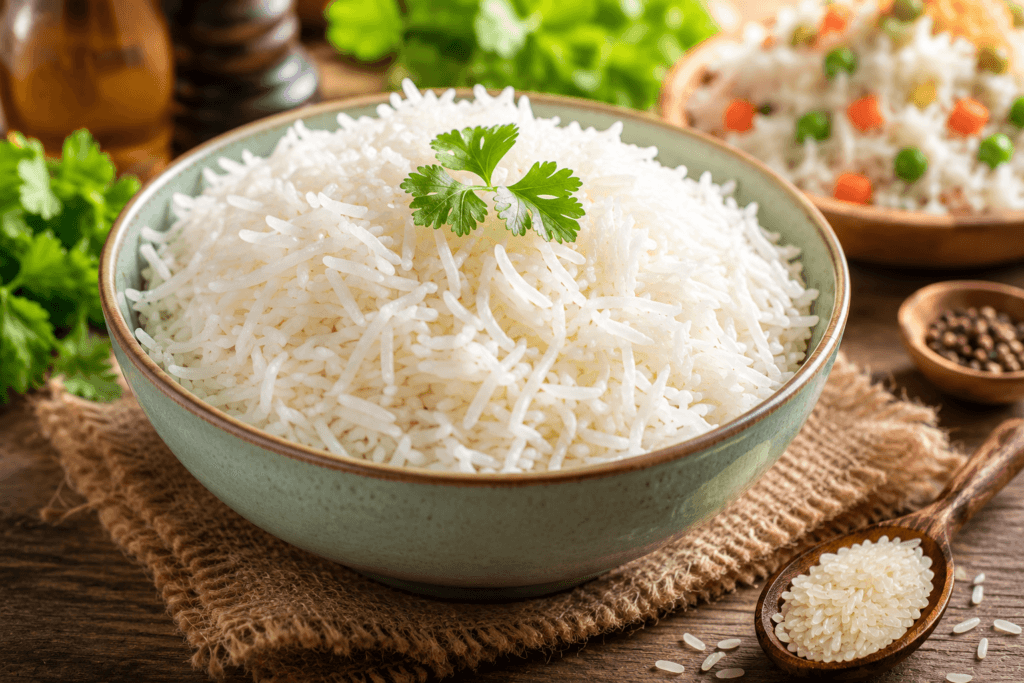 What Is Basmati Rice?
Basmati is a long-grain rice grown mainly in India and Pakistan, and it is famous for its distinct aroma. The word “basmati” literally translates to “fragrant” in Hindi, which explains why one whiff of a cooking pot gives it away instantly.
It comes in two main forms: white and brown. White basmati has the bran, germ, and hull removed, while brown basmati keeps its bran layer intact. That single difference changes quite a bit about its basmati rice nutritional value.
Basmati Rice Nutrition Facts Per Cup
Here is where the numbers matter. One cup (about 163 grams) of cooked white basmati rice calories comes in at roughly 210. That same cup contains:
- Basmati rice protein: about 4.4 grams
- Basmati rice fat: around 0.5 grams
- Basmati rice carbs: close to 45.6 grams
- Basmati rice fiber: roughly 0.7 grams
- Sodium: about 399 mg
These basmati rice nutrition facts per cup make it clear that this is primarily a carb-based food, with small amounts of protein and almost no fat. That is normal for any grain, and it is not automatically a bad thing.
Basmati Rice Nutrition Per 100g
If you prefer measuring by weight instead of cups, basmati rice nutrition per 100g cooked looks slightly different due to the smaller portion size, but the ratios stay consistent. Carbs remain the dominant macro, fiber stays modest, and protein sits in the low single digits per 100 grams.
This consistency is actually useful. Whether you are tracking meals by cup or by gram, the basmati rice macros do not swing wildly, which makes portion planning far less stressful.
White Basmati Rice Nutrition vs Brown Basmati Rice Nutrition
This comparison comes up in almost every conversation about rice, so let’s settle it clearly.
White basmati rice nutrition is lighter on fiber since processing removes the bran layer. It cooks faster and digests more easily, which some people genuinely need, especially with sensitive stomachs.
Brown basmati rice nutrition holds onto more fiber, magnesium, zinc, and B vitamins because the bran stays intact. It is also considered a whole grain, and whole grains carry a well-documented link to lower risks of heart disease and type 2 diabetes.
So when people ask about brown vs white basmati rice nutrition, the honest answer is that brown wins on nutrients, while white wins on convenience and digestibility. Neither one is the villain here.
Basmati Rice Vitamins and Minerals
Beyond carbs and calories, basmati rice quietly delivers a decent lineup of basmati rice vitamins and minerals. A single cup provides meaningful amounts of:
- Folate
- Thiamine (vitamin B1)
- Selenium
- Niacin
- Iron
- Magnesium
Thiamine deserves a special mention here because it plays a direct role in brain function. A serious long-term deficiency can even lead to a condition called Wernicke encephalopathy, though that is an extreme case, not something a normal diet risks.
Basmati Rice Glycemic Index Explained
Here is a detail that changes how people view this rice entirely. Most white rice sits fairly high on the glycemic index, meaning it spikes blood sugar fast. Basmati, however, typically ranges between 50 and 58, placing it in the low to medium glycemic index category.
That single fact answers a lot of searches at once, including is basmati rice good for diabetics. In smaller, controlled portions, basmati can fit into a diabetes-friendly meal plan more comfortably than many other rice varieties, though it still deserves portion awareness.
Is Basmati Rice Healthy?
yes, in the context of a balanced diet. Long answer: it depends on which variety you choose and how much you eat.
Basmati rice tends to contain lower arsenic levels compared with many other rice types, which matters since arsenic naturally accumulates in rice more than in most grains. Basmati grown in California, India, or Pakistan has shown some of the lowest arsenic levels among tested rice varieties.
White basmati is also frequently enriched with iron and B vitamins during processing, adding back some of what refining removes. That is a genuine nutritional plus, not just marketing language.
Is Basmati Rice Good for Weight Loss?
 Is Basmati Rice Good for Weight Loss?
This is where portion size does all the heavy lifting. Basmati rice is not inherently a weight-loss food, but it is not your enemy either.
Brown basmati, thanks to its fiber content, tends to keep you fuller for longer, which can naturally support smaller portions elsewhere in your meal. Pairing it with lean protein and vegetables turns a simple rice bowl into a genuinely balanced plate.
If your goal is fat loss specifically, watching total portion size matters far more than avoiding basmati altogether.
Basmati Rice for Muscle Gain and Bodybuilding
Anyone tracking macros for muscle growth already knows carbs matter just as much as protein. Basmati rice for bodybuilding works well as a clean carbohydrate source that refuels glycogen stores after training.
Basmati rice for muscle gain pairs naturally with a protein source like chicken, fish, or beans, giving you a simple, repeatable meal that does not require much culinary effort. It is not glamorous, but it works, and consistency beats fancy meal prep every time.
Basmati Rice Nutrition vs Jasmine Rice and Other Varieties
People often compare basmati rice nutrition vs jasmine rice, and honestly, the two are quite similar in calories, carbs, and protein. The bigger differences show up in aroma, texture, and glycemic index, with basmati generally sitting a bit lower on the glycemic scale than jasmine rice.
Compared with short-grain white rice, basmati’s long grain and lower arsenic content give it a slight nutritional edge, even though the calorie and carb counts stay fairly close across most rice types.
Is Basmati Rice Gluten Free?
Yes. Basmati rice, like all natural rice varieties, is naturally gluten free. That makes it a solid staple for anyone managing celiac disease or a gluten sensitivity, as long as it is not processed alongside gluten-containing grains during packaging.
Can You Eat Basmati Rice Every Day?
In moderate portions, yes. Basmati rice can absolutely be part of basmati rice for a balanced diet, especially when you rotate between white and brown varieties and pair it with vegetables and lean protein.
The main caution applies to white basmati eaten in very large portions daily, since refined grains have been linked in research to a higher risk of type 2 diabetes and metabolic issues over time. Moderation, as usual, does the heavy lifting.
Best Way to Cook Basmati Rice for Nutrition
Cooking method genuinely affects the final nutrient and starch profile. Here is a simple, nutrition-friendly approach:
- Rinse the rice thoroughly until the water runs clear. This removes excess surface starch.
- Use about 1.5 to 1.75 cups of water for every cup of dry rice.
- Bring it to a boil, then reduce the heat and let it simmer, covered, for 15 to 20 minutes.
- Let it rest for 5 minutes before fluffing with a fork.
Rinsing matters more than most people realize. It also helps reduce surface arsenic slightly, giving you a cleaner, lighter result.
Frequently Asked Questions
How many calories are in basmati rice?
One cup of cooked white basmati rice contains about 210 calories. Brown basmati runs slightly higher due to its extra fiber and intact bran layer.
Is basmati rice healthier than white rice?
Basmati generally contains less arsenic and sits lower on the glycemic index compared with many other white rice varieties, which gives it a slight nutritional edge, though the calorie and carb counts stay fairly similar.
What is the basmati rice serving size for weight management?
A standard basmati rice serving size is about 1 cup cooked (163 grams). Sticking to this portion, paired with protein and vegetables, keeps calories in check without needing to avoid rice altogether.
Is basmati rice good for diabetics?
Basmati’s lower glycemic index, typically between 50 and 58, makes it a more moderate choice for blood sugar control than higher-GI rice varieties. Portion size still matters, so smaller servings are recommended.
Does basmati rice contain gluten?
No. Basmati rice is naturally gluten free, making it safe for people with celiac disease or gluten sensitivity, as long as it hasn’t been cross-contaminated during processing.
Is brown basmati rice better than white basmati rice?
Brown basmati contains more fiber, magnesium, zinc, and B vitamins since it keeps its bran layer. White basmati is easier to digest and cooks faster, so the better choice depends on your priorities.
Can basmati rice help with muscle gain?
Yes. Its carb content helps refuel glycogen stores after workouts, making it a practical, budget-friendly option alongside a protein source for muscle building goals.
How is basmati rice different from jasmine rice?
Both are aromatic long-grain rice varieties with similar calories and carbs. The main differences show up in aroma, texture, and glycemic index, with basmati typically sitting a bit lower on the glycemic scale.
Final Thoughts
Basmati rice nutrition genuinely holds up well against other rice varieties, offering solid carbs for energy, useful vitamins like thiamine and folate, and a lower glycemic index than most competitors. Choosing brown over white adds extra fiber and minerals, while white remains the easier, faster option for busy weeknights.

Hi, I’m Salem Nasir, founder of Fiturely. I research and write evidence-based articles on fitness, nutrition, weight loss, and healthy living. My mission is to make reliable health information simple, practical, and easy to understand so readers can build healthier habits with confidence