
Acorn squash is a low-fat, high-fiber, potassium-rich winter squash. One cup of baked, cubed acorn squash (about 205 g) has roughly 115 calories, 30 g of carbs, 9 g of fiber, 2 g of protein, and 0.3 g of fat. It also gives you about 900 mg of potassium, 22 mg of vitamin C, and 85 to 90 mg of magnesium, with zero cholesterol. Is it healthy? Yes. It supports digestion, heart health, and weight management, as long as you keep the butter and sugar light
What Is Acorn Squash Nutrition All About?
Acorn squash nutrition is simple: it’s a low-fat, fiber-rich, potassium-packed winter squash with a modest calorie count. One cup of baked, cubed acorn squash has roughly 115 calories, 30 g of carbs, 9 g of fiber, and about 900 mg of potassium, according to USDA FoodData Central.
It’s also naturally free of cholesterol and nearly free of fat.
Acorn squash looks like a dark green, ridged acorn, which is where the name comes from. The flesh is golden-orange, mildly sweet, and a bit nutty. Think of it as the “quiet overachiever” of fall vegetables: it doesn’t brag, but its nutrition label is impressive.
What Are the Acorn Squash Nutrition Facts?
The acorn squash nutrition facts show a low-calorie, high-fiber vegetable. Per 100 g, raw squash has about 40 calories, 10 g of carbs, 1.5 g of fiber, under 1 g of protein, and almost no fat. Cooking concentrates these numbers slightly because water cooks out.
| Nutrient | Raw (100 g) | Baked, cubed (1 cup, ~205 g) |
|---|---|---|
| Calories | 40 | 115 |
| Carbohydrates | 10 g | 30 g |
| Dietary fiber | 1.5 g | 9 g |
| Protein | 0.8 g | 2 g |
| Fat | 0.1 g | 0.3 g |
| Potassium | 350 mg | 900 mg |
| Vitamin C | 11 mg | 22 mg |
This is the core of the acorn squash nutritional profile. Low fat, solid fiber, and strong potassium make it a smart base for a balanced plate.
How Many Calories Are in Acorn Squash?
Acorn squash has about 40 calories per 100 g raw and about 56 calories per 100 g baked. A full cup of baked cubes lands near 115 calories. A half medium squash, a common serving, usually runs around 150 to 180 calories before butter or sugar.
Those add-ons matter. A tablespoon of butter adds roughly 100 calories, and a spoonful of brown sugar adds about 50. The squash isn’t the calorie problem; the toppings are.
So if you track calories, weigh your squash after cooking and go easy on the glaze. A drizzle of olive oil, salt, and pepper keeps the numbers friendly.
What Are the Acorn Squash Macronutrients?
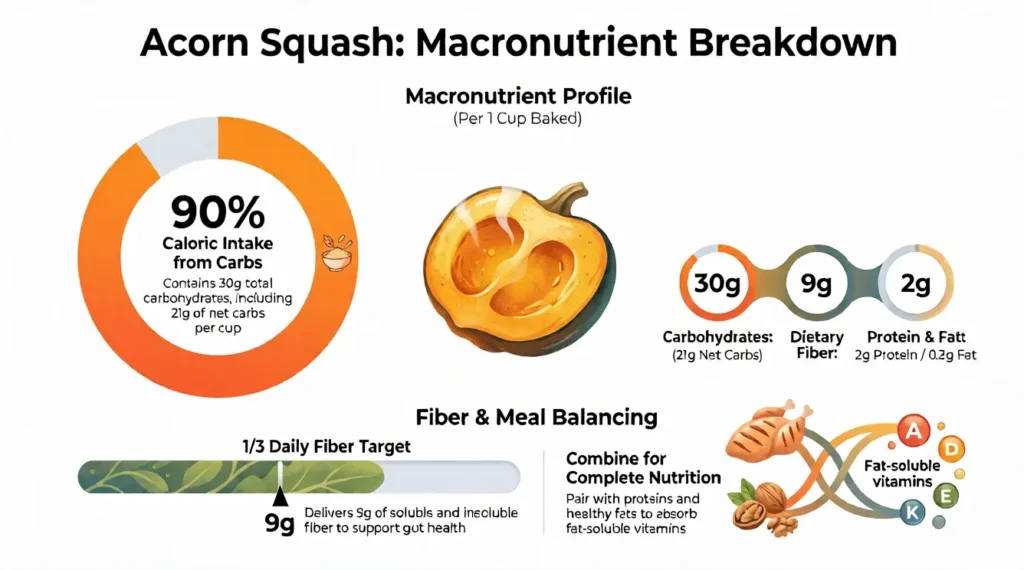
The acorn squash macronutrients are mostly carbohydrates, with small amounts of protein and almost no fat. Roughly 90 percent of its calories come from carbs, including a healthy share of fiber. It supplies very little protein and fat on its own.
Here is the breakdown by macro.
How Many Carbs Are in Acorn Squash?
A cup of baked acorn squash has about 30 g of carbohydrates, and about 9 g of that is fiber. That leaves roughly 21 g of net carbs. The acorn squash carbohydrate content is moderate, higher than zucchini but lower than a large baked potato.
How Much Protein Is in Acorn Squash?
The acorn squash protein content is small: about 2 g per cup of baked cubes. Squash won’t be your protein source. Pair it with chicken, lentils, eggs, or fish to round out the meal.
How Much Fat Is in Acorn Squash?
The acorn squash fat content is tiny, around 0.3 g per baked cup. Any real fat in your dish comes from the cooking oil or butter you add. A little healthy fat actually helps your body absorb the fat-soluble vitamins in the squash.
How Much Fiber Is in Acorn Squash?
One cup of baked acorn squash gives you about 9 g of dietary fiber. That’s roughly a third of the 28 g daily value used on U.S. nutrition labels. It makes acorn squash one of the better high-fiber vegetables you can roast.
Fiber matters because most people miss their target. The Dietary Guidelines for Americans lists dietary fiber as a nutrient of public health concern because many Americans under-consume it. If you want fiber-rich foods that taste good, a roasted squash half is an easy win.
Squash contains both soluble and insoluble fiber, which supports gut health and steady digestion.
What Vitamins and Minerals Are in Acorn Squash?
Acorn squash is especially rich in potassium, magnesium, and vitamin C, with smaller amounts of B vitamins, calcium, and manganese. The acorn squash vitamins and minerals list looks like a multivitamin you can actually eat with a fork.
Key acorn squash micronutrients include:
- Potassium: about 900 mg per baked cup
- Vitamin C: about 22 mg per baked cup (the daily value is 90 mg)
- Magnesium: about 85 to 90 mg per baked cup
- Thiamin (B1), B6, and folate: modest but useful amounts
- Manganese and calcium: smaller supporting amounts
Is Acorn Squash High in Potassium?
Yes. A cup of baked acorn squash has around 900 mg of potassium, roughly 19 percent of the 4,700 mg daily value. That’s more than a medium banana, which has about 420 mg. Potassium supports normal blood pressure and muscle function.
What About Vitamin A?
Acorn squash has some beta-carotene, but less than butternut squash or pumpkin. If you want vitamin A-rich foods, butternut squash and sweet potatoes are stronger picks. Acorn squash earns its place for potassium, magnesium, and fiber instead.
Is Acorn Squash Healthy?
Yes, acorn squash is healthy. It’s low in fat, free of cholesterol, high in fiber, and loaded with potassium and vitamin C. For most people, it’s a great carbohydrate choice that fills you up and supports overall nutrition.
The CDC reports that only about 1 in 10 U.S. adults eats enough vegetables. Adding a nutrient-dense option like squash helps close that gap.
The main caution is portion size and toppings. Candied versions with heavy sugar and butter can turn a healthy side into dessert. If you manage blood sugar or have kidney disease, check with your doctor or dietitian about potassium and carb amounts.
What Are the Health Benefits of Eating Acorn Squash?
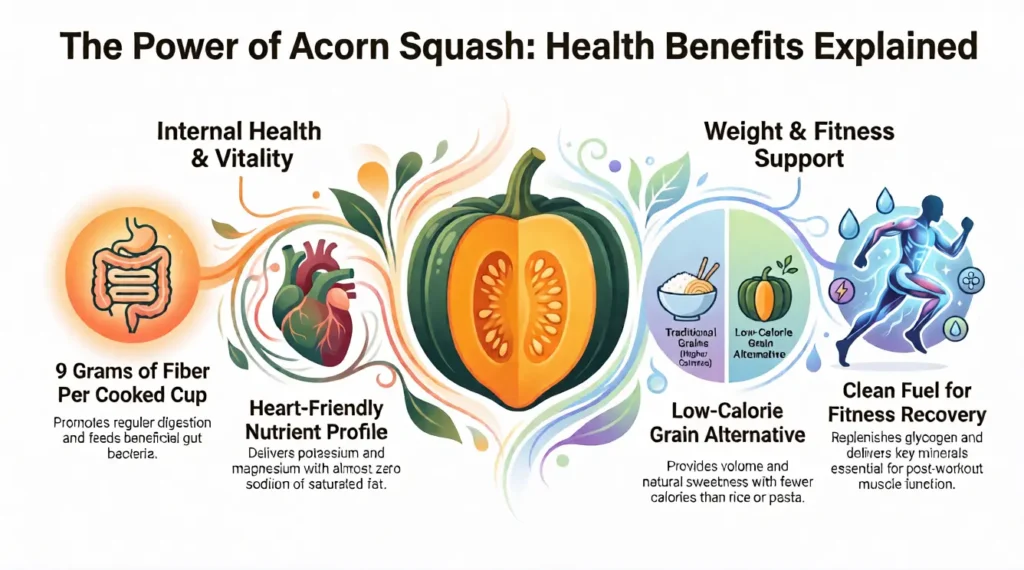
The main acorn squash health benefits are better digestion, heart-friendly nutrients, immune support, and easier weight management. Each one comes from specific nutrients you can see on the label. None of it is magic, just good food doing its job.
Is Acorn Squash Good for Digestion?
Yes. With about 9 g of fiber per cooked cup, acorn squash helps keep digestion regular. Fiber adds bulk, feeds beneficial gut bacteria, and helps you feel full. Drink enough water when you raise your fiber intake, or your gut may protest.
Is Acorn Squash Good for Heart Health?
It supports heart health. The American Heart Association notes that eating more potassium and less sodium can help lower blood pressure. Acorn squash delivers potassium, magnesium, and fiber with almost no sodium or saturated fat, a useful combo for your heart.
Is Acorn Squash Good for Weight Loss?
It can be. Acorn squash is a low-calorie, high-fiber food, and fiber slows digestion so you stay satisfied longer. No single vegetable causes weight loss, but swapping heavier sides for roasted squash trims calories without leaving you hungry.
Is Acorn Squash Good for a Low-Calorie Diet?
Yes, as long as you portion it. Half a medium squash, roasted with a teaspoon of olive oil, fits comfortably in a low-calorie meal plan. It gives volume and sweetness for fewer calories than rice, pasta, or bread.
Does It Support Fitness Goals?
Yes. For anyone focused on fitness, acorn squash is a clean carb source. It fuels workouts, replenishes glycogen, and supplies potassium and magnesium that muscles use. Eat it with a protein source after training for a balanced recovery meal.
Raw vs. Cooked vs. Roasted Acorn Squash Nutrition: What’s the Difference?
Cooking changes acorn squash nutrition mostly through water loss. Raw squash has about 40 calories per 100 g, while baked or roasted squash has about 56. The calories per gram rise as water leaves, but the squash itself doesn’t gain calories.
Here’s how each form compares:
- Raw acorn squash nutrition: lowest calories per 100 g and the highest vitamin C retention, though it’s hard to eat raw.
- Cooked acorn squash nutrition: softer, easier to digest, and more concentrated per cup. Boiling can leach out some water-soluble vitamins.
- Roasted acorn squash nutrition: roasting caramelizes natural sugars and keeps most minerals intact. It’s the most flavorful method, and nutrients stay in the flesh instead of draining into water.
How Nutritious Is Roasted Acorn Squash?
Very. Roasting keeps the fiber, potassium, and magnesium while adding flavor without much extra fat. Cut it in half, scoop the seeds, brush with a little olive oil, and roast at 400°F (about 200°C) for 35 to 45 minutes.
Bonus: roasting is forgiving. You can’t really overcook it into sadness the way you can with boiled vegetables.
How Does Acorn Squash Compare to Other Squash and Starchy Vegetables?
Acorn squash sits in the middle: more fiber and potassium than spaghetti squash, fewer calories than sweet potato, and less vitamin A than butternut. Which one wins depends on what you need from your plate.
Here is a side-by-side comparison per 100 g, cooked (USDA FoodData Central, approximate):
| Vegetable | Calories | Carbs | Fiber | Best Known For |
|---|---|---|---|---|
| Acorn squash (baked) | ~56 | ~14.6 g | ~4.5 g | Fiber and potassium |
| Butternut squash (baked) | ~45 | ~11.7 g | ~2 g | Very high vitamin A |
| Spaghetti squash (baked) | ~31 | ~7 g | ~1.5 g | Lowest calories and carbs |
| Pumpkin (boiled) | ~20 | ~5 g | ~1 g | Lightest, low-calorie option |
| Sweet potato (baked, skin on) | ~90 | ~21 g | ~3 g | Energy and vitamin A |
If you want low-calorie vegetables, spaghetti squash and pumpkin win. For high-fiber vegetables among the squashes, acorn leads. For vitamin A, go butternut or sweet potato. Many people rotate all of them through the fall.
A quick variety note: honey nut squash is a mini butternut variety, so its nutrition looks more like butternut than acorn. It’s sweeter, smaller, and richer in vitamin A.
What Are the Best Healthy Ways to Eat Acorn Squash?
The best ways to eat acorn squash keep it simple: roast it, stuff it, or cube it into soups and grain bowls. Healthy fall vegetables shine with minimal fuss. Season with salt, pepper, cinnamon, or garlic instead of heavy sugar.
Try these easy pairings:
- Stuffed squash: fill roasted halves with quinoa, lentils, and herbs.
- Side dish combo: serve alongside sautéed french beans with garlic for a colorful, fiber-rich plate.
- Light Asian-inspired meal: pair roasted squash wedges with a chilled seaweed salad for a mix of sweet, savory, and mineral-rich flavors.
- Crunchy topping: crush a few saltines with herbs and olive oil for a light, crispy crust on baked squash. It’s a budget-friendly swap for heavier breadcrumbs, but watch the sodium.
- Seeds: roast the seeds like pumpkin seeds for a crunchy snack.
Roasted vegetables’ nutrition stays strong when you limit added fat and sugar. Aim for a teaspoon or two of oil per serving and let the squash’s natural sweetness carry the dish.
Who Should Be Careful With Acorn Squash?
Most people can eat acorn squash freely, but a few groups should check portions. People with advanced kidney disease may need to limit potassium. People counting carbs for diabetes should track the roughly 30 g per cup. Anyone with a squash allergy should avoid it.
If you’re not in those groups, the only real risk is a very full plate and a very happy stomach.
Final Thoughts:
Yes. Acorn squash nutrition delivers a lot for little: about 115 calories per cup, 9 g of fiber, and around 900 mg of potassium, with almost no fat. It’s affordable, filling, and easy to roast.
Treat it as a flexible base. Add protein, keep the toppings light, and rotate it with butternut, spaghetti squash, and sweet potato for variety.
Sources
- USDA FoodData Central: acorn, butternut, and spaghetti squash, pumpkin, and sweet potato entries
- U.S. FDA: Daily Value on the Nutrition and Supplement Facts Labels
- Dietary Guidelines for Americans, 2020–2025.
- CDC: Adults Meeting Fruit and Vegetable Intake Recommendations
- American Heart Association: Potassium and blood pressure guidance

Hi, I’m Salem Nasir, founder of Fiturely. I research and write evidence-based articles on fitness, nutrition, weight loss, and healthy living. My mission is to make reliable health information simple, practical, and easy to understand so readers can build healthier habits with confidence