
Key Takeaways
- Parsnips are rich in fiber, vitamin C, folate, and potassium, making them a highly nutritious root vegetable.
- Their high fiber content supports digestion, improves fullness, and may help with healthy weight management.
- Parsnips are naturally low in fat and provide antioxidants that support heart health and immune function.
- They can be enjoyed roasted, mashed, steamed, or added to soups and stews as a healthy alternative to potatoes.
If you’ve only ever thought of parsnips as “the pale carrot nobody orders,” it’s time for a rethink. Parsnip nutrition packs a genuinely impressive amount of fiber, vitamins, and antioxidants into a low-calorie root vegetable, and once you know the numbers, you’ll probably start tossing a few into your next roasting tray.
This guide breaks down exactly what’s inside a parsnip, how it compares to other root vegetable nutrition heavyweights like carrots and sweet potatoes, and how to fit it into a balanced diet without overthinking it.
 What Is Parsnip Nutrition?
 What Is Parsnip Nutrition?
Parsnip nutrition centers on three things: fiber, vitamin C, and folate. A single cup of raw, sliced parsnip delivers roughly 100 calories, 24 grams of carbohydrates, and over 6 grams of fiber.
That fiber-to-calorie ratio is rare. Most starchy vegetables make you choose between “filling” and “low-calorie.” Parsnips don’t really ask you to choose.
They also belong to the same plant family as carrots and parsley, which is why the flavor sits somewhere between sweet, earthy, and slightly peppery.
How Many Calories and Carbs Are in Parsnips?
One cup (about 133 grams) of raw parsnip has around 100 calories and 24 grams of carbs, most of which are complex carbohydrates rather than simple sugars.
Nutrition databases including USDA FoodData Central and independent trackers report roughly 75-100 calories per 100-133 gram serving, depending on whether the parsnip is raw or cooked.
Compared to potatoes, parsnips run slightly higher in carbs and noticeably higher in fiber, which matters more than the raw carb number for blood sugar control.
Cooking parsnips (boiling, roasting) doesn’t strip out much of this. Most of the carb and fiber content survives the heat.
What Vitamins and Minerals Do Parsnips Contain?
Parsnips are considered an excellent source of vitamin C, vitamin K, and folate, plus meaningful amounts of vitamin E, magnesium, phosphorus, potassium, and manganese.
That’s a wide nutrient spread for a vegetable most people never think twice about buying.
Vitamin C, Vitamin K, and Vitamin E
A single cup of parsnip covers roughly 20-25% of your daily vitamin C needs and a similar share of vitamin K, according to nutrient-density data from Nutrivore and USDA-sourced databases.
Vitamin C supports collagen production and a healthy immune system, while vitamin K is essential for blood clotting and bone metabolism. Vitamin E, present in smaller amounts, adds extra antioxidant support.
Folate, Potassium, Magnesium, Phosphorus, and Manganese
Parsnips are also an excellent source of folate, providing around 20% of the daily value per cup, which matters a lot during pregnancy and for general cell growth and DNA formation.
Add in potassium (supports blood pressure regulation), magnesium and phosphorus (both tied to bone and muscle function), and manganese (an antioxidant cofactor), and you’ve got a fairly complete micronutrient package for one root vegetable.
Is Parsnip Fiber Good for Digestive Health?
Yes. Parsnips rank among the more fiber-dense vegetables you’ll find in a regular grocery aisle, which makes them genuinely useful for digestive health.
One cup contains roughly 6 grams of fiber, which is a solid chunk of the recommended daily intake, all from a vegetable that also happens to taste like dessert when roasted with a bit of honey.
Soluble Fiber vs Insoluble Fiber
Parsnips contain both soluble fiber and insoluble fiber, and that combination is exactly why they’re a favorite among high fiber vegetables.
Soluble fiber slows digestion and helps moderate blood sugar and cholesterol, while insoluble fiber adds bulk and keeps things moving through the gut. Getting both from one food is a small nutritional win.
There’s also emerging interest in the resistant starch naturally found in cooked-and-cooled root vegetables like parsnips, which behaves more like fiber than a typical carbohydrate once it reaches the colon.
Do Parsnips Help with Blood Sugar Control?
Parsnips have a moderate glycemic index. Research cited by nutrition analysts puts it around 52, which is lower than white potatoes and supports steadier blood sugar control when parsnips are eaten in reasonable portions.
The fiber content is the main reason. Fiber slows down how quickly sugar enters the bloodstream, which is useful whether you’re managing diabetes or just trying to avoid a 3 p.m. energy crash.
Pairing parsnips with a protein source (like the lentils in a shepherd’s pie) blunts the carb impact even further.
Are Parsnips Rich in Antioxidants and Anti-Inflammatory Foods?
Parsnips qualify as one of the more underrated anti-inflammatory foods, thanks to polyacetylene compounds like falcarinol and falcarindiol, along with standard antioxidants such as vitamin C and manganese.
Some rodent studies suggest these polyacetylene compounds may have anti-inflammatory properties, though human research is still catching up. That’s worth knowing before anyone claims parsnips “cure” anything.
Still, as part of plant-based nutrition, this antioxidant profile adds up over time, especially when parsnips replace more processed carb sources on the plate.
How Does Parsnip Nutrition Compare to Other Root Vegetables?
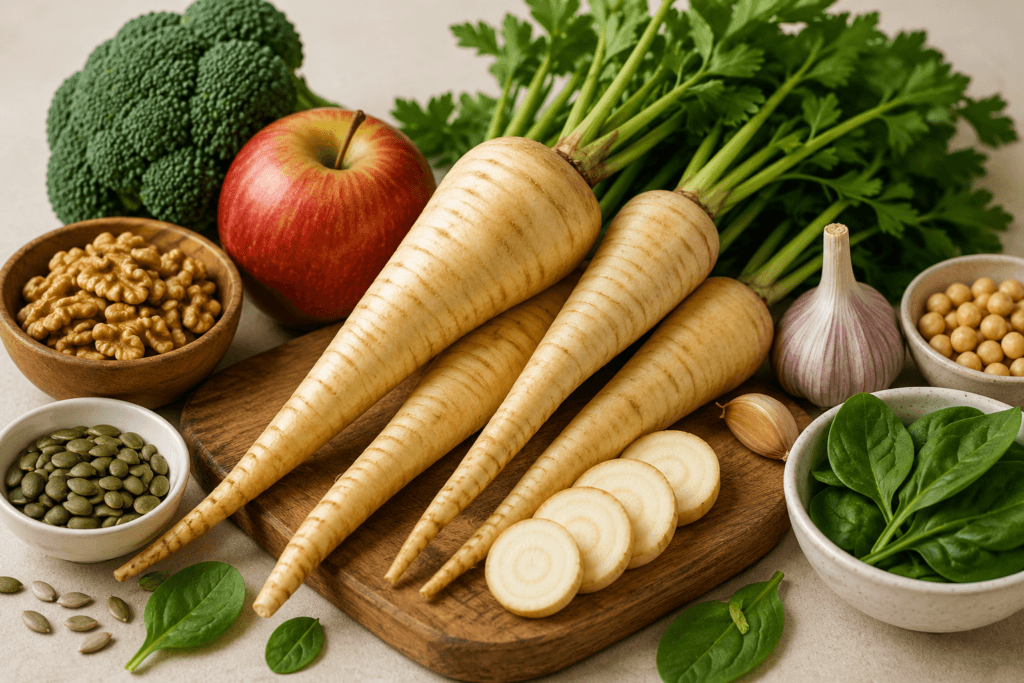 How Does Parsnip Nutrition Compare to Other Root Vegetables?
Parsnips hold their own against carrot nutrition, sweet potato nutrition, beetroot nutrition, turnip nutrition, and rutabaga nutrition. Each root vegetable brings something slightly different to the table.
None of them are “better” across the board. It really comes down to what nutrient you’re prioritizing.
Parsnip Nutrition vs Carrot Nutrition
Parsnips generally contain more fiber and folate per serving than carrots, while carrots pull ahead heavily on beta-carotene and vitamin A. Flavor-wise, parsnips are sweeter and starchier once cooked.
Parsnip Nutrition vs Sweet Potato Nutrition
Sweet potato nutrition wins on vitamin A and beta-carotene by a wide margin, but parsnips are typically lower in sugar and carry a comparable, sometimes higher, fiber count per serving.
Parsnip Nutrition vs Beetroot Nutrition and Turnip Nutrition
Beetroot nutrition stands out for nitrates linked to blood pressure and exercise performance, while turnip nutrition is lower in calories overall. Parsnips beat both on fiber content per cup.
Parsnip Nutrition vs Rutabaga Nutrition
Rutabaga nutrition is close to parsnips in texture and cooking use, but rutabagas tend to run slightly lower in carbs. Parsnips edge ahead on vitamin K and folate.
Where Do Parsnips Fit on a Vegetable Nutrition Chart?
On any vegetable nutrition chart, parsnips land in the “high fiber, moderate carb, nutrient-dense” category, closer to sweet potatoes than to watery vegetables like cucumber or celery.
They’re not the lowest-calorie option in the produce aisle, but per calorie, they deliver more fiber and micronutrients than most starchy sides, which is exactly what nutrition-density scoring systems tend to reward.
If you’re building a chart to compare nutrient-dense vegetables, parsnips deserve a column of their own rather than getting lumped in with “root vegetables, generic.”
How to Add Parsnips to a Balanced Diet
Parsnips are genuinely easy to cook with, which is half the reason they deserve more attention as part of everyday healthy eating.
Try mashing them with lemon and herbs as a lower-glycemic potato swap, adding them to a vegetarian shepherd’s pie with lentils and mushrooms, or baking thin slices into crisps for a fiber-rich snack.
Roasted Root Vegetables
Roasted root vegetables are the easiest entry point. Toss sliced parsnips with olive oil, salt, and rosemary, then roast at around 210°C (410°F) for 30 to 35 minutes until the edges caramelize.
Mixing parsnips with carrots and beets in the same tray is an easy way to get several types of root vegetable nutrition in one dish without extra prep work.
One safety note worth mentioning: in the wild, parsnip roots can resemble water hemlock, a highly toxic plant. This only applies to foraging. Store-bought parsnips are completely safe, but it’s a good reminder to never forage root vegetables without expert identification.
Final Thoughts:
Parsnips check a lot of boxes: solid fiber, strong vitamin C and K content, useful folate levels, and a fairly low calorie intake for how filling they are.
They won’t replace every other vegetable in your fridge, and they’re not a miracle food. No single ingredient ever is. But as part of a varied lineup of whole foods, alongside carrots, beets, and sweet potatoes, parsnips earn their spot.
If your goal is heart health, digestive health, or just a slightly more interesting Sunday roast, parsnips are one of the easiest upgrades you can make without changing much else about how you already eat.

Hi, I’m Salem Nasir, founder of Fiturely. I research and write evidence-based articles on fitness, nutrition, weight loss, and healthy living. My mission is to make reliable health information simple, practical, and easy to understand so readers can build healthier habits with confidence
Pingback: Basmati Rice Nutrition: Calories, Carbs, Protein & Health Benefits (2026) - fiturely.com
Pingback: Steamed Broccoli Nutrition Facts (2026): Calories, Protein, Carbs & Health Benefits - fiturely.com
Pingback: Red Onion Nutrition Facts (2026): Calories, Carbs, Protein & Health Benefits