
Key Takeaways
- Steamed broccoli is low in calories and high in fiber, making it an excellent food for weight management.
- It is rich in vitamin C, vitamin K, folate, and antioxidants that support overall health and immunity.
- Steaming helps retain more nutrients than boiling, making it one of the healthiest cooking methods.
- Adding steamed broccoli to your daily meals is an easy way to boost nutrition and support a balanced diet.
Broccoli has a reputation problem. Somewhere between school cafeterias and dad jokes about “eating your greens,” it became the vegetable people love to complain about, right before eating it anyway, because deep down, everyone knows it’s good for them.
Here’s the good news: steamed broccoli nutrition is genuinely impressive, and you don’t need to drown it in cheese sauce to make it worth your time.
 Steamed Broccoli Nutrition Facts
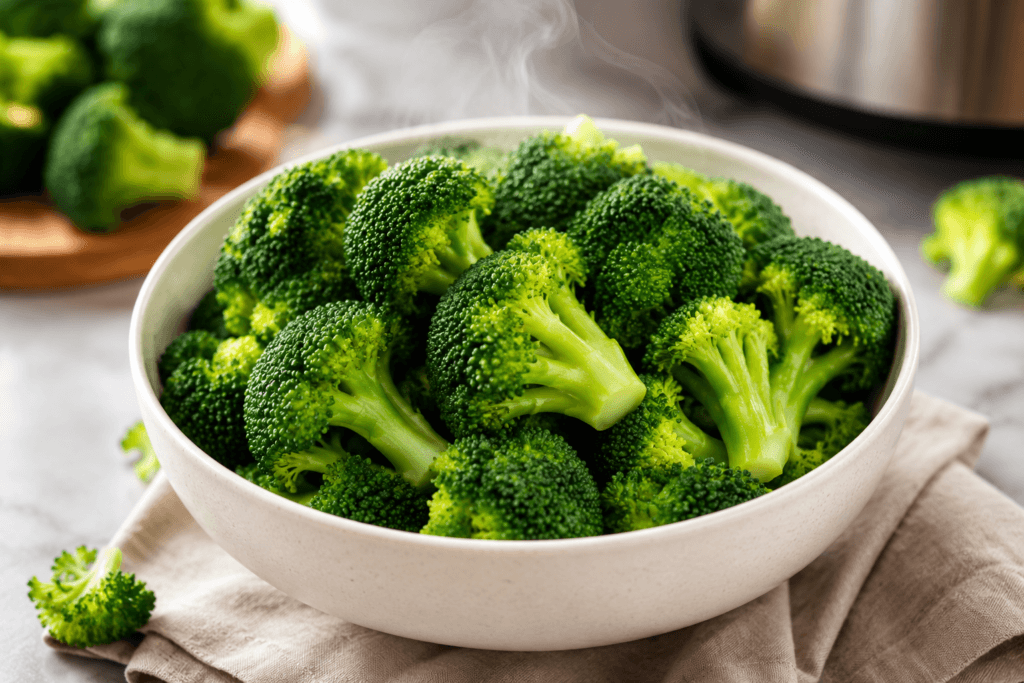 Steamed Broccoli Nutrition Facts
Let’s start with the numbers, since that’s what brought most of you here.
According to steamed broccoli nutrition facts from the USDA FoodData Central database, here’s how a cup compares to a 100-gram serving:
| Nutrient | Per 100g | Per Cup (156g) |
|---|---|---|
| Calories | 35 kcal | 55 kcal |
| Protein | 2.4 g | 3.7 g |
| Carbs | 7.2 g | 11.2 g |
| Fiber | 3.3 g | 5.1 g |
| Fat | 0.4 g | 0.6 g |
| Vitamin C | ~40 mg | ~63 mg |
| Vitamin K | ~92 mcg | ~144 mcg |
| Folate | ~50 mcg | ~78 mcg |
If you’re tracking broccoli nutrition per 100g instead of the cup measurement, the table above is your quick reference. This is the figure most nutrition labels and apps use when they say “cooked broccoli,” so it’s worth memorizing if you log meals often.
Compare that to broccoli calories per cup in its raw form, about 31 calories for roughly 91 grams, and you’ll notice steaming doesn’t dramatically change the calorie count. It just changes the water content and the weight per cup, which is why online numbers vary so much depending on the source.
How Many Calories Are in Steamed Broccoli?
This is one of the most searched questions about the vegetable, and the confusion makes sense. Different sites use different serving sizes, so how many calories are in steamed broccoli depends entirely on whether you’re measuring by the cup, the floret, or the 100-gram mark.
Steaming itself adds zero calories. It’s just hot water vapor doing its job. A steamed broccoli nutrition per cup measurement and a raw broccoli measurement land in a similar range, since the difference mostly comes from moisture loss, not added energy. If your steamed broccoli suddenly has 200 calories, check your butter, not your broccoli.
Protein Content and Carbs
Broccoli won’t replace chicken or lentils as your main protein source, but it quietly punches above its weight for a vegetable.
Steamed broccoli protein content sits at roughly 3.7 grams per cup, which is more protein per calorie than most people expect from a green vegetable. Pair it with eggs, tofu, or fish, and it adds up.
On the carb side, steamed broccoli carbs and fiber work together nicely. Around half of the carbs in a cup of steamed broccoli come from fiber, meaning the net carbs, the ones your body actually digests for energy, stay quite low. This is exactly why broccoli shows up so often in steamed broccoli for keto diet meal plans: low net carbs, high volume, and it fills you up.
Vitamins and Minerals
This is where broccoli earns its “superfood” nickname, even if the term gets thrown around a bit too casually these days.
Steamed broccoli vitamins and minerals include notable amounts of:
- Vitamin C: Even after cooking, broccoli retains a solid amount of vitamin C, supporting immune function and skin health.
- Vitamin K: Important for blood clotting and bone health, and one reason people on blood thinners should mention their broccoli habit to a doctor.
- Folate: Especially relevant during pregnancy for healthy cell growth.
- Potassium: Supports healthy blood pressure.
- Manganese and iron: Smaller amounts, but they still contribute to overall broccoli vitamins and minerals intake across a day.
A quick note on steamed broccoli vitamin C after cooking: some vitamin C is lost during any cooking method because it’s heat-sensitive and water-soluble. Steaming, however, causes far less loss than boiling, since the broccoli isn’t sitting directly in water that nutrients can leach into.
Does Steaming Broccoli Reduce Nutrients?
Short answer: less than you’d think, and far less than boiling.
Research comparing cooking methods has found that boiling broccoli leads to a noticeable drop in flavonoids like kaempferol and quercetin, largely because these compounds dissolve into the cooking water. Steaming, roasting, and microwaving tend to preserve more of these compounds.
So when people ask, does steaming broccoli reduce nutrients, the honest answer is that it reduces some heat-sensitive vitamins slightly, but far less than boiling does, and it can even make certain compounds, like sulforaphane, more accessible.
Steamed Broccoli vs Raw Broccoli Nutrition
Comparing steamed broccoli vs raw broccoli nutrition isn’t really about picking a winner. Both have a place on your plate.
Raw broccoli holds onto slightly more vitamin C, since no heat is involved at all. Steamed broccoli, on the other hand, is easier to digest for many people and may increase the availability of certain antioxidants. Steaming also softens the tough fiber structure, which some people find gentler on the gut.
If your goal is steamed broccoli benefits for digestion, cooked broccoli generally wins. Raw cruciferous vegetables can cause more bloating for people with sensitive digestive systems, since the fiber is harder to break down.
Steamed Broccoli Health Benefits
Beyond the basic steamed broccoli nutrition facts, this vegetable brings a genuinely useful list of health perks to the table.
Steamed broccoli health benefits include:
- Supporting heart health through cholesterol-lowering plant compounds
- Contributing to eye health thanks to lutein and zeaxanthin
- Offering anti-inflammatory effects from flavonoids like kaempferol
- Providing sulforaphane, a compound studied for its potential role in cancer prevention
None of this makes broccoli a miracle cure, and no single vegetable is. But as part of a varied diet, it consistently shows up in research as one of the more nutrient-dense healthy green vegetables available at a regular grocery store.
Is Steamed Broccoli Healthy for Weight Loss?
If you’re wondering is steamed broccoli healthy for weight loss, the math is on your side. Low calories, decent fiber, and enough volume to make a plate look full add up to a solid combination for anyone managing intake without feeling deprived.
Broccoli for weight loss works less like a magic trick and more like simple physics. High fiber and high water content slow digestion and support fullness, so a low calorie vegetable like this one can replace higher-calorie sides without leaving you hungry an hour later.
It also fits well into broccoli for healthy diet planning generally, whether the goal is weight management, better digestion, or simply eating more high fiber vegetables.
Steamed Broccoli for Diabetics and Muscle Building
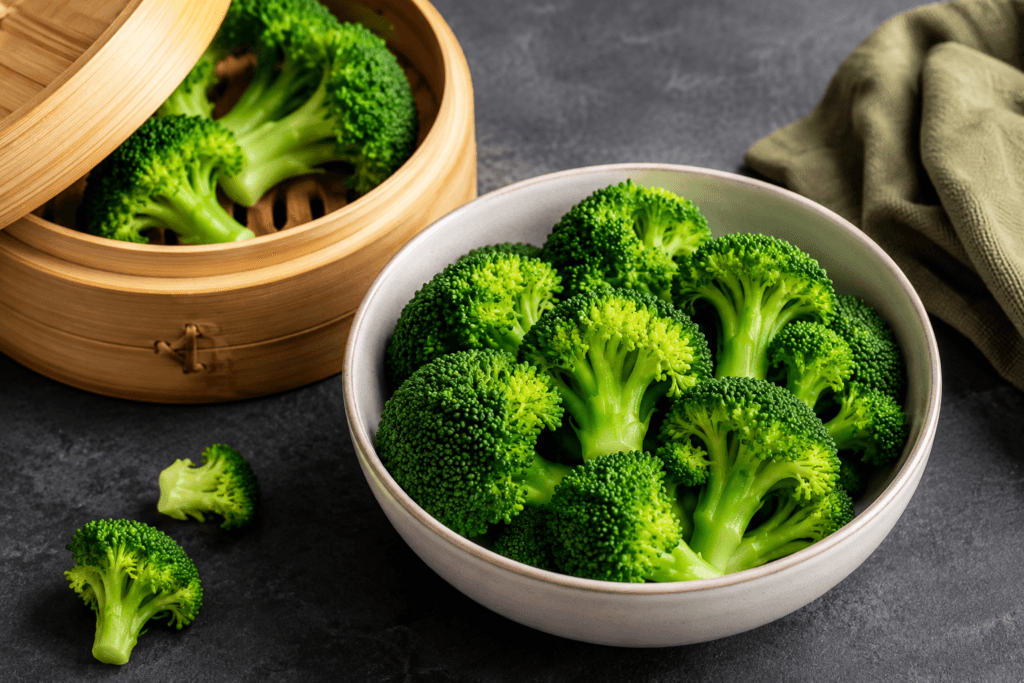 Steamed Broccoli for Diabetics and Muscle Building
For steamed broccoli for diabetics, the low glycemic impact is the main draw. Because so much of the carb content is fiber, steamed broccoli has a minimal effect on blood sugar spikes compared to refined carbs.
For steamed broccoli for muscle building, don’t expect it to replace your protein shake. But as a fiber and micronutrient-rich side dish alongside a protein source, it supports recovery and overall diet quality without adding excess calories.
How to Steam Broccoli Without Losing Nutrients
The best way to steam broccoli without losing nutrients comes down to a few simple habits:
- Cut florets to a similar, moderate size so they cook evenly.
- Steam for 5 to 7 minutes, just until bright green and fork-tender.
- Avoid over-steaming into mush, which breaks down more vitamin C.
- Use a steamer basket over boiling water rather than submerging the broccoli directly.
This approach keeps steamed broccoli nutrition per 100g as close as possible to its natural profile while still making the vegetable easy to chew and digest.
Potential Downsides
Broccoli is safe for most people, but two groups should pay attention.
People taking blood-thinning medication should keep their vitamin K intake consistent, since sudden changes in leafy green or cruciferous vegetable intake can interact with these medications.
People with thyroid conditions may want to moderate raw cruciferous vegetable intake, since compounds called goitrogens can affect thyroid function in large amounts. Cooking, including steaming, reduces this concern significantly.
Can You Eat Steamed Broccoli Every Day?
Generally, yes. For most healthy adults, eating steamed broccoli daily is a reasonable and safe habit, given its low calorie count and high nutrient density. As always, variety in vegetable intake helps cover a broader range of nutrients than any single food can offer alone.
Frequently Asked Questions
Is steamed broccoli healthier than boiled broccoli?
Yes. Boiling causes more nutrients, especially flavonoids and vitamin C, to leach into the water. Steaming keeps the broccoli out of direct contact with water, so it retains more of its nutritional value.
How much protein is in steamed broccoli?
A cup of steamed broccoli has about 3.7 grams of protein, and a 100-gram serving has about 2.4 grams. It’s a useful addition to a meal but not a primary protein source on its own.
What is the steamed broccoli glycemic index?
Steamed broccoli has a low glycemic index, generally estimated around 10 to 15, thanks to its high fiber content and low sugar levels. This makes it a safe choice for blood sugar management.
Is steamed broccoli good for gut health?
Yes. The fiber in steamed broccoli supports regular digestion and feeds beneficial gut bacteria. Cooking also makes the fiber easier to break down than raw broccoli, which can reduce bloating for sensitive stomachs.
What is a normal steamed broccoli serving size?
A typical serving is 1 cup (about 156 grams) of chopped florets. This size fits comfortably into most meal plans and matches the serving size used on most nutrition labels.
Does steamed broccoli fit a daily nutrition value target?
A single cup covers over 100% of the daily vitamin C need for most adults and a meaningful share of daily vitamin K and folate, all for around 55 calories.
The Bottom Line
Cooked broccoli nutrition holds up well against its raw counterpart, offering a strong mix of fiber, vitamins, and plant compounds for very few calories. Whether the goal is weight management, blood sugar control, or simply eating better, steamed broccoli remains one of the most practical healthy green vegetables to keep in a regular rotation.
Related reads: Basmati Rice Nutrition, Parsnip Nutrition, Paneer Nutrition, Pickled Beetroot Benefits, Stop Ignoring Chicken Thighs

Hi, I’m Salem Nasir, founder of Fiturely. I research and write evidence-based articles on fitness, nutrition, weight loss, and healthy living. My mission is to make reliable health information simple, practical, and easy to understand so readers can build healthier habits with confidence
Pingback: Clear Liquid Diet (2026): Food List, Menu, What to Eat & Foods to Avoid - fiturely.com
Pingback: Red Onion Nutrition Facts (2026): Calories, Carbs, Protein & Health Benefits
If you wish for to get much from this piece of writing then you have to apply
these techniques to your won webpage.