
A standard imperial pint (568 ml) of Guinness Draught has approximately 210 calories, around 17g of carbs, 0g of fat, and roughly 1g of protein. That’s based on Guinness’s own published nutrition data of about 37 to 38 kcal per 100 ml. It’s lower in calories than most mainstream lagers of similar serving size.
Ask any pub goer to guess the calories in a pint of Guinness, and you’ll get wild answers. Others swear it’s the lightest pint at the bar. Both can’t be right, so let’s settle it with real numbers, not bar stool legend.
This guide breaks down Guinness pint calories, how the stout compares to lager, wine, and other beers, and whether it actually fits into a healthy lifestyle guided by good fitness habits. No fluff, no fake stats. Just facts you can check for yourself.
How Many Calories in a Pint of Guinness?
Here’s the short answer: a standard imperial pint (568 ml) of Guinness Draught contains roughly 210 calories. That figure comes from Diageo’s own published nutrition data for Guinness Draught, which lists around 37 to 38 kcal per 100 ml.
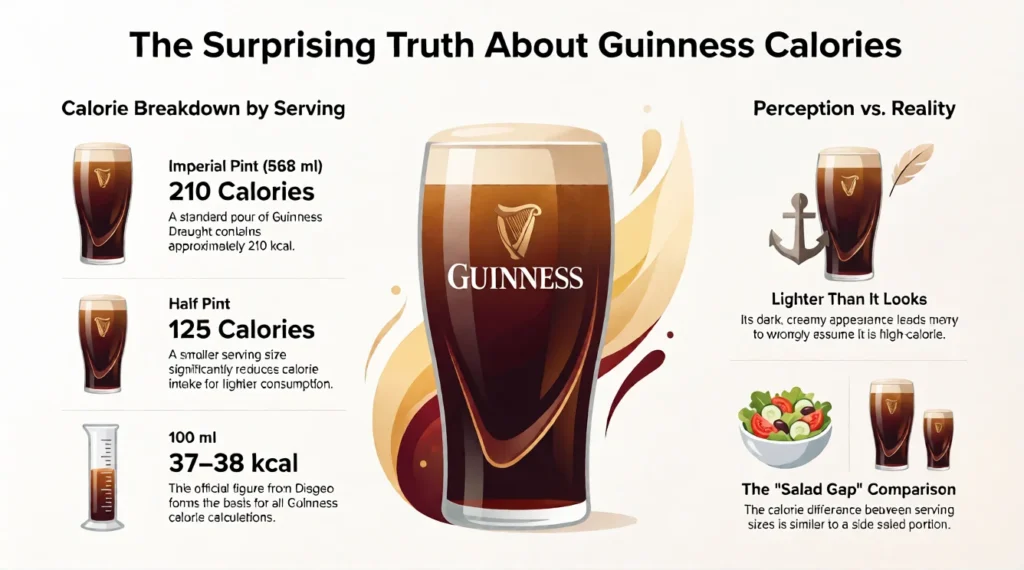
Do the math across a full pint, and you land close to 210 kcal. A half pint sits around 125 kcal, similar to the calorie gap you’d see between a small and large side of red onion salad.
So when people ask, “how many calories in a pint of Guinness” or “how many calories is a pint of guinness,” the honest answer is about 210, give or take a little depending on the exact batch and pour size. That’s lower than most people expect from a dark, creamy stout.
Pint Size Matters: 568 ml vs 16 oz
Here’s a detail most articles skip. Not all pints are equal, the same way not all bowls of rice or portions of chicken are actually the same serving size, even when they look identical on a plate.
A UK or Irish imperial pint is 568 ml. A US pint is 473 ml, and the common American “16 oz” pour is smaller still than the imperial version. That gap matters when you’re comparing calorie claims across websites, because a US style pour naturally lands lower in total calories simply due to less liquid, not because the Guinness itself changed.
When you see the number 210 kcal quoted for Guinness, that’s based on the full 568 ml imperial serving. If you’re being poured a 16 oz US pint, expect the number to land closer to 175 kcal, just from the smaller volume.
Serving size context like this is exactly why nutrition labels always specify volume, a fact worth remembering the next time you compare carbohydrates or calorie counts across different countries’ pint standards.
Guinness Nutritional Information at a Glance
Let’s lay out the Guinness nutrition facts in a simple table. This covers calories in Guinness Draught per standard imperial pint (568 ml, close to the US 20 oz serving, not the American 16 oz “pint”).
| Nutrient | Per Pint (568 ml) |
|---|---|
| Calories | About 210 kcal |
| Carbohydrates | About 17 g |
| Sugar | Low (under 1 g per 100 ml on official labels) |
| Protein | About 1 g |
| Fat | 0 g |
| ABV | 4.1% to 4.2% |
This is the kind of Guinness nutritional information worth bookmarking. It’s also useful if you’re tracking macros and want to fit a pint into your day without guesswork.
Even a side of pickled beetroot deserves the same honest accounting as a pint does.
Why Guinness Feels Heavier Than It Is
Here’s the funny part. Guinness looks like it should be the calorie villain of the pub. It’s black, it’s thick, it has that pillowy head that looks like it was poured by a barista, not a bartender. Visually, it screams dessert in a glass.
But looks lie. The Guinness Draught calories count is actually lower than many pale lagers, because Guinness has a low ABV (around 4.1% to 4.2%) and is nitrogen poured, not carbonated with CO2 like most lagers. Alcohol itself carries 7 calories per gram, so a lower ABV drink naturally has an edge on calorie count.
So next time someone side eyes your pint like you ordered a milkshake, you can politely inform them that beer calories don’t work the way the color of the drink suggests, the same way a dark bowl of pho noodle broth doesn’t automatically mean it’s heavier than a clear one.
Guinness vs Other Drinks: Calorie Comparison
Let’s compare Guinness beer calories against the usual suspects.
- Guinness vs lager calories: A standard lager pint often runs 180 to 250 kcal, depending on ABV. Many mainstream lagers sit at 4.5% to 5% ABV or higher, which pushes calories up. Guinness, at roughly 4.1% to 4.2% ABV, frequently comes in lower or on par.
- Guinness vs beer calories (general): Craft beers and IPAs, especially higher ABV styles, can easily hit 250 to 300 plus kcal per pint. Guinness stays modest by comparison.
- Guinness vs wine calories: A standard 175 ml glass of wine is around 130 to 160 kcal. Ounce for ounce, wine is more calorie dense than Guinness, but a pint is a bigger serving than a wine glass, so total calories per pour can land in a similar range.
- Guinness vs stout calories: Compared to other stouts, especially imperial stouts (often 8% plus ABV), Guinness Draught is genuinely light. Some boozy stouts can carry 300 to 400 kcal per pint.
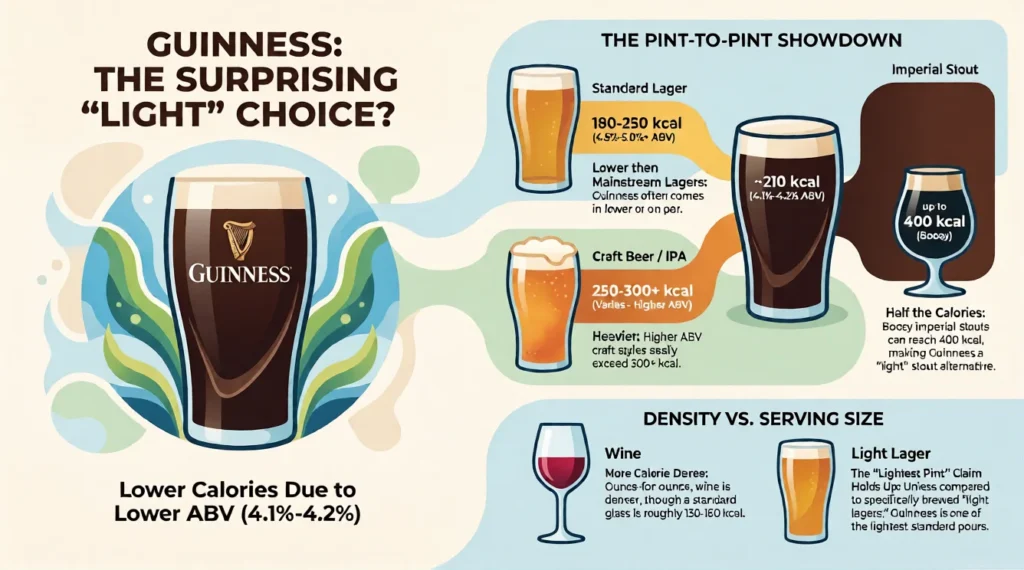
So the popular claim that Guinness is the lowest calorie beer vs Guinness comparisons often assume, meaning “Guinness is basically the lightest pint,” isn’t a myth. It holds up reasonably well against many mainstream options, though some light lagers specifically brewed to be low calorie can still beat it.
If you like building comparison habits into your routine, the way you’d compare cottage style low fat dairy options against regular dairy, or weigh red onion against white onion for sharpness and sugar content, treating beer the same way just makes sense.
Is Guinness Healthy?
This is where we need to be careful. Lower calorie does not mean health drink. Let’s separate fact from marketing, the same clear headed way you’d separate nutrition claims from packaging hype at the grocery store.
Is Guinness high in calories? No, not compared to most alcoholic drinks of similar serving size. Is a pint of Guinness fattening? Any alcohol, in excess, contributes to weight gain over time. Guinness isn’t magically exempt from that. But one pint, occasionally, isn’t going to derail a healthy pattern of eating.
Is Guinness healthier than other beers? It has a modest edge in calories, carbs, and often iron content compared to many lagers, according to widely cited nutrition comparisons. But healthier is relative. It’s still alcohol, and alcohol isn’t a health food no matter how it’s marketed.
Guinness and Weight Loss: Can It Fit?
Can you drink Guinness on a diet? Yes, in moderation. Does Guinness affect weight loss the same way other alcohol does? Mostly yes. The core issue with alcohol and weight loss isn’t the specific drink, it’s total calorie intake and how alcohol can lower inhibition around food choices later in the night, whether that’s a second pint or an extra plate of chicken.
If you’re tracking a Guinness calorie deficit, here’s the practical approach:
- Count the roughly 210 kcal into your daily total, don’t treat it as free.
- Choose Guinness over higher ABV craft beers if you’re comparing options at the bar.
- Watch the food that tends to follow drinking, that’s usually the bigger calorie risk, not the pint itself.
This is the same logic used for any smart meal planning habit as part of good fitness practice, like pairing a light broth based pho noodle soup instead of a creamy dish when you’re watching intake, or picking pickled beetroot as a low calorie side instead of something fried. Small swaps add up.
Does Guinness Have Fewer Calories Than Beer in General?
On average, yes. Many standard lagers and ales carry similar or higher calorie counts due to higher ABV or larger serving sizes in some markets. But it’s not a universal rule, much like how not every rice dish is automatically lighter than every chicken dish. Some light beers, specifically formulated to be low calorie (often under 100 kcal per 12 oz serving), can undercut Guinness per equivalent volume.
The fairest way to compare is always the same serving size and the same ABV bracket. Comparing a 568 ml Guinness against a 355 ml light lager isn’t apples to apples.
Guinness Draught vs Lager:
Beyond calories in Guinness Draught, there’s the carb and sugar angle. Guinness sugar vs beer comparisons generally favor Guinness, its official nutrition label shows very low sugar content per 100 ml. Guinness carbs vs lager is closer, since most lagers and stouts pull carbs from similar malt based brewing processes.
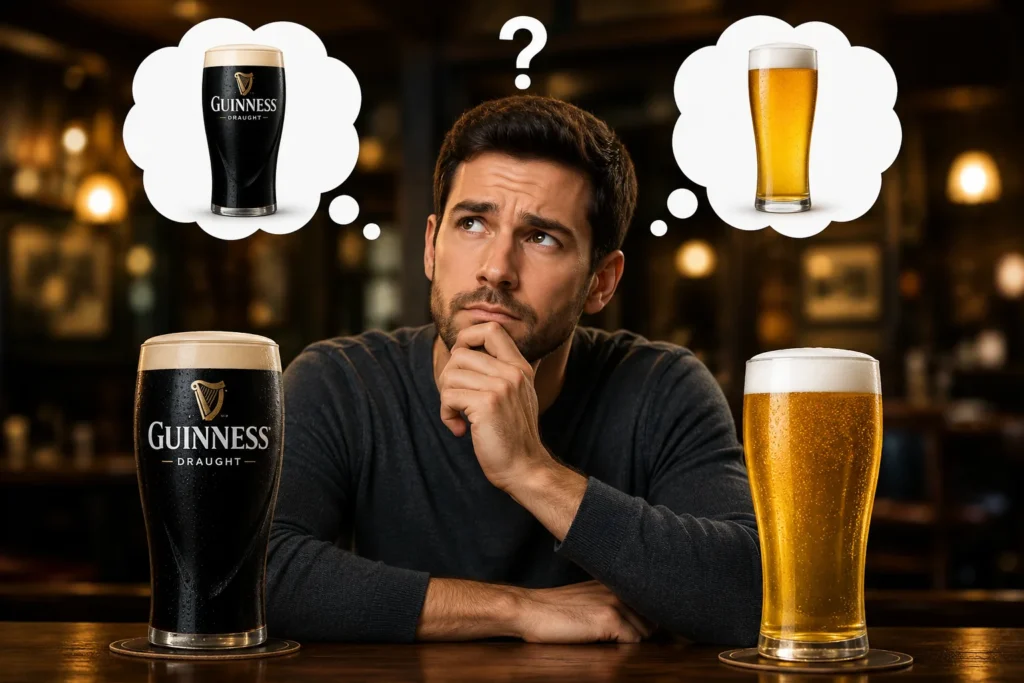
If nutrition tracking is part of your fitness routine, this kind of side by side comparison matters more than vague claims like “stout is heavy.” Read the actual label, not the color of the glass.
Practical Tips for Drinking Guinness Without the Guilt
- Stick to one pint if calories are a concern, the second pint doubles the math fast.
- Pair it with protein forward food like chicken, not deep fried bar snacks.
- Hydrate between pints, it slows consumption and total calorie intake naturally, the same discipline good fitness habits are built on.
- If you’re logging meals, treat Guinness like any other nutrition entry, weigh it against your daily goal instead of ignoring it, right alongside your rice.
The Guinness Calorie Myth, Busted
Here’s the myth that refuses to die: dark equals heavy. People assume Guinness must be loaded with calories because it looks rich, tastes roasted, and pours like it means business.
The truth is the opposite. Color comes from roasted barley, not sugar or fat. Roasting barley darkens the beer without adding meaningful calories, in the same way roasting red onion deepens its color without piling on extra calories. So the visual weight of Guinness is basically a magic trick. Your eyes are reading “heavy,” but the nutrition label is saying “moderate.”
This is worth remembering next time you’re picking between drinks at a party and someone insists the palest beer in the room is automatically the lightest one. It usually isn’t.
What Happens If You Drink Guinness Every Day?
One pint occasionally is easy to fit into a normal routine, the same way one indulgent meal doesn’t undo weeks of good nutrition. Daily is a different story, and this is where the math actually matters.
At roughly 210 kcal per pint, one Guinness a day adds close to 1,470 kcal a week, purely from the drink itself. That’s before counting the food that tends to show up alongside it. Over weeks and months, that adds up the same way any consistent calorie surplus does, regardless of the source.
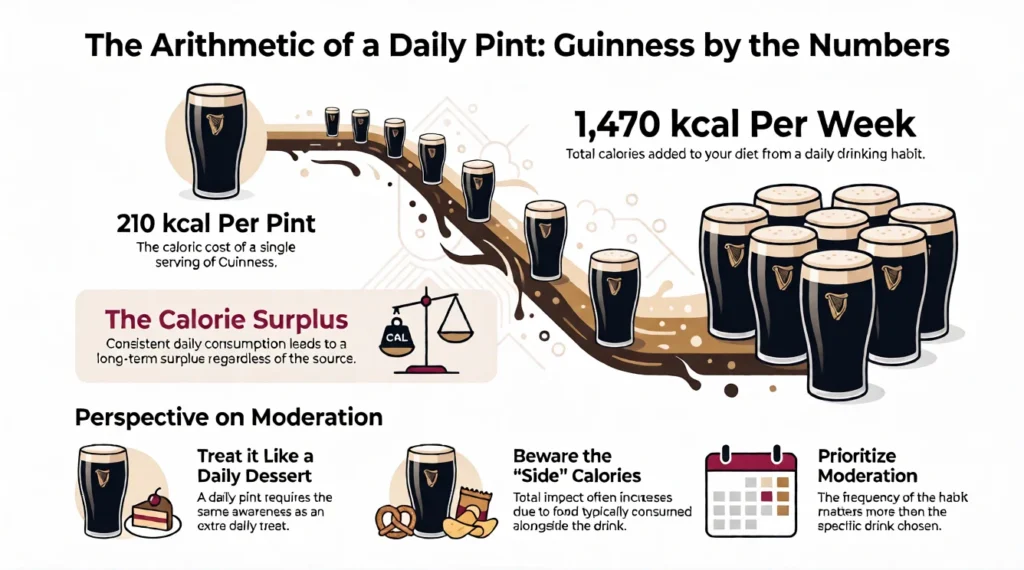
This isn’t a scare tactic, it’s just arithmetic. A daily pint isn’t dangerous on its own, but it deserves the same awareness you’d give a daily dessert or a daily extra portion. Moderation matters more than the specific drink.
Guinness Draught vs Guinness 0.0: The Real Calorie Gap
Guinness now sells an alcohol free version, Guinness 0.0, and the calorie difference is significant. Regular Draught sits around 210 kcal per pint. Guinness 0.0 comes in far lower, often close to a third of that per equivalent serving, since alcohol itself is a dense calorie source at 7 kcal per gram.
For anyone managing a Guinness calorie deficit, this is the single biggest lever available, a smarter swap than trimming a side dish or skipping a bowl of broth. Swapping even one regular pint for the 0.0 version in a week can meaningfully cut total intake without giving up the ritual of having a pint with dinner or after a match.
It’s not about giving up Guinness entirely, it’s about knowing where the real calorie difference actually lives, the same clarity good tracking gives you anywhere else in your diet
Does One Pint of Guinness Undo Your Workout?
No, not on its own. A 30 to 45 minute moderate workout, like a brisk walk, a cycle, or a light weights session, typically burns 200 to 400 kcal, depending on body weight and intensity. That roughly cancels out or beats the 210 kcal in a pint of Guinness.
But there’s a catch worth knowing before you celebrate. Alcohol can slightly blunt fat oxidation in the hours after you drink it, meaning your body temporarily prioritizes processing the alcohol over burning stored fat. It’s a short-term shift, not a permanent setback, and one pint isn’t going to erase a solid training session.
The Bottom Line
The calories in a pint of Guinness sit around 210, lower than most people assume, and often lower than the lager sitting next to it on tap. It’s not a diet drink, and it’s not a health food, but it’s a genuinely reasonable choice if you’re keeping an eye on intake, alongside honest choices about the rest of your plate too.
The real takeaway: don’t judge a pint by its color. Guinness earned its reputation as the surprisingly light stout for a reason, and the numbers back it up.
Calorie and nutrition figures in this article reflect commonly published data from Guinness and Diageo nutritional information as of recent years. Labeling can change, so check the official Guinness nutrition page for the latest confirmed numbers before citing exact figures elsewhere
Sources
- Guinness official website, nutrition information.
- Diageo, parent company nutrition disclosures.
- NHS, calories in alcohol guidance.
- USDA FoodData Central, beer and malt beverage entries.

Hi, I’m Salem Nasir, founder of Fiturely. I research and write evidence-based articles on fitness, nutrition, weight loss, and healthy living. My mission is to make reliable health information simple, practical, and easy to understand so readers can build healthier habits with confidence