
Key Takeaways
- Boneless, skinless chicken thighs are a protein-rich food that supports muscle growth and keeps you feeling full longer.
- They contain essential nutrients like niacin, vitamin B6, phosphorus, selenium, and zinc for overall health.
- Compared with chicken breast, chicken thighs are slightly higher in fat but offer a richer flavor and juicier texture.
- Grilling, baking, air frying, or roasting without excess oil helps keep the meal healthier.
- Pair chicken thighs with vegetables and whole grains for a balanced, nutrient-dense meal that supports weight management and fitness goals.
Boneless skinless chicken thighs are a rich source of high-quality protein, healthy fats, B vitamins, selenium, phosphorus, and zinc. They contain more fat and slightly more calories than chicken breast but remain an excellent choice for muscle growth, weight management, and balanced diets when prepared without excessive oil or breading.
Chicken thighs get a bad reputation they don’t really deserve. Ask ten people about boneless skinless chicken thigh nutrition, and at least seven will tell you breast meat wins, hands down. But the numbers tell a more interesting story. This guide breaks down every gram, vitamin, and mineral so you can decide for yourself, without the gym-bro myths.
 Boneless Skinless Chicken Thigh Nutrition Facts:
 Boneless Skinless Chicken Thigh Nutrition Facts:
These chicken thigh nutrition facts come from raw, boneless, skinless meat, based on USDA FoodData Central reference values. Cooking method changes the final numbers slightly, so treat these as a reliable baseline.
| Nutrient | Amount per 100g |
|---|---|
| Calories | 209 kcal |
| Protein | 26 g |
| Total Fat | 10.9 g |
| Saturated Fat | 2.9 g |
| Carbohydrates | 0 g |
| Sugar | 0 g |
| Fiber | 0 g |
| Sodium | 77 mg |
| Potassium | 229 mg |
| Cholesterol | 101 mg |
| Iron | 1.3 mg |
| Zinc | 2.4 mg |
| Selenium | 19 mcg |
| Vitamin B6 | 0.33 mg |
| Vitamin B12 | 0.36 mcg |
| Niacin | 6.5 mg |
| Phosphorus | 192 mg |
Zero carbs and zero sugar make this cut a natural fit for keto chicken thighs and any low-carb plate. It’s basically a blank canvas for macros.
Chicken Thighs vs Chicken Breast Nutrition
The chicken thigh vs chicken breast debate usually comes down to fat versus leanness. Here’s the side-by-side.
| Category | Chicken Thigh (100g) | Chicken Breast (100g) |
|---|---|---|
| Calories | ~209 kcal | ~165 kcal |
| Protein | ~26 g | ~31 g |
| Fat | ~10.9 g | ~3.6 g |
| Iron | ~1.3 mg | ~0.7 mg |
| Zinc | ~2.4 mg | ~1 mg |
| Flavor | Richer, juicier | Milder, drier |
| Best For | Flavor-forward meals | Strict lean-protein goals |
| Weight Loss | Good, in moderation | Slightly better on raw calories |
| Muscle Gain | Excellent | Excellent |
Neither cut is “bad.” Breast wins on raw leanness; thigh wins on iron, zinc, and taste. Pair either one with healthy rice options for a simple, balanced plate.
Why Are Boneless Skinless Chicken Thighs So Nutritious?
Complete Protein Source
Thigh meat delivers all nine essential amino acids, which makes it a high protein meat your body can actually use for repair and growth, not just a source of calories.
Rich in B Vitamins
B6, B12, and niacin all show up in solid amounts. These chicken thigh vitamins support energy metabolism, nerve function, and red blood cell production, the unglamorous jobs that keep you running.
Supports Muscle Recovery
The combination of protein and zinc helps repair muscle tissue after training. That’s one reason lifters keep coming back to this cut instead of skipping it for something leaner but less satisfying.
Higher Healthy Fat Content
Thighs carry more fat than breast, true, but a good share of it is unsaturated. This slightly higher chicken thigh fat content also helps your body absorb fat-soluble vitamins more efficiently.
Naturally Filling
Fat plus protein equals satiety. A serving of thigh meat tends to keep hunger away longer than an equal-calorie plate of something carb-heavy, which matters if you’re managing healthy lunch ideas during a busy week.
Health Benefits of Boneless Skinless Chicken Thighs
Helps Build Lean Muscle
With roughly 26g of chicken thigh protein per 100g, this cut supports muscle protein synthesis just as well as most other lean meats on the market.
Supports Weight Management
Despite the extra fat, thighs still fit comfortably into a calorie-controlled diet. Portion control matters more than the cut itself.
Keeps You Full Longer
The fat content slows digestion, which reduces snacking urges later in the day, a small but real win for anyone tracking intake.
Supports Immune Function
Zinc and selenium both play direct roles in immune defense. A single serving covers a meaningful chunk of your daily needs for both.
Boosts Energy Production
B vitamins convert food into usable energy. Thighs are quietly one of the better everyday sources of this vitamin group among lean protein foods.
Supports Bone Health
Phosphorus works alongside calcium to maintain bone density, and chicken thighs provide a solid dose per serving, around 192mg per 100g.
Good Source of Selenium
Selenium acts as an antioxidant and supports thyroid function. Chicken thighs deliver close to a third of the daily requirement in a single 100g serving.
Is Boneless Skinless Chicken Thigh Good for Weight Loss?
Yes, with some common sense attached. A 100g serving sits around 209 calories, which isn’t drastically higher than breast meat. The real variable is portion size. Two thighs (roughly 168g raw) can quietly push past 350 calories before any oil or sauce enters the picture.
Cooking method changes everything. Grilling, baking, or air frying keep the fat count close to the natural value. Frying in batter adds calories fast, and that’s where thighs earn their unfair reputation.
For meal planning, thighs work well rotated with high-protein lunch options and paired with fiber-rich vegetables to stretch fullness without stretching your calorie budget. Weigh your portions once or twice to calibrate your eye, then you’re set.
Is Chicken Thigh Better Than Chicken Breast?
“Better” depends entirely on the goal. Here’s a practical comparison.
| Factor | Chicken Thigh | Chicken Breast |
|---|---|---|
| Taste | Richer, more forgiving | Mild, needs seasoning |
| Calories | Slightly higher | Lower |
| Fat | Higher | Lower |
| Protein | High | Slightly higher |
| Cost | Usually cheaper | Usually pricier |
| Juiciness | Naturally juicy | Dries out easily |
| Meal Prep | Holds up well reheated | Can turn rubbery |
| Best Choice | Flavor, budget, meal prep | Strict lean-calorie goals |
For most people cooking at home, thighs are more forgiving. They’re harder to overcook and cheaper per pound, which matters over a month of grocery runs.
Boneless Skinless Chicken Thigh Calories by Serving Size
Skinless chicken thighs calories scale predictably with weight. Here’s a quick reference table for planning meals without pulling out a calculator every time.
| Serving Size | Approximate Calories |
|---|---|
| 100g | ~209 kcal |
| 4 oz (113g) | ~236 kcal |
| 5 oz (142g) | ~297 kcal |
| 6 oz (170g) | ~355 kcal |
| 1 thigh (~84g avg) | ~175 kcal |
| 2 thighs (~168g avg) | ~350 kcal |
Weights vary by bird size and trimming, so treat these as close estimates rather than exact science.
Best Cooking Methods to Keep Chicken Thighs Healthy
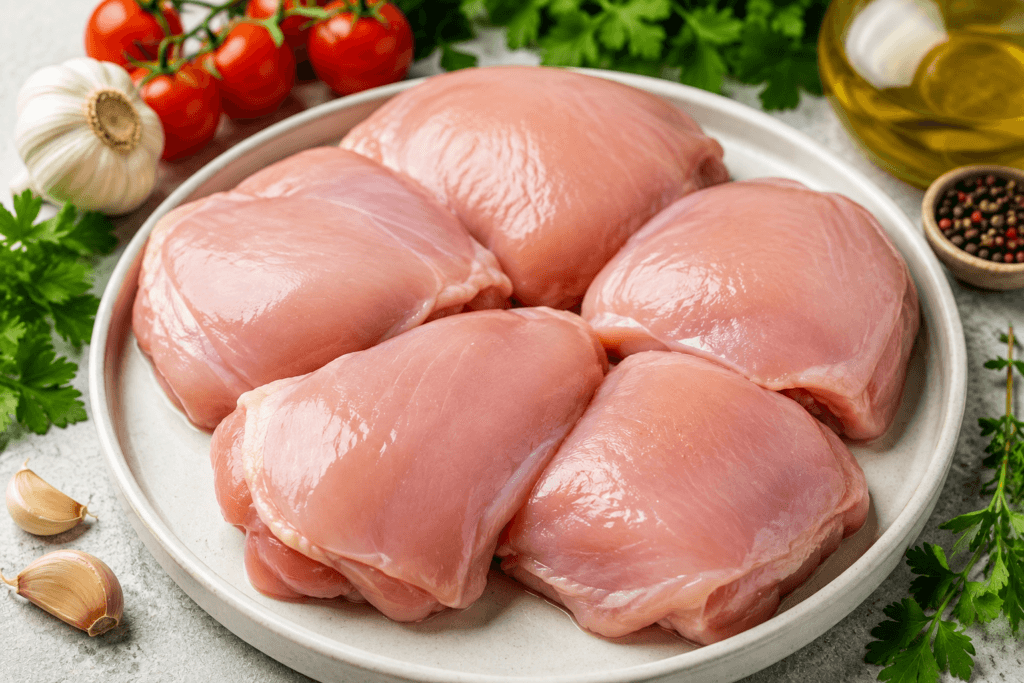
The cut isn’t what makes chicken thighs unhealthy, the cooking method usually is. Here’s a closer look at each option, with actual temperatures, times, and the reasoning behind why they keep the nutrition profile intact.
Air Fryer
Set the air fryer to 380°F and cook for 18-20 minutes, flipping halfway through. Hot circulating air crisps the outside using little to no added oil, sometimes just a light spray. This matters because deep frying can add 100+ extra calories per serving from oil absorption alone, while air frying keeps that number close to zero. The result is a crispy texture without the calorie penalty, which is exactly why air frying has become a go-to for healthy chicken thighs.
Tip: Pat the meat dry before cooking. Excess surface moisture steams the chicken instead of crisping it, and you lose that satisfying texture.
Oven Baked
Roast at 400°F for 25-30 minutes, until internal temperature hits 165°F on a meat thermometer. No oil is required at all, since chicken thighs already carry enough natural fat to stay moist on their own. This is why baked chicken thigh nutrition stays almost identical to the raw values in the nutrition table above, nothing is added, and nothing meaningful is lost.
Tip: Line the tray with parchment paper instead of foil coated in oil. It prevents sticking without adding fat.
Grilled
Grill over medium-high heat for 6-8 minutes per side. As the meat cooks, some of the internal fat renders out and drips through the grates. That’s why grilled chicken thigh nutrition often comes out slightly leaner than the raw weight suggests, the fat that leaves the meat doesn’t end up on your plate.
Tip: Avoid pressing down on the meat with a spatula. It squeezes out moisture along with the fat, leaving the chicken drier than it needs to be.
Pressure Cooked
Pressure cooking (Instant Pot style) needs just 8-10 minutes on high pressure plus natural release, with no oil in the pot at all. The sealed, high-pressure environment locks moisture inside the meat instead of letting it evaporate, so the chicken stays tender without any added fat. This makes it one of the most efficient options for meal prep chicken thighs, since you can cook a full batch in under 15 minutes total.
Tip: Add broth or water at the bottom of the pot, never oil, it’s not needed for moisture here.
Pan Seared
Heat a teaspoon of olive oil in a pan over medium heat and cook 6-7 minutes per side. This method builds a golden, flavorful crust fast, but it’s the one place where oil quantity actually matters for the final calorie count. A teaspoon adds roughly 40 calories to the dish; a tablespoon adds closer to 120. If you’re tracking intake closely, measure the oil instead of eyeballing it.
Tip: A non-stick or well-seasoned cast iron pan lets you use less oil while still getting a good sear.
Foods That Pair Well with Chicken Thighs
Building a balanced meal idea around thigh meat is straightforward. Here are reliable pairings.
| Pairing | Why It Works |
|---|---|
| Brown Rice | Complex carbs, steady energy |
| Quinoa | Complete plant protein, extra fiber |
| Sweet Potato | Micronutrient-dense carb source |
| Broccoli | Fiber and vitamin C |
| Spinach | Iron and folate boost |
| Avocado | Source of healthy fats |
| Mixed Vegetables | Volume and micronutrients |
Rotating these sides keeps meals interesting and prevents the dreaded “chicken and rice every single day” fatigue that derails most diets by week three.
Who Should Eat Boneless Skinless Chicken Thighs?
- Athletes: steady protein and B vitamins for recovery
- Women: iron and zinc support common dietary gaps
- Seniors: easy to chew, nutrient-dense, gentle on digestion
- Kids: mild flavor, good fat for growth
- Diabetics: zero carbs, minimal blood sugar impact
- Weight Lifters: protein plus fat supports training demands
- Keto Diet: fits macros with almost no adjustment
- Low Carb Diet: zero carbohydrate content by nature
Who Should Limit Chicken Thigh Consumption?
- High cholesterol: the extra saturated fat and cholesterol may warrant moderation
- Heart disease: portion control and cooking method both matter more here
- Sodium-sensitive individuals: processed or marinated versions often carry hidden sodium, unlike fresh cuts
- Fried chicken lovers: the cooking method, not the meat, is usually the real issue
This is also where the line between processed meat vs fresh chicken becomes genuinely important. Fresh, unseasoned thighs are a different food entirely from breaded, fried, or heavily marinated versions.
Boneless Skinless Chicken Thighs for Different Goals
| Goal | Recommendation |
|---|---|
| Weight Loss | Bake or grill, watch portion size |
| Muscle Gain | Pair with complex carbs post-workout |
| Keto | Ideal as-is, zero carbs |
| High Protein | 2 thighs covers a substantial protein target |
| Low Carb | Naturally compliant |
| Meal Prep | Reheats well without drying out |
| Healthy Family Meals | Budget-friendly, kid-approved flavor |
How Much Chicken Thigh Should You Eat Per Day?
General protein guidance suggests 0.8g per kg of bodyweight for most adults, and higher, closer to 1.6–2.2g per kg, for active individuals. Translating that into thighs:
- Adults: roughly 4-6 oz per meal covers a solid protein serving without overdoing calories.
- Athletes: may need 2-3 servings daily across meals to hit higher chicken thigh macros targets.
- Seniors: smaller, more frequent servings support digestion and consistent protein intake through the day.
There’s no single magic number. Total daily protein needs matter more than any one meal, so build around your overall goals rather than a fixed thigh count.
Common Mistakes When Eating Chicken Thighs
- Frying: turns a lean-ish cut into a calorie-dense one fast
- Extra oil: pan searing with too much oil quietly doubles fat content
- Skin-on confusion: skin-on thighs carry meaningfully more fat and calories than boneless skinless
- Oversized portions: “one thigh” varies wildly in actual weight
- Sugary sauces: barbecue and teriyaki sauces add hidden sugar fast
- Processed marinades: often loaded with sodium and preservatives
Sticking to whole, unprocessed preparations keeps this protein rich food working in your favor instead of against it.
Frequently Asked Questions
Are boneless skinless chicken thighs healthy?
Yes. They provide high-quality protein, B vitamins, zinc, and selenium, and fit into most balanced diets when prepared without excess oil or breading.
Are chicken thighs higher in fat than chicken breast?
Yes, thighs contain roughly three times the fat of breast meat per 100g, though a meaningful portion is unsaturated fat.
Can I eat chicken thighs every day?
Generally yes, as part of a varied diet. Rotating protein sources still supports broader nutrient intake over time.
Are chicken thighs good for bodybuilding?
Yes. The protein content supports muscle repair, and the extra calories from fat can help those in a muscle-building phase hit daily targets.
Are boneless skinless chicken thighs keto friendly?
Absolutely. Zero carbs and a solid fat-to-protein ratio make them one of the easier proteins to fit into a ketogenic plan.
How much protein is in one chicken thigh?
An average thigh (around 84g) provides roughly 21–22g of protein, though size varies by source.
Are chicken thighs inflammatory?
Fresh, unprocessed chicken thigh meat isn’t considered inflammatory. Heavily fried or processed preparations are a different story.
Which is healthier: baked or fried chicken thighs?
Baked, by a wide margin. Frying adds significant calories and unhealthy fat from the cooking oil itself.
Do chicken thighs contain iron?
Yes, around 1.3mg per 100g, more than chicken breast, making them a decent contributor to daily iron intake.
Can diabetics eat chicken thighs?
Yes. With zero carbohydrates, chicken thighs have minimal direct impact on blood sugar, making them a safe protein choice.
Final Thoughts
Boneless skinless chicken thighs aren’t the diet villain they’re sometimes made out to be. They bring solid protein, useful minerals, and genuine flavor to the table, and the extra fat compared to breast meat is modest, not alarming. Cooking method and portion size decide the outcome far more than the cut itself.
Whether you’re building muscle, managing weight, or just tired of dry chicken breast, thighs deserve a regular spot in your rotation. Pair them with balanced meal ideas, a few healthy side dishes, and reasonable portions, and you’ve got a genuinely solid chicken nutrition guide staple sitting right there on your plate.
Sources:
- USDA FoodData Central: primary reference for raw chicken thigh nutrient values
- USDA Dietary Guidelines for Americans: general protein and macronutrient intake guidance
- Harvard T.H. Chan School of Public Health, The Nutrition Source: reference for protein quality and dietary fat context
Figures are approximate and reflect raw, boneless, skinless chicken thigh meat unless otherwise noted. Always check current USDA data for the most precise values, as database entries are periodically updated

Hi, I’m Salem Nasir, founder of Fiturely. I research and write evidence-based articles on fitness, nutrition, weight loss, and healthy living. My mission is to make reliable health information simple, practical, and easy to understand so readers can build healthier habits with confidence
Pingback: Kidney Beans Nutrition: Calories, Protein, Fiber & Surprising Benefits - fiturely.com
Pingback: Medjool Dates Nutrition: Calories, Benefits & Facts - fiturely.com