
To brew green tea, heat fresh water to 160 to 180°F (70 to 80°C), add 1 teaspoon of loose leaf green tea per 8 oz, and steep for 1 to 3 minutes. Strain the leaves right away. Avoid boiling water, which makes green tea bitter. Re-steep good leaves two or three times for a smooth, sweet, balanced flavor.
How Do You Brew Green Tea?
To brew great green tea, use about 1 teaspoon (2 g) of loose leaf green tea per 8 oz (240 ml) of water at 160-180°F (70-80°C). Steep for 1-3 minutes, then remove the leaves. That is the best way to prepare green tea for most beginners.
That single line covers the core of how to make green tea. The rest of this guide explains why each step matters, so you can fix problems and tune the flavor to your own taste.
The 60-Second Green Tea Cheat Sheet: 5 Numbers for a Perfect Cup
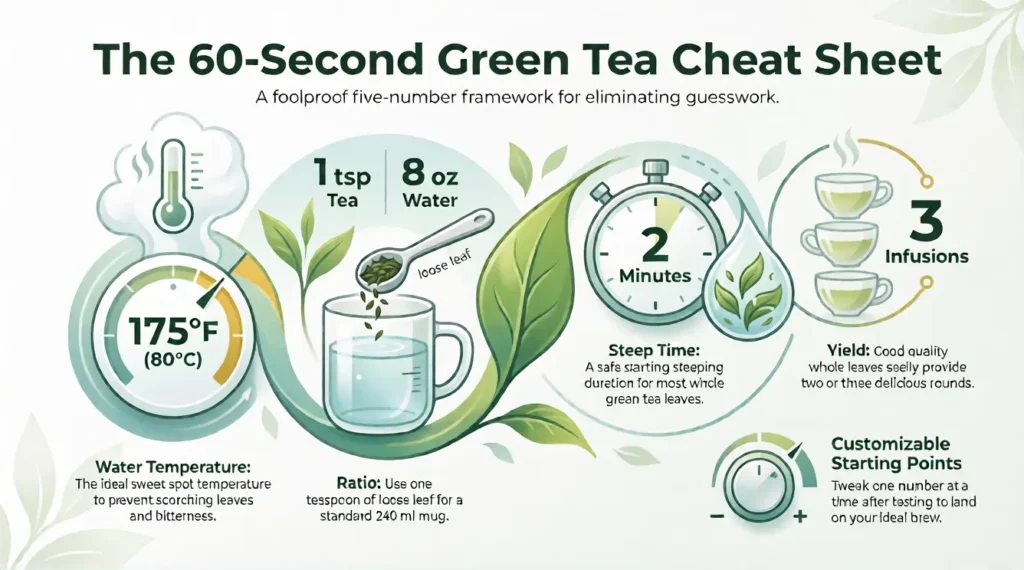
Forget the guesswork. Remember five numbers and your green tea turns out smooth every time: 175°F, 2 minutes, 1 teaspoon, 8 oz, and 3 infusions. Screenshot this section and stick it on your fridge.
Here is the green tea brewing method in a nutshell:
- 175°F (80°C): the sweet spot for green tea water temperature
- 2 minutes: a safe green tea steeping time for most leaves
- 1 teaspoon: the right green tea leaves to water ratio for loose leaf green tea
- 8 oz (240 ml): one standard mug of water
- 3 infusions: good whole leaves often give you two or three rounds
These are starting points, not laws. Taste your first cup, tweak one number, and you will land on your perfect cup of green tea fast.
What Is Green Tea, and Why Does Brewing Matter So Much?
Green tea comes from the Camellia sinensis plant. Unlike black tea, the leaves are heated soon after picking to stop oxidation, which keeps them green and preserves their delicate flavor. This is also why green tea is far more sensitive to heat than black tea.
The NIH’s National Center for Complementary and Integrative Health (NCCIH) notes that green tea and black tea both come from this same plant. A true herbal tea, like chamomile or peppermint, does not. It is an infusion of other plants, so the rules for brewing it are different.
In short, a gentle green tea brewing method protects the flavor and keeps bitterness low. Rough treatment does the opposite.
What Do You Need to Prepare Green Tea at Home?
You need only a few basics: good leaves, fresh filtered water, a kettle, a mug or teapot, and a timer. A thermometer helps, but it is optional. That is the whole green tea preparation kit.
Here is a simple checklist:
- Loose leaf green tea or green tea bags
- Fresh, cold water (filtered if your tap tastes strong)
- A kettle (or a small pot)
- A mug, teapot, or infuser basket
- A timer (your phone is fine)
Pre-warm your mug with hot water first. It keeps the temperature steady during the infusion. Tiny step, noticeable difference.
What Temperature Should Water Be for Green Tea?
Most green tea tastes best with water between 160°F and 180°F (70–80°C). Delicate Japanese teas like gyokuro prefer even cooler water, around 140–160°F. Boiling water at 212°F (100°C) pulls out too much bitter compounds.
This is the key to green tea water temperature. The bitter, astringent taste comes mainly from catechins, a group of antioxidants that dissolve faster in hotter water. Cooler water extracts the sweeter amino acids first, which gives a smoother cup.
Should You Boil Water for Green Tea?
Yes, boil it, then let it cool. Do not pour it straight onto the leaves. Wait about 2–3 minutes after the kettle clicks off, and you will land close to 175°F.
No thermometer? Here is a handy trick: pour the boiled water into your mug first, then into your teapot. Each transfer drops the temperature by roughly 10°F. Ancient technology, zero gadgets.
How Long Should You Steep Green Tea?
For most green tea, steep for 1 to 3 minutes. Thin, delicate leaves like sencha need around 1–2 minutes, while heartier Chinese green tea can take up to 3. Going past that is the fastest route to a bitter cup.
This is the heart of green tea steeping time, and it answers how long to steep green tea and how many minutes to steep green tea in one go. Steeping is not a “more is better” game. Set a timer and trust it.
One more thing: remove the leaves when time is up. Leaving them in the mug keeps the infusion going, and your cup keeps getting harsher with every sip.
How Much Green Tea Leaves Per Cup?
Use about 1 teaspoon (roughly 2 grams) of loose leaf green tea per 8 oz (240 ml) of water. Use a little more for fluffy, whole-leaf teas and a little less for dense, rolled ones. This is the standard green tea leaves to water ratio.
Here is a quick guide for how much green tea leaves per cup:
- Small cup (6 oz): about ¾ teaspoon
- Standard mug (8 oz): 1 teaspoon
- Large mug (12 oz): 1½ teaspoons
Start here, then adjust. Too weak? Add a pinch more next time. Too strong? Shorten the steeping time before you cut the leaves.
How to Brew Loose Leaf Green Tea Step by Step
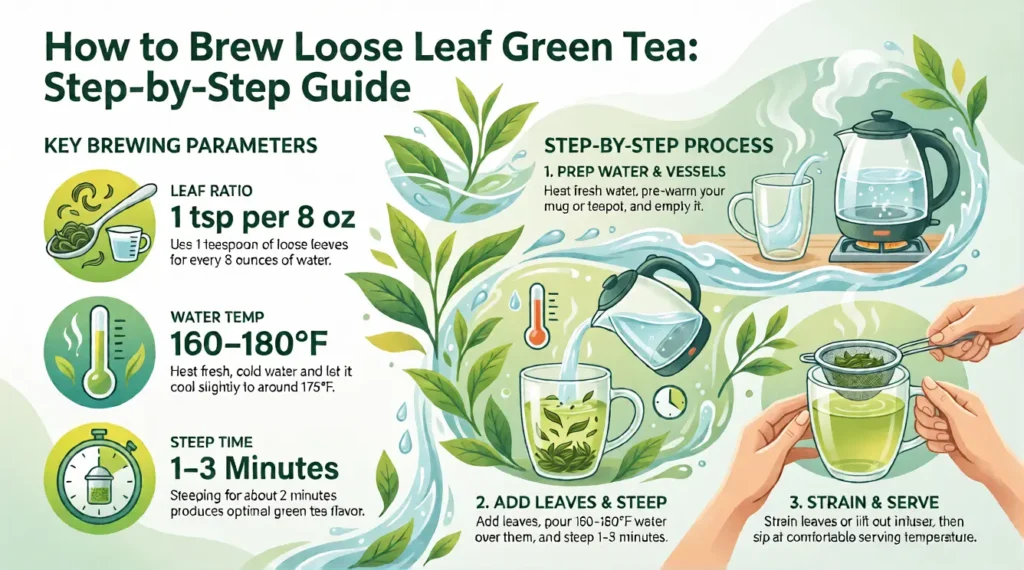
Heat fresh water, let it cool to about 175°F, add 1 teaspoon of leaves per cup, steep for 2 minutes, and strain. That is the full green tea brewing instructions for loose leaf green tea. It takes under five minutes.
Here is the hot green tea recipe in order:
- Fill your kettle with fresh, cold water and heat it.
- Pre-warm your teapot or mug, then empty it.
- Add the leaves (1 teaspoon per 8 oz).
- Pour water at 160-180°F over the leaves.
- Steep for 1-3 minutes.
- Strain or lift out the infuser.
- Sip when it reaches a comfortable green tea serving temperature.
This simple recipe is how to brew green tea at home for the perfect cup of green tea, and it works as a fresh green tea recipe for any quality loose leaf you buy.
How to Brew Green Tea With Tea Bags
For green tea bags, use one bag per 8 oz of water at about 175°F. Steep for 2-3 minutes, then lift the bag out without squeezing it. Squeezing releases extra tannins and adds bitterness.
Many bags contain finely cut leaves, which release flavor quickly. That is why the short steeping window matters even more here. If the box suggests a time, start with the shorter end.
Bags are convenient, and there is no shame in the tea bag. They just tend to have a flatter flavor than whole leaves.
How to Make Green Tea Without a Kettle
You can heat water in a small pot on the stove or in a microwave-safe mug. Bring it to a gentle boil, then let it cool for a few minutes before pouring. The leaves only care about the final temperature, not the gadget.
A stovetop pot works well. Watch for small bubbles, which signal roughly 160-180°F, and pull it off the heat before a full boil. For microwaves, stop when you see steam and tiny bubbles, and stir gently before use to avoid uneven hot spots.
This is the easiest answer to how to make green tea without a kettle when you are in a dorm, office, or rental with a weak stove.
Green Tea Brewing Guide by Type (Comparison Table)
Different styles of green tea need slightly different settings. Use this table as a quick reference. It covers Japanese green tea preparation, Chinese green tea brewing, and flavored options like jasmine.
| Tea Type | Water Temperature | Steeping Time | Amount per 8 oz | Flavor Notes |
|---|---|---|---|---|
| Sencha (Japan) | 160-175°F (70-80°C) | 1-2 min | 1 tsp | Fresh, grassy, slightly sweet |
| Gyokuro (Japan) | 140-160°F (60-70°C) | 1.5-2 min | 1½ tsp | Rich, savory, mellow |
| Jasmine green tea (China) | 170-180°F (77-82°C) | 2-3 min | 1 tsp | Floral, light, aromatic |
| Dragon Well / Longjing (China) | 170-180°F (77-82°C) | 2-3 min | 1 tsp | Nutty, smooth, gentle |
| Matcha (Japan) | 160-175°F (70-80°C) | Whisk, no steeping | ½-1 tsp powder | Creamy, bold, vegetal |
| Green tea bags | 175°F (80°C) | 2-3 min | 1 bag | Mild, simple, slightly flat |
Note that matcha is different. You whisk the powdered whole leaf into water rather than straining it out, so you actually consume the leaf.
How to Brew Japanese Green Tea
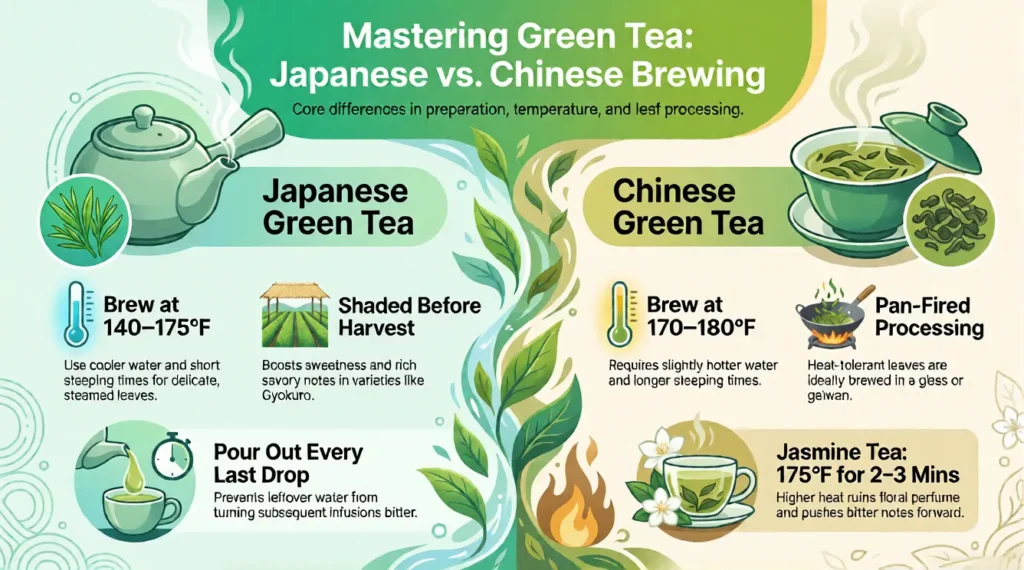
For Japanese green tea preparation, use cooler water (140-175°F) and short steeping times. Steamed Japanese leaves, such as sencha, are delicate and fast to release flavor. A small teapot with a fine strainer works best.
Japanese growers often shade tea plants before harvest to boost sweetness and savory notes. That is why gyokuro tastes so rich, and also why it punishes hot water. Treat it kindly.
Pour out every last drop from the pot after each infusion. Leftover water sitting on leaves turns the next round bitter.
How to Brew Chinese Green Tea
For Chinese green tea brewing, use slightly hotter water (170–180°F) and slightly longer steeping. Many Chinese green tea leaves are pan-fired rather than steamed, so they can handle a bit more heat. Many people brew them in a glass or gaiwan.
Jasmine tea is a popular example: green leaves scented with jasmine blossoms. It brews well at around 175°F for 2–3 minutes. Go hotter and the floral perfume fades while the bitter notes push through.
How to Make Iced Green Tea at Home
For iced green tea, brew a strong hot batch and pour it over ice, or cold brew in the fridge. Hot method: use 1½ teaspoons per cup, steep 2 minutes, then chill. Cold brew: steep 1 teaspoon per cup in cold water for 6-8 hours.
Cold brewing is the gentlest route to green tea without bitterness, because cold water extracts fewer catechins. It is also nearly foolproof. Mix it, forget it, thank yourself tomorrow.
Store it in a sealed container in the fridge and drink within about 2-3 days for the best flavor and freshness.
Why Does My Green Tea Taste Bitter?
Bitter green tea almost always comes from water that is too hot, steeping that runs too long, or too many leaves. Fix any one of these and the flavor improves right away. These are the most common green tea brewing mistakes.
The main culprits behind a harsh cup:
- Using boiling water straight from the kettle
- Steeping for 5 minutes (or “just forgetting it”)
- Squeezing the tea bag
- Reusing old, stale leaves
- Using hard or heavily chlorinated water
This section is your how to brew green tea without bitterness cheat sheet. Lower the temperature first, since it has the biggest effect.
How to Make Green Tea Taste Better
For green tea taste improvement, use fresher leaves, filtered water, and lower temperatures. A thin slice of lemon, a dab of honey, or a few mint leaves can also lift the flavor without hiding it.
Store your tea in an airtight, opaque container away from heat, light, and moisture. Stale leaves taste flat no matter how perfect your brewing is. Buy smaller bags more often if you drink green tea slowly.
These tweaks answer how to make green tea taste better and how to brew green tea for maximum flavor, and they are the secret behind homemade green tea that rivals a cafe cup. You can also brew green tea without losing flavor by covering your mug while it steeps to trap the aroma.
Can You Steep Green Tea Twice?
Yes. Good loose leaf green tea can be steeped 2–3 times. Use slightly hotter water and a shorter time for later rounds, and the flavor often shifts in interesting ways. The second cup is often the sweetest.
Each infusion reveals a new layer, which is a big reason tea lovers prefer whole leaves. Green tea bags usually give one decent cup, so re-steeping them is less rewarding.
What Does Green Tea Contain? Caffeine, Catechins, and Antioxidants
An 8 oz cup of brewed green tea has roughly 25–45 mg of caffeine, compared with about 95 mg in a similar cup of coffee. That makes green tea caffeine content a gentle option. The FDA says 400 mg of caffeine a day is generally not linked to negative effects for most healthy adults.
Green tea is also known for catechins, with EGCG being the best-known one, and for other antioxidants. These compounds explain much of the green tea antioxidants buzz online.
What Are the Green Tea Health Benefits?
The research is promising but mixed, so avoid miracle claims. Harvard’s T.H. Chan School of Public Health notes that tea is rich in polyphenols and may support heart health, though evidence is still developing. The NCCIH also states that drinking green tea is generally safe, while very high doses of green tea extract supplements have been linked to liver problems.
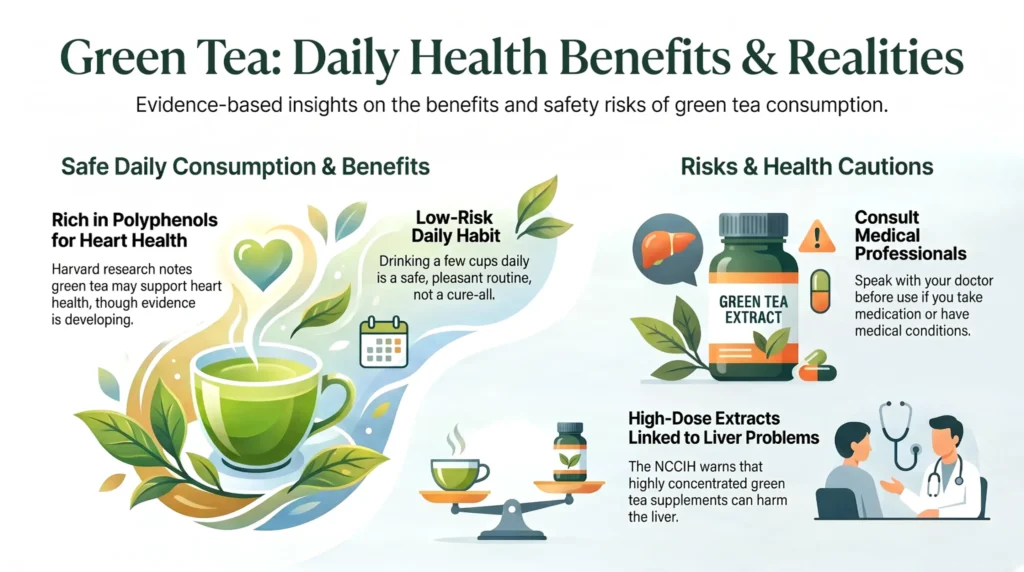
So the honest summary of green tea health benefits: a few cups a day is a pleasant, low-risk habit, not a cure-all. If you have a medical condition or take medication, talk to your doctor.
What Is the Best Green Tea Serving Temperature?
Let your green tea cool to a comfortable sip, ideally well below scalding. The International Agency for Research on Cancer (IARC) classified drinking very hot beverages (above about 149°F or 65°C) as “probably carcinogenic to humans” in 2016. So patience is also good for you.
A good green tea serving temperature is usually around 130–150°F. Your tongue will notice the sweeter flavor at this range anyway.
Mistakes to Avoid When You Brew Green Tea
The biggest green tea brewing mistakes are boiling-hot water, over-steeping, and stale leaves. Others include skipping the measure, using too little water, and leaving the leaves in the mug. Avoid these and you are ahead of most home brewers.
A quick fix list:
- Measure the leaves, do not eyeball them
- Cool the water for a couple of minutes
- Set a timer every time
- Remove the leaves when done
- Store tea airtight and dry
7 Pro Tricks for Smoother, Sweeter Green Tea (Cafes Rarely Mention These)
The small habits matter more than expensive gear. These seven tricks lower bitterness, protect the flavor, and make homemade green tea taste like it came from a tea shop. Most take under ten seconds.
- Pour from a height difference, not a boil. Move boiled water from the kettle to a pitcher, then to the mug. Each switch cools it a little.
- Rinse the leaves quickly. Some tea drinkers pour a splash of warm water over the leaves and discard it. It wakes them up before the real infusion.
- Use a glass teapot or clear mug. Watching the leaves unfurl helps you judge steeping by eye, and it is oddly relaxing.
- Steep short first, longer second. Start with about 1 minute, then add 30 seconds each round. You get a gentler first cup and a fuller second.
- Try a squeeze of lemon. A small lab study from Purdue University (2007) found citrus juice helped more catechins stay available after digestion. It also brightens the flavor.
- Cold brew the bitter-prone teas. If a certain sencha always tastes harsh, steep it overnight in the fridge for a naturally sweeter cup.
- Keep tea away from your spice rack. Leaves absorb smells easily. Store them airtight, dark, and dry.
Pick one trick tonight and test it. Your next cup of green tea will taste different, and your taste buds will tell you so.
Final Thoughts:
The perfect cup of green tea comes down to three levers: water at 160-180°F, steep for 1-3 minutes, and about 1 teaspoon of leaves per cup. Adjust slightly for sencha, jasmine, or matcha, and enjoy the smoother flavor.
Now you know how to make the perfect cup of green tea whether you are a beginner or a seasoned tea drinker. Start with the basics, tweak one variable at a time, and let your own taste decide.
Sources
- NIH National Center for Complementary and Integrative Health (NCCIH): Green Tea
- U.S. Food and Drug Administration (FDA): Spilling the Beans: How Much Caffeine Is Too Much?
- Harvard T.H. Chan School of Public Health, The Nutrition Source: Tea
- International Agency for Research on Cancer (IARC), 2016 evaluation of drinking very hot beverages
- USDA FoodData Central: brewed green tea

Hi, I’m Salem Nasir, founder of Fiturely. I research and write evidence-based articles on fitness, nutrition, weight loss, and healthy living. My mission is to make reliable health information simple, practical, and easy to understand so readers can build healthier habits with confidence