
Dried mango nutrition makes this tropical snack much more than a convenient treat. Packed with vitamins, minerals, fiber, and natural fruit compounds, dried mango can provide a concentrated source of nutrients when eaten in moderation.
Many people reach for chips or candy when they want a quick snack. However, dried mango offers naturally occurring nutrients that support overall health while satisfying sweet cravings. The key is understanding what dried mango contains, how it compares to fresh mango, and how to enjoy it as part of a balanced diet.
In this guide, you’ll learn everything about dried mango nutrition, including calories, vitamins, minerals, health benefits, and practical ways to add this nutrient-dense snack to your daily routine.
What Is Dried Mango?
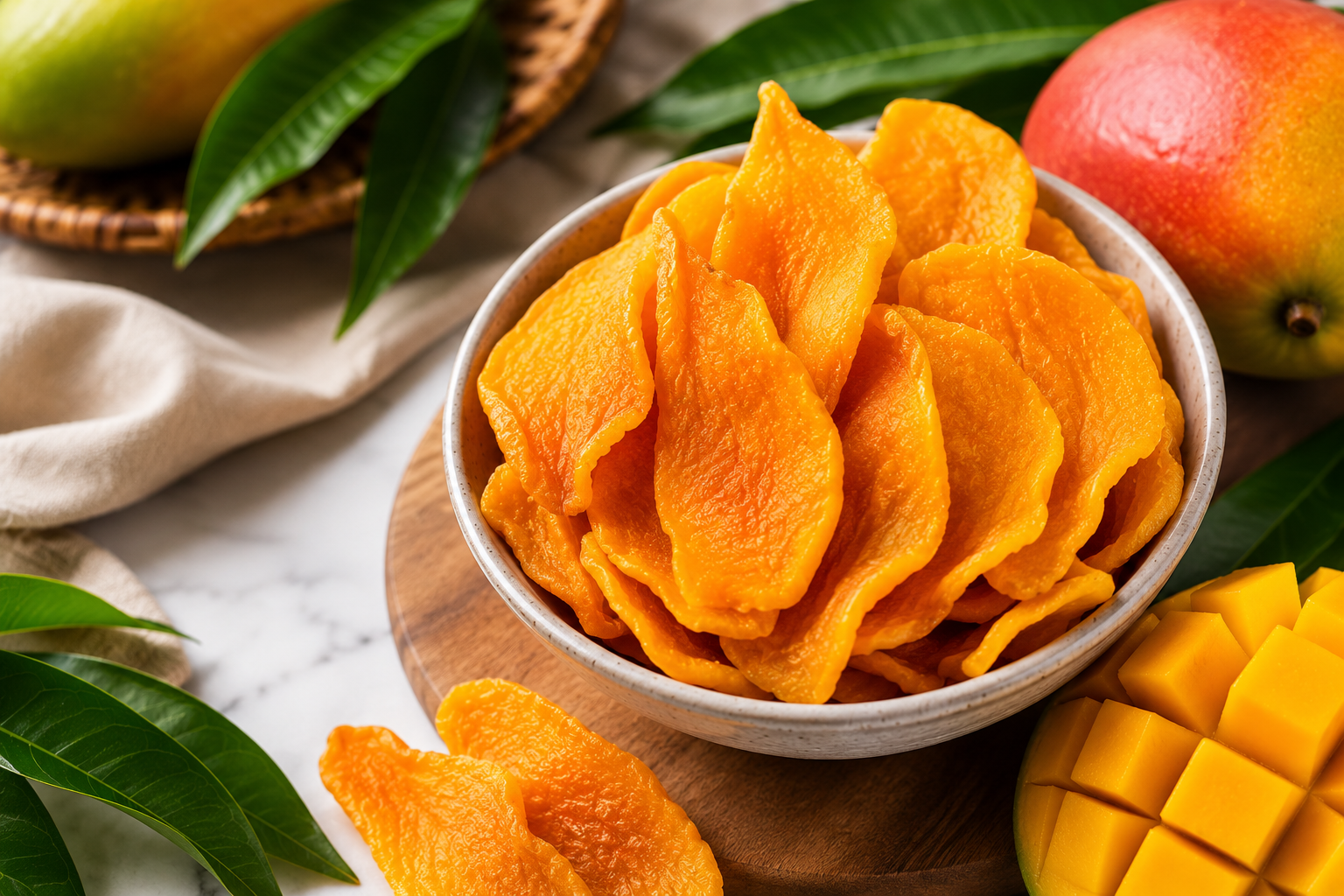
Dried mango is fresh mango that has had most of its water removed through dehydration. This process extends shelf life while concentrating the fruit’s natural sugars, flavor, and many nutrients.
Because water is removed, dried mango becomes smaller and denser than fresh mango. This means a handful contains more calories and nutrients than the same volume of fresh fruit.
The result is a portable, shelf-stable snack that delivers tropical flavor year-round.
What Are the Nutrition Facts of Dried Mango?
Dried mango provides carbohydrates, dietary fiber, vitamins, and minerals in a compact serving.
A typical 40-gram serving (about ¼ cup) of unsweetened dried mango generally contains:
- Calories: 120–140
- Carbohydrates: 30–35 grams
- Natural sugars: 25–30 grams
- Fiber: 2–3 grams
- Protein: 1 gram
- Fat: Less than 1 gram
- Potassium: Approximately 150–250 mg
- Vitamin A: Meaningful amounts depending on processing
- Vitamin C: Small to moderate amounts depending on drying methods
Exact values vary by brand, variety, and whether sugar has been added.
Is Dried Mango a Nutrient-Dense Snack?
Yes. Dried mango qualifies as one of the more nutrient-dense snacks available compared with many processed snack foods.
Unlike candies and pastries that mainly provide added sugar and refined ingredients, dried mango contributes vitamins, minerals, antioxidants, and fiber.
The combination of natural fruit sugars and fiber can help provide sustained energy compared with highly processed sugary snacks.
For people seeking healthier alternatives to traditional snack foods, dried mango can be a smart option when portion sizes are controlled.
Why Is Vitamin A in Dried Mango Important?
One of the standout nutrients in dried mango nutrition is vitamin A.
Vitamin A supports:
- Normal vision
- Immune function
- Skin health
- Cell growth
- Reproductive health
Mangoes naturally contain beta-carotene, a plant pigment that the body converts into vitamin A.
This makes dried mango one of the more appealing vitamin A foods for people looking to increase their intake through fruit-based snacks.
How Much Vitamin C Is in Dried Mango?
Vitamin C in dried mango depends heavily on how the fruit is processed.
Fresh mango naturally contains vitamin C. However, some vitamin C is lost during the drying process because the nutrient is sensitive to heat and air exposure.
Even so, certain dried mango products retain meaningful amounts of vitamin C.
Vitamin C supports:
- Immune health
- Collagen production
- Wound healing
- Iron absorption
- Antioxidant protection
Is Dried Mango a Good Source of Potassium?
Dried mango contains potassium, an essential mineral many people do not consume in sufficient amounts.
Potassium helps:
- Maintain normal blood pressure
- Support muscle function
- Regulate fluid balance
- Assist nerve signaling
While bananas often get all the attention, dried mango can contribute to daily potassium intake as part of a diet rich in potassium-rich foods.
What Health Benefits Can Dried Mango Offer?
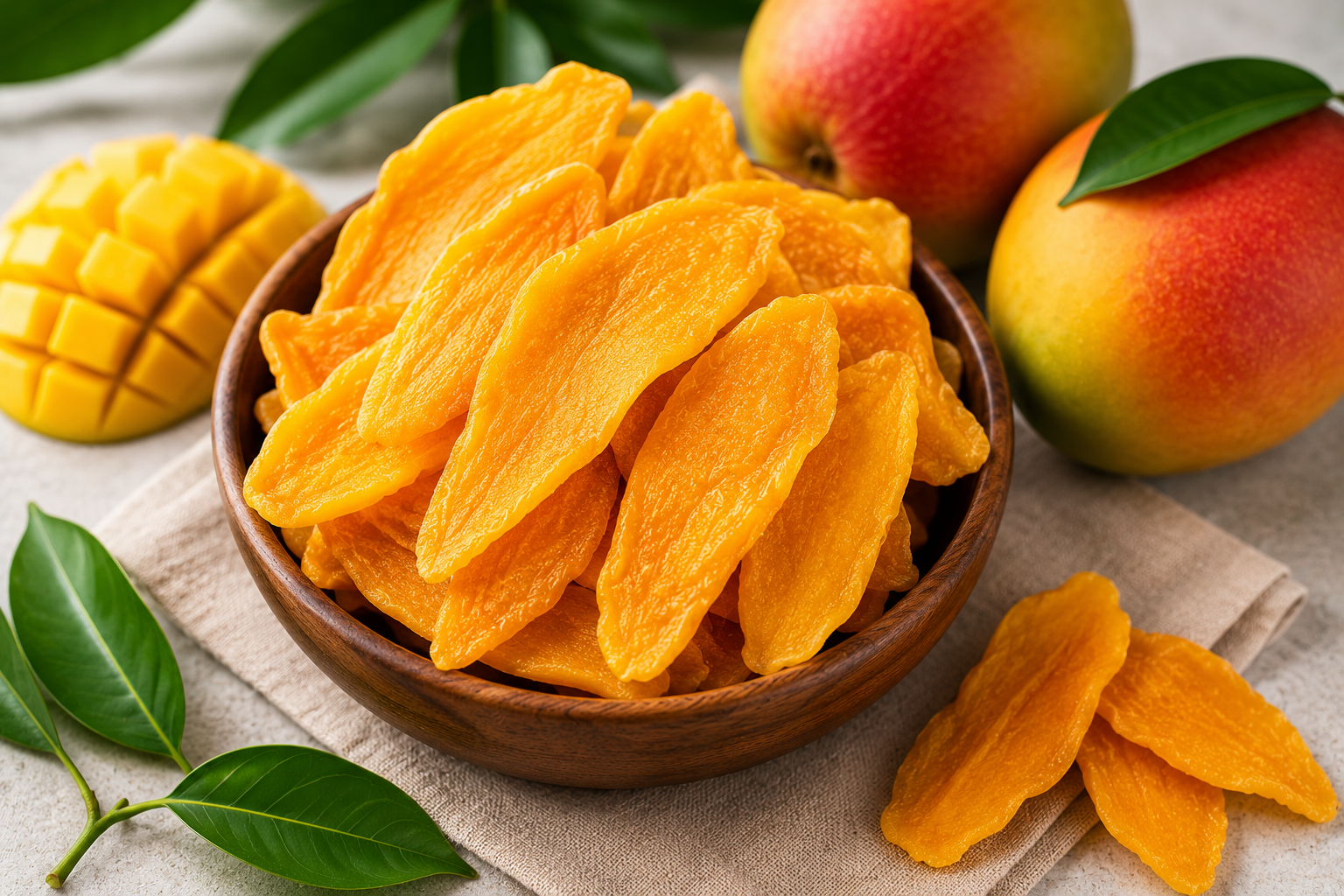
Dried mango provides several potential benefits when consumed as part of a balanced diet.
Supports Healthy Energy Levels
Dried mango contains natural carbohydrates that can provide quick energy.
This makes it useful before workouts, during hikes, or as a midday snack.
Provides Dietary Fiber
Fiber supports digestive health and may help improve feelings of fullness.
Although dried mango contains less water than fresh fruit, it still contributes valuable dietary fiber.
Delivers Antioxidants
Mangoes contain antioxidants such as carotenoids and polyphenols.
These compounds help protect cells from oxidative damage.
Convenient and Portable
Unlike fresh fruit, dried mango requires no refrigeration and can be carried almost anywhere.
This convenience increases the likelihood of choosing fruit over less nutritious snack options.
Is Dried Mango Healthy for Weight Management?
Dried mango can fit into a weight-management plan, but portion control matters.
Because water is removed, it’s easy to consume several servings quickly.
A small handful may contain the calories of a much larger portion of fresh mango.
The good news is that dried mango can satisfy sweet cravings while providing nutrients that candy typically lacks.
Smart Portion Tips
- Measure servings instead of eating directly from the bag.
- Pair with nuts for added protein.
- Combine with yogurt for greater satiety.
- Use as part of a balanced snack rather than eating large quantities alone.
Are All Dried Mango Products the Same?
No. Nutritional quality can vary considerably.
Some products contain only mango, while others include added sugar, preservatives, or flavorings.
When shopping, look for:
- “Unsweetened” on the label
- Short ingredient lists
- No added sugar when possible
- Minimal additives
Dried Mango vs Fresh Mango: Which Is Better?
Both versions offer nutritional benefits.
Fresh mango provides:
- More water
- Fewer calories per serving
- Higher vitamin C retention
- Better hydration
Dried mango offers:
- Greater convenience
- Longer shelf life
- Concentrated nutrients
- Portable energy source
The better choice depends on your goals and lifestyle..
Can Athletes Benefit From Dried Mango?
Yes. Athletes often need convenient carbohydrate sources for training and recovery.
Dried mango provides easily digestible carbohydrates that can help replenish energy stores.
Its portability makes it useful for:
- Hiking
- Cycling
- Running
- Team sports
- Travel
Pairing dried mango with protein-rich foods may create a more balanced recovery snack.
Frequently Asked Questions About Dried Mango Nutrition
Is dried mango healthier than candy?
Generally, yes. Dried mango provides vitamins, minerals, antioxidants, and fiber that candy usually lacks.
Does dried mango contain added sugar?
Some brands do. Always check ingredient labels and choose unsweetened varieties when possible.
Is dried mango high in potassium?
It contributes potassium and can be part of a diet rich in potassium-rich foods.
Does drying destroy vitamin C?
Some vitamin C is lost during drying, but certain products still contain meaningful amounts depending on processing methods.
Is dried mango good for digestion?
The fiber content may support digestive health when consumed as part of a balanced diet.
Final Thoughts: Is Dried Mango a Healthy Snack?
Dried mango nutrition offers a combination of vitamins, minerals, fiber, antioxidants, and natural sweetness that makes it one of the more appealing fruit-based snacks available.
It contains valuable nutrients such as vitamin A, potassium, and varying amounts of vitamin C while delivering convenient energy in a portable form. Although dried mango is calorie-dense compared with fresh fruit, mindful portions can easily fit into a healthy eating pattern.
If you’re searching for nutrient-dense snacks that satisfy sweet cravings without relying on heavily processed ingredients, unsweetened dried mango is worth considering. Enjoy it alongside other vitamin A foods, fruits, vegetables, and potassium-rich foods to create a balanced, nutrient-rich diet that supports overall wellness.

Hi, I’m Salem Nasir, founder of Fiturely. I research and write evidence-based articles on fitness, nutrition, weight loss, and healthy living. My mission is to make reliable health information simple, practical, and easy to understand so readers can build healthier habits with confidence
Pingback: Stop Ignoring Chicken Thighs: Calories, Protein & Nutrition Facts That May Surprise You