
Key Takeaways
- Spam can fit into a weight loss diet, but only if you eat it in moderation and control your portion size.
- It’s high in protein but also high in sodium and saturated fat, making it a food to enjoy occasionally rather than every day.
- Pair Spam with vegetables or other high-fiber foods to create a more balanced, filling meal.
- Choose leaner protein sources more often if your goal is long-term weight loss and better heart health.
- The key to losing weight isn’t one food-it’s your total calorie intake, balanced nutrition, and consistent healthy habits.
Canned meat and weight loss don’t usually show up in the same sentence. Yet here we are, because millions of people genuinely want to know if their pantry staple is helping or hurting their goals.
This guide breaks down spam nutrition facts, real macros, and where it fits (or doesn’t) into a fat-loss plan. No fluff, no fake stats, just verified numbers from USDA and public health sources.
Related reads before you dive in: Spam Nutrition Facts and Ham vs Spam Nutrition.
What Is Spam?
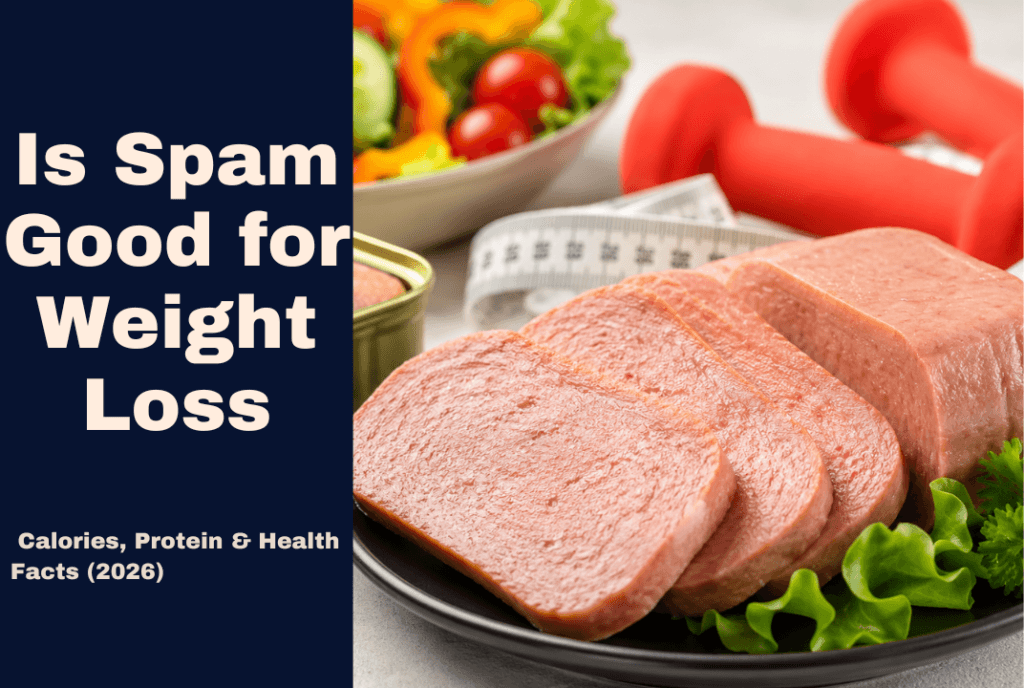
Spam is a canned, precooked meat product made mainly from pork shoulder and ham, mixed with salt, water, sugar, and sodium nitrite. It was created by Hormel Foods in 1937 and became a global pantry staple during World War II. Today it’s classified as a form of processed meat.
The name itself is a registered Hormel trademark, not a generic term. It’s sold in over 40 countries, and Hawaii alone consumes more Spam per capita than any other U.S. state, a fact even Hormel highlights in its own company history.
Because it’s shelf-stable for years without refrigeration, Spam became a budget-friendly protein source long before “meal prep” was a trending hashtag. That convenience is exactly why the weight-loss question keeps coming up.
Is Spam Good for Weight Loss?
Spam can fit into a weight-loss diet in small, controlled portions, but it’s not an ideal everyday choice. It’s high in spam sodium and saturated fat, moderate in spam protein, and low in fiber, so it fills you up less per calorie than lean meats like chicken or turkey.
The short version: it’s not “bad” in isolation, but it’s not efficient either. A 2-ounce serving delivers 174 calories and only 7 grams of protein, compared to about 14 grams of protein for the same weight of skinless chicken breast, per USDA FoodData Central. That protein-to-calorie ratio matters a lot when you’re tracking a calorie deficit.
So if your goal is dropping fat while staying full longer, Spam can be an occasional add-in, not your go-to high protein foods source.
Spam Nutrition Facts (Per Serving)
Here are the verified spam nutrition facts for a standard 2 oz (56g) serving of classic Spam, based on Hormel’s published label data and USDA reference values. This single serving gives you a clear picture of its spam macros before you decide how it fits your plan.
Numbers below are rounded to the nearest standard label value for classic Spam:
| Nutrient | Amount (per 56g serving) | % Daily Value* |
|---|---|---|
| Calories | 174 kcal | 9% |
| Total Fat | 15g | 19% |
| Saturated Fat | 5g | 25% |
| spam protein | 7g | 14% |
| spam carbs | 2g | 1% |
| spam sodium | 579mg | 25% |
| Sugar | 0g | 0% |
*Based on a 2,000-calorie diet. Values sourced from Hormel product labeling and cross-checked against USDA FoodData Central for canned luncheon meat.
Notice the fat-to-protein ratio: more calories come from fat than protein. That’s the core reason nutritionists rarely call Spam a lean protein source, even though it does carry real protein value.
Benefits of Eating Spam
Spam isn’t nutritionally worthless. It has real, practical upsides. It’s shelf-stable for years, cooks in under 5 minutes, and delivers 7g of usable protein per serving without needing a fridge or freezer. For emergency food supplies or budget meal planning, that’s genuinely useful.
It’s also naturally low in carbs, which is why some people search for spam diet or spam for bodybuilding ideas when trying to hit low-carb macros.
Long shelf life and convenience: Because Spam is canned and cured, it can sit in a pantry for years, making it a reliable backup protein during travel, camping, or emergencies.
Decent protein contribution: At 7g per 56g serving, it’s not top-tier, but it still contributes toward daily protein goals when paired with vegetables or eggs.
Naturally low in carbs and sugar: With just 2g carbs and 0g sugar, Spam fits reasonably well into low-carb frameworks, which is part of why the “spam keto” question comes up so often.
Affordable protein source: A single can typically yields 6 to 8 servings at a fraction of the cost of fresh cuts of meat, which matters for tight grocery budgets.
Downsides of Spam for Weight Loss
The downsides are where things get serious. Spam is high in saturated fat, extremely high in sodium, and classified as a processed meat, a category the World Health Organization’s cancer research arm (IARC) linked to increased colorectal cancer risk in its 2015 evaluation. That’s not fear-mongering; it’s a documented classification, not a claim that occasional Spam consumption is dangerous.
High sodium load:
At 579mg per serving, one serving alone eats up roughly 25% of the American Heart Association’s recommended daily sodium limit of 2,300mg (and closer to 40% of AHA’s ideal 1,500mg target for most adults).
High saturated fat:
5g of saturated fat per serving is 25% of the daily value, which adds up fast if Spam is a regular meal component rather than an occasional one.
Low protein efficiency:
Compared to lean protein options, Spam gives you fewer grams of protein per calorie, making it a less efficient choice when every calorie in your calorie deficit counts.
Processed meat classification:
The CDC and WHO both recommend limiting processed meat intake as part of general dietary guidance for long-term health, not just weight management.
Can You Eat Spam on a Calorie Deficit?
Yes, you can eat Spam on a calorie deficit, but portion control is non-negotiable. A single 174-calorie serving can fit into most daily calorie budgets, especially if you’re eating 1,600 to 2,000 calories a day and pair it with low-calorie vegetables.
The catch is that Spam’s calories come mostly from fat, not protein, so it won’t keep you as full as an equal-calorie serving of chicken, turkey, or fish. That matters because satiety is one of the biggest predictors of deficit adherence.
A practical approach: use Spam as a flavor and protein add-on (like in fried rice or a stir-fry) rather than the main protein portion of your plate. That keeps calories controlled while still enjoying it occasionally.
Is Spam Keto Friendly?
Technically, yes. Spam is keto-compatible because it’s low in carbs (2g per serving) and high in fat, which matches the macro ratio keto diets target. Many keto followers do include it among their keto foods and low carb meat options for convenience.
However, “keto-friendly” doesn’t automatically mean “healthy for weight loss.” Keto diets work through calorie control and fat adaptation, not because saturated fat and sodium are inherently good for you. The American Heart Association still recommends limiting saturated fat regardless of overall diet style.
If you’re doing keto and want Spam occasionally, that’s reasonable. Just don’t mistake “fits the macros” for “nutritionally optimal.” Those are two different questions.
Is Spam Better Than Ham for Weight Loss?
Fresh, lean ham generally beats Spam for weight loss because it has more protein and less fat per calorie. A 2 oz serving of lean deli ham typically has around 60 to 75 calories and 9 to 11g of protein, versus Spam’s 174 calories and 7g of protein for the same weight.
The spam vs ham comparison really comes down to processing level and fat content. Ham (especially the lean, low-sodium varieties) is closer to a true lean protein, while Spam is formulated with added fat for texture and shelf stability.
That said, some deli hams are also high in sodium and nitrates, so “ham” isn’t automatically the healthy option. Check the label every time. For a deeper breakdown, see Ham Nutrition and the full Ham vs Spam Nutrition comparison.
| Metric (per 56g / 2oz) | Spam | Lean Deli Ham |
|---|---|---|
| Calories | 174 kcal | ~65 to 75 kcal |
| Protein | 7g | 9 to 11g |
| Total Fat | 15g | 1 to 3g |
| Saturated Fat | 5g | 0.5 to 1g |
| Sodium | 579mg | 400 to 600mg (varies by brand) |
| Carbs | 2g | 0 to 1g |
Ham wins on protein-to-calorie efficiency almost every time. Spam wins on shelf life and convenience. Sodium is a wash, so check labels either way.
Healthier Alternatives to Spam
If you like the convenience of Spam but want better macros, several weight loss foods deliver more protein per calorie with less saturated fat. Canned tuna, canned chicken breast, and low-sodium turkey are the closest swaps in terms of shelf-stability and prep time.
Canned tuna in water: Roughly 90 to 120 calories and 20g+ protein per serving, making it one of the most efficient low calorie protein sources available in a can.
Canned chicken breast: Similar convenience to Spam but with 20 to 25g protein and under 3g fat per serving, a genuinely healthy canned meat option.
Turkey breast (low sodium): A solid lean protein choice for sandwiches, wraps, or quick lunches without the sodium spike.
Egg whites or whole eggs: Not canned, but extremely accessible and among the most efficient high protein foods per calorie for home cooking.
For more inspiration, check out Healthy Lunch Ideas for Weight Loss and pair your protein with sides like Steamed Broccoli Nutrition, Soba Noodles Nutrition Facts, or Pickled Beetroot Nutrition for a balanced, filling plate.
Best Ways to Eat Spam Without Gaining Weight
Portion size and pairing are everything here. Stick to one 2 oz serving, pan-fry it without added oil (Spam already contains enough fat to crisp up on its own), and combine it with high-volume, low-calorie foods like vegetables or salad greens.
Trim the fat before cooking: Slicing off visible fat edges reduces total fat and calories without losing much flavor or texture.
Pair with fiber-rich sides: Adding vegetables, brown rice, or leafy greens increases meal volume and satiety without piling on extra calories.
Bake instead of fry: Baking or air-frying Spam avoids adding cooking oil, keeping total fat closer to the label value instead of higher.
Use it as an accent, not the main protein: A few small cubes in fried rice or eggs delivers flavor without a full 174-calorie hit per serving.
If you’re also building a broader high protein foods routine, options like High Protein Drinks or reading up on Women and Protein Shakes can help round out daily protein without relying on processed meat.
Who Should Limit Spam?
People with high blood pressure, heart disease risk, or kidney conditions should limit or avoid Spam due to its high sodium content. The CDC notes that most Americans already consume more sodium than recommended, and adding processed meats like Spam only compounds that.
People managing blood pressure:
The AHA specifically flags high-sodium processed foods as a risk factor worth minimizing for hypertension management.
Anyone tracking strict macros for fat loss:
If protein efficiency is your priority, Spam’s fat-heavy profile makes it a poor primary protein source during a cut.
People with a family history of colorectal cancer:
Given the WHO’s processed meat classification, this group may want to speak with a doctor about limiting intake specifically.
Anyone on a low-sodium medical diet:
A single serving already covers a quarter of the general daily sodium limit, leaving little room for the rest of the day’s meals.
FAQs:
Is Spam high in calories?
Spam has 174 calories per 2 oz (56g) serving, which is moderate compared to fresh meats. Most of those calories come from fat rather than protein, so it’s more calorie-dense than lean protein sources like chicken breast or canned tuna for the same serving size.
How much protein is in Spam?
A standard serving of Spam contains 7g of spam protein, which is lower than most fresh meats. Chicken breast, turkey, and canned tuna all offer roughly double the protein for a similar calorie count.
Is Spam bad for you every day?
Eating Spam daily isn’t ideal due to its high spam sodium (579mg per serving) and saturated fat content. The AHA and CDC both recommend limiting processed meats to occasional consumption rather than a daily staple.
Can I eat Spam while on keto?
Yes, Spam fits keto macros because it’s low in carbs (2g per serving) and high in fat. It’s a common pick among keto foods, but “keto-friendly” doesn’t mean it’s the healthiest option on the diet.
Is Spam healthier than bacon?
Spam generally has fewer calories and less fat per serving than bacon, but both are processed meat and high in sodium. Neither is a top pick for weight loss compared to lean, minimally processed protein sources.
Does Spam cause weight gain?
Spam itself won’t cause weight gain if eaten in controlled portions within a calorie deficit. Weight gain happens from consistently eating more calories than you burn, and Spam’s fat content just makes it easier to go over that limit if unmonitored.
What’s the healthiest way to cook Spam?
Baking or air-frying Spam without added oil is the healthiest cooking method, since it avoids extra fat from frying. Trimming visible fat before cooking also reduces total calories per serving.
Is canned tuna better than Spam for weight loss?
Yes, canned tuna is generally a better choice for weight loss than Spam. It offers roughly 20g of protein per serving with far less fat and calories, making it a more efficient low calorie protein option for a calorie deficit.
Final Verdict
Spam isn’t the enemy of weight loss, but it’s not a star player either. It works fine as an occasional, portion-controlled ingredient, especially if you value convenience and shelf life, but it shouldn’t replace lean protein staples like chicken, turkey, fish, or egg whites in a serious fat-loss plan.
If sodium, saturated fat, or processed meat guidelines are a concern for your health profile, lean toward the alternatives covered above. Used occasionally and portioned sensibly, Spam can still have a spot in a balanced, real-world diet, just not the leading one.
Sources referenced:
USDA FoodData Central, American Heart Association sodium and saturated fat guidelines, CDC sodium intake data, World Health Organization (IARC) processed meat classification, and Academy of Nutrition and Dietetics general dietary guidance. Product-specific values reflect Hormel’s published nutrition labeling for classic Spam.
This article is for general informational purposes and isn’t a substitute for personalized medical or dietary advice. Consult a registered dietitian or physician for guidance specific to your health needs.

Hi, I’m Salem Nasir, founder of Fiturely. I research and write evidence-based articles on fitness, nutrition, weight loss, and healthy living. My mission is to make reliable health information simple, practical, and easy to understand so readers can build healthier habits with confidence