
Key Takeaways
Chicken thigh nutrition provides approximately 24-27 grams of protein per 100 grams.
Skinless chicken thighs are lower in calories and fat while maintaining high protein content.
Chicken thighs are rich in B vitamins, selenium, phosphorus, and zinc.
Grilled and roasted chicken thigh nutrition are healthier options than fried preparations.
Chicken thighs are excellent muscle-building foods and fit well into high-protein meals.
Chicken thighs are one of the most underrated cuts on the plate. They’re juicy, affordable, easy to cook and packed with more nutritional value than most people give them credit for. Whether you’re tracking macros, building muscle, or just trying to eat smarter, understanding chicken thigh nutrition is a solid place to start.
Let’s break it all down calories, protein, fat, vitamins, and how this humble cut stacks up against everything else in your fridge.
 Calories in a Chicken Thigh
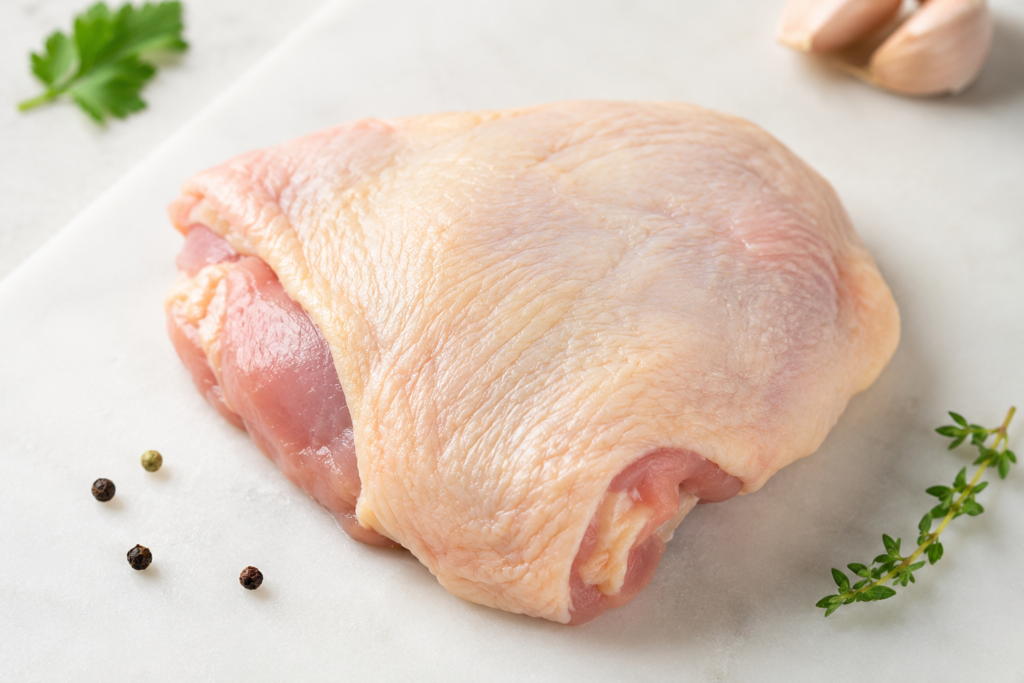 Calories in a Chicken Thigh
A single cooked chicken thigh (without skin, about 3.5 oz or 100g) contains roughly 177 calories. With skin on, that number climbs to around 229 calories. The cooking method also matters a lot.
Here’s a quick look at baked chicken thigh calories and other common preparations:
| Preparation | Calories (per 100g) | Protein (per 100g) |
|---|---|---|
| Baked (skinless) | 177 kcal | 26g |
| Grilled (skinless) | 165 kcal | 25g |
| Roasted (with skin) | 229 kcal | 23g |
| Fried (with skin) | 260–290 kcal | 22g |
| Boiled / Poached | 158 kcal | 24g |
According to the USDA FoodData Central, a 3.5-ounce (100g) skinless, boneless cooked chicken thigh provides approximately 177 calories, 26 grams of protein, and 9 grams of fat. That’s a well-balanced macro profile for a real-food source.
The key takeaway? Skinless chicken thigh nutrition is significantly leaner than most people assume. Remove the skin, and you cut roughly 30-50 calories and several grams of saturated fat in one move.
Protein in Chicken Thigh
A skinless boneless chicken thigh delivers 25-26 grams of protein per 100g serving. That’s a high-quality, complete protein meaning it contains all nine essential amino acids your body can’t produce on its own.
This makes chicken thighs a top-tier choice for:
- Muscle-building foods leucine-rich protein supports muscle protein synthesis
- High-protein meals one thigh easily covers 30-40% of most people’s daily protein needs
- Bodybuilding nutrition affordable, dense, and easy to meal prep in bulk
For reference, the average adult needs roughly 0.8-1.0g of protein per kilogram of body weight according to the Dietary Reference Intakes (DRI) established by the National Academies of Sciences. Athletes and those in muscle-building phases often need 1.4-2.0g/kg, per sports nutrition research.
Chicken thigh protein per serving (one average thigh, ~120g cooked, boneless, skinless):
- Protein: 31g
- Calories: 210 kcal
- Fat: 11g
- Carbs: 0g
That’s right zero carbs. Chicken thighs are a natural low-carb protein food, making them a staple for keto, paleo, and low-carb eating plans.
Dark Meat Chicken and Worth Eating
Dark meat chicken nutrition differs from white meat primarily in fat content and micronutrient density. Thighs and drumsticks are darker because they contain more myoglobin, a protein that stores oxygen in muscle tissue the same reason these muscles are used more by the bird.
Here’s what that actually means for your nutrition:
- Higher fat content mostly unsaturated fats, not the saturated-fat disaster people fear
- More iron and zinc dark meat contains nearly double the iron of white meat, per USDA data
- Richer in B vitamins particularly B12, B6, and niacin
- Better flavor the fat carries flavor, which is why chefs often prefer thighs
The chicken thigh fat content of a skinless thigh is around 9g per 100g with roughly 2.5g being saturated fat. That’s a moderate, not alarming, number. For context, the American Heart Association allows 13g of saturated fat per day on a 2,000-calorie diet. One thigh uses less than 20% of that budget.
Grilled vs. Baked vs. Roasted
- Grilled chicken thigh nutrition: Slightly lower calories due to fat dripping off during grilling. Retains protein well.
- Baked chicken thigh calories: Consistent and easy to measure closer to baseline USDA values when cooked at 375-400°F without heavy marinades.
- Roasted chicken thigh nutrition: With skin on, adds calories and flavor. Without skin, nearly identical to baked.
The real calorie bombs come from added fats butter, oils, heavy sauces not the chicken itself. A tablespoon of olive oil adds 120 calories. Keep that in mind when assessing your total meal.
For healthy chicken recipes that preserve nutritional integrity, dry rubs, herb marinades, and lemon garlic preparations are all excellent choices that add flavor without wrecking your calorie count.
Vitamins and Minerals in Chicken Thighs
Chicken thighs are genuinely nutrient-dense foods, not just a protein vehicle. Here’s what you’re getting beyond the macros:
Vitamin B12
Essential for nerve function and red blood cell formation. One thigh provides around 0.3-0.5 mcg, contributing to the 2.4 mcg daily recommended intake .
Niacin (Vitamin B3)
Critical for energy metabolism. A single chicken thigh can provide 30-40% of your daily niacin needs. This is one reason poultry is considered a core energy food.
Zinc
Supports immunity, wound healing, and testosterone production. Dark meat chicken is a better zinc source than white meat, providing around 2-3mg per thigh.
Iron
Thighs contain non-heme iron (plant-type iron) plus a small amount of heme iron. The combination makes them a good iron source, particularly for people who don’t eat red meat regularly.
Selenium
A powerful antioxidant mineral that supports thyroid function. Chicken is one of the top dietary sources of selenium in the Western diet.
These chicken thigh vitamins and minerals make it a legitimately well-rounded food not just protein filler.
Chicken Thigh vs. Chicken Breast: Which One Should You Actually Eat?
The honest answer: it depends on your goal. Here’s a direct comparison based on USDA data (100g, cooked, skinless, boneless):
| Nutrient | Chicken Thigh | Chicken Breast |
|---|---|---|
| Calories | 177 kcal | 165 kcal |
| Protein | 26g | 31g |
| Fat | 9g | 3.6g |
| Iron | 1.3mg | 0.7mg |
| Zinc | 2.4mg | 1.0mg |
| Niacin | 5.3mg | 13.7mg |
So chicken breast wins on protein per calorie it’s leaner and slightly higher in protein. But chicken thighs win on flavor, micronutrients like iron and zinc, cost, and moisture retention during cooking.
For weight loss protein foods, both work. The 12-calorie difference per 100g is not going to derail any diet. For bodybuilding nutrition where you’re eating large volumes, thighs offer more minerals for the money.
As one registered dietitian popular in sports nutrition circles puts it: “The best protein source is the one you’ll actually eat consistently.” Thighs being tastier often means people stick to their protein goals more reliably.
Are Chicken Thighs Good for Weight Loss?
Yes, chicken thighs are excellent weight loss protein foods when prepared simply. Protein is the most satiating macronutrient, and at 177 calories per 100g with 26g of protein, thighs offer a strong satiety-to-calorie ratio.
A 2020 meta-analysis published in Nutrients found that high-protein diets (>25% of calories from protein) significantly improved weight loss outcomes compared to standard protein diets, with better preservation of lean muscle mass during calorie deficits.
Skinless, grilled or baked chicken thighs fit perfectly into this framework. They’re:
- Low in carbs zero, in fact
- High in protein reduces appetite and cravings
- Moderate in fat healthy fats support hormone function
- Affordable a major real-world factor in dietary adherence
They’re also far more forgiving to cook than chicken breasts, which dry out quickly. Juicy thighs = meals you actually finish, not toss.
Can Chicken Thighs Support Muscle Building?
Absolutely they’re one of the most practical muscle-building foods available. Here’s why:
1. Complete amino acid profile. Chicken thighs contain all essential amino acids, including leucine, the amino acid most directly responsible for triggering muscle protein synthesis (per research in the Journal of Nutrition).
2. High bioavailability. Animal proteins have a higher DIAAS (Digestible Indispensable Amino Acid Score) than most plant proteins. Chicken consistently scores above 1.0, meaning your body actually uses what you eat.
3. Creatine content. Raw chicken contains small amounts of natural creatine (~300–400mg per 100g raw), which supports strength and power output.
4. Practical for meal prep. Batch-cooking chicken thighs is one of the most popular strategies among serious athletes because they stay moist when reheated unlike chicken breast, which often turns to rubber in a microwave.
For high-protein meals focused on muscle gain, pair chicken thighs with rice, sweet potato, or legumes. You get a complete amino acid + carbohydrate combination that supports both training performance and recovery.
Quick Summary:
| Metric | Per 100g (cooked, skinless, boneless) |
|---|---|
| Calories | 177 kcal |
| Protein | 26g |
| Total Fat | 9g |
| Saturated Fat | 2.5g |
| Carbohydrates | 0g |
| Iron | 1.3mg (7% DV) |
| Zinc | 2.4mg (22% DV) |
| Vitamin B12 | 0.4mcg (17% DV) |
| Niacin | 5.3mg (33% DV) |
| Selenium | 27mcg (49% DV) |
Final Thoughts
Chicken thighs are not the nutritional consolation prize that some diet culture has made them out to be. They’re a legitimate, nutrient-dense, high-protein food that belongs in nearly any healthy eating plan whether your goal is weight loss, muscle building, or simply eating well without breaking the bank.
The numbers back it up: strong cooked chicken thigh nutrition, impressive protein content, meaningful vitamins and minerals, and a fat profile that’s far more moderate than its reputation suggests.
The best diet is the one you can sustain. And if juicy, flavorful chicken thighs make it easier to hit your protein goals day after day that’s not a compromise. That’s good strategy.

Hi, I’m Salem Nasir, founder of Fiturely. I research and write evidence-based articles on fitness, nutrition, weight loss, and healthy living. My mission is to make reliable health information simple, practical, and easy to understand so readers can build healthier habits with confidence
Pingback: Sourdough Bread Nutrition Facts (2026): Calories, Protein, Fiber & Health Benefits