
A strong back does more than improve appearance. It supports posture, reduces the risk of injury, improves daily movement, and helps your entire body function better. The good news? You do not need a gym membership or expensive equipment to build a stronger back.
These Back Workouts at Home No Weights are designed to target major back muscles, improve mobility, increase strength, and support long-term spinal health. Whether you are a beginner or someone looking for an effective resistance-free workout, these exercises can help you build a stronger, healthier back from home.
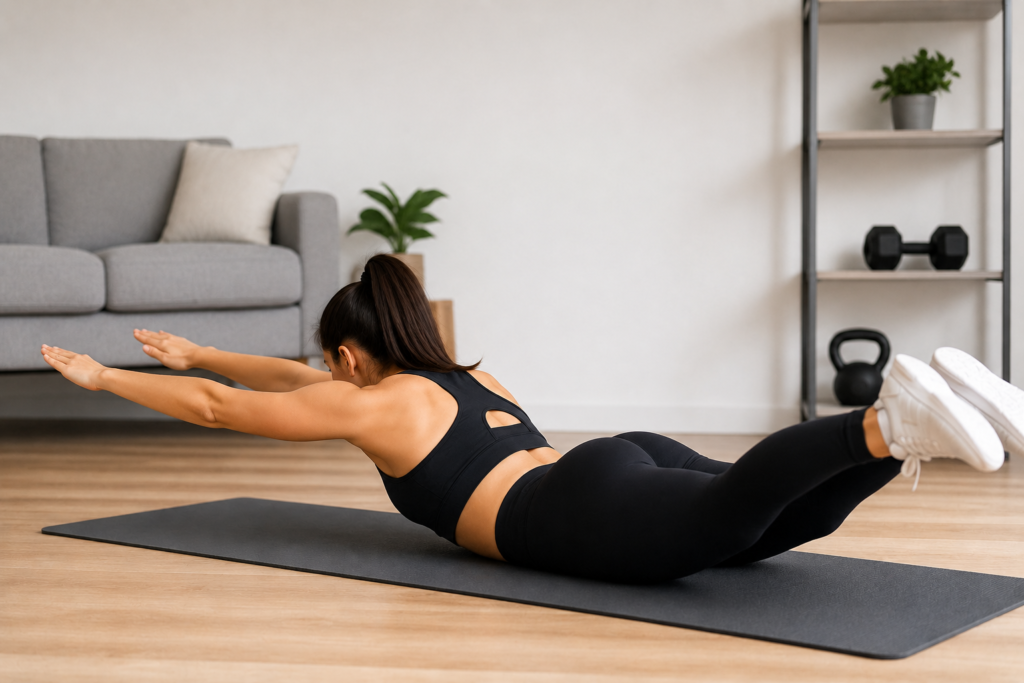
Why Are Back Workouts Important?
Your back plays a central role in nearly every movement you make. From lifting groceries to sitting at a desk, your back muscles work throughout the day.
A well-designed home workout for strong back can:
- Improve posture and alignment
- Strengthen the posterior chain
- Enhance shoulder stability
- Increase core strength
- Support flexibility and mobility
- Reduce the risk of common back injuries
- Improve functional fitness
Can You Build a Strong Back Without Weights?
Yes. Bodyweight exercises can effectively strengthen the back when performed consistently.
Research published by the American College of Sports Medicine shows that bodyweight training can improve muscular strength, endurance, and mobility. While weights can increase resistance, bodyweight fitness remains highly effective for beginners and intermediate exercisers.
The key is using proper form, controlled movements, and progressive overload through increased repetitions and exercise variations.
1. Superman Hold
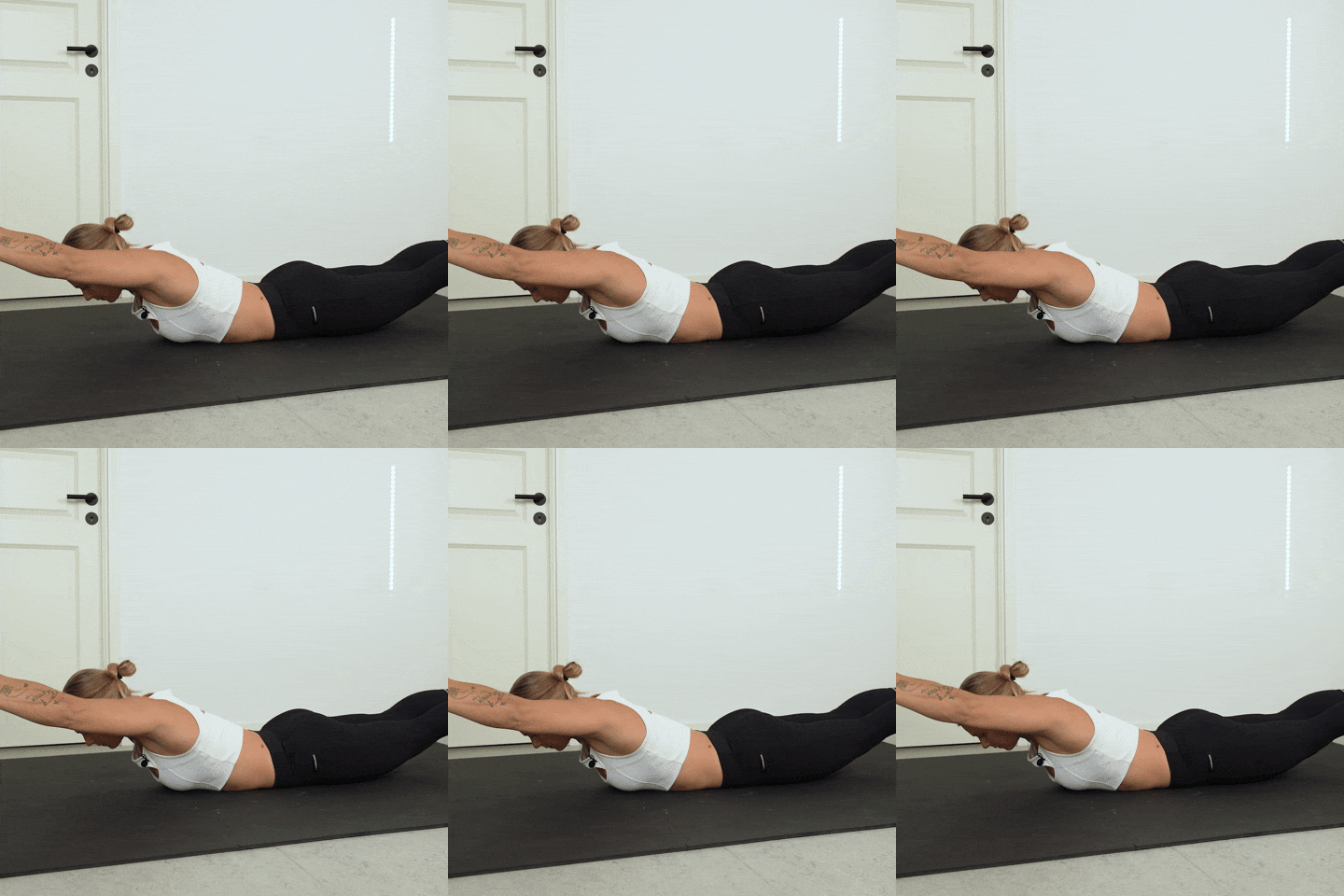 The Superman Hold is one of the best lower back exercises at home.
Lie face down with arms extended. Lift your arms, chest, and legs off the floor simultaneously and hold the position.
The Superman Hold is a powerful bodyweight exercise that targets the lower back, glutes, and core muscles. By lifting your arms, chest, and legs off the floor, you strengthen the spinal erectors and improve posture. This exercise helps enhance back stability, muscle endurance, and overall functional fitness. It is an excellent addition to any home workout for strong back and back pain prevention routine
Benefits
- Strengthens spinal erectors
- Improves posture improvement
- Supports back pain prevention exercises
- Enhances muscle endurance
How to Perform
- Hold for 20–30 seconds
- Repeat 3 times
2. Reverse Snow Angels
This exercise targets the upper back and shoulders.
Lie face down and move your arms in a wide arc from your hips to above your head while keeping them slightly elevated.
Reverse Snow Angels are an effective upper back exercise that strengthens the rhomboids, trapezius muscles, and rear shoulders. This movement helps improve posture, shoulder stability, and overall upper-back strength without requiring any equipment
Benefits
- Strengthens trapezius muscles
- Activates rhomboids
- Improves shoulder stability
- Supports posture correction exercises
Repetitions
- 12–15 reps
- 3 sets
3. Bird Dog
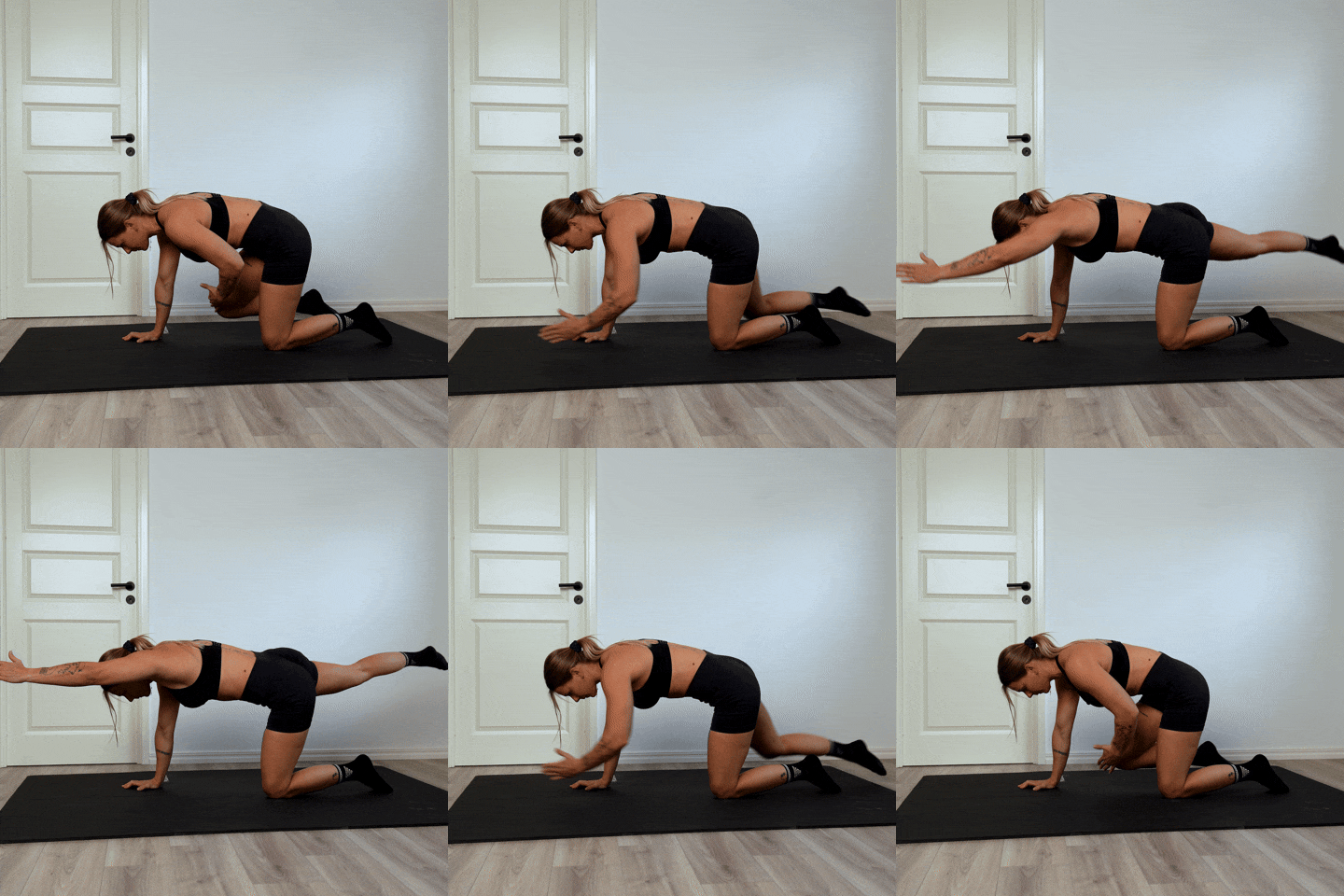 The Bird Dog is a classic exercise for core and back strength.
Start on all fours and extend the opposite arm and leg simultaneously.
The Bird Dog is a highly effective bodyweight exercise that strengthens the back, core, and glutes while improving balance and coordination. By extending opposite arms and legs, it engages the spinal erectors and deep core muscles that support proper posture. This movement enhances stability, functional fitness, and overall body control. It is an excellent addition to any home workout for a strong back and core
Benefits
- Improves core strength
- Strengthens spinal stabilizers
- Enhances balance
- Supports functional fitness
Repetitions
- 10–12 reps per side
4. Glute Bridge
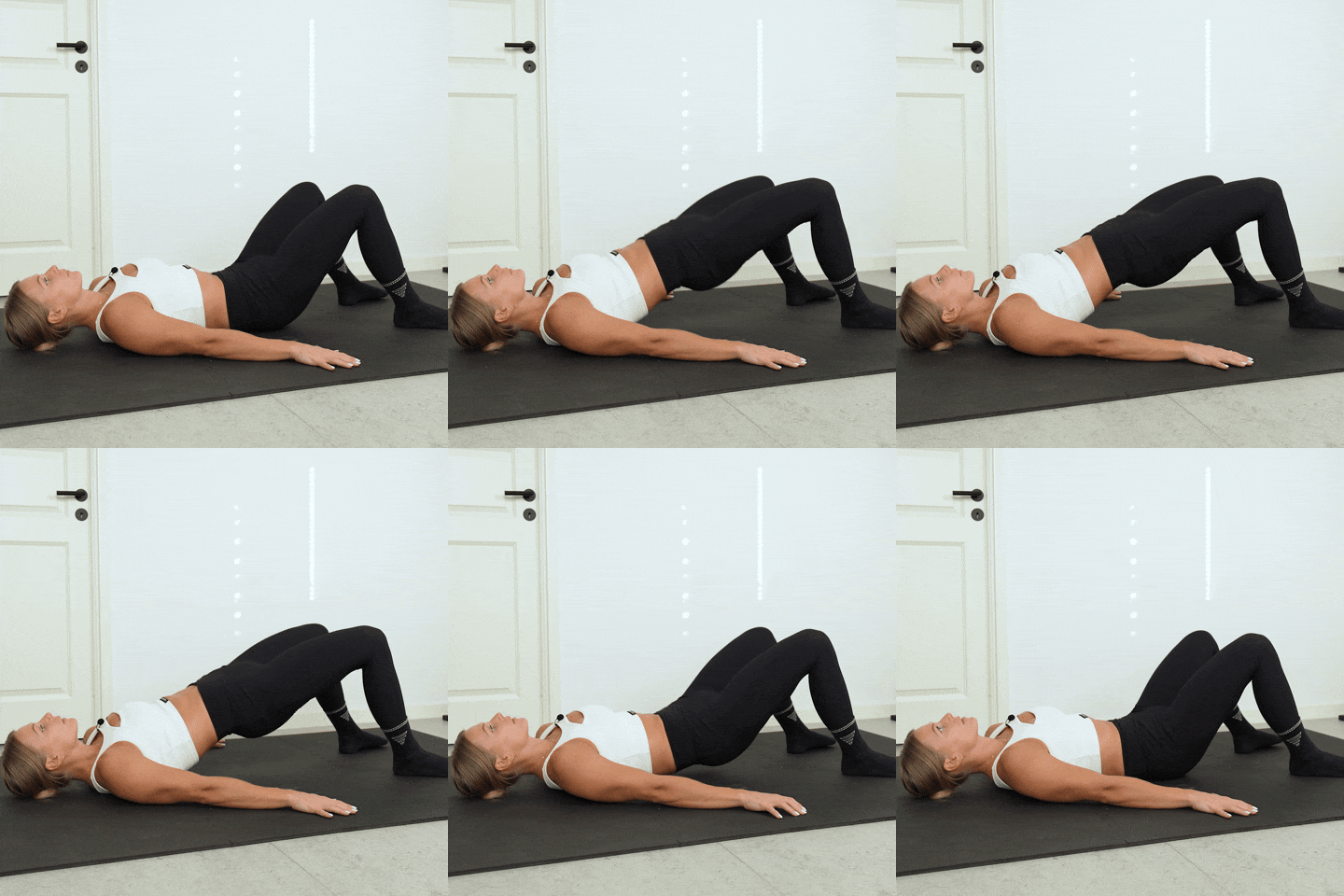
Although often viewed as a lower-body exercise, the Glute Bridge strongly supports the posterior chain.
Lie on your back with knees bent and lift your hips upward.
The Glute Bridge is a simple yet highly effective exercise that strengthens the glutes, lower back, and core muscles. By lifting your hips off the floor, you activate the posterior chain and improve overall stability. This exercise can help support better posture, reduce lower back strain, and enhance functional fitness. It is an excellent addition to any home workout for strong back and core strength routine
Benefits
- Strengthens lower back
- Activates glutes
- Improves spinal support
- Enhances strength and conditioning
Repetitions
- 15 reps
- 3 sets
5. Wall Angels
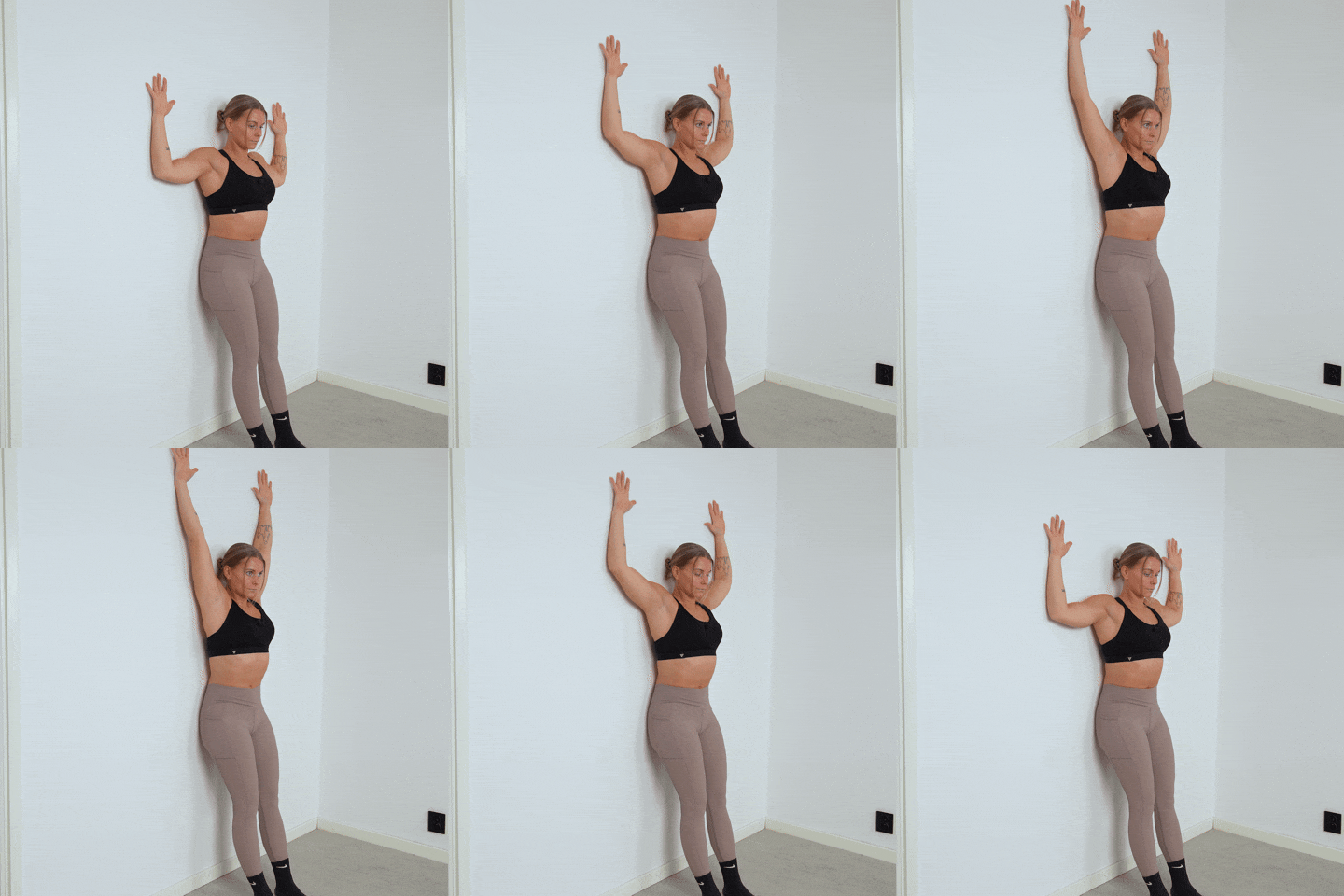 Wall Angels are excellent posture correction exercises.
Stand with your back against a wall and slowly move your arms up and down while maintaining contact.
Wall Angels are an excellent exercise for improving posture and strengthening the upper back muscles. By sliding your arms up and down against a wall, you activate the rhomboids, trapezius muscles, and shoulders. This simple movement helps enhance shoulder mobility, promotes better posture alignment, and supports overall upper body stability
Benefits
- Improves posture
- Strengthens upper back muscles
- Enhances shoulder mobility
- Supports back conditioning workout routines
Repetitions
- 12–15 reps
6. Cobra Stretch
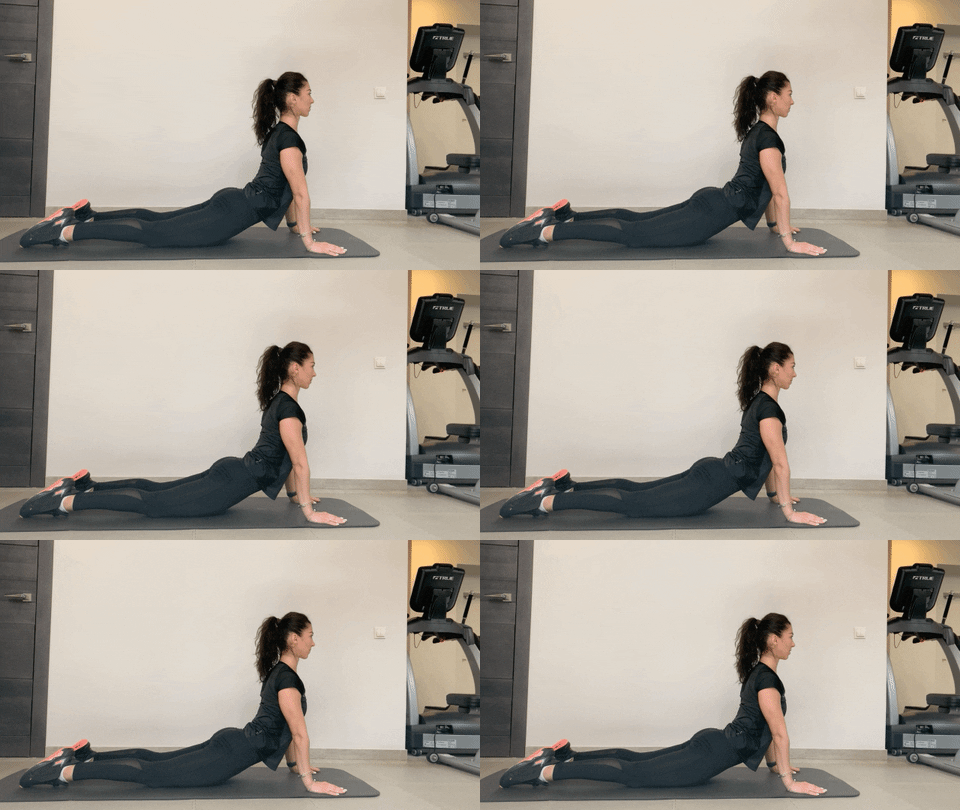 The Cobra Stretch combines flexibility and mobility training.
The Cobra Stretch is a simple yoga-inspired movement that helps improve spinal flexibility and reduce tightness in the lower back. It involves lying face down and gently lifting your chest off the floor while keeping your hips grounded. This stretch targets the abdominal muscles, spinal erectors, and chest while promoting better posture. Regular practice can support back mobility exercises and help relieve stiffness caused by prolonged sitting. It is also a great addition to any home workout for strong back and overall flexibility and mobility routine
Benefits
- Increases flexibility and mobility
- Stretches abdominal muscles
- Relieves stiffness
- Supports back mobility exercises
Hold Time
- 20–30 seconds
7. Prone Y-T-W Raises
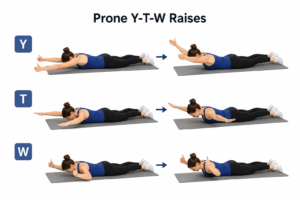
This advanced bodyweight movement targets multiple upper back muscles.
Form Y, T, and W arm positions while lying face down.
Prone Y-T-W Raises are excellent upper-back exercises that target the rhomboids, trapezius muscles, and rear shoulders. These movements help improve posture, shoulder stability, and overall upper-body strength while supporting better mobility and muscle balance
Benefits
- Strengthens rhomboids
- Activates trapezius muscles
- Improves shoulder stability
- Supports bodyweight strength training for back
Repetitions
- 8–12 reps each position
8. Cat-Cow Stretch
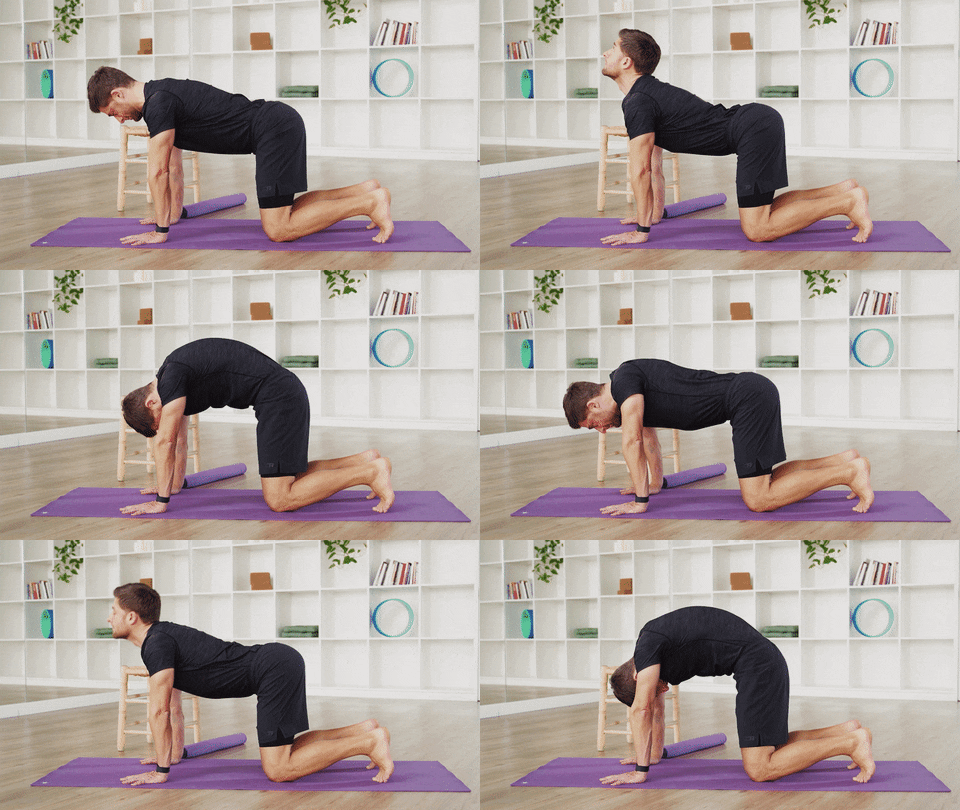
The Cat-Cow is one of the most effective back mobility exercises.
Move between arching and rounding your spine while on hands and knees.
The Cat-Cow Stretch is a gentle mobility exercise that improves spinal flexibility and helps relieve tension in the back and neck. It promotes better posture, increases range of motion, and is an excellent addition to any back mobility routine
Benefits
- Improves spinal mobility
- Enhances flexibility
- Reduces stiffness
- Supports mobility training
Repetitions
- 10–15 slow repetitions
9. Reverse Plank
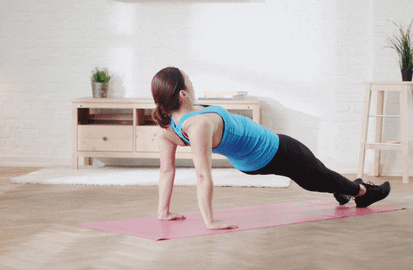
The Reverse Plank challenges multiple muscles simultaneously.
Sit with legs extended and lift your body upward.
The Reverse Plank is a powerful bodyweight exercise that strengthens the posterior chain, including the back, glutes, and hamstrings. It also improves shoulder stability, core strength, and overall posture. Regular practice can enhance muscle endurance and support better functional fitness for everyday activities.
Benefits
- Strengthens the entire posterior chain
- Improves shoulder stability
- Builds muscle endurance
- Supports bodyweight fitness goals
Hold Time
- 20–45 seconds
10. Swimmers
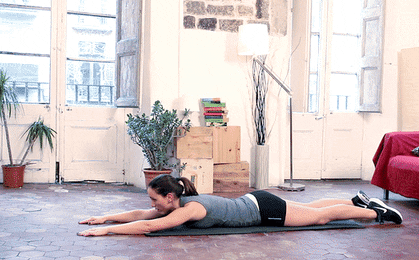
Swimmers simulate swimming motions while lying face down.
Alternate lifting opposite arms and legs.
The Swimmers exercise strengthens the upper and lower back by engaging the spinal erectors, glutes, and shoulders through alternating arm and leg movements. It helps improve posture, muscle endurance, and overall back stability without requiring any equipment
Benefits
- Strengthens spinal erectors
- Improves coordination
- Enhances endurance
- Supports back toning exercises
Duration
- 30–60 seconds
11. Child’s Pose Stretch
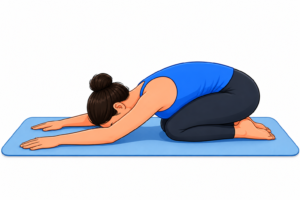 Child’s Pose is a recovery-focused movement.
It gently stretches the lower back while reducing tension.
Child’s Pose Stretch is a gentle recovery exercise that helps relax the lower back, hips, and spine while reducing muscle tension. It improves flexibility, promotes relaxation, and is an excellent stretch to include after any back workout routine
Benefits
- Relaxes the spine
- Supports recovery
- Improves flexibility
- Complements lower back exercises at home
Hold Time
- 30–60 seconds
12. Plank with Shoulder Taps
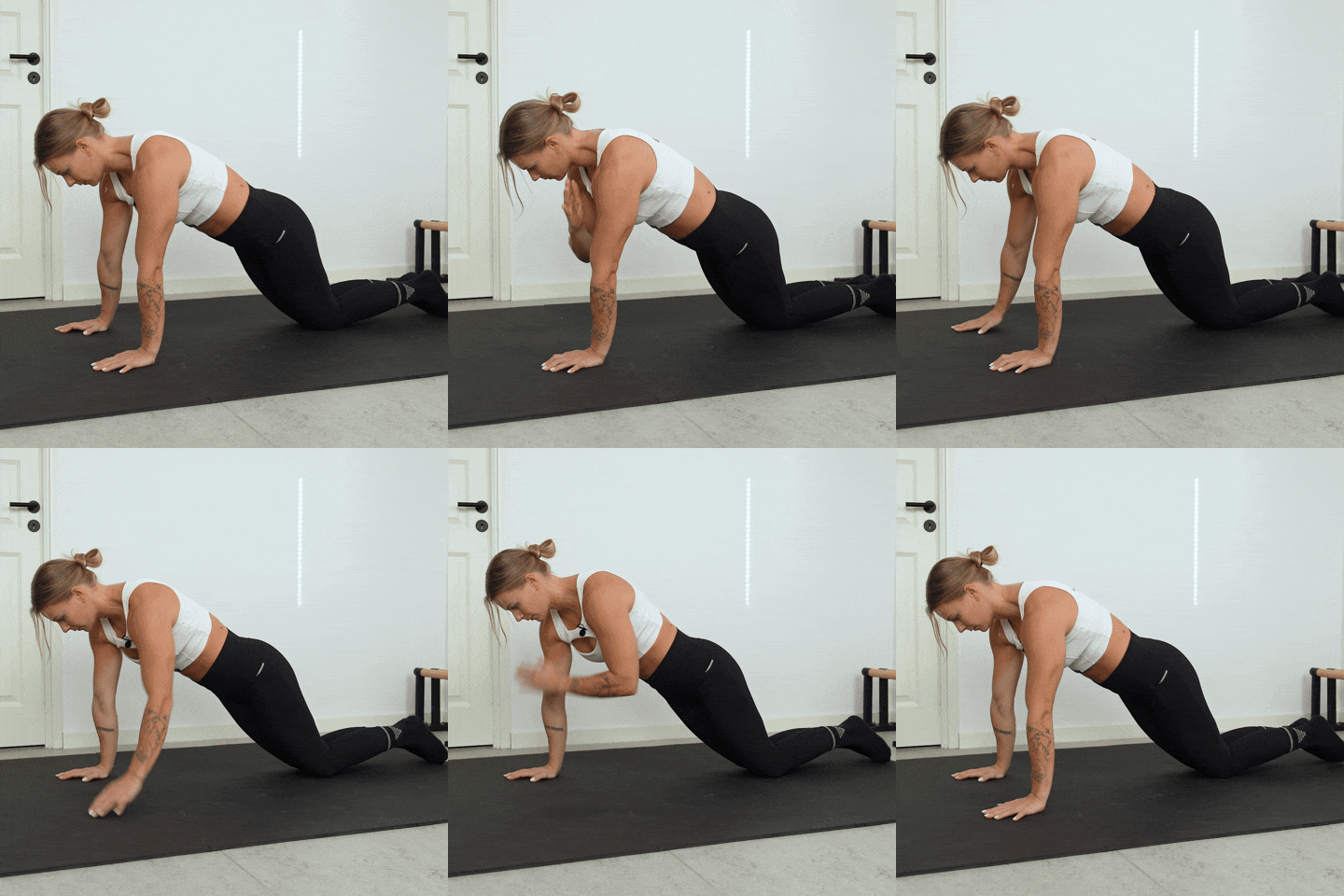 This exercise combines back and core training.
Start in a plank position and tap opposite shoulders.
Plank with Shoulder Taps is an effective exercise that combines core strength, balance, and upper-body stability. By alternating shoulder taps while holding a plank position, you engage the abs, shoulders, and back muscles. This movement helps improve posture, coordination, and shoulder stability while strengthening the entire core. It is a great addition to any bodyweight fitness or home workout routine.
Benefits
- Builds core strength
- Improves stability
- Enhances posture
- Supports functional fitness
Repetitions
- 20 taps total
Do Back Workouts Help Reduce Back Fat?
Back workouts strengthen muscles but do not directly burn fat from one specific area.
Scientific evidence consistently shows that spot reduction is largely ineffective. Fat loss occurs throughout the body when you maintain a calorie deficit through proper nutrition and regular exercise.
However, exercises for back fat at home can improve muscle tone and create a more defined appearance when combined with healthy eating habits.
Sample 15-Minute Home Back Workout
Try this simple routine:
- Superman Hold – 30 seconds
- Bird Dog – 12 reps each side
- Reverse Snow Angels – 15 reps
- Glute Bridge – 15 reps
- Reverse Plank – 30 seconds
- Swimmers – 45 seconds
Complete 2–3 rounds.
This creates an effective back conditioning workout without any equipment.
How Often Should You Train Your Back?
For most people:
- Beginners: 2–3 sessions weekly
- Intermediate: 3–4 sessions weekly
- Advanced: 4–5 sessions weekly
Allow at least 24–48 hours of recovery between intense sessions.
Consistency matters more than intensity. Performing regular Back Workouts at Home No Weights produces better results than occasional hard workouts.
Common Mistakes to Avoid
Using Momentum
Move slowly and maintain control throughout each exercise.
Ignoring Posture
Poor posture reduces effectiveness and increases injury risk.
Skipping Mobility Work
Include mobility training and stretching exercises regularly.
Neglecting Core Training
A strong core supports a strong back.
Overtraining
Recovery is where muscles adapt and become stronger.
Key Facts About Back Training
- The human spine contains 33 vertebrae.
- Back pain is among the leading causes of disability worldwide.
- Strong back muscles improve daily movement efficiency.
- Bodyweight exercises can increase muscular endurance.
- Good posture may reduce unnecessary strain on joints.
- Core strength and back strength work together.
- Mobility training improves range of motion.
- The posterior chain contributes significantly to athletic performance.
- Consistent exercise supports long-term spinal health.
- Functional fitness exercises improve real-world movement patterns.
Final Thoughts
These Back Workouts at Home No Weights prove that you do not need expensive equipment to build a stronger back. By combining upper back exercises at home, lower back exercises at home, back mobility exercises, and bodyweight strength training for back, you can improve posture, enhance strength, increase flexibility, and support overall health.
Start with a few exercises, focus on proper form, and stay consistent. Over time, your back will become stronger, more stable, and better prepared for everyday life.

Hi, I’m Salem Nasir, founder of Fiturely. I research and write evidence-based articles on fitness, nutrition, weight loss, and healthy living. My mission is to make reliable health information simple, practical, and easy to understand so readers can build healthier habits with confidence
Pingback: Fitness with Ropes (2026): 5 Expert-Recommended Battle Rope Exercises for Full-Body Strength, Weight Loss & Home Workouts
Pingback: Military Calisthenics: The Complete Beginner to Advanced Guide (2026)
Pingback: Best Exercise for Breast Fitness: Home & Gym Chest Workouts for Women (2026)
Pingback: Women and Protein Shakes: How Much You Really Need (2026)
Pingback: Pain Lower Left Back Women: Kidney, Muscle or Ovary? Find Out
Pingback: Kettlebell Leg Workout (2026): 10 Best Exercises for Strength, Muscle & Fat Loss