
Key Takeaways
- Choose appropriate portion sizes to help manage calorie and sodium intake.
- Enjoy Spam as a source of protein for quick and convenient meals.
- Balance Spam with vegetables, fruits, and other nutrient-rich foods.
- Be mindful of its high sodium and saturated fat content.
- Include Spam in moderation as part of an overall healthy eating plan.
Spam nutrition facts, You’ve seen it in the grocery store. You’ve probably eaten it at some point in your life. But do you actually know what’s inside that iconic blue can? Spam the world’s most famous canned meat product has a surprisingly complex nutritional profile that deserves a closer look.
Whether you’re tracking your calorie intake, managing heart health, or just curious about that luncheon meat sitting in your pantry, this article breaks it all down. No fluff, no filler just the real facts.
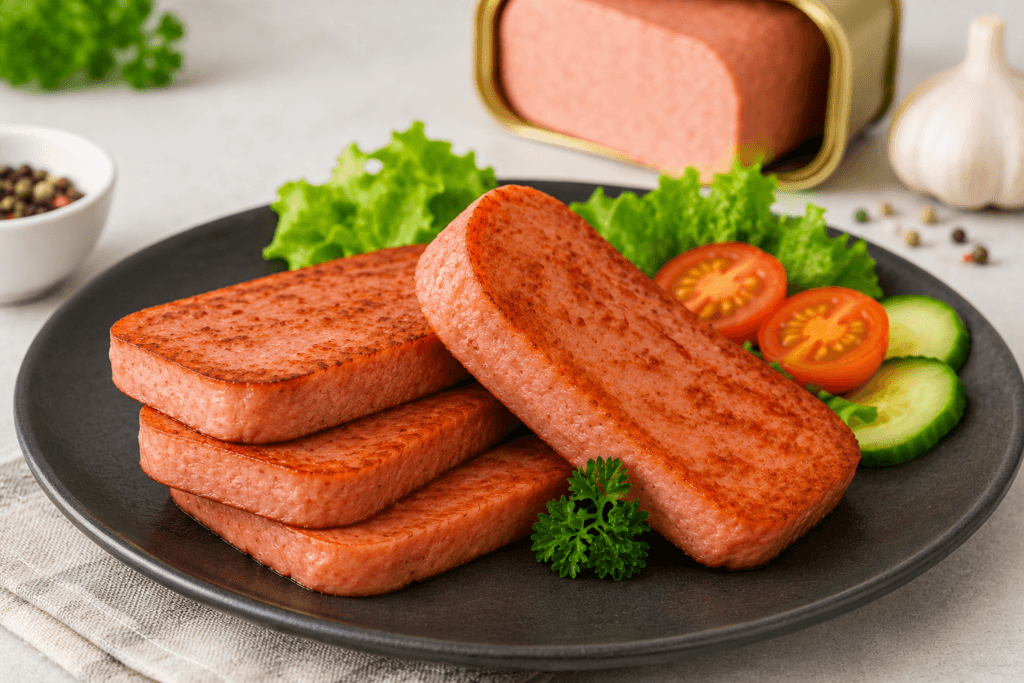
What Is Spam?
Spam is a shelf-stable, pre-cooked canned pork product made primarily from pork shoulder and ham meat. It was introduced by Hormel Foods in 1937 and has since sold over 9 billion cans worldwide (source: Hormel Foods). That’s not a typo nine billion.
The name “Spam” officially stands for nothing, though Hormel acknowledges the popular belief that it’s short for “Spiced Ham.” The product is technically classified as a luncheon meat or canned meat product, falling under the broader category of processed meat.
What makes it unique is its shelf-stable nature. Thanks to its sealed can and food preservatives, Spam can last up to 3–5 years without refrigeration which is a big reason why it became a wartime staple and remains a pantry favorite around the globe.
Is Spam Healthy?
Spam looks harmless in that little blue can, but your body reads it differently. One slice can pack over 700mg of sodium, which is almost a third of your daily limit. It’s high in saturated fat too, the kind your heart quietly keeps score of.
Yes, it has protein, but so does literally everything else without the guilt trip. The preservatives that keep it “fresh for years” aren’t doing your gut any favors either. Occasional Spam on a busy day? Fine, nobody’s calling the food police. Daily Spam breakfast? That’s a slower problem waiting to happen. Think of it like fast food’s quieter cousin, convenient and tasty, but not built for regular rotation. Your best move is to enjoy it rarely, pair it with real vegetables, and skip the extra salt shaker. Moderation isn’t boring, it’s just smart eating in disguise
Calories in Spam
A standard serving size of Spam (Classic) is 2 ounces (56g), and it contains approximately 180 calories. The full 12 oz can contains about 6 servings, giving you roughly 1,080 calories total per can.
Here’s a quick calorie breakdown per serving:
| Spam Variety | Calories per Serving (2 oz) |
|---|---|
| Spam Classic | 180 |
| Spam Lite | 110 |
| Spam Less Sodium | 180 |
| Spam Turkey | 80 |
| Spam Tocino | 190 |
For context, 180 calories from a single 2 oz portion is fairly moderate similar to a couple of scrambled eggs or a small chicken thigh. However, most people don’t eat just one serving, which is where portion control becomes essential.
How Does Spam Compare to Other Processed Meats in Calories?
Compared to similar ready-to-eat meat products, Spam sits in the mid-range for processed meat calories. A 2 oz serving of bologna delivers around 170-180 calories. Two slices of salami clock in at about 110-120 calories. Spam’s calorie density isn’t extreme, but its sodium content which we’ll get to is where things get interesting.
Nutrition of Spam
One 2-ounce serving of Spam Classic contains a meaningful mix of macronutrients, though it leans heavily toward fat and sodium. Here’s the complete breakdown based on the official USDA FoodData Central database:
| Nutrient | Amount per Serving | Daily Value % |
|---|---|---|
| Calories | 180 kcal | 9% |
| Total Fat (Spam fat) | 16g | 21% |
| Saturated Fat | 6g | 30% |
| Cholesterol | 40mg | 13% |
| Sodium | 790mg | 34% |
| Total Carbohydrates | 1g | 0% |
| Dietary Fiber | 0g | 0% |
| Total Sugars | 0g | — |
| Spam Protein | 7g | 14% |
What Does This Nutritional Data Actually Mean?
Let’s decode those numbers. That 34% daily value percentage for sodium in one serving is significant. The American Heart Association (AHA) recommends no more than 2,300mg of sodium per day, ideally under 1,500mg for most adults. Two servings of Spam alone would push you to 68% of the upper daily limit.
The saturated fat at 30% daily value per serving is also something to keep in mind, especially for those managing heart health. The Dietary Guidelines for Americans recommend keeping saturated fat under 10% of total daily calories and a single Spam serving already covers a third of that budget.
On the positive side, Spam’s dietary protein content at 7g per serving makes it a moderate protein source. It’s not a powerhouse like Greek yogurt or chicken breast, but it’s not negligible either.
Health Benefits of Spam
Yes, Spam does have some legitimate nutritional benefits especially when consumed in moderation as part of a balanced diet. Let’s be real about both sides of the coin.
Is Spam a good source of protein?
Spam is a decent source of dietary protein for a canned, shelf-stable food. At 7g per 56g serving, it provides protein-rich convenience that few pantry staples can match. For hikers, campers, or people in remote areas, it’s one of the more practical protein-rich convenience foods available.
Protein supports muscle repair, immune function, and satiety. In areas where fresh meat access is limited, shelf-stable meat products like Spam can fill a real nutritional gap.
According to Harvard T.H. Chan School of Public Health, while processed meats aren’t the ideal primary protein, they can be part of a varied diet without being harmful in moderate amounts.
Vitamins or Minerals
Spam isn’t just protein and fat it also contains:
- Zinc: Important for immune health and wound healing
- Iron: Supports red blood cell production
- Vitamin B12: Essential for nervous system function and found almost exclusively in animal products
- Niacin (B3): Supports energy metabolism
These micronutrients are a natural byproduct of using pork shoulder and ham meat, both of which are naturally nutrient-dense cuts of pork. So while Spam is a processed food, it retains some of the nutritional value of its raw ingredients.
Is Spam Good for Weight Loss?
Spam can fit into a weight loss plan, but only with strict portion control and careful attention to your overall sodium and fat intake. It’s not a weight loss food by any stretch, but it’s not automatically off-limits either.
The calorie intake from two servings of Spam (360 calories) is manageable within a 1,500–1,800 calorie daily deficit diet. The protein from Spam can support satiety, which helps you eat less throughout the day a proven weight management strategy supported by research published in the American Journal of Clinical Nutrition.
However, the high sodium content in processed meat calories can cause water retention, which may temporarily inflate the number on the scale. That’s not fat gain, but it can be discouraging if you’re tracking weight daily.
 Who Should Limit or Avoid Spam?
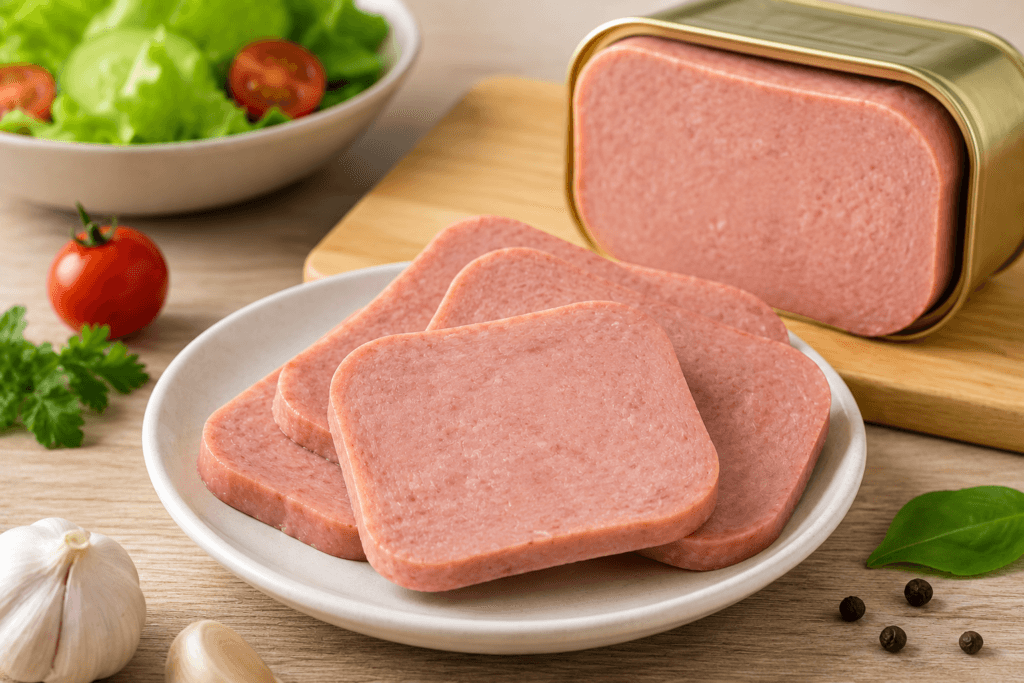 Who Should Limit or Avoid Spam?
Certain groups should approach high sodium foods like Spam with extra caution:
- People with hypertension or pre-hypertension
- Individuals with chronic kidney disease (kidneys process sodium)
- Those managing cardiovascular disease or high LDL cholesterol
- Anyone on a low-sodium medically supervised diet
The World Health Organization (WHO) classifies processed meat as a Group 1 carcinogen meaning there is sufficient evidence linking regular, high consumption to increased colorectal cancer risk. This doesn’t mean Spam causes cancer if you eat it occasionally. It means that making it a daily dietary staple over decades carries documented risk. Context matters enormously here.
How Can You Eat Spam More Healthily?
A few smart strategies for incorporating Spam without derailing healthy eating:
Choose Spam Lite, which cuts calories to 110 per serving and significantly reduces fat. Pair it with high-fiber foods like vegetables or whole grains to improve the overall nutrient density of your meal. Treating Spam as a flavor enhancer rather than the main protein in every meal is a practical approach that many nutritionists recommend for processed food nutrition generally.
7 Key Spam Nutrition Facts Most People Don’t Know
Here are verified, eye-opening facts that put canned meat nutrition into broader context:
- Spam Classic contains only 6 ingredients far fewer than most packaged meat products on grocery shelves.
- One can provides 1,080 calories total roughly half the daily intake for a 2,000-calorie diet.
- The sodium content per serving (790mg) represents 34% of the daily value making it one of the higher-sodium shelf-stable meat products available.
- Spam has zero dietary fiber making it a protein source but not a particularly filling one without supporting carbohydrates or vegetables.
- Spam Lite reduces fat by roughly 50% compared to Classic, making it one of the better shelf-stable meat products for calorie-conscious consumers.
- Pork shoulder nutrition is naturally rich in B vitamins and Spam retains much of this even after processing and canning.
- USDA regulates the sodium nitrite levels in canned meat products keeping them within the safe range established by the FDA and EFSA.
Frequently Asked Questions About Spam Nutrition Facts
Is Spam healthier than bacon?
Does Spam contain preservatives?
Yes. Spam contains preservatives such as sodium nitrite, which helps maintain flavor, color, and shelf life. Like many processed meats, it should be consumed in moderation due to its sodium and preservative content
How Much Cholesterol Does Spam Contain?
One serving of Spam Classic contains 40mg of cholesterol, which is 13% of the daily value (based on a 300mg daily limit). This is moderate compared to other animal-based protein sources and shouldn’t be alarming for most healthy adults eating Spam occasionally.
Is Spam Keto-Friendly?
Yes, Spam is technically keto-compatible. With only 1g of total carbohydrates per serving, it fits within the strict carbohydrate limits of a ketogenic diet. Its high fat content (16g per serving) also aligns with keto macro targets. Just watch the sodium, which can complicate electrolyte balance on keto.
Can people with diabetes eat Spam?
People with diabetes can eat Spam occasionally, but it should be limited because it is high in sodium and saturated fat. Pairing small portions with vegetables and whole grains is a healthier choice. Always follow your healthcare provider’s dietary advice
Can Spam Be Part of a Balanced Diet?
Absolutely with the key word being “part.” Spam can serve as a convenient protein source within a balanced diet that includes plenty of vegetables, whole grains, and other lean proteins. The concern isn’t Spam itself; it’s when processed meat becomes the dominant or only protein source in someone’s daily eating pattern.
Registered dietitians generally suggest limiting processed meat consumption to no more than a few times per week and balancing it with whole food protein sources to support long-term heart health and overall wellbeing.
The Bottom Line on Spam Nutrition Facts
Spam is a product that delivers convenience and moderate protein at a low cost but it comes with real trade-offs in sodium and saturated fat. It’s not the health food of the future, but it’s also not the dietary villain it’s sometimes made out to be.
The facts are clear: one serving of Spam Classic gives you 180 calories, 7g of spam protein, 16g of spam fat (including 6g saturated fat), and 790mg of sodium. Treat it as an occasional, portion-controlled addition to your diet rather than a daily staple, and there’s no reason it can’t have a place on your plate.
The key, as with most things in nutrition, comes down to balance, portion control, and the overall quality of your whole diet pattern not any single food..

Hi, I’m Salem Nasir, founder of Fiturely. I research and write evidence-based articles on fitness, nutrition, weight loss, and healthy living. My mission is to make reliable health information simple, practical, and easy to understand so readers can build healthier habits with confidence
Pingback: High Protein Drinks for Weight Loss: Best Shakes & Smoothies (2026)
Pingback: Stop Ignoring Chicken Thighs: Calories, Protein & Nutrition Facts That May Surprise You
Pingback: Sourdough Bread Nutrition Facts (2026): Calories, Protein, Fiber & Health Benefits
Pingback: Is Spam Good for Weight Loss? Calories, Protein & Health Facts (2026) - fiturely.com