
Key Takeaways
- Paneer is high in protein, making it an excellent vegetarian food for muscle growth, recovery, and staying full longer.
- It provides healthy fats and calcium, which support strong bones, teeth, and overall health.
- Paneer is naturally low in carbohydrates, making it suitable for low-carb and keto-friendly eating plans.
- Eating paneer in moderation can support weight loss or muscle gain, depending on your daily calorie and protein goals.
- Choosing fresh or homemade paneer gives you better control over ingredients, sodium, and fat content for a healthier diet.
Paneer isn’t just the star of your favorite curry. It’s quietly one of the most nutrient-dense foods in the Indian kitchen. This guide breaks down real paneer nutrition facts, including calories, protein, carbs, and calcium, using verified data so you know exactly what you’re eating.
 Calories, Protein, and Carbs in Paneer
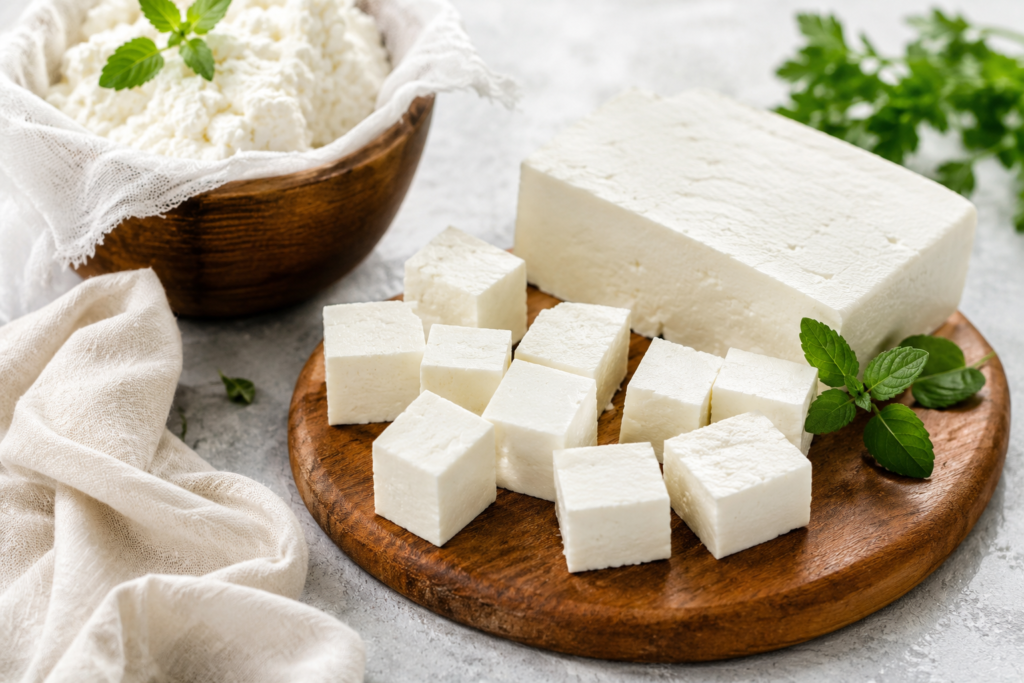 Calories, Protein, and Carbs in Paneer
Here’s the quick snapshot: 100 grams of full-fat paneer has 258 to 265 calories, 18 to 19 grams of protein, and just 1 to 3 grams of carbs. Fat sits around 20 grams, making protein and fat the main contributors to its calorie count, not carbs.
| Nutrient | Per 100g (Full-Fat) | Per 100g (Low-Fat) |
|---|---|---|
| Calories | 258 to 265 kcal | 200 to 220 kcal |
| Protein | 18 to 19 g | 18 to 22 g |
| Carbs | 1 to 3 g | 1 to 3 g |
| Fat | ~20 g | 10 to 12 g |
By common serving size, a 50g piece of paneer gives you roughly 129 kcal and 9.5g protein, while a 150g curry portion adds up to about 387 kcal and 28g protein. Carbs barely move regardless of portion size, staying under 4g even at 150g.
This is exactly why paneer is treated as a macro-friendly food. The calorie count is predictable, protein is high, and carbs are basically a rounding error.
What Are the Basic Paneer Nutrition Facts Per 100g?
100 grams of full-fat paneer contains roughly 258 to 265 calories, 18 to 19 grams of protein, and around 20 grams of fat. Carbs are minimal, usually under 3 grams. This makes paneer a high-protein, low-carb dairy food by default.
These numbers come from USDA-style nutrition databases and Indian nutrition trackers that test commercial paneer brands. Slight variations happen because paneer is homemade or semi-industrial, unlike standardized packaged cheese.
Low-fat paneer, made from toned or skimmed milk, drops to around 200 to 220 calories per 100g while keeping protein at 18 to 22 grams. So if you’re watching calories without sacrificing protein, low-fat paneer is worth choosing over the full-fat version.
Protein:
Paneer delivers about 18 to 19 grams of protein per 100 grams, making it one of the strongest protein-rich vegetarian foods available in a typical Indian diet. That’s comparable to chicken breast by weight.
This protein comes mainly from casein, the slow-digesting dairy protein also found in milk. Casein releases amino acids gradually, which is exactly why paneer keeps you full for hours after a meal.
A 150-gram serving of paneer (a common curry portion) provides close to 28 grams of protein. For a moderately active adult, that’s roughly half the daily protein requirement from a single dish.
Is Paneer a Complete Protein Food?
Yes, paneer is one of the few vegetarian complete protein foods, meaning it contains all nine essential amino acids your body cannot produce on its own. Its Protein Digestibility Corrected Amino Acid Score (PDCAAS) sits at 1.0, the highest possible rating.
Most plant proteins like lentils or beans are missing one or two essential amino acids. Paneer, being a dairy protein, doesn’t have that gap. That’s a big deal for vegetarians who often struggle to hit complete amino acid profiles without eggs or meat.
It also contains leucine, the amino acid most responsible for triggering muscle protein synthesis. Around 100g of paneer gives you close to 1.5 to 1.6g of leucine, which matters a lot if muscle repair is your goal.
Bodybuilding and Muscle Gain:
Paneer is genuinely one of the better vegetarian bodybuilding foods because it combines high protein, complete amino acids, and slow digestion. It fits well into muscle-building diets without needing supplements.
Research on muscle protein synthesis suggests you need roughly 20 to 25 grams of complete protein per meal, along with about 2.5g of leucine, to properly stimulate muscle repair. A 150g serving of paneer gets you close to both numbers in one go.
Combine that with resistance training, and 100 to 200g of paneer spread across two or three meals a day becomes a practical, macro-friendly food strategy for vegetarian lifters. No powder, no shakes, just paneer bhurji or grilled cubes.
How Does Paneer Compare to Eggs and Tofu?
Paneer beats tofu on protein density but loses to it on calories, and it beats eggs on total protein while eggs win slightly on leucine concentration. Neither comparison makes paneer a bad choice. It just depends on your goal.
Per 100 grams, tofu (firm) has about 8 grams of protein compared to paneer’s 18 to 19 grams, more than double. But tofu is far lower in calories, at roughly 76 kcal versus paneer’s 258 to 265 kcal for the full-fat version.
Eggs contain about 13 grams of protein per 100g, meaning paneer is actually more protein-dense by weight. However, eggs are lower in calories per gram of protein, so they win on pure efficiency.
If you’re looking at healthy cheese alternatives strictly for calorie control, tofu or low-fat paneer make more sense. If you want protein density in a vegetarian format, paneer is hard to beat.
Is Paneer a Good Source of Calcium?
Yes, paneer is a genuinely calcium-rich dairy food, offering somewhere between 200 to 210mg of calcium per 100 grams. That’s roughly 20% of the recommended daily calcium intake for adults in one serving.
Calcium and phosphorus work together in paneer to support bone density, which matters for growing children, active adults, and older people trying to prevent bone loss. This combination is part of why paneer has stayed a staple in Indian households for generations, alongside milk and curd.
It also contains vitamin B12, at around 0.5 micrograms per 100g. That’s genuinely useful for vegetarians, since B12 is one of the few nutrients almost impossible to get from plant foods alone.
Does Paneer Fit Into a Low-Carb or Macro-Friendly Diet?
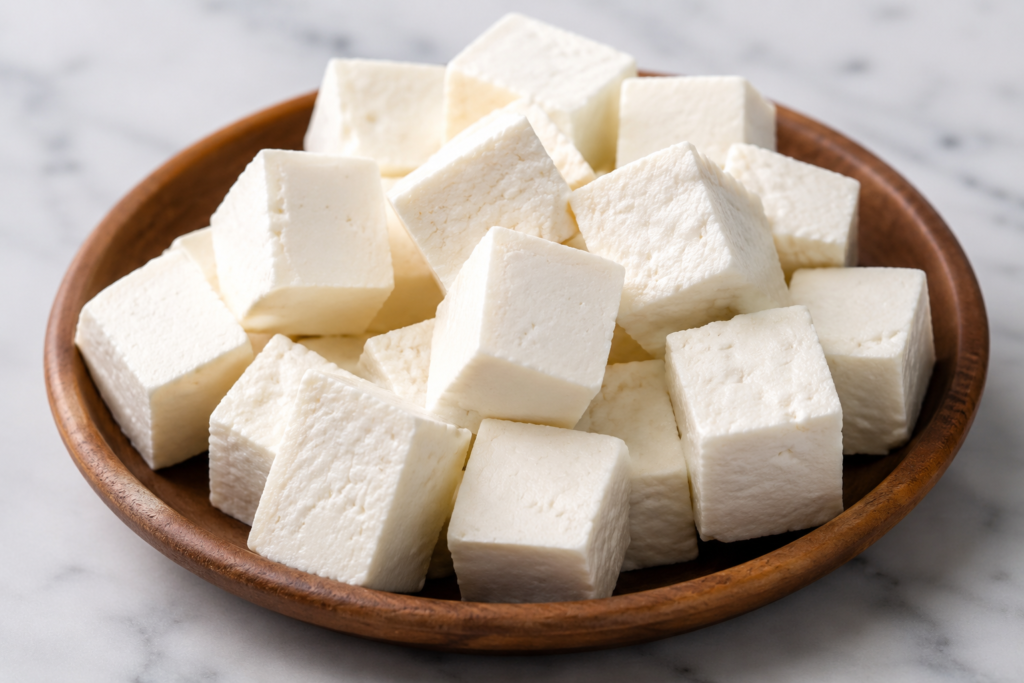 Does Paneer Fit Into a Low-Carb or Macro-Friendly Diet?
Yes, paneer fits comfortably into low-carb, keto, and general macro-friendly foods plans because it contains only 1 to 3 grams of carbs per 100 grams. Almost all its calories come from protein and fat, not carbohydrates.
This makes tracking paneer simple if you’re counting macros. A 100g serving gives you a predictable ratio: high protein, moderate-to-high fat, and barely any carbs to account for.
For people managing blood sugar, this low-carb, low-glycemic profile means paneer doesn’t cause the sharp insulin spikes that carb-heavy foods do. That’s a meaningful point for anyone building nutrient-dense foods into a diabetic-friendly meal plan.
How Much Paneer Should You Eat Daily?
A daily portion of 50 to 100 grams of paneer is considered safe and beneficial for most healthy adults. That range gives you 9 to 19 grams of protein without overloading on saturated fat or calories.
If you’re active or trying to build muscle, going up to 150 to 200g spread across meals is reasonable, especially if the rest of your diet is otherwise balanced. People managing cholesterol or kidney conditions should stick to the lower end and check with a doctor first.
Restaurant paneer dishes are the real calorie trap here. A curry loaded with cream and 200g+ of paneer can easily cross 600 to 800 calories in one bowl. The paneer itself isn’t the problem, the sauce is.
What Are Some Healthy High-Protein Meals Using Paneer?
Grilled paneer skewers, paneer bhurji with vegetables, and paneer salad with lemon dressing are simple ways to turn paneer into healthy high-protein meals without excess oil or cream. Each keeps the protein benefits intact while controlling calories.
Swapping paneer into breakfast, say a paneer paratha or paneer toast instead of processed cereal, is another easy win. It adds sustained protein early in the day, which helps curb mid-morning cravings.
For a lighter option, pair 75 to 100g of grilled paneer with a big vegetable salad. You get the full amino acid profile and calcium benefits without the calorie load of a rich curry.
Frequently Asked Questions
Is paneer high in fat?
Full-fat paneer does carry a notable amount of fat, roughly 20 grams per 100g. Low-fat paneer versions cut this down significantly while keeping protein levels similar or even slightly higher.
Is paneer better than tofu?
Paneer wins on protein density and calcium; tofu wins on lower calories and being fully plant-based. Your choice depends on whether calorie control or protein density matters more to you.
Can lactose-intolerant people eat paneer?
Many people with mild lactose sensitivity tolerate paneer better than milk, since much of the lactose converts to lactic acid during preparation. Those with severe lactose intolerance or a diagnosed milk protein allergy should still avoid it.
Is paneer good for weight loss?
In moderate portions, yes. Its protein content keeps you full longer, which can reduce overall snacking and calorie intake. Just watch the preparation method, since cream-heavy curries add up fast.
The Bottom Line
Paneer earns its reputation honestly. It’s a complete protein food, a calcium-rich dairy source, and one of the most practical protein-rich vegetarian foods you can cook with daily. Whether you’re building muscle, managing carbs, or just trying to eat better, paneer fits, as long as you’re mindful of portion size and what you cook it in.

Hi, I’m Salem Nasir, founder of Fiturely. I research and write evidence-based articles on fitness, nutrition, weight loss, and healthy living. My mission is to make reliable health information simple, practical, and easy to understand so readers can build healthier habits with confidence
Pingback: Guinness Nutrition Facts (2026): Calories, Carbs, Alcohol, Ingredients & Health Benefits
Pingback: Navel Orange Nutrition Facts (2026): Calories, Carbs, Protein & Health Benefits
Pingback: Is Peanut Butter Healthy for Weight Loss? Benefits, Calories & Best Time to Eat (2026)
Pingback: Cottage Cheese Nutrition Facts (2026): Calories, Protein, Carbs & Health Benefits - fiturely.com