
Key Takeaways
- Protein shakes can help women meet their daily protein needs, especially when diet alone isn’t enough.
- They support muscle recovery, strength, and healthy weight management when combined with regular exercise.
- Choose a protein shake with high-quality protein, low added sugar, and ingredients that match your health goals.
- Protein shakes work best as part of a balanced diet—they’re a supplement, not a replacement for nutritious whole foods.
Let’s be honest, protein shakes still have a bit of a “bro” reputation. Walk into any supplement aisle and you’ll see shaker bottles, bulging biceps, and packaging that screams gym bro, not “made for you.” No wonder so many women skip the aisle entirely.
But here’s the plot twist: women and protein shakes are actually a great match, for muscle, bones, skin, hormones, and yes, even weight management. This guide breaks down the real science, busts the myths, and helps you pick the right one without the marketing noise.
 Do Women Actually Need Protein Shakes?
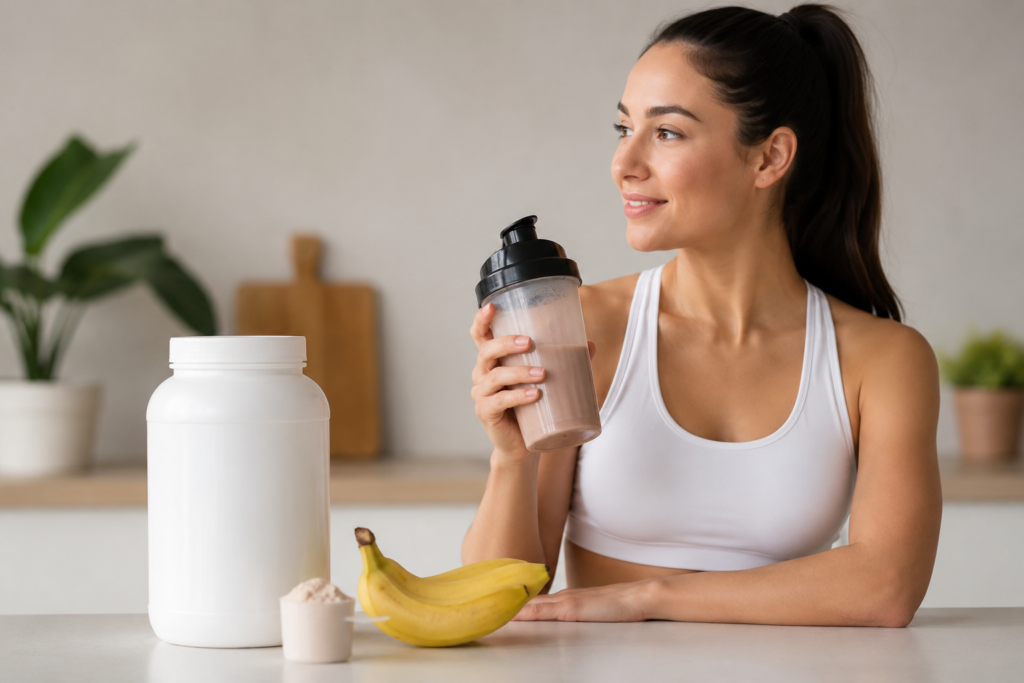 Do Women Actually Need Protein Shakes?
Short answer: you don’t need a shake specifically, but most women do need more protein than they’re eating, and a shake is the easiest way to close that gap. Food always comes first, but convenience matters when life gets busy.
Research consistently shows women, on average, eat less protein relative to their needs than men do, especially around breakfast and lunch. That gap adds up over decades and quietly affects muscle, bone, and energy levels.
A protein drink for women isn’t a magic fix. Think of it as a convenient top-up: 20 to 30 grams of usable protein in under a minute, no cooking, no dishes, no excuses.
How Much Protein Do Women Really Need Each Day?
The baseline U.S. RDA for protein is 0.8 grams per kilogram of body weight per day, which is the minimum to avoid deficiency, not necessarily the optimal amount for an active woman. For a 65 kg (143 lb) woman, that works out to roughly 52 grams a day.
Many nutrition scientists, and even newer U.S. dietary guidance, now suggest closer to 1.2 to 1.6 g/kg for people who strength train, are over 50, or are trying to lose fat while keeping muscle, nearly double the old minimum. That same 65 kg woman could reasonably aim for 78 to 104 grams a day depending on activity.
Needs shift across life stages too:
- Pregnancy: requirements rise notably in the second and third trimesters as the body builds new tissue.
- Breastfeeding: protein needs stay elevated to support milk production.
- Post-menopause: dropping estrogen speeds up muscle and bone loss, so many dietitians recommend intakes at or above 1.2 g/kg.
If you’re unsure where you land, a quick chat with a doctor or registered dietitian is worth more than any online calculator.
Why Protein Matters More for Women Than the Marketing Admits
Does Protein Help Prevent Muscle Loss (Sarcopenia)?
Yes, and this starts earlier than most women expect. Muscle loss, known as sarcopenia, typically begins around age 30, with the body losing about 3 to 5% of muscle mass per decade, a decline that becomes more noticeable by 60, according to the Office on Women’s Health.
Adequate protein, paired with resistance training, is one of the few proven ways to slow this down. This is exactly where high-protein shakes for women earn their keep: they make it realistic to hit your target most days, not just on “good” days.
Can Protein Shakes Support Bone Health?
Indirectly, yes. About one in two women over 50 will break a bone due to osteoporosis, per the Bone Health & Osteoporosis Foundation, a bigger lifetime risk than breast, uterine, and ovarian cancer combined. Protein works alongside calcium and vitamin D to support bone density, so it’s a piece of the puzzle, not a stand-alone fix.
Do Protein Shakes Actually Curb Hunger?
They can, for many people. Protein triggers the release of fullness hormones like GLP-1 and PYY, which is why a protein-rich breakfast or snack often keeps cravings quieter than a carb-heavy one. This is one reason healthy protein shakes for women show up so often in weight-management routines, not because they burn fat by themselves, but because they help you eat less without white-knuckling it.
What About Hair, Skin, and Nails?
Keratin (hair, nails) and collagen (skin) are both proteins. When intake is chronically low, hair sheds more, nails get brittle, and skin loses some elasticity. A shake won’t reverse aging, but it does supply the raw amino acid building blocks your body needs to keep producing these proteins efficiently.
Does Protein Affect Hormones and Mood?
Amino acids from protein are precursors for neurotransmitters like serotonin and dopamine, which play a role in mood and stress regulation. It’s not a substitute for sleep, stress management, or medical care, but chronically low protein intake doesn’t help an already unstable mood or energy level.
Will Protein Shakes Make Women “Bulky”?
No, and this fear is probably the single biggest reason women avoid protein in general. Building visible muscle bulk requires a serious calorie surplus, years of heavy progressive strength training, and hormonal conditions women simply don’t have in the same way men do (testosterone levels are roughly 10 to 20 times lower in women).
A scoop of whey isn’t a steroid, and it won’t “turn you into a bodybuilder overnight.” Whey protein for women behaves exactly the same as it does for men: it’s just protein, sourced from milk, nothing more dramatic than that.
Other common myths, quickly debunked:
- “Protein damages your kidneys.” Not true for healthy kidneys. This concern applies mainly to people with pre-existing kidney disease, who should check with their doctor first.
- “You must drink it right after a workout or it’s wasted.” The “anabolic window” is much wider than once believed. Total daily protein intake matters more than perfect timing.
- “It’s only for gym rats.” Anyone recovering from illness, surgery, or simply struggling to eat enough protein from food can benefit.
What Are the Best Protein Shakes for Women?
There’s no single “best,” it depends on your goals, digestion, and diet. Here’s a fast comparison of the most common women’s protein shakes on the market:
- Whey protein (concentrate, isolate, hydrolysate): Fast absorbing, contains all nine essential amino acids, great post workout. Isolate and hydrolysate suit those with mild lactose sensitivity better than concentrate.
- Casein protein: Digests slowly, making it a solid pick before bed or between long gaps in meals.
- Soy protein: A complete plant protein with isoflavones; a solid dairy free option.
- Pea protein: Popular among vegans, easily digestible, though slightly lower in a couple of essential amino acids (often blended with rice protein to balance this out).
- Hemp protein: Plant based, rich in omega 3s, considered a complete protein, though less concentrated per scoop than whey or pea.
If you’re comparing protein supplements for women on a label, look for: 20 to 30g protein per serving, under 5g added sugar, a full amino acid profile, and third party testing (like NSF Certified for Sport or Informed Choice).
Are Meal Replacement Shakes for Women Different from Protein Shakes?
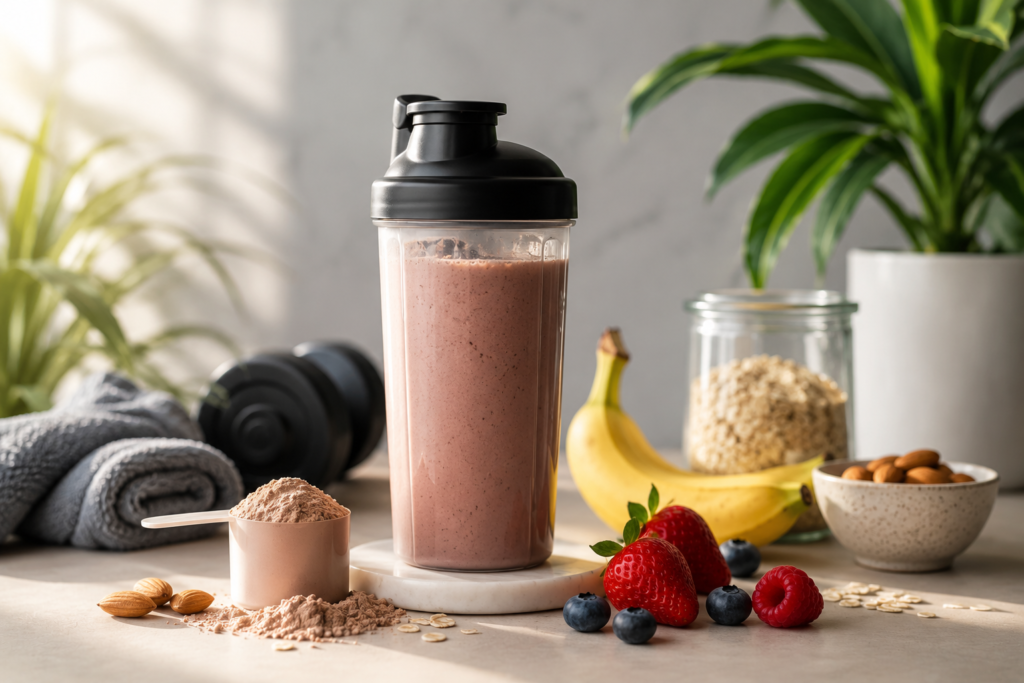 Are Meal Replacement Shakes for Women Different from Protein Shakes?
Yes, and mixing these up is a common, costly mistake. A standard protein shake is a supplement, extra protein on top of your normal meals. A meal replacement shake for women is designed to actually substitute a full meal, so it includes added carbs, fats, vitamins, and minerals to be nutritionally complete on its own.
If you’re grabbing a shake to replace breakfast entirely, you want a meal replacement formula, not just a protein powder mixed with water, otherwise you’ll likely be hungry (and low on nutrients) by 11 a.m.
How to Choose Healthy Protein Shakes for Women
Because the FDA does not review dietary supplements for safety or effectiveness before they hit shelves, the burden of quality checking falls on the buyer, not the government. That’s not scary, it just means a little label reading goes a long way.
Quick checklist for women’s nutrition shakes:
- Protein per serving: aim for 20 to 30g.
- Sugar: under 5g added sugar per serving is a good ceiling.
- Ingredient list: shorter and more recognizable is usually better.
- Third party testing seal: NSF, Informed Sport, or USP.
- Allergen check: dairy free if you’re lactose intolerant; soy free if needed.
- Realistic marketing: be wary of shakes promising rapid fat loss or “detox.” Protein doesn’t detoxify anything; your liver and kidneys already do that job.
When Should Women Drink Protein Drinks?
Anytime it fills a real gap, there’s no single “correct” hour. Popular, evidence backed windows include:
- Breakfast, if mornings are rushed and usually protein light.
- Post-workout, within a few hours, to support muscle repair.
- Mid-afternoon, to curb the 3 p.m. snack attack.
- Before bed (casein based), for slow overnight amino acid release.
Spreading protein across the day, roughly 25 to 30g per meal, tends to work better for muscle maintenance than cramming it all into one giant shake.
Frequently Asked Questions
Is whey protein safe for women every day?
Yes, for most healthy women, daily use is safe and simply counts toward your total daily protein intake, same as eating chicken, eggs, or lentils.
Can protein shakes replace real food entirely?
Not long term. They’re a convenient supplement, not a replacement for a varied, whole food diet, unless specifically formulated and used as a meal replacement.
Do protein shakes cause weight gain?
Only if total daily calories exceed what your body burns. Protein itself isn’t uniquely fattening, and it’s actually linked to better appetite control.
Which is better: whey or plant-based protein for women?
Neither is universally “better.” Whey absorbs faster and is a complete protein; quality plant based blends (pea plus rice, for instance) can match it closely. Choose based on digestion, ethics, and allergies.
The Bottom Line
Protein isn’t a men’s only nutrient, and it never was, the marketing just made it look that way. Whether your goal is stronger bones, steadier energy, better hair and skin, or simply less afternoon hunger, a well chosen shake can be a small daily habit with a genuinely large payoff.

Hi, I’m Salem Nasir, founder of Fiturely. I research and write evidence-based articles on fitness, nutrition, weight loss, and healthy living. My mission is to make reliable health information simple, practical, and easy to understand so readers can build healthier habits with confidence
Pingback: Weight Loss for Women Over 40: 15 Science-Backed Tips to Lose Belly Fat Faster (2026)