
Key Takeaways
- Daily low-impact exercise helps improve strength, balance, flexibility, and mobility, making everyday activities easier.
- Just 15-30 minutes of movement each day can reduce the risk of falls and support healthy aging.
- Choose exercises that match your fitness level, focus on proper form, and increase intensity gradually.
- Stay consistent, listen to your body, and consult a healthcare professional before starting a new exercise routine if you have any medical conditions.
Your joints, muscles, and balance all need regular attention as the years Going. The good news? You don’t need a gym membership or fancy equipment. A short, consistent daily senior fitness routine can keep you steady, strong, and independent for years to come.
Below are 7 exercises to do everyday, backed by real health guidance, not internet myths. We’ll also cover how much is enough, when to check with your doctor, and how to build these moves into a routine that actually sticks.
 Why Daily Movement Matters More With Age
 Why Daily Movement Matters More With Age
Here’s the blunt truth: more than 25% of older adults fall each year, and falling once doubles your chances of falling again. That’s not a scare tactic. It’s just biology. As flexibility and balance decline, the risk of a stumble turning into a serious injury goes up.
The flip side is encouraging. Staying active improves flexibility, strengthens bones, and sharpens balance and coordination. It also supports better sleep, healthier blood pressure, and a lower risk of chronic conditions like heart disease, stroke, and type 2 diabetes.
Adults, including older adults, are generally encouraged to aim for about 150 minutes of moderate aerobic activity each week. That sounds like a lot until you break it down: roughly 30 minutes a day, five days a week. Or, if that feels like too much at once, split it into two 15-minute walks.
This is where an evidence based exercises for seniors approach makes all the difference. Small, consistent movement beats occasional intense workouts every time.
Talk to Your Doctor Before You Start
Before jumping into any new routine, especially if you manage a condition like arthritis, diabetes, or heart disease, check in with your physician. A doctor recommended exercises for seniors plan should match your current abilities, not push you past them.
Most doctors actually encourage more movement, not less. Staying active tends to lower your risk of developing additional health issues down the line. So this conversation usually works in your favor.
7 Exercises To Do Everyday
This isn’t a random list pulled from thin air. It’s a practical, expert approved senior workout routine built around balance, strength, and flexibility, the three pillars that keep older adults mobile and confident on their feet.
1. Walking
Simple, free, and effective. Walking gets your heart pumping and keeps your hips and knees moving through their natural range of motion.
Aiming for around 8,000 to 10,000 steps a day can help lower the risk of several age-related health issues. If that number feels far off, start smaller. Even 5 to 10 minutes of walking every hour adds up fast, and it’s one of the easiest daily exercises for seniors to fit into an ordinary day.
2. Single-Leg Balance Holds
Every time you climb a stair or step off a curb, you briefly balance on one leg. Training that skill directly is one of the smartest balance exercises for seniors you can do.
Stand near a wall or sturdy chair for support. Lift one foot a few inches off the floor, hold for up to 30 seconds, then switch legs. Repeat five times per side. This single move builds the kind of stability that prevents falls before they happen.
3. Chair Yoga or Standing Yoga
Yoga is low impact and gentle on the joints, which makes it one of the most accessible flexibility exercises for seniors around. It combines physical postures with controlled breathing, and it can be done standing, seated, or a mix of both.
Two to three sessions a week is a solid starting point. Beyond flexibility, yoga also supports better balance and can help take the edge off daily stress.
4. Tai Chi
Tai chi looks slow and effortless from the outside, but don’t let that fool you. This ancient practice builds real balance, coordination, and ankle stability through smooth, deliberate movement.
One study found that at-risk adults and older adults who practiced tai chi cut their risk of injury-related falls in half. That’s a meaningful result from a practice that barely raises your heart rate. Start with once a week and build the habit before adding more sessions.
5. Wall Pushups
Upper body strength matters more than people realize. It’s what lets you push yourself up from a chair, carry groceries, or catch yourself if you trip.
Stand about three feet from a wall, place your palms flat against it at shoulder height, and lower your body toward the wall before pushing back. Ten repetitions, two to three times a week, is enough to notice a difference. This is a foundational move in almost every senior exercise routine without equipment.
6. Standing Back Leg Raise
This move strengthens your hips and glutes while reinforcing natural posture and alignment. Hold onto a counter or chair, extend one leg straight behind you, lift it an inch or two off the floor, then lower it back down. That’s one rep. Aim for 10 reps per leg, at least three days a week.
It’s a small motion with a big payoff for stability, making it one of the most useful functional exercises for seniors on this list.
7. Daily Stretching
Stretching rarely gets the credit it deserves. A few minutes of neck rolls, shoulder squeezes, and upper back stretches each day keeps your range of motion intact, so reaching for a top shelf or turning to check a blind spot doesn’t feel like a struggle.
Hold each stretch for 10 to 30 seconds and repeat three to five times. Do this daily, ideally both before and after your other activities.
Building Your Weekly Senior Wellness Routine
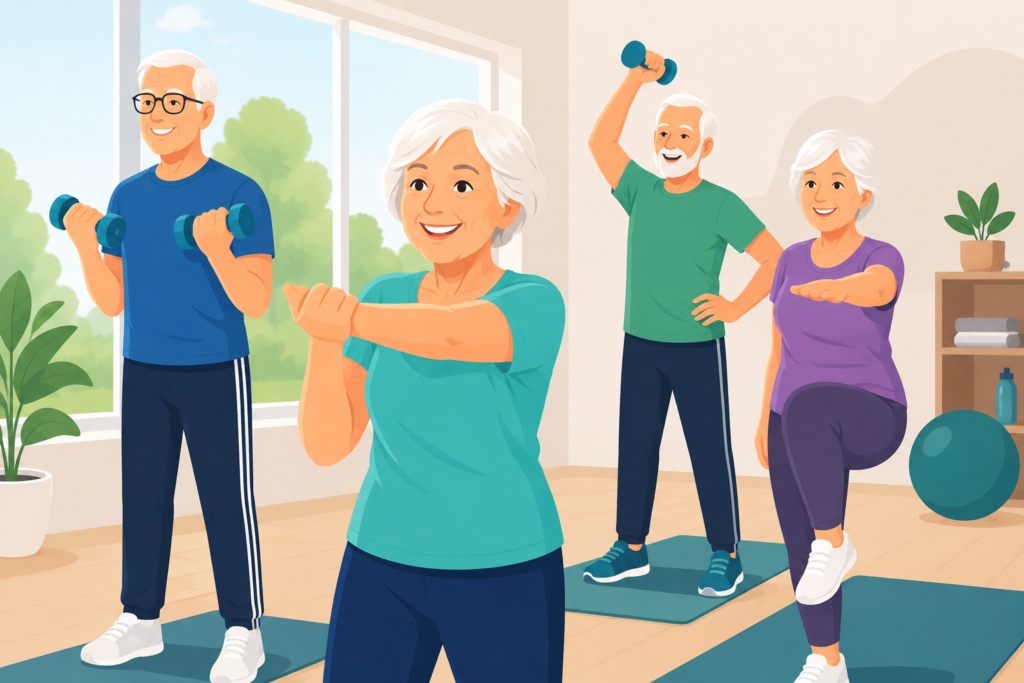 Building Your Weekly Senior Wellness Routine
You don’t need to do all seven exercises every single day. A realistic senior exercise routine spreads things out across the week:
- Aerobic activity (walking, swimming, cycling, or dancing): most days, 15 to 30 minutes
- Strength moves (wall pushups, leg raises): 2 to 3 days a week
- Balance work (single-leg holds, tai chi): daily or near-daily
- Flexibility and stretching: every day, even just five minutes
This mix reflects a genuine healthy aging exercise plan, one that builds strength without burning you out. If you’re enrolled in certain Medicare Advantage plans, programs like SilverSneakers can also give you access to classes and gyms designed specifically for older adults.
Weekly Routine at a Glance
| Day | Aerobic Activity | Strength | Balance | Flexibility |
|---|---|---|---|---|
| Monday | 15-minute walk x 2 | Wall pushups | Single-leg hold | Daily stretch |
| Tuesday | 15-minute walk x 2 | Rest | Tai chi | Daily stretch |
| Wednesday | 30 min cycling or swimming | Standing back leg raise | Single-leg hold | Daily stretch |
| Thursday | Rest | Wall pushups | Tai chi | Daily stretch |
| Friday | 30-minute walk | Rest | Single-leg hold | Daily stretch |
| Saturday | 30 min cycling or dancing | Standing back leg raise | Tai chi | Daily stretch |
| Sunday | Rest | Rest | Chair yoga | Daily stretch |
This table is only a starting template. Swap days around, shorten sessions, or rest more often based on how your body responds. The goal is progress, not a perfect scorecard.
Getting Started as a Beginner
If you’re new to exercise, don’t try to do everything at once. Beginner exercises for seniors should start small: one or two moves, a few times a week, gradually increasing as your body adjusts.
Walking and stretching are the easiest entry points. Once those feel comfortable, layer in balance work, then strength moves. This gradual approach is really the foundation of any solid at home senior exercise guide, and it works because it respects your body’s pace instead of rushing it.
Frequently Asked Questions
What are the 7 exercises to do everyday for seniors?
Walking, single-leg balance holds, chair or standing yoga, tai chi, wall pushups, standing back leg raises, and daily stretching. Together, they cover aerobic health, balance, strength, and flexibility, the core areas that matter most for healthy aging.
Do I really need to do all 7 exercises every single day?
No. Walking, balance work, and stretching are fine daily. Strength moves like wall pushups and leg raises work best spread across 2 to 3 days a week, so your muscles get time to recover.
How much exercise should older adults get each week?
General guidance points to about 150 minutes of moderate aerobic activity weekly. That can be broken into smaller chunks, such as two 15-minute walks a day, which feels far more manageable than one long session.
Are these exercises safe if I have arthritis, diabetes, or heart disease?
Many of them are low impact and generally well tolerated, but it’s always worth checking with your doctor first. They can adjust intensity or suggest modifications based on your specific condition.
Can these exercises actually lower my risk of falling?
Yes. Balance-focused movements like single-leg holds and tai chi are directly linked to fall prevention. One notable study found tai chi practice cut injury-related falls in half among at-risk and older adults.
What if I haven’t exercised in years? Where should I start?
Start small. A short daily walk and a few minutes of stretching are enough to begin. Add one balance or strength move once that feels comfortable, then build gradually from there.
The Bottom Line
None of these seven moves require special equipment, a gym membership, or hours of free time. They require consistency. A daily walk, a few balance holds, a couple of wall pushups, and some honest stretching go a long way toward keeping you steady, strong, and doing the things you love.
Think of this as your mobility exercises for older adults starting point, not a rigid rulebook. Adjust the pace to fit your body, check in with your doctor when needed, and give yourself credit for showing up. That’s really what a sustainable daily workout for seniors looks like: small, steady, and built to last.

Hi, I’m Salem Nasir, founder of Fiturely. I research and write evidence-based articles on fitness, nutrition, weight loss, and healthy living. My mission is to make reliable health information simple, practical, and easy to understand so readers can build healthier habits with confidence