
Key Takeaways
- Ham is a high-protein, low-carb food that can support muscle health and satiety.
- It provides essential nutrients like vitamin B12, selenium, zinc, and phosphorus.
- Most ham is high in sodium, so enjoy it in moderation and choose low-sodium options when possible.
- Lean, baked ham is a healthier choice than heavily processed or fried varieties.
- Ham can fit into a balanced diet, especially when paired with vegetables and whole grains.
Ham shows up on almost every holiday table, every deli counter, and half the sandwiches in America, yet most people have no idea what’s actually in it. Is it a lean protein win or a sodium trap in disguise? Let’s break down ham nutrition facts with real numbers, not guesswork.
This guide covers ham calories and protein, vitamins, minerals, and the honest risks, so you can decide how ham fits into your plate.
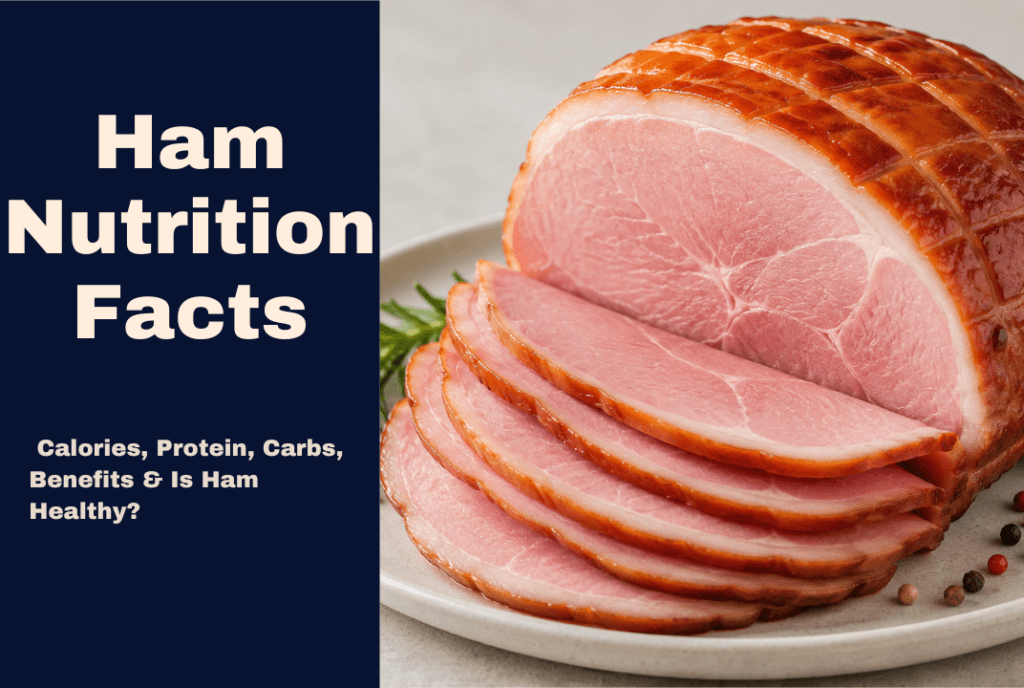
Ham Nutrition Facts
A standard serving of cured pork ham delivers roughly 145 calories, 20g protein, 6g fat, and 1.5g carbs per 100g, according to USDA FoodData Central. That makes it a solid protein-rich food, though the sodium number deserves attention too.
Here’s the quick breakdown for ham nutrition per 100g versus a typical ham calories per slice (about 28g):
| Nutrient | Per 100g | Per Slice (28g) |
|---|---|---|
| Calories | 145 | 41 |
| Protein | 20g | 5.6g |
| Fat | 6g | 1.7g |
| Saturated Fat | 2g | 0.6g |
| Carbs | 1.5g | 0.4g |
| Sodium | 1,200mg | 336mg |
| Cholesterol | 53mg | 15mg |
Numbers shift a bit depending on whether it’s honey baked ham nutrition, smoked ham nutrition facts, or plain cured ham. Glazes and brines change the sugar and sodium content, so always check the label since brands vary more than people expect.
For anyone tracking macros closely, this table alone answers most of what people search for around ham nutrition facts per serving.
Calories
Ham is genuinely low in calories for how much protein it packs. A 3 ounce serving (about 84g) sits around 100 to 120 ham calories, per USDA data. That’s less than a slice of white bread in most cases.
This is exactly why ham keeps showing up in high-protein breakfast plans and lunch box staples. It fills you up without blowing your calorie budget, as long as portion size stays reasonable.
Compare that to bacon, which runs closer to 40 to 45 calories per slice just from rendered fat. We’ll get into that full bacon vs ham nutrition comparison later in this article.
If you’re also curious how other pantry staples stack up, check out our guide on Spam Nutrition Facts, a surprisingly similar comparison in the processed meat world.
Protein
Here’s the number that matters most for most readers: ham protein content averages 18 to 20g per 100g serving, making it a genuine complete protein source. That means it delivers all nine essential amino acids your body can’t make on its own.
This is why ham often gets recommended as is ham good after workout food. It’s quick, needs no prep, and refuels muscle tissue fast. Compared to plant proteins, it also digests faster since it’s already a complete amino acid profile.
For anyone doing intermittent fasting or needing a fast protein hit without carbs, ham checks that box cleanly. Just don’t stack it with high sodium sides.
Speaking of protein sources people often question, our piece on Is Spam Healthy digs into a related canned meat debate worth reading.
Carbs
Good news for low carb eaters: ham carbs and calories are both naturally low, since ham is a muscle meat, not a starch. Plain cured ham has under 2g of carbs per 100g, almost entirely from the curing process rather than the meat itself.
Honey glazed varieties are the exception. That glaze can add 5 to 10g of sugar per serving, so if you’re watching carbs strictly, plain or ham nutrition without fat trimmed versions are the safer pick.
This near zero carb profile is exactly why ham fits so easily into low-carb foods lists and keto meal plans. More on that a bit further down.
Fat
Ham’s ham fat content sits in the moderate range, about 4 to 6g per 100g, with roughly a third of that as saturated fat. That’s leaner than bacon or sausage, but not as lean as chicken breast or turkey.
The saturated fat here isn’t extreme, but it adds up if ham is a daily habit rather than an occasional food. The American Heart Association recommends keeping saturated fat under 13g per day on a 2,000 calorie diet, so a few ham slices still leave plenty of room.
Leaner cuts labeled “extra lean” or “97% fat-free” cut that number close to 2g fat per 100g, worth checking labels for if fat is your main concern.
If you’re building a lower fat plate, our breakdown of Steamed Broccoli Nutrition makes a great pairing reference for balancing out the meal.
Vitamins and Minerals
Ham isn’t just protein and salt, it’s genuinely rich in a handful of micronutrients most people underestimate. A single serving covers a meaningful chunk of daily vitamin B12, niacin, selenium, zinc, phosphorus, and potassium.
Selenium stands out the most. Ham can provide 40 to 75% of the daily value in one serving, based on USDA nutrient data. Selenium supports thyroid function and acts as an antioxidant in the body.
Zinc and phosphorus support immune function and bone health, while potassium helps balance sodium’s effect on blood pressure, a small silver lining given how salty ham tends to be.
Vitamin B12 and niacin round things out, both crucial for energy metabolism and nerve function, nutrients that are much harder to get from plant based proteins alone.
Health Benefits of Ham
Eaten in moderation, ham brings real nutritional value to the table. It’s not just empty processed meat. It’s a fast, complete protein source with useful micronutrients and almost no carbs.
- Muscle maintenance: high quality protein supports muscle repair, especially useful for older adults and active people.
- Convenience: pre-cooked and ready to eat, making it an easy high-protein breakfast or lunch add in.
- Micronutrient density: solid source of selenium, zinc, and B12 without needing supplements.
- Low carb, low sugar: fits cleanly into low-carb foods and keto-friendly meat categories.
The catch, as with most processed meat, is moderation. The benefits are real, but so are the downsides discussed below.
For a lighter side dish that balances a ham heavy plate, see our guide on Red Onion Nutrition Facts, packed with antioxidants and almost zero sodium.
Is Ham Healthy?
Short answer: is ham healthy in moderation, yes, as an occasional protein source, not a daily staple. It’s nutrient dense and low carb, but it’s still classified as a processed meat, which the World Health Organization links to increased colorectal cancer risk with heavy, regular consumption.
The key word is regularity. Eating ham a few times a week as part of a varied diet is very different from eating it daily in large amounts. The WHO’s IARC classification (Group 1 carcinogen) is based on population level data from frequent, high volume processed meat consumption, not occasional servings.
Choosing lower sodium, minimally processed, or fresh (uncured) ham versions reduces most of the concern while keeping the protein and micronutrient benefits intact.
Is Ham Good for Weight Loss?
Yes, in the right context. Is ham good for weight loss comes down to its low calorie density and high protein, both of which support satiety. A 100g serving at 145 calories with 20g protein hits a favorable ratio compared to many snack foods.
Protein has a well documented effect on reducing hunger hormones and increasing fullness, per multiple nutrition studies. Swapping a carb heavy snack for a couple of slices of lean ham can genuinely help control appetite between meals.
The caveat: sodium can cause water retention, which shows up as a temporary scale bump, not actual fat gain. Pairing ham with fiber rich vegetables balances this out nicely.
Trying to round out a weight loss friendly plate? Our article on Parsnip Nutrition Facts covers a fiber rich, low calorie side that pairs well here.
Is Ham Keto Friendly?
Absolutely. Is ham keto friendly is one of the easiest yes answers in this whole guide. With under 2g of carbs per 100g and zero sugar in plain cured versions, ham fits keto and low carb diets without any adjustment.
This is why it shows up so often under ham nutrition for keto diet searches. It delivers fat and protein with essentially no carb interference, which is exactly what ketogenic macros call for.
Just steer clear of honey glazed or sweetened varieties, since those can add enough sugar to nudge a strict keto day off track. Plain, smoked, or dry cured styles are the safest keto picks.
Risks (Sodium & Processed Meat)
Here’s the part that deserves real attention: sodium in ham is genuinely high, often 700 to 1,200mg per 100g. That’s roughly a third to half of the recommended daily 2,300mg limit from the American Heart Association in a single serving.
The ham sodium content issue compounds with its classification as processed meat. The WHO’s IARC lists processed meat as a Group 1 carcinogen, tied to colorectal cancer risk with regular, high volume intake, a finding based on decades of population studies, not scare mongering.
Cholesterol is another factor worth noting, around 50 to 55mg per 100g, moderate but relevant for anyone managing heart health closely.
For can diabetics eat ham, generally yes, since carbs are minimal, but the sodium level matters more here, especially for those managing blood pressure alongside blood sugar. Choosing low sodium versions and pairing with potassium rich vegetables helps offset the impact.
For readers managing sodium sensitive diets, our Clear Liquid Diet guide covers what to eat during recovery periods when salt intake needs close monitoring.
Ham vs Bacon Nutrition
People constantly ask is ham healthier than bacon, and the numbers do favor ham. Here’s a direct bacon vs ham nutrition comparison per 100g:
| Nutrient | Ham | Bacon |
|---|---|---|
| Calories | 145 | 541 |
| Protein | 20g | 37g |
| Fat | 6g | 42g |
| Saturated Fat | 2g | 14g |
| Sodium | 1,200mg | 1,717mg |
| Carbs | 1.5g | 1.4g |
Bacon has more protein by weight, but it also brings nearly four times the fat and calories. Ham comes out ahead as the leaner, lower fat option overall. Bacon wins on flavor intensity, ham wins on the nutrition label.
For those avoiding pork entirely, turkey ham nutrition and chicken ham nutrition run even leaner, typically 100 to 110 calories and under 3g fat per 100g, making them solid alternatives within deli meat nutrition comparisons.
Honey Baked Ham Nutrition vs Smoked Ham Nutrition Facts
Honey baked ham nutrition:
runs higher in sugar and calories than plain smoked ham, due to the sugary glaze. A typical 3-oz serving of honey-baked ham has around 120-140 calories and 5-8g of sugar, compared to smoked ham’s near-zero sugar content.
Smoked ham nutrition facts:
show a very similar profile to standard cured ham, around 100 calories, 14g protein, and similar sodium, with the main difference being flavor compounds picked up during the smoking process, plus slightly higher levels of certain carcinogenic compounds (PAHs) formed by smoke exposure, per IARC research
Cured Ham vs Fresh Ham:
Cured ham:
goes through a salt or brine preservation process, which significantly raises sodium content compared to fresh, uncured pork ham. Fresh ham must be fully cooked before eating and isn’t preserved with nitrates or nitrites.
Ham nutrition facts cooked:
this way (fresh, roasted) typically show lower sodium, often half or less of cured ham’s sodium content, because no curing brine is involved. If sodium is your main concern, fresh, unprocessed pork leg roasted at home is nutritionally the better choice over deli or holiday cured ham
Ham Nutrition Comparison Table
| Type | Calories (3 oz) | Protein | Fat | Sodium | Carbs |
|---|---|---|---|---|---|
| Cured Ham | 100 | 14g | 4g | 1,050mg | 1g |
| Smoked Ham | 98 | 14g | 4g | 1,000mg | 0.5g |
| Honey Baked Ham | 130 | 12g | 6g | 950mg | 6g |
| Prosciutto (thin-cut) | 90 | 15g | 5g | 1,150mg | 0g |
| Turkey Ham | 80 | 15g | 2.5g | 950mg | 1g |
| Chicken Ham | 85 | 14g | 3g | 900mg | 1g |
| Bacon (for comparison) | 160 | 12g | 12g | 780mg | 0.5g |
Best Way to Eat Ham
The healthiest approach isn’t complicated: choose lower sodium or fresh cut ham, watch portion size (around 3 ounces), and pair it with fiber and potassium rich vegetables to balance sodium’s effect.
Avoid charring or over grilling ham at high heat, since this can increase compound formation linked to the processed meat cancer risk mentioned earlier. Gentle reheating or serving cold (as with prosciutto) is the safer cooking method.
Finally, treat ham as one healthy meat option among many. Rotating with turkey, chicken, and fish keeps your protein-rich foods intake varied and reduces reliance on any single processed source.
Pairing ham with a drink? Our Guinness Nutrition breakdown is a fun, factual read for anyone building out a full holiday meal nutrition picture.
Frequently Asked Questions
Is ham bad for you if eaten every day?
Eating ham daily in large amounts isn’t ideal, mainly because of its high sodium and processed meat classification. Occasional or a few times a week is a safer pattern than a daily habit, according to WHO and American Cancer Society guidance on processed meat.
How many calories are in 2 slices of ham?
Two slices of deli ham (about 56g total) come in around 70 to 80 calories, based on USDA data for standard cured ham. That makes it one of the lowest calorie deli meats available.
Is ham a good source of protein for muscle building?
Yes, ham is a complete protein with all nine essential amino acids, delivering about 20g of protein per 100g. It’s a fast, convenient option for muscle repair, though it should be balanced with lower sodium proteins across the week.
Can I eat ham on a low sodium diet?
You can, but choose low sodium or reduced sodium labeled ham, since regular cured ham can carry over 1,000mg of sodium per 100g. Pairing it with potassium rich vegetables like potatoes or spinach also helps offset the sodium load.
What is the healthiest type of ham to buy?
Fresh, uncured, or nitrate free ham with a “reduced sodium” label is generally the healthiest choice. Prosciutto and thinly sliced deli styles also work well since portion sizes are naturally smaller.
The Bottom Line
Ham is a nutrient dense, high protein, low carb food that fits comfortably into keto, weight loss, and general healthy eating plans, as long as sodium stays on your radar. Choose leaner, lower sodium cuts, keep portions reasonable, and balance meals with vegetables high in potassium and fiber..
Related Reads:
Is Spam Healthy, Spam Nutrition Facts, Clear Liquid Diet, Steamed Broccoli Nutrition, Red Onion Nutrition Facts, Guinness Nutrition, Parsnip Nutrition Facts
Sources: USDA FoodData Central, World Health Organization (IARC Monograph on Red and Processed Meat), American Heart Association Sodium Guidelines, American Cancer Society.

Hi, I’m Salem Nasir, founder of Fiturely. I research and write evidence-based articles on fitness, nutrition, weight loss, and healthy living. My mission is to make reliable health information simple, practical, and easy to understand so readers can build healthier habits with confidence