
Key Takeaways
- Hip thrusts are one of the most effective glute exercises for building stronger, rounder, and more defined glutes with consistent training.
- Focus on proper form and progressive overload to maximize glute growth while reducing the risk of lower back strain.
- Train your glutes 2-3 times per week using a mix of hip thrusts, squats, Romanian deadlifts, and glute bridges for balanced development.
- Beginners can achieve excellent results with bodyweight or resistance band hip thrusts before progressing to heavier weights.
- Combine glute training with adequate protein, recovery, and consistency to see noticeable strength and muscle growth over time.
The 7 best glute exercises for women are the hip thrust, glute bridge, Bulgarian split squat, Romanian deadlift, donkey kicks, fire hydrants, and clamshells. Together, they hit all three glute muscles, and you can do most of them at home with zero equipment.
Your glutes don’t just sit there looking good. They power almost every move you make: standing up, climbing stairs, sprinting for the bus, even holding your posture at a desk. A proper glute workout for women trains three separate muscles at once, and most people only train one of them by accident.
This guide breaks down a real, evidence-based butt workout for women, using rep ranges and recovery windows straight from sports science research, not guesswork. If you’re also working on other areas, our guide on leg exercises for women pairs perfectly with this routine.
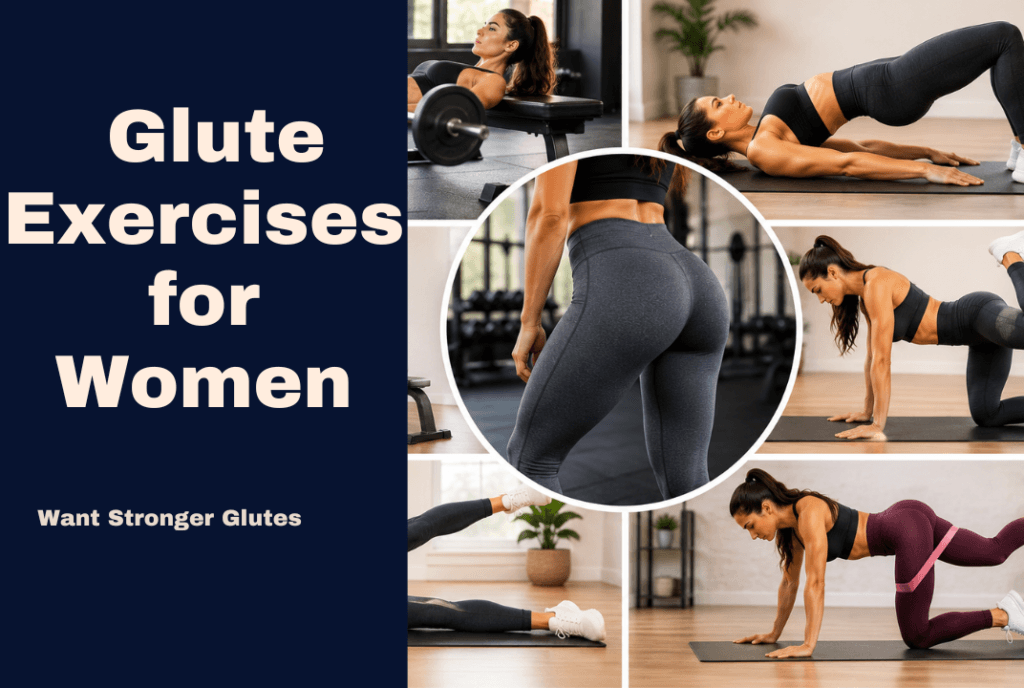
Why Your Glutes Deserve More Attention
Your backside is made of three separate muscles, and each one has a job:
- Gluteus maximus: the biggest muscle in your entire body. It drives you forward when you walk, run, or stand up from a chair.
- Gluteus medius: a fan-shaped muscle that stabilizes your pelvis and rotates your hip.
- Gluteus minimus: the smallest of the three, working alongside the medius to keep your hips steady.
When these muscles go quiet from too much sitting, the pain doesn’t stay in your butt. It travels. Weak glutes are linked to lower back pain, knee pain, and hip discomfort, according to Cleveland Clinic. That’s the real case for glute strengthening exercises: they’re not just about shape, they’re about function.
If you sit for most of the day, start with simple glute activation exercises before your main workout. Waking up the muscle first means it actually does the work during your set, instead of your lower back or hamstrings picking up the slack.
How to Structure a Glute Training Program
Here’s where most routines fall apart: people do random exercises with no plan. Glute training for women works best when it follows a hypertrophy-based structure, according to Healthline’s review of muscle-building research:
| Factor | Recommendation |
|---|---|
| Reps | 6 to 12 per set, at roughly 75-85% of your one-rep max |
| Sets | 3 to 5 per exercise |
| Rest | 60 to 90 seconds between sets |
| Frequency | At least twice a week |
| Recovery | 48 hours between glute sessions |
New to lifting? Start with one set per exercise. Add a set every week or two as things get easier. That’s how a beginner glute workout turns into an advanced glute workout without wrecking your joints along the way.
Pair this with a smart eating pattern, and results come faster. Check our healthy lunch ideas if your midday meals need a refresh.
1. Hip Thrust
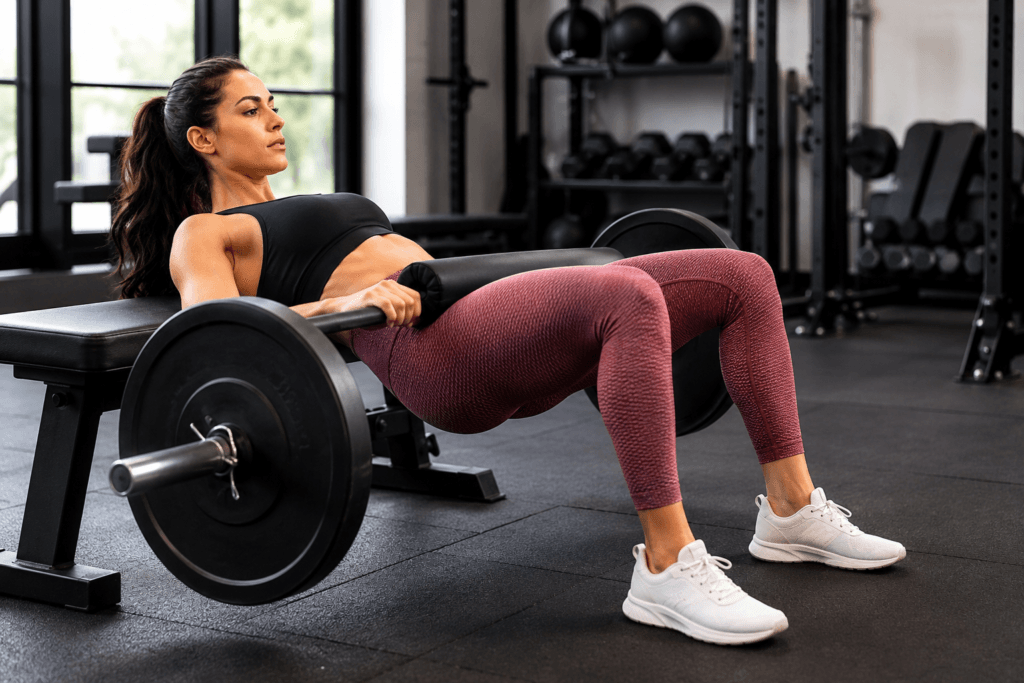
The hip thrust is the king of glute growth workout moves. Research shows it can activate the glutes more effectively than back squats or deadlifts. It looks a little awkward the first time you try it, and yes, people at the gym might glance over. Push through anyway. This is the single most direct route to a stronger glutes workout.
How to do it:
- Sit on the floor with your upper back against a bench.
- Roll a barbell (or hold a dumbbell) across your hip crease.
- Bend your knees, feet flat, hip-width apart.
- Drive through your heels and squeeze your glutes to lift your hips until your torso is parallel to the floor.
- Lower slowly and repeat.
Do 3 sets of 6 to 12 reps. Practice with just body weight first. This move rewards patience, not ego.
Benefits:
Builds serious glute size and strength, improves hip power for sprinting and jumping, and strengthens the posterior chain that protects your lower back
2. Glute Bridge
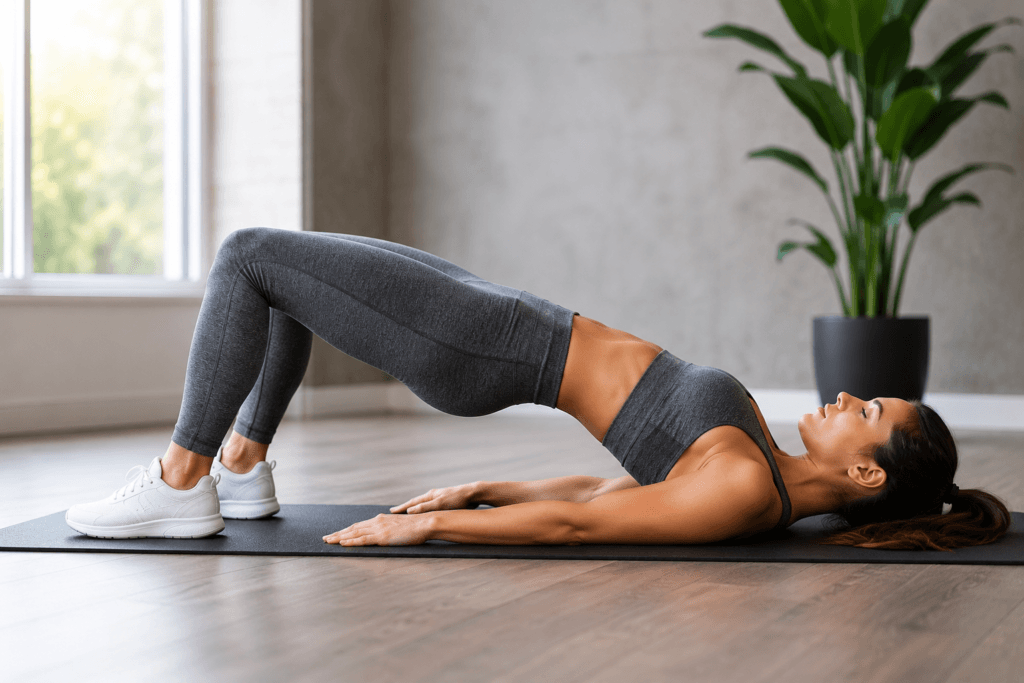
Think of the glute bridge as the hip thrust’s friendlier, floor-based cousin. It’s a genuinely great glute exercises without equipment option, and it still fires up your core along the way. Most people can nail the form on the first try, which makes it a solid starting point if you’ve never trained glutes on purpose before.
How to do it:
- Lie on your back, knees bent, feet flat on the floor.
- Press your arms flat at your sides.
- Squeeze your glutes and lift your hips until your body forms a straight line from shoulders to knees.
- Pause for a second at the top, then lower with control.
Complete 3 sets of 6 to 12 reps. Add a resistance band above your knees for a proper resistance band glute workout for women upgrade.
Benefits:
Activates the glutes without straining the knees or spine, strengthens the core at the same time, and works well as a warm-up or a beginner’s first strength move
3. Bulgarian Split Squat
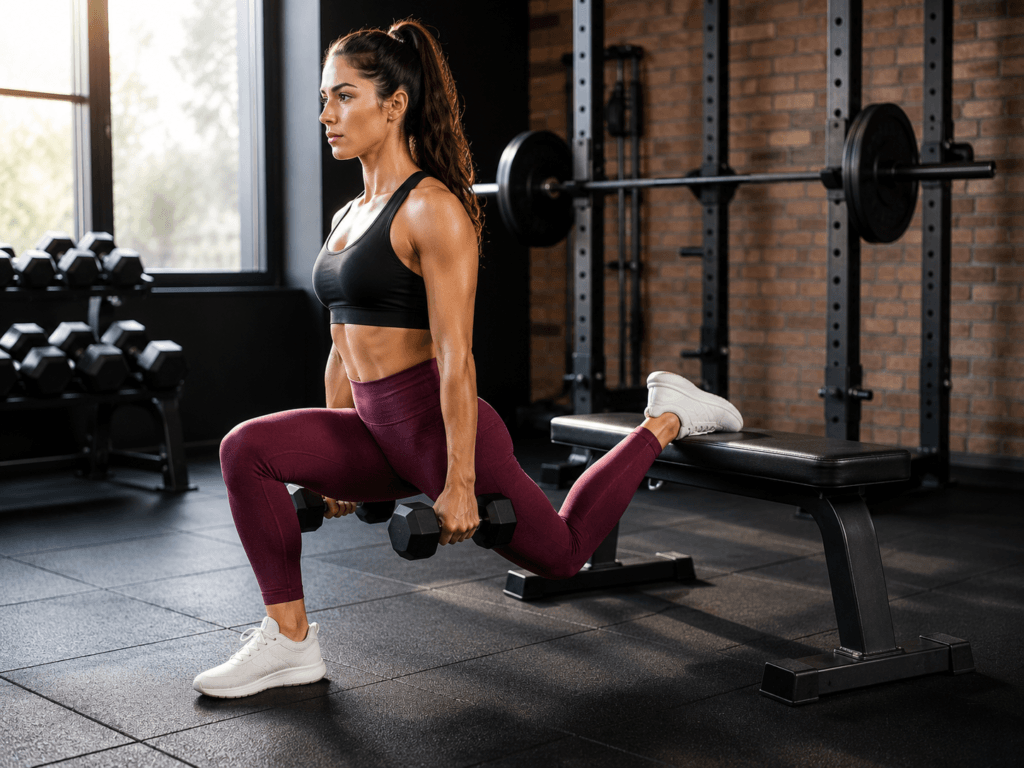
The Bulgarian split squat is humbling. Your legs will shake on day one. That’s normal. It’s a serious single-leg strength builder, and one of the better glute building exercises for balance and stability too. Because each leg works alone, it also exposes any strength gap between your left and right side, which most bilateral squats never reveal.
How to do it:
- Stand about 2 feet in front of a bench, facing away from it.
- Rest the top of your back foot on the bench.
- Bend your front knee and lower until your thigh is close to parallel with the floor.
- Push through your front heel to stand back up.
Do 3 sets of 6 to 12 reps per leg. Hold dumbbells once bodyweight feels easy. This is a natural entry into a dumbbell glute workout.
Benefits: Builds single-leg strength and balance, corrects left-right muscle imbalances, and shapes the glutes and quads at the same time
For balance and mobility work between sets, some people mix in Pilates-style holds. Curious if that’s worth it? See is Pilates good for the full picture.
4. Romanian Deadlift
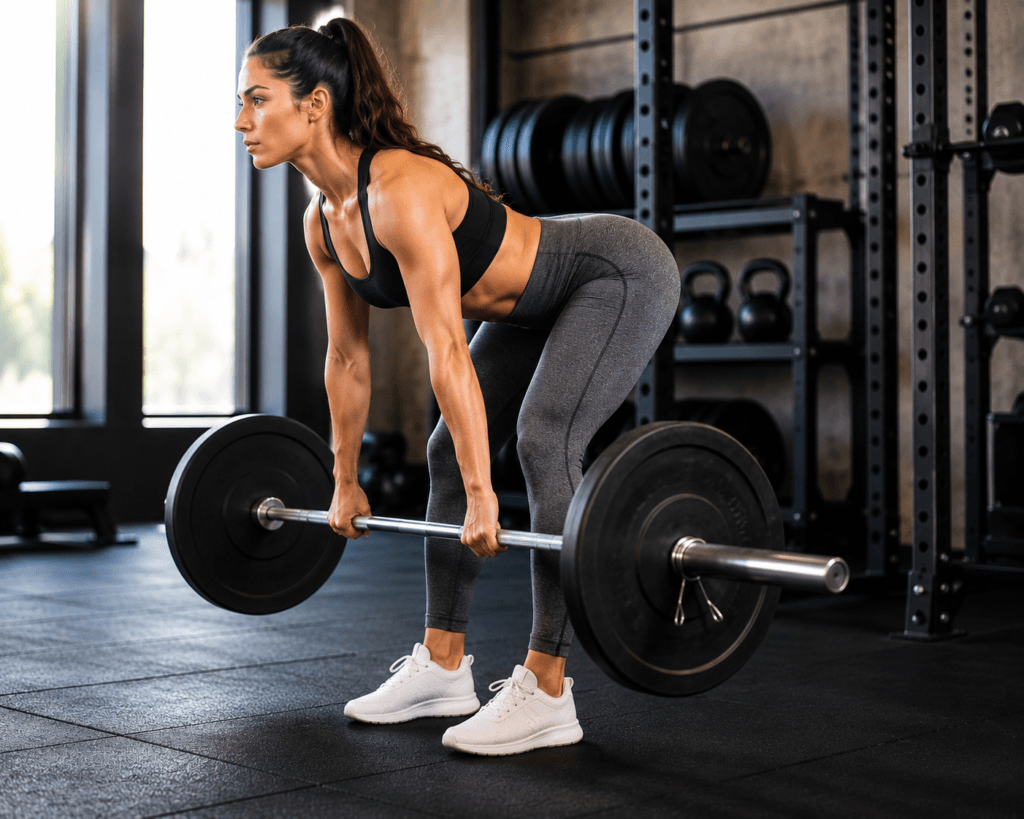
The Romanian deadlift is a hinge movement, meaning you bend at the hips, not the knees. It’s one of the most effective stronger glutes workout staples for a reason: it loads the glutes and hamstrings through a long, controlled range of motion. It also teaches you to hinge properly, a skill that carries over into everyday life, like lifting a laundry basket without straining your back.
How to do it:
- Stand with feet hip-width apart, a dumbbell in each hand.
- With a slight bend in your knees, hinge at the hips and lower the weights toward your shins.
- Keep your back neutral throughout.
- Squeeze your glutes to rise back to standing.
Complete 3 sets of 6 to 12 reps. Start light. This move punishes bad form fast, usually in your lower back.
Benefits:
Strengthens the glutes and hamstrings together, teaches a safer hip-hinge pattern for everyday lifting, and builds a strong, stable lower back
5. Donkey Kicks
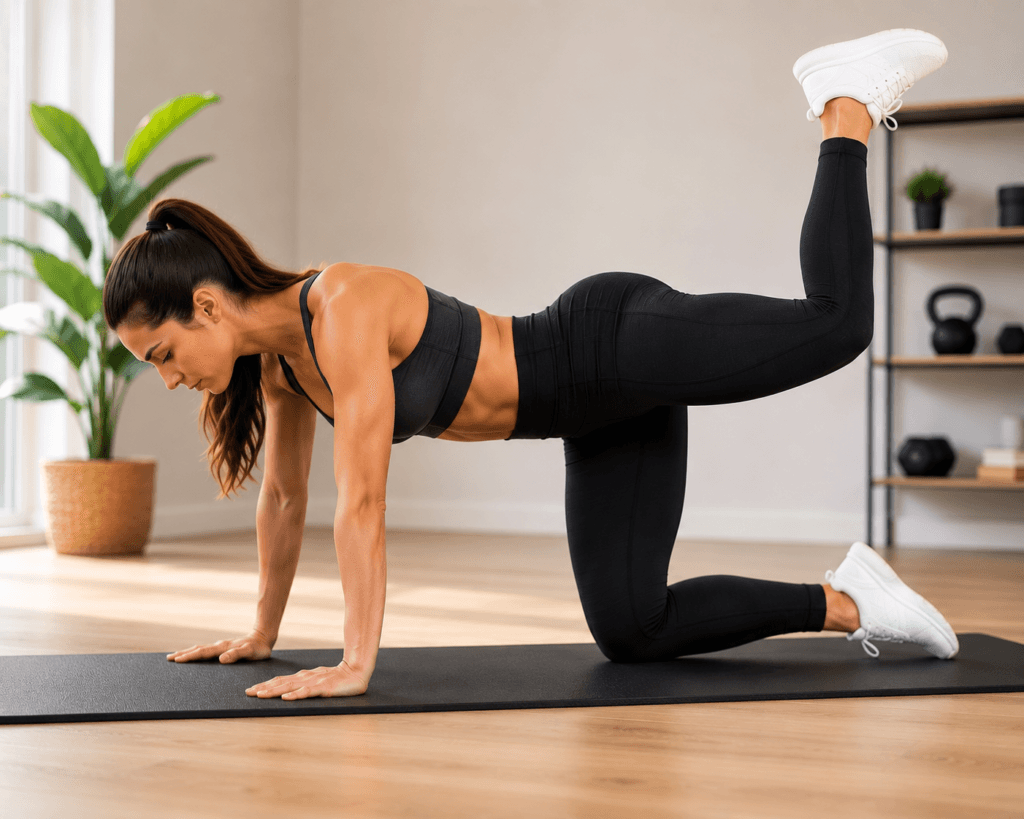
Donkey kicks isolate the glutes directly, without help from your quads or hamstrings. That makes them one of the purest glute isolation exercises on this list. The movement is small, but the burn shows up fast, usually somewhere around rep 8, right when you start questioning your life choices.
How to do it:
- Get on all fours, hands under shoulders, knees under hips.
- Keep your right knee bent and your foot flexed.
- Push your foot toward the ceiling using your glute, not your lower back.
- Pause at the top, then lower with control.
Do 3 sets of 6 to 12 reps per leg. Add an ankle weight once it feels too easy.
Benefits:
Isolates the gluteus maximus directly, requires no equipment, and is gentle enough for beginners or anyone easing back into training
6. Fire Hydrants
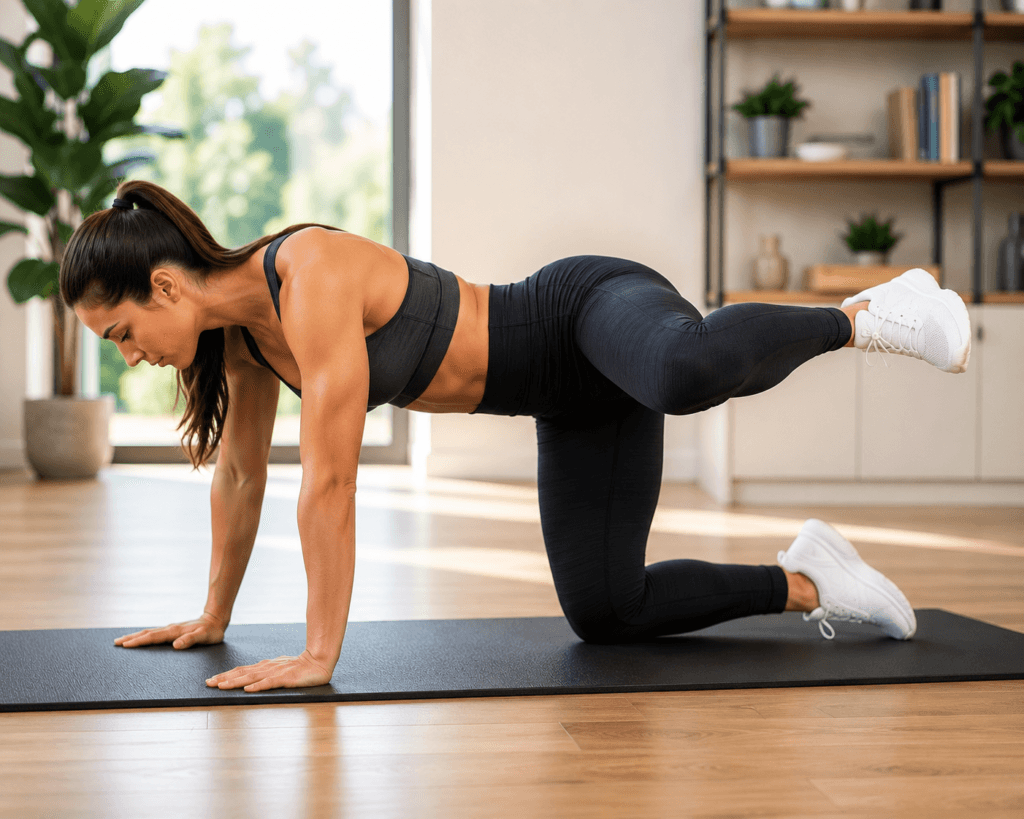
Fire hydrants target the gluteus medius and minimus, the two smaller muscles most squats and lunges tend to skip. Expect a deep burn, even without any weight. The name comes from the resemblance to a dog lifting its leg, so feel free to laugh through the first set. Everyone does.
How to do it:
- Start on all fours, back flat.
- Lift your left knee out to the side, keeping it bent, like a dog at a fire hydrant.
- Bring it back to center with control.
Do 10 reps per side. This is a great warm-up move too, perfect for glute activation before workout, right before you load up on heavier lifts.
Benefits:
Strengthens the gluteus medius and minimus, improves hip stability and rotation, and helps prevent knee pain caused by weak side glutes.
7. Clamshells
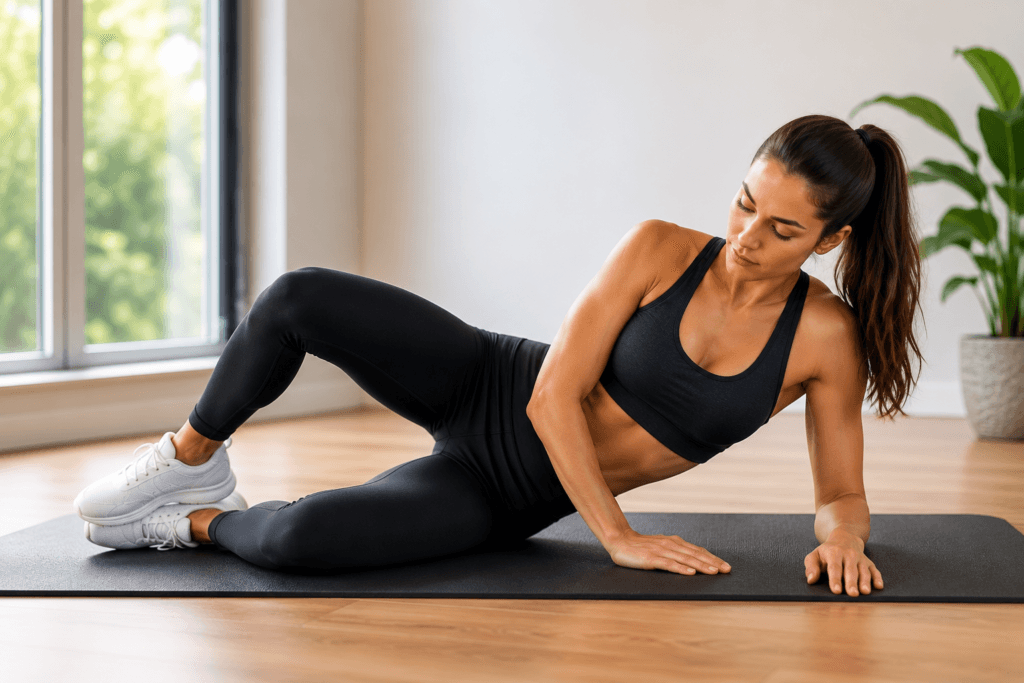
Clamshells round out this list as one of the gentlest yet most effective booty exercises for hip stability. Physical therapists often use them for people recovering from knee or lower back pain. Don’t let the low intensity fool you. This move quietly fixes the hip weakness that causes a lot of that nagging knee pain during squats.
How to do it:
- Lie on your side, knees bent at 90 degrees, feet in line with your hips.
- Keep your feet touching and lift your top knee, like opening a clamshell.
- Lower with control.
Do 10 to 15 reps per side. Loop a resistance band around your thighs for one of the simplest resistance band exercises you can add to any routine.
Benefits:
Improves hip stability and pelvic alignment, supports knee and lower back recovery, and works well as a low-impact warm-up before heavier lifts
Building a Full Booty Workout Routine
You don’t need all seven exercises every session. A smart booty workout routine rotates them across the week. Try this simple split:
Day 1 (Strength focus): Hip thrust, Bulgarian split squat, Romanian deadlift.
Day 2 (Activation and isolation): Glute bridge, donkey kicks, fire hydrants, clamshells
This structure covers both heavy lifting and the smaller stabilizer work that heavy lifts tend to miss.
Since your glutes work with your hips and hamstrings as one chain, don’t isolate leg day from the rest of your training. Round things out with our guide to back workouts, since a strong posterior chain relies on your back too.
4-Week Glute Training Plan
Progress matters more than intensity on day one. Here’s a simple 4-week plan to build from a beginner glute workout into something more advanced, without burning out or risking injury.
| Week | Day 1 (Strength) | Day 2 (Activation & Isolation) | Focus |
|---|---|---|---|
| Week 1 | 2 sets x 8-10 reps of each exercise, bodyweight or light load | 2 sets x 10 reps of each exercise, no weight | Learn correct form, activate the right muscles |
| Week 2 | 3 sets x 8-10 reps, add light dumbbells | 3 sets x 10-12 reps, add a resistance band | Build consistency, add light resistance |
| Week 3 | 3 sets x 6-10 reps, increase weight slightly | 3 sets x 12-15 reps, keep band tension higher | Add load, push closer to muscle fatigue |
| Week 4 | 4 sets x 6-10 reps, heavier weight | 3 sets x 15 reps, add a pause at the top of each rep | Peak intensity for this cycle, then repeat from Week 2 with more weight |
Stick to two sessions a week with 48 hours of rest in between. Once Week 4 feels manageable, restart the cycle at a slightly heavier load. That’s how a glute growth workout keeps progressing instead of plateauing.
Equipment Options:
Good news: you don’t need a gym membership. Here’s how the equipment options break down.
At-home glute workout, no equipment:
Glute bridges, donkey kicks, fire hydrants, and clamshells work entirely with body weight. These are true glute exercises without weights, and they still build real strength when you focus on slow, controlled reps.
Resistance band glute workout:
Add a loop band above your knees for bridges, clamshells, and lateral steps. Bands are cheap, packable, and genuinely effective for the smaller stabilizer muscles.
Dumbbell glute workout for women:
Once bodyweight feels too easy, dumbbells add load to split squats, deadlifts, and step-ups. Start light. Form always comes before weight.
Gym equipment:
Barbells for hip thrusts and deadlifts, plus machines like the seated abduction machine or cable kickbacks, which apply constant tension throughout the whole movement.
Whichever setup you choose, this is a lower body workout for women that scales with you. A true beginner glute workout can grow into an advanced glute workout just by adding load, reps, or a band.
Common Mistakes That Slow Down Results
A few habits quietly sabotage most glute workout for beginners female routines:
- Skipping activation. Jumping straight into squats without waking up your glutes first means your quads do most of the work.
- Going too heavy, too soon. Bad form on a Romanian deadlift or hip thrust usually shows up as lower back strain, not glute soreness.
- Training glutes but skipping recovery. Muscles grow during rest, not during the set. Stick to that 48-hour recovery window.
- Ignoring the smaller muscles. Squats and lunges are great, but they mostly hit the gluteus maximus. Fire hydrants and clamshells fill the gap.
If your goal includes overall body composition changes, not just glute size, pairing this plan with a broader routine helps. Our guide on weight loss for women over 40 covers the nutrition side in more depth, and dumbbell exercises is worth a look if you want to build out your full-body strength training for women plan.
How to Grow Glutes Naturally
There’s no shortcut here, and anyone promising one is selling something. How to grow glutes naturally comes down to three things: progressive overload (adding reps, sets, or weight over time), consistency (training twice a week, every week), and recovery (sleep and protein intake support muscle repair).
Results take weeks, not days. Most people notice a firmer, more toned shape around 6 to 8 weeks into consistent toned glutes workout training, with more visible growth after 3 months.
FAQ:
How often should I do a glute workout for women?
Twice a week, with at least 48 hours of rest between sessions, works well for most people.
What’s the best exercise for bigger glutes?
Research points to the hip thrust as one of the best exercises for bigger glutes, since it activates the gluteus maximus more directly than squats or deadlifts.
Can I do a glute workout to lift butt without any equipment?
Yes. Glute bridges, donkey kicks, fire hydrants, and clamshells are true best glute exercises for women at home, and they build real strength using just body weight.
Do sumo squats work the glutes differently than regular squats?
Yes. Sumo squats use a wider stance and turned-out toes, which shifts more emphasis onto the inner thighs and glutes compared to a standard squat.
Are step-ups worth adding to a leg day workout?
Definitely. Step-ups demand more balance and stabilization than squats or deadlifts, which some research suggests makes them especially effective for glute activation.
How long does it take to see glute growth results?
Most people notice a firmer shape in 6 to 8 weeks of consistent training, with more visible growth after 3 months of following a proper rep, set, and recovery structure.
Can you build glutes without a gym?
Yes. Bodyweight moves like glute bridges, donkey kicks, fire hydrants, and clamshells build real strength on their own, and a resistance band takes them even further.
Do glute exercises help with lower back pain?
Often, yes. Weak glutes force your lower back and hamstrings to compensate during everyday movement. Strengthening the glutes takes that extra load off your spine.
The Bottom Line:
Building stronger, firmer glutes isn’t complicated. It comes down to picking the right exercises, following a real rep and recovery structure, and staying consistent for weeks, not days. The hip thrust, glute bridge, Bulgarian split squat, Romanian deadlift, donkey kicks, fire hydrants, and clamshells cover every angle your glutes need.
Start where you are. Add load or reps as things get easier. And remember, your glutes carry you through your entire day, so a little training time is a fair trade for a body that moves and feels stronger.
Sources referenced:
Glute anatomy and function insights are based on Cleveland Clinic Health Essentials. Training structure (reps, sets, rest, and frequency) is based on Healthline’s review of hypertrophy research and studies indexed on the National Institutes of Health (NIH/PubMed).

Hi, I’m Salem Nasir, founder of Fiturely. I research and write evidence-based articles on fitness, nutrition, weight loss, and healthy living. My mission is to make reliable health information simple, practical, and easy to understand so readers can build healthier habits with confidence