
For most healthy adults, herbal tea is a safe, low-calorie everyday drink that supports hydration, relaxation, and digestion. Peppermint and ginger are popular for digestion, chamomile for bedtime, and unsweetened herbal tea can support weight loss habits by replacing sugary drinks. It isn’t a miracle cure, so check with your doctor first if you’re pregnant or taking medication.
What Is Herbal Tea?
Herbal tea is a drink made by steeping herbs, flowers, spices, roots, or dried fruit in hot water. Strictly speaking, it isn’t tea at all. True tea (black, green, white, oolong) comes from the Camellia sinensis plant. Herbal tea comes from other plants, which is why experts also call it a herbal infusion or “tisane.”
That difference matters. Most natural herbal tea contains no tea leaves, so it usually has no caffeine. It also tastes very different, from minty and cooling to floral and earthy.
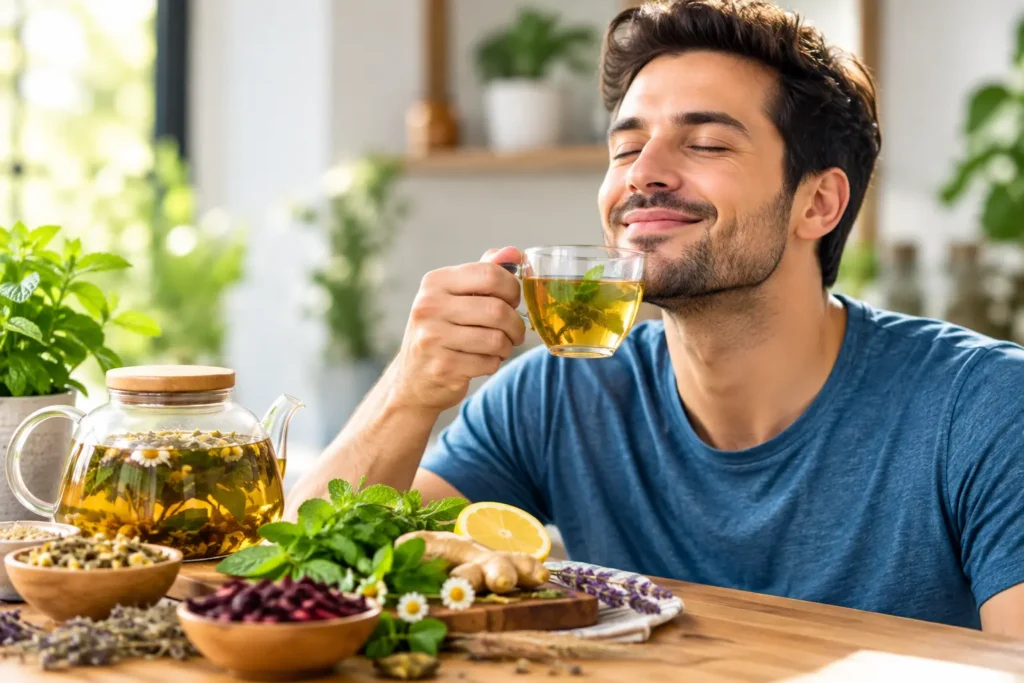
People have brewed herbal infusions for thousands of years, from Egyptian chamomile to South African rooibos. Today they’re a staple of fitness and herbal tea for wellness routines, mostly because they’re cheap, comforting, and easy to make.
Is Herbal Tea Good for You?
Yes, for most healthy adults, herbal tea is a safe, low-calorie way to add flavor and fluids to your day. The benefits depend heavily on the herb, though, and some are better proven than others.
Here is the honest picture:
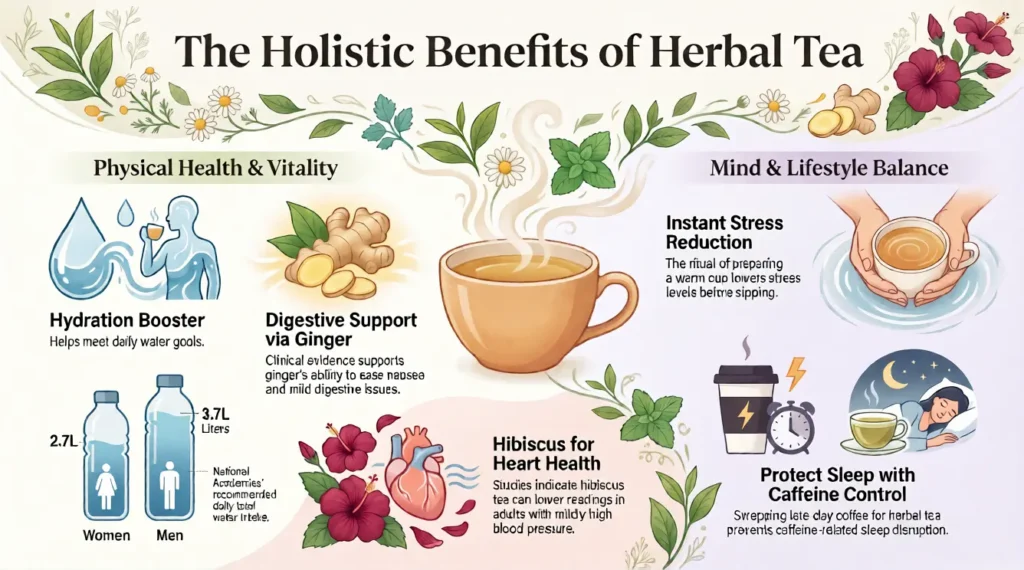
- Herbal teas count toward your daily fluid intake, which makes herbal tea for hydration a real, simple win.
- Many contain plant compounds like polyphenols and flavonoids.
- Unsweetened cups have close to zero calories.
- Research on specific health claims ranges from “promising” to “mostly tradition.”
The U.S. National Center for Complementary and Integrative Health (NCCIH) notes that evidence for many herbal products is limited. So treat herbal tea for health as a helpful habit, not a medicine.
What Are the Benefits of Herbal Tea?
The best-supported benefits are hydration, symptom relief for mild digestive issues, and a calming bedtime ritual. Some herbs have stronger evidence than others.
The main herbal tea benefits people look for:
- Hydration: Warm, flavorful water makes it easier to drink enough. The National Academies suggest about 2.7 liters (women) and 3.7 liters (men) of total water daily from all drinks and foods.
- Digestion: Ginger has decent evidence for easing nausea, according to NCCIH.
- Relaxation: The ritual of a warm cup can lower your stress before you even sip.
- Blood pressure support: A 2010 study in The Journal of Nutrition found hibiscus tea lowered blood pressure in adults with mildly high readings.
- Caffeine control: Swapping a late coffee for a caffeine free herbal tea can protect your sleep.
What Are the Main Herbal Tea Types?
The most popular herbal tea types are chamomile, peppermint, ginger, hibiscus, turmeric, cinnamon, lemon balm, lavender, fennel, dandelion, rooibos, and nettle. Each has its own flavor and traditional use.
Which herbal tea is best for what?
| Herbal Tea | Taste | Best Known For | Caffeine? | Quick Caution |
|---|---|---|---|---|
| Chamomile tea | Mild, apple-like | Relaxation, bedtime | No | Avoid if allergic to ragweed-family plants |
| Peppermint tea | Cool, fresh | Digestion, bloating | No | May worsen acid reflux |
| Ginger tea | Spicy, warm | Nausea, digestion | No | Large amounts may upset the stomach |
| Hibiscus tea | Tart, cranberry-like | Blood pressure, hydration | No | Can lower blood pressure further |
| Turmeric tea | Earthy, golden | Inflammation support | No | May interact with blood thinners |
| Cinnamon tea | Sweet, woody | Comfort, flavor | No | Cassia type has more coumarin |
| Lemon balm tea | Lemony, gentle | Calm, stress | No | Limited long-term data |
| Lavender tea | Floral | Relaxation | No | Strong taste; use sparingly |
| Fennel tea | Sweet, licorice-like | Bloating, digestion | No | Skip if pregnant unless advised |
| Dandelion tea | Bitter, nutty | Mild diuretic | No | Check with a doctor if you take diuretics |
| Rooibos tea | Smooth, naturally sweet | Everyday drinking | No | Generally well tolerated |
| Nettle tea | Grassy, mineral | Traditional wellness | No | May interact with some medications |
If you’re hunting for the best herbal tea overall, there isn’t one winner. The best pick is the one that matches your goal and that you’ll actually enjoy drinking.
Is Herbal Tea Caffeine Free?
Most herbal tea is caffeine free, but not all of it. Chamomile, peppermint, ginger, hibiscus, and rooibos naturally contain no caffeine.
The exceptions are drinks sold alongside herbal teas that come from caffeinated plants, such as yerba mate or guayusa. Some “energy” blends also add green tea. Always read the ingredient list.
For context, the U.S. FDA says most healthy adults can consume up to 400 milligrams of caffeine daily. Switching to a caffeine free herbal tea in the afternoon is an easy way to stay well below that line and sleep better.
What Herbal Tea Is Best for Digestion and Gut Health?
Peppermint, ginger, and fennel are the most popular choices for digestion. Ginger has the strongest evidence, especially for nausea. Peppermint and fennel are traditional favorites for a heavy stomach.
Here’s how they stack up as herbal tea for digestion:
- Ginger tea: Helps with nausea and general stomach upset.
- Peppermint tea: Relaxes the feeling of fullness, though it can aggravate heartburn.
- Fennel tea: A classic after-meal drink in many cultures.
For herbal tea for bloating, warm liquid and slower sipping help too. Not every benefit comes from the herb. Some of it is just you sitting down and not inhaling lunch in four minutes.
For herbal tea for gut health, the science is thin. No tea replaces fiber, fermented foods, or a doctor’s advice for ongoing gut problems.
What Herbal Tea Is Good Before Bed?
Chamomile, lemon balm, and lavender are the most popular bedtime picks. None is a sleeping pill, but their calming reputation and warm ritual help many people wind down.
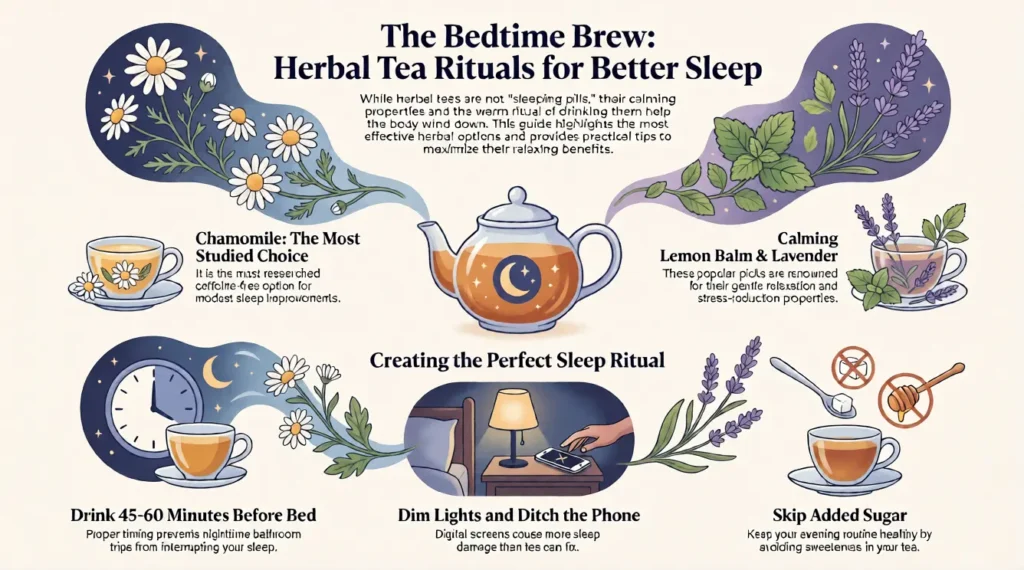
For herbal tea for sleep, chamomile is the most studied of the three, though results are modest. It’s worth a try if you want a caffeine-free evening routine.
A few practical tips:
- Drink it 45 to 60 minutes before bed so you’re not up for bathroom trips.
- Pair it with dim lights and no phone. The phone does more damage than the tea can fix.
- Skip added sugar.
Which herbal tea is best for relaxation? Chamomile and lemon balm are the usual answers. For herbal tea for relaxation and herbal tea for stress, they’re a gentle option, but they won’t replace therapy, exercise, or good sleep.
Can Herbal Tea Help With Weight Loss?
Herbal tea can support weight loss habits, but it won’t melt fat on its own. No tea is a magic fix, and any product claiming otherwise deserves side-eye.
Here’s what is true. Unsweetened herbal tea has almost no calories, so it works as a low calorie herbal tea swap for soda, juice, or sugary coffee drinks. That swap is where the real benefit lives.
Consider a few facts:
- A 2012 Cochrane review found green tea had no significant effect on weight loss in overweight adults. Green tea isn’t herbal, but the finding shows how weak “fat-burning tea” claims can be.
- Dandelion tea and similar diuretics cause water loss, not fat loss.
- The FDA classifies senna as a stimulant laxative for short-term constipation. It isn’t a weight-loss aid and can cause cramping and dependency.
So what about herbal tea for metabolism? Ginger and cinnamon are often marketed that way, but the evidence for a meaningful metabolic boost is weak. For anyone searching tea weightloss or tea for weightloss results, the sensible view is that tea helps by replacing higher-calorie drinks and curbing snack cravings. That’s why herbal tea for weight loss works best as a supporting habit.
What Is the Best Herbal Tea for Weight Loss?
The best herbal tea for weight loss is the one you enjoy unsweetened and use to replace a sugary drink. Ginger, peppermint, cinnamon, and hibiscus all fit that job well.
When people ask about the best herbal tea for weight loss, a few practical approaches work:
- Peppermint or ginger after meals: A pleasant signal that dinner is over, which may reduce grazing.
- Hibiscus iced tea: A tart, zero-sugar replacement for fruit punch.
- Cinnamon tea: Naturally sweet-tasting without sugar.
Looking for herbal tea for bloating and weight loss? Peppermint and fennel can ease bloating, which may make your waistline feel better even though the scale hasn’t moved. Similarly, herbal tea before bed for weight loss works mostly by replacing a late-night snack or dessert. Think of it as natural tea for weight management, not fat burning.
Pair any of these with sleep, movement, and balanced meals. Consistent fitness habits do the heavy lifting.
Can Herbal Tea Help Immunity and Inflammation?
Some herbal teas contain antioxidants, but no tea is proven to “boost” your immune system. Anyone selling immunity in a teabag is overpromising.
For herbal tea for immunity, ginger, echinacea, and hibiscus are popular. They provide plant compounds and fluids, and warm drinks soothe a sore throat. That is useful, but it isn’t the same as preventing illness.
For herbal tea for inflammation, turmeric tea gets the attention. Curcumin, its active compound, is poorly absorbed on its own. Research shows piperine, found in black pepper, can increase absorption significantly, which is why many recipes add a pinch.
Treat these as supportive habits, and see a doctor for chronic inflammation or frequent infections.
How to Make Herbal Tea at Home
To make herbal tea, pour just-boiled water over herbs, cover, and steep 5 to 10 minutes. Covering the cup keeps the aromatic oils from escaping.
Follow these steps for the best cup:
- Use about 1 to 2 teaspoons of dried herbs (or a small handful of fresh ones) per cup.
- Pour freshly boiled water over them.
- Cover and steep 5 to 10 minutes. Roots like ginger can steep longer.
- Strain, then sweeten lightly with honey or lemon if you like.
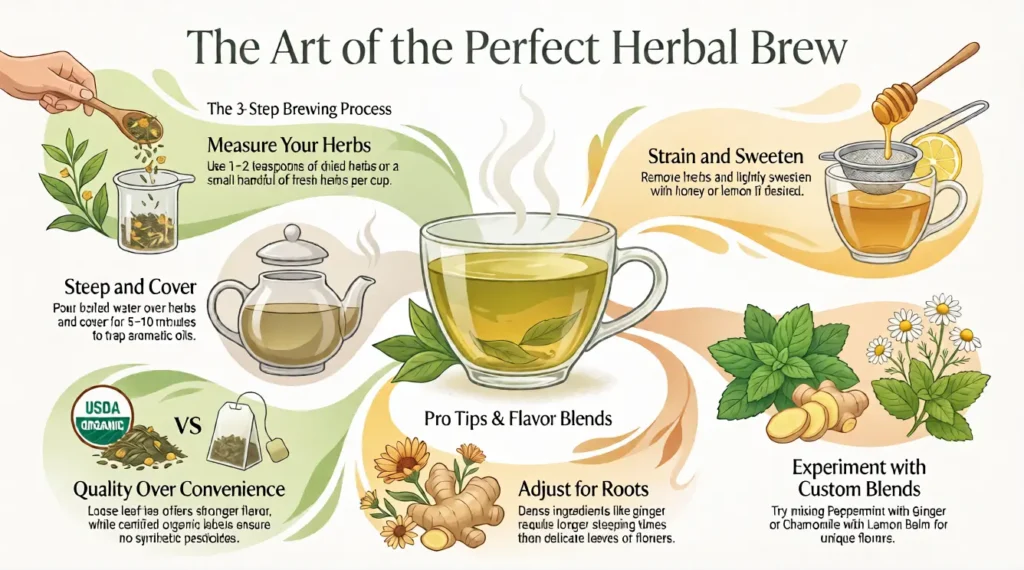
For organic herbal tea, look for certified organic labels, which follow farming rules on pesticides and synthetic fertilizers. Loose-leaf tends to taste stronger than bagged tea, though good bags work fine.
You can also create your own herbal tea blends. Try peppermint with ginger, chamomile with lemon balm, or rooibos with cinnamon. Experimenting is half the fun, and the worst outcome is a weird cup.
Can You Drink Herbal Tea Every Day? How Much Is Enough?
Yes, most healthy adults can drink 2 to 4 cups of herbal tea daily. Variety is smart, since rotating herbs limits your exposure to any single compound.
Some cautions apply:
- Pregnancy and breastfeeding: Many herbs lack safety data, so ask your doctor first.
- Medications: Hibiscus, nettle, turmeric, and licorice root can interact with blood pressure drugs, blood thinners, or diuretics.
- Allergies: Chamomile can trigger reactions in people allergic to ragweed and related plants.
- Licorice root: In large amounts it can raise blood pressure and lower potassium.
If you have a medical condition, check with your doctor or pharmacist before making herbal tea a daily habit. A quick chat beats a surprise side effect.
The Bottom Line: Is Herbal Tea Worth It?
Yes. Herbal tea is a low-cost, low-calorie habit that supports hydration, relaxation, and better drink choices. It isn’t a miracle cure, and that’s fine.
Pick two or three favorites: peppermint for digestion, chamomile for evenings, hibiscus for something tart and cold. Skip the “detox” hype, watch for medication interactions, and enjoy the ritual.
Sources:
- National Center for Complementary and Integrative Health (NCCIH): herbal supplement and ginger/chamomile pages
- U.S. FDA: caffeine intake guidance; senna laxative labeling
- National Academies of Sciences, Engineering, and Medicine: dietary reference intakes for water
- McKay et al., The Journal of Nutrition, 2010: hibiscus tea and blood pressure
- Jurgens et al., Cochrane Database of Systematic Reviews, 2012: green tea and weight loss
- Mayo Clinic: herbal tea and supplement safety pages

Hi, I’m Salem Nasir, founder of Fiturely. I research and write evidence-based articles on fitness, nutrition, weight loss, and healthy living. My mission is to make reliable health information simple, practical, and easy to understand so readers can build healthier habits with confidence