
French beans are a low-calorie vegetable, with just 31 kcal per 100g, 1.8g protein, 7g carbs, and 3.4g fiber. They’re rich in vitamin C, vitamin K, folate, and potassium, with almost no fat or sodium. Protein is lower than Kidney Beans, so pairing them with a protein source helps. Overall, they’re excellent for weight loss, digestion, diabetics, and safe for daily eating.
Are French Beans Healthy?
Yes, French beans are genuinely healthy. They’re low in calories, high in fiber, and rich in vitamins C and K. They contain almost no fat and no cholesterol. Dietitians regularly recommend them for weight management and heart health.
The reason French beans nutrition holds up so well is simple: they’re mostly water and fiber, with just enough carbohydrate to give you steady energy. There’s no added sugar, no saturated fat, and no sodium unless you add salt yourself.
Compared to processed snacks like Saltines, French beans give you far more nutritional value per calorie. A handful of Saltines mostly delivers refined carbs, while French beans deliver fiber, potassium, and vitamin C alongside their carbs.
This is exactly why French beans show up in almost every “vegetables to eat more of” list from dietitians and public health sites.
French Beans Nutrition Facts (Per 100g)
Here are the core French beans nutrition facts, based on standard USDA data for raw green/French beans:
- Calories: 31 kcal
- Protein: 1.8g
- Carbohydrates: 7g
- Fiber: 3.4g
- Fat: 0.1g
- Vitamin C: 12mg (about 14% of daily value)
- Vitamin K: 14mcg
- Folate: 33mcg
- Potassium: 211mg
This French beans nutrition per 100g profile makes them one of the lowest-calorie, highest-fiber vegetables you can regularly eat.
French Beans Calories Per Serving
A typical serving (about 1 cup, roughly 100g) has around 31-35 calories. That’s lower than most fruits and dramatically lower than starchy vegetables like potatoes or corn.
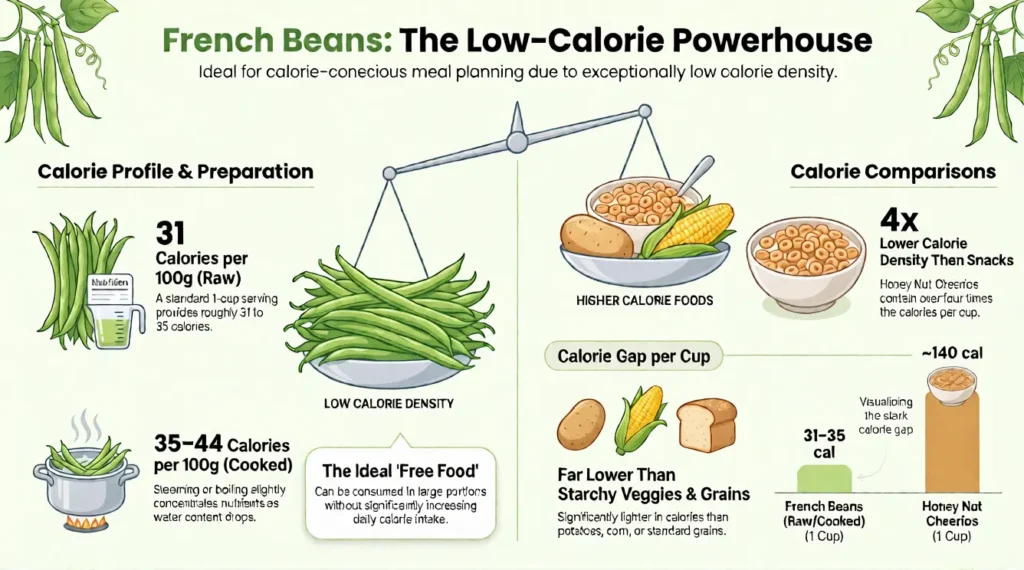
If you’re tracking French beans calories per 100g for a meal plan, you can basically treat them as a “free” or near-free food in most calorie-counting systems.
How Many Calories Are in French Beans?
French beans have about 31 calories per 100 grams raw, and roughly 35–44 calories per 100g once boiled or steamed (cooking slightly concentrates nutrients as water content drops).
That’s lower than almost every grain, and far lower than snack foods. For comparison, a serving of Honey Nut Cheerios contains around 140 calories per cup, more than four times as many as the same weight of French beans.
This calorie gap is exactly why French beans are a go-to vegetable for anyone managing weight without cutting portion sizes dramatically.
Cooked vs Raw vs Boiled French Beans Nutrition
- Raw French beans nutrition: 31 kcal, highest vitamin C retention
- Boiled French beans nutrition: 35-44 kcal (per 100g, water loss concentrates values), some vitamin C loss (10-15%) due to heat and water exposure
- Cooked French beans nutrition (steamed): Best middle ground, retains more vitamins than boiling, similar calorie profile
Steaming or quick sautéing is generally the better cooking method if you want to preserve the most nutrients.
Are French Beans High in Protein?
Not really, French beans are low-to-moderate in protein, offering about 1.8g per 100g. They’re a vegetable, not a protein source, so they shouldn’t replace beans, meat, or dairy in your protein intake.
French beans protein per 100g is modest compared to legumes like Kidney Beans, which pack around 8.7g of protein per 100g, nearly five times more. If protein is your goal, pair French beans with a protein-dense food rather than relying on them alone.
That said, every gram counts. Adding French beans to a protein-rich meal (like grilled chicken or lentils) rounds out the meal with fiber and micronutrients your protein source usually lacks.
Are French Beans High in Fiber?
Yes, French beans are a solid fiber source, delivering about 3.4g of fiber per 100g. That’s roughly 12% of the recommended daily fiber intake per serving, impressive for such a low-calorie food.
French beans fiber per 100g supports digestion, helps regulate blood sugar, and contributes to feeling full longer. This is one of the biggest reasons French beans are good for digestion.
Do French Beans Have Carbs?
Yes, but not many. French beans carbohydrates sit around 7g per 100g, and most of that is fiber and slow-digesting starch rather than sugar.
French beans carbs per 100g are low enough that they fit comfortably into low-carb, keto-adjacent, and diabetic meal plans. This is part of why French beans are healthy for diabetics, they don’t cause the same blood sugar spikes as starchy vegetables or refined grains.
Unlike snack foods such as Saltines, which are almost entirely refined carbohydrate with little fiber to slow digestion, French beans release their carb content gradually.
What Vitamins Are in French Beans?
French beans nutrition includes a solid spread of vitamins and minerals:
- Vitamin C – supports immunity and skin health
- Vitamin K – essential for blood clotting and bone health
- Vitamin A (as beta-carotene) – supports eye health
- Folate – important for cell growth and especially pregnancy health
- Potassium – helps regulate blood pressure
- Calcium and Iron – present in smaller but meaningful amounts
- Magnesium – supports muscle and nerve function
This combination of French beans vitamins and minerals is why nutritionists describe them as “nutrient-dense”, a lot of micronutrient value packed into very few calories.
French Beans Antioxidants
French beans also contain antioxidants like flavonoids and carotenoids, which help neutralize free radicals in the body. While they’re not as antioxidant-dense as berries, they contribute meaningfully to overall dietary antioxidant intake, especially since most people eat far more vegetables than berries in a typical week.
Are French Beans Good for Weight Loss?
Yes, French beans are genuinely excellent for weight loss. They’re low in calories, high in fiber and water content, and they add volume to meals without adding much energy density.
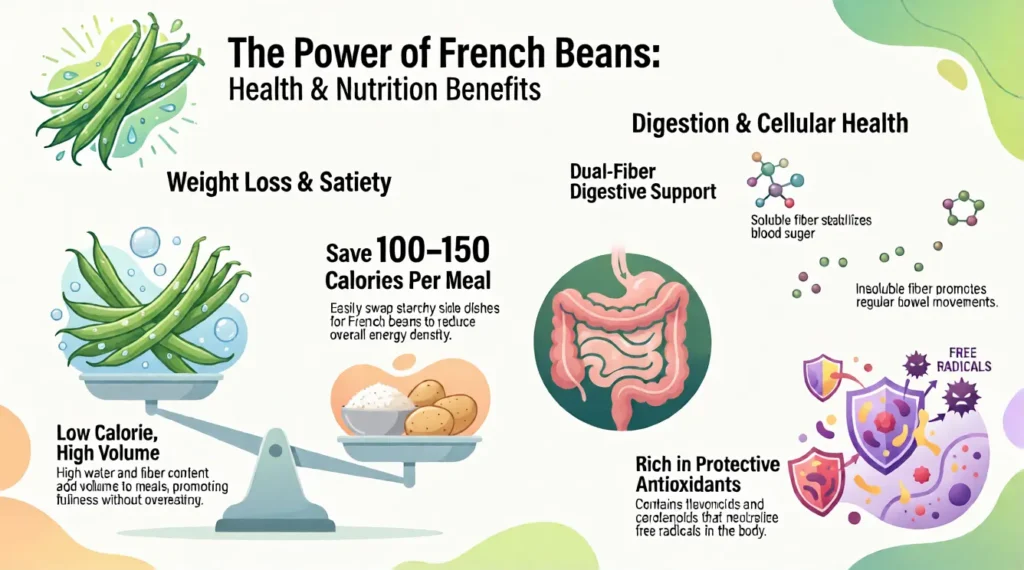
This makes French beans a low calorie food that helps you feel full without overeating. Swapping a starchy side dish for French beans can save 100–150 calories per meal without changing your portion size at all.
Are French Beans Good for Digestion?
Yes. Their fiber content feeds beneficial gut bacteria and adds bulk to stool, which supports regular bowel movements and reduces constipation risk.
French beans are good for digestion partly because they contain both soluble and insoluble fiber, soluble fiber slows digestion and stabilizes blood sugar, while insoluble fiber keeps things moving through the gut.
If you’re building a gut-friendly plate, French beans pair well with fermented or fiber-rich sides like Seaweed Salad, which brings its own unique mix of minerals and marine fiber to the table.
Can You Eat French Beans Every Day?
Yes, French beans are safe to eat daily for most people. They’re not high in any nutrient that causes problems in excess, and their fiber and vitamin content actually benefits from consistent daily intake.
The main caveat: always cook French beans before eating them. Raw green beans contain small amounts of a compound called phytohaemagglutinin, which can cause mild digestive upset, cooking neutralizes it. This is a well-documented food safety note from public health sources, so it’s worth taking seriously rather than skipping.
Green Beans vs French Beans Nutrition
Here’s where things get a little confusing: “French beans” and “green beans” are largely the same vegetable family (Phaseolus vulgaris), with French beans typically referring to the thinner, more tender “haricot vert” variety.
Nutritionally, they’re nearly identical, same calorie range, same fiber content, same vitamin profile. The main difference is texture and cooking time, not nutrition. So when you see “green beans vs French beans nutrition” comparisons, expect the numbers to be very close, sometimes identical depending on the source.
Are French Beans Safe During Pregnancy?
Yes, French beans are considered safe and beneficial during pregnancy when properly cooked. They’re a natural source of folate, a nutrient doctors specifically recommend for preventing neural tube defects in early pregnancy.
French beans folate content (~33mcg per 100g) contributes toward the daily folate needs of pregnant women, alongside iron and potassium that support increased blood volume during pregnancy.
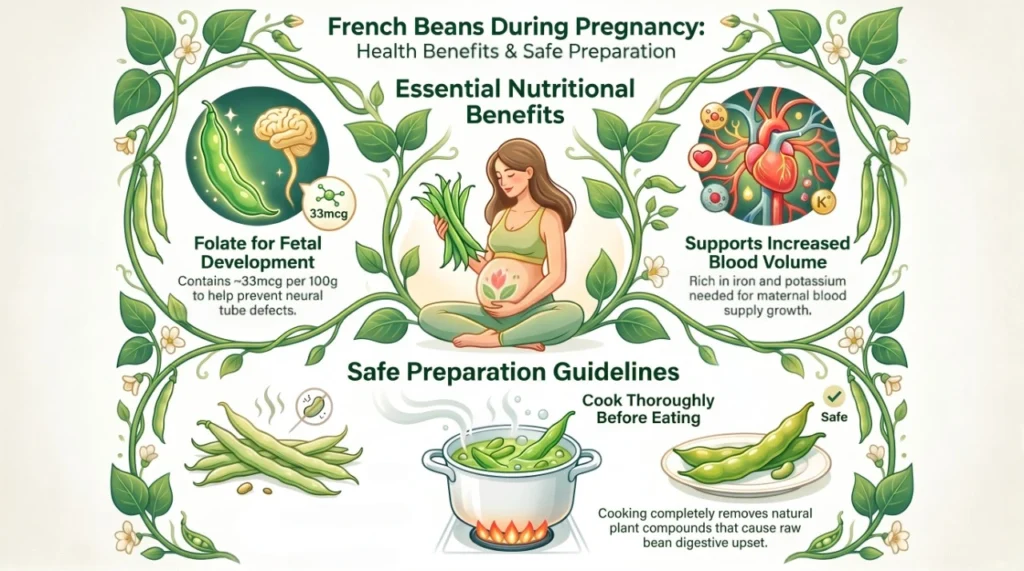
Always cook French beans thoroughly before eating, especially during pregnancy, since raw beans carry a mild digestive-upset risk from natural plant compounds. Cooking removes this risk completely.
Do French Beans Cause Gas or Bloating?
Generally, no, French beans cause far less gas than most legumes. Unlike Kidney Beans, which are known for causing bloating due to their high oligosaccharide content, French beans have a much gentler fiber structure.
This is one of the underrated advantages of French beans nutrition: you get fiber’s digestive benefits without the uncomfortable side effects that heavier legumes sometimes bring.
If you’re sensitive to fiber-rich foods, starting with a small portion and increasing gradually is the easiest way to avoid any bloating at all.
Comparison Table: French Beans vs Other Common Foods (Per 100g)
| Food | Calories | Protein | Carbs | Fiber | Fat |
|---|---|---|---|---|---|
| French Beans | 31 kcal | 1.8g | 7g | 3.4g | 0.1g |
| Kidney Beans (cooked) | 127 kcal | 8.7g | 22.8g | 6.4g | 0.5g |
| Seaweed Salad | ~45 kcal | 1.7g | 9g | 1.3g | 0.5–5g (varies by dressing) |
| Honey Nut Cheerios | ~379 kcal (dry) | 6g | 79g | 6g | 4g |
| Saltines | ~421 kcal | 9g | 74g | 3g | 10g |
| Medjool Dates | ~277 kcal | 1.8g | 75g | 6.7g | 0.2g |
Values are approximate and vary by brand, preparation, and source. Always check current packaging or USDA FoodData Central for exact figures.
The takeaway from this table is clear: French beans are the lightest option by far, calorie-for-calorie, while still holding their own on fiber. Medjool Dates, by contrast, are calorie-dense and best used in moderation, great for quick energy, but not a low-calorie choice.
Frequently Asked Questions
1. How many French beans should I eat per day?
1–2 cups (100–200g) of cooked French beans per day is a safe, healthy amount for most adults. There’s no strict upper limit, but 1–2 cups fits well within general vegetable intake guidelines while keeping calories low and fiber intake steady.
2. Is it necessary to boil French beans before eating?
Yes, raw French beans contain a natural compound that can upset digestion, and cooking removes it completely. Boiling, steaming, or sautéing for a few minutes is enough to make them fully safe and easier to digest.
3. Are French beans the same as green beans?
Almost, French beans are simply a thinner, more tender variety of the same green bean family. Nutritionally they’re nearly identical, so recipes and nutrition data often overlap between the two names.
4. Can diabetics eat French beans daily?
Yes, their low carb and high fiber content make them one of the safer vegetables for blood sugar control. They digest slowly and don’t cause the sharp blood sugar spikes associated with refined carbs or starchy vegetables.
5. Do French beans help with belly fat or weight loss?
Yes, their low calorie, high fiber, high water content makes them ideal for a calorie-deficit diet. They won’t burn fat directly, but replacing higher-calorie sides with French beans is an easy way to cut calories without feeling hungry.
6. Are canned French beans as healthy as fresh ones?
Mostly yes, but canned versions often contain added sodium, so rinsing them before eating helps. Fresh or frozen French beans generally retain more vitamin C, but canned beans still keep most of their fiber and mineral content.
7. What’s the best time to eat French beans?
Anytime works, but eating them with lunch or dinner helps slow digestion and keep blood sugar stable. Since they’re light and easy to digest, they also make a good pre-workout vegetable side for sustained energy.
The Bottom Line
French beans nutrition checks almost every box: low calories, decent fiber, a broad vitamin and mineral spread, and virtually no fat or sodium. They’re not a protein powerhouse like Kidney Beans, and they won’t give you the fiber density of Medjool Dates, but as an everyday vegetable, they’re hard to beat.
If you’re building a balanced plate, French beans are the kind of food that makes everything else on it a little healthier just by being there, quietly doing their job, one crunchy bite at a time.
References
USDA FoodData Central – Green beans, raw (nutrient database), Harvard T.H. Chan School of Public Health – Fiber, Mayo Clinic – Folate (Vitamin B9), National Institutes of Health, Office of Dietary Supplements – Vitamin K, Centers for Disease Control and Prevention (CDC) – Food Safety, Raw Legumes, American Diabetes Association – Fiber and Blood Sugar: https://www.diabetes.org

Hi, I’m Salem Nasir, founder of Fiturely. I research and write evidence-based articles on fitness, nutrition, weight loss, and healthy living. My mission is to make reliable health information simple, practical, and easy to understand so readers can build healthier habits with confidence