
What are scapular stability exercises? Scapular stability exercises are movements that strengthen the muscles controlling the shoulder blade, mainly the serratus anterior, trapezius, and rhomboids, so the shoulder joint moves smoothly and stays injury-free. The most effective ones include wall slides, scapular push-ups, band pull-aparts, and prone Y-T-W raises, done two to four times a week.
If you’ve ever felt a shoulder “click,” slouched forward at your desk, or struggled to lift your arms overhead without pain, weak scapular muscles are usually the hidden reason. The good news? You can fix this with a handful of simple, well-researched movements. This guide breaks down the best scapular stability exercises, why they work, and how to add them to your week, even if you’re a Busy Mom with ten spare minutes.
What Is Scapular Stability?
The scapula, or shoulder blade, sits on your rib cage and connects to your arm through the shoulder joint. It doesn’t stay still. It glides, tilts, and rotates every time you raise your arm. Physical therapists call this coordinated motion scapulohumeral rhythm, and it depends on several muscle groups working together:
- The serratus anterior pulls the shoulder blade forward and rotates it upward
- The trapezius muscles control upward rotation and retraction
- The rhomboid muscles pull the shoulder blades together (scapular retraction)
- The rotator cuff keeps the ball of the shoulder centered in its socket
When these muscles fire in the right order, you get smooth, pain-free shoulder movement. When they don’t, you get shoulder instability, poor scapular control, and eventually pain. According to the American Council on Exercise (ACE), scapular control is one of the most overlooked pieces of shoulder training, and it’s a major reason people plateau or get injured during upper-body workouts.
Signs of Weak Scapular Muscles
You don’t need an MRI to spot a problem. Watch for these common signs of weak shoulder blades:
- Shoulders that round forward when you sit or stand
- A “winging” shoulder blade that sticks out during push-ups
- Clicking or pinching when you raise your arms overhead
- Neck and upper back tension that won’t go away
- Difficulty holding good form during presses or pull-ups
If any of this sounds familiar, you’re dealing with poor shoulder stability, and it’s fixable.
Why This Matters Beyond the Gym
Scapular strength isn’t just an athlete’s concern. It shows up in daily life more than people expect.
New mothers carrying a baby for hours a day often develop rounded shoulders and upper back fatigue, a textbook case for Posture Exercises that target the scapula. Since core and shoulder stability are closely linked, many postpartum routines now pair scapular work with Diastasis Recti Exercises to rebuild strength from the middle out.
Women managing PCOS also benefit here. Hormonal fatigue and joint sensitivity make high-impact training harder to sustain, so Low Impact Exercises that still build strength, like scapular work, offer a sustainable, joint-friendly option. And because scapular exercises activate the upper back and core together, they blend naturally into a Metabolic Workout without adding strain on tired joints.
The Best Scapular Stability Exercises
Here’s a practical list of exercises for scapular stability, ranked from beginner-friendly to more advanced. Do them two to four times a week for real, lasting results.
1. Wall Slides
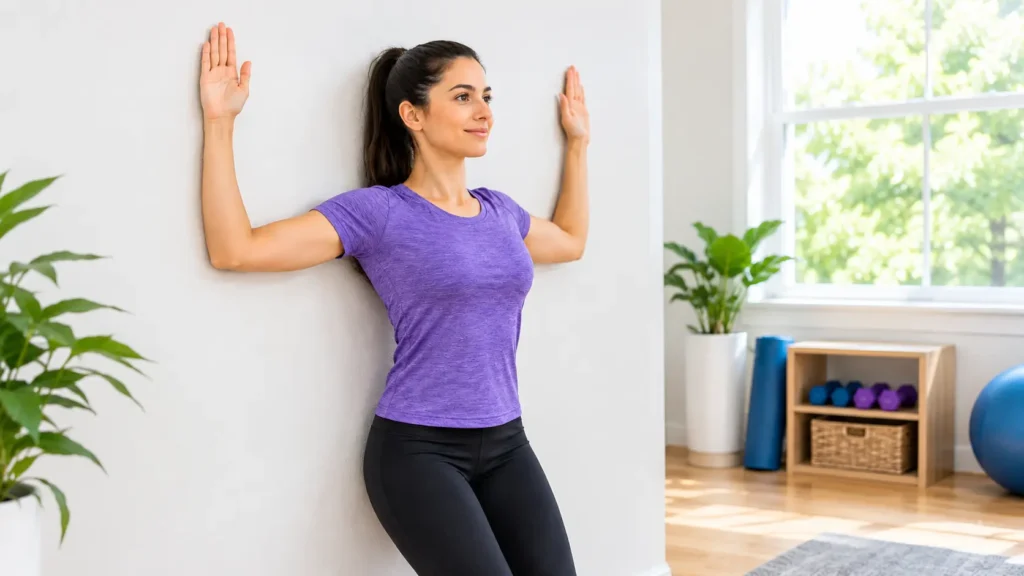
Stand with your back against a wall, arms bent at 90 degrees, touching the wall. Slide your arms up and down while keeping contact with the wall. This move trains scapular upward rotation and is a staple in almost every physical therapy program for shoulder rehab.
2. Wall Angels
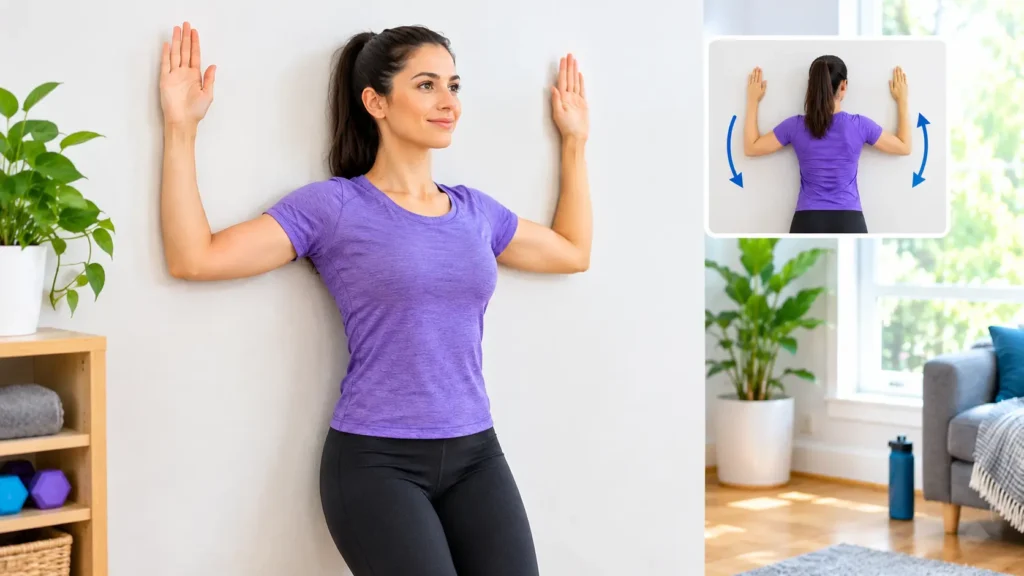
A close cousin of wall slides. Press your lower back, shoulders, and arms flat against the wall, then move your arms like you’re making a snow angel. It’s one of the simplest shoulder blade stability exercises at home, and it doubles as a posture check.
3. Scapular Push-Ups
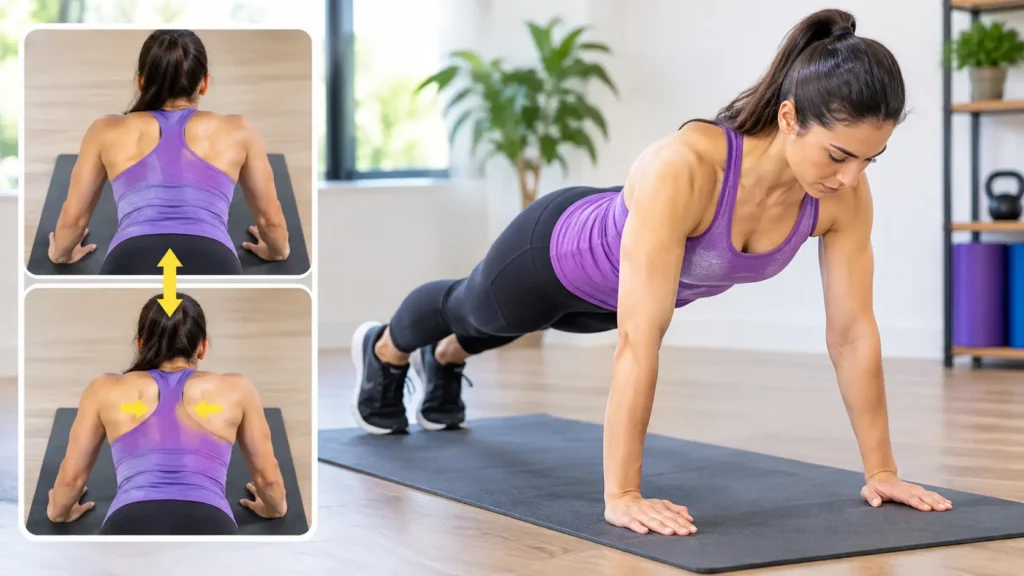
Get into a push-up position, but instead of bending your elbows, just let your shoulder blades pinch together and then push apart. This isolates the serratus anterior directly and is a favorite among physical therapists for building scapular control.
4. Band Pull-Aparts
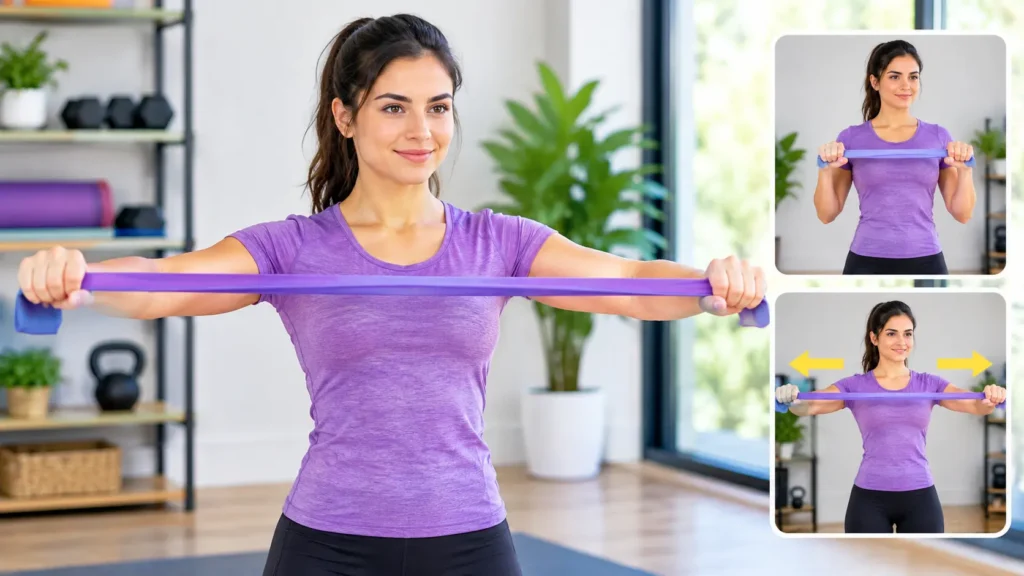
Hold a resistance band with both hands, arms extended, and pull it apart by squeezing your shoulder blades together. This is one of the most efficient resistance band shoulder exercises for building endurance in the upper back.
5. Face Pulls
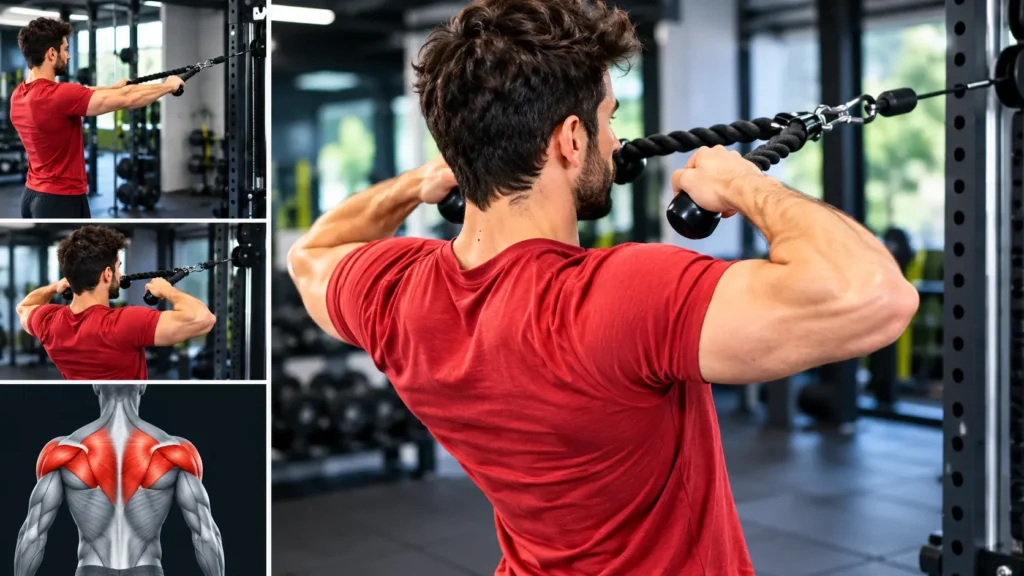
Using a band or cable, pull the resistance toward your face while flaring your elbows out. Face pulls hit the rear deltoids, rhomboids, and rotator cuff at once, making them a go-to for anyone dealing with rounded shoulders from desk work.
6. Prone Y, T, and W Raises
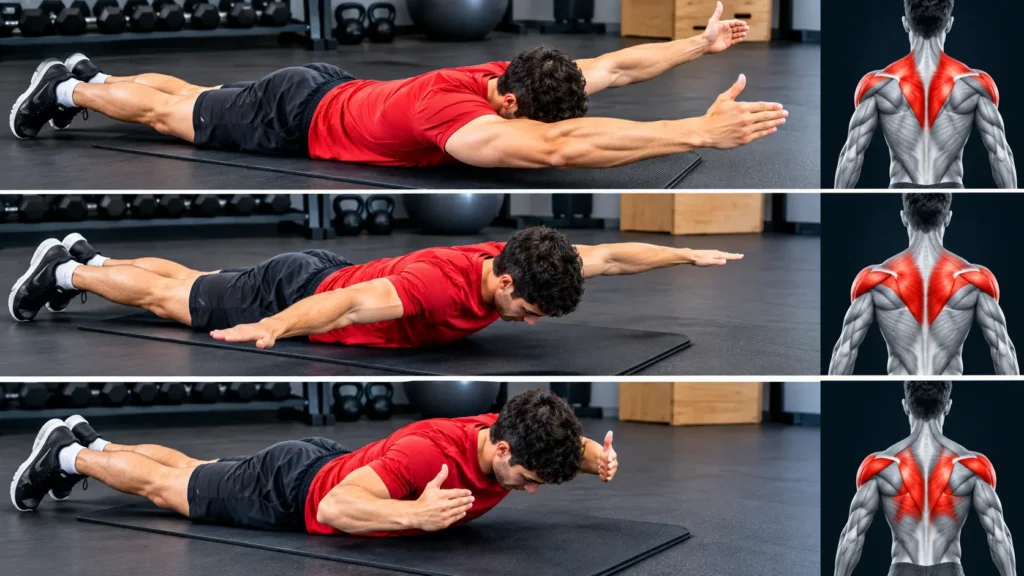
Lie face-down on a bench or the floor. Raise your arms into a Y shape, then a T shape, then a W shape, pausing briefly at each position. This trio targets different fibers of the trapezius and rotator cuff, covering nearly every angle of scapular movement in one exercise.
7. Shoulder Blade Squeezes
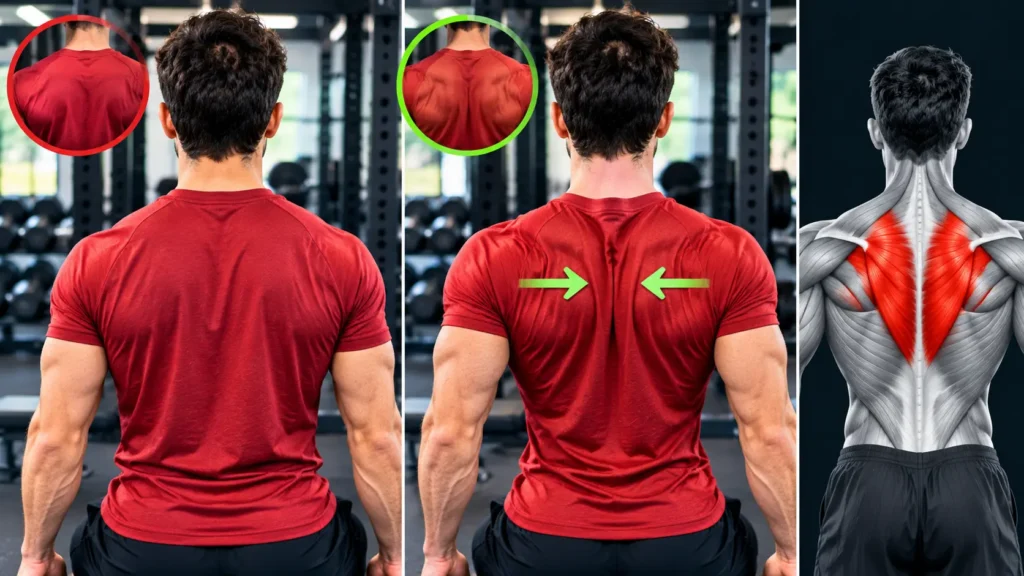
Sit or stand tall, then simply squeeze your shoulder blades together and hold for two to three seconds. It sounds too easy to work, but this basic scapular retraction drill rebuilds the mind-muscle connection many people have lost from years of slouching.
8. Serratus Punches
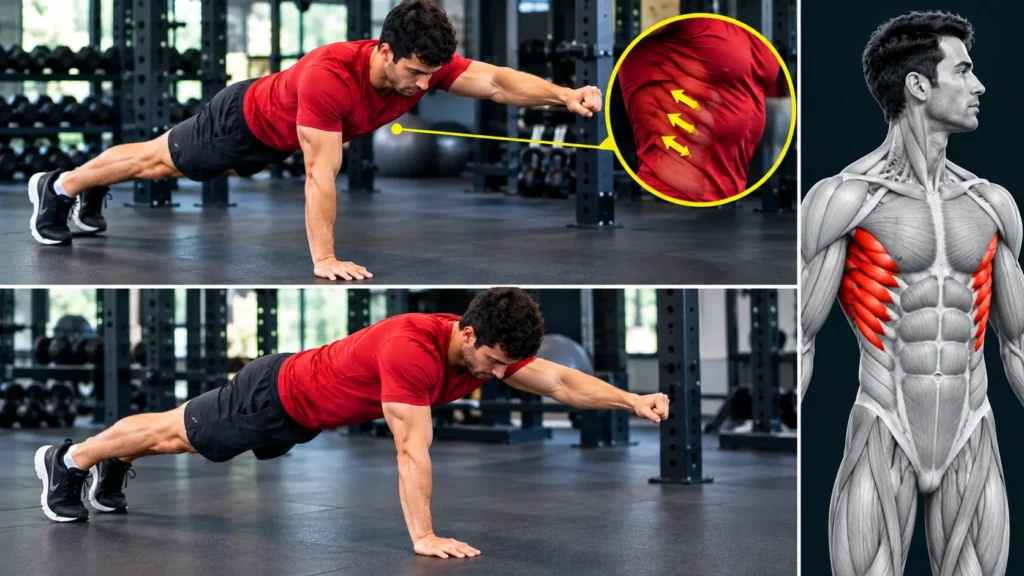
Lie on your back holding light dumbbells straight above your chest. Punch toward the ceiling, letting your shoulder blades lift off the floor slightly. This trains scapular protraction, the opposite motion of retraction, and strengthens the often-neglected serratus anterior.
9. External Rotation Exercises
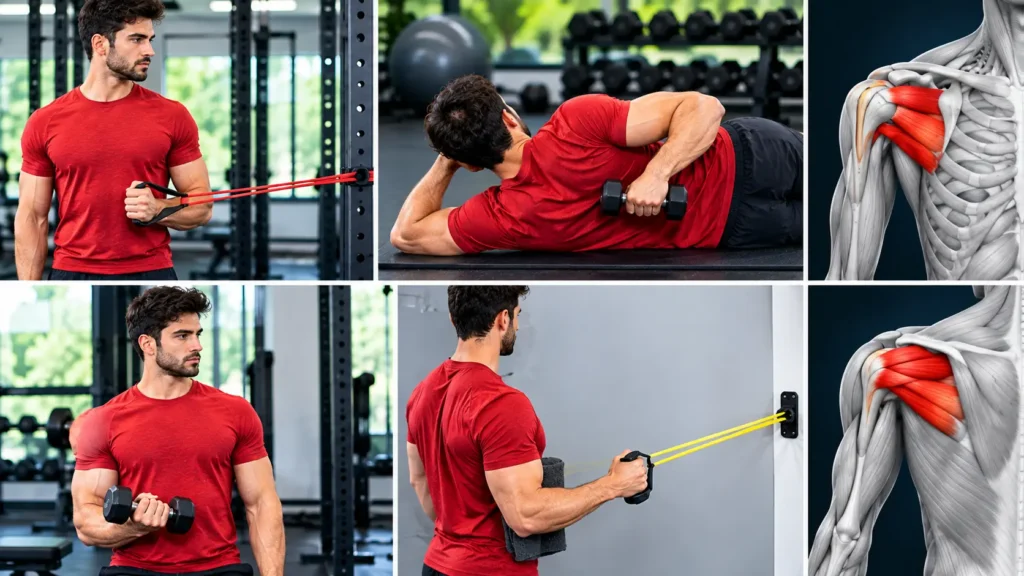
With a light band or dumbbell, keep your elbow tucked at your side and rotate your forearm outward. This move protects the rotator cuff and pairs naturally with scapular training to build complete shoulder joint stability.
10. Prone T Raise with Band
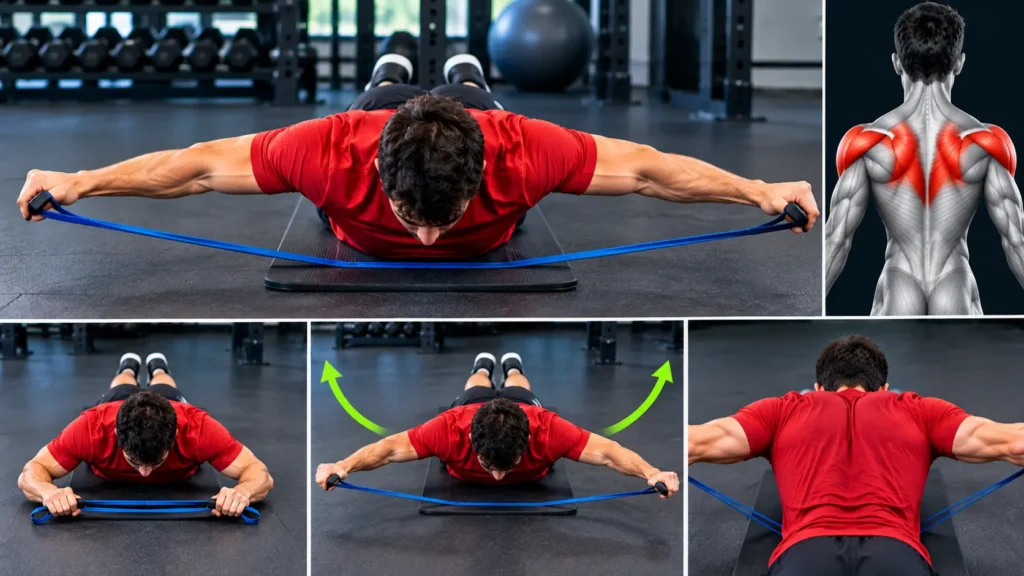
Add light resistance to the T-raise position described above for extra load once bodyweight versions feel too easy.
Scapular Stability Exercises at Home
You don’t need a gym to fix your shoulders. Wall slides, wall angels, scapular push-ups, and shoulder blade squeezes all work with zero equipment. This makes them ideal scapular strengthening exercises without equipment for anyone training from a living room, hotel room, or office break.
For those ready to add resistance, a simple long resistance band unlocks band pull-aparts, face pulls, and external rotations, some of the most effective scapular stability exercises with resistance band work available.
Building a Simple Weekly Routine
You don’t need an hour. Ten to fifteen minutes, three times a week, is enough to see change within a month. A sample beginner circuit:
- Wall angels: 2 sets of 12
- Scapular push-ups: 2 sets of 10
- Band pull-aparts: 3 sets of 15
- Prone Y-T-W raises: 2 sets of 8 each
As strength improves, add face pulls and external rotations. This progression covers scapular stabilization exercises for beginners through to intermediate-level training.
Common Mistakes to Avoid
- Rushing the movement. Scapular exercises rely on control, not speed. Slow reps build better neuromuscular patterns.
- Shrugging instead of retracting. Keep your shoulders down and away from your ears during squeezes and pull-aparts.
- Skipping the warm-up. Cold, tight upper back muscles won’t fire correctly. A few wall slides before lifting go a long way.
- Ignoring pain. Mild muscle fatigue is normal; sharp or pinching pain is not. Stop and reassess your form.
How to Improve Scapular Stability Long-Term
Consistency beats intensity here. The Journal of Orthopaedic & Sports Physical Therapy notes that scapular retraining programs typically show measurable improvements in shoulder mechanics after several weeks of consistent practice, not overnight. Pair your scapular work with general upper back strengthening exercises like rows and reverse flys for a well-rounded routine, and always include rotator cuff work since the two systems support each other directly.
When to See a Professional
Scapular exercises help prevent shoulder injuries, but they aren’t a substitute for medical care. If you experience persistent pain, numbness, or a visibly winging shoulder blade, see a physical therapist or physician. Organizations like the American Physical Therapy Association (APTA) recommend a proper movement assessment before starting any corrective exercise program for existing pain or injury.
Final Thoughts
Strong shoulders start at the shoulder blade, not the shoulder joint itself. Whether you’re rebuilding strength after pregnancy, managing symptoms of PCOS, or simply tired of slouching at your desk, scapular stabilization exercises offer a low-cost, low-risk way to move better and feel stronger. Start small, stay consistent, and let your shoulder blades do the work they were built for.
Sources
- American Council on Exercise (ACE).
- American Physical Therapy Association (APTA).
- Mayo Clinic.
- Journal of Orthopaedic & Sports Physical Therapy (JOSPT).
- Physiopedia.

Hi, I’m Salem Nasir, founder of Fiturely. I research and write evidence-based articles on fitness, nutrition, weight loss, and healthy living. My mission is to make reliable health information simple, practical, and easy to understand so readers can build healthier habits with confidence