
Your brain doesn’t get a retirement plan. Even after decades of remembering birthdays, passwords, and where you left your glasses (again), it still needs a job to do. The good news is that brain exercises for seniors don’t require expensive gadgets, fancy apps, or hours of free time just a few intentional habits done consistently.
With the global population aged 65 and older projected to nearly double from about 857 million in 2025 to 1.58 billion by 2050, healthy aging has quickly become one of the biggest conversations in public health. This guide breaks down seven practical, research-backed brain exercises that support memory retention, mental stimulation, and long-term brain fitness for seniors minus the boring lecture.
Why Do Brain Exercises Matter So Much for Seniors?
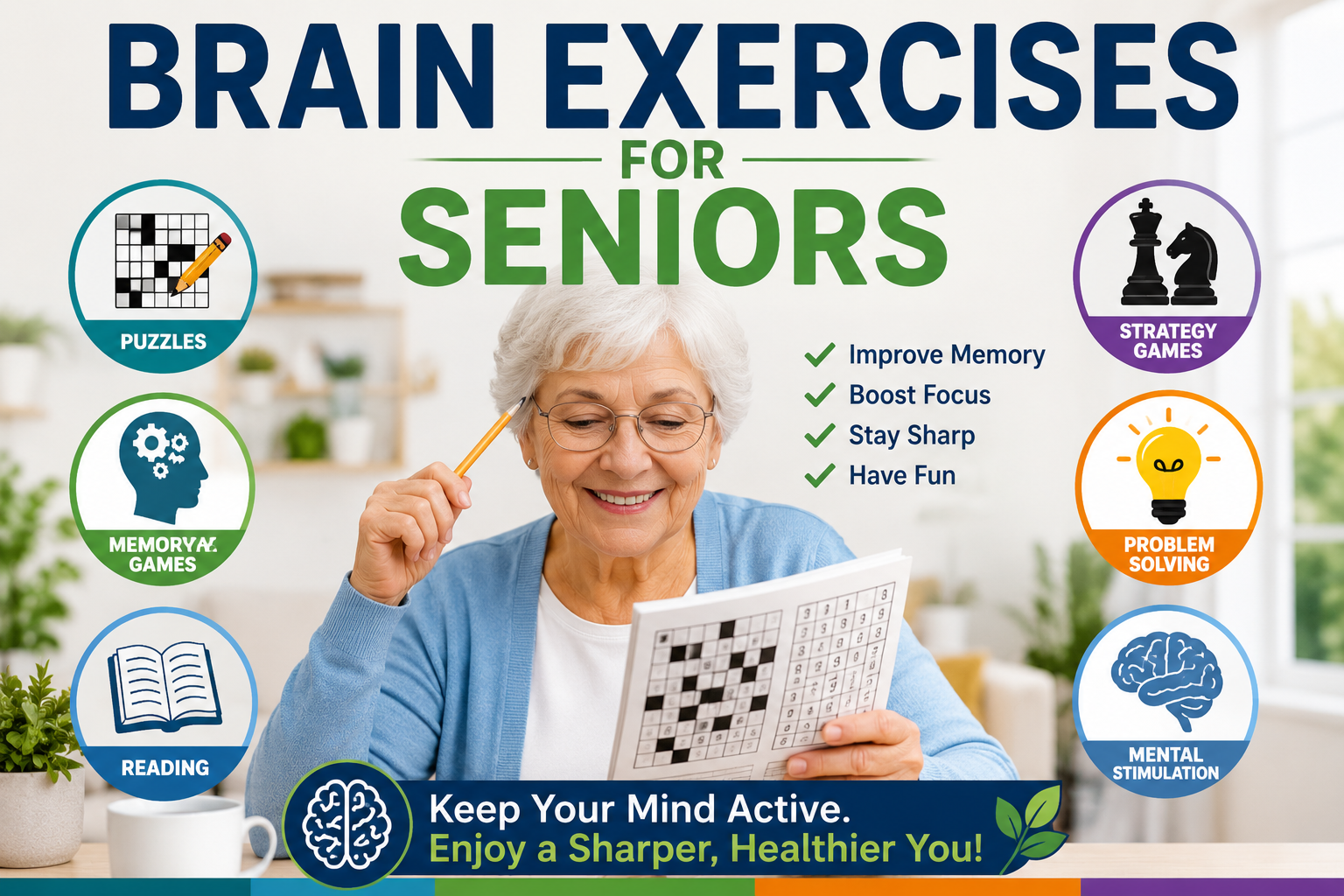
Brain exercises matter because the brain changes with age but those changes aren’t a one-way street toward decline. Mild memory loss affects roughly 4 in 10 people by age 65, based on data cited by the National Institutes of Health. After age 65, the risk of dementia roughly doubles every five years. Regular mental activity helps slow this process and keeps the brain’s communication pathways active. In short, an unused brain tends to age faster than a busy one.
This doesn’t mean every senior is destined for memory problems far from it. It simply means the brain, like a muscle or a garden, responds to use. Skip the watering, and things wilt a little faster. Give it daily attention, and it tends to stay greener for longer.
There’s also a bigger-picture reason this topic deserves attention right now. The share of the global population aged 65 and older is expected to rise from about 10% today to 16% by 2050. As more families navigate aging together, brain health is becoming a shared priority, not just a personal one.
What Makes a Brain Exercise Actually Work?
Not everything that “feels” mentally engaging actually challenges the brain in a meaningful way. Activities that genuinely support brain fitness for seniors tend to share three traits: they involve learning something new, they require sustained focus, and they’re repeated often enough to become a habit. Watching the same show every night is relaxing, but it doesn’t ask much of the brain compared with learning a new card game.
Interestingly, research from the National Institute on Aging found that long-term cardiovascular fitness is linked to higher levels of myelin, the protective coating around brain cells that helps them send signals faster. Even small improvements in fitness corresponded to noticeably higher myelin levels, especially in adults over 40. Brain fitness and physical fitness, it turns out, are teammates rather than separate categories.
1. Does Reading Every Day Improve Memory Retention?

Yes, reading regularly is one of the simplest and most accessible brain exercises for seniors, and it genuinely supports memory retention. It activates several brain regions at once:
visual processing, language comprehension, and memory recall all work together as you follow a story or an argument. Reading also introduces new vocabulary and ideas, which keeps the brain forming fresh connections. Even 20 to 30 minutes a day can make a noticeable difference over time.
The trick is variety. Reading the same genre on autopilot is fine, but mixing things up a mystery novel one week, a biography the next, a newspaper feature after that gives the brain new patterns to follow. Joining a local or online book club adds a social layer too, turning a solo activity into a memory-and-conversation combo.
2. Can Learning a New Skill Really Boost Brain Fitness for Seniors?
Yes, and this is where things get genuinely fun. Learning something brand new, a language, a musical instrument, knitting, or even a smartphone feature forces the brain to build fresh neural pathways from scratch. Researchers sometimes call this extra capacity “cognitive reserve,” and it may help buffer against age-related decline. The key is picking something challenging enough to feel a little awkward at first.
That awkward, fumbling stage (yes, adults feel it too) is actually the brain doing its best work. Whether it’s playing “Twinkle Twinkle Little Star” badly on a keyboard or finally figuring out a video call, struggling through something new is more valuable for the brain than effortlessly repeating something familiar.
3. How Do Puzzles and Brain Games Support Mental Stimulation?
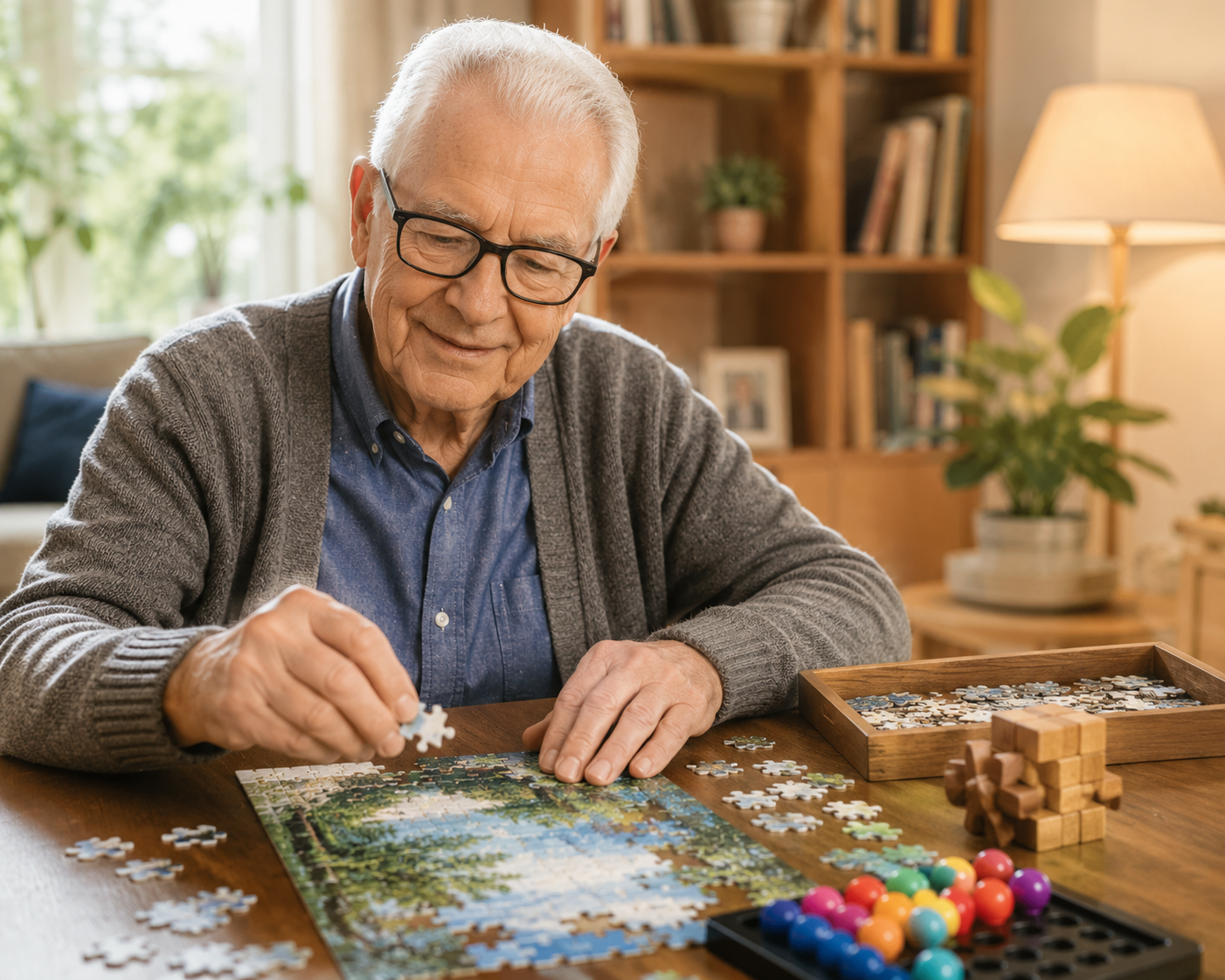
Crosswords, sudoku, jigsaw puzzles, and brain-training apps are classic brain exercises for seniors, and for good reason. They target specific skills like working memory, pattern recognition, and processing speed in short, focused bursts. A 2025 study published in JMIR Serious Games, led by McGill University researchers and supported by the National Institute on Aging, found that structured computerized cognitive training raised levels of a brain chemical marker associated with healthier brain aging in older adults.
That said, puzzles work best as part of a bigger routine rather than a stand-alone fix. Rotating between types word puzzles one day, number puzzles the next, a jigsaw on the weekend keeps the brain from settling into one comfortable pattern.
4. Why Is Physical Exercise One of the Best Brain Exercises for Seniors?
Physical exercise might be the most underrated brain exercise on this entire list. It increases blood flow to the brain, supports the growth of new brain cells, and, as mentioned earlier, is tied to higher myelin levels that help neurons communicate. Federal guidelines recommend at least 150 minutes of moderate physical activity per week for adults, and walking is one of the easiest ways to get there.
One randomized controlled trial highlighted by the National Institute on Aging found that aerobic exercise can increase the size of the hippocampus the brain’s memory center leading to improved spatial memory in older adults. So the next time someone calls a walk “just exercise,” feel free to mention it doubles as a memory workout.
5. Can Staying Social Really Sharpen Memory and Lower Dementia Risk?
Yes, and the research here is hard to ignore. A National Institute on Aging study following more than 7,000 adults aged 65 and older found that high social engagement, including volunteering and visiting with neighbors, was tied to better cognitive health later in life. On the flip side, a large-scale analysis covering over 600,000 participants found that loneliness raised the risk of Alzheimer’s disease by 14% and vascular dementia by 17%.
The takeaway isn’t that seniors need to become extroverts overnight. It’s that regular, meaningful interaction a weekly phone call, coffee with a neighbor, a community class counts as real brain exercise. Even a short chat at the grocery store does more for the brain than most people realize.
6. Does Cooking or Trying New Recipes Count as a Brain Workout?
 Yes, and it’s one of the most underrated brain exercises for seniors. Cooking involves planning, sequencing, multitasking, and engaging all five senses a surprisingly demanding combination for the brain. Following a new recipe means processing unfamiliar steps in order while adjusting for timing, measurements, and the occasional substitution.
Trying a cuisine that’s completely new say, attempting Thai food for the first time adds an extra layer of novelty, exactly the kind of challenge the brain responds well to. The bonus: unlike most brain exercises, this one ends with dinner.
7. How Can Mindfulness and Simple Memory Games Improve Focus?
Mindfulness and short memory games help by lowering stress hormones that can interfere with memory and focus, while training the brain to pay closer attention to the present moment. Simple practices like deep breathing, guided meditation, or a few quiet minutes of reflection can improve concentration over time. Memory games, such as recalling a grocery list without writing it down or naming items in a category, give the brain quick, low-pressure reps.
These don’t need to be formal sessions. A two-minute “name five things you can see, hear, and smell right now” exercise works just as well as a meditation app, and it fits easily into a morning coffee routine.
How Can Seniors Turn These Brain Exercises Into a Daily Habit?
The most effective approach isn’t doing one exercise intensely it’s doing a few of them consistently. A simple daily mix might include reading in the morning, a short walk in the afternoon, a puzzle or game in the evening, and at least one social interaction somewhere along the way. None of these need to take more than 20 to 30 minutes.
Consistency beats intensity here. Five minutes of a new activity, done daily, tends to outperform one long session done occasionally much like brushing your teeth works better as a daily habit than a once-a-month deep clean.
Frequently Asked Questions About Brain Exercises for Seniors
How long should brain exercises take each day?
Even 20 to 30 minutes a day, split across a couple of activities, can support memory retention and mental stimulation over time. Starting small and staying consistent matters more than marathon sessions.
Can brain exercises reverse memory loss?
Brain exercises are best understood as a way to support and protect cognitive health, not a guaranteed cure. They may help slow age-related decline, but anyone noticing significant memory changes should speak with a healthcare provider.
Is it too late to start brain exercises after 70 or 80?
No. Research consistently shows the brain retains some ability to adapt and form new connections well into older age. Starting later still brings benefits the best time to start is simply now.
Final Thoughts
Brain fitness for seniors doesn’t have to mean strict routines or expensive programs. A good book, a new recipe, a walk around the block, and a chat with a neighbor can do more for memory retention and healthy aging than most people expect. Small, consistent habits, repeated often enough, are what actually move the needle over time.
As always, anyone with concerns about memory changes or starting a new exercise routine should check in with a healthcare provider first. This article is for general information and isn’t a substitute for medical advice.

Hi, I’m Salem Nasir, founder of Fiturely. I research and write evidence-based articles on fitness, nutrition, weight loss, and healthy living. My mission is to make reliable health information simple, practical, and easy to understand so readers can build healthier habits with confidence
Pingback: 8 Best Strength Exercises for Seniors Without Equipment to Build Muscle, Improve Balance & Stay Independent (2026)
Pingback: 7 Exercises to Do Everyday for Seniors: Improve Balance, Strength & Mobility (2026)