
Key Takeaways
- Low impact exercises help seniors improve strength, balance, flexibility, and mobility without putting extra stress on the joints.
- Regular gentle workouts can reduce the risk of falls, improve heart health, and support healthy aging.
- Seniors can safely perform many low impact exercises at home with little or no equipment.
- A balanced routine that includes cardio, strength, stretching, and balance exercises promotes greater independence and daily function.
- Always start slowly, use proper form, and consult a healthcare provider before beginning a new exercise program, especially if you have existing health conditions.
Getting older doesn’t mean slowing down it means moving smarter. Whether you’re 62 or 82, the right exercise routine can transform your energy levels, protect your joints, and add years to your life. This guide covers the best low impact exercises for seniors, backed by real science and practical tips you can start using today.
 Low Impact Exercises for Seniors A Safe Path to Better Health
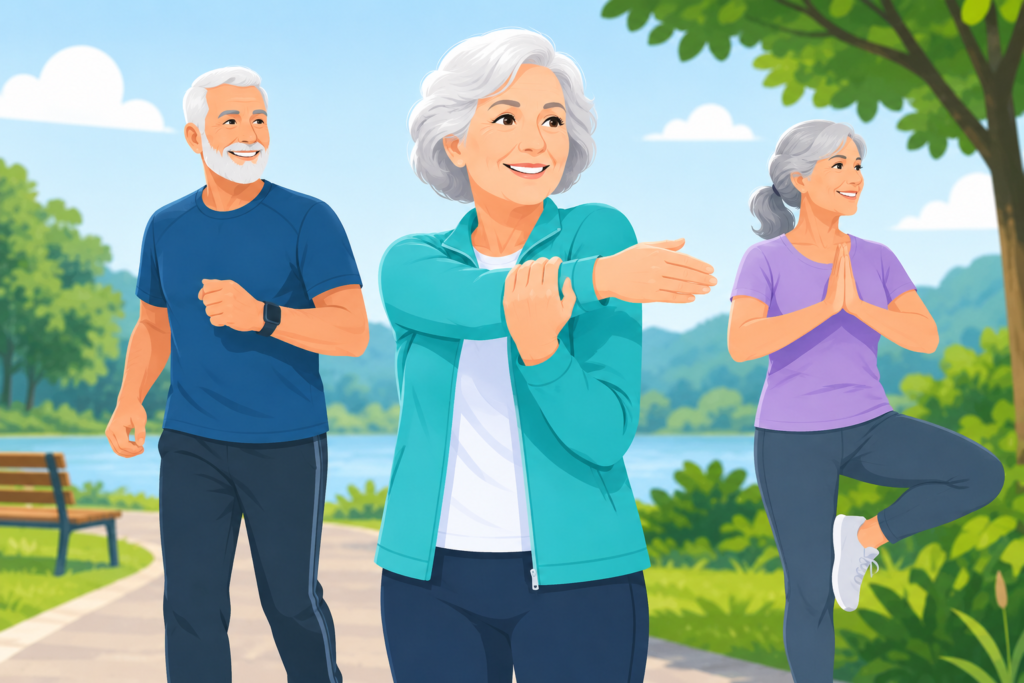 Low Impact Exercises for Seniors A Safe Path to Better Health
Low impact exercises are movements that keep at least one foot on the ground at all times meaning your joints absorb far less shock than activities like running or jumping. For aging adults, this distinction matters enormously. According to the CDC, adults aged 65 and older who engage in regular physical activity have a significantly lower risk of heart disease, type 2 diabetes, and cognitive decline. Yet many seniors avoid exercise out of fear of injury.
The good news? You don’t need high-intensity workouts to stay healthy. A well-designed, joint-friendly workout plan can deliver all the cardiovascular, muscular, and mental health benefits your body needs without the pain or injury risk.
Key fact: The World Health Organization recommends that adults aged 65+ get at least 150–300 minutes of moderate-intensity aerobic activity per week, plus muscle-strengthening activities on 2 or more days. Low impact workouts check all those boxes.
How Does Exercise Support Healthy Aging?
Exercise is one of the most powerful anti-aging tools available and it’s completely free. Studies consistently show that regular physical activity for older adults slows muscle loss (sarcopenia), improves bone density, sharpens memory, and reduces the risk of falls.
Here’s what the research says:
- A 2023 review published in peer-reviewed health journals found that walking 6,000–8,000 steps per day significantly lowers all-cause mortality in adults over 60.
- Strength training twice a week helps counteract the natural 3–8% muscle loss that occurs per decade after age 30, according to research published in the Journal of Strength and Conditioning Research.
- Regular tai chi practice has been shown to reduce fall risk by up to 45% in older adults a finding supported by multiple clinical reviews.
The message is clear: an active lifestyle for seniors isn’t optional it’s essential.
Low Impact Exercises for Seniors:
1. Walking:
Walking is the most accessible exercise on earth. No gym membership, no equipment, no excuses. It’s the gold standard of low intensity workout options for older adults because virtually anyone can do it, anywhere, at their own pace.
Benefits backed by science:
- Improves cardiovascular health and lowers blood pressure
- Boosts mental well-being and reduces symptoms of depression
- Enhances sleep quality and cognitive function
- Reduces all-cause mortality risk
The CDC recommends 30 minutes of brisk walking 5 days per week as a starting target for seniors. If that feels like too much, begin with 10-minute walks and build up gradually. Even a modest daily walk beats sitting still.
2. Chair Exercises:
Chair exercises are a game-changer for seniors who face mobility challenges or are recovering from injury. These are structured movements performed while seated ranging from leg lifts to seated marches to upper body stretches.
A 2021 study confirmed that chair exercise programs significantly improve upper and lower limb functioning in older adults. They’re ideal for anyone who needs an exercise for limited mobility that is still genuinely effective.
What you can do from a chair:
- Seated leg extensions (great for quadriceps)
- Ankle rolls and foot flexes (range of motion exercises)
- Seated torso twists (flexibility training and core work)
- Arm circles and shoulder rolls (shoulder mobility)
3. Yoga:
Yoga is not just for 20-somethings in trendy studios. It’s one of the most well-rounded senior mobility routines available, combining flexibility training, balance work, and stress relief in a single session.
For older adults new to yoga or those with joint limitations, chair yoga is an excellent entry point. It brings all the core benefits of traditional yoga while eliminating the need to get up and down from the floor repeatedly.
Why yoga works for seniors:
- Improves range of motion in hips, spine, and shoulders
- Strengthens core muscles that support posture and balance
- Reduces chronic pain, including that associated with arthritis
- Lowers cortisol (stress hormone) levels and improves sleep.
4. Strength Training:
Here’s a truth many seniors are surprised to learn: resistance training is one of the safest and most beneficial things you can do for your body after 60. Muscle strength isn’t just about looking fit it protects your bones, supports your joints, and keeps you independent longer.
A comprehensive 2019 study found that strength training in older adults helps counteract muscle loss, reduces physical vulnerability, manages chronic conditions, and builds resilience. The CDC specifically recommends 2 strength training sessions per week for adults over 65.
You don’t need a gym or heavy barbells. Effective options include:
- Resistance bands affordable, portable, and gentle on joints
- Bodyweight exercises squats to a chair, wall push-ups, calf raises
- Light dumbbells even 2–5 lb weights are effective for beginners
5. Cycling and E-Bikes:
Cycling is one of the few cardiovascular activities that is genuinely zero-impact on the knees and hips. The circular pedaling motion lubricates the joints while building strength in the legs making it one of the top joint-friendly workouts for older adults.
A 2023 review of cycling in older populations found measurable improvements in joint mobility, cardiovascular health, and psychological well-being. And with the rise of electric bikes (e-bikes), seniors who once felt they couldn’t keep up on hills or longer rides now have a fantastic option.
Stationary bikes are an excellent home workout routine alternative same benefits, zero traffic, any weather.
6. Tai Chi:
If there’s one exercise that’s almost universally recommended by geriatric health professionals, it’s tai chi. This ancient Chinese practice involves slow, flowing movements that build balance, coordination, and mindfulness simultaneously.
A 2021 systematic review found that regular tai chi practice significantly improves:
- Balance and postural stability the #1 benefit for fall prevention exercises
- Pain management particularly for arthritis and lower back pain
- Brain function and memory
- Sleep quality
- Immune system function
7. Swimming and Water Aerobics:
Water is your joints’ best friend. The buoyancy of water reduces the effective weight your body bears by up to 90%, making swimming and water aerobics among the most therapeutic mobility exercises available.
For seniors with severe arthritis, joint replacements, or chronic pain, aquatic exercise opens doors that land-based activities might keep shut. Water resistance also provides gentle but effective muscle strengthening.
Many community pools and senior centers offer structured water aerobics classes as part of a senior exercise program often covered by Medicare Advantage plans through programs like SilverSneakers.
Home Workout Routine for Seniors
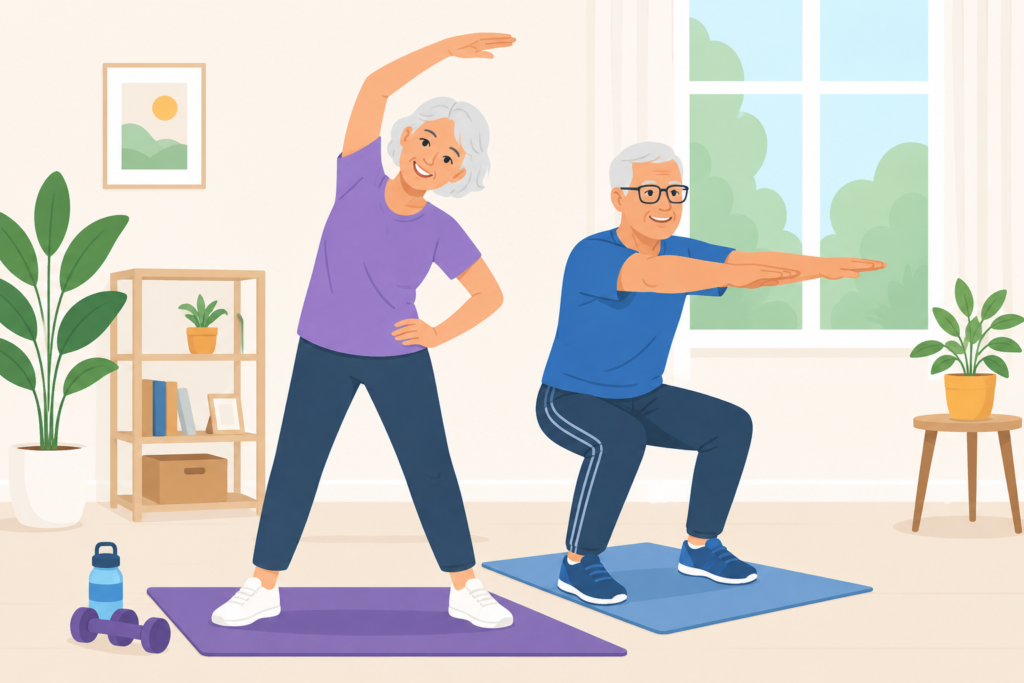 Home Workout Routine for Seniors
The ideal senior home workout doesn’t require expensive equipment or a large space. Consistency matters far more than complexity. Here’s a sample weekly plan:
Monday / Thursday Strength Training (20–30 min)
- Wall push-ups: 2 sets of 10
- Chair squats: 2 sets of 10
- Resistance band rows: 2 sets of 12
- Calf raises: 2 sets of 15
Tuesday / Friday Cardio + Flexibility (30 min)
- 20 minutes of brisk walking or stationary cycling
- 10 minutes of gentle yoga stretches or range of motion exercises
Wednesday / Saturday Balance + Mobility (20 min)
- Tai chi routine (YouTube has excellent free beginner videos)
- Single-leg balance practice
- Heel-to-toe walking
Sunday Rest or gentle stretching
This elderly workout plan hits all the recommendations from the CDC and WHO cardio, strength, flexibility, and balance without ever being overwhelming.
How Do Seniors Exercise Safely and Avoid Injury?
A safe exercise program for seniors follows a few non-negotiable principles. Jumping in too hard, too fast is the most common mistake and the one most likely to cause the very injuries exercise is meant to prevent.
Essential safety rules for older adult fitness:
Start slow and progress gradually.
Your body needs time to adapt. Begin at 50–60% of what you think you can handle, and increase duration or intensity by no more than 10% per week.
Warm up every time.
Even 5 minutes of gentle marching in place or arm swings prepares your muscles and joints for activity and significantly reduces injury risk.
Listen to your body.
Sharp pain is always a stop signal. Mild muscle soreness 24–48 hours after exercise is normal. Persistent joint pain is not consult a healthcare professional.
Stay hydrated.
Older adults have a diminished sense of thirst, making dehydration a real risk during exercise. Drink water before, during, and after workouts.
Work with a professional when possible.
A trainer experienced with older adults can ensure proper form, especially for strength training and yoga, where technique directly affects safety.
What Role Does Exercise Play in Mental Health for Seniors?
The mental health benefits of regular physical activity are just as powerful as the physical ones and for older adults, who face elevated rates of depression, anxiety, and cognitive decline, this matters deeply.
Exercise triggers the release of endorphins, serotonin, and brain-derived neurotrophic factor (BDNF) a protein that literally helps grow new brain cells and protect existing ones. A consistent exercise routine for the elderly has been linked to:
- Up to 35% lower risk of depression
- Slower cognitive decline and reduced dementia risk
- Better sleep quality and duration
- Increased sense of purpose and social connection (especially in group classes)
Senior wellness isn’t just about the body. It’s about showing up fully for the life you want to live.
Quick-Reference:
| Goal | Best Exercise Options |
|---|---|
| Cardiovascular health | Walking, cycling, swimming, water aerobics |
| Muscle strength | Resistance band training, chair exercises, bodyweight squats |
| Balance & fall prevention | Tai chi, single-leg stands, heel-to-toe walking |
| Flexibility & joint mobility | Yoga, chair yoga, gentle stretching |
| Bone health | Walking, strength training, resistance bands |
| Mental health & stress relief | Tai chi, yoga, walking outdoors |
| Limited mobility | Chair exercises, water aerobics, seated yoga |
Final Thoughts:
One of the most empowering findings in modern gerontology is this: the benefits of exercise begin immediately, regardless of age. Adults who start exercising in their 70s and 80s still experience meaningful improvements in strength, balance, cardiovascular health, and mental well-being.
Fitness after retirement isn’t a luxury it’s the single most effective strategy for maintaining independence, vitality, and quality of life. Whether you begin with a 10-minute walk around the block or join a local tai chi class, the most important step is the first one.

Hi, I’m Salem Nasir, founder of Fiturely. I research and write evidence-based articles on fitness, nutrition, weight loss, and healthy living. My mission is to make reliable health information simple, practical, and easy to understand so readers can build healthier habits with confidence
Pingback: 7 Exercises to Do Everyday for Seniors: Improve Balance, Strength & Mobility (2026)
Pingback: Best Cardio Exercises for Seniors Over 60 (No Equipment) - fiturely.com
Do you have a spam problem on this site; I also am a blogger, and I was wanting to know your situation; we have developed some
nice procedures and we are looking to swap solutions with others,
be sure to shoot me an email if interested.