
Key Takeaways:
- Start with basic bodyweight exercises like push-ups, squats, planks, and lunges to build a solid fitness foundation.
- Train 3-4 times per week, focusing on proper form before increasing reps or trying advanced movements.
- Use progressive overload by gradually adding reps, sets, or more challenging exercise variations.
- Include a warm-up, cool-down, and rest days to improve recovery, mobility, and reduce injury risk.
- Stay consistent with your workouts and support them with a protein-rich diet and quality sleep for the best results.
Starting a calisthenics workout plan for beginners doesn’t need a single dumbbell, a gym card, or a fancy app. All you really need is floor space, a bit of patience, and your own bodyweight. This guide breaks down exactly how to start, what to do in your first 30 days, and how to avoid the mistakes that make most beginners quit by week two.
Calisthenics is bodyweight strength training at its purest: push, pull, squat, hold, repeat. It’s how gymnasts get strong, how soldiers get fit, and how your old school PE teacher tortured you with jumping jacks. Turns out, they were onto something.
 What Is Calisthenics?
 What Is Calisthenics?
Calisthenics is strength training that uses your own bodyweight as resistance instead of machines or weights. Think push-ups, pull-ups, squats, and planks, moves you’ve probably already done without calling them “calisthenics.”
The word comes from Greek roots meaning “beauty” and “strength,” which sounds dramatic for something you can do in your pajamas. But that’s the point: it’s simple, it’s old (dating back to ancient Greece), and it still works.
Unlike a barbell squat, calisthenics scales with you. A beginner does knee push-ups; an advanced athlete does a one-arm push-up. Same movement pattern, wildly different difficulty. That’s the beauty of bodyweight fitness.
| Feature | Beginner Calisthenics | Gym Weight Training |
|---|---|---|
| Equipment Needed | None or Pull-Up Bar | Dumbbells, Barbells, Machines |
| Cost | Free or Very Low | Monthly Gym Membership |
| Best For | Beginners & Home Workouts | Muscle Hypertrophy & Heavy Strength |
| Workout Location | Home, Park, Anywhere | Gym |
| Builds Strength | Yes | Yes |
| Builds Muscle | Yes (Progressive Overload Required) | Yes (Faster for Most People) |
| Improves Mobility | Excellent | Moderate |
| Functional Fitness | Excellent | Good |
| Learning Curve | Easy to Moderate | Moderate |
| Injury Risk | Lower with Proper Form | Moderate to High if Form Is Poor |
| Suitable for Weight Loss | Yes | Yes |
| Time to Get Started | Immediately | Requires Gym Access |
Is Calisthenics Actually Effective for Beginners?
Yes, and research backs this up, not just gym-bro enthusiasm. An 8-week study on untrained men found that a structured calisthenics program significantly improved push-up performance by 16.4%, pull-up performance by 39.2%, posture, and body composition, with meaningful fat mass reduction, compared to a control group that did nothing .
That’s not a fluke study. It’s the kind of data that makes calisthenics a legitimate beginner fitness routine, not just a budget alternative to the gym. And here’s the underrated part: because there’s no barbell to load up, you’re forced to master exercise form and technique before anything else. That’s a genuine advantage for anyone starting from zero.
How Many Days a Week Should Beginners Do Calisthenics?
The CDC recommends adults get muscle-strengthening activity on at least 2 days a week, targeting all major muscle groups, ideally at 2 to 3 sets of 8 to 12 reps per movement. Calisthenics checks every one of those boxes without needing a single piece of equipment.
For a calisthenics workout plan for beginners, 3 non-consecutive days a week (say, Monday, Wednesday, Friday) hits that sweet spot. It’s enough stimulus to build strength and endurance training without frying your joints or your motivation before you’ve even built the habit.
Rest days aren’t laziness. They’re when your muscles actually rebuild and grow. Skip them, and you’re just accumulating fatigue, not fitness.
What Does a 30-Day Calisthenics Workout Plan Look Like?
A good beginner plan builds gradually: same core movements, increasing reps and sets week over week. It should always include a push, a pull, a squat, and a core movement. That’s a full body strength workout in four moves.
Here’s a simple, no-equipment 4-week progression you can actually stick to:
Week 1:
- Push-ups (or knee push-ups): 3 sets of 8 to 10 reps
- Bodyweight squats: 3 sets of 12 to 15 reps
- Plank hold: 3 sets of 20 seconds
- Glute bridges: 3 sets of 12 reps
Week 2:
- Push-ups: 3 sets of 12 reps
- Squats: 4 sets of 15 reps
- Plank: 3 sets of 30 seconds
- Inverted rows or towel rows (a pull up progression starter): 3 sets of 8 reps
Week 3:
- Push-ups: 4 sets of 12 to 15 reps
- Assisted or negative pull-ups: 3 sets of 5 reps
- Walking lunges: 3 sets of 10 reps per leg
- Hollow body hold: 3 sets of 20 seconds
Week 4:
- Full-body circuit: push-ups, squats, rows, plank, lunges. 3 rounds, minimal rest.
- Test your push-up and pull-up max to track real progress
This structure gives your body a repeatable framework while still allowing progressive overload in calisthenics, the golden rule of getting stronger over time.
Best Beginner Calisthenics Exercises
The eight moves below cover pushing, pulling, legs, and core, the four pillars every basic calisthenics skills list should include. Master these before chasing muscle-ups or handstand push-ups.
1. Push-Ups

Push-ups are the classic upper-body builder, and for good reason, they hit your chest, shoulders, and triceps while forcing your core to stay tight the whole time. If a full push-up feels too hard right now, that’s completely normal. Start with knee push-ups or an incline version against a bench or wall; that’s a genuine push up progression, not cheating.
How to do it:
Get into a plank position with hands slightly wider than shoulder-width. Keep your body in a straight line from head to heels, no sagging hips, no piked-up butt. Lower your chest toward the floor by bending your elbows at about a 45-degree angle to your body, then press back up until your arms are straight.
Benefits:
• Builds chest, shoulder, and tricep strength
• Trains core bracing and full-body tension
• Requires zero equipment and scales easily as you get stronger
How much to do in a day: 3 sets of 8 to 12 reps (or as many as you can with good form) is a solid daily starting point. Beginners can do push-ups most days of the week since the volume is light, but 3 to 4 sessions per week is plenty if you want proper recovery.
2. Bodyweight Squats
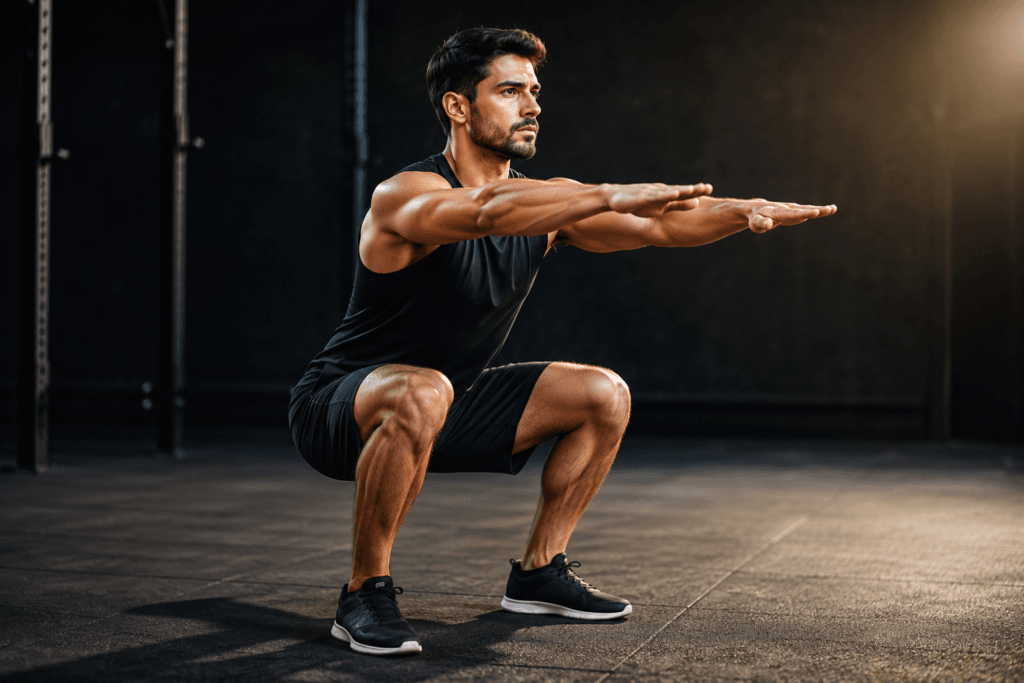
Squats are the foundation of every lower-body movement you’ll ever do in calisthenics. They’re simple to learn but easy to do sloppily, so don’t rush them. Depth and knee tracking matter more than speed here, a slow, controlled squat beats a fast, shallow one every time.
How to do it:
Stand with feet shoulder-width apart, toes pointed slightly outward. Push your hips back and bend your knees to lower down, keeping your chest up and knees tracking in line with your toes (not caving inward). Go as low as you comfortably can, ideally thighs parallel to the floor or below, then drive through your heels to stand back up.
Benefits:
• Builds quad, glute, and hamstring strength
• Improves hip and ankle mobility
• Lays the groundwork for jump squats, pistol squats, and other advanced leg work later
How much to do in a day: 3 sets of 15 to 20 reps is a great daily target for beginners. Since squats are low-impact and don’t beat up your joints much, you can train them almost every day if you’re not adding extra load.
3. Pull-Ups

Pull-ups are honestly the hardest “beginner” move on this list, and that’s exactly why they belong on it. Getting your first pull-up is a milestone worth working toward from day one. Use resistance bands or inverted rows to build the strength you need; a slow, steady pull up progression beats forcing a bad rep every time.
How to do it:
Grab a bar with hands slightly wider than shoulder-width, palms facing away from you. Hang with arms fully extended, then pull your chest up toward the bar by driving your elbows down and back. Lower yourself back down under control instead of just dropping.
If you can’t do a full rep yet, loop a resistance band around the bar and under your knee or foot for assistance, or practice inverted rows using a low bar or table.
Benefits:
• Builds back, bicep, and grip strength
• Develops the pulling strength that’s often missing in beginner routines
• Directly carries over to more advanced moves like muscle-ups later on
How much to do in a day: 3 to 4 sets of as many reps as you can manage (even if that’s just band-assisted or negative reps) is enough. Unlike squats or push-ups, pull-ups are demanding on your joints and central nervous system, so 3 sessions a week with rest days in between works better than daily training.
4. Lunges
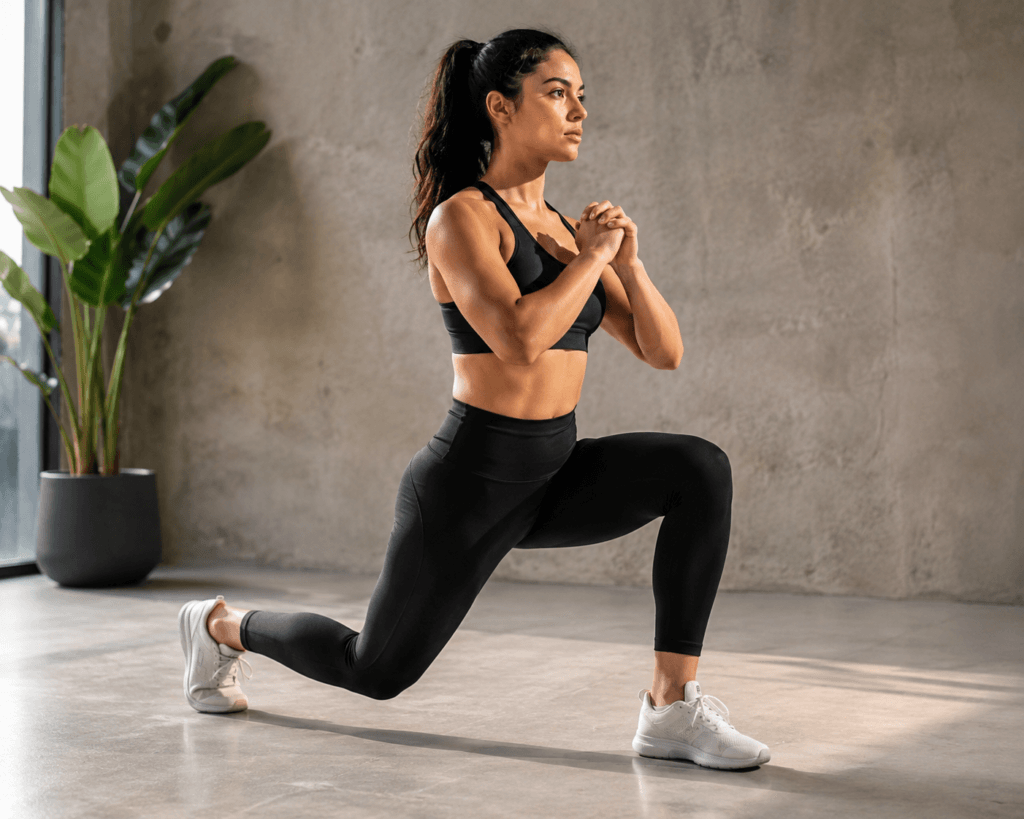
Lunges train single-leg strength, balance, and hip mobility all at once, something regular squats can’t fully replicate. If you’ve ever noticed one leg feels weaker or less stable than the other, lunges are one of the best ways to even that out.
How to do it:
Stand tall, then step one foot forward into a long stride. Lower your back knee toward the floor by bending both knees to roughly 90 degrees, keeping your front knee over your ankle (not pushed past your toes). Push through your front heel to return to standing, then repeat on the other leg.
Benefits:
• Builds single-leg strength and stability
• Improves balance and coordination
• Exposes and corrects left-right imbalances
How much to do in a day: 3 sets of 10 to 12 reps per leg is a good daily beginner dose. Because lunges challenge balance more than squats do, focus on quality over quantity, especially when you’re still learning the movement.
5. Plank
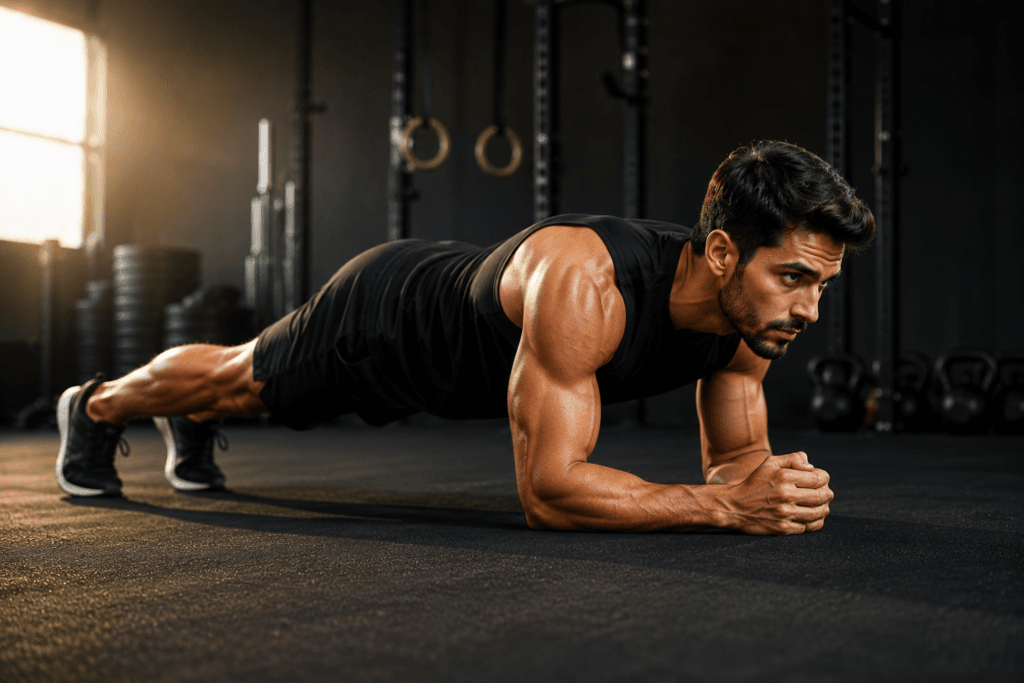
The plank is the entry point for real core strengthening exercises. Instead of teaching your core to create movement (like crunches do), it teaches your body to resist movement, a skill that carries over into almost every other exercise on this list, from push-ups to pull-ups.
How to do it:
Get into a forearm plank position, elbows under shoulders, forearms flat on the floor. Keep your body in a straight line from head to heels, squeezing your glutes and bracing your abs as if you’re about to get punched in the stomach. Avoid letting your hips sag or pike up.
Benefits:
• Builds full-body core stability
• Protects your lower back by teaching proper bracing
• Improves performance in almost every other calisthenics move
How much to do in a day: 3 sets of 20 to 40 second holds is a solid starting point, quality over duration. It’s better to hold perfect form for 20 seconds than to shake through 60 seconds with your hips sagging. Planks can be done daily since they’re low-fatigue.
6. Glute Bridges
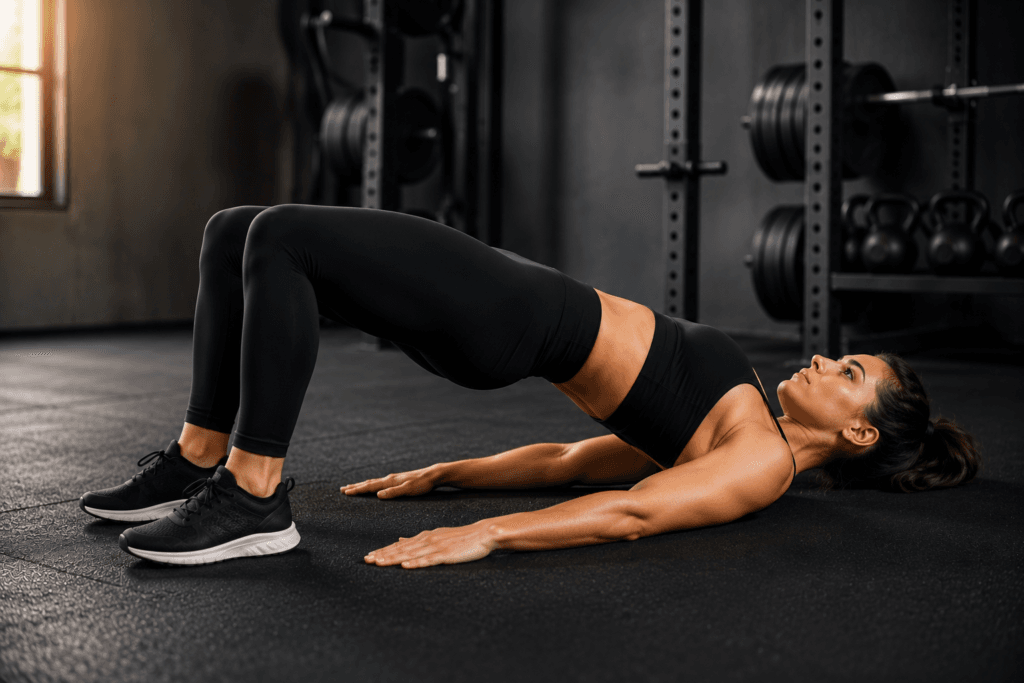
Glute bridges strengthen your posterior chain, the glutes, hamstrings, and lower back, which is chronically underused if you sit at a desk all day (and let’s be honest, most of us do). This move is a simple but powerful fix for that.
How to do it:
Lie on your back with knees bent, feet flat on the floor hip-width apart. Drive through your heels and squeeze your glutes to lift your hips up until your body forms a straight line from shoulders to knees. Pause briefly at the top, then lower back down with control.
Benefits:
• Strengthens glutes, hamstrings, and lower back
• Counteracts the effects of prolonged sitting
• Supports better posture and hip function
How much to do in a day: 3 sets of 15 to 20 reps is a good daily target. Because this move is gentle on the joints, it’s safe to include in a daily routine, especially if you sit for long stretches during the day.
7. Hollow Body Hold
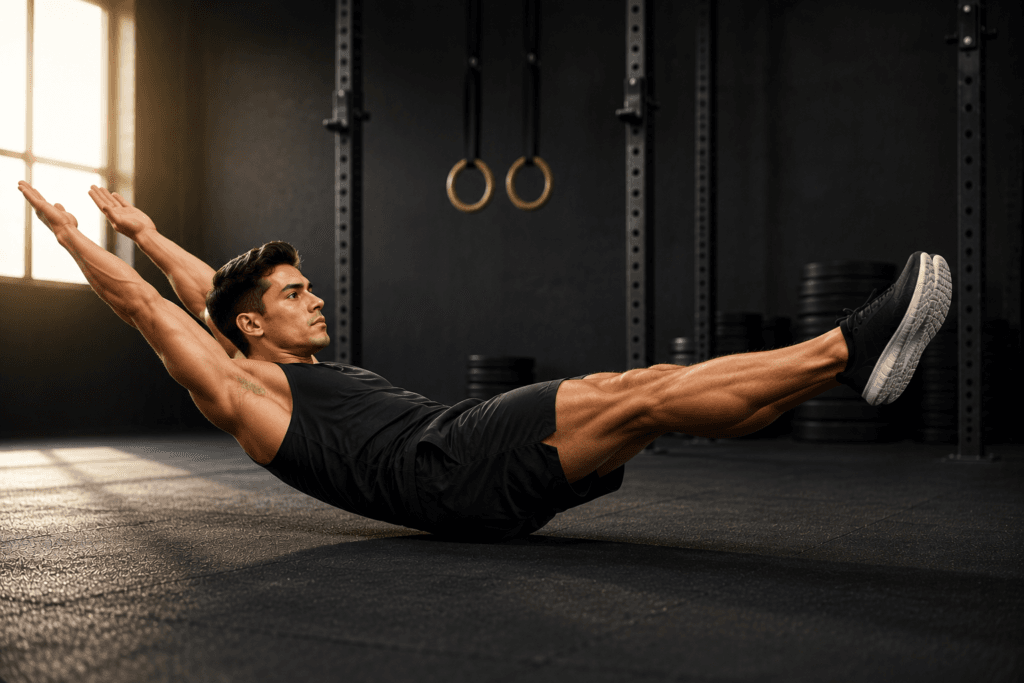
The hollow body hold is a gymnastics staple, and it builds the exact kind of core tension you’ll need for pull-ups, handstands, and just about every advanced calisthenics skill down the road. It looks simple but it’s tougher than it looks, start small and build up.
How to do it:
Lie on your back, then press your lower back flat into the floor. Extend your arms overhead and legs out straight, lifting both your shoulders and legs slightly off the ground so your body forms a shallow “banana” shape. Keep your lower back glued to the floor the entire time, that’s the whole point of the move.
Benefits:
• Builds deep core strength and tension
• Directly transfers to pull-ups, handstands, and levers
• Teaches full-body tightness under load
How much to do in a day: 3 sets of 15 to 20 second holds is a good beginner starting point. If your lower back lifts off the floor, that’s your cue to shorten the hold or bend your knees slightly until you build up the strength.
8. Dead Bugs
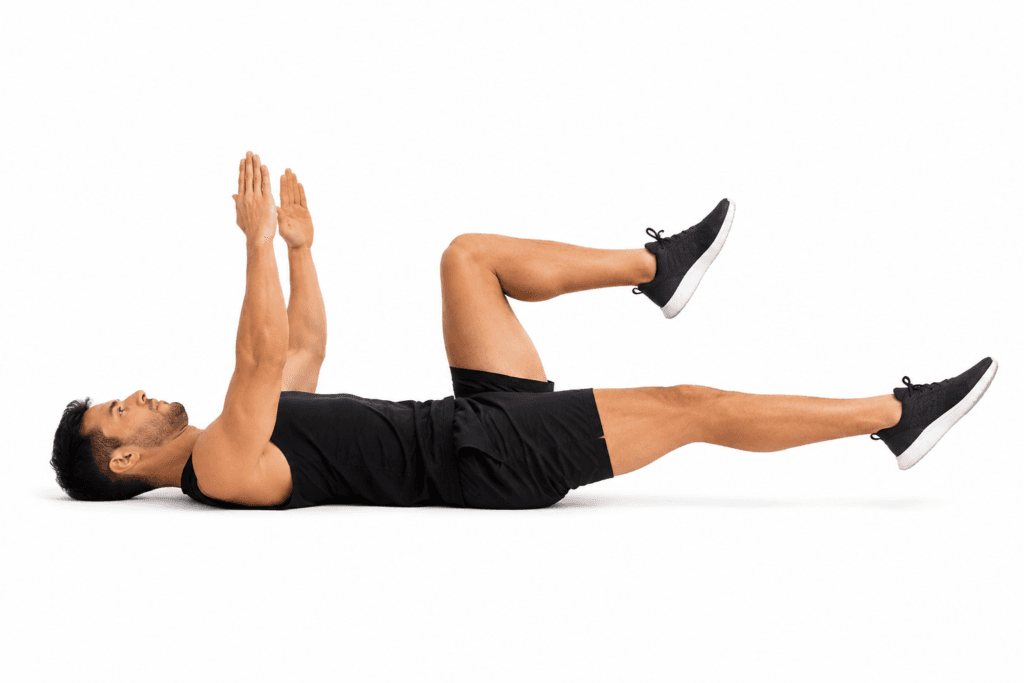
Dead bugs are unglamorous but genuinely effective. They fall under body control exercises because they teach your core to stabilize your spine while your arms and legs move independently, a skill that matters far more in real life (and in calisthenics) than crunches ever will.
How to do it:
Lie on your back with arms reaching straight up toward the ceiling and knees bent at 90 degrees above your hips (tabletop position). Slowly lower your right arm and left leg toward the floor at the same time, keeping your lower back pressed flat against the ground. Return to the start and repeat on the opposite side.
Benefits:
• Builds core stability and coordination
• Protects the lower back during other exercises
• Improves control over opposite-limb movement patterns
How much to do in a day: 3 sets of 8 to 10 reps per side is a good daily dose. Since dead bugs are low-intensity and joint-friendly, they’re a great addition to a daily warm-up or core routine.
Putting It All Together
You don’t need to do all eight every single day. A simple beginner split could look like:
• Push day: Push-ups + Plank
• Pull day: Pull-ups + Dead Bugs
• Leg day: Squats + Lunges + Glute Bridges
• Core day: Hollow Body Hold + Plank + Dead Bugs
Aim for 3 to 5 sessions a week, letting muscle groups rest between harder sessions (especially pull-ups). Master these fundamentals with good form before moving on to muscle-ups, handstand push-ups, or other advanced calisthenics skills.
Do You Need to Warm Up Before Calisthenics?
Yes. Skipping your warm up routine is one of the fastest ways to get injured, and one of the easiest habits to build once you know what actually works. Five to eight minutes is usually enough.
A solid warm-up covers three bases: raise your heart rate (light jogging in place or jumping jacks), mobilize your joints (arm circles, hip openers, wrist rotations), and prime the specific muscles you’re about to train (scapular pull-ups before pulling work, for example).
Don’t skip the cool down stretches either. A few minutes of static stretching post-workout supports flexibility training and mobility exercises, both of which quietly determine how good your form looks six months from now.
How Do You Build Muscle Without Weights?
You build muscle the same way lifters do, by progressively challenging your muscles past their comfort zone. You just change the resistance source. In calisthenics, that resistance is gravity plus your own bodyweight, applied through smarter leverage and range of motion.
Muscle building with bodyweight relies on three levers: harder variations (knee push-up to full push-up to decline push-up), more reps, or slower tempo. Each one is a legitimate way to keep progressing without ever touching a barbell.
This is also why home workout without equipment routines can genuinely build muscle, not just “tone.” A decline push-up loads roughly the same percentage of bodyweight as a moderate bench press set, according to biomechanics research on push-up variations.
Can You Get Fit With a No Gym Workout?
Absolutely. A no gym workout built around calisthenics can improve strength, cardiovascular fitness, and mobility all at once. You lose the machines, but you gain full-body, functional movement patterns that carry over directly to daily life.
This is really where functional fitness shines. Squats mimic sitting and standing. Push-ups mimic pushing a heavy door. Rows mimic picking something up and pulling it toward you. You’re not just training muscles, you’re training movements you already use every day.
For anyone commuting, traveling, or just avoiding a monthly membership fee, this is one of the most practical arguments for fitness for beginners who want results without overhead costs.
How Do You Stay Consistent With a Beginner Routine?
Consistency beats intensity, every single time. A mediocre workout done three times a week for two months will always beat a “perfect” workout done once and abandoned.
Workout consistency comes down to friction, not motivation. Keep your routine short (20 to 30 minutes), keep it in one place (your living room, a park bench, wherever), and track it somewhere visible, a notebook, a habit app, anything.
Also, expect soreness in week one. That’s normal. What’s not normal is sharp joint pain. That’s your cue to check your exercise form and technique, not push through it.
What About Balance, Recovery, and Long-Term Progress?
Recovery isn’t optional. It’s where the actual strength gains happen, since muscles adapt during rest, not during the workout itself. Give the same muscle group at least 24 to 48 hours before training it again.
Good workout recovery tips include sleeping 7 to 9 hours, staying hydrated, eating enough protein, and taking a full rest day if you’re unusually sore or fatigued. Skipping recovery to “keep the streak going” usually backfires into injury or burnout.
As you advance, layer in balance and coordination training: single-leg squats, side planks, or handstand holds against a wall. These build the body awareness that separates someone who can do a push-up from someone who can eventually do a handstand push-up.
FAQs
1. How long does it take to see results from calisthenics as a beginner?
Most beginners notice strength and control improvements within 3 to 4 weeks of consistent training, 3 to 5 sessions a week. Visible muscle changes usually take 8 to 12 weeks, depending on diet, sleep, and consistency.
2. Can I do calisthenics every day, or do I need rest days?
Low-intensity moves like squats, planks, glute bridges, and dead bugs can be done daily. Demanding moves like pull-ups need 1 to 2 rest days between sessions so your joints and nervous system can recover.
3. Do I need a pull-up bar to start calisthenics?
No. You can build strength with push-ups, squats, lunges, planks, glute bridges, hollow body holds, and dead bugs using just your bodyweight. A pull-up bar helps once you’re ready to train pulling strength, but resistance bands or inverted rows are solid substitutes early on.
4. What if I can’t do a single push-up or pull-up yet?
That’s completely normal. Use knee push-ups or incline push-ups to build toward a full push-up, and use resistance bands or inverted rows to build toward a full pull-up. Progressions exist exactly for this reason, so start where you are.
5. How many days a week should a beginner do calisthenics?
3 to 5 days a week is ideal. This gives your body enough training stimulus to build strength while leaving room for recovery, especially for joint-heavy moves like pull-ups.
6. Is calisthenics enough to build muscle, or do I need weights?
Yes, calisthenics alone can build real muscle and strength, especially for beginners. As you progress, you can increase difficulty through harder variations, added reps, or slower tempos instead of needing external weights.
7. What’s the best order to do these exercises in a workout?
A simple approach is pushing and pulling moves first (push-ups, pull-ups) while you’re fresh, followed by legs (squats, lunges, glute bridges), then core work last (plank, hollow body hold, dead bugs) since a fatigued core can affect form on earlier exercises.
Final Rep:
A good calisthenics workout plan for beginners isn’t about chasing an Instagram-worthy muscle-up in week two. It’s about mastering push-ups, squats, planks, and rows with clean form, then patiently layering on difficulty as your body adapts.
Follow CDC-backed frequency (2 to 3 sessions a week), respect your warm-up and recovery, and track your reps so progress feels real, not imaginary. Do that for a month, and you’ll be shocked at how far “just bodyweight” can actually take you.
Sources:
- American Council on Exercise (ACE) Provides evidence-based information on bodyweight exercises, proper workout techniques, and safe exercise progression for beginners.
- National Academy of Sports Medicine (NASM) Offers research-backed guidance on strength training, movement quality, and creating effective beginner workout programs.
- Centers for Disease Control and Prevention (CDC) Provides health and fitness recommendations related to physical activity, muscle strengthening, and overall wellness.

Hi, I’m Salem Nasir, founder of Fiturely. I research and write evidence-based articles on fitness, nutrition, weight loss, and healthy living. My mission is to make reliable health information simple, practical, and easy to understand so readers can build healthier habits with confidence
Pingback: 15 Best Home Workout Equipment for Abs (2026): Build a Strong Core Faster
Pingback: Military Calisthenics (2026): 11 Best Exercises to Build Strength & Endurance