
Key Takeaways
- Ham is usually the healthier choice because it contains less fat, fewer calories, and significantly less sodium than Spam.
- Spam is high in protein but also high in sodium and saturated fat, making it a food best enjoyed occasionally rather than every day.
- Lean ham is a better option for weight loss, heart health, and high-protein diets thanks to its leaner nutritional profile.
- Both Spam and ham are processed meats, so limiting portion sizes and frequency can help support long-term health.
- For most people, ham offers a better balance of protein and nutrition, while Spam is best reserved for convenience or occasional meals.
Two canned and deli-counter classics, one nutrition showdown. If you’ve ever stood in the meat aisle wondering which is healthier spam or ham, you’re not alone, and the answer isn’t as obvious as the price tag suggests. Let’s break down spam vs ham nutrition using real, verifiable numbers.
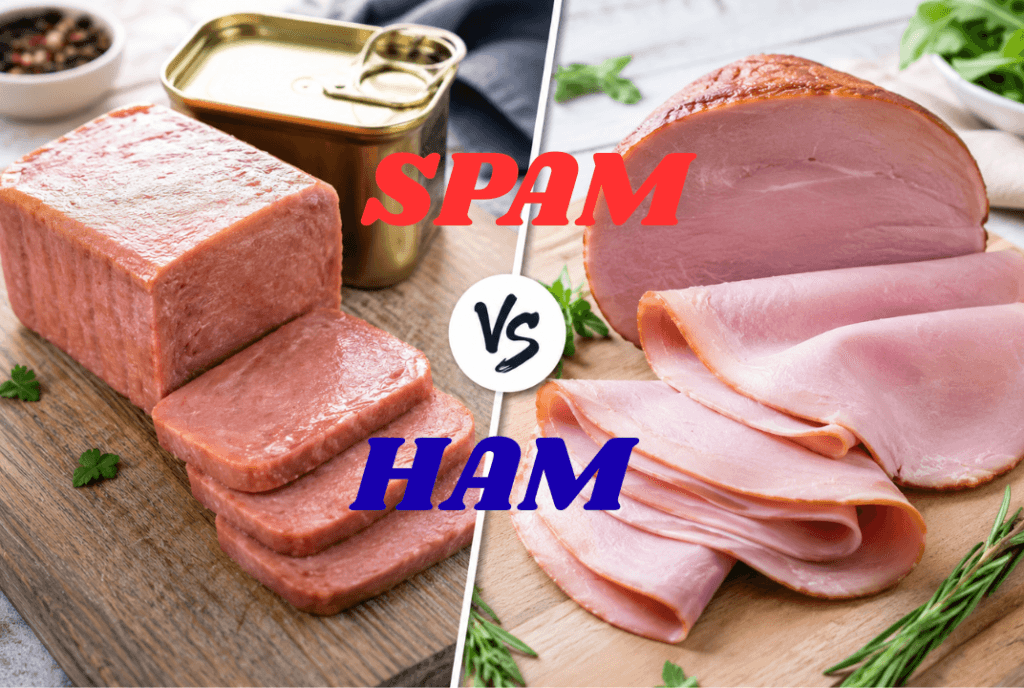
Spam vs Ham Nutrition:
Ham generally wins on protein-to-calorie ratio and fat content, while Spam wins on shelf life and convenience. For spam vs ham nutrition facts, the biggest gap is fat: Spam packs roughly double the calories of lean ham per serving. Sodium, though, is high in both, so neither is a clean win for a low-salt diet.
Based on standard USDA FoodData Central entries and manufacturer nutrition labels, here’s the side-by-side snapshot before we dig into each category.
| Nutrient (per 2 oz / 56g) | Spam (Classic) | Cooked Lean Ham |
|---|---|---|
| Calories | 180 | 60-70 |
| Protein | 7g | 9-11g |
| Total Fat | 16g | 2-3g |
| Saturated Fat | 6g | 1g |
| Carbohydrates | 2g | 0-1g |
| Sodium | 790mg | 560-700mg |
Calories Comparison
Ham has noticeably fewer calories than Spam per equal serving. This is the single biggest factor driving most people’s decision when comparing spam vs ham calories for daily meal planning. It comes down to fat content more than anything else.
A 2 oz serving of classic canned Spam runs about 180 calories, largely from its fat content. The same size serving of lean cooked ham sits closer to 60 to 70 calories, according to USDA nutrient data for cured pork products.
That’s not a small gap. Swap Spam for ham in a sandwich twice a week, and you’ve cut over 200 calories without changing portion size. For anyone tracking intake closely, this alone often settles the debate.
If you’re weighing other lean protein swaps too, our guide on Chicken Thighs breaks down how poultry stacks up against processed pork options like these.
Protein Comparison
Ham typically delivers more protein per calorie than Spam. For spam vs ham protein comparisons, ham’s leaner profile means you get more muscle-building value from the same bite.
Cooked lean ham provides roughly 9 to 11 grams of protein per 2 oz serving, while Spam offers about 7 grams in the same portion. The difference seems small in grams, but the protein density (protein per calorie) tells a clearer story.
Ham delivers close to 0.15g of protein per calorie, while Spam delivers roughly 0.04g per calorie. If you’re building a diet around protein rich foods, that ratio matters more than the raw gram count alone.
Fat and Saturated Fat
Spam contains significantly more total and saturated fat than ham. This is the core reason Spam feels heavier and more indulgent, while ham reads as the “lighter” lunch meat option on most labels.
Spam’s 2 oz serving carries about 16g of total fat, with 6g being saturated fat, according to standard product nutrition labels. Lean cooked ham, by comparison, usually has just 2 to 3g of total fat per equivalent serving.
The American Heart Association recommends limiting saturated fat to under 13g daily on a 2,000-calorie diet. A single Spam serving alone eats up nearly half that budget, which is worth knowing before you build a sandwich stack.
Carbohydrates
Neither Spam nor ham contributes meaningful carbohydrates to your daily intake. For spam vs ham carbs, both sit close to zero, making this category a non-factor for most dietary decisions.
Spam contains about 2g of carbs per serving (mostly from added starch used as a binder), while ham typically has 0 to 1g. Neither will meaningfully affect blood sugar for most people.
This is actually good news if you’re following a low-carb or spam vs ham keto diet approach: both meats fit within strict carb limits, so the decision comes down to fat, sodium, and protein quality instead.
Sodium Comparison
Both Spam and ham are high in sodium, though ham can vary more depending on brand and curing method. Answering does spam have more sodium than ham isn’t a clean “yes,” since some deli hams come close to or exceed Spam’s sodium content.
Spam contains about 790mg of sodium per 2 oz serving. Lean deli ham ranges from roughly 560mg to over 700mg depending on the brand and curing process, per label data from major grocery brands.
If sodium is your main concern, look specifically for low sodium ham options, which some brands now offer with 25% to 40% less sodium than standard cured ham. Spam also now sells a reduced-sodium version, so read labels rather than assuming by product name alone.
For a deeper breakdown of exactly what’s in the can, check our full Spam Nutrition Facts guide, and pair it with our Ham Nutrition Facts page for the complete label-by-label picture.
Vitamins and Minerals
Ham generally offers a slightly better micronutrient profile than Spam, particularly for B vitamins and zinc. Neither product is a significant source of vitamins, but the difference is still measurable.
Ham provides small amounts of vitamin B12, zinc, and phosphorus, largely because it retains more of the original muscle tissue compared to Spam’s processed blend. Spam, being a processed meat product with added fillers, dilutes these naturally occurring nutrients somewhat.
| Vitamin/Mineral (per 2 oz / 56g) | Spam (Classic) | Cooked Lean Ham |
|---|---|---|
| Vitamin B12 | 0.4 mcg | 0.5-0.6 mcg |
| Zinc | 1.0 mg | 1.2-1.4 mg |
| Phosphorus | 90 mg | 140-160 mg |
| Potassium | 130 mg | 180-200 mg |
| Iron | 0.6 mg | 0.5-0.7 mg |
Neither should be relied on as a meaningful vitamin source. If micronutrients are a priority, pairing either meat with vegetables or whole grains does more nutritional heavy lifting than the meat itself.
Which Is Better for Weight Loss?
Ham is the better choice for weight loss due to its lower calorie and fat content per serving. For spam vs ham for weight loss goals, the math is straightforward: fewer calories and more protein per bite means better satiety per calorie spent.
Protein has a well-documented satiety effect, meaning it helps you feel fuller for longer relative to its calorie cost. Since ham delivers more protein at a fraction of the calories, it supports weight loss goals more efficiently than Spam.
That said, portion control still matters. Even lean ham can contribute to a calorie surplus if paired with high-calorie bread, cheese, and condiments in a sandwich stack.
Which Is Better for Muscle Building?
Ham edges out Spam for muscle-building purposes because of its higher protein-to-calorie ratio. For a spam vs ham bodybuilding comparison, protein density is the deciding factor, not just total protein grams.
To hit daily protein targets (often 1.6 to 2.2g per kg of body weight for active individuals, per sports nutrition research), you’d need to eat significantly more Spam than ham to reach the same protein number, while also consuming far more fat and calories in the process.
If your goal is lean muscle gain without excess fat intake, ham is simply the more efficient tool. Combining it with other high protein meats like chicken, turkey, or lean beef rounds out a stronger muscle-building diet.
Health Risks of Processed Meats
Both Spam and ham fall under the “processed meat” category, which carries documented health risks tied to regular high consumption. The World Health Organization classifies processed meat as a Group 1 carcinogen, meaning there’s sufficient evidence linking it to colorectal cancer risk with regular consumption.
This classification applies to both products, since both are cured and processed using similar preservation methods (including sodium nitrite in most formulations). Frequency and portion size matter more here than the specific brand or type.
The WHO’s IARC report doesn’t say occasional consumption is dangerous, it flags that consistent daily intake over long periods raises risk. Moderation, not elimination, is the practical takeaway backed by this processed meat comparison research.
Spam vs Ham:
For most everyday nutrition goals, ham wins on calories, protein density, and overall health profile. Spam wins on convenience, shelf stability, and, admittedly, flavor versatility for certain recipes.
If you’re asking is spam healthier than ham, the honest answer is generally no, based on the calorie, fat, and protein numbers above. If you’re asking is ham healthier than spam, the data leans yes, particularly for lean, low-sodium ham varieties.
Neither is a daily health food. Both work fine as occasional protein sources in a varied diet, especially when paired with vegetables and whole grains rather than processed sides.
For anyone building a broader protein strategy beyond canned and deli meats, our Chicken Thighs breakdown offers a useful comparison point for a healthy lunch meat rotation that doesn’t rely solely on cured pork products.
Frequently Asked Questions
Is Spam healthier than ham?
Generally no. Ham has fewer calories, less fat, and a better protein-to-calorie ratio, making it the leaner choice in most spam vs ham nutrition comparisons.
Does Spam have more sodium than ham?
Classic Spam has about 790mg of sodium per 2 oz serving, which is often similar to or slightly higher than standard deli ham, though sodium varies by brand and curing method.
Which has more protein, Spam or ham?
Ham typically has more protein per serving (9-11g vs Spam’s 7g) and a much better protein-to-calorie ratio, making it the stronger pick for spam vs ham protein comparisons.
Is ham better for weight loss?
Yes. Ham’s lower calorie and fat content per serving make it more efficient for calorie control, which is why it generally wins spam vs ham for weight loss comparisons.
Which meat has fewer calories?
Ham has fewer calories, roughly 60-70 per 2 oz serving compared to Spam’s 180, largely due to Spam’s higher fat content.
Is ham high in sodium?
Yes, most ham varieties are high in sodium (560-700mg per serving or more), though low sodium ham options exist and can cut sodium content significantly.
Whichever you choose, reading the label, not just the product name, is what actually protects your health goals. Nutrition facts vary by brand, so treat this comparison as a starting point, not a substitute for checking the can or package in your own kitchen. For more label-by-label details, see our Spam Nutrition Facts and Ham Nutrition Facts guides.
Sources: USDA FoodData Central, WHO/IARC, American Heart Association, and manufacturer nutrition labels.

Hi, I’m Salem Nasir, founder of Fiturely. I research and write evidence-based articles on fitness, nutrition, weight loss, and healthy living. My mission is to make reliable health information simple, practical, and easy to understand so readers can build healthier habits with confidence