
Scroll through any fitness app and you’ll find two camps fighting it out. One says Pilates is just stretching with fancy names. The other swears it reshaped their entire body. So who’s right?
The honest answer: it’s complicated, but mostly good news. Let’s break down what studies actually found, and how to use Pilates inside a real weight loss workout plan.
 Is Pilates Good for Weight Loss?
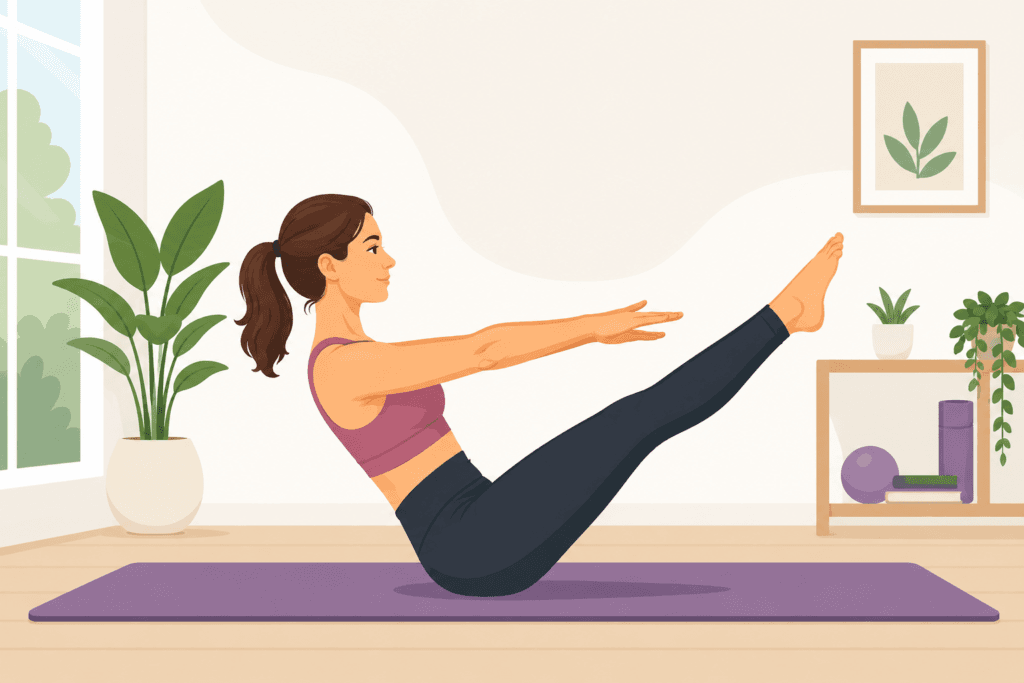 Is Pilates Good for Weight Loss?
Yes, Pilates can support weight loss, but it works differently than running or cycling. It won’t torch calories the way a spin class does. Instead, it builds lean muscle, improves core strength, and helps your body burn more energy at rest.
Think of Pilates as the quiet teammate who makes everyone else look better. It doesn’t grab headlines, but the team doesn’t win without it.
Does Pilates Help Lose Weight, According to Research?
Research on does Pilates help lose weight gives a mixed but encouraging picture.
A 2017 study followed 37 overweight or obese women aged 30 to 50 for eight weeks. The group practicing Pilates saw real drops in weight, BMI, and waist measurements compared to a non-exercising group. Lean body mass, however, didn’t change much in that short window.
A separate study on postmenopausal women found that 12 weeks of mat Pilates didn’t shift body composition much on its own. Researchers pointed out that diet wasn’t part of the intervention. Strength did improve significantly, though, especially in the abdominal and limb muscles.
The takeaway is simple. Pilates works best as part of a bigger fitness program, not a stand-alone miracle.
Can Pilates Help You Lose Belly Fat?
You cannot spot-reduce fat. No exercise, Pilates included, burns fat from one specific area on command. That’s basic physiology, not opinion.
But can Pilates help you lose belly fat in a real sense? Indirectly, yes. Pilates strengthens the transverse abdominis, the deep muscle layer that wraps around your midsection like a natural corset. Stronger core muscles improve posture and create a tighter, more defined waistline appearance, even before the scale moves.
Combine that with an overall calorie deficit and consistent movement, and belly fat reduction becomes realistic.
How Many Calories Does Pilates Burn?
Calorie burn depends on your weight, class intensity, and format.
For someone around 150 pounds, a 50-minute beginner mat class burns roughly 175 calories. A more advanced 50-minute session pushes closer to 254 calories. Since losing one pound requires burning about 3,500 calories, Pilates alone takes patience.
Reformer Pilates for weight loss tends to burn more than mat work. The spring-based resistance machine adds load to every movement, which raises heart rate and muscle demand. Mat Pilates for weight loss still counts, especially when sessions run longer or include faster-paced sequences.
If your goal is pure fat burning workout numbers, pair Pilates with cardio days for the best of both worlds.
Pilates and Fat Loss:
Pilates and fat loss connect through metabolism, not just sweat.
Muscle tissue burns more calories at rest than fat tissue does. So building lean muscle through consistent Pilates practice can raise your basal metabolic rate over time. That means your body works a little harder even while you’re sitting on the couch.
There’s also a stress angle worth mentioning. Chronic stress raises cortisol, and elevated cortisol is linked to increased abdominal fat storage. Pilates emphasizes controlled breathing and focused movement, which can help lower stress responses. Less stress often means better sleep and fewer cravings, both of which support healthy weight loss.
Best Pilates Exercises for Weight Loss
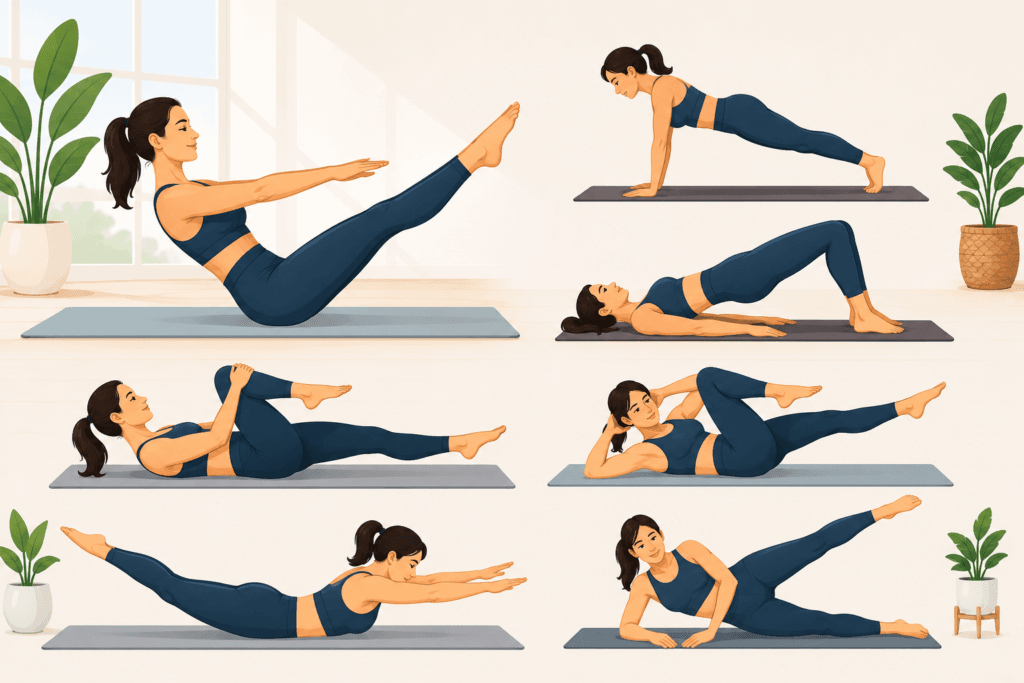
Not every move burns the same amount of energy. If you want the best Pilates exercises for weight loss, look for compound, full-body sequences rather than isolated stretches.
Strong options include:
- The Hundred: core activation with steady breathing
- Plank variations: full-body engagement and stability
- Leg circles: hip mobility plus core control
- Teaser: advanced core and balance challenge
- Jackknife: full-body strength with a cardio kick
These moves build muscle endurance while keeping impact low on your joints.
Pilates for Beginners Weight Loss:
 Pilates for Beginners Weight Loss:
Starting Pilates for the first time can feel intimidating, especially in a room full of people who look like they were born doing the Teaser. Don’t worry. Every instructor has seen a wobbly first class.
For Pilates for beginners weight loss, start with two to three sessions a week. This lets your body adapt without burnout. Focus on form before speed. Rushing a Pilates movement usually means you’re skipping the muscle group it was designed to target.
A personal trainer or certified instructor can correct alignment early, which prevents bad habits from forming. If in-person classes aren’t accessible, online Pilates classes offer guided instruction from home, often at a fraction of the cost.
Building a Pilates Workout for Weight Loss Into Your Week
A Pilates workout for weight loss works best as part of a structured exercise routine, not a random once-a-week attempt.
A realistic weekly split might look like this:
- 3 Pilates sessions for body toning and core strength
- 2 cardio sessions (walking, cycling, or swimming) for calorie burn
- 1–2 rest or flexibility and mobility days
This balance supports full body workout goals while protecting your joints from overuse. Pilates is genuinely one of the better options for exercise for beginners, since it teaches control before intensity.
Pilates Equipment and Home Workout Options
You don’t need a studio membership to get started. Basic pilates equipment like a mat, resistance band, and light hand weights covers most beginner routines.
For structure, a good fitness app can guide a home workout plan with timed sequences and form cues. This works well for people building consistency around a busy schedule.
If you eventually want more resistance, a reformer machine adds a new challenge. It’s a bigger investment, so many people try it at a studio before buying one for home use.
Nutrition and Weight Loss Tips That Actually Matter
No workout, Pilates or otherwise, out-trains a poor diet. If weight loss tips are what you’re after, nutrition comes first.
Focus on lean protein, vegetables, whole grains, and healthy fats. Stay hydrated. Limit processed sugar where you reasonably can. None of this requires extreme restriction; consistency beats perfection here.
Speak with a doctor or registered dietitian before starting a new eating plan, especially if you have existing health conditions. Extremely low-calorie diets can backfire and slow progress rather than speed it up.
Extra Benefits Beyond the Scale
Even when the number on the scale moves slowly, Pilates delivers benefits that matter for daily life.
Regular practice supports posture improvement, balance and stability, and joint-friendly mobility. Some research also points to Pilates helping with chronic low back pain management, though more studies are still needed in that specific area.
These wins add up. Better posture and balance reduce injury risk during other workouts, which keeps your entire healthy lifestyle on track long term.
FAQs:
Is Pilates good for weight loss on its own?
Pilates helps, but it works best alongside a balanced diet and some cardio. It builds lean muscle and supports metabolism, though it burns fewer calories per session than running or cycling.
Does Pilates help lose weight faster than cardio?
No. Cardio generally burns more calories in the same amount of time. Pilates makes up for this by improving core strength, muscle tone, and long-term movement quality, which supports weight loss indirectly.
Can Pilates help you lose belly fat specifically?
Not through spot reduction, since that isn’t physically possible with any exercise. Pilates does strengthen deep core muscles, which improves posture and waistline appearance as overall body fat drops.
How many times a week should beginners do Pilates for weight loss?
Two to three sessions a week is a solid starting point. As strength and stamina improve, this can increase to three to five sessions, depending on goals and recovery needs.
Is reformer Pilates better than mat Pilates for weight loss?
Reformer Pilates typically burns more calories because the spring resistance increases muscle demand. Mat Pilates still builds strength and endurance effectively, especially in longer or faster-paced sessions.
Do I need special equipment to start Pilates at home?
Not necessarily. A mat and a resistance band cover most beginner routines. A fitness app or online Pilates classes can guide form and structure without needing a reformer machine right away.
How long before I see weight loss results from Pilates?
Timelines vary by individual, diet, and consistency. Some studies show visible changes in weight, BMI, and waist measurements within eight to twelve weeks when paired with regular practice and mindful eating.
Final Thoughts:
So, back to the original question. Pilates won’t replace cardio if raw calorie burn is your only metric. But it builds the kind of strength, control, and body awareness that make every other part of a fitness journey easier.
Pair it with a sensible diet, a bit of cardio, and realistic expectations, and Pilates becomes a genuinely effective low impact workout for long-term results. Just don’t expect the Teaser to feel easy on day one. It won’t. Almost nobody’s does.

Hi, I’m Salem Nasir, founder of Fiturely. I research and write evidence-based articles on fitness, nutrition, weight loss, and healthy living. My mission is to make reliable health information simple, practical, and easy to understand so readers can build healthier habits with confidence