
Fitness with ropes commonly called battle rope training involves performing continuous, dynamic movements with a heavy, thick rope anchored at one end. You grip both ends and perform waves, slams, spirals, or whips to generate power, build endurance, and torch calories.
It’s not just a gym trend. Battle ropes have been used in athletic performance training since the early 2000s, popularized by strength coach John Brookfield. Today, they’re a staple in NFL training camps, MMA gyms, and home fitness setups worldwide.
Why the surge in popularity? Three reasons: they’re incredibly versatile, they’re joint-friendly compared to heavy barbell lifts, and they deliver measurable results fast whether your goal is fat loss, muscular endurance, or explosive power.
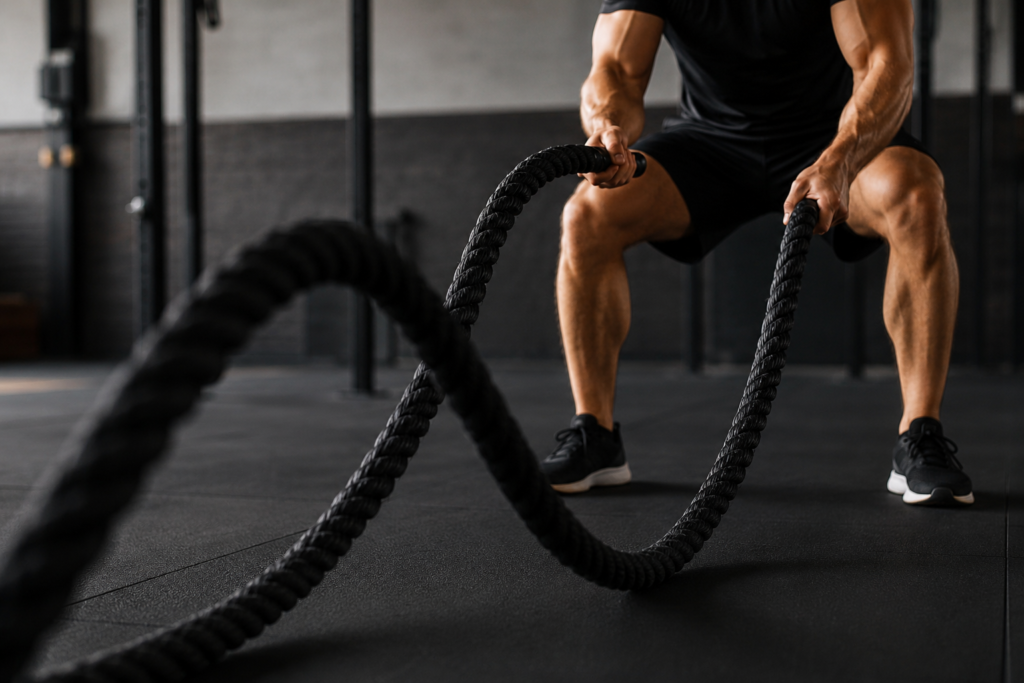
Real Benefits of Battle Rope Training
Does Battle Rope Training Actually Work for Fat Loss?
Yes and it’s one of the best calorie burning workouts available. A 2012 study in the Journal of Strength and Conditioning Research found that even short battle rope sessions significantly elevated heart rate and oxygen consumption, placing them firmly in the HIIT (high-intensity interval training) category.
Battle rope HIIT workouts are especially effective because they create an “afterburn effect” technically called Excess Post-Exercise Oxygen Consumption (EPOC). Your body continues burning calories for up to 24 hours after a session. For anyone pursuing a fat burning workout that keeps working even after they’ve showered, this is a game-changer.
Combine that with the fact that battle ropes are a resistance training tool not just cardio and you’re building muscle while losing fat. That combination is the holy grail of body composition.
Can Battle Ropes Build Muscle and Strength?
Absolutely. Battle ropes are particularly effective as an upper body workout, targeting the shoulders, biceps, triceps, and upper back. But depending on the movement, they also double as a lower body workout squat slams, lateral shuffles, and lunge waves all engage the quads, glutes, and hamstrings.
The constant tension through the rope requires your core strengthening muscles to stabilize your entire body. Unlike a treadmill or stationary bike, there’s no machine holding you upright your core does that job every second of the workout.
Research from the American Council on Exercise (ACE) confirms that battle rope exercises recruit more muscle groups simultaneously than most traditional gym machines, making them a superior choice for functional fitness and real-world athletic performance.
Are Battle Ropes Good for Cardio?
One of the best kept secrets in cardio conditioning is that battle ropes are just as effective as running but with far less stress on the knees and ankles. A 2015 ACE-commissioned study found that a 10-minute battle rope workout produced an average heart rate of 163 BPM, which falls squarely in the aerobic/anaerobic training zone.
That means battle ropes serve as a legitimate endurance training tool, not just a power exercise. When programmed as interval training say, 30 seconds on, 15 seconds rest they become one of the most effective HIIT rope workouts you can do without leaving your home.
Is Rope Training Good for Beginners or Only Advanced Athletes?
Battle Rope Workout for Beginners:
Good news: battle ropes are one of the most scalable pieces of home fitness equipment available. The intensity is entirely in your hands literally. Work harder, move faster, and the rope gets heavier and more demanding. Ease up, and it becomes manageable even for beginners.
For a battle rope workout for beginners, start with the Alternating Wave the most fundamental move in any battle rope training program. Stand with feet shoulder-width apart, knees slightly bent, and alternate raising each arm to generate a wave down the rope. Aim for 20 seconds of work followed by 40 seconds of rest. Repeat 5–6 times.
This simple exercise for beginners builds foundational endurance, wrist stability, and cardiovascular capacity without risking injury. As you progress over two to three weeks, reduce rest time and increase work intervals.
What Does an Advanced Rope Workout Look Like?
For experienced athletes, battle ropes become a platform for serious strength and conditioning work. An advanced rope workout might include:
- Power Slams raise both ropes overhead and slam down hard; develops explosive power and posterior chain strength
- Rotational Waves engages the obliques and builds rotational core strength for sport-specific performance
- Burpee-to-Slam Combos a brutal fitness challenge that combines bodyweight and ropes for maximum metabolic stress
- Lateral Shuffle Waves moves side to side while maintaining waves, simulating the demands of sport and developing hip stability
These moves align with what strength coaches use to develop athletic performance in professional athletes. They’re demanding, effective, and endlessly progressive.
How Do You Design a Proper Battle Rope Workout Plan?
What Does an Effective Battle Rope Training Program Look Like?
A well-structured battle rope workout plan follows the same principles as any smart conditioning workout: progressive overload, adequate recovery, and movement variety.
Here’s a simple 4-week structure that works as both a home fitness routine and a gym-based program:
Week 1-2
- 3 sessions per week
- 5 exercises, 20 seconds on 40 seconds rest
- Focus on form and breathing
Week 3-4
- 4 sessions per week
- 6-8 exercises, 30 seconds on 20 seconds rest
- Add compound movements (squat + waves, lunge + slams)
This structure covers all bases: metabolism boosting workout sessions, muscular endurance development, and progressive cardiovascular challenge. It’s one of the most complete battle rope exercises for weight loss frameworks available because it never lets your body fully adapt.
Pair your rope work with bodyweight and ropes circuits push-ups, squats, and planks for a full home gym exercises session that needs nothing more than a rope and a wall anchor.
Best Battle Rope Exercises for Weight Loss
The best battle rope exercises for weight loss share one trait: they keep your heart rate elevated for sustained periods while engaging multiple muscle groups. Top picks:
- Alternating Waves the gold standard; high volume, low technical demand
- Double Arm Slams peak calorie burn per rep; engages entire kinetic chain
- Jumping Jacks with Waves lower body activation + upper body endurance = maximum metabolic output
- Cyclone Waves (Spirals) forces rotational engagement, burns more calories than standard waves
Structured as a 20-minute HIIT circuit, these four moves constitute a complete fat burning workout that rivals a 45-minute treadmill session in caloric expenditure.
Best Battle Rope Exercises for Athletic Performance
Athletes focused on explosive power and athletic performance should prioritize:
- Power Slams max force generation
- Lateral Waves mimics lateral sport movements
- Snaking Waves builds shoulder stability and endurance under load
- Side-to-Side Slams develops rotational power
These exercises are common in strength and conditioning programs for football, basketball, and combat sports. They work because they demand total-body coordination under fatigue exactly the condition real sports present.
Top 5 Best Battle Ropes in 2026
Choosing the right rope matters more than most people realize. Diameter, length, material, and handle quality all affect durability and feel. Here are the best battle ropes available today, based on build quality, user reviews, and value for money.

1. REP Fitness Battle Rope:
The REP Fitness Battle Rope is widely regarded as the best all-around option for both home gym users and commercial facilities. It features a polypropylene braid with nylon end protectors, ensuring durability across thousands of slams and waves. Available in 1.5″ and 2″ diameters and multiple lengths (30ft, 40ft, 50ft), it suits beginners and advanced athletes alike.
What sets REP Fitness apart is the quality of the heat-shrink handles firm, non-slip, and sweat-resistant. The rope maintains consistent wave propagation even after extended use, which matters more than most buyers realize until they’ve trained with a cheaper option that goes limp mid-session.
Review: ( From RepFitness)

Verdict: The premium pick. Best for serious home gym users and commercial buyers looking for commercial battle ropes that won’t fray in six months.
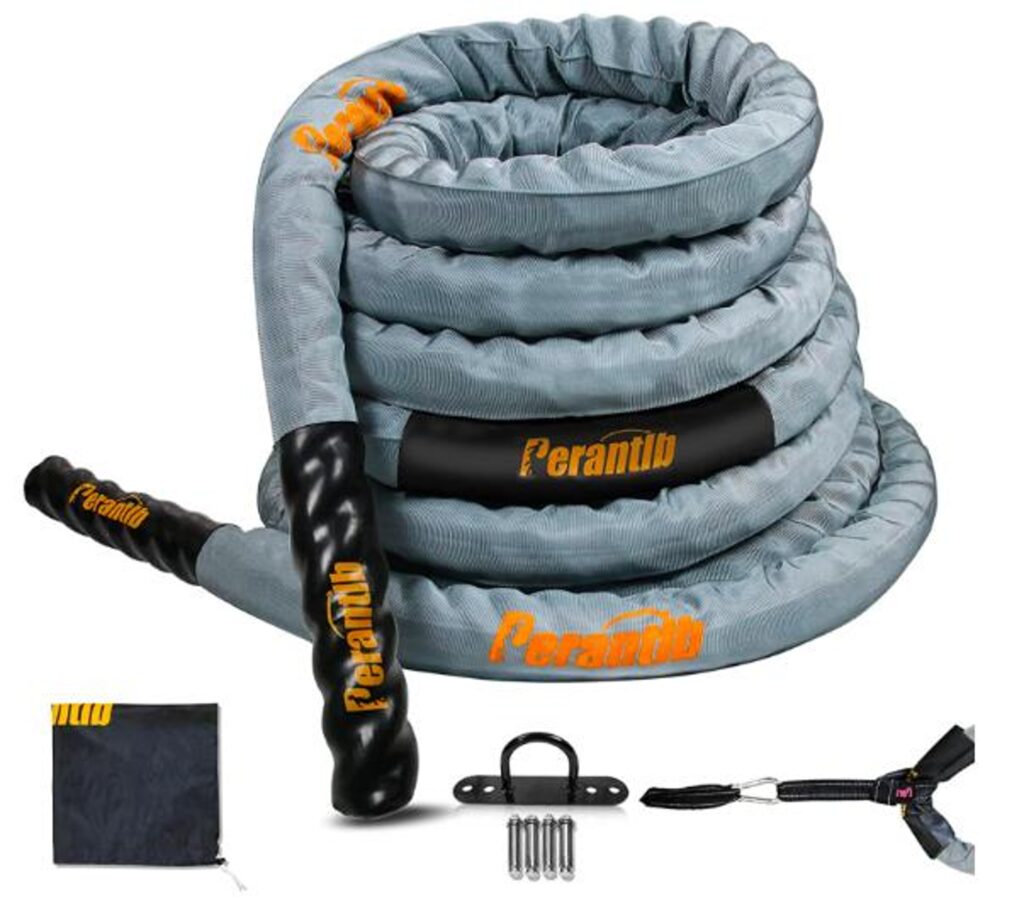
2. Perantlb Poly Battle Rope:
For those searching for affordable battle ropes without sacrificing performance, the Perantlb Poly Battle Rope delivers remarkable value. It uses a tightly braided polypropylene construction that resists fraying, and the dacron-wrapped handles offer a comfortable grip that holds up in sweaty conditions.
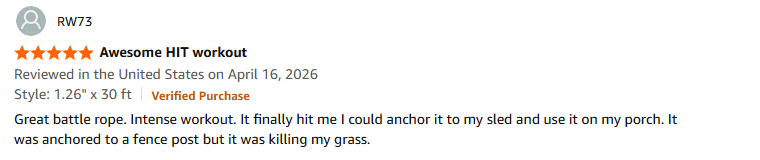
Perantlb is a popular option for battle ropes for home gym setups because it’s lightweight to ship, competitively priced, and available in a range of lengths. Users consistently note it performs well above its price point in battle rope reviews across fitness communities.
Review: (from Amazon)
Verdict: Ideal for budget-conscious buyers who want a reliable rope for their home fitness routine without overspending on premium branding.
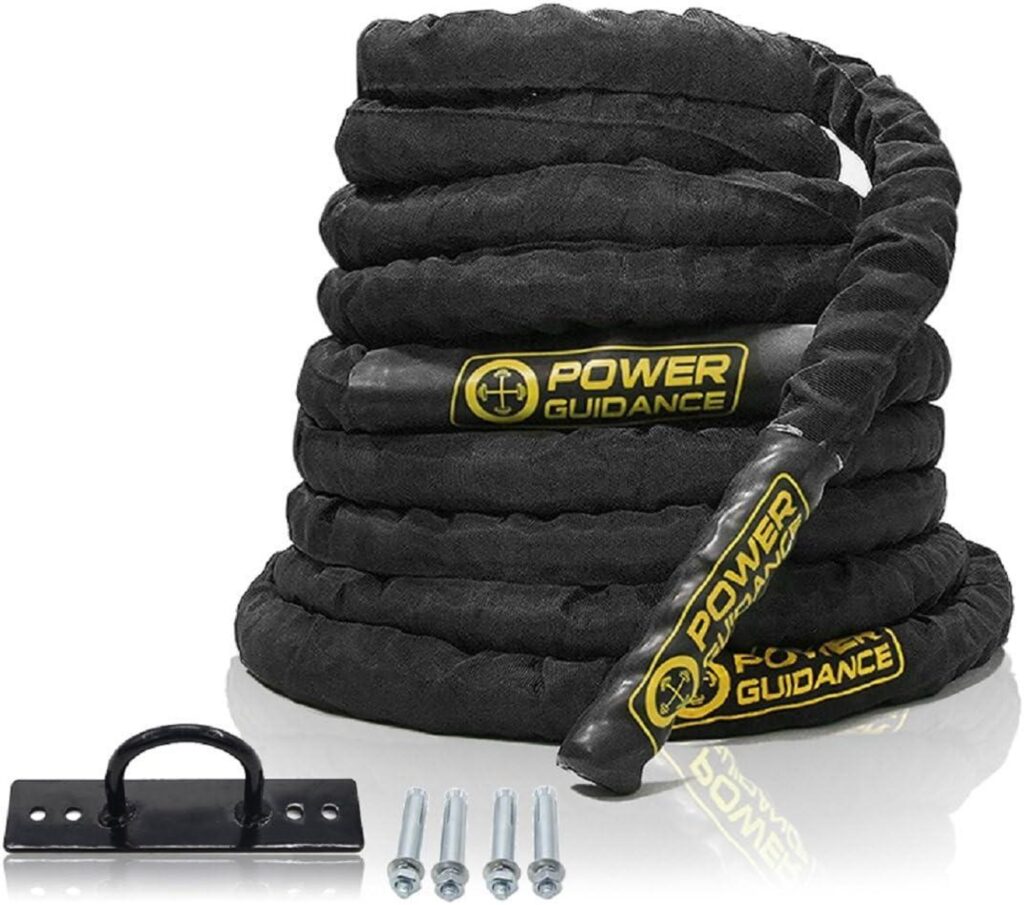
3. POWER GUIDANCE Battle Rope:
The POWER GUIDANCE Battle Rope is an excellent entry point for anyone starting a battle rope workout for beginners. Its 1.5″ diameter makes it lighter and easier to control than thicker ropes, lowering the barrier for new users to develop proper wave technique before progressing to heavier options.
The rope features a tightly wound polypropylene core with protective end caps that prevent unraveling a common failure point in cheaper ropes. It’s also one of the easiest to find when you buy battle ropes online, with wide availability and reliable shipping.
Review: (from Amazon)

Verdict: The smartest starting point for beginners. It builds confidence, teaches form, and transitions well into intermediate training.
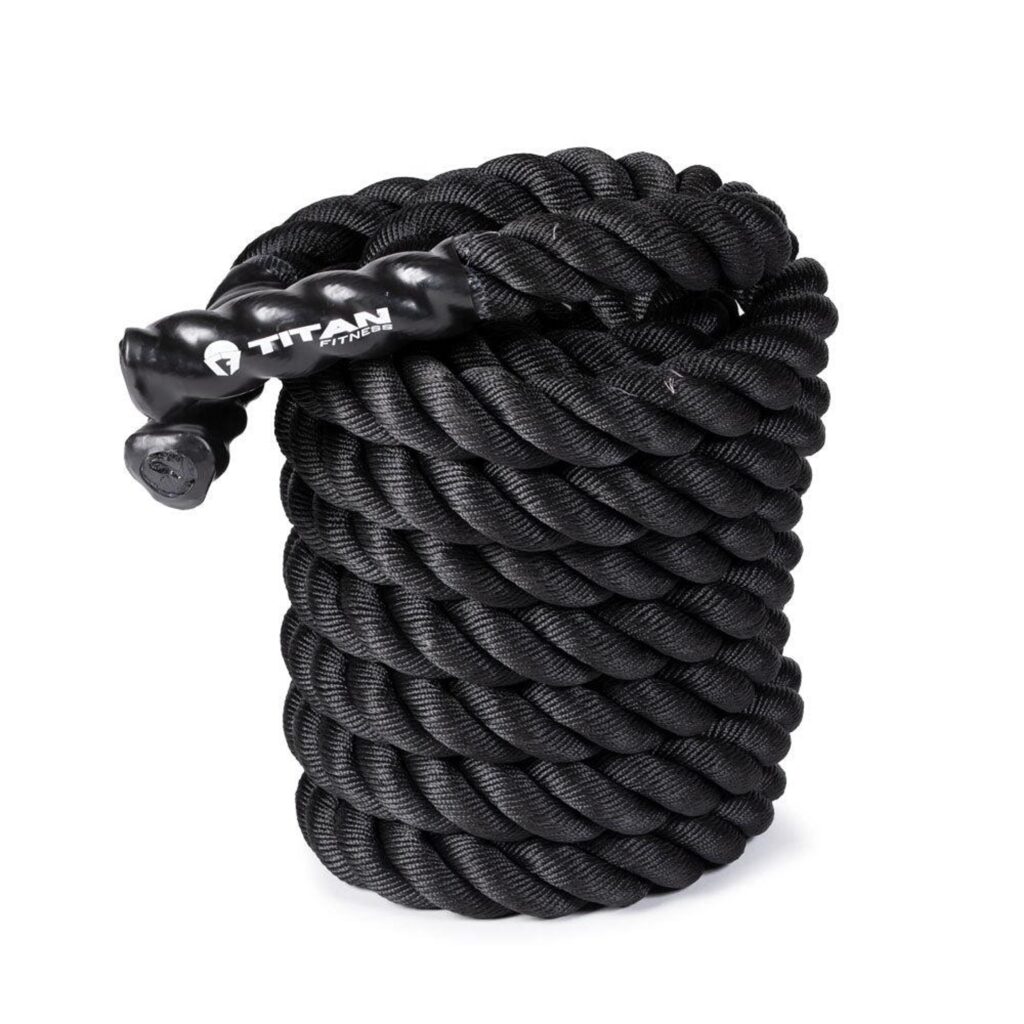
4. Titan Fitness Battle Rope:
For those who need heavy battle ropes built to withstand punishment in commercial or semi-professional settings, the Titan Fitness Battle Rope is the answer. Available in 2″ diameter and lengths up to 50ft, it’s genuinely heavy and demands full-body engagement to move effectively.
Titan Fitness is a trusted name in the home gym exercises space, and their battle rope reflects the same build philosophy: overbuilt, durable, and designed to last years in high-use environments. The end caps are reinforced, and the braid is tight enough to maintain shape under extreme lateral stress.
Review: (from Walmart)

Verdict: Best for experienced athletes and anyone building a dedicated home gym or small training studio. Qualifies as true heavy battle ropes without costing as much as commercial-grade options.
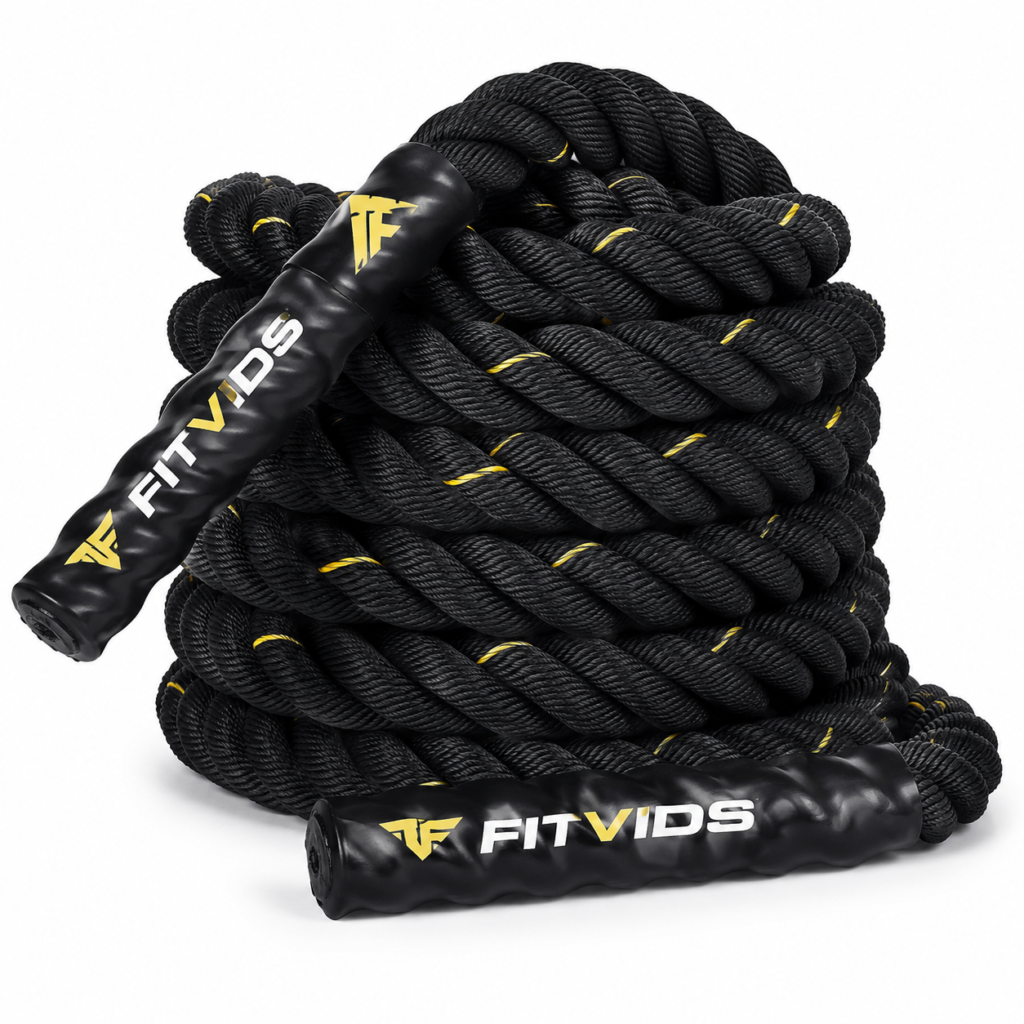
5. Fitvids Battle Rope:
Fitvids has carved out a strong reputation in the home fitness equipment market with a battle rope that balances quality, affordability, and ease of use. The rope is constructed from durable manila-style poly fiber with color-coded length markings a thoughtful feature that helps users set up consistently every session.
It performs exceptionally well for HIIT rope workout circuits and is light enough to store easily in a home gym corner. For users who want a straightforward rope that works well across battle rope exercises for weight loss, endurance, and conditioning work, Fitvids consistently delivers.
Review:
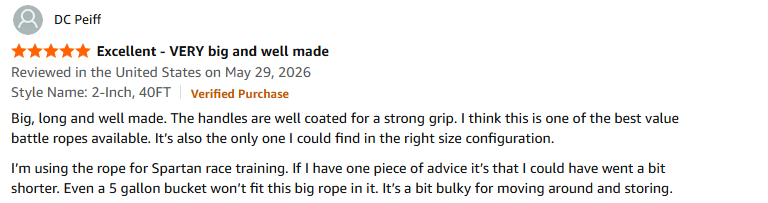
Verdict: A reliable, no-nonsense option for everyday home users. Great starting point for anyone still researching battle ropes for sale across multiple brands.
What Should You Look for When You Buy Battle Ropes Online?
1. Length 30ft works for small spaces; 40-50ft is the standard for full-intensity training. Longer ropes are heavier and harder to move, making them better for endurance training and advanced work.
2. Diameter 1.5″ is ideal for beginners and speed-focused work. 2″ is for heavy battle ropes training and muscle-building-focused sessions.
3. Material Polypropylene lasts longer than manila fiber in most conditions. Manila feels natural but degrades faster outdoors or in humid environments.
4. Handle Quality Often overlooked, handle grip directly impacts training quality. Look for heat-shrink or dacron wrapping over bare rope ends.
These four factors determine whether a rope is a worthy piece of workout equipment or an expensive mistake that sits in the corner after three sessions.
Smartest Way to Incorporate Battle Ropes into Your Routine
Home Fitness Routine
Battle ropes are incredibly versatile as home gym exercises because they require minimal space (just a wall anchor or heavy kettlebell to wrap around) and replace multiple pieces of best home gym equipment at once. They cover cardio, resistance, and core work in a single session.
For a complete home fitness routine, use battle ropes 3–4 times per week, either as a standalone conditioning workout or as a finisher after strength training. Keep sessions between 15–30 minutes, and focus on intensity over duration this is where the metabolism boosting workout effect really takes hold.
As you progress, add variety. Combine bodyweight and ropes alternate between rope waves and push-up sets. This approach creates a genuine total body exercise circuit that develops muscular endurance, cardiovascular capacity, and functional fitness simultaneously.
The data is clear, the equipment is accessible, and the results are real. Whether you’re a beginner picking up your first rope or an experienced athlete designing an advanced rope workout program, fitness with ropes is one of the smartest investments you can make in your long-term health and performance.
Final Thoughts: Is Battle Rope Training Worth It?
The short answer? Completely. Battle rope training delivers cardiovascular conditioning, upper and lower body strength, core stability, and calorie burn in a single, scalable tool that fits a home gym as easily as a commercial facility.
The five ropes reviewed here REP Fitness, Perantlb, POWER GUIDANCE, Titan Fitness, and Fitvids represent the best the market offers across different budgets and training goals. Start with the right rope for your level, follow a structured battle rope training program, and stay consistent.

Hi, I’m Salem Nasir, founder of Fiturely. I research and write evidence-based articles on fitness, nutrition, weight loss, and healthy living. My mission is to make reliable health information simple, practical, and easy to understand so readers can build healthier habits with confidence
Pingback: Military Calisthenics: The Complete Beginner to Advanced Guide (2026)