
Key Takeaways
- Hummus contains healthy fats mainly from tahini and olive oil.
- Healthy fats can help with satiety, making meals more satisfying.
- Portion size matters because hummus is relatively calorie-dense.
- Pair it with fresh vegetables for a filling, nutrient-rich snack.
- Choose varieties with simple ingredients and less added oil for easier calorie control.
Hummus is good for weight loss when eaten in the right portion. A 2 tablespoon serving has about 70 to 80 calories, plus fiber and plant protein that help control hunger. It works best as a chickpea spread for weight loss when paired with vegetables instead of fried chips. Keep portions to 2 to 3 tablespoons for the best results.
Is Hummus Good for Weight Loss?
Hummus is a nutrient-dense food that combines plant protein, fiber, and unsaturated fat, which together slow digestion and reduce hunger. A 2 tablespoon (30g) serving has roughly 70 to 80 calories, making it a smart low calorie dip for dieting compared to cream or mayo based dips. It’s also naturally cholesterol-free and gluten-free, fitting most modern eating patterns.
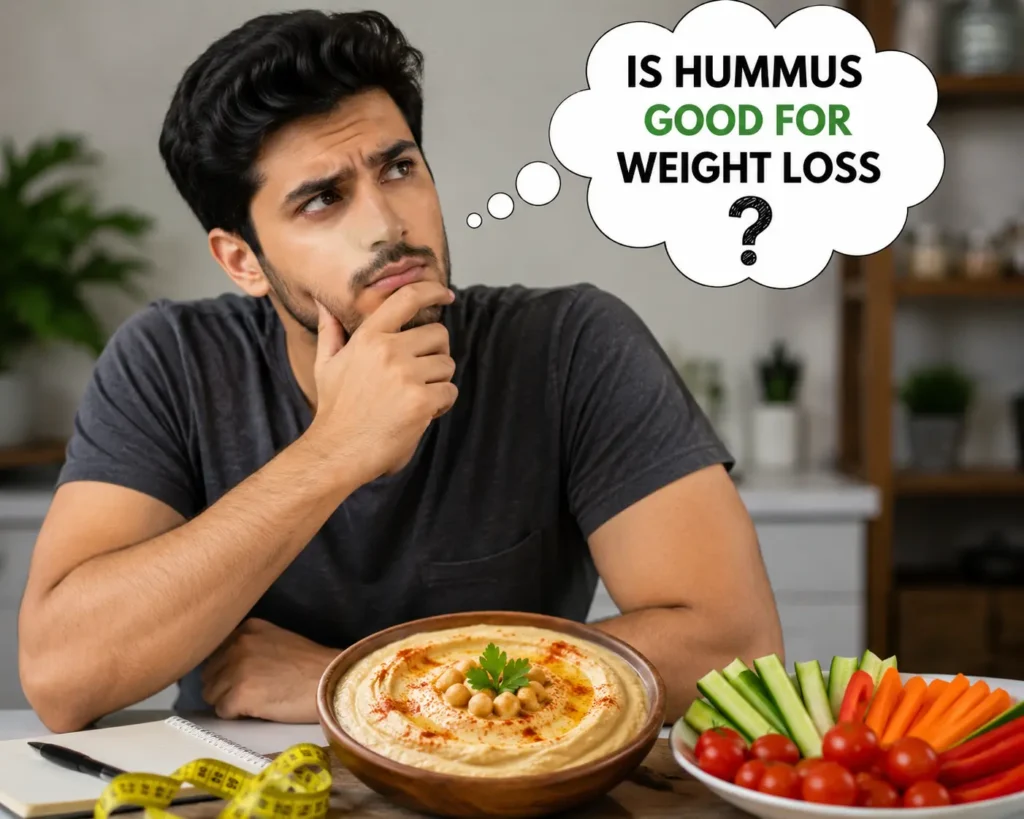
The catch is portion control. Because hummus is calorie-dense per gram (thanks to olive oil and tahini), mindless dipping can quietly add up. Used intentionally, it’s one of the more diet-friendly spreads on the shelf, and it pairs well with a broader balanced diet and active lifestyle, including your regular fitness routine.
Pros and Cons of Hummus for Weight Loss
Pros:
- High in dietary fiber, which supports satiety and digestion
- Good source of plant protein from chickpeas
- Contains healthy fats from olive oil and tahini, not saturated fat
- Low in calories per serving when portioned correctly
- Versatile, pairs with vegetables for a healthy Mediterranean snack
Cons:
- Calorie-dense per gram, easy to overeat without measuring
- Store-bought versions can be high in sodium
- Often paired with fried chips, which cancels out the benefits
- Contains carbs, not ideal for strict keto diets
This quick breakdown is worth bookmarking if you’re deciding whether hummus fits your weight management plan, or comparing it against other filling foods for weight loss.
What Is Hummus Made Of? (Chickpea Nutrition Breakdown)
Hummus is traditionally made from chickpeas, tahini (sesame paste), olive oil, lemon juice, and garlic. This combo is exactly why it works for weight management, layering plant protein, dietary fiber, and healthy fats into a single food.
Per USDA FoodData Central, cooked chickpeas alone provide about 8g protein and 7 to 8g fiber per 100g. Add tahini and olive oil, and you get a spread that’s satisfying in small amounts, a genuine chickpea nutrition for weight loss win.
| Nutrient (per 2 tbsp / 30g) | Hummus | Ranch Dip | Guacamole | Cream Cheese |
|---|---|---|---|---|
| Calories | 70 to 80 | 140 | 50 | 100 |
| Protein | 2 to 3g | 0.5g | 0.6g | 2g |
| Fiber | 2g | 0g | 2g | 0g |
| Fat type | Mostly unsaturated | Mostly saturated | Unsaturated | Saturated |
| Sodium | Moderate | High | Low | Moderate |
This table shows why hummus is often the smarter pick among the best dips for a calorie deficit, more fiber and protein for fewer calories.
How Many Calories Are in Hummus?
A standard 2 tablespoon serving of hummus is around 70 to 80 calories, though store brands vary (some flavored versions push closer to 100). That makes hummus not high in calories when portioned correctly, the problem is usually the pita chips next to it, not the dip itself.
So, is chickpea dip high in calories? Not inherently. Whole food, homemade versions with less added oil tend to run lighter than restaurant style hummus, which is often drenched in extra olive oil for flavor.
If you’re tracking a calorie deficit for weight loss, hummus fits comfortably into most meal plans, similarly to how portion controlled Rice for Weight Loss works when measured rather than eyeballed.
Does Hummus Keep You Full? (Satiety Explained)
Hummus supports satiety better than most dips because of its fiber protein combo. Fiber slows stomach emptying, while protein triggers hormones (like GLP 1 and PYY) that signal fullness to the brain. Together, they help control appetite control more effectively than a fat only or carb only snack.
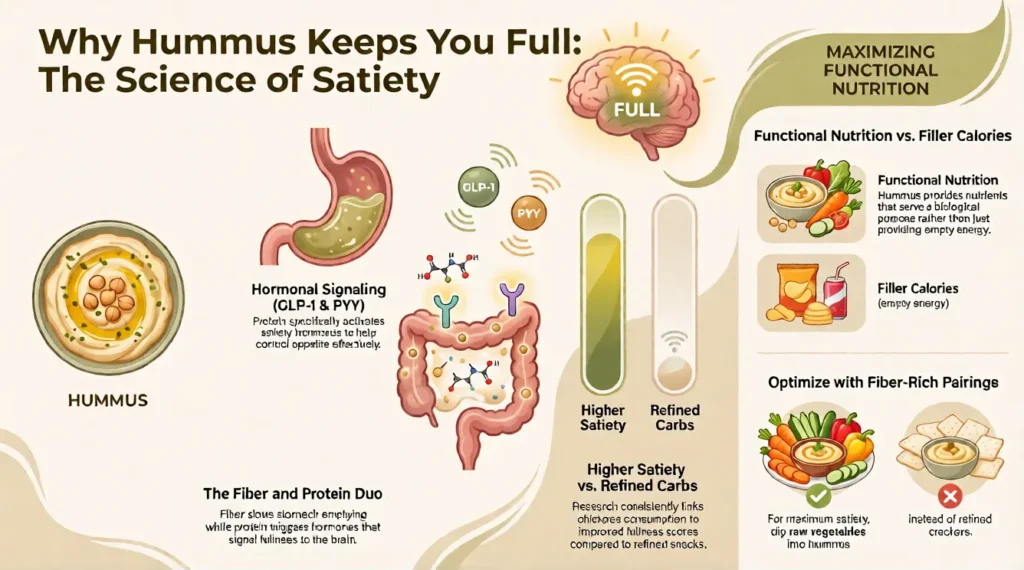
This is why hummus is often listed among healthy foods that keep you full, it’s not just filler calories, it’s functional nutrition. Research on legume based diets, including studies indexed on PubMed, consistently links chickpea consumption to improved satiety scores compared to refined carb snacks.
Does chickpea dip keep you full? Generally, yes, especially when paired with fiber rich vegetables rather than refined crackers.
Research-Based Note:
Regular pulse consumption, including chickpeas, is linked to greater fullness and modest weight reduction, per research reviewed in the American Journal of Clinical Nutrition. Hummus is also a staple of the Mediterranean diet, ranked among the top overall diets by U.S. News & World Report.
Is Hummus High in Healthy Fats?
Hummus contains healthy fats and weight loss friendly fat sources, mainly from tahini (sesame seeds) and olive oil, both rich in unsaturated fats. These fats don’t just add flavor, they help your body absorb fat soluble vitamins and keep you satisfied longer than fat free dips often do.
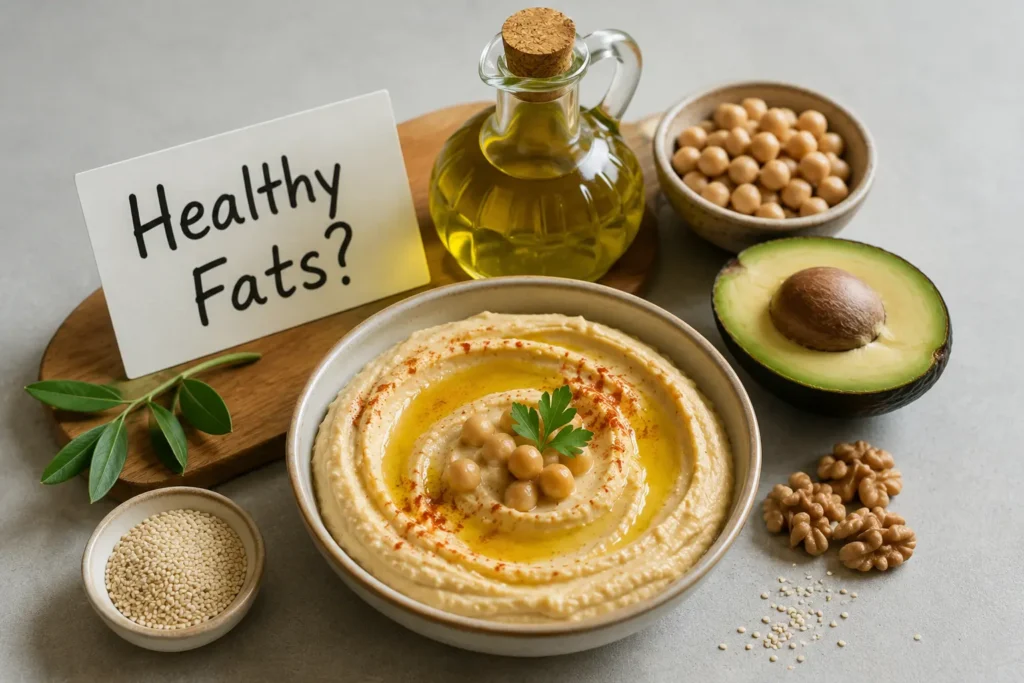
Unsaturated fats, per Harvard T.H. Chan School of Public Health, are linked to better heart health markers compared to saturated fats found in butter or sour cream based dips. So while hummus isn’t fat free, its fat profile works in your favor.
Can You Eat Chickpea Spread on a Diet?
Hummus fits well into most diet structures, keto is the main exception, since chickpeas carry natural carbs. For general weight management, low carb, Mediterranean, or flexible dieting, hummus is a reasonable, nutrient dense addition.
It’s a staple in the Mediterranean diet, repeatedly ranked as one of the healthiest long term eating patterns. That’s a strong endorsement for hummus as a healthy Mediterranean snack choice, not just a trendy dip.
If you’re also exploring medical routes to weight loss, it’s worth understanding how food choices interact with medications. For instance, people researching Can Spironolactone Cause Weight Loss want to know how diet and diuretics work together; food quality still matters regardless of medication.
How Much Chickpea Dip Should I Eat on a Diet?
Stick to 2 to 3 tablespoons (about 30 to 45g) per serving, that’s the portion size for weight loss most dietitians recommend. This gives you the fiber and protein benefits without tipping your calorie count for the day.
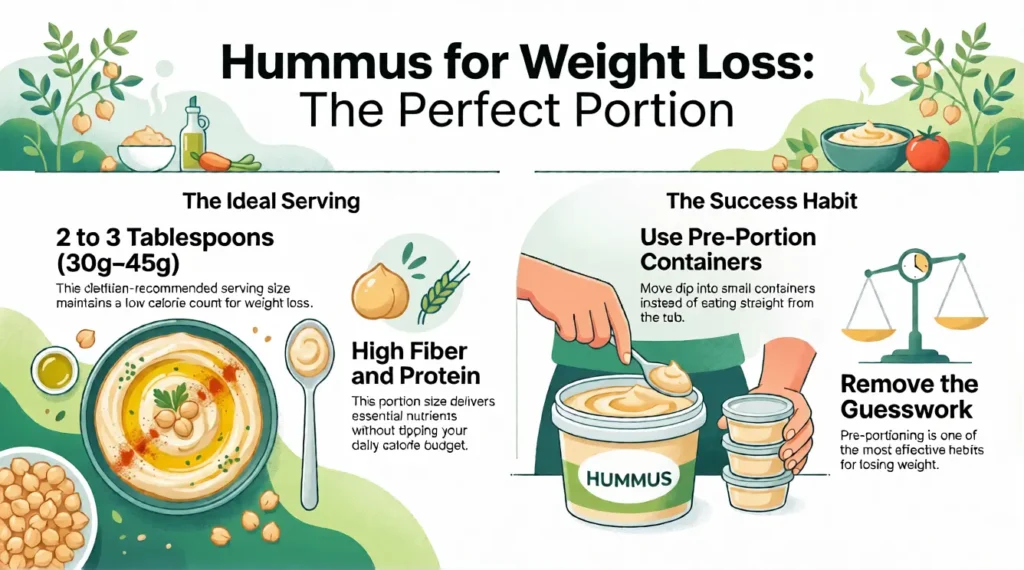
pre-portion hummus into small containers instead of dipping straight from the tub. This single habit is one of the most effective healthy snack ideas for losing weight, because it removes the guesswork.
What to Eat With Chickpea Dip When Dieting
Pair hummus with raw vegetables, cucumber, bell peppers, carrots, celery, and red onion slices all work beautifully and add extra fiber without many calories. This turns hummus into a genuinely healthy dip to eat with vegetables for weight loss, rather than a vehicle for refined carbs like white pita chips.
Avoid fried chips or crackers as your main dipper if weight loss is the goal, they can double or triple the calorie load of the snack. Whole grain crackers or a small wholemeal pita are a reasonable middle ground if you want some crunch.
For a heartier option, hummus also works as a spread in a Healthy Lunch wrap with grilled vegetables, or alongside a source of lean protein.
Best Way to Eat Hummus for Weight Loss
The best approach combines a measured portion with high fiber, low calorie dippers and mindful timing, think mid afternoon snack, not late night grazing. This keeps hummus working as a filling foods for weight loss tool rather than an extra calorie source stacked on top of meals.
Some practical healthy snack combinations for weight loss:
- Hummus + cucumber and carrot sticks
- Hummus + cherry tomatoes and celery
- Hummus + a small wholemeal pita and red onion
- Hummus + grilled chicken strips for extra protein
Rotating dippers keeps things interesting and prevents snack fatigue, which matters just as much as macros when you’re trying to stay consistent with fitness and nutrition goals long term.
Is Chickpea Dip Good for Losing Belly Fat?
No single food targets belly fat specifically, spot reduction isn’t how fat loss works physiologically. But hummus can support overall fat loss (including visceral fat reduction over time) by helping you stay in a calorie deficit through better hunger control.
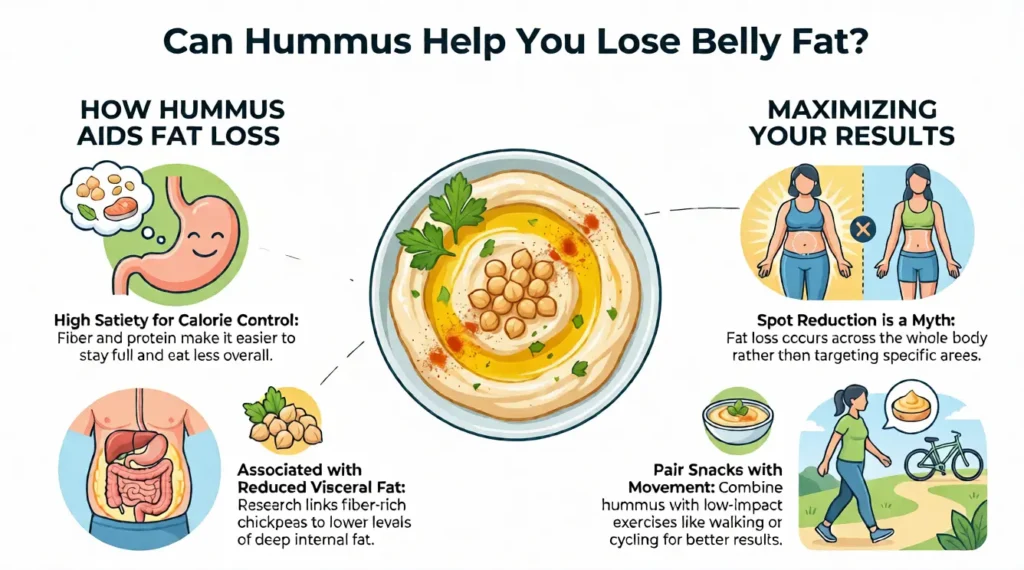
Fiber rich foods like chickpeas have been associated with reduced visceral fat in some population studies, including research published via the American Journal of Clinical Nutrition. The mechanism isn’t magic, it’s simply that fiber and protein make it easier to eat less overall.
Pairing hummus based snacking with regular movement, even Low Impact Exercises like walking or cycling, tends to produce better fat loss results than diet changes alone, since both energy intake and expenditure matter.
High Protein and Fiber Snack Comparison
If you’re comparing hummus to other popular snack options for a high protein snacks for weight loss goal, here’s how it stacks up:
| Snack (typical serving) | Calories | Protein | Fiber | Best for |
|---|---|---|---|---|
| Hummus (2 tbsp) | 75 | 2 to 3g | 2g | Balanced fiber + fat |
| Peanut Butter (1 tbsp) | 95 | 4g | 1g | Protein density |
| Greek yogurt (100g) | 60 | 10g | 0g | Pure protein |
| Rice cakes (2) | 70 | 1g | 0.5g | Low fat, low fiber |
This kind of comparison matters when you’re building a nutrient-dense snack options list, hummus isn’t the single highest in protein, but its fiber fat protein balance is hard to beat for satiety per calorie.
A Note for Specific Weight Loss Journeys
Nutritional needs shift with age, hormones, and activity level. For example, women navigating Weight Loss for Women Over 40 often deal with slower metabolism and hormonal shifts, making fiber and protein rich snacks like hummus especially useful for appetite regulation.
Similarly, if you’re comparing protein sources across your diet, say, Is Steak Healthy for Weight Loss versus plant based options like hummus, the honest answer is both can fit, depending on your fat intake goals and dietary preferences. Steak offers more complete protein per gram; hummus offers more fiber and unsaturated fat.
And if you’re curious about ultra processed comparisons, Is Spam Good for Weight Loss is a fair question too. Spam is high in sodium and saturated fat with almost no fiber, making hummus the clearly better choice for sustained fullness and heart health.
Frequently Asked Questions
Is hummus good for weight loss at night?
Yes, in a small portion (around 2 tablespoons) paired with vegetables. It’s easier to digest than fried snacks and less likely to spike blood sugar before bed.
How many calories are in a tablespoon of hummus?
Roughly 35 to 40 calories per tablespoon, so a typical 2 tablespoon serving lands around 70 to 80 calories.
Is hummus better than peanut butter for weight loss?
Both work well. Hummus has more fiber per serving, while Peanut Butter has more protein and calories. Pick based on whether you need more fullness (hummus) or more protein (peanut butter).
Can hummus help reduce belly fat?
Not on its own, but its fiber and protein content supports the calorie deficit and appetite control that drive overall fat loss, including visceral fat, over time.
Is store-bought hummus as healthy as homemade?
It can be, but check the label. Homemade hummus lets you control oil and sodium, which are usually the two factors that push store-bought versions higher in calories.
Final Takeaway:
Hummus earns its reputation as a smart, plant based protein snack for weight loss, not because it’s a miracle food, but because its fiber, protein, and healthy fat combination genuinely helps control hunger. Portion it, pair it with vegetables instead of fried chips, and it becomes a reliable ally in your weight management routine rather than a hidden calorie trap. hummus can help you to reduce your weight if you eat it right way , if you eat high it will not work.
References:
USDA FoodData Central, chickpeas (garbanzo beans), raw and cooked, nutrient profile, Harvard T.H. Chan School of Public Health, “The Nutrition Source: Fats and Cholesterol”, U.S. News & World Report, “Best Diets Overall” annual rankings, American Journal of Clinical Nutrition, pulse consumption and satiety research, PubMed, legume-based diets and appetite regulation studies:

Hi, I’m Salem Nasir, founder of Fiturely. I research and write evidence-based articles on fitness, nutrition, weight loss, and healthy living. My mission is to make reliable health information simple, practical, and easy to understand so readers can build healthier habits with confidence