
tai chi for weight loss works, but gently. It burns calories similar to a brisk walk, tones muscles, and lowers stress hormones that trigger fat storage. It won’t beat a bad diet on its own, but practiced 4 to 6 times a week for 20 to 45 minutes, it becomes a real, sustainable part of a healthy weight management plan.
If you’ve searched tai chi for weight loss, you’re probably tired of workouts that hurt your knees, your back, or your motivation. This guide breaks down what tai chi actually does for your body, what it doesn’t do, and how to use it as part of a realistic healthy weight management plan.
What Is Tai Chi, Exactly?
Tai chi started as a Chinese martial art. Today, most people practice it as a mind body exercise for weight loss, stress relief, and better movement. It combines slow, flowing postures with controlled breathing and mental focus.
Unlike high-intensity workouts, tai chi never asks you to sprint or jump. Instead, it asks you to move with intention. That’s the whole trick, and it’s more demanding than it looks the first time you try it.
Does Tai Chi Really Help With Weight Loss?
tai chi supports weight loss, but it isn’t a magic calorie-torching machine on its own.
Research reviewed by institutions like Harvard Health Publishing and the National Center for Complementary and Integrative Health (NCCIH) links regular tai chi practice to improved body composition, better balance, and modest reductions in body weight, especially when paired with dietary changes. It works best as one piece of a bigger active lifestyle, not a standalone miracle fix.
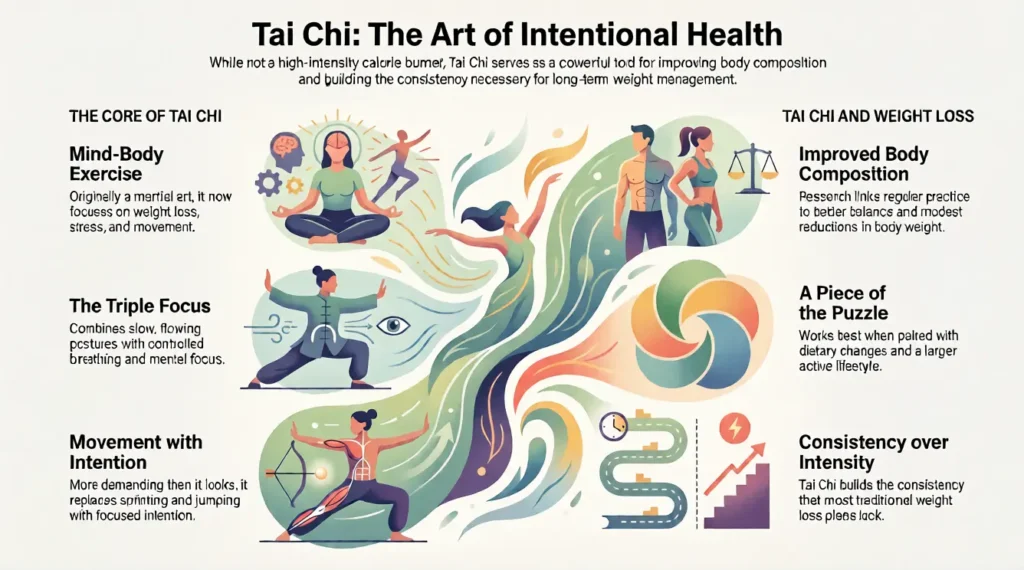
Think of it this way: tai chi won’t outrun a bad diet. But it builds consistency, and consistency is what most weight loss plans actually lack.
Does Tai Chi Burn Calories?
Yes, just not at the same rate as running or cycling. A slow tai chi session burns calories similar to a brisk walk, depending on your weight, intensity, and how long you practice.
Tai chi weight loss results come from a mix of factors:
- Steady, low-level calorie burning during practice
- Increased daily movement and better posture
- Improved sleep and reduced stress, which affects appetite and cravings
- Better long-term adherence, since it’s gentle enough to repeat daily
So while tai chi won’t torch calories the way a sprint session does, it adds up over weeks and months. Weight loss is rarely about one workout. It’s about what you can sustain.
Tai Chi for Belly Fat: What to Know
Let’s clear up a common myth first: no exercise, including tai chi for belly fat, targets fat loss from one specific area. Spot reduction isn’t how the human body works.
What tai chi does offer is core engagement. Many tai chi movements rely on rotating the torso, shifting weight, and stabilizing the spine. Over time, this can strengthen the abdominal muscles and improve posture, even if visible belly fat reduction depends more on overall calorie balance.
Pair tai chi with a modest calorie deficit and better sleep, and you get a far more realistic path to a leaner midsection than any single “belly fat exercise” trend promises.
Tai Chi vs Walking: Which Is Better for Weight Loss?
This comparison comes up constantly, and the answer is refreshingly simple: both work, and they work even better together.
| Factor | Tai Chi | Walking |
|---|---|---|
| Impact on joints | Very low | Low |
| Calorie burn | Moderate | Moderate to high (pace-dependent) |
| Balance and flexibility | High benefit | Lower benefit |
| Stress reduction | High | Moderate |
| Beginner accessibility | High | High |
Tai chi vs walking isn’t really a competition. Walking edges ahead on raw calorie burn at a brisk pace. Tai chi edges ahead on balance and flexibility, joint safety, and stress reduction. Combining both gives you cardiovascular benefits and functional strength without overloading any single body system.
Can 15 Minutes of Tai Chi Help You Lose Weight?
it helps, but consistency matters more than duration.
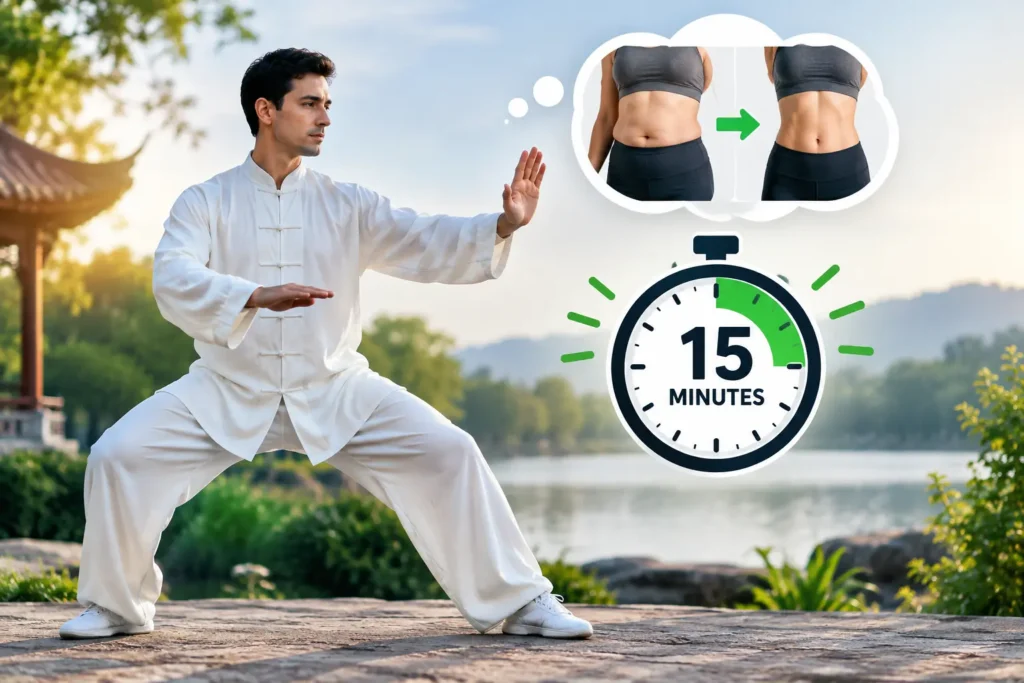
Fifteen minutes of tai chi won’t create dramatic weight loss by itself. However, it can:
- Kickstart daily movement habits for beginners
- Reduce stress hormones tied to fat storage
- Improve mobility, making longer workouts feel easier later
- Fit into busy schedules without excuses
If you’re asking how long should you do tai chi for weight loss, aim to build from 15 minutes toward 30-45 minutes most days. Short sessions are a smart entry point, not a finish line.
How Effective Is Tai Chi for Weight Loss?
How effective is tai chi for weight loss depends heavily on three things: consistency, intensity, and diet. Tai chi alone, practiced occasionally, will produce modest results. Tai chi practiced daily, combined with mindful eating, becomes a legitimate tool for metabolic health and gradual, sustainable fat loss.
It’s not the fastest method on the market. It is, however, one of the more sustainable ones, and sustainability usually wins in the long run.
Best Tai Chi Moves for Weight Loss Beginners
You don’t need fancy equipment or a studio membership. A few classic movements form the foundation of most beginner routines:
- Opening posture – A simple stance to center your breathing and posture before you begin.
- Wave hands like clouds – A flowing side-to-side movement that works the legs, hips, and core.
- Grasp the sparrow’s tail – A weight-shifting sequence that builds leg strength and balance.
- Golden rooster stands on one leg – A balance move that challenges stability and core control.
- Closing posture – A calming finish that lowers heart rate and settles the mind.
These form some of the best tai chi exercises for beginners and require nothing more than comfortable shoes and a few square feet of space.
Tai Chi for Beginners: How to Start Safely
Starting tai chi for weight loss beginners style doesn’t require martial arts experience. It requires patience and a willingness to move slowly.
A few practical starting tips:
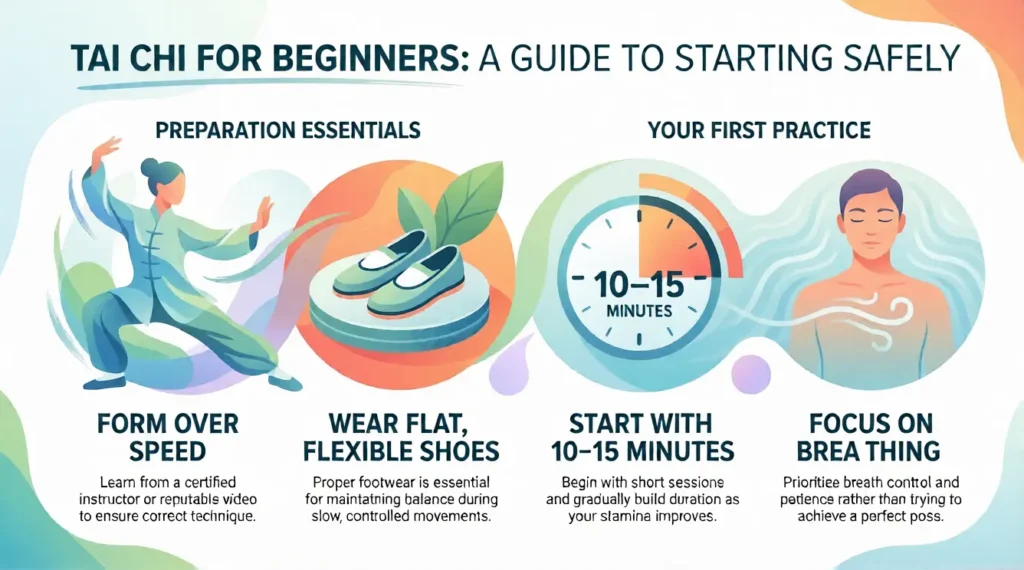
- Learn from a certified instructor or a reputable video series first, since form matters more than speed.
- Wear flat, flexible shoes for better balance.
- Start with 10-15 minutes and build gradually.
- Focus on breathing, not perfection.
This approach also works well as a gentle tai chi workout for seniors or as low impact tai chi for weight management for anyone recovering from injury or dealing with joint pain.
Tai Chi for Overweight Beginners
Tai chi for overweight beginners deserves special mention, because it solves a real problem: many high-impact workouts feel intimidating or physically risky at a heavier starting weight.
Tai chi removes jumping, running, and jarring impact from the equation. It still builds muscle strength, improves mobility exercises capacity, and supports cardiovascular health, all while being kind to joints. That combination makes it one of the more approachable entry points into regular physical activity.
Beyond the Scale: Other Real Benefits
Weight loss isn’t the only reason to try tai chi, and honestly, it might not even be the best one.
Regular practice is associated with:
- Better balance and flexibility, reducing fall risk in older adults
- Improved stress reduction through slow breathing and focused movement
- Support for cardiovascular health via low-intensity, sustained activity
- Enhanced mobility exercises performance for daily tasks like bending and reaching
- A beginner-friendly exercise option for people easing back into fitness after time off
As a form of mindful movement, tai chi also supports mental clarity, a benefit that rarely shows up on a scale but shows up everywhere else in life.
How Often Should You Do Tai Chi to Lose Weight?
Most health guidance suggests aiming for at least 150 minutes of moderate physical activity per week, a benchmark commonly cited by organizations like the CDC and World Health Organization. Tai chi can count toward that total.
Practicing tai chi 4-6 times per week, for 20-45 minutes per session, gives your body enough consistent activity to support healthy weight management without burnout. Rest days still matter, even with low intensity workout routines.
Making Tai Chi Part of a Real Fitness Routine
Tai chi works best as one tool among several, not a replacement for everything else. Combine it with:
- A full body movement strength routine two to three times a week
- Regular walking or light cardio for extra calorie burning
- A balanced diet that supports a modest calorie deficit
- Sufficient sleep, since poor sleep undermines almost every weight loss effort
This kind of well-rounded fitness plan treats tai chi as what it actually is: a smart, joint-friendly addition to an active lifestyle, not a standalone shortcut.
Frequently Asked Questions
Does tai chi burn calories as well as walking?
Not quite at a brisk walking pace, but it comes close, and it adds up over consistent daily practice.
Can tai chi help you lose weight on its own?
It helps, but it works best alongside a modest calorie deficit, decent sleep, and regular movement.
Is tai chi safe for overweight beginners or seniors?
Yes. Its low-impact nature makes it one of the safer entry points into regular physical activity for both groups.
How long should you do tai chi for weight loss?
Start with 15 minutes a day and build up to 30 to 45 minutes, 4 to 6 times a week.
Does tai chi reduce belly fat specifically?
No exercise targets one area alone. Tai chi strengthens the core and supports overall calorie balance instead.
Final Thoughts
Tai chi exercises for weight loss won’t replace deadlifts or sprint intervals, and it doesn’t need to. What it offers instead is something many workouts can’t: a sustainable, low-risk tai chi workout for weight loss that people actually stick with.
If you’re searching for can tai chi help you lose weight, the honest answer is yes, as part of a bigger picture that includes diet, sleep, and consistency. Start slow, breathe deeply, and give your body the kind of movement it can keep doing for years, not just weeks.
References
Harvard Health Publishing, Harvard Medical School. National Center for Complementary and Integrative Health (NCCIH), National Institutes of Health. Centers for Disease Control and Prevention (CDC), Physical Activity Guidelines. World Health Organization (WHO), Physical Activity Fact Sheets.

Hi, I’m Salem Nasir, founder of Fiturely. I research and write evidence-based articles on fitness, nutrition, weight loss, and healthy living. My mission is to make reliable health information simple, practical, and easy to understand so readers can build healthier habits with confidence