
Key Takeaways
- The right home workout equipment for abs helps build a stronger core, improve balance, and increase workout effectiveness.
- Combine strength training, cardio, and a healthy diet to reduce body fat and reveal defined abs.
- Equipment like an ab roller, resistance bands, medicine ball, and stability ball can deliver excellent results at home.
- Stay consistent with your workouts, gradually increase intensity, and focus on proper form for long-term success.
Home workout equipment includes items like dumbbells, resistance bands, yoga mats, and kettlebells that let you train strength, flexibility, and cardio at home. The best equipment depends on your goals, but adjustable dumbbells and resistance bands are a solid starting point. This gear suits anyone short on time or gym access, and beginners can absolutely use it with proper form. If you’re just getting started, check out our Calisthenics Workout Plan for Beginners to learn foundational bodyweight exercises before adding equipment to your routine.
What Is Home Workout Equipment for Abs?
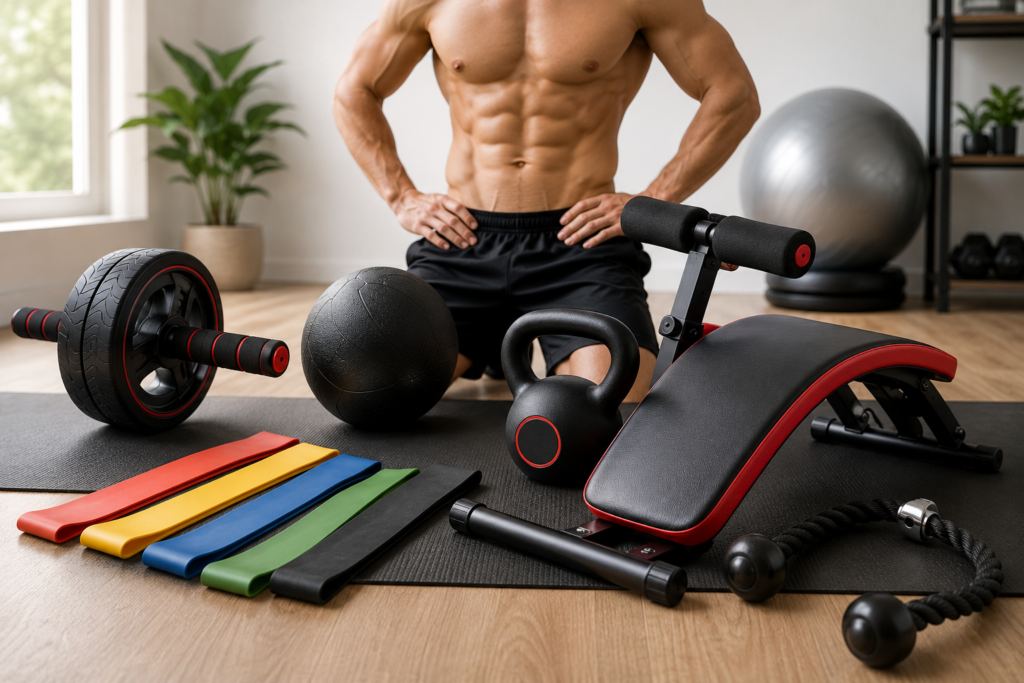
Home workout equipment for abs refers to any tool you can use at home to strengthen and tone your core, without needing a gym membership. This ranges from simple items like a yoga mat or resistance band to more dedicated gear like an ab roller or Roman chair.
Why Train Your Abs at Home?
Training your abs at home saves time, since there’s no commute or waiting for machines to free up. It also gives you the flexibility to fit in a quick 10-minute core session between meetings or after the kids are asleep, something a gym schedule doesn’t always allow. If you enjoy bodyweight training, our Military Calisthenics guide is another great resource for building core strength and overall fitness without expensive equipment.
Beyond convenience, a strong core supports better posture, lowers your risk of lower back pain, and makes everyday movements like bending, lifting, and twisting feel easier.
Do You Need Equipment for Strong Abs?
Not really, but the right equipment speeds things up. Bodyweight moves like planks and crunches build real core strength on their own, and a yoga mat is technically all you need to get started. If you’re looking for gentle, beginner-friendly routines, our Core Exercises for Seniors guide is a great place to start.
That said, adding tools like resistance bands, an ab roller, or a weighted vest lets you increase difficulty once bodyweight exercises stop feeling challenging. Progression matters more than the gear itself, so equipment becomes useful once you’re ready to push past the basics.
Best Home Workout Equipment for Abs
Building strong abs at home doesn’t need a garage full of machines. A few smart pieces of equipment can target your core from different angles, and each one has its own strengths and limits worth knowing before you buy.
1. Ab Roller Wheel
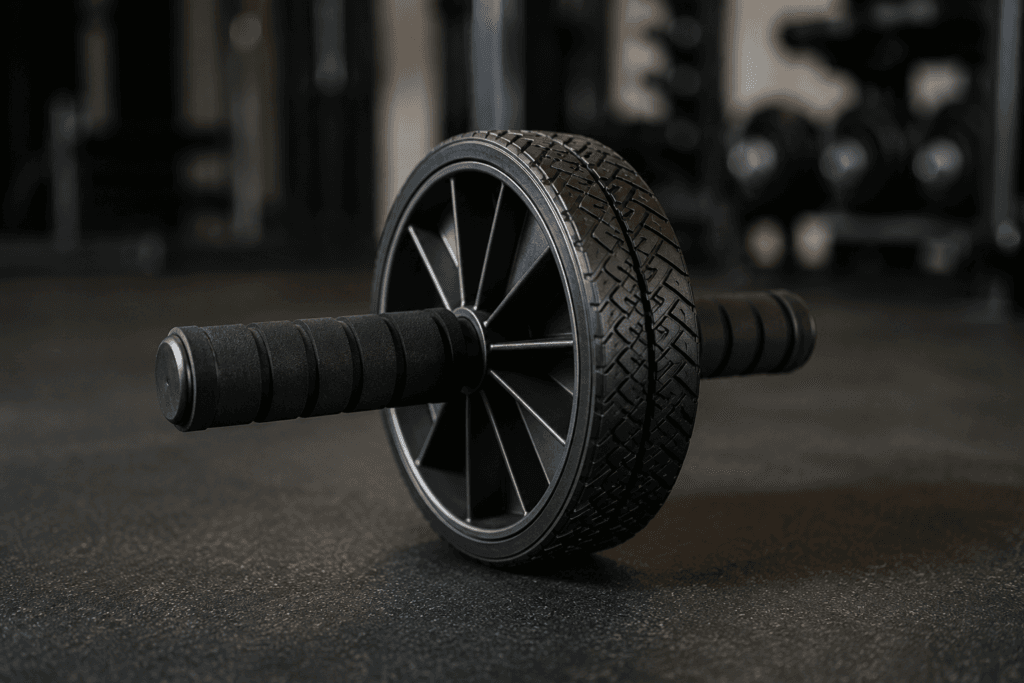
Benefits: The ab roller works your entire core, shoulders, and lower back at once, since you’re fighting to keep your body stable as you roll out and back.
Pros:
- Cheap and compact
- Engages multiple muscle groups in one move
- Builds real core stability, not just surface strength
Cons:
- Hard on the knees and wrists without a mat
- Too difficult for total beginners at first
- Limited to one main movement pattern
Best For: People who already have some core strength and want a tough, no-frills challenge.
2. Stability Ball
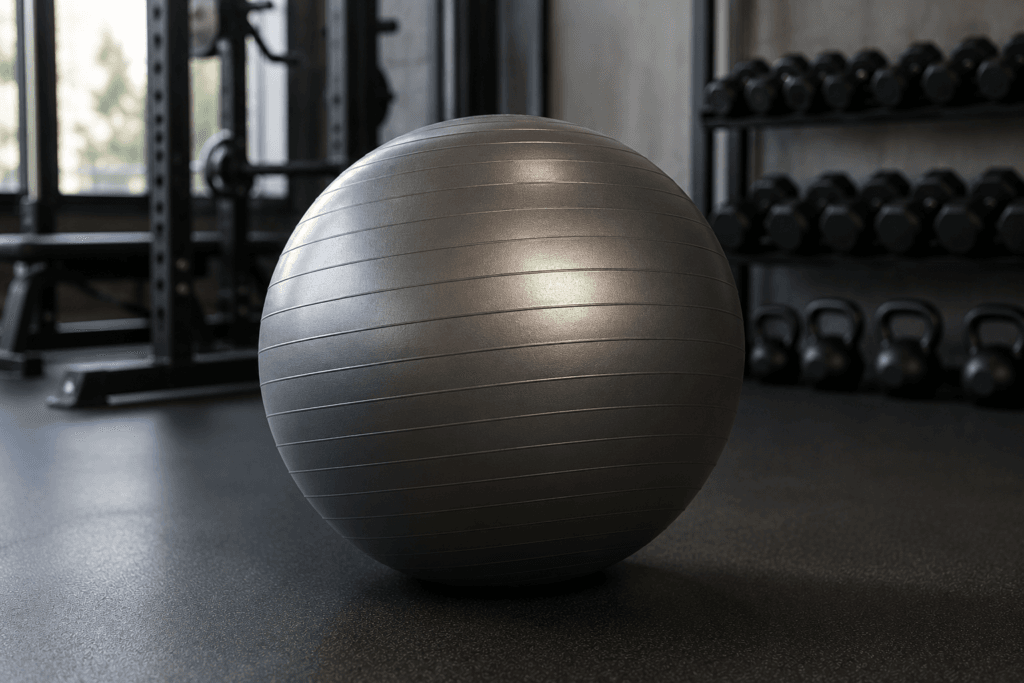
Benefits: A stability ball forces your core to work overtime just to keep you balanced, which turns basic moves like crunches or planks into a bigger challenge.
Pros:
- Improves balance and core control
- Works well for stretching and mobility too
- Affordable and easy to store (mostly) once deflated
Cons:
- Takes up a lot of space when inflated
- Can roll away mid-exercise if you’re not careful
- Not ideal on hard, slippery floors
Best For: Beginners and anyone wanting to add balance training to a basic ab routine.
3. Resistance Bands
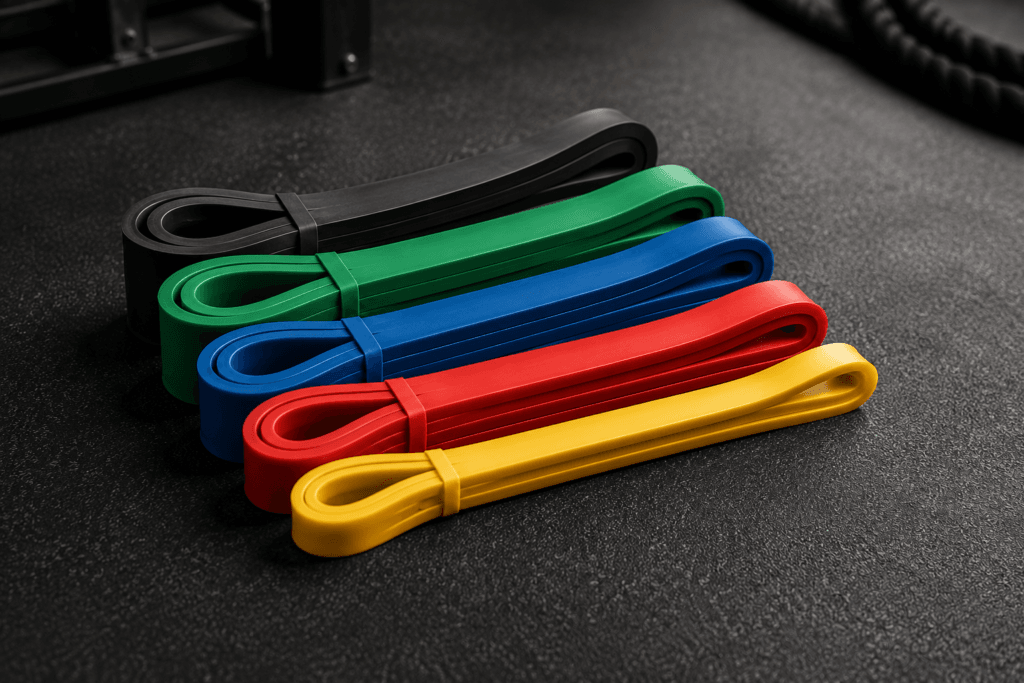
Benefits: Bands add adjustable resistance to twists, crunches, and standing core exercises, making them useful for both light activation work and tougher training days.
Pros:
- Lightweight and travel-friendly
- Adjustable resistance levels
- Gentle on joints compared to weights
Cons:
- Bands wear out and can snap over time
- Less effective for building serious strength alone
- Resistance can feel inconsistent through a movement
Best For: Beginners, home-office workers, and anyone who wants a portable core option.
4. Adjustable Dumbbells
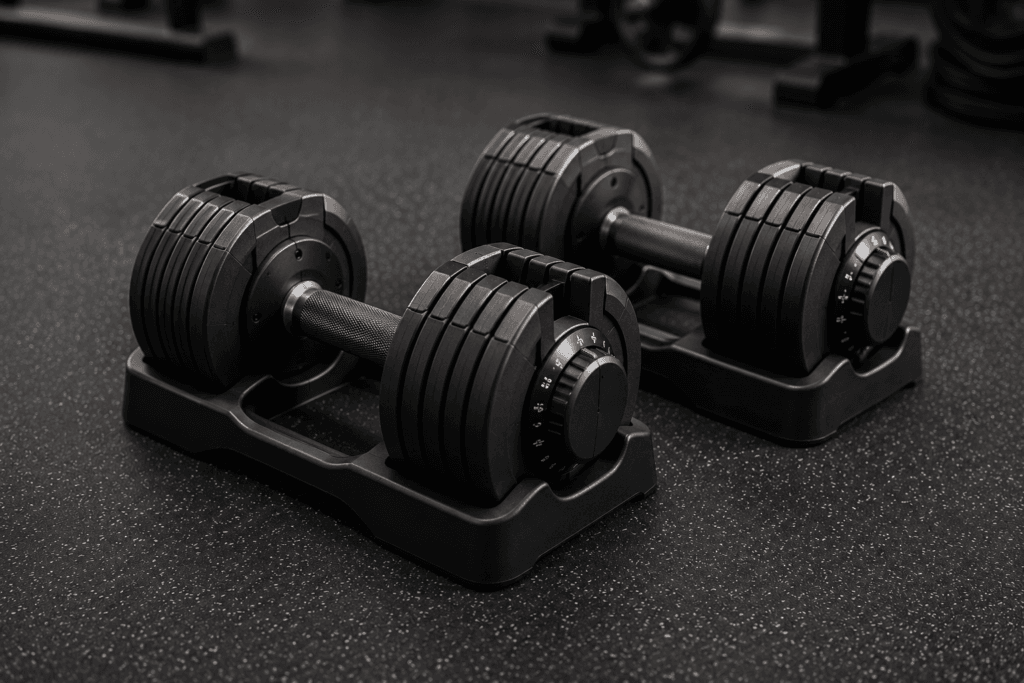
Benefits: Holding a dumbbell during weighted crunches, Russian twists, or side bends adds resistance that helps your core muscles grow stronger over time.
Pros:
- Adjustable weight in one compact set
- Useful for full-body workouts, not just abs
- Long-lasting and low-maintenance
Cons:
- Higher upfront cost than bands or mats
- Can be bulky depending on the design
- Not ideal for high-rep, fast-paced core circuits
Best For: People who want one piece of equipment that covers abs and full-body strength training.
5. Kettlebell
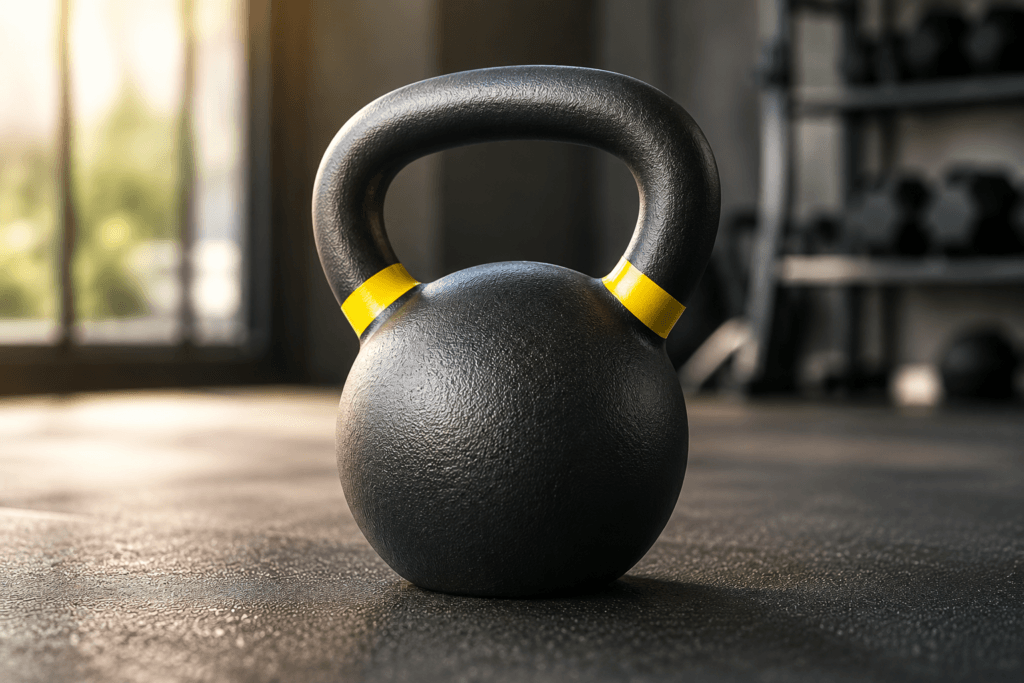
Benefits: Kettlebell moves like the Russian twist, windmill, or Turkish get-up train your core through rotation and stability, not just straight crunching.
Pros:
- Builds functional, rotational core strength
- Doubles as full-body and cardio equipment
- Compact compared to a full dumbbell rack
Cons:
- Technique matters a lot; poor form risks injury
- Can be intimidating for complete beginners
- Limited to one fixed weight per kettlebell
Best For: Intermediate to advanced users comfortable learning proper kettlebell form.
6. Medicine Ball
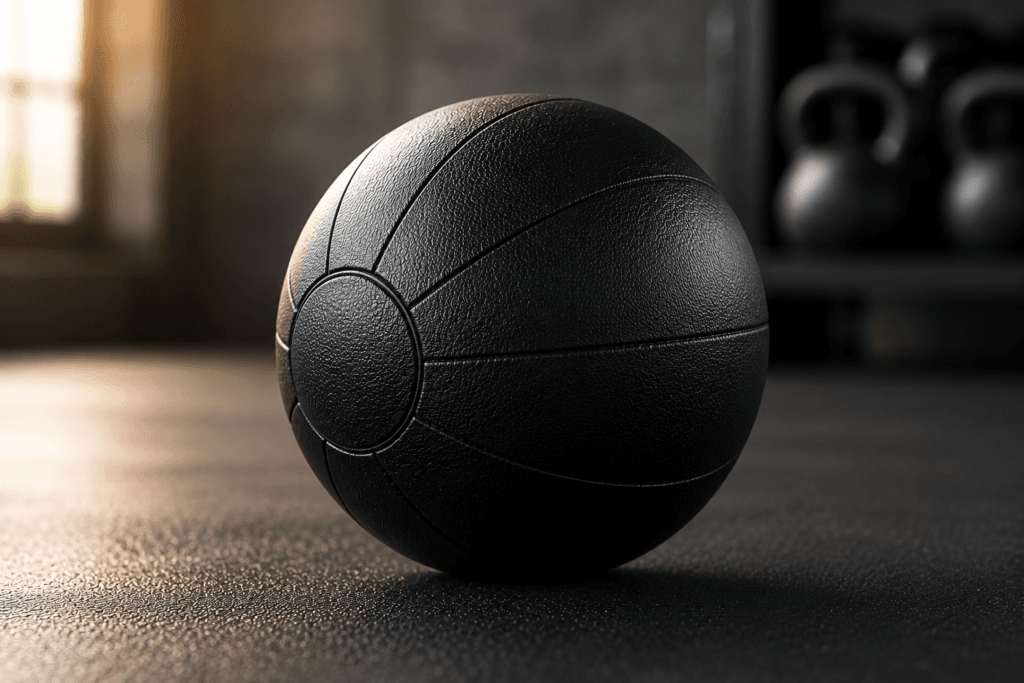
Benefits: Medicine ball slams, twists, and throws train your core with power and speed, adding an athletic element that static ab exercises don’t offer.
Pros:
- Great for explosive, athletic core training
- Works well for partner or group workouts
- Doubles as a tool for cardio circuits
Cons:
- Needs some space, especially for slams
- Can be noisy if used on hard floors
- Less precise for isolating specific ab muscles
Best For: People who enjoy dynamic, athletic-style training over slow, controlled reps.
7. Pull-Up Bar
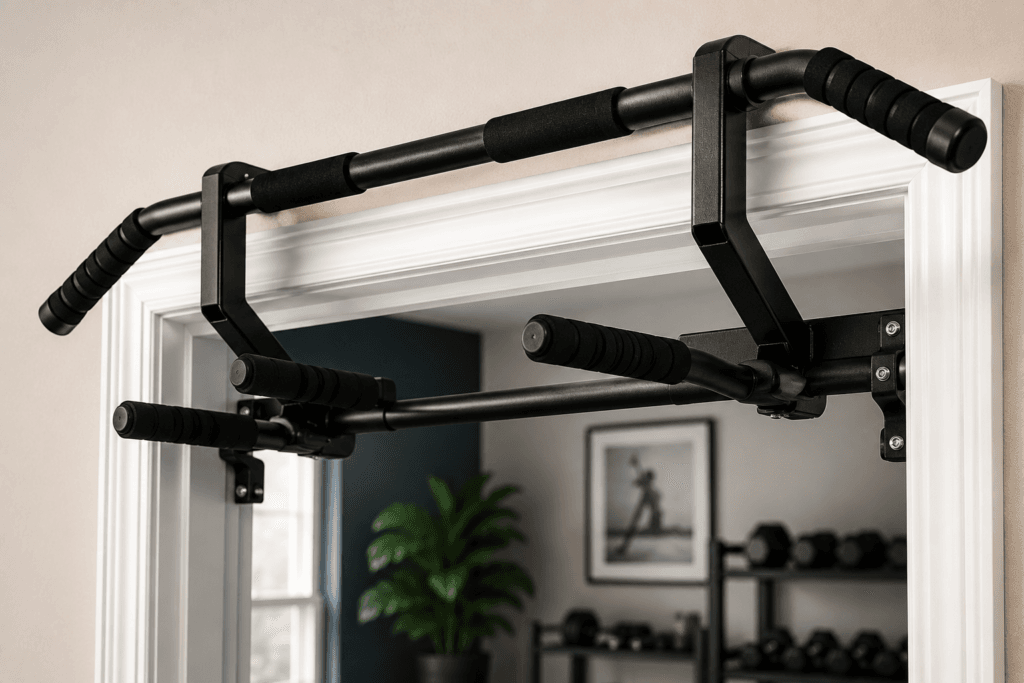
Benefits: Hanging leg raises and knee raises on a pull-up bar are some of the most effective moves for the lower abs, using your body weight as resistance.
Pros:
- Doubles as back and grip-strength equipment
- No floor space needed once installed
- Very durable with basically no upkeep
Cons:
- Requires decent upper-body and grip strength
- Doorframe models may not fit every home
- Not beginner-friendly for hanging core moves
Best For: Intermediate to advanced users who already have some upper-body strength.
8. Ab Bench
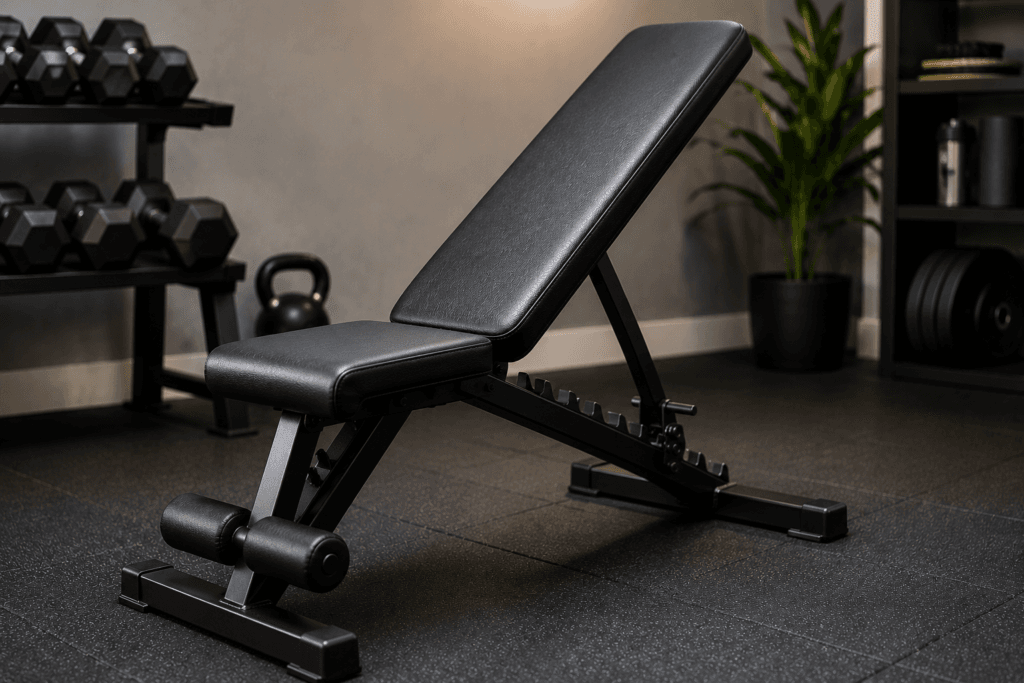
Benefits: An ab bench supports your back and legs during sit-ups and crunches, letting you focus purely on your core without straining your neck or spine.
Pros:
- Comfortable, supported positioning
- Adjustable incline on most models
- Reduces neck and lower-back strain
Cons:
- Takes up permanent floor space
- Higher cost than mats or bands
- Limited to sit-up and crunch-style movements
Best For: People who want a comfortable, dedicated setup for consistent ab training.
9. Roman Chair
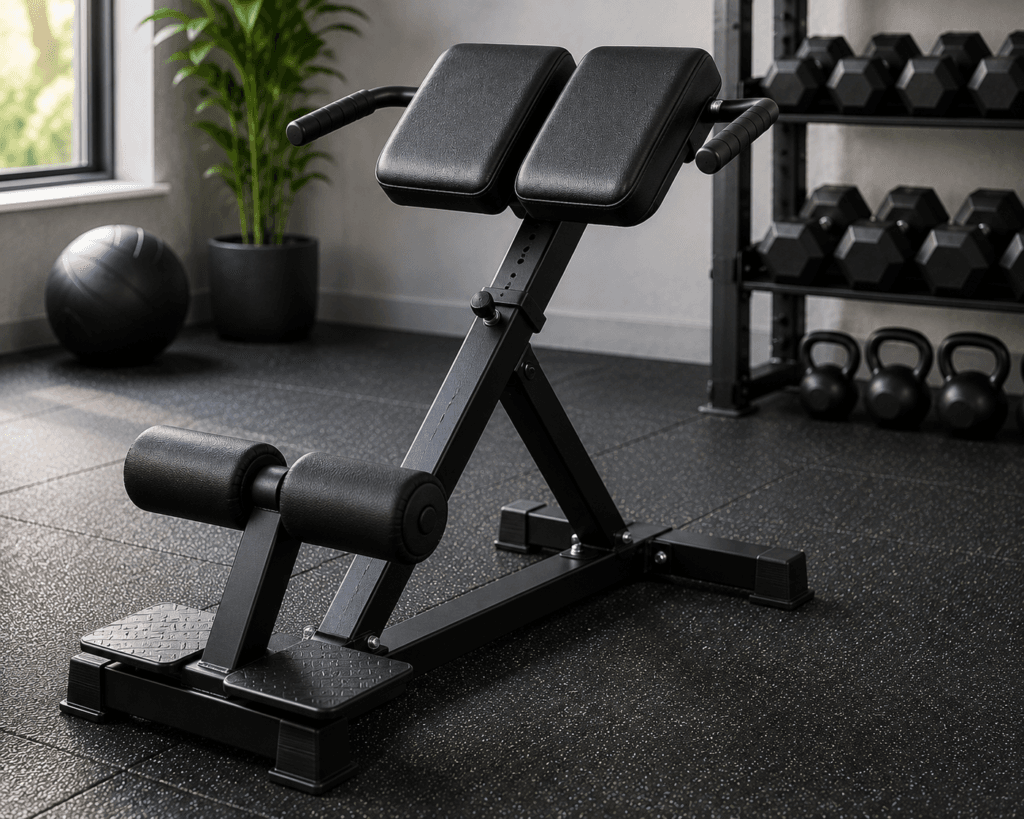
Benefits: The Roman chair is built for back extensions and hanging leg raises, targeting the lower abs and lower back through a full range of motion.
Pros:
- Strengthens both abs and lower back
- Supports a deeper range of motion
- Sturdy and stable during exercises
Cons:
- Bulky and not ideal for small spaces
- More expensive than most core equipment
- Overkill for casual, beginner-level training
Best For: Serious home-gym owners focused on lower back and lower-ab strength together.
10. Core Sliders
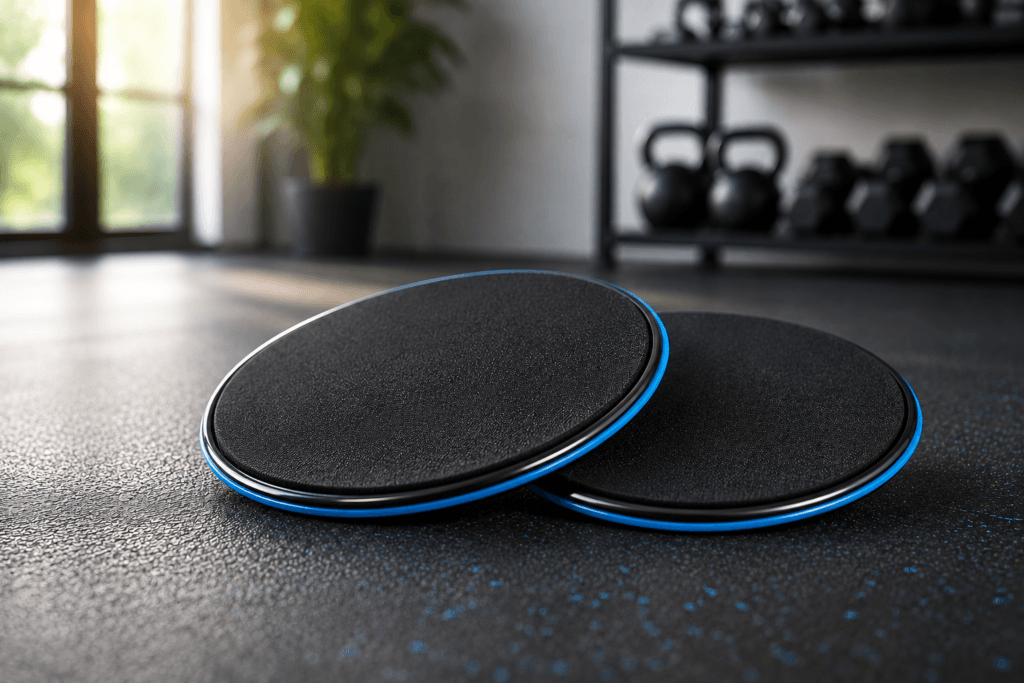
Benefits: Sliders turn moves like mountain climbers and plank slides into a smooth, low-impact core workout that also challenges balance and control.
Pros:
- Extremely cheap and lightweight
- Gentle on joints
- Works well on most flooring types
Cons:
- Requires decent core control to use properly
- Limited range of exercises compared to other tools
- Can feel awkward for first-time users
Best For: Beginners to intermediates wanting a low-cost, low-impact core option.
11. Balance Board
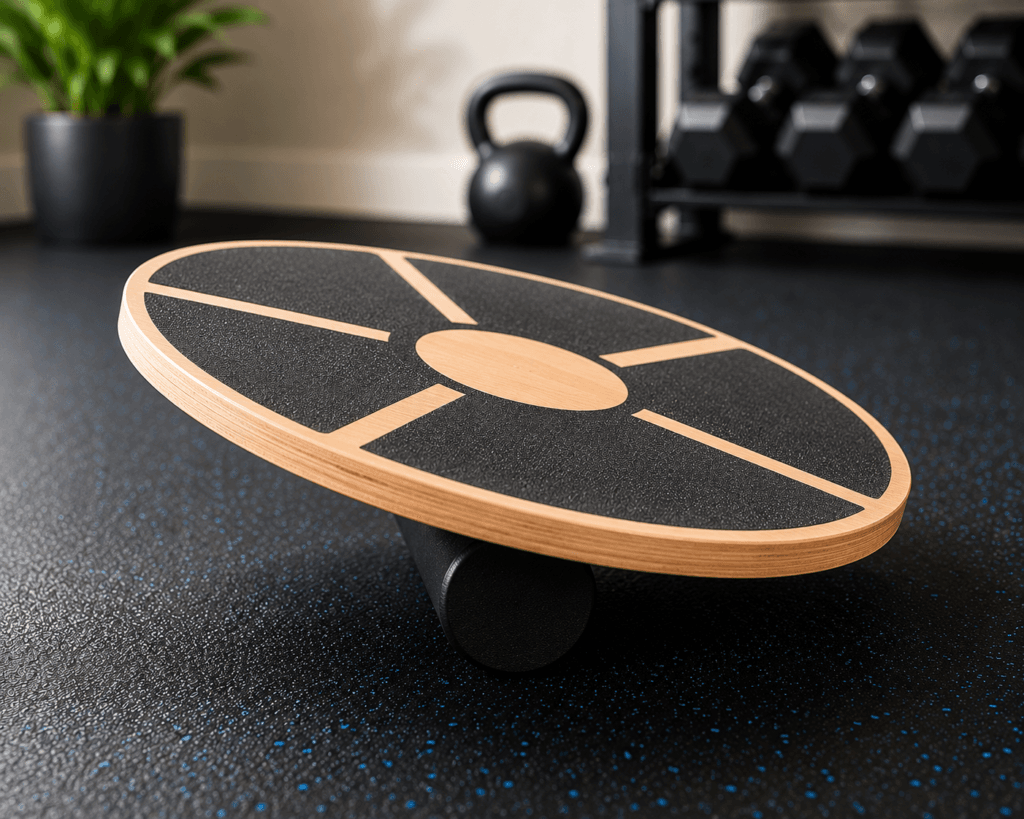
Benefits: A balance board challenges your core stabilizers constantly, since your body is working to stay upright the entire time you’re standing on it.
Pros:
- Builds core stability and balance together
- Compact and easy to store
- Useful for rehab and injury prevention too
Cons:
- Steep learning curve for beginners
- Limited as a standalone ab-building tool
- Some risk of falls without caution
Best For: People focused on balance, stability, and functional core strength over visible muscle.
12. Yoga Mat
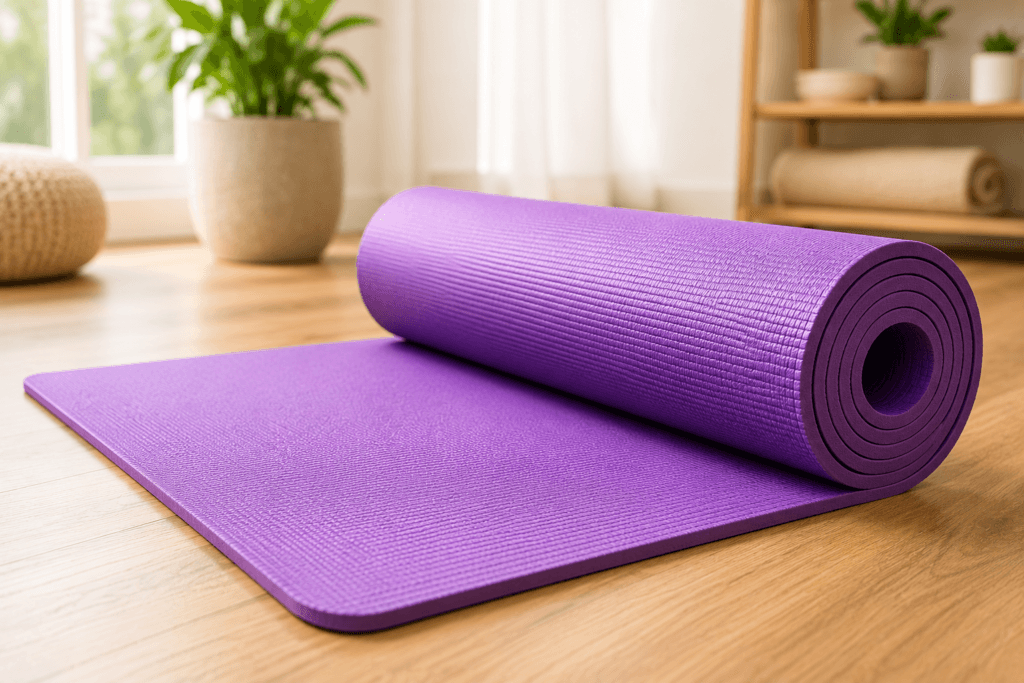
Benefits: A yoga mat isn’t flashy, but it makes floor-based ab work like planks, crunches, and leg raises far more comfortable and joint-friendly.
Pros:
- Very affordable
- Works with almost every core exercise
- Easy to store and transport
Cons:
- Provides no resistance on its own
- Thin mats offer limited cushioning
- Needs pairing with other equipment for progress
Best For: Absolutely everyone; it’s the baseline tool for any home ab routine.
13. Suspension Trainer (TRX)
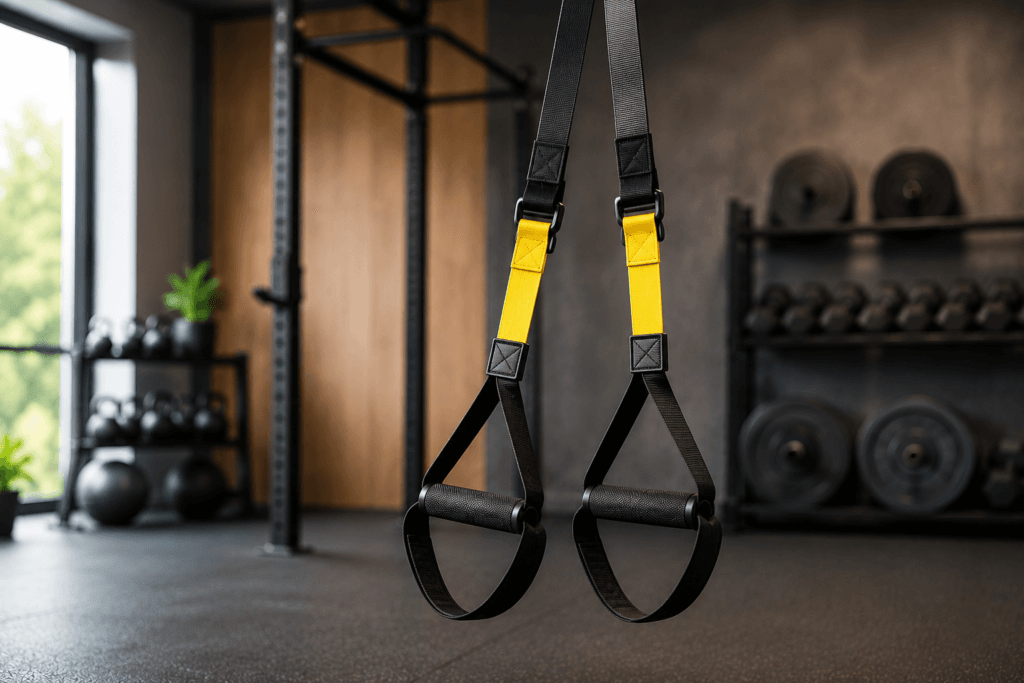
Benefits: A suspension trainer uses your body weight and instability to make core exercises like planks and pikes noticeably harder than doing them on the floor.
Pros:
- Highly versatile for full-body training
- Adjustable difficulty by changing body angle
- Compact and easy to pack away
Cons:
- Requires a secure anchor point
- Learning curve for proper form
- Not ideal for absolute beginners
Best For: Intermediate to advanced users who want core and full-body training combined.
14. Weighted Vest
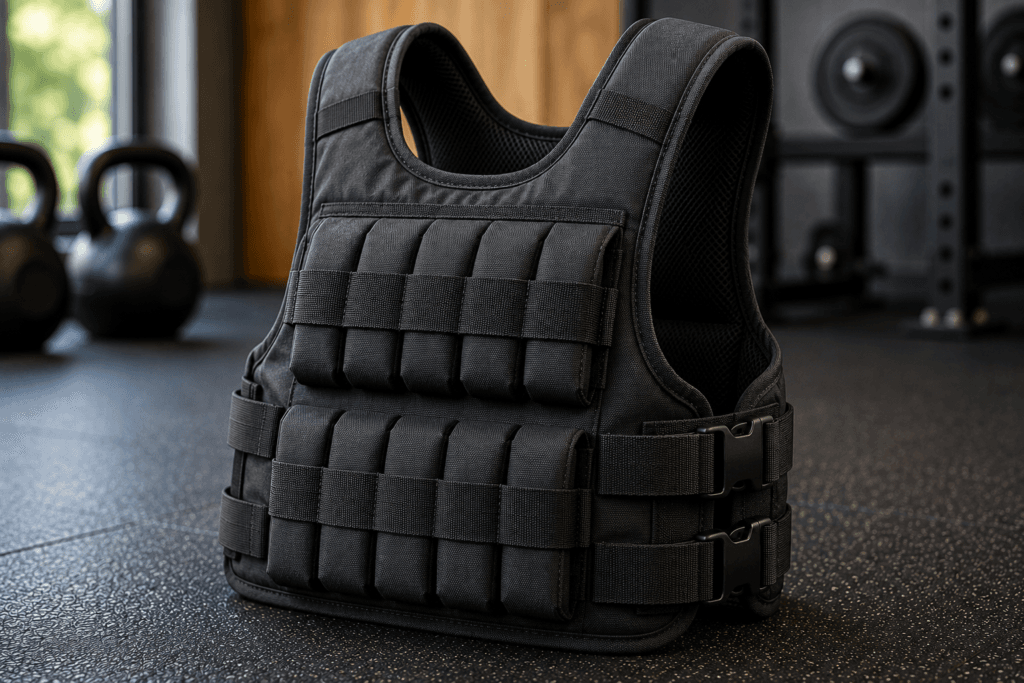
Benefits: Wearing a weighted vest during planks, crunches, or standing core work adds resistance without needing to hold anything in your hands.
Pros:
- Adds resistance to almost any bodyweight move
- Frees up your hands during exercises
- Useful beyond ab training too
Cons:
- Can strain the lower back if too heavy
- Pricier than most basic core tools
- Not suited for beginners or those with back issues
Best For: Intermediate to advanced users looking to progress bodyweight core exercises.
15. Cable Resistance System
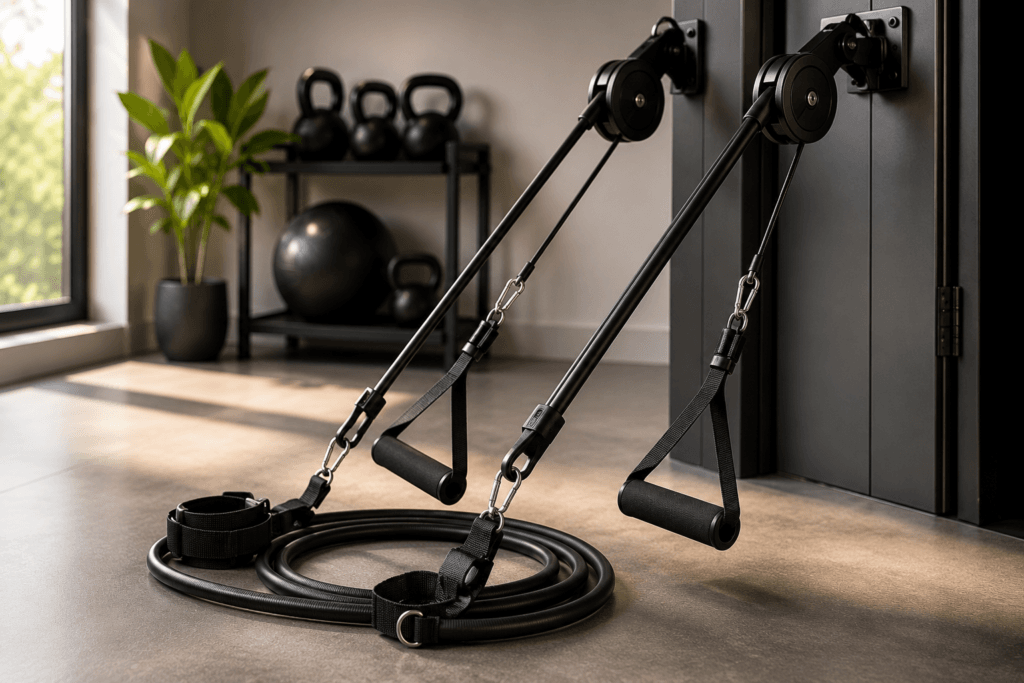
Benefits: A cable system lets you perform woodchops, twists, and pull-downs with constant, adjustable tension through the entire range of motion, something bands and dumbbells can’t fully replicate.
Pros:
- Smooth, adjustable resistance throughout each rep
- Great for rotational core exercises
- Doubles as equipment for many other muscle groups
Cons:
- Expensive and space-intensive
- Needs wall or frame mounting in most cases
- Overkill for casual home users
Best For: Serious home-gym builders who want gym-level versatility for core training.
Sample Home Ab Workout Using Equipment
Once you’ve picked your equipment, it helps to see how it fits into an actual routine. Here’s a simple, beginner-to-intermediate friendly workout that mixes a few of the tools covered above.
| Exercise | Equipment | Sets x Reps / Duration |
|---|---|---|
| Ab Rollout | Ab Roller Wheel | 3 x 10 |
| Stability Ball Crunch | Stability Ball | 3 x 15 |
| Resistance Band Woodchopper | Resistance Bands | 3 x 12 (each side) |
| Plank | Yoga Mat | 45 sec |
| Russian Twist | Medicine Ball | 3 x 20 (total, both sides) |
Rest for about 30 to 60 seconds between sets. This routine works well 2 to 3 times a week, giving your core enough recovery time between sessions to actually get stronger.
How Much Body Fat Do You Need to See Your Abs?
Men typically need to reach around 10-14% body fat to see visible abs, while women usually need somewhere between 16–20%, according to data compiled by Healthline and InBody USA. Genetics and hormones shift this range slightly for everyone.
This gap between men and women isn’t cosmetic, it’s biological. Women naturally carry more essential fat for reproductive health, so pushing body fat too low can disrupt hormones. Chasing a six-pack at any cost isn’t a smart goal. If you’re also working on lower-body strength and muscle tone, check out our Glute Exercises for Women guide.
So before blaming your ab roller for “not working,” check your diet and overall body fat first. No core workout equipment on Earth can out-train a calorie surplus.
What Are the Best Ab Exercise Machines for Home?
The best ab exercise machines for home use are ones that add resistance or improve range of motion without wrecking your lower back. Think ab crunch machines, vertical knee raise (VKR) stands, and cable functional trainers. If you’re looking for low-impact ways to build full-body strength, our Strength Exercises for Seniors guide is another excellent resource.
Ab crunch machines keep your spine aligned during the movement, reducing strain compared to floor crunches. VKR stands (captain’s chair) let you do hanging leg raises, which the ACE study ranked among the top exercises for both rectus abdominis and obliques.
Is the Ab Roller Workout Actually Effective?
Yes, but with a catch. In the original ACE study, the plain ab roller wheel ranked 9th out of 13 exercises for rectus abdominis activation better than a traditional crunch in engagement of stabilizer muscles, but not the top performer.
Where the ab roller workout shines is total-body core engagement. Rolling out and back forces your shoulders, lats, and deep core stabilizers to work together, something isolated crunches simply can’t replicate.
Ab wheel exercises work best when you control the eccentric (rolling-out) phase slowly. Rushing the movement shifts stress to your lower back instead of your abs a common rookie mistake.
How Do You Use a Sit-Up Bench for Abs Correctly?
Use a sit-up bench for abs by starting at a low incline and increasing the angle only once your form stays clean. Steeper inclines increase resistance, but wobbly form cancels out the benefit and stresses your neck.
A sit-up bench is one of the more underrated pieces of core strengthening equipment because it lets you progressively overload ab training the same way you’d progressively load a bench press. Most bodyweight-only routines can’t offer that.
Pro tip: keep your hands lightly crossed on your chest, not laced behind your head. Pulling on your neck to “help” the movement is how people turn ab day into neck day.
What Compact and Portable Ab Equipment Works for Small Spaces?
For small apartments or travel, resistance bands, an ab wheel, and a compact stability ball cover almost every core movement pattern you need. None of them take up more space than a shoebox.
This compact ab equipment trio is popular for a reason: it’s cheap, foldable, and doesn’t require a spotter or an outlet. If you travel often, a resistance band set is genuinely the most portable ab workout equipment you can pack in a carry-on.
How Effective Are Resistance Bands for Abs?
Resistance bands for abs work by adding constant tension throughout a movement, unlike gravity-based exercises that only load part of the range of motion. This makes standing core exercises far more challenging than they look. For a complete routine, explore our Resistance Band Exercises guide to learn more effective full-body band workouts.
Try banded flutter kicks, Pallof presses, or standing wood chops. These moves also engage the obliques and transverse abdominis—the deep “corset” muscle that flattens your stomach and supports your spine.
Because bands are elastic, they’re gentler on the lower back than heavy free weights, which matters if you’ve had any prior back issues.
Are Kettlebell Core Exercises Worth Adding to Your Routine?
Kettlebell core exercises are worth it because they train anti-rotation and anti-extension your core’s real job, according to most physical therapists, isn’t to bend and crunch but to resist unwanted movement.
Moves like the suitcase carry, kettlebell windmill, and Turkish get-up force your abs to stabilize your spine under load. This is a very different (and arguably more functional) type of abs training equipment compared to isolated crunch machines.
If you only have one kettlebell at home, that’s genuinely enough to build serious core stability alongside your other ab work.
Mistakes to Avoid When Training Abs
Even with the right equipment, a few common mistakes can slow down your progress or lead to unnecessary strain. Here’s what to watch out for.
Too Many Crunches
Doing endless crunches every day doesn’t speed up results and can actually strain your neck and lower back over time. Your core responds better to variety, like planks, rotational moves, and weighted exercises, than to repeating one movement hundreds of times.
Ignoring Nutrition
No amount of core training will reveal visible abs if your diet doesn’t support fat loss. Ab exercises build the muscle underneath, but nutrition plays the bigger role in whether that muscle actually shows.
No Progressive Overload
Sticking with the same reps and resistance forever means your core stops adapting after a while. Gradually adding difficulty, whether through more reps, added weight, or a tougher variation, keeps your muscles improving instead of just maintaining.
Poor Form
Rushing through reps or letting your lower back arch during moves like leg raises shifts strain away from your abs and onto your spine. Slowing down and focusing on control matters more than speed or rep count.
No Recovery
Training abs every single day doesn’t give the muscle fibers time to repair and grow stronger. Like any other muscle group, your core needs rest days built into your weekly routine to actually benefit from the work you’re putting in
Safety Tips
A little caution goes a long way when training abs at home, especially with equipment that adds resistance or instability.
Warm up for a few minutes before starting, since cold muscles are more prone to strain. Keep your neck relaxed during crunches and sit-ups by avoiding the urge to pull on your head with your hands.
Use a mat under equipment like the ab roller or sliders to protect your knees and wrists from hard flooring. Stop if you feel sharp pain in your lower back, since that’s usually a sign of poor form rather than normal muscle fatigue.
Anyone with an existing back injury, recent surgery, or a medical condition should check with a doctor before starting a new core routine.
Quick Buying Guide: Matching Equipment to Your Goal
- Tight budget, small space: resistance bands + ab wheel
- Want progressive overload: sit-up bench with adjustable incline
- Enjoy variety: stability ball + medicine ball combo
- Functional, real-world strength: kettlebell core work
- Already own a cable machine: add an abdominal bar attachment
FAQs
What is the best home equipment for abs?
There’s no single “best” option since it depends on your fitness level and budget. For beginners, a yoga mat and resistance bands cover the basics, while an ab roller or weighted vest suits people ready for a bigger challenge.
Can you get a six-pack with home equipment alone?
Yes, equipment can help build the muscle underneath, but visible abs depend just as much on your overall body fat percentage. Diet and consistent training matter more than any single piece of gear.
Is an ab roller good for beginners?
It can be tough at first since it demands solid core control from the start. Beginners are often better off starting with planks or a stability ball before progressing to the roller.
How often should I train my abs at home?
Most people see good results training abs 2 to 4 times a week, with rest days in between to let the muscles recover. Training every single day isn’t necessary and can slow down recovery.
Do resistance bands really work for abs?
Yes, bands add adjustable tension to twists, crunches, and standing core moves, making bodyweight exercises noticeably harder. They’re especially useful for beginners who aren’t ready for heavier equipment yet.
What’s the cheapest way to train abs at home?
A yoga mat alone is enough to start, since exercises like planks, crunches, and leg raises only need bodyweight. Resistance bands are the next most affordable upgrade once bodyweight moves feel too easy.
Is a stability ball better than a mat for ab workouts
? A stability ball adds a balance challenge that a flat mat can’t offer, making exercises more demanding on your core stabilizers. Beginners can still use a mat first and add a stability ball later as they progress.
Can beginners use a pull-up bar for ab exercises?
It’s possible, but hanging leg raises require decent grip and upper-body strength first. Beginners often benefit more from floor-based core work before moving on to bar exercises like this one.
Final Word
Good home workout equipment for abs speeds up muscle development, but it’s not magic. Pair a few smart tools an ab wheel, resistance bands, a stability ball with a real calorie deficit and consistent cardio, and the six-pack underneath will eventually get its moment to shine.
References
- Mayo Clinic – mayoclinic.org
- American Council on Exercise (ACE) – acefitness.org
- Harvard Health Publishing, Harvard Medical School – health.harvard.edu
- National Academy of Sports Medicine (NASM) – nasm.org

Hi, I’m Salem Nasir, founder of Fiturely. I research and write evidence-based articles on fitness, nutrition, weight loss, and healthy living. My mission is to make reliable health information simple, practical, and easy to understand so readers can build healthier habits with confidence
Pingback: Build Bigger, Stronger Traps at Home with These Simple Exercises
Pingback: Calisthenics Workout Plan for Beginners (2026): 4 Week Full Body Routine to Build Strength Fast
Pingback: No Gym? Try These 15 Best Bicep Workouts at Home - fiturely.com
Pingback: Military Calisthenics: The Ultimate Beginner's Workout Plan (2026)