
Getting older doesn’t mean slowing down forever. It means training smarter. Cardio exercises for seniors are one of the few things doctors, physical therapists, and fitness coaches all agree on without argument, and that almost never happens in the health world.
This guide breaks down exactly what works, what to avoid, and how to build a routine that fits your knees, your living room, and your schedule.
What Are the Best Cardio Exercises for Seniors?
The best options are low-impact, joint-friendly, and easy to start today: brisk walking, water aerobics, stationary cycling, chair cardio, and marching in place. These give real heart-health benefits without the pounding that high-impact workouts put on hips and knees. Most require no equipment and no gym membership. They can be done indoors, outdoors, seated, or standing.
The Centers for Disease Control and Prevention (CDC) recommends that adults, including older adults, get at least 150 minutes of moderate-intensity aerobic physical activity for older adults each week, roughly 30 minutes, five days a week . That number sounds intimidating until you realize it can be broken into three 10-minute chunks a day. Suddenly it’s just… doable.
Why Do Cardio Exercises Matter So Much After 60?
Cardio strengthens the heart muscle, improves circulation, and helps regulate blood pressure and blood sugar. It’s also one of the most effective tools against age-related muscle and bone loss when combined with light strength work. The World Health Organization (WHO) specifically recommends older adults aim for 150 to 300 minutes of moderate aerobic activity weekly, plus balance training, to reduce fall risk.
cardio isn’t just about the heart. Regular aerobic movement is linked to better sleep, sharper memory, and lower rates of depression in older adults, according to Harvard Health Publishing. So yes, a 20-minute walk really can improve your mood, science backs that one up, no wellness-influencer exaggeration needed.
Consistency matters more than intensity. A short senior exercise routine done four times a week beats an exhausting one-off workout every time.
What Are the Best Cardio Exercises for Seniors Over 60?
Walking, swimming, water aerobics, and stationary cycling top the list for adults over 60. They protect joints, are easy to scale up or down, and don’t require any special skill. Group classes also add a social element, which matters for long-term consistency.
The best cardio exercises for seniors over 60 share three traits: low joint impact, adjustable intensity, and minimal equipment. Walking, in particular, is often called the “perfect exercise” by cardiologists because it needs nothing but a decent pair of shoes and works for almost every fitness level.
Brisk Walking for Seniors

Brisk walking for seniors simply means walking at a pace where you can talk but not sing comfortably, about 3 to 4 mph for most people. The American Heart Association lists walking as a top recommendation for cardiovascular health at any age. Start with 10-minute walks and build up gradually.
Swimming and Water Aerobics
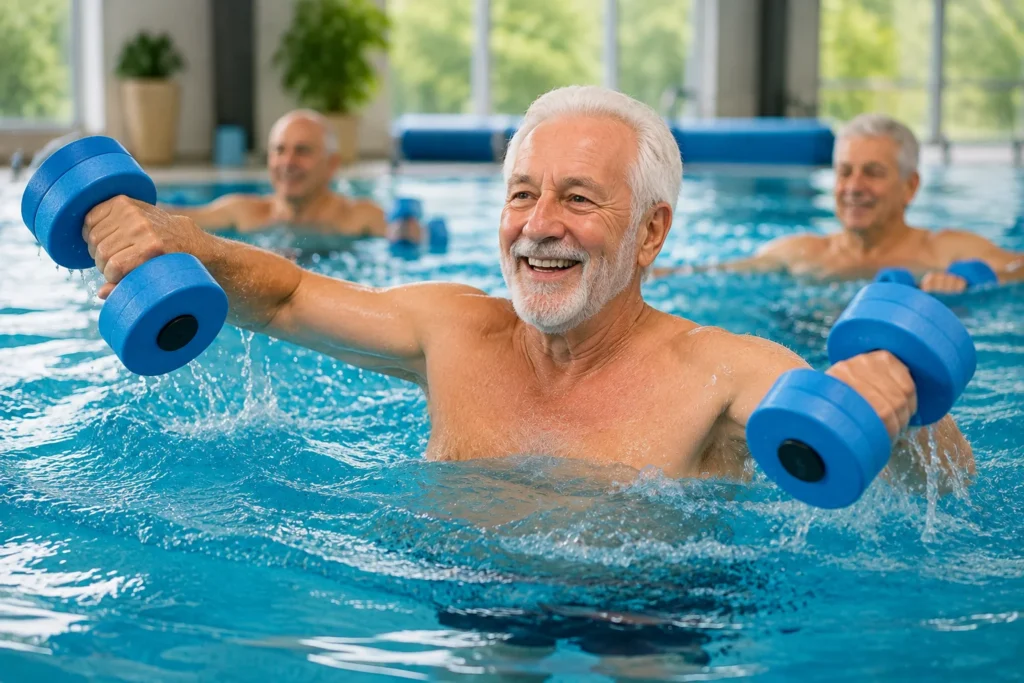
Swimming for older adults and water aerobics for seniors are gold standard for people with arthritis or joint pain, because water supports body weight and reduces impact by up to 90% compared to land-based movement (Arthritis Foundation). Most community pools and YMCA locations offer dedicated senior swim hours.
What Are Easy Cardio Exercises for Seniors at Home?
Marching in place, step touches, seated leg lifts, and dancing to a favorite playlist all count as real cardio, no equipment, no gym, no excuses. These moves raise your heart rate safely and can be done in a living room in under 15 minutes. They’re ideal for rainy days or when getting to a class isn’t realistic.
Easy cardio exercises for seniors at home don’t need to look like a workout video. Simple movement patterns repeated for a few minutes at a time add up. Below are the go-to moves physical therapists recommend for cardio exercises for seniors without equipment.
Marching in Place
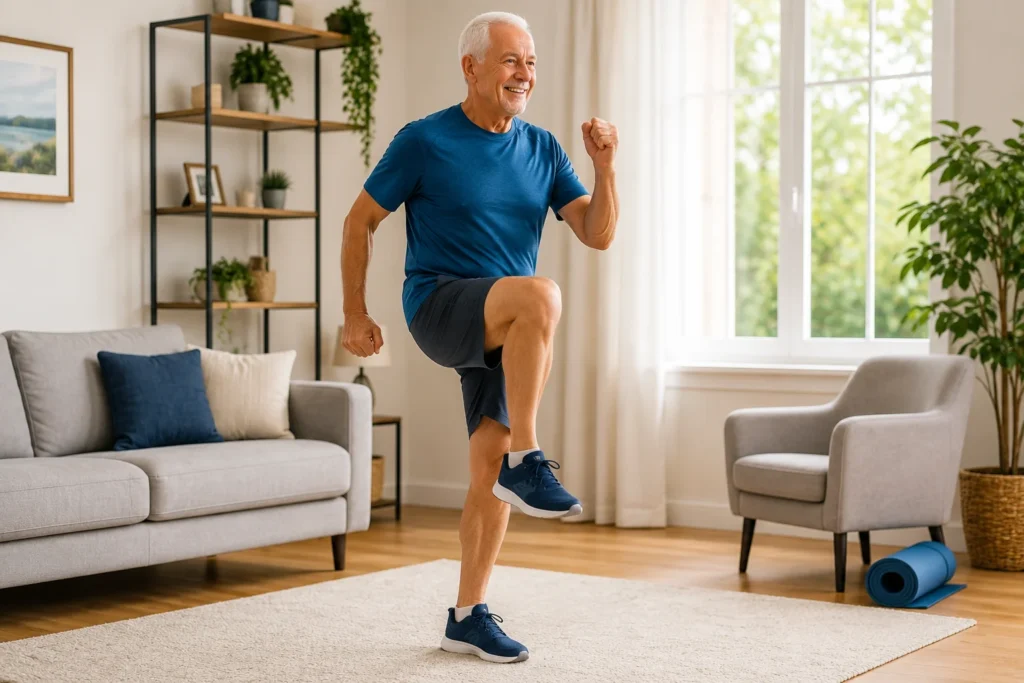
Marching in place is exactly what it sounds like, lifting your knees alternately while standing near a chair or counter for support. Two to three minutes is enough to notice your heart rate climb. It’s a foundational move in nearly every beginner cardio exercises for seniors routine.
Step Touch Exercise
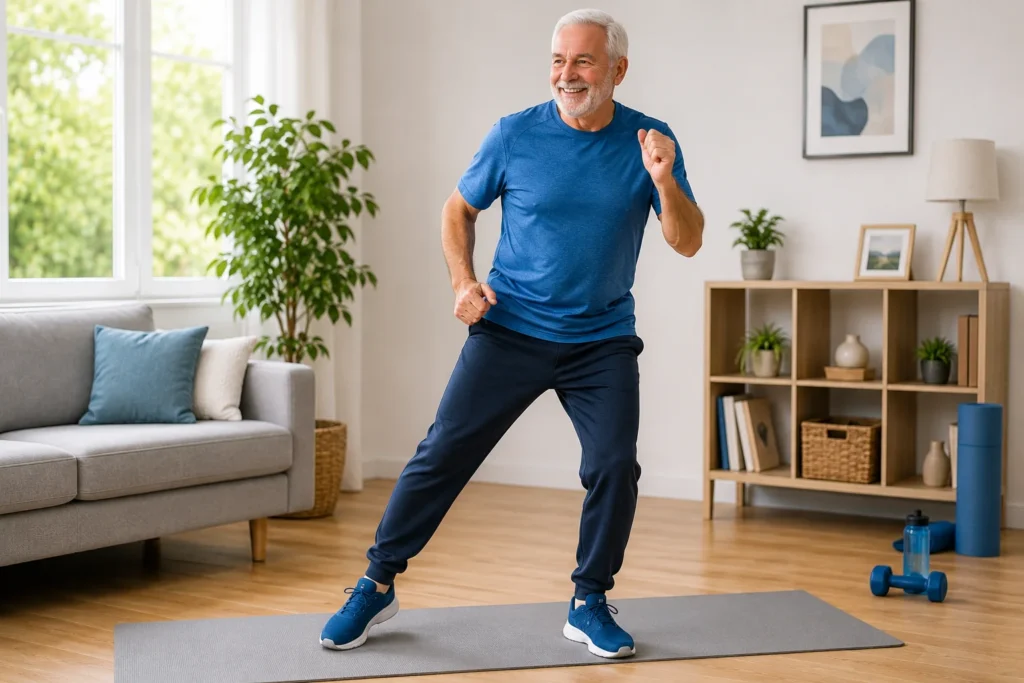
The step touch exercise involves stepping side to side while gently swinging your arms. It builds coordination and mild cardio load at the same time, and it’s a staple in low impact dancing classes for older adults.
Seated and Chair Cardio
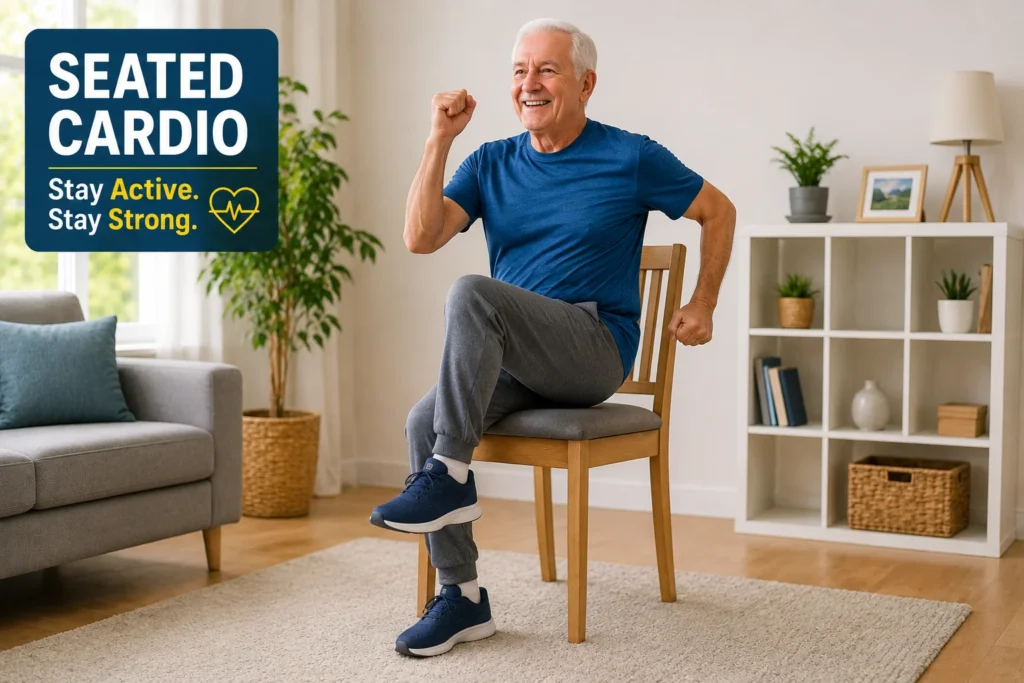
Seated cardio exercises for seniors, also called chair cardio exercises, are perfect for anyone with balance concerns or recovering from surgery. Seated marching, seated arm circles, and seated punches all elevate heart rate while keeping both feet grounded and stable.
Standing Options
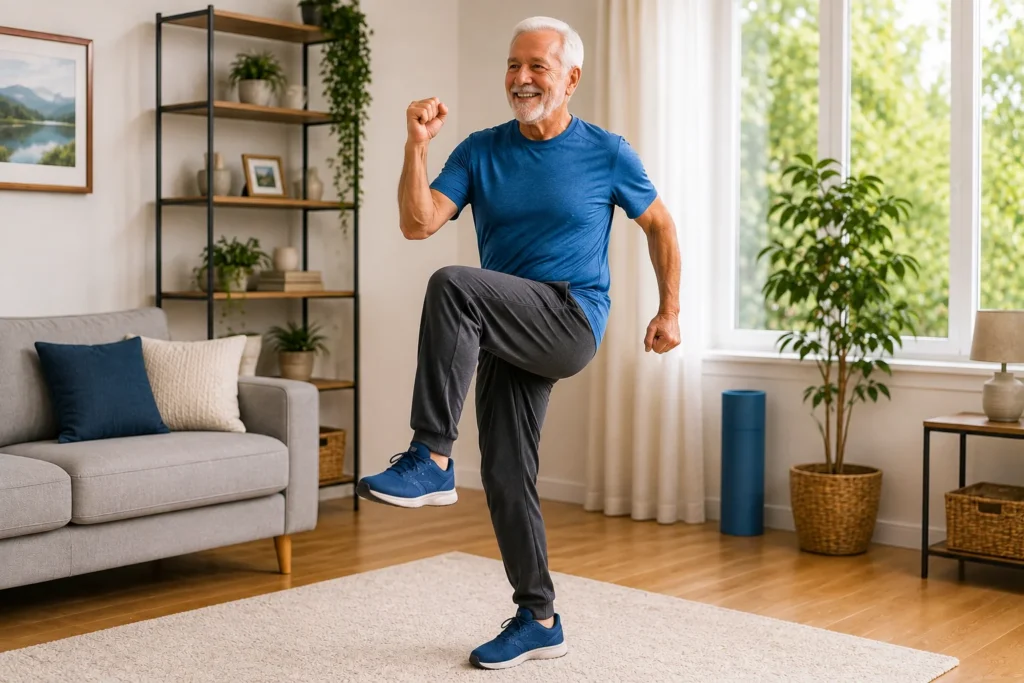
For those steady on their feet, standing cardio exercises for seniors like heel-toe taps, side leg raises, and slow squats-to-chair add variety without needing to leave the house.
What Are the Best Low Impact Cardio Exercises for Seniors?
Water aerobics, stationary cycling, walking, and chair-based movement are the top low impact cardio exercises for seniors. “Low impact” means at least one foot stays on the ground at all times, which dramatically reduces stress on knees, hips, and ankles.
Low impact workouts are especially important for cardio exercises for seniors with bad knees, where jumping or running is off the table. Stationary cycling is a favorite here, many models allow seated pedaling with adjustable resistance, so intensity can be dialed up as fitness improves. Recumbent bikes (with a backrest) are often the most comfortable option for longer sessions.
The Arthritis Foundation specifically endorses cycling and water-based movement for people managing joint pain, noting these options let people stay active without aggravating existing conditions.
Are There Safe Cardio Workouts for Seniors Over 70?
Yes, with a few adjustments. Safe cardio workouts for seniors over 70 typically emphasize shorter sessions, seated or supported options, and a strong focus on balance and cardio exercises combined. The CDC fall-prevention program, STEADI, notes that falls are the leading cause of injury among adults 65 and older, which is why balance work is folded into most senior cardio plans, not treated as a separate afterthought.
For safe cardio exercises for seniors over 65, a good rule of thumb is the “talk test”, if you can hold a conversation while exercising but not sing, you’re in the right zone. If you’re breathless within a minute or feel dizzy, that’s the signal to slow down or sit.
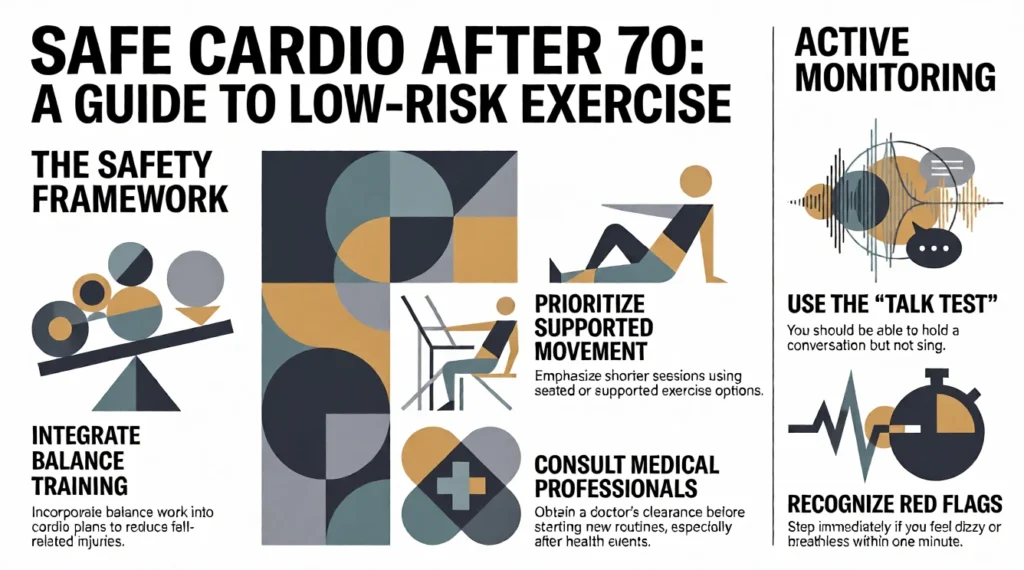
Anyone starting a new routine after 65, especially after a health event, should get a quick check-in with a doctor first. It’s a five-minute conversation that can prevent a much bigger problem later.
What’s a Good 10-Minute Cardio Workout for Seniors?
A simple, effective 10-minute routine: 2 minutes marching in place, 2 minutes step touches, 2 minutes seated punches, 2 minutes standing side leg raises, and 2 minutes slow walking to cool down. This structure works as a 10 minute cardio workout for seniors for busy days or as a warm-up before a longer session.
This kind of daily cardio exercises for seniors habit is more sustainable than a single long workout once a week. Short, frequent sessions build the habit loop that actually sticks, consistency beats intensity almost every time in exercise science.
Standing vs. Seated vs. Water Cardio: Which Is Right for You?
| Exercise Type | Impact Level | Equipment Needed | Best For | Approx. Calories (30 min)* |
|---|---|---|---|---|
| Brisk walking | Low | None (shoes) | Beginners, everyday cardio | 120-150 |
| Water aerobics | Very low | Pool access | Arthritis, joint pain | 130-170 |
| Stationary cycling | Low | Bike | Bad knees, controlled intensity | 140-200 |
| Chair/seated cardio | Very low | Chair | Balance issues, post-surgery recovery | 90-120 |
| Standing cardio (step touch, marching) | Low-moderate | None | Home workouts, no equipment | 110-150 |
| Swimming (laps) | Very low | Pool | Full-body endurance building | 150-220 |
| Low impact dancing | Low-moderate | None | Fun factor, group classes | 130-180 |
*Estimates based on a 150-160 lb adult at moderate pace, adapted from Harvard Health Publishing’s calorie-burn reference charts. Actual numbers vary by weight, intensity, and individual metabolism.
How Does Cardio Help With Heart Health and Weight?
Regular aerobic movement lowers resting heart rate, improves blood vessel function, and helps manage cholesterol and blood pressure over time. It also supports steady, sustainable weight management when paired with balanced eating. The American Heart Association names regular aerobic activity as one of the seven core factors in its “Life’s Essential 8” cardiovascular health framework.
Cardio exercises for seniors to improve heart health don’t need to be extreme, moderate and consistent beats occasional and intense. For cardio exercises for seniors to lose weight, the same principle applies: the workout you’ll actually repeat three times a week outperforms the “perfect” one you do once and never again.
Beyond the heart, this kind of movement builds real-world endurance exercises for seniors rely on, the stamina to garden, play with grandkids, or climb stairs without stopping halfway. Think of it less as “exercise” and more as maintenance for the things you actually want to keep doing.
What Counts as Moderate Intensity Exercise for Older Adults?
Moderate intensity means your heart rate rises, breathing quickens, and you can talk but not sing, think brisk walking, light cycling, or water aerobics. This is the target zone recommended by both the CDC and WHO for aerobic activity for older adults, and it applies whether you’re doing simple aerobic exercises for older adults at home or in a group class.
Best aerobic exercises for seniors generally hit this zone without overexertion: walking, swimming, cycling, and dancing. Endurance training for older adults builds gradually, start at a pace that feels easy, and only increase duration or intensity once the current level feels comfortable for a week or two straight.
Mobility and cardio work well together, too. A short mobility warm-up (ankle circles, gentle stretches) before cardio reduces stiffness and injury risk, especially first thing in the morning.
Where Can You Find Senior Fitness Classes Near You?
Local community centers, YMCAs, and senior centers are the most reliable places to find structured, instructor-led classes. Many offer free or low-cost trial sessions, and most are staffed by trainers experienced in working with older adults.
If you’re searching for senior fitness classes near me or senior aerobic classes near me, start with these options:
- YMCA senior fitness classes: most branches run dedicated low-impact and water aerobics classes for older members.
- Community center senior exercise classes: often free or very low-cost through city parks and recreation departments.
- Senior walking groups near me: many towns have organized morning walking clubs, sometimes through local hospitals or wellness programs.
- Cardio classes for seniors near me: search local gyms specifically for “SilverSneakers” or “senior fit” branded classes, which are widely available across the USA.
- Senior wellness programs near me: check with local hospitals, which frequently run cardiac rehab-adjacent wellness classes open to the public.
For the best cardio workout for seniors in the USA, SilverSneakers is worth noting specifically, it’s a fitness program included with many Medicare Advantage plans, giving members access to indoor senior exercise programs and classes nationwide at no extra cost. It’s worth checking your plan, since a lot of people don’t realize they already have access.
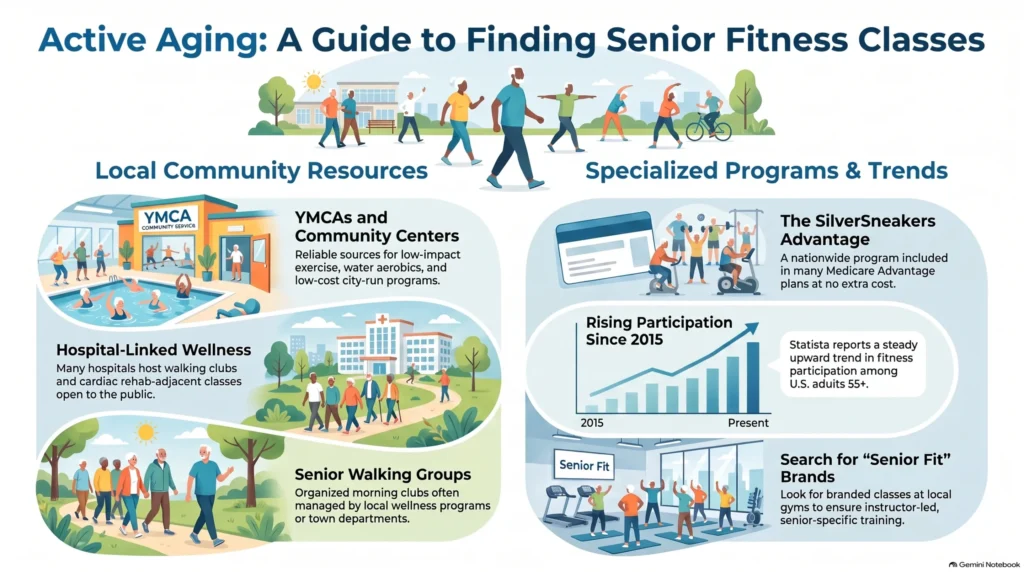
Senior fitness programs in the USA have expanded significantly in the last decade, partly driven by rising interest in healthy aging, Statista reports that fitness and wellness participation among U.S. adults 55 and older has trended upward since 2015, reflecting greater awareness of preventive health.
What Mistakes Do Seniors Make When Starting Cardio?
The most common mistakes are starting too fast, skipping warm-ups, ignoring pain signals, and picking high-impact moves before the body is ready. These aren’t rare beginner slip-ups, physical therapists see them constantly, and they’re usually why people quit within the first two weeks. Fixing them early makes the difference between a habit that sticks and one that ends in a pulled muscle.
Starting too intense, too soon is the biggest one. Jumping into a 30-minute session in week one often leads to soreness so bad that week two never happens. The CDC’s own activity guidelines emphasize gradual progression over intensity for exactly this reason.
Skipping the warm-up is another common error. A rushed 5-minute ankle-and-shoulder warm-up before any senior fitness exercises session significantly lowers injury risk, according to physical therapy associations, yet it’s the step most people cut when short on time.
Ignoring pain vs. discomfort is the one that matters most. Mild muscle fatigue is normal; sharp joint pain, chest tightness, or dizziness is not. Stopping immediately and checking in with a doctor is always the right call, pushing through is not “toughing it out,” it’s a genuine risk, especially for cardio exercises for seniors with bad knees or existing heart conditions.
Doing the same routine forever also stalls progress. The body adapts to repeated movement within a few weeks, so rotating between walking, cycling, and water aerobics keeps both motivation and results moving.
How Do You Start Cardio If You Haven’t Exercised in Years?
Start with 5 to 10 minutes of the gentlest option, usually walking or seated marching, three times a week, and build from there. There’s no need to “catch up” on years of inactivity in one session; the CDC guidelines apply the same way whether you’re starting fresh at 62 or 82. Progress, not speed, is the goal.
Week 1-2: Focus on consistency, not duration. Five to ten minutes of easy cardio workout for older adults movement, like slow walking or seated marching, done three to four times a week, is a realistic starting point.
Week 3 to 4: Once that feels comfortable, add 5 minutes and introduce one new movement, step touches or light stationary cycling work well here as part of a beginner cardio exercises for seniors progression.
Month 2 onward: By now, most people can comfortably reach 20 to 30 minutes most days. This is when a proper senior exercise routine starts to include variety, mixing standing, seated, and water-based sessions through the week.
A quick, practical tip: pairing the workout with something enjoyable, a podcast, music, or a walking buddy, is one of the simplest ways to keep it going past the first month, which is where most people actually drop off.
The Bottom Line
Cardio exercises for seniors don’t need fancy equipment, a gym membership, or hour-long sessions to work. Walking, water aerobics, chair cardio, and simple standing movements all deliver real heart-health, mobility, and mood benefits, backed by guidance from the CDC, WHO, and the American Heart Association.
Start small, stay consistent, and build from there. The goal isn’t a perfect routine. It’s one you’ll actually keep doing next month, and the month after that.
Source:
This article draws on publicly available guidance from the CDC, WHO, American Heart Association, Arthritis Foundation, and Harvard Health Publishing. As with any health content, verify current recommendations directly on these organizations’ websites, since guidelines are periodically updated.

Hi, I’m Salem Nasir, founder of Fiturely. I research and write evidence-based articles on fitness, nutrition, weight loss, and healthy living. My mission is to make reliable health information simple, practical, and easy to understand so readers can build healthier habits with confidence