
The best arm workout for women combines pushing moves (push-ups, tricep dips, overhead extensions) with pulling moves (bicep curls, hammer curls) 2 to 3 times per week, using a weight that feels challenging by the last few reps. Women don’t “bulk up” from this training. Lower natural testosterone levels mean the result is lean, toned, functional strength, not exaggerated muscle size.
That’s the whole point of this guide. A smart arm workout for women builds strength, definition, and everyday function, not size you didn’t ask for. If you’re managing PCOS, regular strength training can also be a useful part of an overall healthy fitness routine. Let’s break down how arms actually work, which exercises earn their spot in your routine, and how to put them together without wasting your time.
Why Women Don’t “Bulk Up” From Lifting
This myth refuses to die, so let’s kill it properly.
Muscle growth depends heavily on testosterone. Men naturally produce far more of it than women, which is why male bodybuilders can add muscle mass faster and more easily. Women who train arms consistently build lean, defined muscle, not the exaggerated size seen in competitive bodybuilders, who often follow years of specialized training, nutrition, and sometimes supplementation to reach that look.
In plain terms: lifting weights makes your arms stronger and more toned. It doesn’t turn you into someone else overnight. If you’re looking for a gentler approach, low-impact exercises can also help you stay active while putting less stress on your joints
The Muscles Behind a Great Arm Workout
Your arms aren’t one muscle. They’re a small team, and each player needs attention.
- Biceps: the front-of-arm muscle used in curls and pulling movements
- Triceps: the back-of-arm muscle responsible for about two-thirds of upper arm size, used in pushing movements
- Deltoids (shoulders): shape the top of the arm and support lifting overhead
- Forearms: control grip strength, used in nearly every exercise whether you train them directly or not
A common mistake is training biceps constantly while ignoring triceps. Since triceps make up more of your arm’s mass, skipping them is like decorating half a room and calling it finished.
How Often Should Women Train Arms?
Strength training guidelines generally recommend working each major muscle group 2 to 3 times per week, with at least one rest day between sessions targeting the same muscles. This gives muscles time to repair and actually grow stronger. If you’re specifically training your biceps, exercises such as curls can effectively target this muscle without requiring daily training.
Training arms every single day doesn’t speed up results. It just adds fatigue. Recovery is where the real progress happens. The workout is the trigger, not the finish line.
Best Arm Exercises for Women
Here’s your core toolkit. You don’t need all of these in one session, so pick 4 to 6 per workout.
1. Bicep Curls
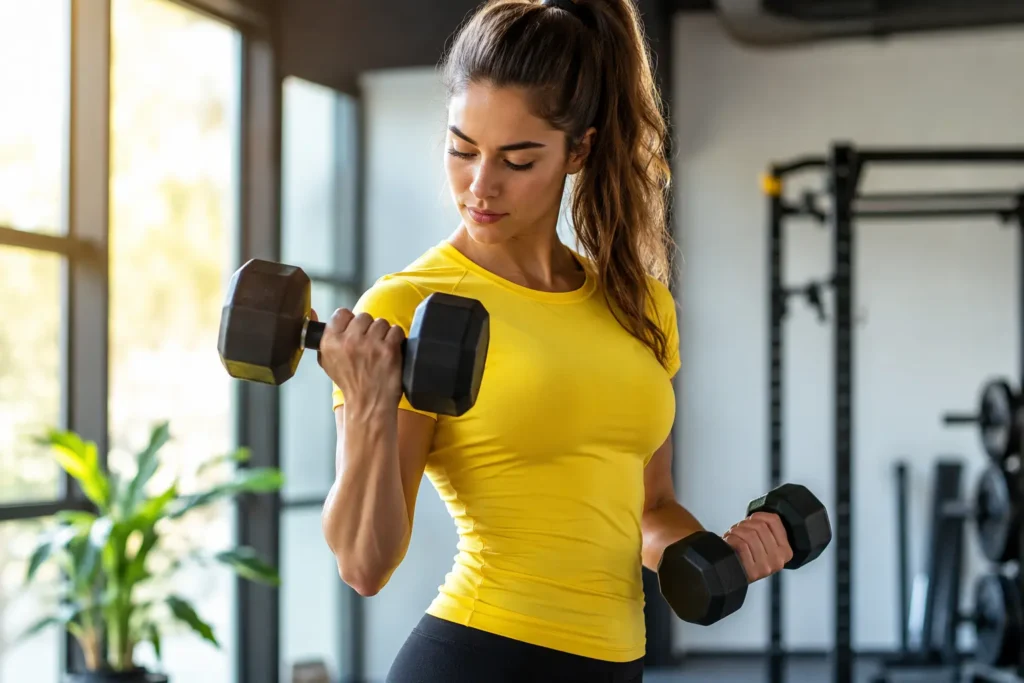
The classic for a reason, and yes, it’s more useful than just “arm day content.”
- How to do it: Stand tall, hold a dumbbell in each hand, palms facing forward. Keep elbows tucked close to your body. Curl the weight up toward your shoulders, then lower slowly.
- Muscle worked: Biceps (front of the upper arm).
- The part people rush: The lowering phase. Slowing it down (about 2 to 3 seconds) is called the eccentric phase, and it’s where a lot of the real strength building happens. Don’t just drop the weight.
- Common mistake: Swinging the hips or shoulders to “help” the weight up. If you’re swinging, the weight is too heavy. Ego has no place in a curl.
- Suggested rep range: 3 sets of 10 to 12.
2. Tricep Dips
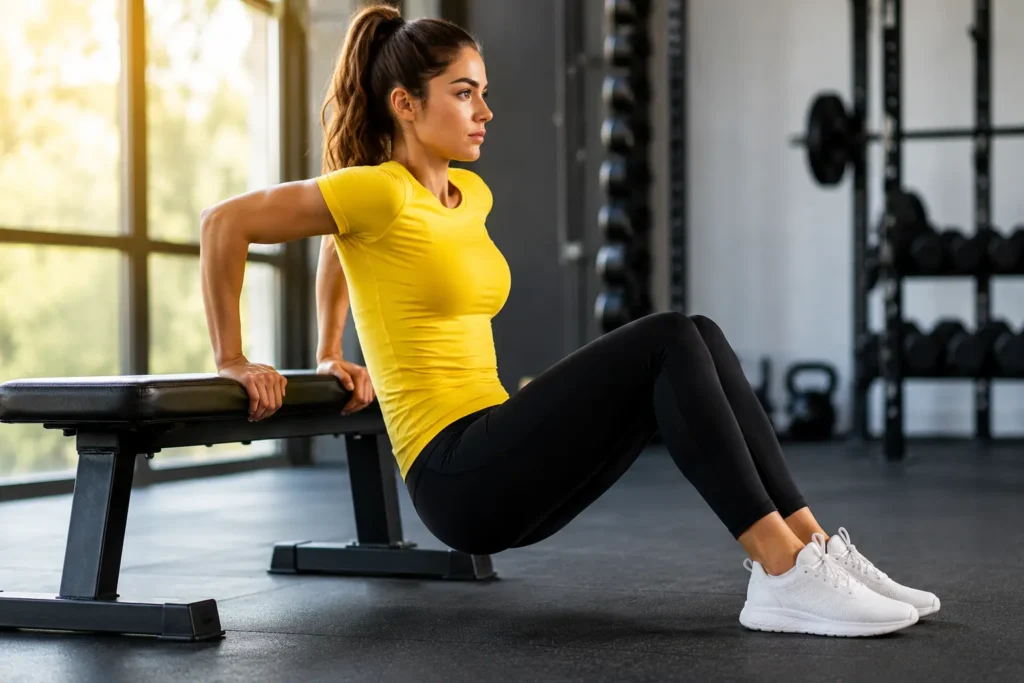
Simple, brutal, effective. Your triceps will have opinions about this one.
- How to do it: Sit on the edge of a chair or bench, hands gripping the edge beside your hips, feet forward. Slide off slightly and lower your body until elbows bend to roughly 90 degrees, then push back up.
- Muscle worked: Triceps (back of the upper arm), with some shoulder involvement.
- Form tip: Keep shoulders down and away from your ears. Shrugging up puts unnecessary strain on the neck and shoulders instead of the arms.
- Beginner adjustment: Bend your knees more and keep feet closer to the chair to reduce the load. For a harder version, straighten your legs out further.
- Suggested rep range: 3 sets of 8 to 10.
3. Overhead Tricep Extension
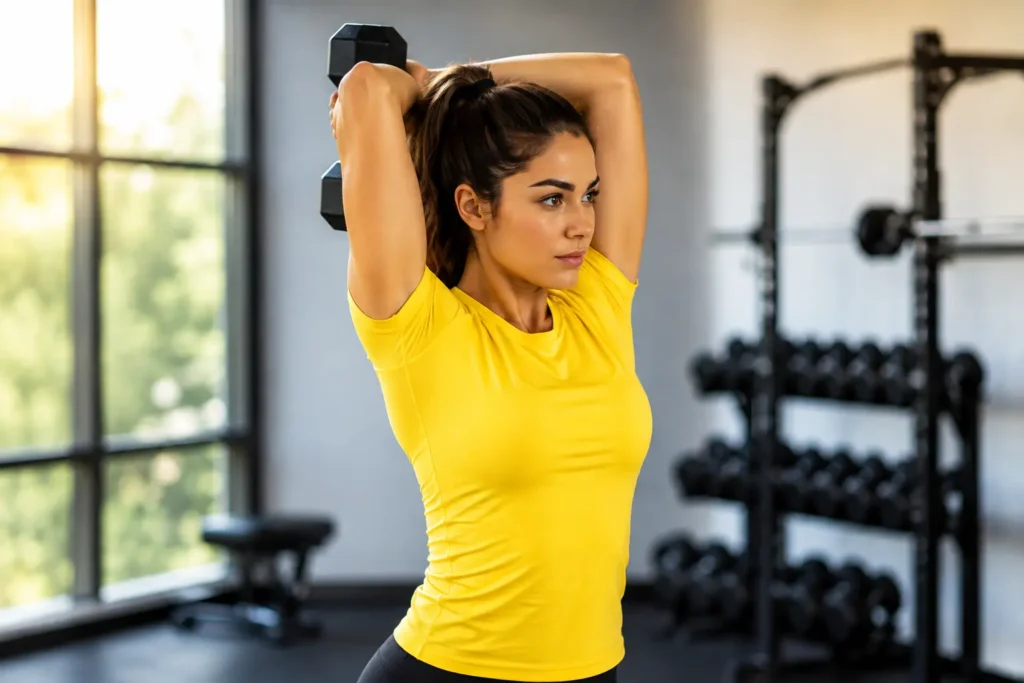
This one isolates the triceps almost entirely, so expect it to burn early.
- How to do it: Hold one dumbbell with both hands, arms straight overhead. Slowly lower it behind your head by bending only at the elbows, then extend back up.
- Muscle worked: Triceps, specifically the long head, which contributes a lot to arm shape.
- Form tip: Keep your elbows pointing forward and close to your ears throughout. Elbows flaring outward reduce the effectiveness and stress the joint.
- Common mistake: Using too heavy a weight and turning it into a back arching, momentum driven mess. Go lighter than you think.
- Suggested rep range: 3 sets of 10.
4. Hammer Curls
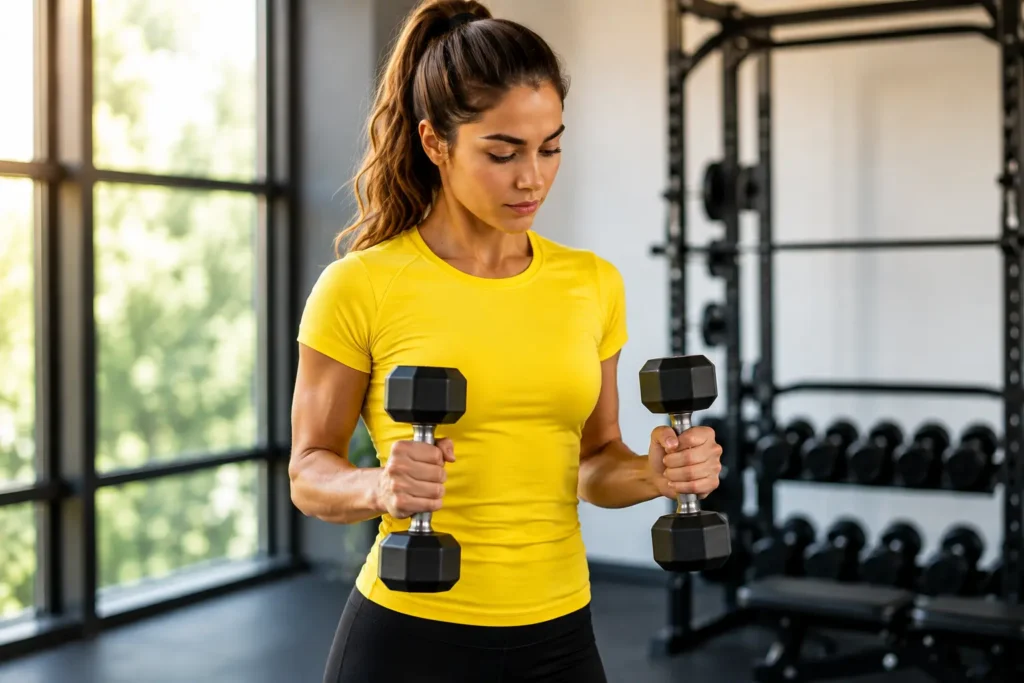
Same family as bicep curls, different grip, different results.
- How to do it: Hold dumbbells with palms facing each other (like you’re holding a hammer), and curl up without rotating your wrists.
- Muscle worked: Biceps plus the brachialis (a muscle underneath the bicep) and forearms.
- Why bother with this if you already do bicep curls: It builds a more complete, rounded arm shape and improves grip strength, useful for everything from carrying bags to opening stubborn jars.
- Suggested rep range: 3 sets of 10 to 12.
5. Push-Ups
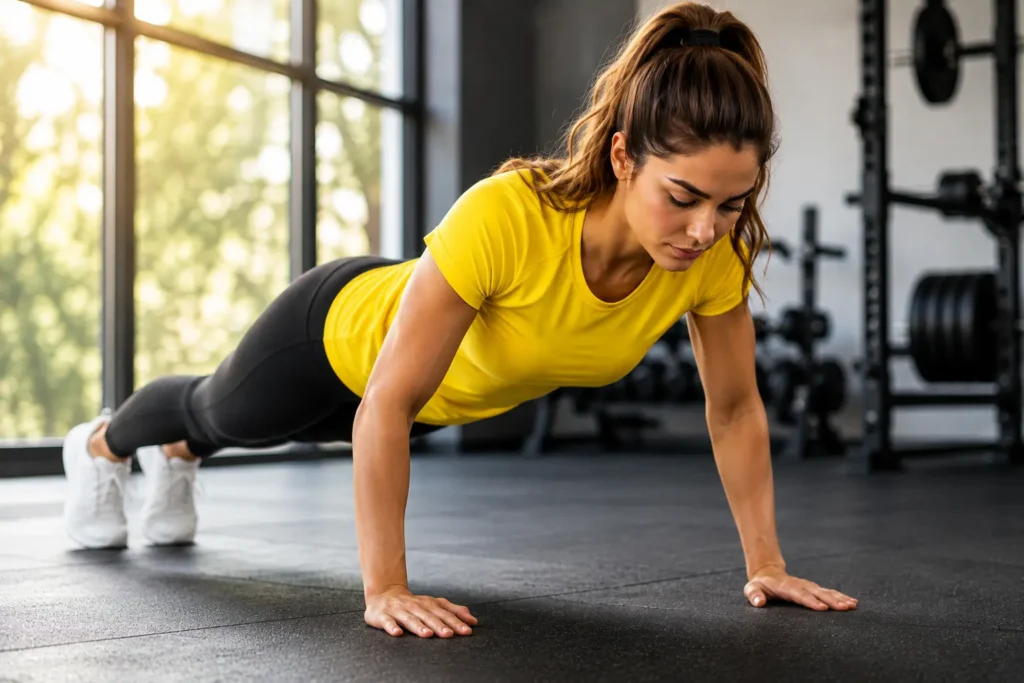
The exercise everyone loves to hate, and secretly respects.
- How to do it: Hands slightly wider than shoulder width, body in a straight line from head to heels. Lower your chest toward the floor, then push back up.
- Muscle worked: Chest, shoulders, and triceps. Arms don’t work alone here, which is exactly why it’s efficient.
- Beginner-friendly version: Do them on your knees, or against a wall or countertop. This isn’t a “lesser” push-up. It’s a legitimate stepping stone, not a shortcut.
- Common mistake: Letting the hips sag or pike upward. Keep the core tight so your body moves as one straight line.
- Suggested rep range: 3 sets of 8 to 12, or to near-failure with good form.
6. Lateral Raises
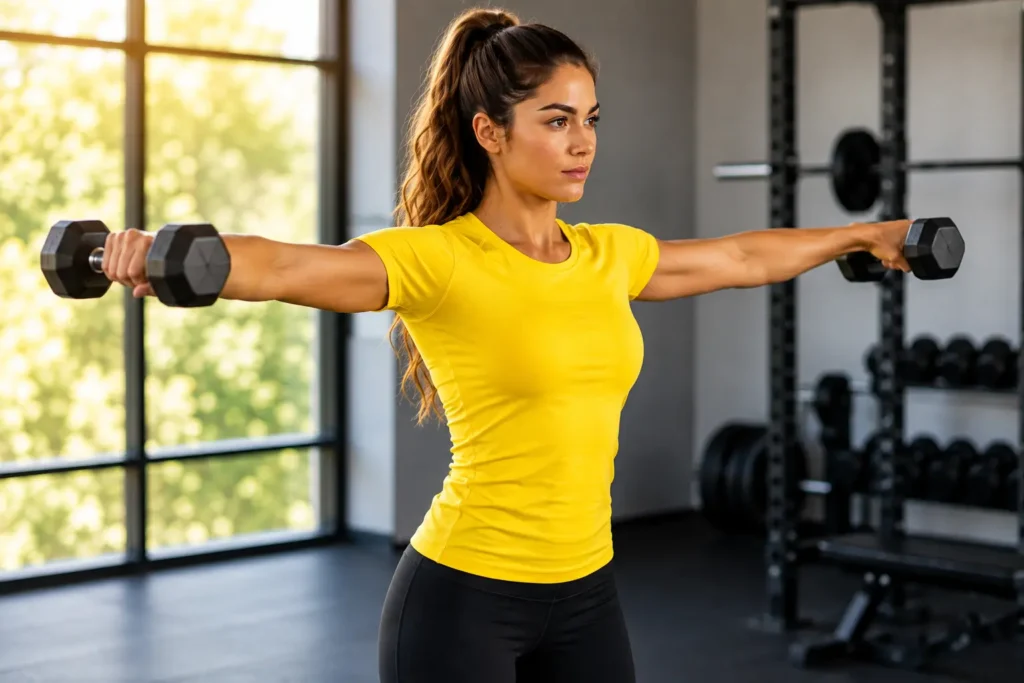
Small movement, big impact on shoulder shape.
- How to do it: Hold light dumbbells at your sides, raise both arms out to the sides until they reach roughly shoulder height, then lower with control.
- Muscle worked: Deltoids (shoulders), which visually “cap” the top of the arm.
- Form tip: Use light weight here. This move is about control and shoulder isolation, not how much you can hoist up.
- Common mistake: Shrugging the weight up using the traps (upper back and neck muscles) instead of the shoulders. Keep shoulders relaxed and down.
- Suggested rep range: 2 to 3 sets of 12 to 15.
7. Resistance Band Curls
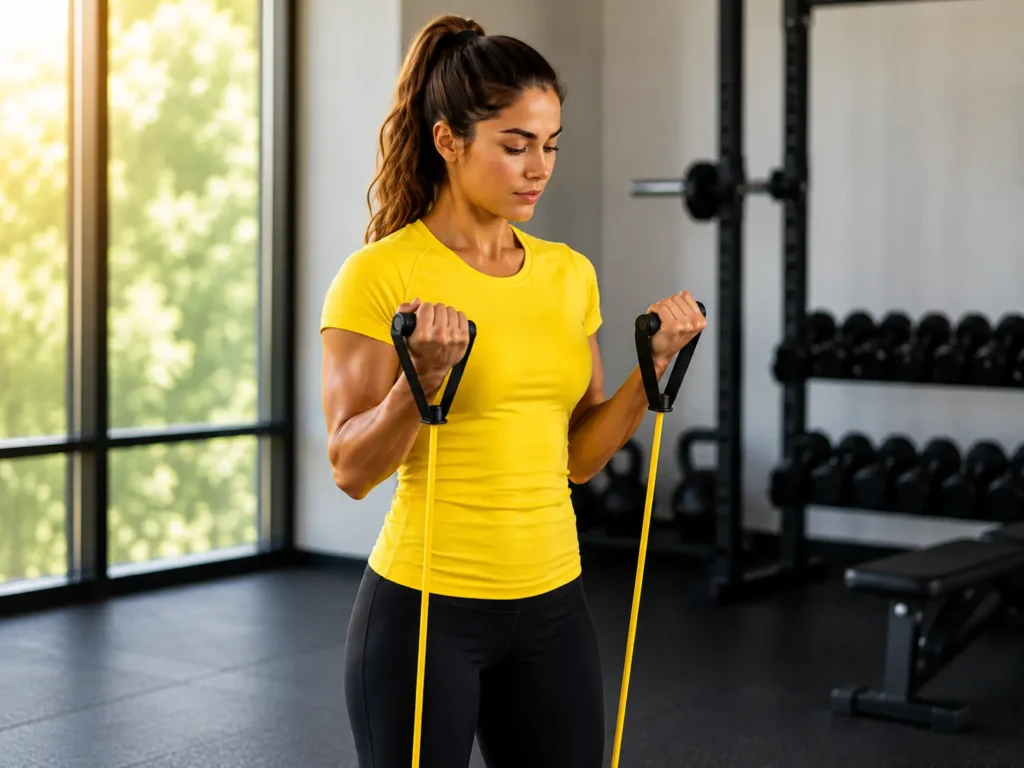
The budget-friendly, travel-friendly, joint-friendly option.
- How to do it: Step on the middle of the band with both feet, hold one end in each hand, and curl up just like a dumbbell curl.
- Muscle worked: Biceps, with continuous tension throughout the movement, unlike dumbbells, which ease up at certain points.
- Why it’s great for a home arm workout: Bands are cheap, foldable, and let you adjust resistance just by changing your stance or grip.
- Suggested rep range: 3 sets of 12 to 15.
8. Diamond Push-Ups
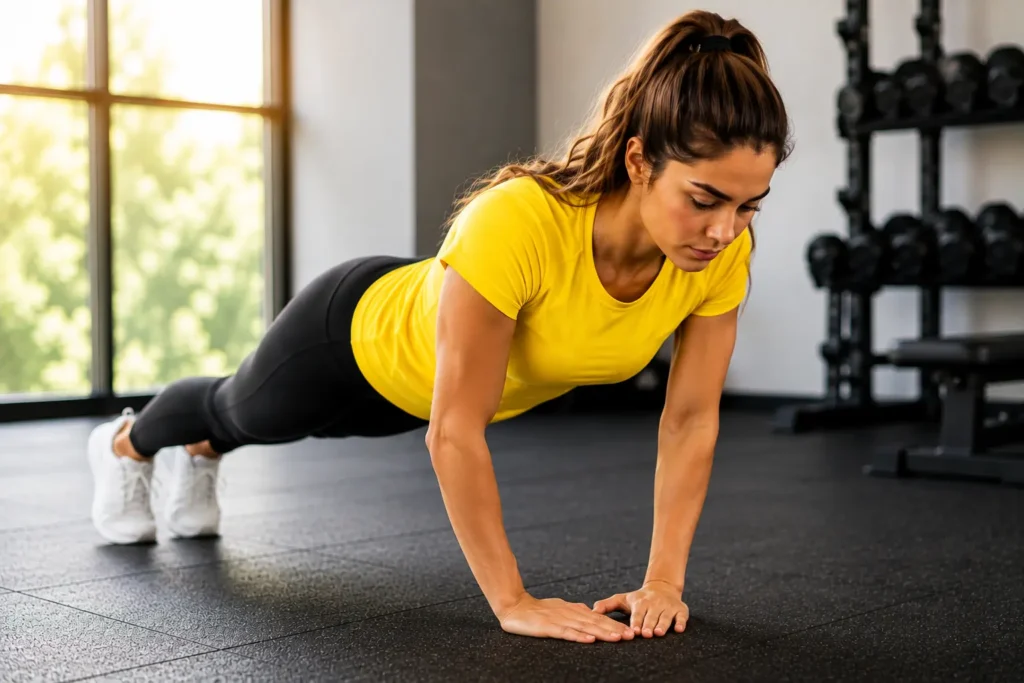
A push-up variation that shifts more of the load onto your triceps.
- How to do it: Get into push-up position with hands close together under your chest, forming a diamond or triangle shape with your thumbs and index fingers.
- Muscle worked: Triceps primarily, with chest and shoulders assisting.
- Form tip: Keep elbows tucked close to your ribs as you lower, rather than flaring them outward.
- Beginner adjustment: Do these on your knees until you build enough tricep strength for the full version.
- Suggested rep range: 2 to 3 sets of 6 to 10.
9. Plank to Push-Up
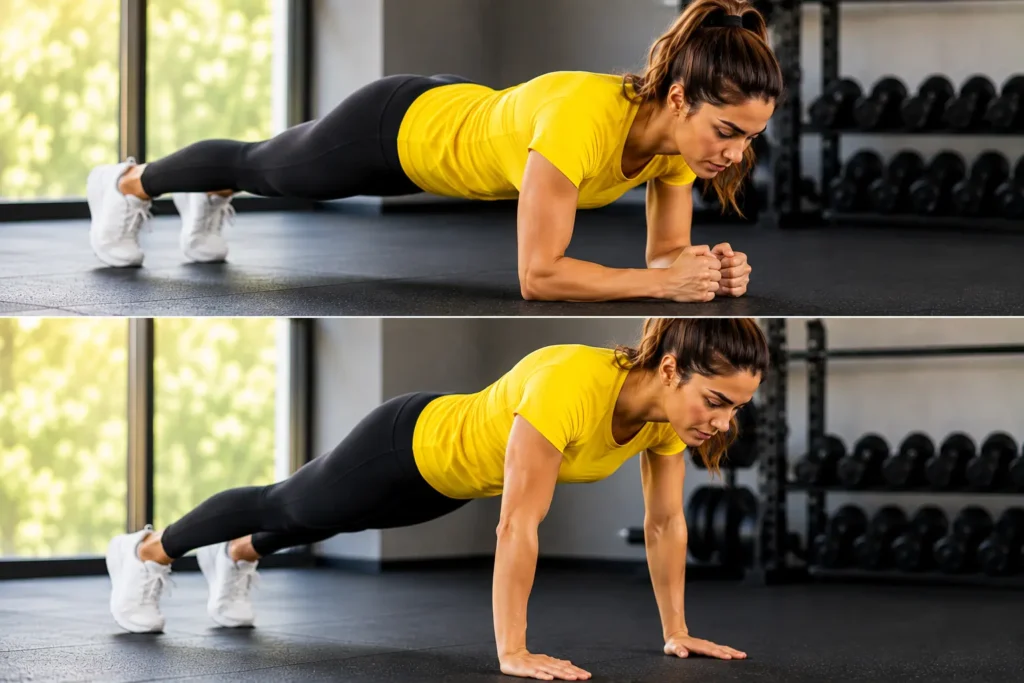
A little combo move that sneaks in core work along with the arms.
- How to do it: Start in a forearm plank. One arm at a time, push up onto your hands into a full push-up position, then lower back down to forearms, alternating leading arms.
- Muscle worked: Arms, shoulders, and core all working together.
- Why it’s worth the effort: It’s efficient. One movement, multiple muscle groups, and it builds stability along with strength.
- Common mistake: Letting the hips twist or sway side to side. Keep the core braced so your body stays level throughout.
- Suggested rep range: 3 sets of 6 to 8 per side.
10. Wrist Curls
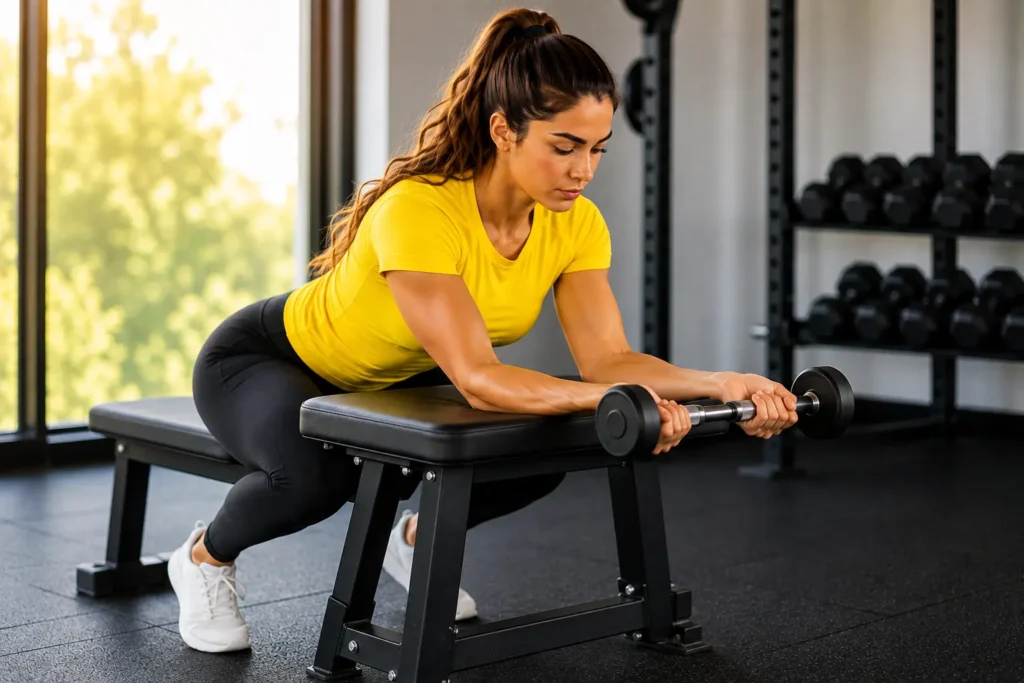
The most overlooked exercise on this list, and arguably one of the most useful.
- How to do it: Sit down, rest your forearms on your thighs with wrists hanging off the edge, holding a light dumbbell. Curl your wrist up, then lower slowly.
- Muscle worked: Forearm flexors, which control grip strength.
- Why it matters: Grip strength quietly supports almost every other exercise on this list, plus daily tasks like carrying groceries, kids, or gym bags without your hands giving out first.
- Suggested rep range: 2 to 3 sets of 15.
Sample At-Home Arm Workout (No Equipment Needed)
Perfect for arm exercises without weights:
- Push-ups: 3 sets of 8 to 12
- Tricep dips (using a chair): 3 sets of 10
- Plank to push-up: 3 sets of 8
- Wall push-ups (easier variation): 2 sets of 15
Rest 30 to 45 seconds between sets. This routine takes about 20 minutes and needs nothing but floor space.
Sample Dumbbell Arm Workout (Gym or Home)
A well-rounded dumbbell arm workout:
- Bicep curls: 3 sets of 10
- Overhead tricep extension: 3 sets of 10
- Hammer curls: 3 sets of 10
- Tricep dips: 3 sets of 10
- Lateral raises: 2 sets of 12
Start with a weight that feels challenging by the last two reps of each set. If you finish easily, it’s time to go heavier. This is called progressive overload, and it’s the actual engine behind visible results, not any single “miracle” exercise.
Don’t Skip the Warm-Up
Cold muscles are more prone to strain. A five-minute warm-up of arm circles, light jogging in place, and a few bodyweight push-ups gets blood flowing and joints ready. It’s not the exciting part of the workout, but neither is a pulled muscle.
Common Mistakes Women Make in Arm Workouts
Using momentum instead of muscle. Swinging the weight up shifts work away from the arm and onto your back. Slower, controlled reps beat fast sloppy ones.
Only training biceps. As mentioned earlier, triceps do more of the heavy lifting for arm shape. Balance the two.
Fear of heavier weights. Light dumbbells for endless reps mostly build endurance, not strength. Gradually increasing weight is safe and necessary for change.
Skipping rest days. Muscles grow during recovery, not during the workout itself. Training sore arms every day slows progress rather than speeding it up.
Ignoring form for speed. Rushing through reps to “finish faster” increases injury risk and reduces the actual muscle engagement you’re working out for in the first place.
Nutrition and Recovery: The Other Half of the Equation
Exercise builds the demand for muscle repair; food supplies the material. Adequate protein intake supports muscle repair after strength training, with sources like eggs, poultry, fish, beans, and dairy all counting. Pho, cottage cheese, and chicken thigh can also be included in a balanced diet to help you meet your overall protein and nutrition needs. Staying hydrated also matters, since water plays a role in muscle function and recovery

Sleep deserves credit too. Much of the body’s repair work happens during deep sleep, which is one reason consistent, quality rest supports strength gains just as much as the workout itself.
How Long Until You See Results?
This varies by person, but general strength training research suggests noticeable strength improvements can appear within a few weeks of consistent training, while visible muscle tone changes typically take longer, often several weeks to a couple of months, depending on training frequency, nutrition, and genetics.
Patience isn’t the fun answer, but it’s the honest one.
Frequently Asked Questions
1. Will an arm workout for women cause bulky muscles?
No. Due to lower natural testosterone levels, women typically build lean, toned muscle rather than significant bulk from standard strength training.
2. How many days a week should I train arms?
Two to three times per week, with rest days in between, works well for most people. Training every day adds fatigue without speeding up results.
3. Can I do an arm workout with no equipment?
Yes. Push-ups, dips, and plank variations build real strength using just body weight, making them ideal for a home arm workout with zero gear.
4. Do I need heavy weights to tone my arms?
Not necessarily heavy, but weight that challenges you by the final reps of a set. Comfort-zone weights that never feel hard limit progress over time.
5. How long does it take to see toned arms?
Strength gains often show up within a few weeks of consistent training, while visible muscle tone typically takes several weeks to a couple of months, depending on frequency, nutrition, and genetics.
6. What is the best arm workout for women at home?
A mix of push-ups, tricep dips, plank to push-up, and resistance band curls covers pushing and pulling movements without needing a gym membership.
7. Should I do cardio or weights to tone my arms?
Strength training builds and shapes the muscle itself, while cardio supports overall fitness and calorie balance. For visible arm toning, resistance exercises matter more than cardio alone.
Final Thoughts
A good arm workout for women isn’t about chasing a trend or fearing a myth. It’s about consistent, well-rounded training that respects how muscles actually grow and recover. Mix pushing and pulling movements, progress your weights gradually, rest when you need to, and fuel your body properly.
Strong arms aren’t just about how they look in a mirror. They’re what let you carry the groceries in one trip, hoist a suitcase overhead, or scoop up a toddler without thinking twice. That’s a workout worth showing up for.
References
- American College of Sports Medicine (ACSM), exercise and strength training guidelines.
- Mayo Clinic, strength training basics and safety.
- Harvard Health Publishing, muscle recovery, protein, and sleep.
- National Academy of Sports Medicine (NASM), exercise technique and program design.

Hi, I’m Salem Nasir, founder of Fiturely. I research and write evidence-based articles on fitness, nutrition, weight loss, and healthy living. My mission is to make reliable health information simple, practical, and easy to understand so readers can build healthier habits with confidence