
The best PCOS workout combines strength training, moderate cardio, and low-impact movement like walking or yoga, done 3-5 times a week for 30-45 minutes. This mix improves insulin sensitivity, balances hormones, and supports sustainable weight loss far better than intense cardio alone. Consistency matters more than intensity for long-term PCOS symptom management.
This guide breaks down exactly what works, how often, and how to build a PCOS workout plan you’ll actually stick to, whether you’re training at a gym or on your living room floor.
What Is the Best Workout for PCOS?
The best workout for PCOS combines strength training, moderate cardio, and low-impact movement, not endless hours of running. Research consistently shows that a mix of resistance training for PCOS and cardiovascular exercise improves insulin sensitivity more than cardio alone. Three to five sessions a week, roughly 30-45 minutes each, is the sweet spot most studies point to.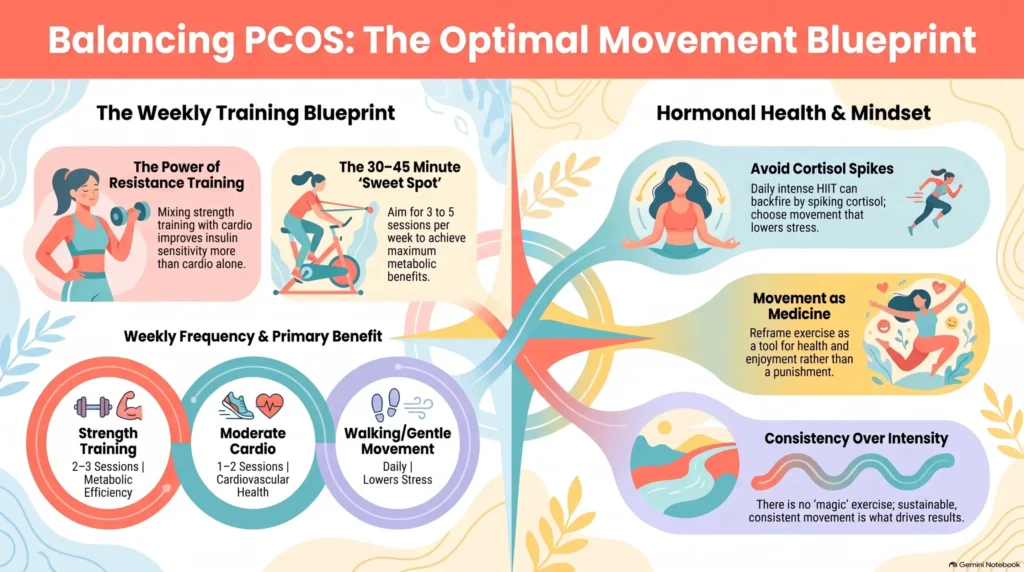
There’s no single “magic” exercise. What matters is consistency and picking movement that lowers cortisol instead of spiking it. That’s why over-exercising (think daily intense HIIT) can actually backfire for some women with PCOS.
A well-rounded PCOS exercise routine typically looks like this: 2-3 strength sessions, 1-2 cardio sessions, and daily walking or gentle movement. Think of it less like a punishment and more like medicine you’re allowed to enjoy.
How Does Exercise Help PCOS?
How exercise helps PCOS comes down to one word: insulin. Up to 70% of women with PCOS have some degree of insulin resistance, per a 2020 review in the Journal of Clinical Endocrinology & Metabolism. Muscle contraction during exercise pulls glucose out of the bloodstream without needing extra insulin, which directly eases that resistance.
Better insulin sensitivity means lower androgen (testosterone-type hormone) levels over time, since insulin and androgens are closely linked in PCOS. Lower androgens can mean fewer symptoms like acne, excess hair growth, and irregular cycles.
PCOS and exercise also affects inflammation. PCOS is associated with low-grade chronic inflammation, and regular moderate exercise has been shown to reduce inflammatory markers like CRP (C-reactive protein) in multiple clinical trials.
There’s a mental health angle too. Women with PCOS have roughly triple the risk of depression and anxiety compared to the general population (a finding echoed across several endocrinology studies). Exercise remains one of the best-evidenced, side-effect-free mood boosters we have, no prescription required.
How Often Should You Exercise With PCOS?
How often should you exercise with PCOS is a question with a fairly clear answer: aim for at least 150 minutes of moderate exercise per week, per the American College of Obstetricians and Gynecologists (ACOG) and general physical activity guidelines from the CDC. That breaks down to about 30 minutes, five days a week.
For strength specifically, 2-3 non-consecutive days is enough to build the muscle that improves insulin sensitivity. More isn’t automatically better, since your body needs recovery days, especially as PCOS is already a higher-cortisol condition for many women.
If you’re just starting, three days a week is a completely legitimate starting point. A PCOS workout for beginners doesn’t need to look like a bodybuilder’s split. Consistency over months beats intensity for two weeks followed by burnout.
What’s the Best Time to Exercise for PCOS?
The best time to exercise for PCOS is whatever time you’ll actually show up for, though there’s a small physiological edge to mornings. A morning workout for PCOS can help regulate cortisol rhythms, since cortisol naturally peaks shortly after waking, and moving your body during that window tends to work with it rather than against it.
Morning exercise has also been linked to better appetite regulation and more consistent sleep patterns in general population studies, both of which matter for PCOS symptom management.
That said, evening workouts are far better than no workouts. If mornings genuinely don’t fit your life, an evening gym workout for PCOS still delivers the insulin-sensitivity benefits. Just try to finish at least 2-3 hours before bed so cortisol has time to settle before sleep.
What Are the Best Exercises for PCOS?
The best exercises for PCOS fall into four categories: strength training, low-impact cardio, HIIT (used sparingly), and mind-body movement like yoga or Pilates. Here’s how each one pulls its weight.
Strength Training for PCOS
Strength training for PCOS is arguably the single most impactful category. Muscle tissue is your body’s biggest consumer of glucose, so building more of it directly improves how your body handles insulin. A 2019 study published in Frontiers in Physiology found resistance training improved menstrual regularity and reduced testosterone levels in women with PCOS over 12 weeks.
A basic strength training workout for PCOS could include squats, rows, push-ups, and deadlifts, two to three sets of 8–12 reps, two to three times weekly. You don’t need a barbell; resistance bands and bodyweight work fine.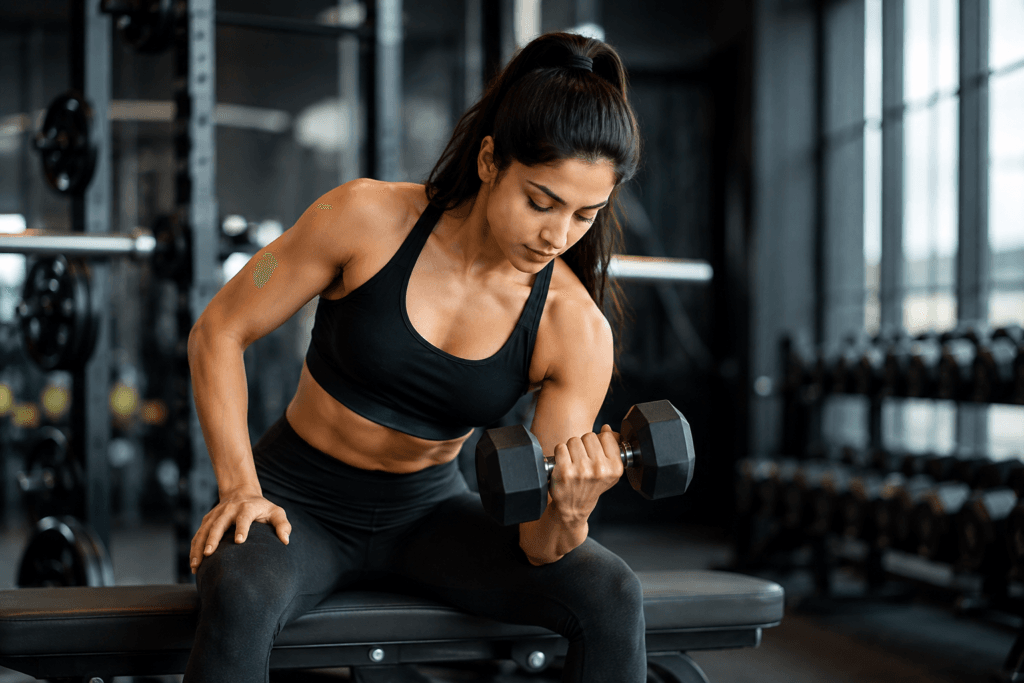
PCOS Cardio Workout
A PCOS cardio workout doesn’t need to mean sprinting. Moderate-intensity cardio, like brisk walking, cycling, or swimming, improves cardiovascular health, which matters since PCOS carries a higher long-term risk of heart disease according to the CDC. Aim for 20-30 minutes, 3-4 times a week.
The best cardio workout for PCOS is one where you can still hold a light conversation. That “moderate” zone (roughly 50–70% of max heart rate) is where fat oxidation and insulin sensitivity improvements tend to peak without overloading your stress hormones.
HIIT Workout for PCOS
A HIIT workout for PCOS can be effective, but in smaller doses than you’d think. Short bursts (20-30 seconds of effort, followed by rest) done once or twice a week have shown measurable improvements in insulin resistance in small clinical trials. More than that, and rising cortisol can start working against you.
If you’re new to exercise, save HIIT for later. It’s a tool to add once your base fitness and recovery capacity are already solid.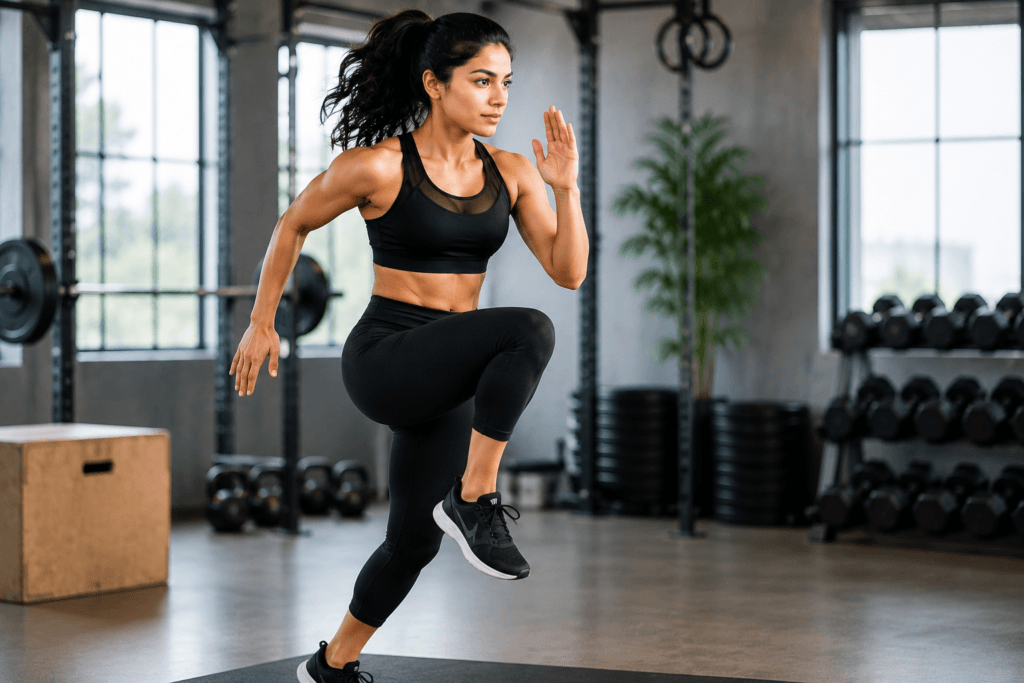
Yoga and Pilates for PCOS
Yoga for PCOS shows up repeatedly in research for a good reason. A 2013 study in the Journal of Alternative and Complementary Medicine found 12 weeks of yoga reduced testosterone levels and improved menstrual regularity in adolescent girls with PCOS, outperforming conventional exercise in that specific trial.
Pilates for PCOS offers similar low-cortisol benefits with an added core-strength and posture component. Both are excellent low impact exercise for PCOS options on days when your joints or energy need a break from anything higher-intensity.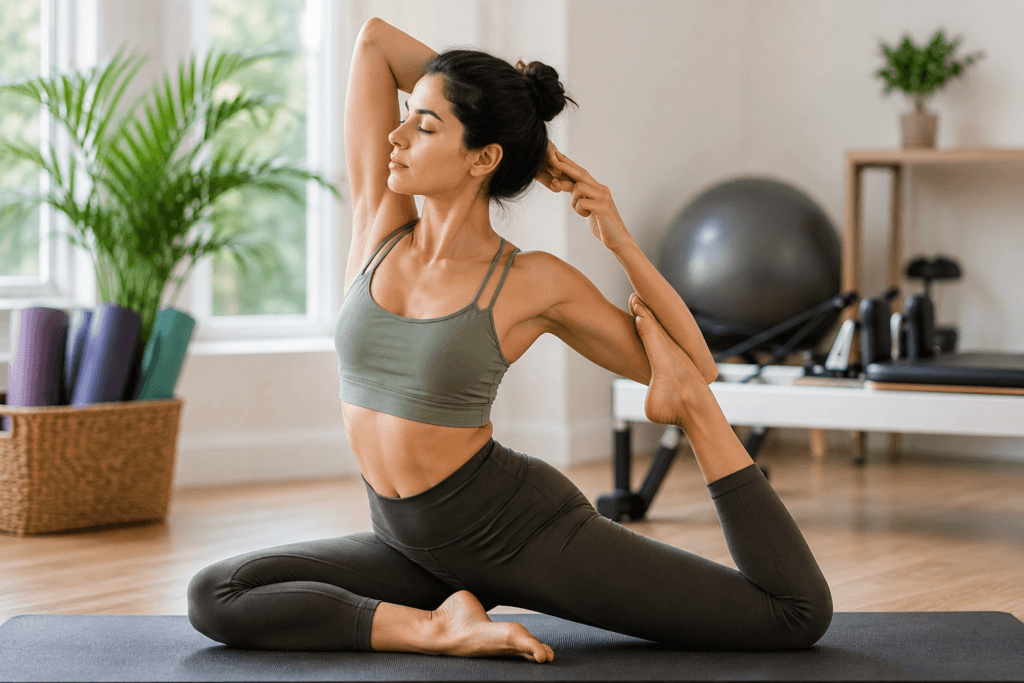
Walking for PCOS
Never underestimate it. Walking for PCOS is free, joint-friendly, and genuinely effective. A brisk 30-minute daily walk has been associated with meaningful improvements in insulin sensitivity in multiple population studies. It’s the easiest entry point into a PCOS fitness routine for anyone starting from zero.
Comparison Table: Which PCOS Workout Type Fits You?
| Workout Type | Best For | Intensity | Frequency | Impact on Body |
|---|---|---|---|---|
| Strength training for PCOS | Insulin resistance, hormone balance | Moderate to High | 2-3x/week | Builds muscle, boosts metabolism |
| PCOS cardio workout (walking, cycling) | Heart health, steady fat loss | Low to Moderate | 3-4x/week | Improves endurance, low cortisol impact |
| HIIT workout for PCOS | Time-efficient insulin improvement | High (short bursts) | 1-2x/week | Fast results, higher cortisol risk if overdone |
| Yoga for PCOS | Stress, hormone regulation, flexibility | Low | 2-3x/week | Lowers cortisol, improves mood |
| Pilates for PCOS | Core strength, low-impact toning | Low to Moderate | 2-3x/week | Builds stability, gentle on joints |
| Walking for PCOS | Beginners, daily consistency | Low | Daily | Easy entry point, sustainable |
What Does a Sample PCOS Workout Plan Look Like?
A realistic PCOS workout plan for weight loss balances all the categories above instead of maxing out one. Here’s a simple weekly template:
- Monday: Strength training (full body), 30-40 minutes
- Tuesday: Brisk walk or light cycling, 30 minutes
- Wednesday: Yoga or Pilates, 20-30 minutes
- Thursday: Strength training (full body), 30-40 minutes
- Friday: HIIT (short session) or rest, 15-20 minutes
- Saturday: Walking or an active hobby, 30-45 minutes
- Sunday: Rest or gentle stretching
This isn’t a rigid prescription, it’s a framework. Swap days around based on energy levels, cycle phase, and life in general.
How Can You Do a PCOS Workout at Home?
Workouts for PCOS at home are just as effective as gym sessions, provided you’re consistent and progressively challenging yourself. A home workout for PCOS doesn’t require equipment: bodyweight squats, lunges, glute bridges, push-ups, and planks cover strength; brisk walking or stair climbing covers cardio.
Resistance bands are the one cheap investment worth making, since they add progressive load without needing a full gym setup. A low impact PCOS workout at home using just a mat and bands can realistically replace a gym membership for most beginners.
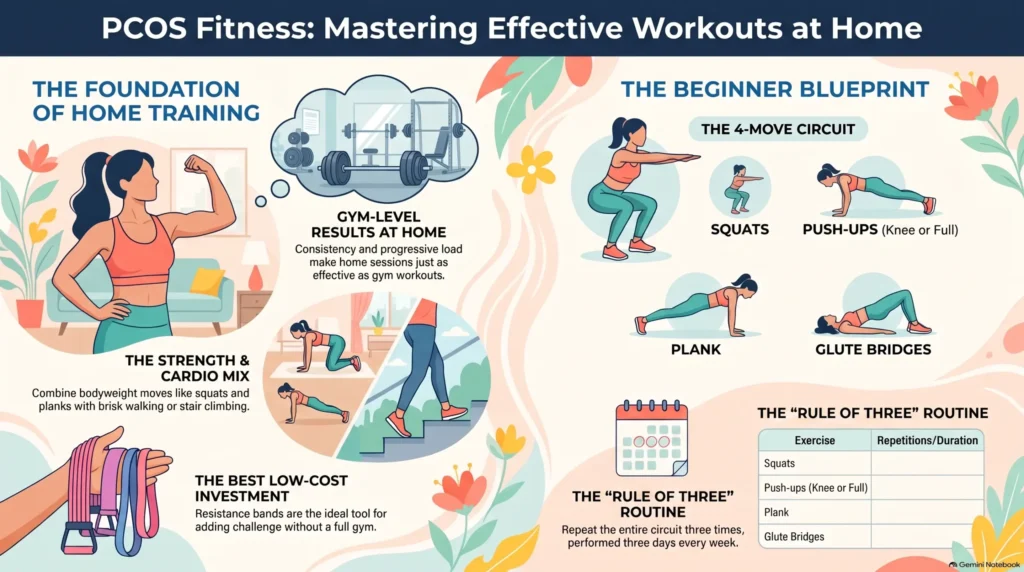
A PCOS workout at home for beginners might look like: 10 squats, 10 push-ups (knee or full), 20-second plank, 10 glute bridges, repeated three times, three days a week. Simple, repeatable, and genuinely effective.
Can Exercise Help With PCOS Belly Fat?
Yes, a PCOS workout to lose belly fat works primarily through the insulin-resistance pathway, since visceral (belly) fat in PCOS is closely tied to elevated insulin levels. Spot reduction isn’t real, but combining strength training with moderate cardio has been shown to reduce visceral fat specifically, not just overall weight.
PCOS exercises to lose belly fat work best when paired with adequate protein intake and sleep. Exercise alone, without those supports, produces slower results. This isn’t a diet culture point; it’s simply how the physiology works.
Patience matters here. Because PCOS involves a hormonal component, belly fat often responds slower to exercise than it would for someone without the condition. That’s frustrating, but it doesn’t mean it isn’t working. Consistency over 8–12 weeks is usually where people start noticing real change.
What Exercises Balance Hormones and Improve Insulin Resistance in PCOS?
Exercises to balance hormones PCOS-wise center on anything that improves insulin sensitivity and lowers cortisol, which loops back to strength training, walking, and yoga as the core three. A workout for insulin resistance PCOS specifically benefits from resistance training, since muscle is the primary site of glucose uptake in the body.
Exercise for hormonal balance PCOS also includes simply moving more throughout the day, like using a standing desk, taking short walking breaks, or taking the stairs. A 2021 study in Diabetologia found that breaking up sedentary time with brief activity bursts improved insulin sensitivity independent of formal exercise sessions.
What’s a Good 30-Minute PCOS Workout for Beginners?
A 30 minute PCOS workout for beginners can be split into three 10-minute blocks:
- Block 1 (Warm-up + walk): 10 minutes of brisk walking or marching in place
- Block 2 (Strength): 3 rounds of squats, push-ups, and glute bridges (10 reps each)
- Block 3 (Cool-down): 10 minutes of gentle stretching or yoga poses
This format works as a PCOS workout for insulin resistance without requiring any equipment, and it’s short enough to fit before work or during a lunch break.
Frequently Asked Questions
Can PCOS be reversed with exercise alone?
No, exercise doesn’t reverse PCOS, since it’s a hormonal condition with a genetic component. But regular movement, especially strength training for PCOS and cardio, can significantly reduce symptoms like weight gain, irregular periods, and insulin resistance over time.
Which exercise is best for PCOS weight loss?
A mix of strength training for PCOS and moderate cardio works best for weight loss, since building muscle raises resting metabolism while cardio burns calories. Walking, cycling, and bodyweight strength circuits are especially beginner-friendly and sustainable.
Is walking enough exercise for PCOS?
Walking alone can meaningfully improve insulin sensitivity, especially for beginners, but pairing it with 2–3 strength sessions a week gets faster, more complete results. Walking is a great foundation, not necessarily the finish line.
How long does it take to see results from a PCOS workout?
Most women notice early changes, like better energy and mood, within 2–4 weeks, while measurable shifts in weight, cycle regularity, or insulin markers typically take 8–12 weeks of consistent effort. PCOS responds to patterns, not single workouts.
Can I do HIIT every day with PCOS?
Daily HIIT is generally not recommended for PCOS, since it can raise cortisol and worsen symptoms for some women. One to two short HIIT sessions a week, balanced with strength and low-impact movement, is the safer approach.
Does exercise help with PCOS-related hair loss or acne?
Indirectly, yes. Exercise improves insulin sensitivity and can lower excess androgen levels, which are often behind PCOS-related acne and hair thinning. Results usually take several months and work best alongside a balanced diet.
What is the best diet to pair with a PCOS workout plan?
A protein-rich, low-glycemic diet with plenty of fiber tends to pair best with exercise for PCOS, since it supports the same insulin-sensitivity goals. Whole foods, balanced meals, and consistent protein intake generally outperform restrictive crash diets.
Final Thoughts
Exercise for PCOS weight loss isn’t about punishing your body into shrinking, it’s about giving it tools to regulate hormones it’s currently struggling with. A PCOS workout for women that mixes strength, moderate cardio, and low-impact recovery movement consistently outperforms extreme, unsustainable routines in both research and real life.
Start today PCOS workout to reduce your weight loss, do it daily and it will gain your confidence and make your body healthy and strong and try not to skip it do it on daily bases .
This article is for general educational purposes and isn’t a substitute for personalized medical advice. Please consult your doctor or an endocrinologist before starting a new exercise program, especially if you have other health conditions.
Sources
- World Health Organization: Polycystic Ovary Syndrome Fact Sheet
- CDC: PCOS and Diabetes Risk
- NIH / NICHD: Polycystic Ovary Syndrome Overview
- ACOG: Polycystic Ovary Syndrome (PCOS) FAQ
- PubMed / NCBI: Search: Exercise and PCOS Insulin Resistance

Hi, I’m Salem Nasir, founder of Fiturely. I research and write evidence-based articles on fitness, nutrition, weight loss, and healthy living. My mission is to make reliable health information simple, practical, and easy to understand so readers can build healthier habits with confidence
Pingback: Diastasis Recti Exercises: A Complete, No-Nonsense Guide to Healing Your Core - fiturely.com