
Key Takeaways:
- Improve flexibility and maintain easier everyday movement
- Reduce stiffness with gentle, regular stretching
- Support better balance, mobility, and posture
- Try simple stretches at home with minimal equipment
- Seated and supported stretches are beginner-friendly options
- Stretch slowly and avoid painful or forced movements
- Consistency matters more than stretching intensely
- Make stretching part of your daily senior fitness routine
Stretching exercises for seniors improve flexibility, balance, and joint mobility while lowering the risk of falls and stiffness. A safe daily routine includes 8 to 10 gentle stretches, such as neck tilts, seated hamstring stretches, and calf stretches, held for 15 to 30 seconds each, done after a short warm-up. Ten minutes a day, seated or standing, is enough to see real results within a few weeks. Pair this with something like Tai Chi for Seniors, and you’ve got a low-cost, no-equipment path to feeling noticeably better.
This guide covers stretching exercises for seniors over 60: how to perform each move safely, what relief it brings, and how to build it into a routine you’ll actually stick to. No jargon, no gym membership required, just ten honest minutes a day.
Why Stretching Still Matters After 60
Muscles and joints naturally lose elasticity with age. That’s not a scare tactic, it’s basic biology. The good news is that senior flexibility responds well to consistent, gentle movement, even if you’ve never stretched a day in your life. Think of it as maintenance, not punishment.
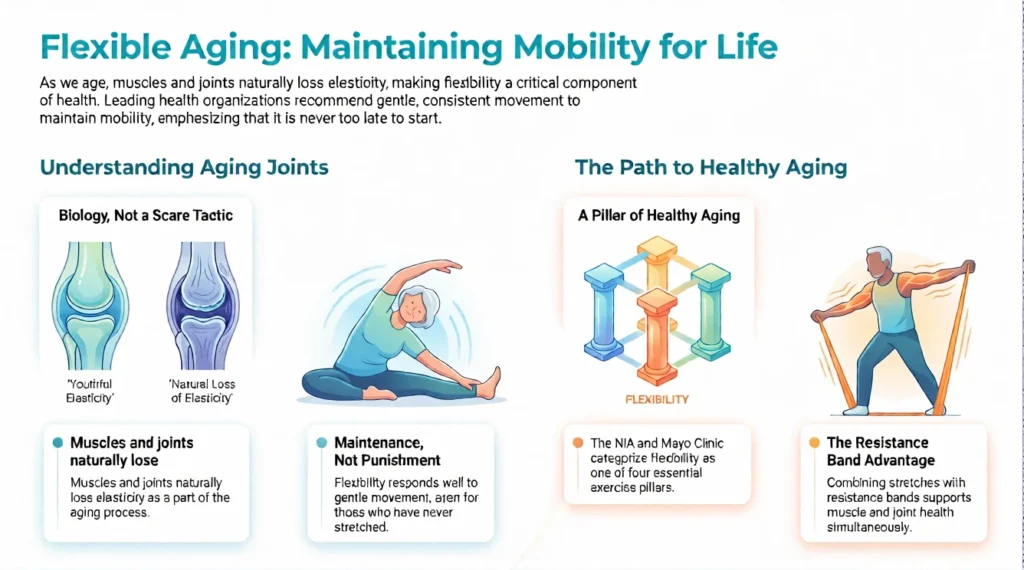
Organizations like the National Institute on Aging and Mayo Clinic list flexibility work alongside strength and balance training as one of the four pillars of healthy aging exercises. If you’re building a well-rounded plan, combining stretches with Resistance Band Exercises covers both flexibility and muscle support at once, which is exactly what aging joints need.
Safety First: A Few Ground Rules
Before starting any senior stretching routine, a few sensible rules apply, in line with guidance from the CDC and Harvard Health Publishing. Warm up for two to three minutes with light walking or marching in place before stretching cold muscles. Never bounce, stop at mild tension rather than pain, and breathe normally throughout.
Check with your doctor first if you have joint replacements, osteoporosis, or a recent surgery. And if standing stretches feel unsteady, lean on support from a chair or wall, or explore something gentler like Chair Yoga for Seniors, which keeps you seated and supported throughout.
10 Best Stretching Exercises for Seniors Over 60
Below are ten easy stretching exercises for seniors that cover the whole body. Hold each stretch for 15 to 30 seconds and repeat two to three times per side. These work as full body stretches for seniors whether you do all ten or pick a few for a quick session.
1. Neck Tilts and Shoulder Rolls
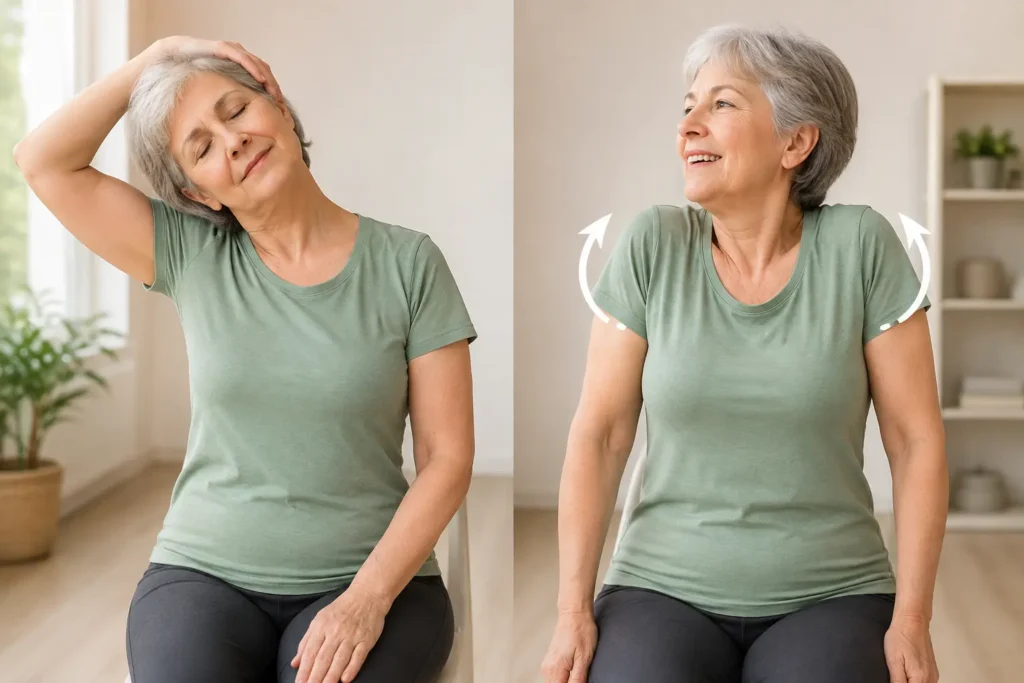
How to perform:
Sit or stand tall. Slowly tilt your right ear toward your right shoulder, hold, then switch sides. Follow with five slow shoulder rolls forward and five backward.
Relief:
Undoes hours of hunching over a phone, a book, or a crossword puzzle, and eases tension headaches at the base of the skull. A good pairing move here is light neck and shoulder work from Chair Yoga for Seniors, which teaches proper posture alongside the stretch.
2. Seated Hamstring Stretch
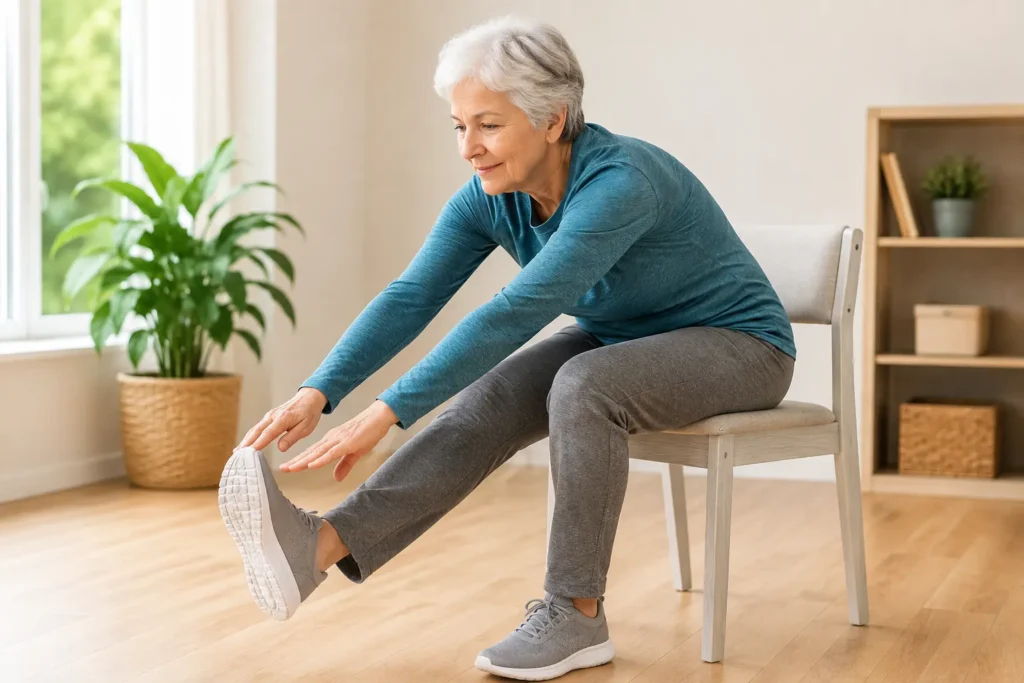
How to perform:
Sit on the edge of a sturdy chair. Extend one leg straight, heel on the floor, toes pointed up. Lean forward slightly from the hips until you feel a gentle pull behind the thigh.
Relief:
Loosens tight hamstrings, which reduces lower back strain and makes bending to tie shoes or pick things up much easier. This is one of the most effective seated stretching exercises for seniors precisely because it needs no balance at all.
3. Standing Calf Stretch
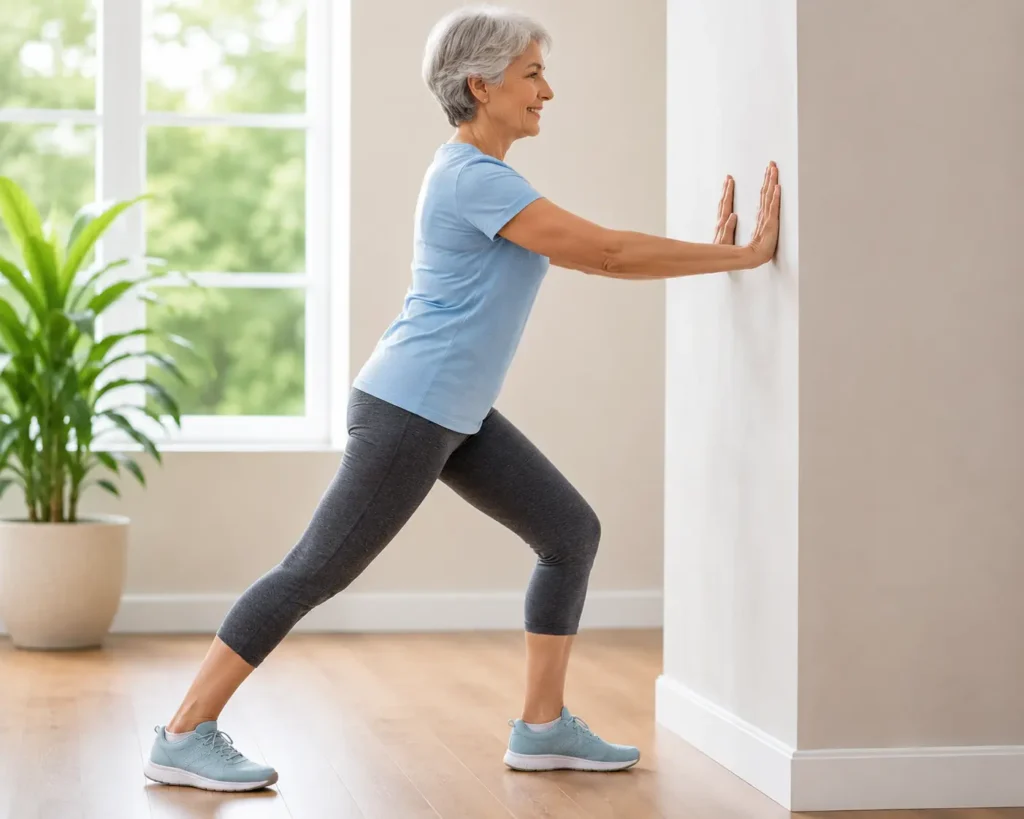
How to perform:
Stand facing a wall, hands flat against it for support. Step one foot back, keep that heel pressed down, and lean forward gently until you feel a stretch in the calf.
Relief:
Tight calves are a common cause of shuffling gait and ankle stiffness. Loosening them supports smoother, more confident walking, which connects directly to overall Leg Strength and stability over time.
4. Seated Cat-Cow
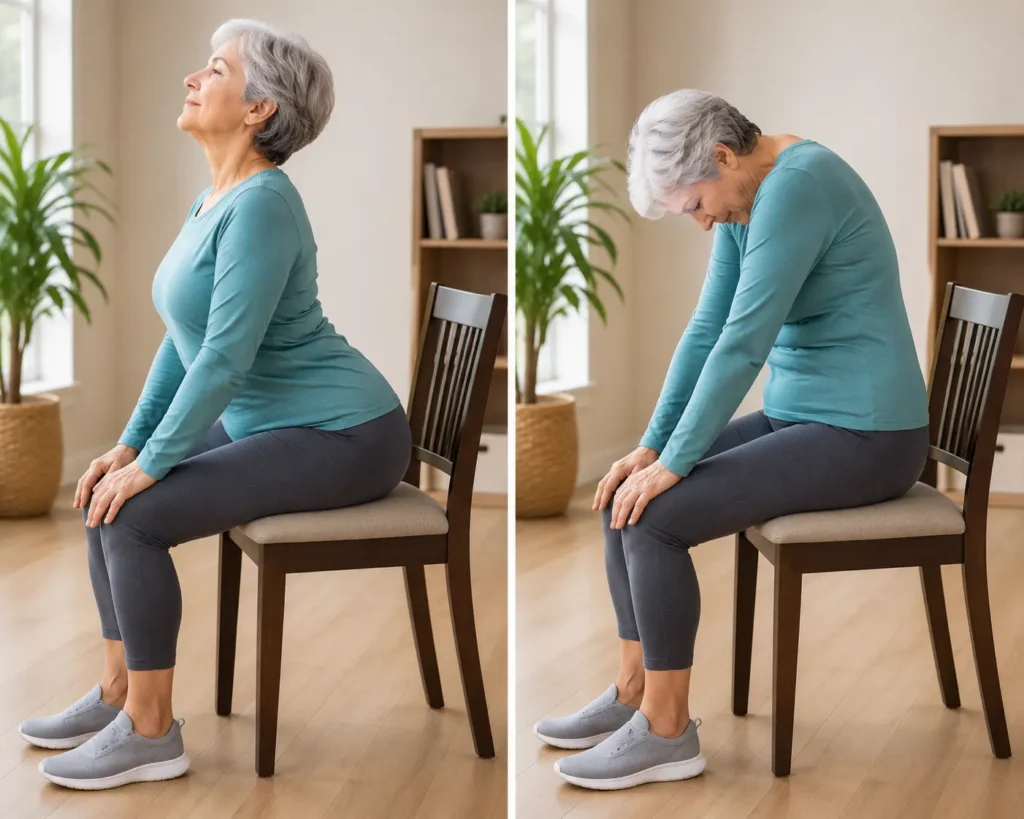
How to perform:
Sit tall with hands on your knees. Inhale, arch your back and lift your chest (cow). Exhale, round your spine and drop your chin (cat). Repeat slowly six to eight times.
Relief:
Loosens the entire spine and relieves stiffness from long periods of sitting. It’s a favorite among beginner stretches for seniors because it’s gentle, rhythmic, and easy to remember.
5. Cross-Body Shoulder Stretch
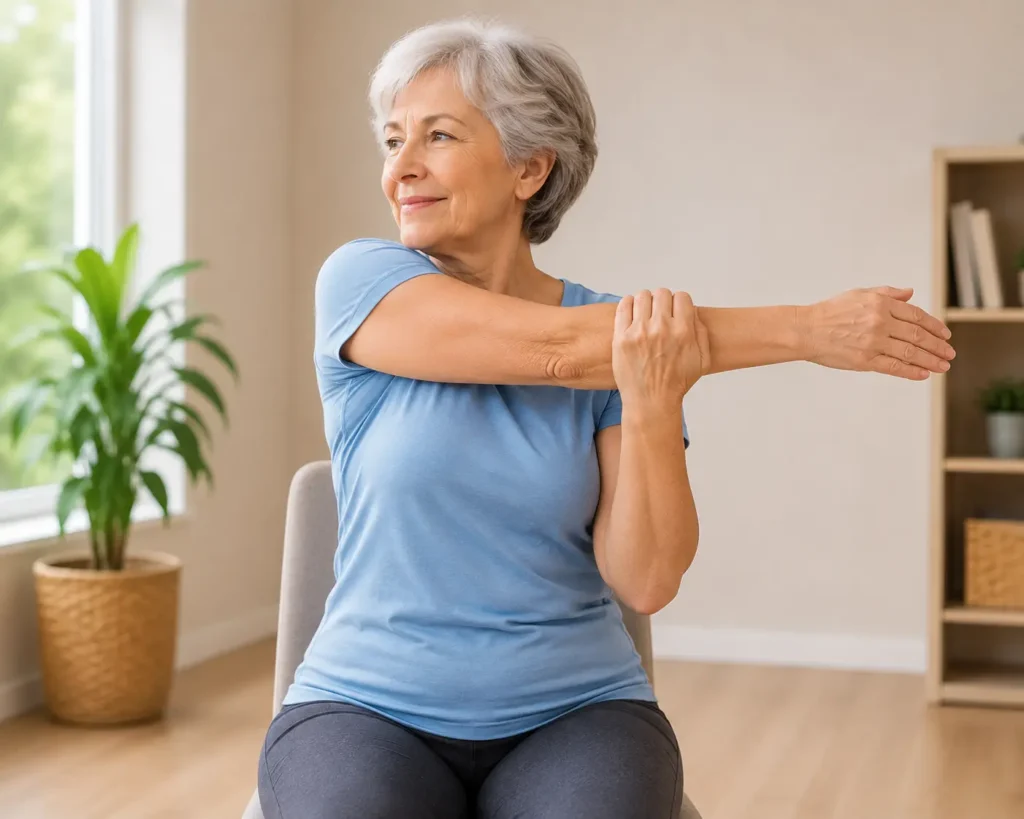
How to perform:
Bring one arm straight across your chest. Use the other hand to gently press it closer, holding at a comfortable point without forcing the movement.
Relief:
Eases stiffness from gardening, knitting, or carrying groceries, and improves overhead reach for everyday tasks like reaching a top shelf.
6. Seated Spinal Twist
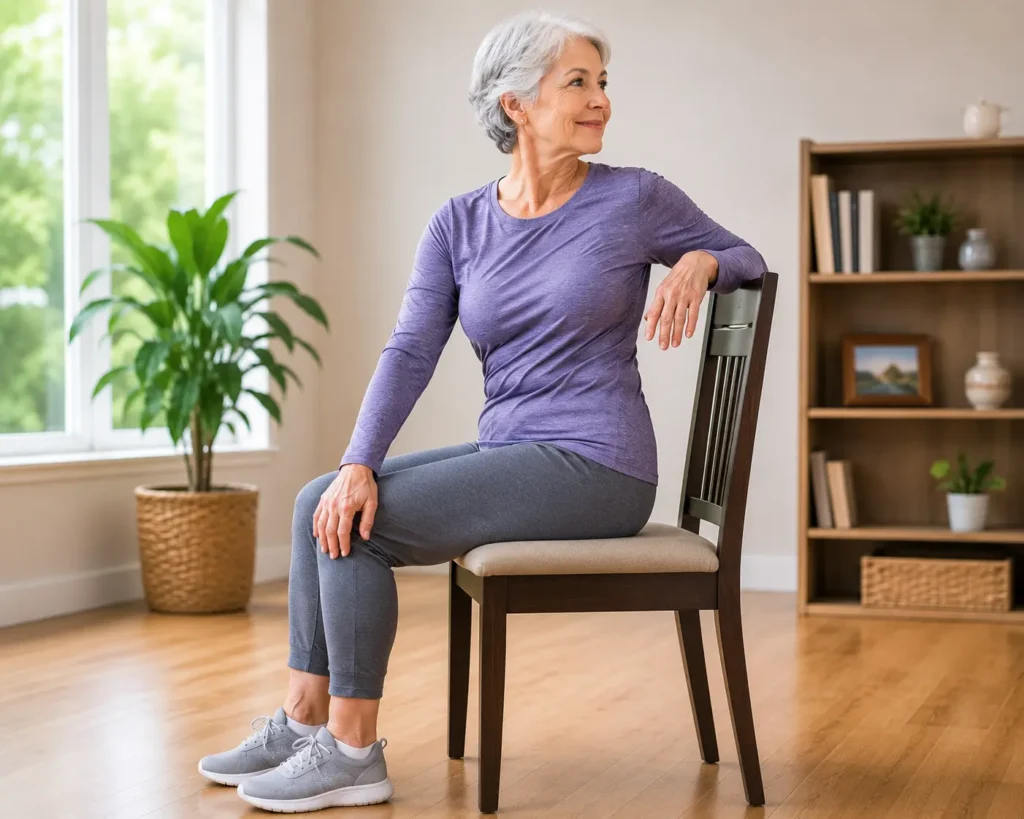
How to perform:
Sit tall with feet flat on the floor. Place one hand on the opposite knee and the other on the back of the chair. Gently twist your torso toward the chair back, hold, then switch sides.
Relief:
Improves rotation in the spine, which helps with movements like checking a blind spot while driving or reaching behind you in the car. It’s one of the safer stretching exercises for seniors with limited mobility since it stays fully seated.
7. Ankle Circles
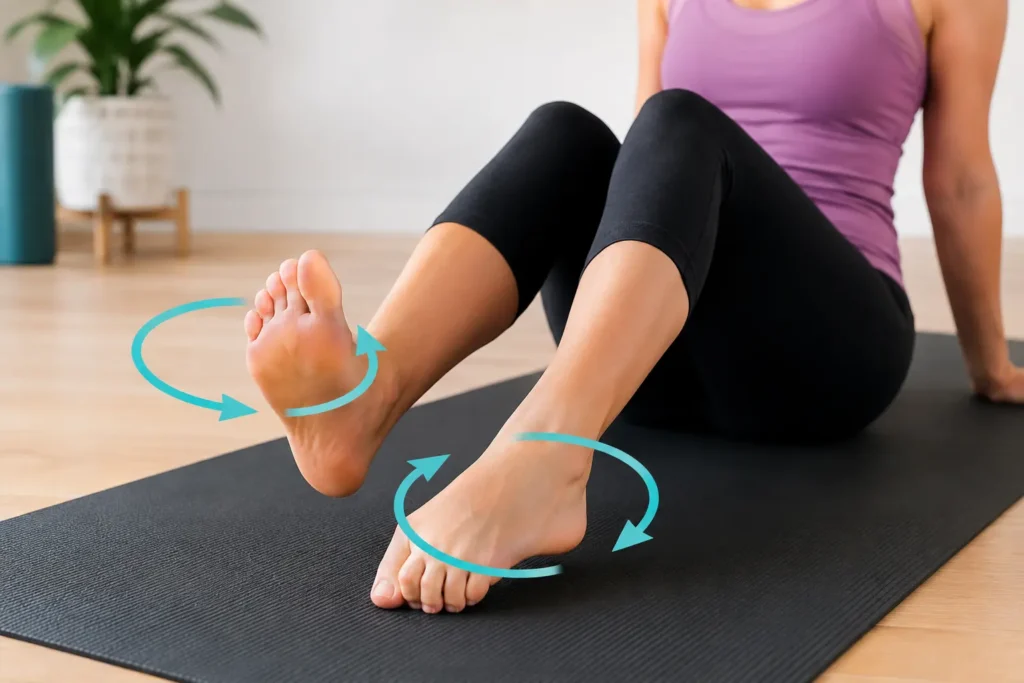
How to perform:
While seated, lift one foot slightly off the floor. Rotate the ankle slowly in a full circle, ten times clockwise, then ten times counterclockwise. Switch feet.
Relief:
Supports circulation and ankle flexibility, both of which play a direct role in balance and flexibility exercises for seniors and reduce the risk of trips or rolled ankles, a benefit also highlighted by the Arthritis Foundation.
8. Standing Quad Stretch
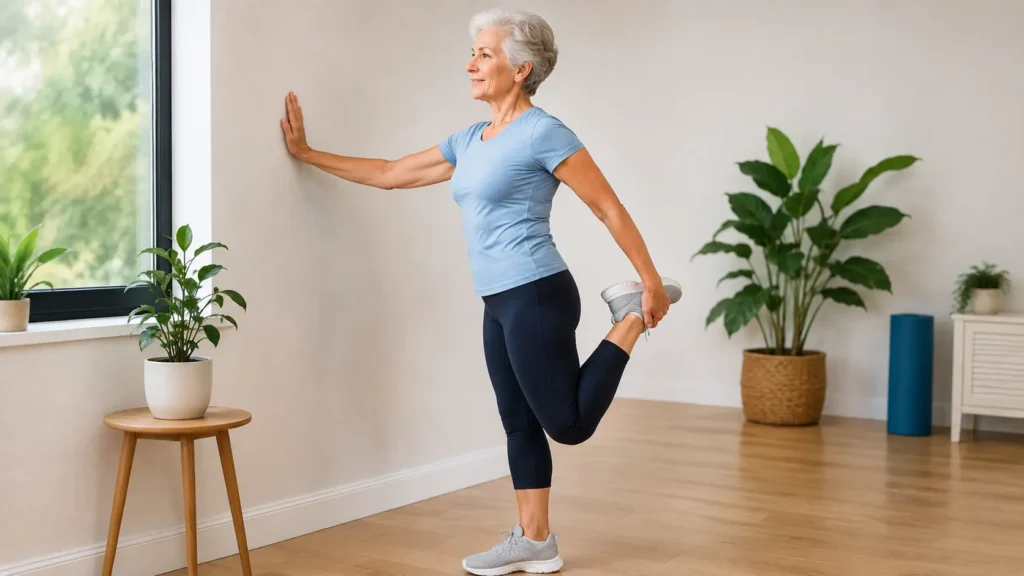
How to perform:
Stand near a wall or sturdy chair for support. Bend one knee, bringing your heel toward your glutes, and hold your ankle gently. Keep knees close together and hold.
Relief:
Loosens the front of the thigh, which often tightens from long periods of sitting, and improves comfort when climbing stairs. This pairs naturally with work on the Lower Body as a whole.
9. Hip Flexor Stretch
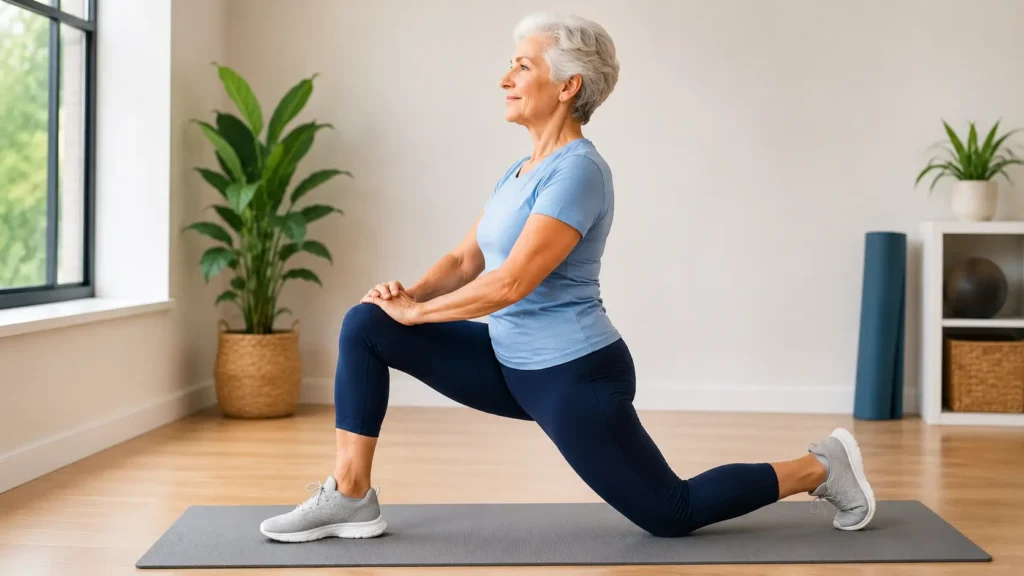
How to perform:
Stand with one foot forward in a shallow lunge, back knee slightly bent, hands on hips or on a chair for balance. Gently shift weight forward until you feel a stretch at the front of the back hip.
Relief:
Tight hip flexors are a major contributor to poor posture and shortened stride length. This is a core move in any serious mobility and stretching exercises for seniors routine, and it complements structured programs like Military Calisthenics, which use the same hip-opening principle at a higher intensity.
10. Overhead Side Reach
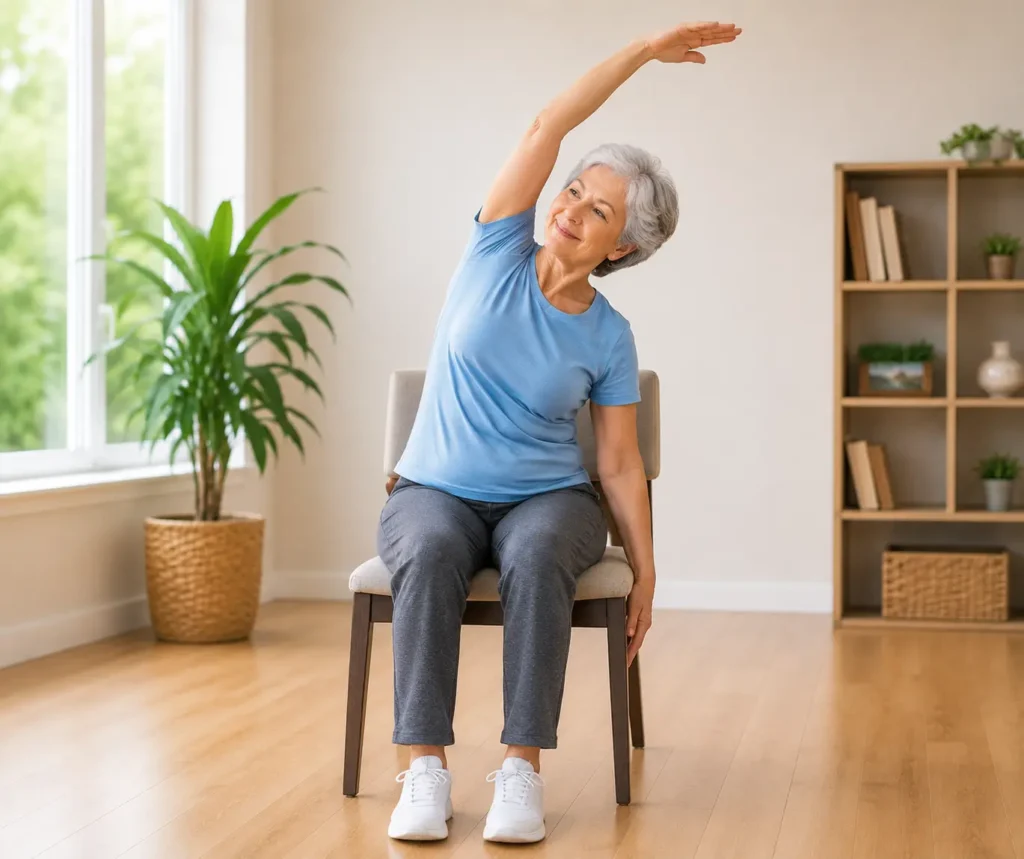
How to perform:
Sit or stand tall. Raise one arm overhead and lean gently toward the opposite side, feeling a stretch along the ribs and waist. Hold, then switch sides.
Relief:
Opens up the side body and improves breathing capacity, which is especially useful after sitting hunched for long stretches. It’s a satisfying way to finish a morning stretching routine, since it leaves you feeling taller and looser.
Chair Stretching Exercises for Seniors
Not everyone wants to get up and down off the floor, and that’s completely fine. Chair stretching exercises for seniors, like the seated hamstring stretch, seated spinal twist, and ankle circles above, deliver real flexibility gains without ever leaving the seat. If you enjoy this seated approach, Chair Yoga for Seniors is a natural next step, blending breathing and gentle poses into the same low-pressure format.
Stretching Exercises for Seniors with Limited Mobility
Stretching exercises for seniors with limited mobility don’t need to be complicated. Small, controlled movements still count as real progress, and pairing them with light band work from Resistance Band Exercises can add gentle resistance without any strain.
Stretching exercises for seniors with poor balance should always include a stable point of contact, whether that’s a chair, wall, or countertop. There’s no medal for stretching without support. Stability wins every time, and it keeps the routine sustainable for the long run.
Morning Stretches for Seniors
Mornings are often the stiffest part of the day, which makes morning stretches for seniors especially valuable. A short 10 minute stretching routine using exercises one through five above can genuinely change how the rest of the day feels, and it fits naturally alongside a slow warm-up walk or a few minutes of Tai Chi for Seniors-style breathing.
Full Body Stretches for Seniors: Building a Daily Routine
A well-rounded daily stretching routine for seniors covers the neck, shoulders, back, hips, and legs, which is exactly why the ten exercises above are grouped by body area. Consistency matters more than intensity here. Ten focused minutes daily beats one exhausting hour once a week, especially when combined with functional strength work for the Leg Strength and Lower Body.
Fueling the Routine
Movement pairs best with sensible nutrition. Lean protein supports muscle repair, and simple meals like grilled Chicken Thighs with vegetables make an easy, satisfying option after a stretching or light strength session. If you’re curious how movement principles apply to other groups too, a PCOS Workout plan shows how flexibility and low-impact training carry over well beyond senior fitness.
Common Mistakes to Avoid
- Skipping the warm-up before stretching cold muscles
- Holding your breath during a stretch
- Comparing your flexibility to someone else’s
- Stretching only when something already hurts, instead of daily
- Ignoring balance support when doing standing stretches
FAQs:
What is the best stretching exercise for seniors over 60?
The seated hamstring stretch is often the best starting point. It needs no balance, targets a muscle group that gets tight from sitting, and directly reduces lower back strain, one of the most common complaints after 60.
Is it too late to start stretching after 60?
No. Flexibility can improve at any age with consistent practice. Muscles and connective tissue respond to gentle, regular stretching even if you’ve never done it before, so starting today still counts as starting on time.
How long should seniors hold each stretch?
Hold each stretch for 15 to 30 seconds without bouncing, and repeat two to three times per side. Anything shorter rarely gives the muscle enough time to actually release.
Can seniors stretch every day, or is rest needed?
Daily stretching is safe and actually recommended, unlike intense strength training, which needs rest days. Gentle stretching improves with frequency, so a short routine every day beats one long session per week.
What stretches help seniors improve balance the most?
Ankle circles, standing calf stretches, and hip flexor stretches make the biggest difference, since tightness in the ankles and hips is a leading contributor to poor balance and fall risk.
Final Thoughts:
Simple stretches for seniors at home don’t require perfection, just consistency. These ten moves, done daily, protect independence far more than any single intense workout ever could. Start small, stay consistent, and let your body do what it’s designed to do: move.
References:
- National Institute on Aging : Four Types of Exercise
- Mayo Clinic: Stretching Focus on Flexibility
- Harvard Health Publishing: The Importance of Stretching
- CDC: Physical Activity Basics for Older Adults

Hi, I’m Salem Nasir, founder of Fiturely. I research and write evidence-based articles on fitness, nutrition, weight loss, and healthy living. My mission is to make reliable health information simple, practical, and easy to understand so readers can build healthier habits with confidence