
KeyTakeaway:
- High in Protein & Fiber: Kidney beans help make meals more filling and satisfying.
- Nutrient-Dense Choice: Packed with iron, magnesium, potassium, folate, and other essential nutrients.
- Weight-Loss Friendly: Their protein and fiber combination can support appetite control when included in a balanced diet.
- Affordable Plant-Based Protein: An easy, budget-friendly way to add more plant protein to your meals.
- Versatile & Healthy: Add them to salads, soups, chili, rice bowls, or balanced meal-prep dishes.
Kidney beans are a nutrition powerhouse: just 127 calories, 8.7g protein, and 6.4g fiber per 100g cooked, with almost no fat. One cup packs 15.4g protein and covers nearly half your daily fiber needs. They’re rich in iron, potassium, and folate, help control blood sugar, support weight loss, and cost pennies per serving. Bottom line: yes, kidney beans are genuinely healthy, and worth eating weekly.
We’ll cover everything from kidney beans nutritional value to how they stack up against canned, dried, and boiled versions. No fluff, no fake numbers, just facts you can actually use.
What Are the Kidney Beans Nutrition Facts Per 100g?
Kidney beans are a nutrient-dense legume packed with protein, fiber, and slow-digesting carbs, the kind of ingredient that works just as well in a hearty stew as it does tossed cold into a salad with Pickled Beetroot. A 100g serving of cooked kidney beans nutrition profile (boiled, no added salt) looks like this, based on USDA data.
| Nutrient | Amount per 100g (cooked) |
|---|---|
| Calories | 127 kcal |
| Protein | 8.7g |
| Carbohydrates | 22.8g |
| Fiber | 6.4g |
| Fat | 0.5g |
| Potassium | 403mg |
| Iron | 2.2mg |
| Folate | 130mcg |
That’s the kidney beans nutrition facts per 100g baseline most nutritionists reference. It’s a short list, but it tells a big story: low fat, high fiber, solid protein. Not bad for a bean that costs less than a coffee.
How Many Calories Are in Kidney Beans?
Cooked kidney beans sit around 127 calories per 100g, making them a genuinely low-calorie, high-satiety food. That’s the honest answer to how many calories are in kidney beans.
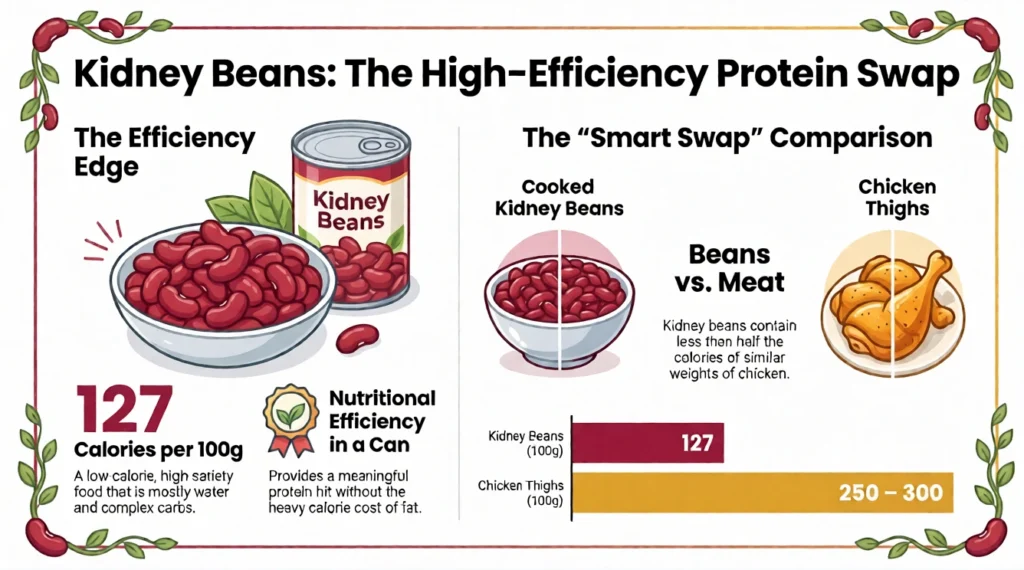
Kidney beans calories per 100g stay low because beans are mostly water and complex carbs after cooking, not fat. Compare that to the same weight of red meat like Chicken Thighs, which can run 250-300 calories, and beans start looking like a smart swap.
This is also why kidney beans calories and protein are often mentioned together, you get a meaningful protein hit without a heavy calorie cost. It’s basically nutritional efficiency in a can.
How Much Protein Is in Kidney Beans?
Yes, do kidney beans have protein? Absolutely, around 8.7g per 100g cooked, which is high for a plant food. That answers how much protein is in kidney beans in one line.
Kidney beans protein per 100g puts them in the same conversation as lentils and chickpeas. They’re a staple beans plant based protein source for vegetarians, vegans, and anyone cutting back on meat, and they pair especially well with dairy staples like Cottage Cheese for a fuller amino acid profile.
Here’s a fun stat: the kidney beans protein to calorie ratio works out to roughly 0.068g of protein per calorie, meaning you get real protein without a huge calorie trade-off. That’s rare in the plant world.
Are Kidney Beans High in Carbs and Fiber?
Short answer: yes to both, but it’s the good kind of carb. Kidney beans carbs and fiber content sits at roughly 22.8g carbs and 6.4g fiber per 100g cooked, so are kidney beans high in carbs? Technically yes, but most of it is fiber-slowed, not sugar-spiked.
Kidney beans fiber content is genuinely impressive, 6.4g per 100g means a single cup can cover nearly half your daily fiber target. So are kidney beans high in fiber? By almost any standard, yes.
Much of that fiber is kidney beans soluble fiber, which helps slow digestion and steady blood sugar, similar to what you’d get from fiber-rich vegetables like Steamed Broccoli. Beans also contain kidney beans resistant starch, a type of carb your gut bacteria ferment instead of your body absorbing quickly, good news for gut health and blood sugar control alike.
What Vitamins and Minerals Do Kidney Beans Contain?
Beyond protein and fiber, kidney beans carry a genuinely wide kidney beans micronutrients profile. This is where their real kidney beans nutrition density shows up: small serving, big mineral payoff.
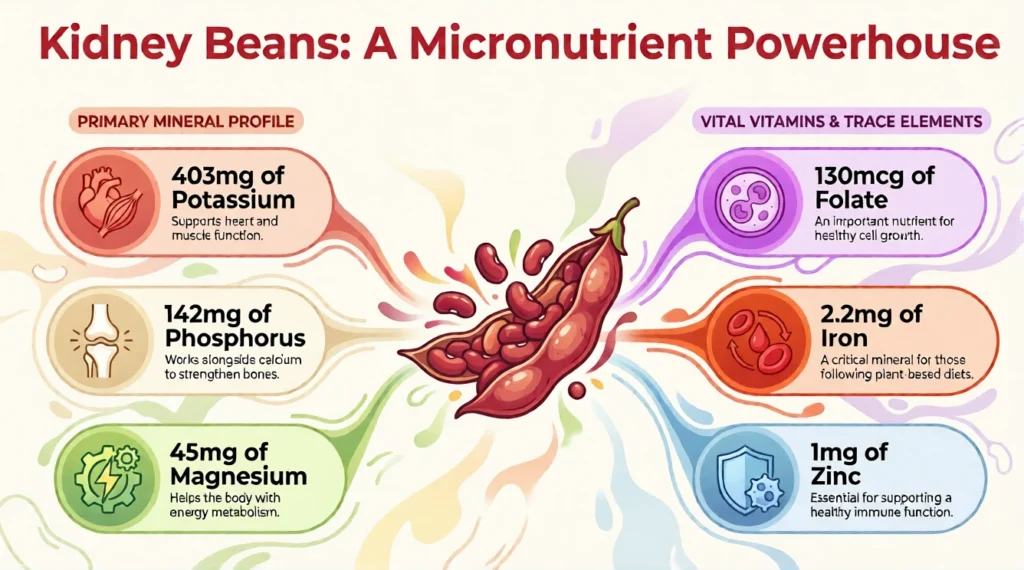
Here’s the breakdown of kidney beans vitamins and minerals per 100g cooked:
- Kidney beans potassium content: 403mg, supports heart and muscle function
- Kidney beans magnesium content: 45mg, helps with energy metabolism
- Kidney beans iron content: 2.2mg, useful for plant-based diets
- Kidney beans folate content: 130mcg, important for cell growth
- Kidney beans calcium content: 28mg, modest, but adds up
- Kidney beans zinc content: 1mg, supports immune function
- Beans phosphorus content: 142mg, works alongside calcium for bones
That’s a kidney beans complete nutrition profile most single foods can’t match.
All figures in this article are cross-referenced against the USDA FoodData Central database, the standard nutrition reference used by dietitians and researchers in the US. Health claims are supported by peer-reviewed and institutional sources, including Harvard T.H. Chan School of Public Health, the Mayo Clinic, and the NIH Office of Dietary Supplements, not from blogs repeating unverified numbers.
Are Kidney Beans Healthy? Are They Good for You?
Yes, are kidney beans healthy is one of the easiest “yes” answers in nutrition. They’re low fat, high fiber, protein-rich, and loaded with minerals your body actually uses daily.
So are kidney beans good for you? Research published via Harvard’s School of Public Health and similar bodies consistently links legume consumption with lower cholesterol and better blood sugar control. Beans aren’t a trend. They’ve been a dietary staple for centuries for a reason.
The kidney beans nutrition benefits for adults extend to heart health, digestion, and even mood, since folate and magnesium both play a role in nervous system function. Building a broader plate with a side like Red Onion adds even more antioxidants alongside the beans. It’s one food doing several jobs at once.
Are Kidney Beans Good for Weight Loss?
If you’re tracking calories, are kidney beans good for weight loss is a fair question. The answer leans yes. High fiber and protein both increase satiety, meaning you stay full longer on fewer calories.
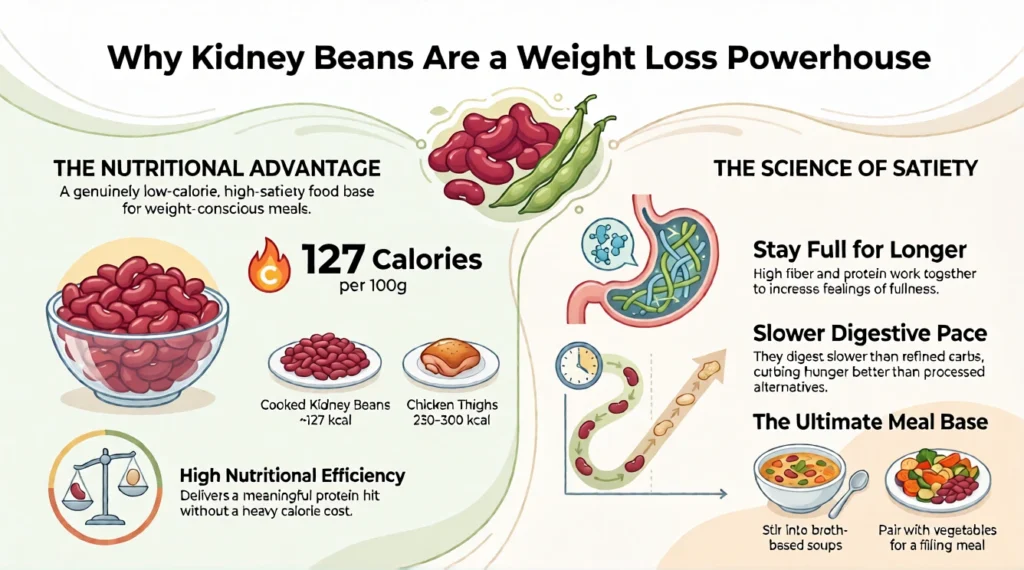
A cup of beans takes longer to digest than refined carbs, which helps curb the “hungry again in an hour” problem. That’s not magic. It’s just fiber and protein doing their job well.
Pair beans with lean protein or vegetables, and you’ve got a filling, low-calorie meal base that doesn’t leave you reaching for snacks two hours later. Even a light bowl of Pho Noodle Soup with beans stirred in can turn a broth-based meal into something far more filling.
Cooked vs Canned vs Dried Kidney Beans: How Do They Compare?
Preparation method changes the numbers more than people expect. Here’s how canned kidney beans nutrition facts compare to dried kidney beans nutrition facts and home-boiled beans, per 100g.
| Type | Calories | Protein | Carbs | Fiber | Sodium |
|---|---|---|---|---|---|
| Boiled red kidney beans calories (no salt) | 127 kcal | Cooked red kidney beans protein: 8.7g | 22.8g | 6.4g | 1mg |
| Canned (drained, no salt added) | 110 kcal | 7.5g | 20g | 5.5g | 2mg |
| Canned (regular, with salt) | 110 kcal | 7.5g | 20g | 5.5g | 250-400mg |
| Dried (uncooked, before soaking) | 333 kcal | 24g | 60g | 15g | 5mg |
The big takeaway: kidney beans nutrition without added salt stays far lower in sodium than standard canned varieties. If you’re comparing sodium across processed foods generally, it’s worth checking Ham Nutrition or reading Is Spam Healthy before reaching for canned Spam, since beans come out far ahead on that front. If sodium is a concern, rinse canned beans thoroughly. It cuts sodium content noticeably. That’s also why plain cooked kidney beans nutrition (boiled from dried, no salt) is usually the healthiest baseline for comparison.
What’s the Kidney Beans Nutrition Per Serving and Per Cup?
Most nutrition labels use a cup as the standard reference, so here’s kidney beans nutrition per serving and kidney beans nutrition per cup (roughly 177g cooked) laid out clearly.
| Metric | Amount |
|---|---|
| Calories in one cup cooked | 225 kcal |
| Protein in one cup cooked | 15.4g |
| Fiber in one cup cooked | 11.4g |
| Carbs per serving | 40.4g |
| Fat per serving | 0.9g |
| Net carbs per serving | 29g |
This is essentially the full cooked kidney beans macros breakdown scaled up from the 100g figures. Protein per serving and fiber per serving both look strong here, a single cup covers close to a third of most adults’ daily fiber needs.
How Do Kidney Beans Fit Into a Balanced Diet?
Kidney beans rarely eat alone. They’re a base ingredient, not the whole meal. If you’re building out a weekly meal plan, they work well alongside lighter carbs like Soba Noodles on days you want to keep things simple.
5 Kidney Bean Mistakes Almost Everyone Makes
Most people eat kidney beans wrong without realizing it. These are small habits that quietly cancel out the health benefits. Here are the mistakes worth fixing.
- Skipping the rinse on canned beans. Draining and rinsing canned beans cuts sodium by up to 40%, according to canning industry studies. It’s a simple step most people skip.
- Undercooking dried kidney beans. Raw or undercooked kidney beans contain a natural toxin called phytohaemagglutinin, which boiling for at least 10 minutes fully breaks down. This isn’t optional. It’s a food safety step, not a texture preference.
- Drowning them in salt and oil. Adding heavy salt or frying beans in oil quietly turns a low-calorie food into a high-sodium, high-fat one.
- Assuming all bean products are equal. Boiled red kidney beans calories and nutrients differ meaningfully from canned or heavily processed bean products. Read labels, don’t assume.
- Ignoring portion size. Beans are nutrient-dense, but doubling your serving doubles your carb and calorie intake too. A cup is a serving, not a “light” portion.
Small fixes here make a real difference in how much benefit you actually get from the same bowl of beans.
FAQs :
Is it OK to eat kidney beans every day?
Yes, for most people. A daily serving of properly cooked kidney beans fits comfortably within standard fiber and protein guidelines and is linked to better heart health when eaten regularly.
Do kidney beans raise blood sugar?
Not much. Their high fiber and resistant starch content mean they have a low glycemic index, so they raise blood sugar far more slowly than refined carbs like white rice or bread.
Are kidney beans a complete protein?
Not on their own, they’re low in the amino acid methionine. Pairing them with rice, grains, or a small amount of animal protein creates a complete amino acid profile.
Can kidney beans help lower cholesterol?
Research from Harvard’s Nutrition Source and similar institutions links regular legume intake, including kidney beans, to modest reductions in LDL cholesterol, largely thanks to soluble fiber.
Are canned kidney beans as healthy as dried ones?
Nutritionally, yes. Once cooked, canned and home-boiled beans have similar protein, fiber, and carb profiles. The main difference is sodium, which rinsing canned beans significantly reduces.
Final Thoughts
Kidney beans aren’t flashy, but the numbers speak for themselves: solid protein, serious fiber, low fat, and a mineral list that punches above its weight. Whether you’re eating them boiled, canned, or straight from dried batches you cooked yourself, the kidney beans nutrition facts hold up across nearly every metric that matters: calories, protein, carbs, fiber, and micronutrients.
If you’re building meals around real, whole-food ingredients, kidney beans deserve a regular spot in the rotation. Not because they’re trendy, but because the math checks out. Even if you’re winding down with a Guinness on the weekend, it’s worth knowing its Guinness Nutrition profile alongside your meals. For broader guidance, our Nutrition and Fitness hubs go deeper into how legumes fit long-term health goals.
Sources
- USDA FoodData Central: Kidney Beans (Cooked, Boiled, No Salt) The official US government nutrition database, the primary source for all calorie, protein, carb, fiber, and mineral figures in this article.
- USDA FoodData Central: Kidney Beans, Canned Used for the canned vs. dried vs. boiled comparison table above, including sodium differences.
- Harvard T.H. Chan School of Public Health: Legumes and Pulses Explains the broader health research behind legume consumption, cholesterol, and blood sugar benefits.
- Mayo Clinic: High-Fiber Foods Guide A trusted medical reference on daily fiber targets and why beans count toward them.
- NIH Office of Dietary Supplements: Folate Fact Sheet Government-backed reference on folate’s role in the body, cited for the folate content section.
- NIH Office of Dietary Supplements: Iron Fact Sheet Government-backed reference on iron, used to support the iron content section for plant-based diets.

Hi, I’m Salem Nasir, founder of Fiturely. I research and write evidence-based articles on fitness, nutrition, weight loss, and healthy living. My mission is to make reliable health information simple, practical, and easy to understand so readers can build healthier habits with confidence
Pingback: French Beans Nutrition: Calories, Protein & Health Benefits - fiturely.com