
Key Takeaways
- Red onions are low in calories and high in antioxidants.
- They provide vitamin C, fiber, potassium, and folate.
- Quercetin and anthocyanins may support heart health and reduce inflammation.
- The fiber in red onions helps promote healthy digestion and gut health.
- Red onions can be a smart addition to weight-loss and balanced eating plans.
- They are easy to enjoy raw, roasted, grilled, or added to salads, sandwiches, and cooked dishes.
Red onion nutrition facts show that this colorful vegetable is low in calories, rich in vitamin C, fiber, antioxidants, and beneficial plant compounds like quercetin and anthocyanins. Red onions support heart health, immunity, digestion, and overall wellness while adding flavor to meals. They are a healthy choice for most balanced diets and weight management plans.
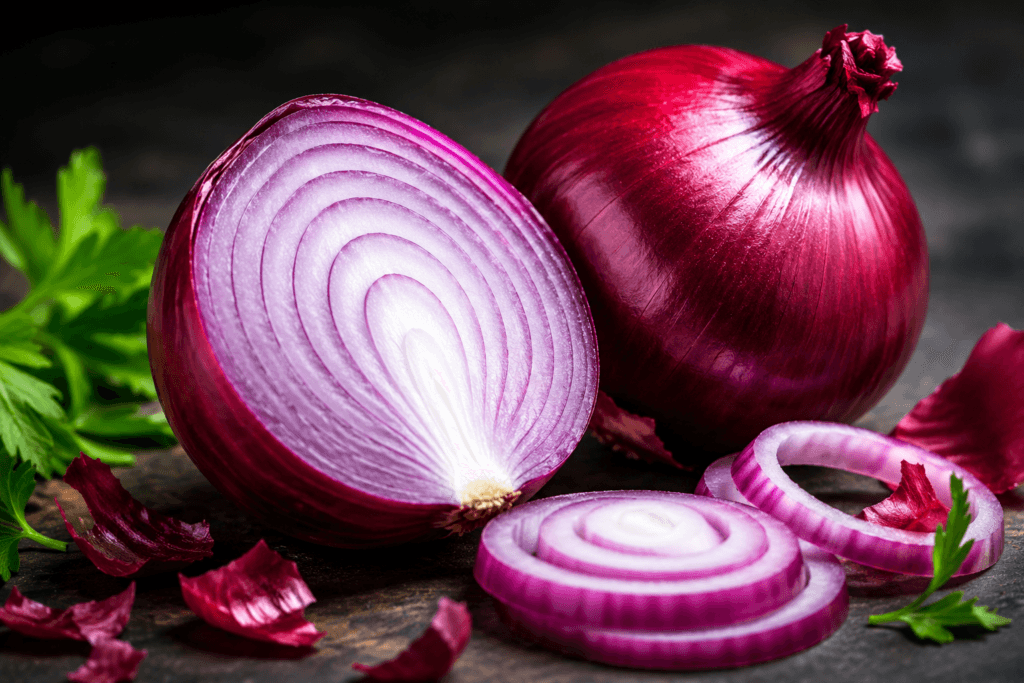
Red Onion Nutrition Facts (Per 100g)
Here’s what a standard 100-gram serving of raw red onion provides, based on USDA FoodData Central figures:
- Calories: 40 kcal
- Carbohydrates: 9.3g
- Dietary Fiber: 1.7g
- Sugars: 4.2g
- Protein: 1.1g
- Fat: 0.1g
- Vitamin C: 7–10mg
- Potassium: 119mg
- Calcium: 20mg
- Iron: 0.2mg
This red onion nutrition per 100g breakdown shows a vegetable that’s light on calories but rich in small, useful nutrients. Nothing flashy. Just steady, quiet value.
For comparison, if you’re tracking other vegetables in your diet, Steamed Broccoli Nutrition and Parsnip Nutrition offer different carb-to-fiber ratios worth knowing.
Red Onion Calories, Carbs, Protein & Fiber
Let’s talk numbers people actually search for. Calories in a red onion depend on size. A small red onion (about 70g) has roughly 28 calories. A medium one (110g) sits closer to 44 calories. So one red onion calories count rarely crosses 50, unless you’re eating a genuinely large one.
Red onion carbs come mostly from natural sugars, not starch. That matters if you’re watching blood sugar. The red onion net carbs figure (total carbs minus fiber) lands around 7.6g per 100g, which is why many keto trackers still allow onions in small amounts. So yes, is red onion keto friendly in moderation? Mostly yes, as long as portions stay small.
Red onion protein content is modest, just over 1g per 100g. Nobody builds muscle on onions, and that’s fine. They’re not meant to compete with lentils or eggs. If protein tracking matters to you, foods like Spam Nutrition facts show a completely different macro profile, heavy on protein and sodium instead.
Red onion fiber, though modest, supports digestion. Combined with prebiotic compounds, it feeds good gut bacteria quietly in the background.
Health Benefits of Red Onion
Here’s where red onions earn their reputation. The health benefits of red onion come largely from plant compounds, not vitamins alone.
Red onion antioxidants, especially red onion quercetin, sit at the center of most research. Quercetin is a flavonoid linked to reduced inflammation and better blood vessel function. Red onions contain more quercetin than white or yellow varieties, largely because of their pigmented skin.
That same pigment brings anthocyanins, the compounds responsible for the deep purple-red color. Anthocyanins support red onion for heart health by helping maintain healthy cholesterol levels and reducing oxidative stress.
Red onion vitamin C adds another layer of protection. Vitamin C supports immune defense and collagen production, which your skin quietly thanks you for.
Red onion potassium, while not enormous, contributes to fluid balance and healthy blood pressure. Combined with a diet low in processed sodium, potassium-rich foods like onions help balance things out.
For gut health, red onion for gut health benefits stem from fructans, a type of prebiotic fiber. These fructans ferment in the colon and feed beneficial bacteria. Some people with sensitive digestion feel bloated from this same fiber, so moderation matters here too.
Red onion for immune system support comes from a mix of vitamin C, sulfur compounds, and antioxidants working together. No single nutrient does the job alone. It’s teamwork, not a solo act.
Emerging research also links onion consumption to better red onion for diabetes management, largely due to sulfur compounds that may support insulin sensitivity. This isn’t a replacement for medication. Think of it as a helpful side character, not the hero of the story.
Is Red Onion Good for Weight Loss?
Short answer: yes, onions fit well into a weight-conscious diet. Long answer: it’s about context, not magic.
At roughly 40 calories per 100g, red onions add flavor without adding much caloric weight. Fiber content helps with satiety, meaning a chopped red onion in your salad can make the whole meal feel more filling.
Red onion glycemic index sits on the lower end, generally estimated between 10 and 15, which is low compared to most starchy vegetables. This means red onions don’t spike blood sugar sharply, which supports steadier energy levels throughout the day.
Red onion sugar content, while present, is naturally occurring and comes bundled with fiber, unlike added sugars in processed snacks. Eating onions won’t melt fat away. But swapping calorie-dense condiments for raw onion in sandwiches or salads is a small, sensible move.
Red Onion vs White Onion
People often ask about red onion nutrition vs white onion, assuming one is dramatically healthier. The truth is less dramatic.
Calorie and carb counts stay fairly close between the two. The real difference lies in antioxidant content. Red onions carry more quercetin and anthocyanins because of their pigmented skin. White onions, lacking that pigment, offer fewer of these specific compounds but still provide sulfur compounds and fiber.
Flavor differs too. Red onions taste milder and slightly sweeter, which is why they show up raw in salads and salsas. White onions tend to have a sharper bite, often reserved for cooking.
Here’s a side-by-side comparison table based on USDA data for a 100g raw serving:
| Nutrient | Red Onion | White Onion | Yellow Onion |
|---|---|---|---|
| Calories | 40 kcal | 40 kcal | 40 kcal |
| Carbohydrates | 9.3g | 9.3g | 9.3g |
| Dietary Fiber | 1.7g | 1.7g | 1.7g |
| Sugars | 4.2g | 4.2g | 4.7g |
| Protein | 1.1g | 1.1g | 1.1g |
| Fat | 0.1g | 0.1g | 0.1g |
| Vitamin C | 7-10mg | 7-8mg | 7mg |
| Potassium | 119mg | 144mg | 146mg |
| Antioxidant Highlight | Quercetin + anthocyanins | Quercetin (lower levels) | Quercetin |
| Best Used | Raw, salads, salsas | Cooking, sauces | Caramelizing, general cooking |
The macro numbers barely move between varieties. The real story is in the antioxidant column and the kitchen use case, not the calorie count.
Raw vs Cooked Red Onion
Raw red onion nutrition retains more vitamin C, since heat breaks down this vitamin over time. Raw onions also deliver a stronger sulfur-compound punch, which is partly why they make your eyes water while chopping.
Cooked red onion nutrition shifts slightly. Cooking softens the sharp flavor and reduces some vitamin C content, but it also makes the onion easier to digest for sensitive stomachs. Fiber content stays largely intact through cooking.
Raw vs cooked red onion isn’t a competition with a clear winner. Raw wins for antioxidant retention. Cooked wins for digestibility and flavor mellowing. Pick based on your goal, not a blanket rule.
 How to Store Red Onion
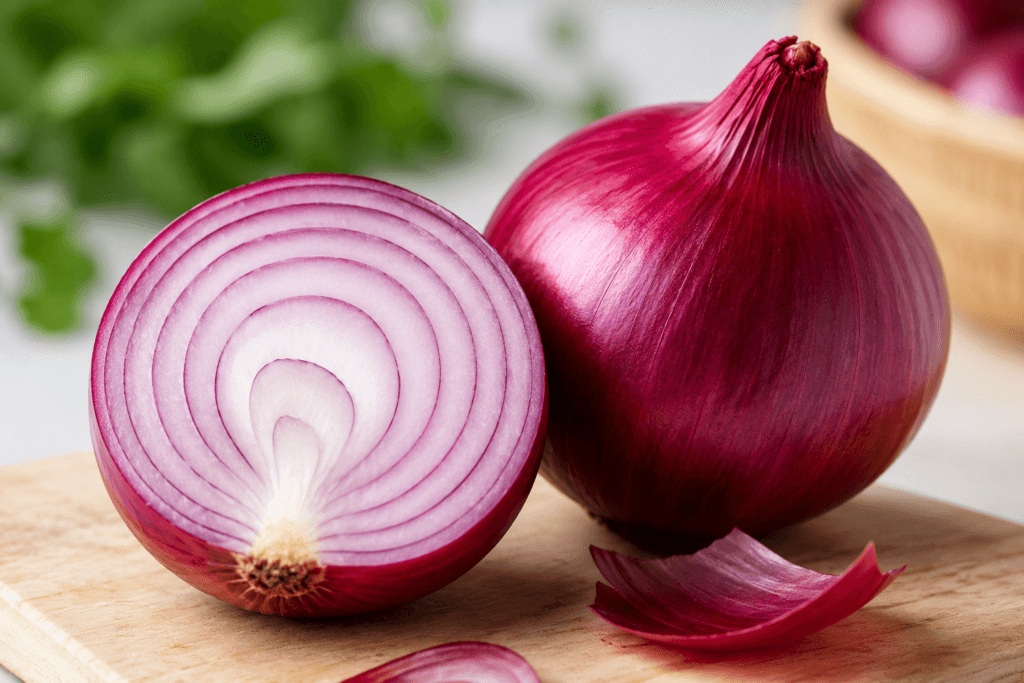 How to Store Red Onion
Whole red onions last longest in a cool, dry, dark place with good airflow, ideally not in the refrigerator until cut. Once peeled or sliced, store them in an airtight container in the fridge, where they typically stay fresh for five to seven days.
Avoid storing onions near potatoes. Onions release gases that speed up potato sprouting, and nobody wants surprise sprouts in the pantry.
Who Should Limit Red Onion?
Onions aren’t universally friendly. People with IBS or fructan sensitivity often experience bloating and discomfort from raw onions, since fructans ferment in the gut.
Those on blood-thinning medication should also check with a doctor, as onions contain natural compounds that mildly affect blood clotting.
Acid reflux sufferers sometimes report worsened symptoms after eating raw onion, particularly on an empty stomach. If that sounds familiar, cooked onion in smaller amounts may sit better.
And if you’re comparing carb-conscious foods across the board, checking something like Pickled Beetroot Nutrition alongside red onions can help build a fuller picture of your daily carb intake.
FAQs
Is red onion healthier than white onion?
Not by a wide margin. Calories, carbs, and fiber stay nearly identical between the two. Red onion pulls ahead slightly on antioxidants, thanks to the quercetin and anthocyanins in its pigmented skin, but white onion isn’t nutritionally behind, just less colorful.
Can you eat red onion every day?
Yes, for most people, moderate daily consumption is safe and offers ongoing antioxidant benefits. Those with IBS or fructan sensitivity may want to keep portions small or stick to cooked onion instead.
How many calories are in one red onion?
A small red onion (about 70g) has roughly 28 calories. A medium one (around 110g) sits closer to 44 calories. Size matters more than variety here.
Is red onion keto-friendly?
Yes, in small portions. With around 7.6g net carbs per 100g, a quarter cup fits comfortably into most keto meal plans without pushing daily carb limits.
Is red onion good for diabetics?
It can be a sensible choice. Red onion has a low glycemic index and contains sulfur compounds linked to better insulin sensitivity. That said, it supports blood sugar management; it doesn’t replace medication or a doctor’s guidance.
Can you eat red onion raw?
Yes, and raw is actually where it holds onto the most vitamin C and sulfur compounds. Some people find raw onion harder to digest or too sharp in flavor, in which case lightly cooking it is a fine alternative
Red onions won’t replace your multivitamin, and they’re not a miracle food. But as a low-calorie, antioxidant-rich staple, they earn their spot in the kitchen. Slice one into your next meal, and you’re getting more nutritional value than you probably gave it credit for.
Related Nutrition Guides: Steamed Broccoli Nutrition, Pickled Beetroot Nutrition, Spam Nutrition Facts, Parsnip Nutrition

Hi, I’m Salem Nasir, founder of Fiturely. I research and write evidence-based articles on fitness, nutrition, weight loss, and healthy living. My mission is to make reliable health information simple, practical, and easy to understand so readers can build healthier habits with confidence
Pingback: Is Peanut Butter Healthy for Weight Loss? Benefits, Calories & Expert Facts (2026)
Pingback: Spam Nutrition Facts: Calories, Protein, Sodium & Is It Healthy? (2026 Guide) - fiturely.com
Pingback: Is Tilapia Actually Good for You? Here's What the Nutrition Facts Really Say - fiturely.com