
Tilapia shows up on more dinner plates than almost any other fish in America, and for good reason. It’s cheap, mild-tasting, and easy to cook. But is it actually good for you? Let’s break down tilapia nutrition facts using real, verifiable data, not guesswork.
This guide covers everything from tilapia calories and tilapia protein to mercury safety, weight loss, and how tilapia compares to salmon and chicken. Every number here is sourced from the USDA FoodData Central database, the same source dietitians use.
What Is Tilapia’s Nutritional Value?
Tilapia is a freshwater fish that’s low in calories, high in protein, and low in fat. It’s one of the leanest whitefish options available, which is exactly why bodybuilders and dieters both reach for it. Its tilapia nutritional value comes mainly from protein, selenium, and vitamin B12 rather than fat or carbs.
A single serving delivers roughly 20-26 grams of protein for under 130 calories. That ratio is hard to beat among common proteins. Tilapia also contains almost no carbohydrates, making it a natural fit for low-carb and high-protein diets.
In short: if you want tilapia fish nutrition in one sentence, it’s “high protein, low calorie, low fat, and mineral-rich.”
Tilapia Nutrition Facts
Here’s the tilapia nutrition per 100g breakdown, based on USDA data for raw and cooked (dry-heat) fillets.
| Nutrient | Raw Tilapia (100g) | Cooked Tilapia (100g) |
|---|---|---|
| Calories | 96 kcal | 128 kcal |
| Protein | 20.1 g | 26.2 g |
| Total Fat | 1.7 g | 2.7 g |
| Saturated Fat | 0.6 g | 0.9 g |
| Omega-3 (ALA+DHA+EPA) | 0.1-0.2 g | 0.1-0.2 g |
| Selenium | 54.4 mcg | 68 mcg |
| Vitamin B12 | 1.86 mcg | 2.6 mcg |
| Phosphorus | 204 mg | 270 mg |
| Potassium | 302 mg | 380 mg |
| Sodium | 52 mg | 56 mg |
Cooking reduces water content, which is why cooked values look “higher” per 100g. The nutrients get more concentrated, not added. This is standard for cooked tilapia nutrition across most fish and meat.
How Many Calories Are in Tilapia?
A 100g raw tilapia fillet has about 96 calories, and cooked tilapia has around 128 calories per 100g. A typical 3.5oz-6oz serving (about the size of a checkbook) lands between 110 and 200 calories depending on cooking method.
So, how many calories are in tilapia compared to other proteins? It’s lower than most red meats and even leaner than many other fish. This is why tilapia is often labeled a low calorie fish in nutrition guides.
Grilled or baked tilapia stays closest to these baseline numbers since no extra oil is absorbed. Grilled tilapia nutrition typically runs 128-140 calories per 100g, with almost no added fat.
How Much Protein Is in Tilapia?
Tilapia delivers 20-26 grams of protein per 100g, depending on whether it’s raw or cooked. That means a standard 150g cooked fillet gives you close to 39 grams of protein, nearly the daily requirement in one meal for many adults.
So if you’re wondering how much protein is in tilapia, the short answer is: a lot, relative to its calorie count. This is what makes tilapia a favorite for anyone tracking macros.
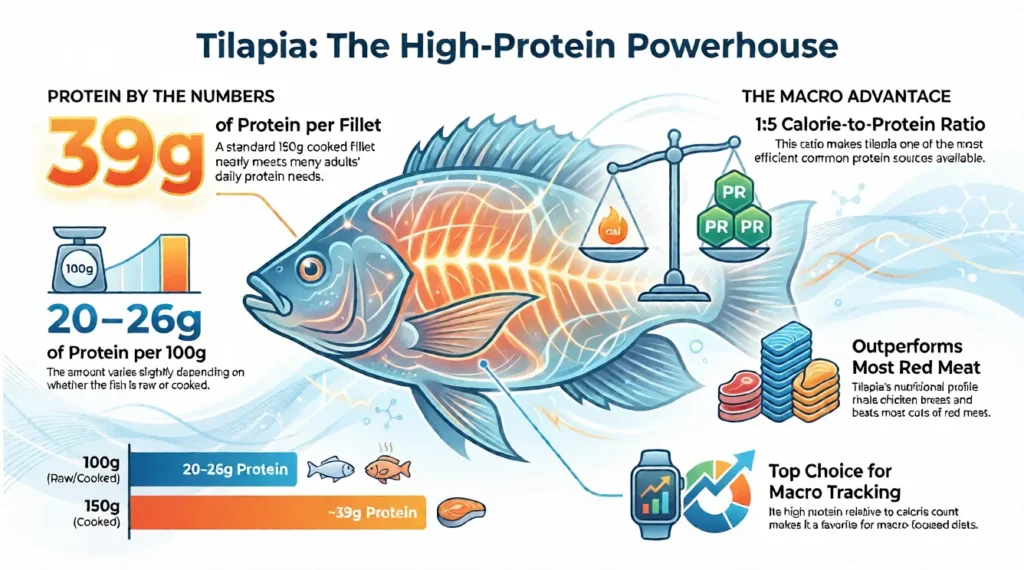
The tilapia calories and protein per 100g ratio (about 1:5, calories to protein grams) is one of the best among common proteins, rivaling chicken breast and outperforming most red meat cuts.
Is Tilapia a Good Source of Protein?
Yes, tilapia is considered a complete protein, meaning it contains all nine essential amino acids your body can’t make on its own. This makes it just as “complete” as chicken, eggs, or beef, just with fewer calories per gram.
Is tilapia a good source of protein? By USDA standards, any food with more than 10g of protein per 100 calories qualifies as a high-protein food. Tilapia easily clears that bar, making it a legitimate high protein seafood choice, not just a filler fish.
For reference, one cooked tilapia fillet (roughly 150g) provides more protein than two large eggs, with less saturated fat.
What Are the Full Tilapia Health Benefits?
Beyond protein, tilapia health benefits include strong bone support (phosphorus), immune and thyroid support (selenium), and nervous system support (vitamin B12). It’s also naturally low in mercury compared to many predatory fish.
Tilapia is farmed rather than wild-caught in most markets, which keeps the price low and supply consistent year-round. This also means its nutrient profile is fairly stable from batch to batch, unlike wild fish which can vary by season.
It won’t give you the omega-3 punch of salmon, but as an overall package of essential nutrients in tilapia, it holds its own, especially for people who don’t love “fishy” tasting seafood.
What Vitamins and Minerals Does Tilapia Contain?
Tilapia is particularly rich in four nutrients: selenium, vitamin B12, phosphorus, and potassium. Each one supports a different part of your body, from thyroid function to muscle and nerve signaling.
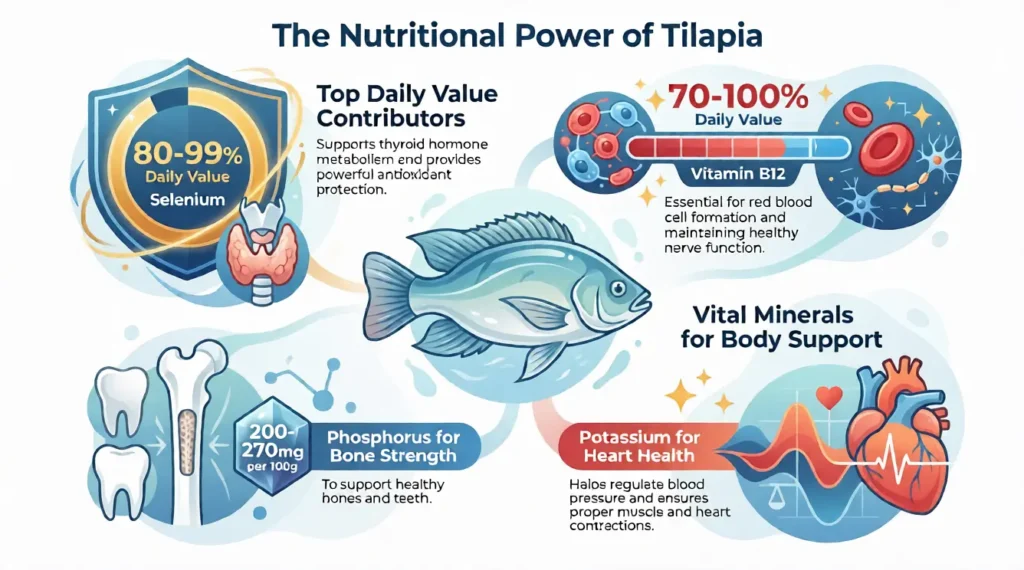
Selenium in tilapia covers close to 80-99% of the Daily Value in a single serving, based on a 2,000-calorie diet. Selenium supports thyroid hormone metabolism and acts as an antioxidant.
Vitamin B12 in tilapia sits around 70-100% of the DV per serving. B12 is essential for red blood cell formation and nerve function, a nutrient many plant-based eaters specifically need to supplement.
The phosphorus content in tilapia (about 200-270mg per 100g) supports bone and teeth health, while potassium in tilapia helps regulate blood pressure and muscle contractions, including your heartbeat.
Does Tilapia Have Meaningful Omega-3s?
Not really. This is tilapia’s one weak spot. Tilapia omega 3 content is low, around 0.1-0.2g per 100g, compared to salmon’s 2+ grams. If omega-3s are your main goal, tilapia isn’t the fish to rely on.
Tilapia actually has a less favorable omega-6 to omega-3 ratio than fattier fish, largely because of its diet (often corn- or soy-based feed in farmed settings). That doesn’t make it unhealthy, but it does mean it’s not a source of healthy fats in fish the way salmon, sardines, or mackerel are.
If you eat tilapia regularly, consider pairing your diet with flaxseed, walnuts, or a fattier fish once or twice a week to round out your omega-3 intake.
Tilapia vs Salmon Nutrition: Which Wins?
Salmon wins on omega-3s and healthy fats; tilapia wins on calories and price. Neither is “bad.” They simply serve different goals. If your priority is heart-healthy fats, pick salmon. If it’s lean protein on a budget, pick tilapia.
| Nutrient (per 100g, cooked) | Tilapia | Salmon | Chicken Breast |
|---|---|---|---|
| Calories | 128 kcal | 208 kcal | 165 kcal |
| Protein | 26.2 g | 20 g | 31 g |
| Total Fat | 2.7 g | 13 g | 3.6 g |
| Omega-3 | 0.1-0.2 g | 2.3 g | 0.02 g |
| Vitamin B12 | 2.6 mcg | 2.8 mcg | 0.3 mcg |
| Mercury Level | Low | Low-Moderate | None (not applicable) |
This tilapia vs salmon nutrition comparison shows both fish are excellent protein sources, but salmon is the clear winner for omega-3 fatty acids, while tilapia is lighter on calories and fat.
Tilapia vs Chicken Protein: Which Is Better?
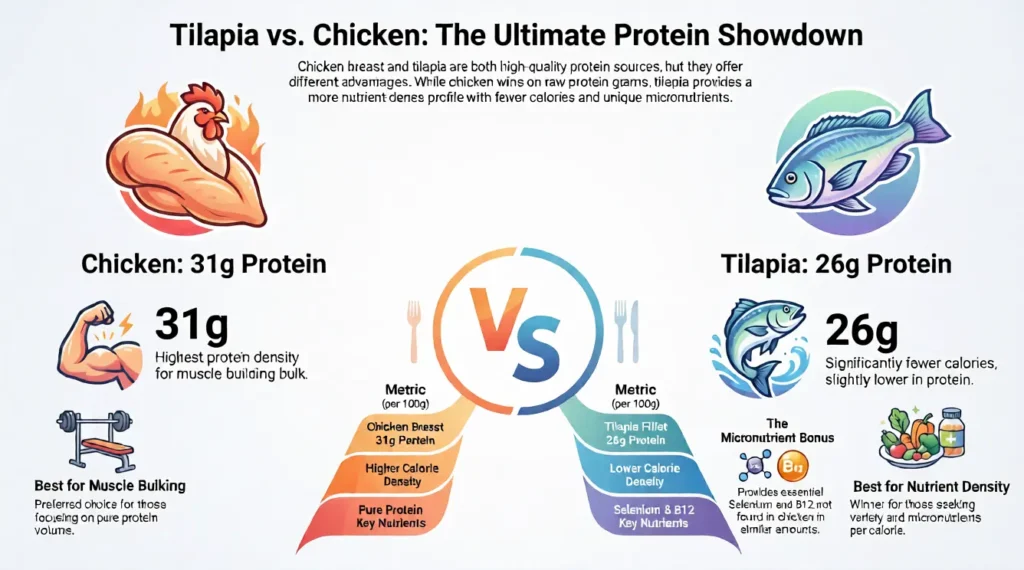
Chicken breast edges out tilapia slightly on raw protein grams (31g vs 26g per 100g), but tilapia has fewer calories and comes with bonus nutrients like selenium and B12 that chicken doesn’t offer in the same amounts.
For tilapia vs chicken protein, the honest answer is: both are excellent. Chicken is marginally higher in protein density; tilapia brings more micronutrient variety per calorie.
Is tilapia healthier than chicken?
It depends on your goal. For pure muscle-building bulk, chicken breast has a slight edge. For overall nutrient density per calorie, tilapia often wins.
Is Tilapia Healthy to Eat?
Yes, tilapia is healthy to eat for most people, in moderate amounts (2-3 servings per week), as part of a balanced diet. The American Heart Association and FDA both list tilapia among fish that are safe for regular consumption due to its low mercury levels.
Is tilapia healthy to eat every day? Most nutrition experts recommend variety rather than daily reliance on a single fish, mainly to get a broader range of nutrients, including omega-3s that tilapia lacks.
Farmed tilapia’s feed and farming conditions vary by country, so buying from reputable, well-regulated tends to give more consistent quality than some imported sources.
Is Tilapia Good for a Healthy Diet?
Tilapia fits well into almost any structured eating plan, including keto, high-protein, calorie-controlled, or general balanced diets. It’s naturally low in carbs and sodium, and versatile enough to season however your diet allows.
Is tilapia good for a healthy diet? For most people, yes. It checks the boxes of lean protein, low calories, and useful micronutrients, without excess saturated fat or sugar.
Is Tilapia Good for Weight Loss?
Yes. Tilapia benefits for weight loss come from its high protein-to-calorie ratio, which keeps you full longer while staying within a calorie deficit. Protein also has a higher thermic effect than fat or carbs, meaning your body burns more calories digesting it.
Tilapia nutrition for weight loss works best when it’s baked, grilled, or steamed, not fried, which can double or triple the calorie count per serving.
A 150g grilled tilapia fillet with vegetables can sit comfortably under 250 calories total, while still delivering nearly 40g of protein, a strong combination for anyone counting calories.
Is Tilapia Good for Building Muscle?
Yes, tilapia supports muscle building thanks to its complete amino acid profile and high protein content per calorie. It won’t out-protein chicken breast gram for gram, but it’s an easy, affordable way to hit daily protein targets.
Is tilapia good for building muscle? Combined with resistance training, any complete protein source, tilapia included, supports muscle protein synthesis. Variety in your protein sources (fish, poultry, eggs, legumes) generally beats relying on just one.
Fried vs Grilled Tilapia Calories:
Grilled tilapia stays close to its natural calorie count (128 kcal per 100g), while fried tilapia can jump to 200-280+ kcal per 100g due to oil absorption and breading.
Fried vs grilled tilapia calories is one of the biggest hidden differences in fish nutrition. The fish itself doesn’t change, but the cooking method can nearly double the calorie and fat content. If you’re managing weight, grilling, baking, or air-frying preserves the lean profile far better than deep frying.
Is Tilapia High in Mercury? Is It Safe to Eat Regularly?
No, tilapia is not considered a high-mercury fish. The FDA and EPA both list tilapia in the “Best Choices” category for mercury safety, meaning it’s safe to eat 2-3 servings a week for most adults, including pregnant women.
Is tilapia high in mercury?
Compared to shark, swordfish, and king mackerel (high-mercury fish to avoid), tilapia’s mercury levels are minimal because it’s typically farmed and has a short lifespan and lower position on the food chain.
Is tilapia safe to eat regularly?
Yes, based on current FDA/EPA seafood guidance, tilapia is one of the safer, more consistent choices for frequent consumption.
Final Verdict:
Tilapia is an affordable, mild-tasting, high-protein fish that fits into nearly any diet. It’s not the best source of omega-3s, but it more than makes up for it with lean protein, selenium, and B12, all backed by real USDA data, not marketing claims.
If you want a lean protein source that’s budget-friendly and easy to cook five different ways, tilapia genuinely earns its spot in the fridge. Pair it occasionally with a fattier fish like salmon, and you’ll cover both ends of your nutritional needs.
Sources
- USDA FoodData Central: Fish, tilapia, raw & cooked.
- FDA & EPA: Advice about Eating Fish (Mercury Levels).
- American Heart Association: Fish and Omega-3 Fatty Acids.

Hi, I’m Salem Nasir, founder of Fiturely. I research and write evidence-based articles on fitness, nutrition, weight loss, and healthy living. My mission is to make reliable health information simple, practical, and easy to understand so readers can build healthier habits with confidence