
Key Takeaways:
- Low in Calories: Seaweed salad can be a light, flavorful side dish for calorie-conscious meals.
- Rich in Iodine: Seaweed naturally provides iodine, an important mineral for normal thyroid function.
- Packed With Minerals: It can provide minerals such as calcium, magnesium, iron, and potassium.
- Contains Fiber & Antioxidants: Seaweed offers dietary fiber and beneficial plant compounds.
- Watch Sodium & Sugar: Store-bought seaweed salads may contain added sugar and higher amounts of sodium.
Seaweed salad shows up on almost every sushi menu, and it looks healthy sitting next to the California rolls. But is it actually good for you, or just a pretty green side dish? Let’s break down the real numbers.
In short: seaweed salad is low in calories, rich in fiber and minerals, surprisingly high in iodine and sodium, and a smart pick for anyone focused on fitness or weight management, as long as you watch the dressing. Here’s everything behind that answer.
What Is Seaweed Salad Made Of?
Seaweed salad is usually made from wakame seaweed, tossed with sesame oil, rice vinegar, soy sauce, and sesame seeds. Some versions swap in or add hijiki seaweed, kelp, or shredded nori. The dressing is what turns a plain sea vegetable into a flavorful side dish.
Wakame seaweed is the most common base. It’s tender, mildly sweet, and turns bright green when rehydrated. Hijiki seaweed looks like small black threads and has a stronger, earthier taste. Kelp, a thicker brown seaweed, is often used in Korean style versions.
The dressing usually includes sesame oil for richness, rice vinegar for tang, soy sauce for saltiness, and toasted sesame seeds for crunch. Some restaurants add sugar or chili oil, which changes the nutrition profile more than people expect.
So when someone asks “what is seaweed salad made of,” the honest answer is: mostly seaweed, but the dressing carries a lot of the calories, sugar, and sodium.
5 Surprising Facts About Seaweed Salad Nutrition
Seaweed salad hides a few facts that most menus never mention, and some of them will genuinely change how you order it. These are the ones worth knowing before your next sushi run.
- One serving can meet your entire daily iodine need. A small portion of kelp based seaweed salad can supply well over the recommended 150 micrograms of iodine for adults in a single sitting, according to the NIH Office of Dietary Supplements.
- The seaweed itself is almost calorie free. Raw wakame comes in around 45 calories per 100 grams, so nearly all the calories in restaurant seaweed salad come from the oil and sugar in the dressing, not the seaweed.
- It contains a fat burning pigment. Fucoxanthin, an antioxidant found in brown seaweeds like kelp, has been studied by researchers at Harvard for its possible role in metabolism.
- It’s naturally gluten free, but the sauce might not be. Regular soy sauce often contains wheat, so a truly gluten free seaweed salad depends on tamari, not the seaweed.
- Sodium, not sugar, is the real concern. A single serving can carry 600 to 900 milligrams of sodium, mostly from soy sauce, which is a bigger dietary flag than the small amount of added sugar.
How Many Calories Are in Seaweed Salad?
A typical serving of seaweed salad, about 1 cup or roughly 100 to 120 grams with dressing, contains around 100 to 180 calories, depending on how much oil and sugar the kitchen uses. Plain, unseasoned wakame seaweed itself is much lower, around 45 calories per 100 grams, according to USDA FoodData Central.
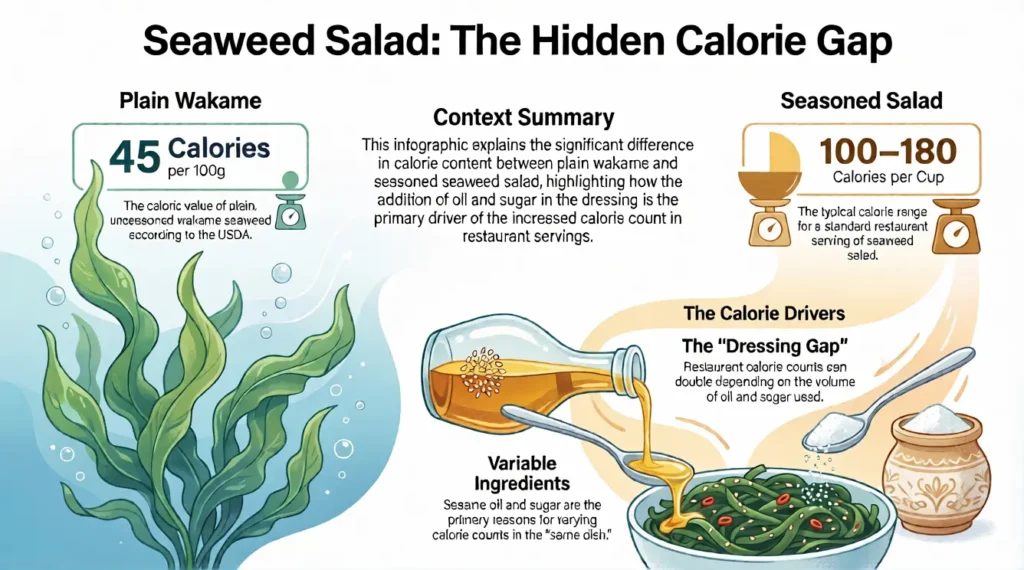
That gap matters. Restaurant seaweed salad calories per cup can double once sesame oil and sugar enter the picture. This is the main reason two people can eat “the same dish” and get very different calorie counts.
If you’re tracking seaweed salad calories for a diet plan, homemade versions with light dressing are the safer bet. You control the oil, so you control the number.
What Are the Full Seaweed Salad Nutrition Facts?
Per average 100 gram serving of prepared seaweed salad, you’re typically looking at roughly 3 to 4 grams protein, 8 to 12 grams carbs, 6 to 10 grams fat, and 1 to 3 grams fiber, alongside a meaningful dose of iodine, calcium, and magnesium. These numbers shift based on the seaweed type and dressing ratio.
Here’s a simplified breakdown based on USDA data for raw wakame and typical restaurant preparation:
| Nutrient | Per 100g Raw Wakame | Per 100g Dressed Seaweed Salad (approx.) |
|---|---|---|
| Calories | 45 kcal | 120 to 150 kcal |
| Protein | 3g | 2 to 3g |
| Carbs | 9g | 8 to 10g |
| Fat | 0.6g | 7 to 9g (mostly sesame oil) |
| Fiber | 0.5 to 1g | 1 to 2g |
| Sodium | 870mg | 600 to 900mg |
| Iodine | Very high | Very high |
Source: USDA FoodData Central; nutrition varies by brand and preparation.
Seaweed Salad Protein
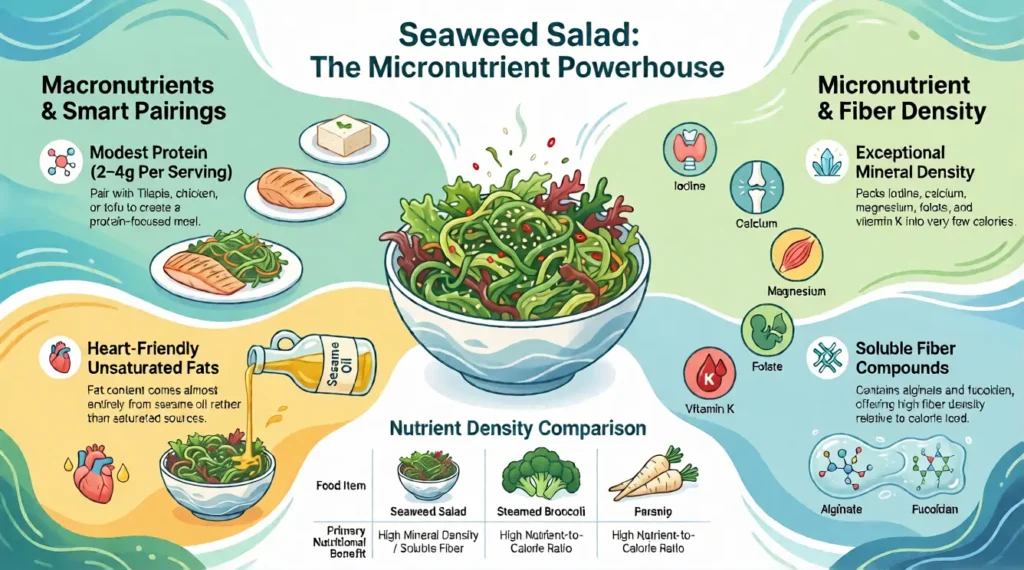
Seaweed salad protein per serving is modest, usually 2 to 4 grams per cup. It’s not a protein powerhouse, so pairing it with Tilapia, chicken, or tofu makes more sense if you’re building a protein focused meal.
Seaweed Salad Carbs and Fat
Seaweed salad carbs come mostly from natural sugars in the seaweed and any added sugar in the dressing. Seaweed salad fat is almost entirely from sesame oil, which is unsaturated fat, a heart friendlier fat source than butter or lard.
Seaweed Salad Fiber
Seaweed contains soluble fiber compounds like alginate and fucoidan. While the fiber count per serving looks modest on a label, seaweed is genuinely high in fiber relative to its tiny calorie load, similar in spirit to Steamed Broccoli or Parsnip on a nutrient density basis.
Vitamins and Minerals
Seaweed salad vitamins and minerals include iodine, calcium, magnesium, folate, and vitamin K. Few everyday foods pack this much mineral density into so few calories, that’s the real nutritional value here.
Is Seaweed Salad Healthy?
Yes, seaweed salad is healthy in moderate amounts, mainly because of its iodine, antioxidants, and dietary fiber content. It supports thyroid function, contributes to gut health, and adds mineral variety that’s rare in a typical Western diet.
Seaweed contains antioxidants like fucoxanthin, a pigment compound studied for its role in metabolism and fat regulation, per research summarized by Harvard T.H. Chan School of Public Health on sea vegetables. It’s not a miracle compound, but it adds real value.
The dietary fiber in seaweed feeds beneficial gut bacteria, which is one reason nutritionists keep recommending sea vegetables as an easy add on rather than a main course.
So “is seaweed salad good for you” gets a genuine yes, with the caveat that portion and dressing still matter.
Is Seaweed Salad Good for Weight Loss?
Seaweed salad can support weight loss because it’s low in calories, high in water content, and adds fiber that helps with fullness. It’s a smart low calorie food to bulk up a meal without piling on energy density.
Seaweed salad low calorie food status holds true mainly for lightly dressed versions. A cup of seaweed salad can replace a higher calorie side like fried rice or a creamy slaw, which is a genuinely useful swap for anyone working on fitness goals or calorie control.
Is Seaweed Salad High in Sodium or Iodine?
Yes to both. Seaweed salad is typically high in sodium, mostly from soy sauce, and naturally very high in iodine, from the seaweed itself. These are the two biggest caution points for regular eaters.
A single serving can carry 600 to 900 milligrams of sodium, which is a meaningful chunk of the recommended daily limit of under 2,300 milligrams, per the American Heart Association. If you’re watching blood pressure, this is the number to track.
Iodine is trickier. According to the NIH Office of Dietary Supplements, the recommended daily iodine intake for adults is about 150 micrograms, and seaweed, especially kelp, can contain iodine levels that exceed this in a single serving. That’s great for people with mild deficiency, but risky for anyone with thyroid conditions.
Does Seaweed Salad Have Sugar? Is It Keto and Gluten Free?
Most seaweed salad recipes contain a small amount of added sugar in the dressing, usually just enough to balance the vinegar’s sharpness, roughly 1 to 3 grams per serving. Seaweed itself has no significant natural sugar.
Is seaweed salad keto friendly? Generally yes, since carbs stay low, around 8 to 10 grams per 100 grams, and fat comes from sesame oil. Just double check the sauce for hidden sugar if you’re strict about macros.

Is seaweed salad gluten free? Usually, but not always. Soy sauce can contain wheat unless it’s labeled gluten free or made with tamari. Always check the label if gluten is a concern.
Can You Eat Seaweed Salad Every Day?
Eating seaweed salad every day isn’t recommended for most people, mainly because of the iodine and sodium load, not the seaweed’s calorie count. A few servings a week is a safer, more sustainable habit.
Daily consumption can push iodine intake well past recommended limits over time, which may affect thyroid function in sensitive individuals, a point echoed by multiple thyroid health researchers cited by the NIH. It’s not dangerous occasionally, but it’s not a “the more, the better” food either.
Japanese vs Asian Seaweed Salad: What’s the Difference?
Japanese seaweed salad usually centers on wakame seaweed with a light sesame vinegar dressing, while broader Asian seaweed salad styles often mix in kelp, hijiki seaweed, or nori, plus regional flavors like chili oil or garlic.
Japanese versions tend to be simpler and lighter, letting the seaweed’s natural texture shine. Other Asian variations, Korean and Chinese styles especially, sometimes add more seasoning, sugar, or spice, which shifts the calorie and sodium count higher.
Neither version is “healthier” by default. It genuinely comes down to how much oil, sugar, and salt the specific recipe uses.
Seaweed Salad vs. Other Healthy Sides: Comparison Table
| Food (per 100g) | Calories | Protein | Carbs | Fiber | Standout Nutrient |
|---|---|---|---|---|---|
| Seaweed Salad (dressed) | 120 to 150 kcal | 2 to 3g | 8 to 10g | 1 to 2g | Iodine, minerals |
| Tilapia (cooked) | 128 kcal | 26g | 0g | 0g | Lean protein |
| Parsnip (roasted) | 75 kcal | 1.2g | 18g | 4.9g | Fiber, potassium |
| Steamed Broccoli | 35 kcal | 2.8g | 7g | 2.6g | Vitamin C, antioxidants |
| Pickled Beetroot | 65 kcal | 1g | 15g | 1.6g | Betalains, folate |
Values approximate, based on USDA FoodData Central averages for common preparations.
Seaweed Salad Mistakes That Quietly Add Calories
Most of the “bad reputation” seaweed salad gets is really about how it’s prepared, not the seaweed itself. Here’s what actually pushes the calorie and sodium count up without anyone noticing.
- Skipping the ingredient check. Restaurant versions often use more sesame oil than a homemade batch would ever need, quietly doubling the calorie count.
- Assuming all seaweed salad is the same. A wakame based version and a kelp heavy version can differ in iodine content by a wide margin, so the “healthy” label isn’t universal.
- Ignoring the soy sauce. This single ingredient is usually responsible for most of the sodium in the dish, more than the seaweed itself contributes.
- Treating it as a main course. Seaweed salad works best as a side next to protein like Tilapia, not as the entire meal, since it’s light on protein.
- Eating it daily without variety. Rotating in Pickled Beetroot, Parsnip, or Steamed Broccoli keeps iodine intake balanced instead of maxing it out every day.
The Bottom Line on Seaweed Salad Nutrition
Seaweed salad is genuinely one of the more nutrient dense, low calorie sides you can order: light on calories, rich in minerals, and a reasonable friend to any fitness focused diet. The trade off is sodium and iodine, both of which come mostly from the dressing and the seaweed itself.
Enjoy it a few times a week, watch the soy sauce, and pair it with something protein rich like Tilapia or fiber rich like Steamed Broccoli. That combination, not any single “superfood,” is what actually builds a balanced plate.
References
USDA FoodData Central, Seaweed, wakame, raw. NIH Office of Dietary Supplements, Iodine Fact Sheet for Health Professionals, Harvard T.H. Chan School of Public Health, The Nutrition Source, Seaweed, American Heart Association, How Much Sodium Should I Eat Per Day,

Hi, I’m Salem Nasir, founder of Fiturely. I research and write evidence-based articles on fitness, nutrition, weight loss, and healthy living. My mission is to make reliable health information simple, practical, and easy to understand so readers can build healthier habits with confidence