
A 15 minute workout for seniors sounds too short to matter, but that’s exactly the point. Short, consistent movement beats long, occasional workouts that never happen because “today just wasn’t the day.” This guide walks you through a real, practical routine built around senior mobility exercises, balance exercises for seniors, and simple strength work you can do at home, starting today.
Why a Short Workout Actually Works for Older Adults
The Centers for Disease Control and Prevention (CDC) recommends that adults over 65 aim for at least 150 minutes of moderate activity per week, plus muscle-strengthening activity on two or more days. Split that across the week, and 15 minutes a day covers most of it without turning your living room into a boot camp.
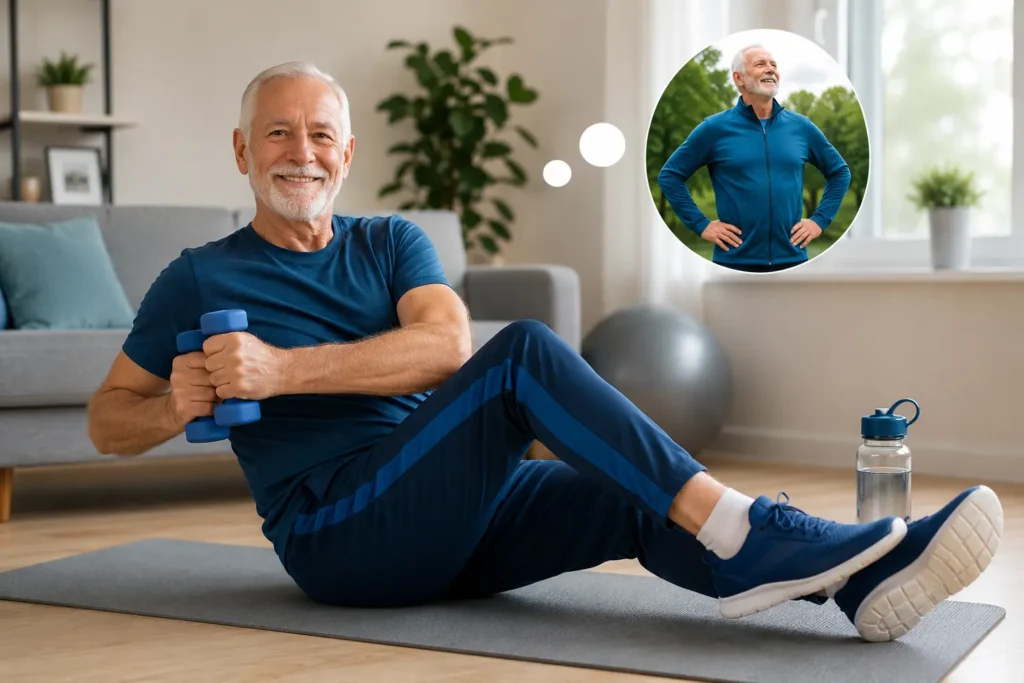
Short sessions also lower the barrier to starting. A quick workout for seniors feels doable. A one-hour session feels like a chore, and chores get skipped.
This is a daily exercise routine for seniors that fits into real life. You can do it before breakfast, during a TV ad break, or right after your morning coffee.
How Often Should Seniors Exercise?
The honest answer: most days, in some form.
The National Institute on Aging (NIA), through its Go4Life program, encourages older adults to move on most days of the week rather than saving activity for one intense session. Consistency matters more than intensity here.
Can seniors exercise every day? Yes, for most people, daily light-to-moderate movement is safe and encouraged. The key is variety. Rotate between strength, balance, and flexibility work so the same muscles and joints aren’t stressed every single day. If you’re managing a health condition, check with your doctor first. This article isn’t medical advice, just a practical starting point.
The Warm-Up (2 Minutes)
Skipping the warm-up is how people turn a good workout into a bad afternoon. Two minutes fixes that.
- March in place, lifting knees gently, for 30 seconds.
- Roll your shoulders forward and backward, 10 times each direction.
- Circle your ankles while seated, 10 times per foot.
- Take five slow, deep breaths to settle in.
This gentle warm-up loosens joints and raises your heart rate just enough to prepare for what’s next.
Standing Exercises for Older Adults (4 Minutes)
If standing balance feels steady for you, these standing exercises for older adults build real strength where it counts: legs, hips, and core.
1. Sit-to-Stand (1 minute)
Sit on a sturdy chair, feet flat on the floor. Stand up without using your hands, then sit back down slowly. Repeat for the full minute. This single move is one of the best strength exercises for seniors because it mirrors a movement you do dozens of times a day.
2. Wall Push-Ups (1 minute)
Stand an arm’s length from a wall. Place your palms flat against it, then bend your elbows to bring your chest closer, and push back. This builds upper body strength without any pressure on the wrists or knees.
3. Heel-to-Toe Walk (1 minute)
Walk in a straight line, placing the heel of one foot directly in front of the toes of the other. Hold onto a counter or wall if needed. This is a foundational balance drill used in physical therapy programs across the country.
4. Side Leg Raises (1 minute)
Hold onto a chair for support. Lift one leg out to the side, lower it, and switch. This strengthens the hips, which play a major role in preventing falls.
Chair Exercises for Seniors (4 Minutes)
If standing for long periods is uncomfortable, a seated workout for seniors delivers nearly the same benefits, minus the balance demand. Chair exercises for seniors are also perfect for rainy days, recovery periods, or simply mixing things up.

1. Seated Marching (1 minute)
Sit tall, lift one knee, then the other, as if marching in place. Keep your back straight and avoid slouching.
2. Seated Arm Circles (1 minute)
Extend your arms out to the sides and draw small circles, gradually making them larger. Switch directions halfway through.
3. Seated Leg Extensions (1 minute)
Straighten one leg out in front of you, hold for two seconds, then lower it. Alternate legs. This targets the quadriceps, which support knee stability.
4. Seated Torso Twist (1 minute)
Cross your arms over your chest and gently twist your upper body left, then right. Move slowly. This isn’t a race, and your spine will thank you.
Balance Exercises for Seniors (2 Minutes)
Falls are one of the leading causes of injury among older adults, according to the CDC. Exercises to improve balance and mobility don’t need to be complicated to make a real difference.
- Single-leg stand: Hold onto a chair, lift one foot slightly off the ground, and hold for 10 to 15 seconds. Switch sides.
- Weight shifts: Stand with feet hip-width apart and slowly shift your weight from one foot to the other.
Both moves train the small stabilizing muscles that keep you upright on uneven sidewalks, in crowded stores, or getting out of bed at 2 a.m.
Flexibility Exercises for Seniors (3 Minutes)
End the routine here, not because it’s optional, but because muscles stretch better when they’re already warm. Flexibility exercises for seniors reduce stiffness and make everyday movement, like reaching, bending, and turning, noticeably easier.
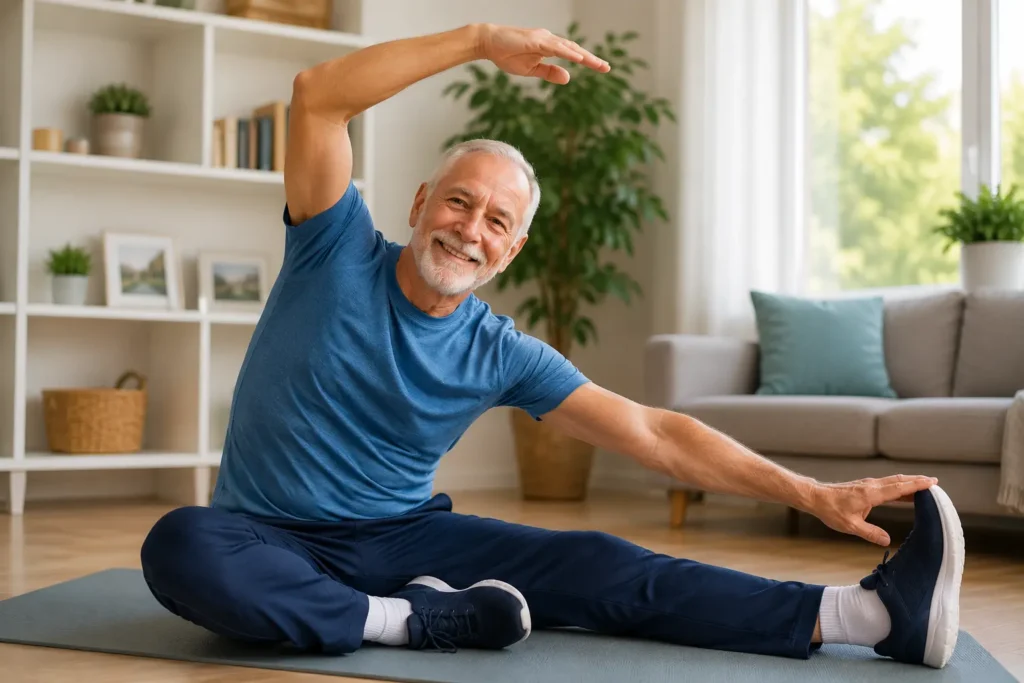
- Seated hamstring stretch: Extend one leg forward, flex your foot, and lean slightly forward. Hold for 20 seconds per side.
- Overhead reach: Raise both arms overhead and stretch upward, as if reaching for a shelf. Hold for 10 seconds.
- Neck stretch: Gently tilt your head toward one shoulder, hold for 10 seconds, then switch sides.
Putting It All Together: The Full 15-Minute Routine
Here’s the complete full body exercises for older adults sequence in one place:
| Time | Section | Focus |
|---|---|---|
| 0 to 2 min | Warm-up | Joint mobility |
| 2 to 6 min | Standing exercises | Strength, balance |
| 6 to 10 min | Chair exercises | Low-impact strength |
| 10 to 12 min | Balance exercises | Fall prevention |
| 12 to 15 min | Flexibility | Stretching, cool-down |
This is a genuine at home workout for seniors, no equipment required, no gym membership, and no complicated instructions to remember after the first few tries.
What Exercises Should Seniors Avoid?
Not every exercise trend belongs in a senior fitness plan. A few categories are worth skipping or approaching with real caution:
- High-impact jumping moves, like box jumps or jump squats, put unnecessary stress on joints.
- Heavy overhead lifting without proper form or supervision can strain the shoulders and lower back.
- Deep twisting combined with heavy loads, which raises spinal injury risk.
- Exercises that cause pain, not muscle fatigue, but actual sharp or joint pain, which is your body’s way of saying “not this one.”
Low impact exercises for seniors, like the ones in this routine, deliver strength and mobility benefits without the joint stress that high-impact training carries.
Is 15 Minutes of Exercise Enough for Seniors?
For many older adults, yes, especially when done consistently and combined with everyday activity like walking or gardening. Fifteen minutes of focused movement, done most days, adds up to meaningful strength, balance, and flexibility gains over weeks and months.
It’s not about doing more; it’s about doing it regularly. A short workout for older adults that actually happens every day beats an hour-long routine that only happens once a month.
What Is the Best Daily Workout for Seniors?
The best routine is the one that covers all four pillars: strength, balance, flexibility, and light cardio, and one that a person will actually stick with. That’s exactly why this senior fitness workout mixes standing and seated exercises, so it adapts to how you feel each day rather than forcing one rigid format.
FAQs:
Is 15 minutes of exercise enough for seniors?
For many older adults, yes, especially when done consistently and paired with everyday activity like walking or gardening. Fifteen focused minutes, repeated most days, adds up to real strength and balance gains over time.
What is the best daily workout for seniors?
The best routine covers all four pillars: strength, balance, flexibility, and light cardio, in a format the person will actually stick with. Mixing standing and seated exercises, like in this guide, keeps the routine doable even on tough days.
How often should seniors exercise?
Most days of the week, mixing strength, balance, and flexibility work, following CDC and NIA guidance for older adults. Rest isn’t required daily, but variety is.
What exercises should seniors avoid?
High-impact jumping moves, heavy overhead lifts without proper form, deep twisting under load, and anything that causes sharp pain rather than normal muscle fatigue.
Can seniors exercise every day?
Generally yes, as long as the routine rotates between different types of movement and doesn’t push through pain. Daily light-to-moderate activity is safe for most people.
What are the best low-impact exercises for older adults?
Chair exercises, wall push-ups, seated leg extensions, and balance drills like weight shifts are among the safest and most effective low-impact options, since they build strength without jarring the joints.
What is the best time of day for seniors to exercise?
Whatever time you’ll actually stick to. Many people prefer mornings, since energy and joint stiffness are more predictable, but evening sessions work just as well if that’s when motivation is highest.
Do seniors need rest days between workouts?
Not strictly, as long as the routine alternates focus areas. A strength-heavy day can be followed by a lighter balance-and-flexibility day, so the same muscles get a break without skipping movement altogether.
Final Thoughts:
Fitness after 60 doesn’t need to be intimidating. A 15 minute exercise for seniors routine like this one fits into a normal day, respects your joints, and still delivers real strength, balance, and flexibility gains. Start with what feels manageable, stay consistent, and let 15 minutes do more than you’d expect.
Source:
This article is for general informational purposes and isn’t a substitute for medical advice. Speak with your doctor before starting a new exercise routine, especially if you have an existing health condition. General guidance referenced here draws on publicly available recommendations from the CDC , the National Institute on Aging’s Go4Life program, and the World Health Organization.

Hi, I’m Salem Nasir, founder of Fiturely. I research and write evidence-based articles on fitness, nutrition, weight loss, and healthy living. My mission is to make reliable health information simple, practical, and easy to understand so readers can build healthier habits with confidence