
Key Takeaways
• Setting the right macro goals can make weight loss more effective and sustainable.
• Protein helps preserve muscle and keeps you feeling full longer.
• Carbohydrates provide energy to support workouts and daily activities.
• Healthy fats are important for hormone balance and overall health.
• Consistently following your macro targets can lead to long-term fat loss success.
If you’re trying to lose weight, counting calories is only part of the equation. The quality of those calories matters just as much. That’s where macro goals for weight loss come in.
Macronutrients-protein, carbohydrates, and fats-provide your body with energy and play different roles in fat loss, muscle preservation, and overall health. Setting the right balance can help you lose body fat while maintaining energy levels and muscle mass.
In this guide, you’ll learn how to calculate your macros, understand the ideal macro split for weight loss, and build a sustainable nutrition strategy that supports long-term results.
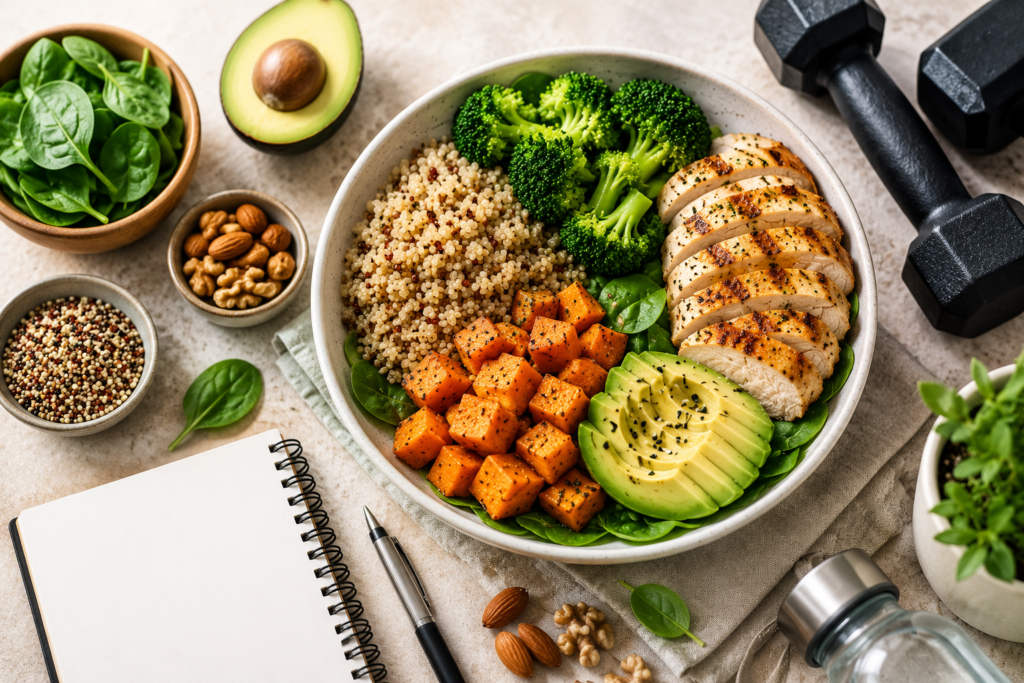
What Are Macro Goals for Weight Loss?
Macro goals for weight loss are personalized targets for protein, carbohydrates, and fats that support fat loss while maintaining health and muscle mass.
Unlike simple calorie counting, macro tracking focuses on where your calories come from.
The three macronutrients are:
- Protein: 4 calories per gram
- Carbohydrates: 4 calories per gram
- Fat: 9 calories per gram
A well-designed macro nutrition plan helps improve satiety, maintain muscle, and support sustainable weight management.
Macros Important for Weight Loss
Calories determine weight loss, but macros influence how your body responds to those calories.
Research consistently shows that adequate protein intake helps preserve lean muscle during calorie restriction.
At the same time, carbohydrates fuel physical activity, while dietary fats support hormone production and overall health.
Benefits of following a macro-based diet include:
- Better appetite control
- Increased dietary flexibility
- Improved muscle retention
- Sustainable eating habits
- Easier long-term weight management
How Do Macro Goals Support Fat Loss?
The primary driver of fat loss is a calorie deficit. Macros help make that deficit more effective and sustainable.
When your body consumes fewer calories than it burns, it uses stored energy, including body fat.
This is often referred to as using calorie deficit macros, where calorie intake is reduced while maintaining appropriate nutrient distribution.
For example:
- Higher protein can increase fullness.
- Moderate carbs can support workouts.
- Healthy fats help regulate hormones.
More balanced and manageable fat loss nutrition plan.
Best Macro Split for Weight Loss
There is no universal macro ratio that works for everyone. The best approach depends on your goals, body composition, and activity level.
However, many nutrition professionals recommend a balanced starting point.
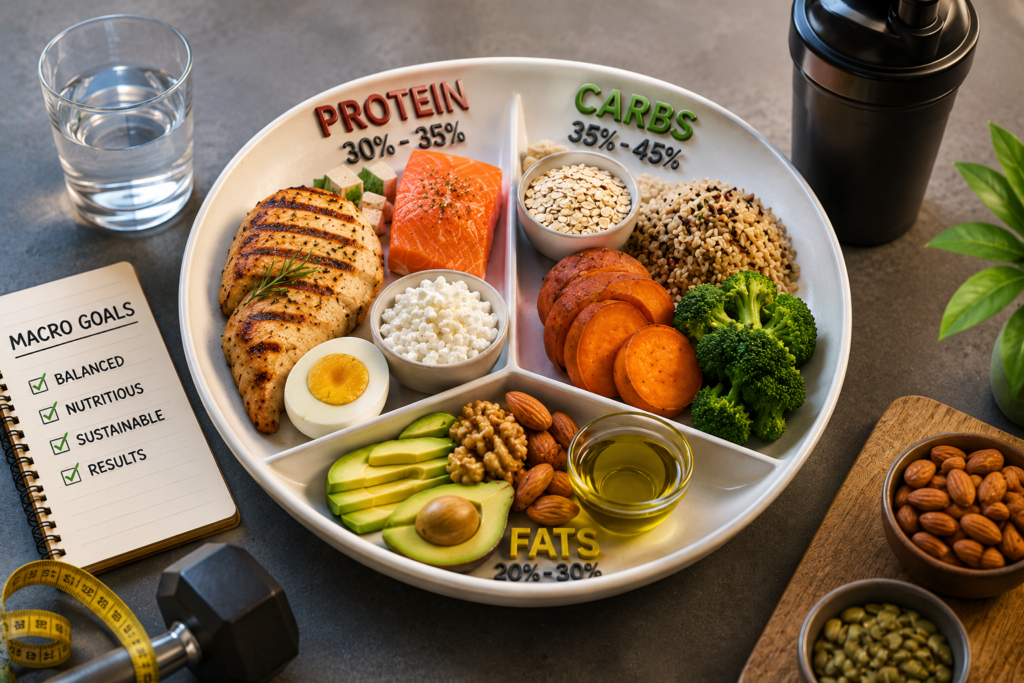
Example Macro Split for Weight Loss
| Macronutrient | Percentage |
|---|---|
| Protein | 30-35% |
| Carbohydrates | 35-40% |
| Fat | 25-30% |
This structure often works well because it prioritizes protein while maintaining sufficient energy from carbohydrates and fats.
Remember that your ideal macro split for weight loss may vary based on lifestyle and preferences.
How Much Protein Intake for Weight Loss?
Protein is often the most important macronutrient during fat loss.
Adequate protein intake for weight loss helps maintain muscle mass while dieting and can increase feelings of fullness.
According to research published by organizations such as the International Society of Sports Nutrition, active individuals often benefit from consuming approximately 1.4–2.2 grams of protein per kilogram of body weight.
Examples of high-protein foods include:
- Chicken breast
- Turkey
- Eggs
- Greek yogurt
- Fish
- Lean beef
- Cottage cheese
- Tofu
- Lentils.
Ideal Carb Intake for Fat Loss
Carbohydrates are not the enemy of weight loss. They are your body’s preferred energy source.
The right carb intake for fat loss depends on activity levels and personal preferences.
People who exercise frequently often perform better with moderate carbohydrate intake because carbs fuel workouts and recovery.
Healthy carbohydrate sources include:
- Oats
- Brown rice
- Sweet potatoes
- Fruits
- Vegetables
- Whole grains
- Beans.
How Much Healthy Fat Intake Do You Need?
Dietary fat supports hormones, brain function, and nutrient absorption.
Many people make the mistake of cutting fat too aggressively when trying to lose weight.
A reasonable healthy fat intake generally accounts for about 20–35% of daily calories.
Healthy fat sources include:
- Avocados
- Olive oil
- Nuts
- Seeds
- Fatty fish
- Natural nut butters
What Are Daily Macro Targets?
Daily macro targets are the specific grams of protein, carbs, and fats you aim to consume each day.
For example, someone eating 2,000 calories might have:
- Protein: 150 grams
- Carbs: 200 grams
- Fat: 55 grams
Your own daily macro targets should align with your calorie needs and activity levels.
Flexible Dieting Macros
Flexible dieting allows you to enjoy a variety of foods while still hitting your macro goals.
This approach is often summarized as “If It Fits Your Macros” (IIFYM).
The concept focuses on total daily intake rather than labeling foods as good or bad.
Benefits of flexible dieting macros include:
- Less restriction
- Better adherence
- Reduced cravings
- Improved long-term consistency
Tracking Macros and Calories Effectively
Consistency beats perfection. Tracking provides awareness and accountability.
Popular tracking apps make tracking macros and calories easier than ever.
Helpful tips:
- Weigh foods when possible.
- Log meals before eating.
- Focus on weekly consistency.
- Track liquid calories.
- Review progress every few weeks.
The goal is progress, not perfection.
Macro-nutrients Plan Look Like?
The best fat-loss diets are balanced and sustainable.
A diet built around balanced macro-nutrients typically includes:
Breakfast:
- Eggs
- Oatmeal
- Fruit
Lunch:
- Chicken breast
- Rice
- Vegetables
Snack:
- Greek yogurt
- Nuts
Dinner:
- Salmon
- Sweet potato
- Salad
This type of structure supports overall nutrition goals for weight loss without feeling restrictive.
FAQs
What are the best macro goals for weight loss?
Most people benefit from a higher-protein approach with moderate carbs and healthy fats while maintaining a calorie deficit.
How much protein should I eat for weight loss?
Active individuals often consume around 1.4-2.2 grams of protein per kilogram of body weight.
Can I lose weight without tracking macros?
Yes. However, tracking often improves awareness and accuracy, especially for beginners.
Are carbs bad for fat loss?
No. The right carb intake for fat loss can improve workout performance, recovery, and overall adherence.
What is flexible dieting?
Flexible dieting allows people to eat a variety of foods while meeting daily macro and calorie goals.
How often should I adjust my macros?
Review progress every 2-4 weeks and make adjustments only if progress stalls.
Conclusion
Setting the right macro goals for weight loss can make dieting more effective, flexible, and sustainable. Instead of focusing only on calories, pay attention to your protein intake for weight loss, carb intake for fat loss, and healthy fat intake.
A well-designed macro nutrition plan built around balanced macronutrients, realistic daily macro targets, and a manageable calorie deficit can support long-term success.
Whether you prefer a structured approach or flexible dieting macros, the key is consistency. Build a sustainable macro-based diet, track your progress, and adjust your personalized macro goals as needed

Hi, I’m Salem Nasir, founder of Fiturely. I research and write evidence-based articles on fitness, nutrition, weight loss, and healthy living. My mission is to make reliable health information simple, practical, and easy to understand so readers can build healthier habits with confidence
Pingback: 10 Best Protein Bars for Weight Loss (2026): Low-Calorie, High-Protein Picks
Pingback: 5 Fruits That Could Be Sabotaging Your Weight Loss Goals
Pingback: 21 Healthy Lunch Ideas for Weight Loss (2026): High-Protein, Low-Calorie Meals