
If you wake up feeling like a rusty gate that needs oiling, you’re not alone, and you’re not broken. Your joints just need a gentle wake-up call before they go to work. Morning stretches for seniors are one of the simplest, cheapest, and most effective ways to loosen stiff joints, protect leg strength, and start the day without wincing.
This guide gives you a real, doable senior morning exercise routine backed by actual research, not vague “just stretch more” advice. You’ll get the science, the safety rules, a full routine, and a comparison table so you know exactly where to start.
Why Do Seniors Get So Stiff in the Morning?
Morning stiffness happens because joint fluid thickens overnight and muscles shorten from hours of inactivity. This is completely normal aging, not a sign something is wrong. It gets worse with age because cartilage naturally loses water content over time. The fix isn’t complicated: gentle movement restores fluid circulation within minutes.
Here’s the mechanism in plain English. While you sleep, synovial fluid (the natural lubricant in your joints) stops circulating as much. Muscles that support your spine, hips, and knees also relax and shorten. When you finally stand up, everything feels tight because it genuinely is tighter than it was 8 hours earlier.
According to the National Institute on Aging, regular stretching and low-impact movement are core components of healthy aging, alongside strength and balance work. This isn’t a fringe opinion. It’s baseline federal health guidance for older adults.
What Are the Real Benefits of Morning Stretching for Seniors?
Morning stretching improves flexibility, reduces fall risk, and eases joint pain within weeks of consistent practice. It also supports better posture and circulation. The CDC specifically lists flexibility and balance exercises as essential for adults 65 and older to prevent falls. This isn’t cosmetic fitness advice. It’s fall-prevention medicine.
Falls are the leading cause of injury-related death among adults 65+ in the United States, according to the CDC’s National Center for Injury Prevention and Control. That single fact should change how anyone views a 10-minute stretch routine. It’s not optional self-care, it’s protective maintenance.
A few more facts worth knowing:
- The CDC reports that 1 in 4 older Americans falls each year, but many falls are preventable through balance and mobility work.
- The World Health Organization recommends that older adults do muscle-strengthening and balance activities at least 3 days a week as part of overall physical activity guidelines.
- A 2021 study published in the Journal of Aging and Physical Activity found that consistent stretching routines improved hip and shoulder range of motion in adults over 60 within 8 weeks.
- Harvard Health Publishing notes that stretching combined with light strength work helps reduce lower back pain, one of the most common complaints in older adults.
- Statista’s 2023 data on U.S. senior wellness habits shows a growing share of adults 65+ now use structured home fitness routines rather than gym memberships, reflecting the shift toward accessible, low impact movement.
Put simply: this is not a “nice to have.” It’s a well documented, low cost intervention with real backing.
How Long and How Often Should Seniors Stretch?
Most seniors benefit from 10 to 15 minutes of stretching daily, or at minimum 3 to 4 times per week. Consistency matters more than duration. Even 5 minutes daily beats 30 minutes once a week. The CDC and WHO both emphasize frequency over intensity for older adults.
If mornings feel too rushed, a 5 minute morning stretches for seniors version focused only on neck, shoulders, and hips still delivers real benefit. On days with more time, a 10 minute morning stretching routine for seniors covering the full body is ideal.
Think of it like brushing your teeth. Nobody skips it because they’re “too busy.” It just happens because it’s short and habitual. Stretching deserves the same status.
Is It Safe to Stretch Right After Waking Up?
Yes, but gentle warm-up movement should come first. Cold muscles are more prone to strain than warmed-up ones. A short warm-up before stretching, like marching in place or ankle circles for 60 seconds, makes the whole routine safer and more effective.
Here’s a simple rule: if a stretch causes sharp pain, stop immediately. Mild tension is normal; pain is a warning sign. This single distinction prevents most stretching related injuries in older adults.
Breathing matters too. Slow, steady breathing during stretching helps muscles relax and prevents holding your breath, which can spike blood pressure momentarily. Inhale before you stretch, exhale as you ease into the position.
The Full Morning Stretching Routine for Seniors (Step by Step)
Below is a complete, beginner-safe stretching routine for seniors, combining seated morning stretches for seniors and standing options. Hold each stretch for 15 to 30 seconds, breathing normally throughout.
1. Neck Stretches (Seated or Standing)

Gently tilt your head toward one shoulder, hold, then switch sides. This relieves overnight tension and improves upper spine mobility. Avoid rolling your neck in full circles; a straight tilt is safer for aging joints.
2. Shoulder Stretches and Upper Back Stretches

Roll your shoulders backward slowly 5 to 8 times, then clasp your hands and reach forward to round the upper back. This combo targets two common stiffness zones at once, great for anyone who sleeps on their side.
3. Chest Stretches and Arm Stretches

Clasp your hands behind your back and gently lift, opening the chest. Follow with a simple overhead arm reach if balance allows. This counteracts the forward hunched posture common after a night of sleep.
4. Side Stretches and Spine Mobility

Reach one arm overhead and lean gently to the opposite side. This wakes up the spine and improves spine mobility without any twisting strain, which is safer for sensitive backs.
5. Lower Back Stretches and Hip Stretches
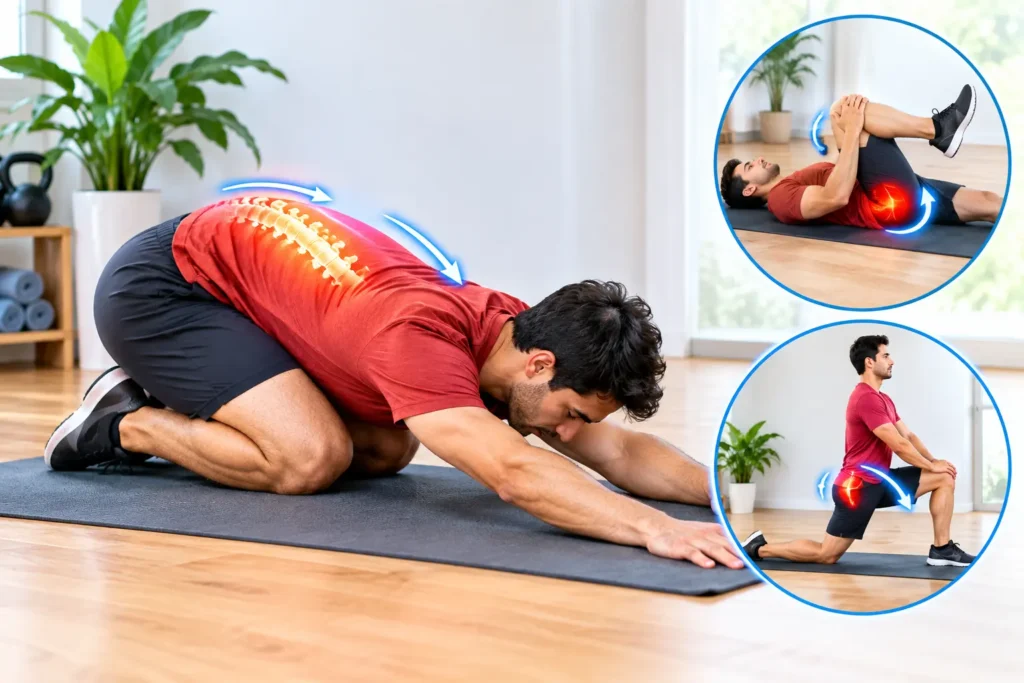
While seated, gently pull one knee toward your chest, then switch legs. This is one of the safest hip mobility moves and directly supports lower back comfort throughout the day.
6. Hamstring Stretches and Hip Mobility
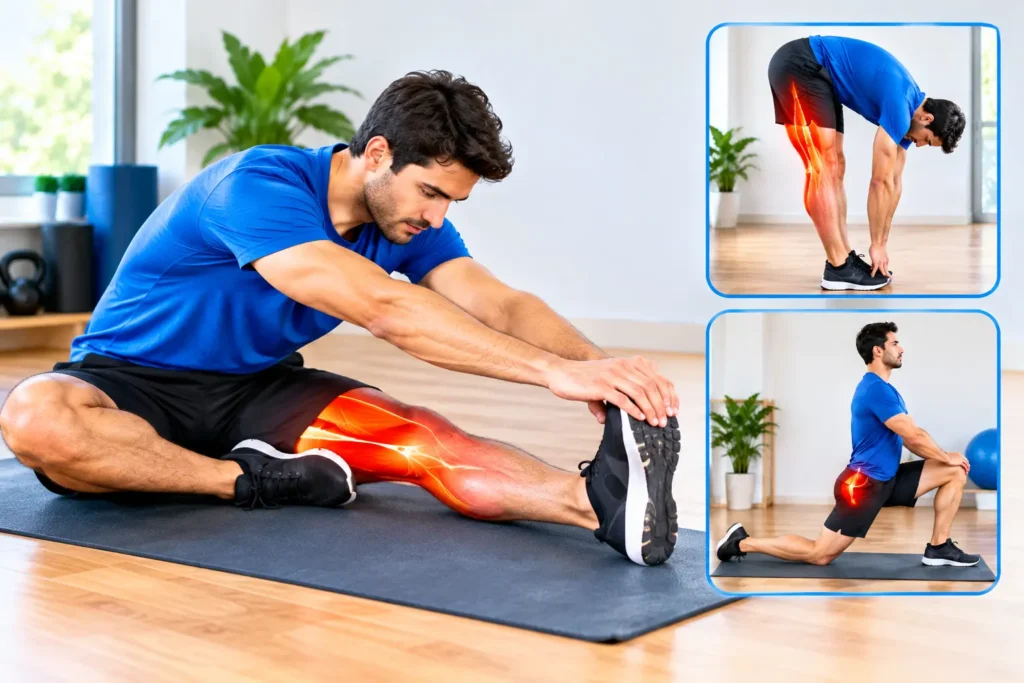
Extend one leg with a slight knee bend and lean forward gently from the hips, not the back. This targets tight hamstrings, a major contributor to lower back pain in older adults.
7. Calf Stretches and Ankle Mobility
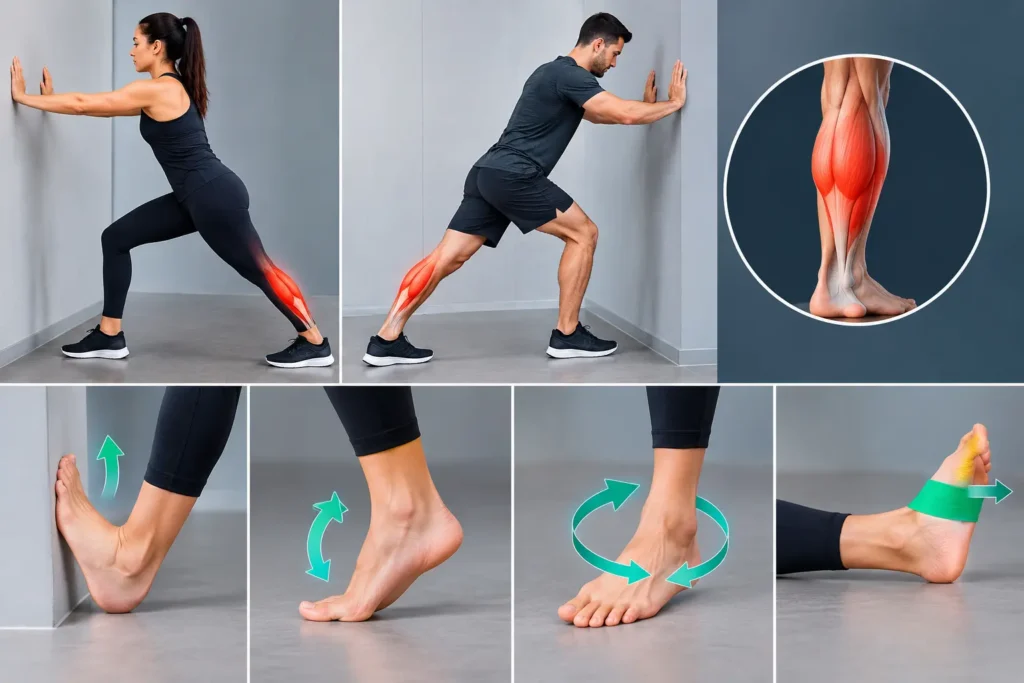
Stand facing a wall, step one foot back, and press the heel down gently. This supports ankle mobility, which directly affects balance and walking stability, a top priority in any senior fitness plan.
8. Balance Exercises to Finish
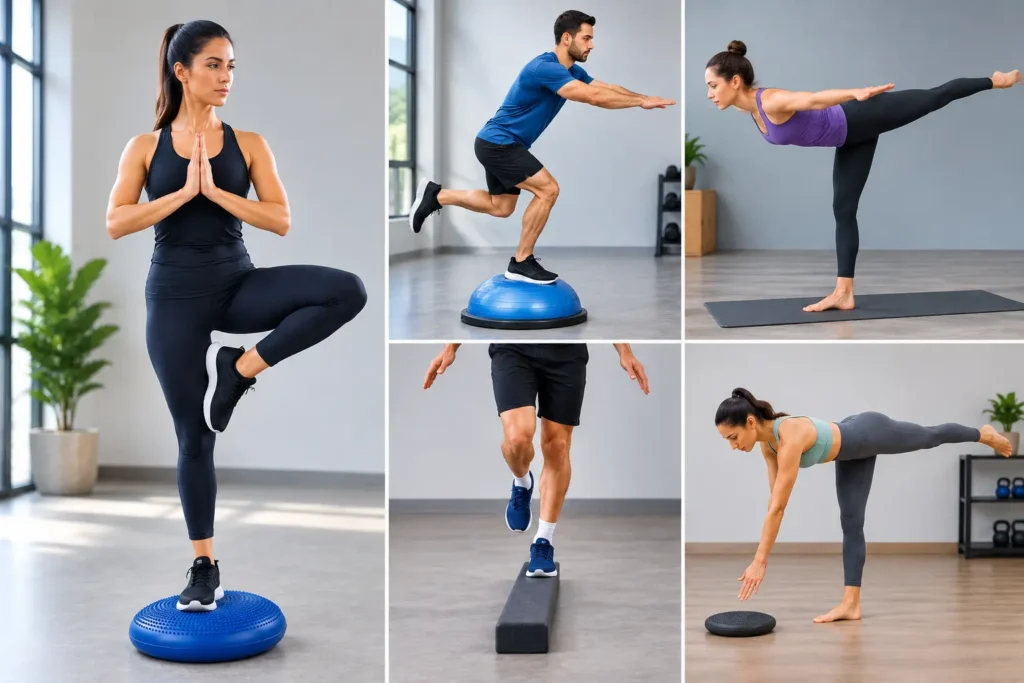
End with 20 to 30 seconds of standing on one foot near a stable chair. This isn’t technically a stretch, but pairing balance exercises with mobility work is one of the most effective combinations for fall prevention.
Seated vs. Standing Stretches: Which Should Seniors Choose?
Seated stretches are safer for balance concerns; standing stretches build more functional strength and stability. The right choice depends on your current mobility level, not your age alone. Many seniors benefit from mixing both types in the same routine.
| Feature | Seated Stretches | Standing Stretches |
|---|---|---|
| Best for | Balance issues, beginners | Confident movers, building strength exercise habits |
| Fall risk | Very low | Low, with support nearby |
| Targets | Neck, shoulders, hips, hamstrings | Calves, ankles, full body flexibility training |
| Equipment needed | Sturdy chair | Wall or chair for support |
| Good starting point? | Yes, ideal for beginner stretches for seniors | Yes, once seated stretches feel easy |
If you have morning stretches for seniors with balance issues, start seated exclusively for the first two weeks, then slowly add standing options as confidence builds.
Safety Tips Every Senior Should Follow
Never stretch to the point of pain, always keep a chair nearby, and check with your doctor before starting if you have joint replacements or osteoporosis. These aren’t overly cautious suggestions. They’re the same guidance found in CDC fall-prevention materials.
A few more practical tips:
- Wear non slip shoes or grip socks, even at home.
- Stretch on a non slippery surface, not a soft mattress.
- Avoid holding your breath; it can spike blood pressure briefly.
- Skip any stretch that involves twisting the neck fully around.
- If you feel dizzy standing up, sit back down immediately and rest.
None of this is meant to scare you off. It’s meant to make the habit sustainable for years, not just weeks.
Building a Daily Senior Fitness Routine Beyond Stretching
Stretching works best when paired with light strength and balance training, not as a replacement for them. The WHO’s physical activity guidelines for older adults recommend combining aerobic activity, muscle-strengthening, and balance work weekly. Stretching is one piece of a bigger picture.
Once morning stretches feel easy, consider adding light strength exercise like sit-to-stands for leg strength, or resistance band work for the arms. This progression turns a simple stretch routine into a complete daily senior fitness routine without ever needing a gym membership.
Frequently Asked Questions
How long should seniors stretch each morning?
Around 10 to 15 minutes is ideal, but even 5 minutes done consistently is better than a longer session done rarely. Start small and build up as your body adapts.
What is the best time of day for seniors to stretch?
Right after waking, once you’ve done a short warm-up, works well because it loosens overnight stiffness before you start moving around the house. Some seniors also prefer a second short session in the evening to ease tension before bed.
Can stretching alone improve balance?
Stretching helps, but pairing it with dedicated balance exercises produces stronger, more reliable results. The CDC’s fall-prevention research consistently pairs flexibility work with balance training for the best outcomes.
Are standing stretches unsafe for seniors?
Not inherently. They’re unsafe only without support nearby. Using a wall or chair makes standing stretches accessible for most seniors, even those with mild balance concerns.
Do seniors need any special equipment to start stretching at home?
No. A sturdy chair, comfortable clothing, and a non slippery floor are enough to begin. This is one of the reasons stretching remains one of the most accessible forms of senior fitness available.
Final Thoughts
You don’t need fancy equipment, a gym membership, or an hour of free time to feel less stiff in the morning. A short, low impact stretching habit, done consistently, genuinely changes how your joints feel by week two or three. Start with five minutes tomorrow morning. Your knees will thank you by Thursday.
References
- National Institute on Aging, “Four Types of Exercise Can Improve Your Health and Physical Ability”
- Centers for Disease Control and Prevention, “Older Adult Fall Prevention”
- World Health Organization, “Physical Activity” Fact Sheet
- Harvard Health Publishing, “The Importance of Stretching”
- Journal of Aging and Physical Activity, Human Kinetics Journals.
- Statista, “Health and Fitness in the United States” statistics portal.

Hi, I’m Salem Nasir, founder of Fiturely. I research and write evidence-based articles on fitness, nutrition, weight loss, and healthy living. My mission is to make reliable health information simple, practical, and easy to understand so readers can build healthier habits with confidence