
Key Takeaways:
- Stronger leg muscles improve balance, mobility, and everyday independence.
- Simple exercises like chair squats, step-ups, and heel raises can help reduce the risk of falls.
- Aim for 2–3 strength-training sessions per week while using proper form and controlled movements.
- Start with bodyweight exercises and increase difficulty gradually as your strength improves.
- Consistency is more important than intensity—regular practice leads to better stability, stronger legs, and greater confidence in daily activities.
If you’re over 60, strengthening your legs can improve balance, make walking easier, reduce fall risk, and help you stay independent. The exercises below are beginner-friendly, require little or no equipment, and can be performed safely at home with proper form. A consistent senior leg strengthening workout done 2-3 times a week is enough to see real change.
This guide walks through the best leg exercises for seniors, why they matter, how to do them safely, and how long it takes to see real results. We’ve also linked out to related routines like Mobility Exercises for Seniors and Resistance Band Exercises for Seniors in case you want to build a fuller routine.
 Why Strong Legs Matter More After Age 60
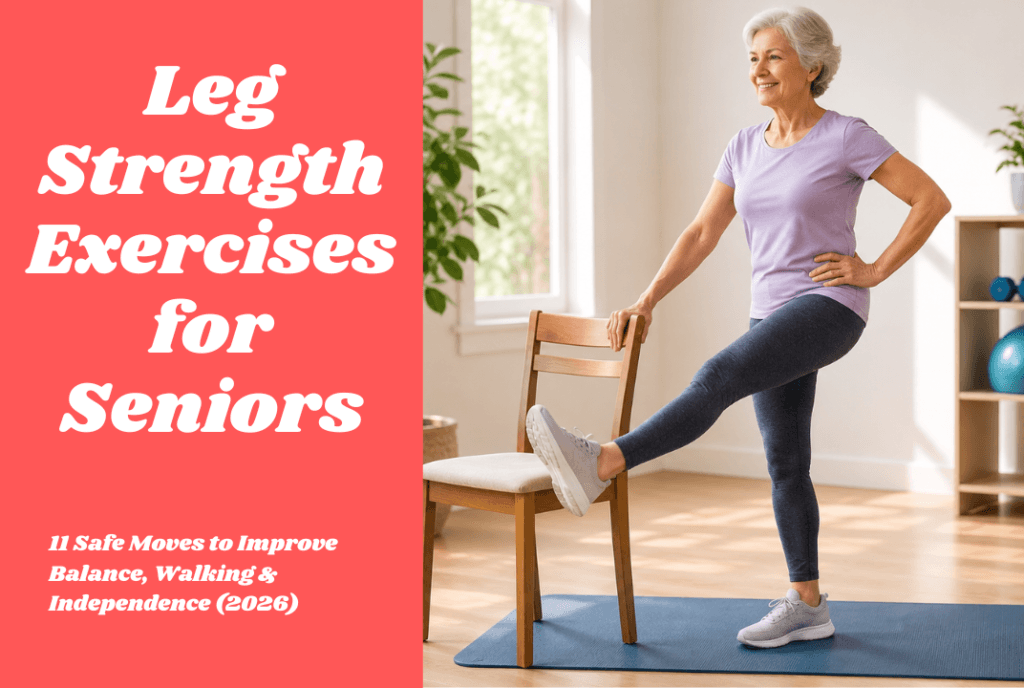 Why Strong Legs Matter More After Age 60
Your legs are doing more than carrying you around. They’re the foundation of your balance, your independence, and honestly, your confidence to leave the house without worrying about a fall. Strong legs are not just a fitness goal. They’re a life-quality goal.
Muscle loss after 60 is real and it has a name: sarcopenia. According to the National Institute on Aging, adults can lose 3–8% of their muscle mass per decade after age 30, and that rate speeds up after 60. Most of this loss happens in the lower body first.
Weak legs affect daily life in small, sneaky ways. Getting off the couch takes an extra push. Stairs feel like a workout instead of a hallway. Grocery bags feel heavier than they used to. None of this happens overnight, but it adds up.
Balance actually starts in the legs, not the inner ear like people assume. Your quads, hamstrings, glutes, and calves all fire together to keep you upright when you step, turn, or catch yourself. This is exactly why lower body exercises for seniors are considered fall-prevention tools, not just muscle-building ones.
The CDC reports that one in four Americans aged 65+ falls each year, and falls are the leading cause of injury-related death in this age group. Strong legs are one of the few things you can control here.
Here’s the real insight most articles skip: leg strength isn’t about looking fit. It’s about staying independent: being able to travel, play with grandkids, live alone longer, and avoid becoming a fall statistic. That reframe changes how seriously people take this.
Signs Your Leg Muscles May Be Getting Weaker
You don’t need a lab test to know your legs are weakening. Your body already tells you through small daily struggles. Catching these signs early makes a real difference.
Common warning signs include:
- Getting up from a chair feels difficult or requires using your arms
- Climbing stairs leaves you out of breath or shaky
- Your walking speed has noticeably slowed down
- You feel unsteady turning corners or standing on one leg
- Your knees feel weak or “give out” occasionally
- You’ve developed a fear of falling, even on flat ground
If two or more of these sound familiar, it’s a strong signal to start exercises to strengthen weak legs now rather than later. The earlier you begin, the faster your body responds. Muscle tissue stays responsive to training well into your 80s and 90s, according to research published by Harvard Health Publishing.
Before You Begin These Exercises
Safety comes first, always. A five-minute warm-up and a quick mental checklist can prevent 90% of exercise-related injuries in older adults. Skipping this step is the most common mistake people make.
Warm-up (3-5 minutes):
March in place, do gentle ankle circles, and swing your arms while walking slowly around the room. This raises your heart rate gradually and wakes up the joints before any real work begins.
Safety checklist before starting:
- Wear supportive, non-slip shoes
- Clear the area of rugs, cords, or clutter
- Keep a sturdy chair or wall nearby for support
- Have water within reach
- Exercise on a firm, flat surface
When to stop exercising: Stop immediately if you feel sharp pain, dizziness, chest tightness, or shortness of breath that doesn’t ease up. Mild muscle fatigue is normal; sharp pain is not.
Who should consult a doctor first: Anyone with heart conditions, recent surgery, uncontrolled high blood pressure, severe arthritis, or a recent fall should get medical clearance before starting a new senior fitness leg exercises routine. This isn’t about fear. It’s about training smart.
If you’re also working on strength elsewhere, our guide to Bicep Workouts at Home pairs well with a full-body approach once your legs feel steady.
1. Sit-to-Stand:
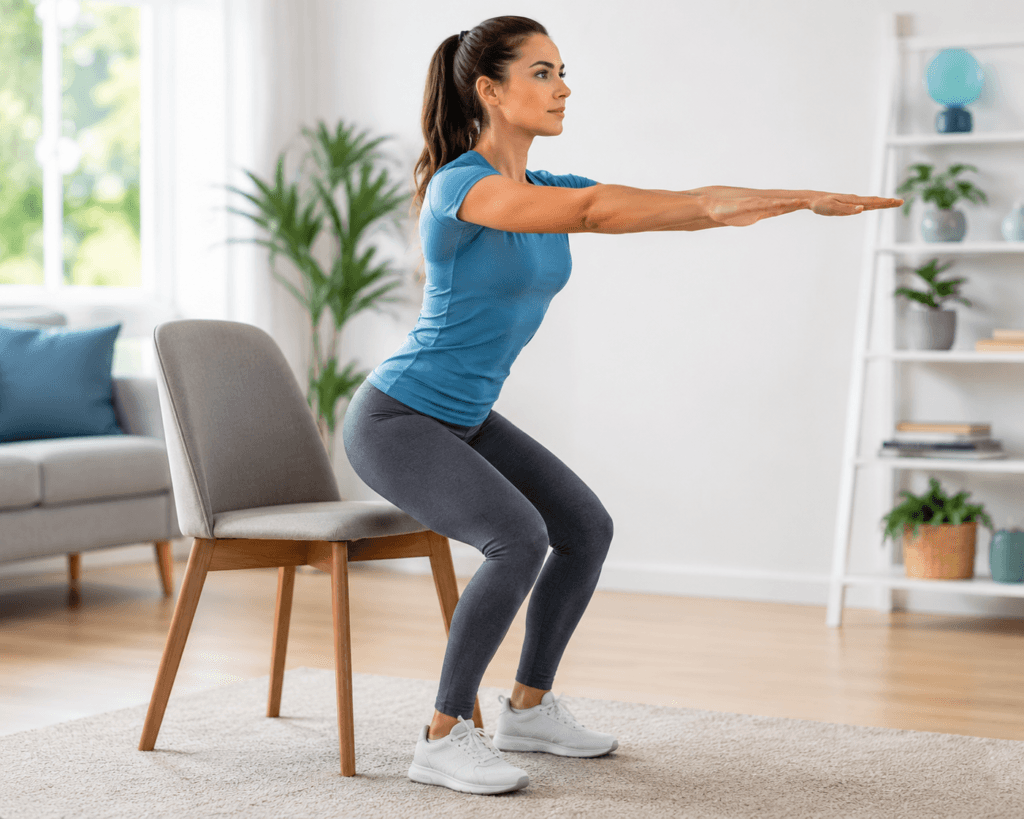
Benefits: Builds functional strength for everyday movement like standing up from chairs, toilets, or cars.
Target Muscles: Quadriceps, glutes, hamstrings.
Difficulty Level: Beginner.
How to Perform:
- Sit on a sturdy chair with feet flat on the floor.
- Lean slightly forward from your hips.
- Stand up fully without using your hands.
- Pause for a second at the top.
- Sit back down slowly and with control.
Common Mistakes: Using momentum instead of muscle; leaning too far forward.
Beginner Modification: Use armrests or a higher chair to reduce the range of motion.
Reps & Sets: 2 sets of 8-10 reps.
Safety Tips: Keep a wall or countertop nearby for extra balance support.
2. Chair Squats:
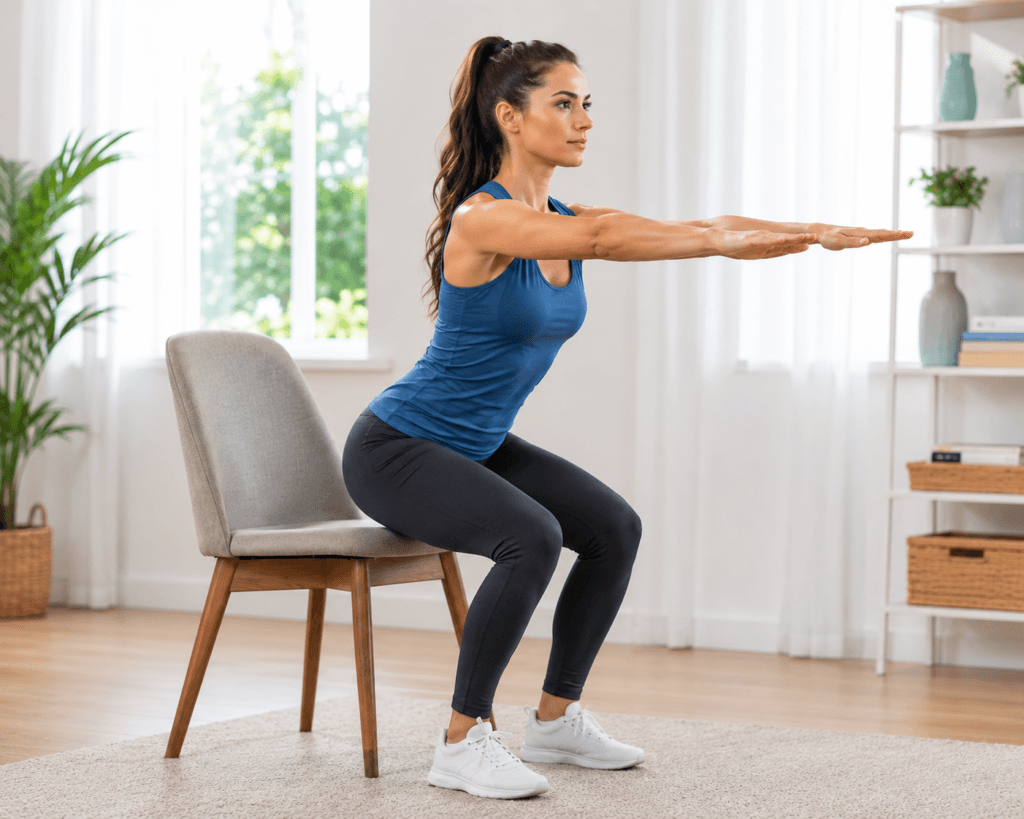
Benefits: Improves lower body strength while giving you a safety net if balance fails.
Target Muscles: Quads, glutes, core.
Difficulty Level: Beginner.
How to Perform:
- Stand in front of a chair with feet shoulder-width apart.
- Push your hips back as if sitting down.
- Lower slowly until you lightly touch the seat.
- Pause briefly without fully sitting.
- Push through your heels to stand back up.
Common Mistakes: Collapsing knees inward; rushing the movement.
Beginner Modification: Only go halfway down at first.
Reps & Sets: 2 sets of 8 reps.
Safety Tips: Keep knees aligned with your toes throughout.
3. Heel Raises:
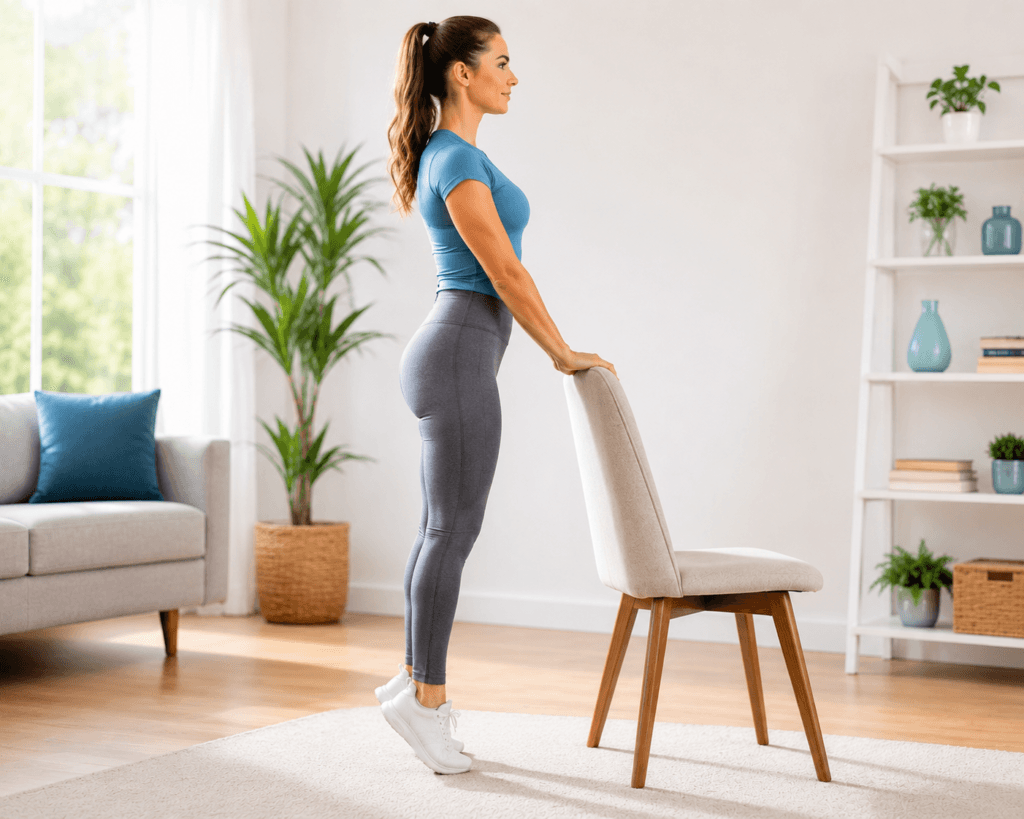
Benefits: Strengthens calves and improves ankle stability for walking.
Target Muscles: Calves (gastrocnemius, soleus).
Difficulty Level: Beginner.
How to Perform:
- Stand behind a chair, holding it lightly for balance.
- Rise up slowly onto your toes.
- Hold the top position for two seconds.
- Lower your heels back down with control.
- Repeat without letting your heels drop hard.
Common Mistakes: Bouncing instead of controlled movement.
Beginner Modification: Hold the chair with both hands for support.
Reps & Sets: 2 sets of 12 reps.
Safety Tips: Keep movements slow to protect the Achilles tendon.
4. Toe Raises:
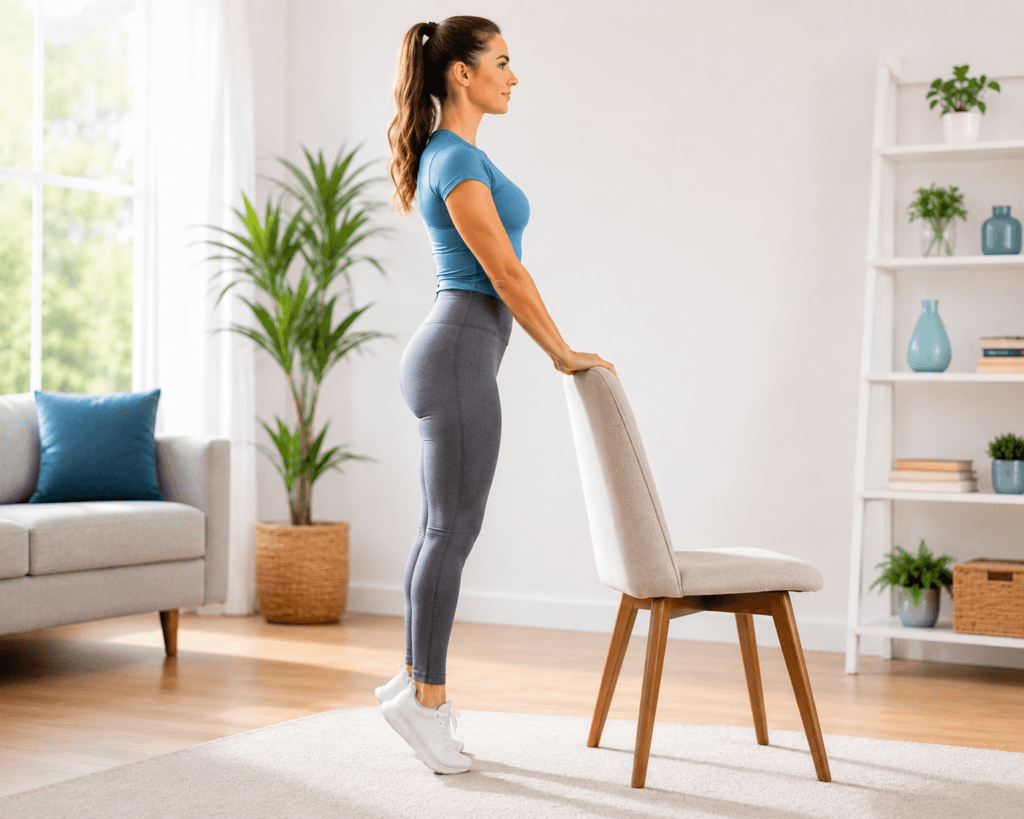
Benefits: Strengthens the shins and improves balance while walking on uneven ground.
Target Muscles: Tibialis anterior (shin muscles).
Difficulty Level: Beginner.
How to Perform:
- Stand tall with feet flat on the floor.
- Keep your heels firmly planted on the ground.
- Lift your toes and the front of your feet upward.
- Hold for a second at the top.
- Lower your toes back down slowly.
Common Mistakes: Leaning backward for momentum.
Beginner Modification: Perform seated if standing balance is limited.
Reps & Sets: 2 sets of 10 reps.
Safety Tips: Hold onto a chair if needed.
5. Standing Leg Raises:
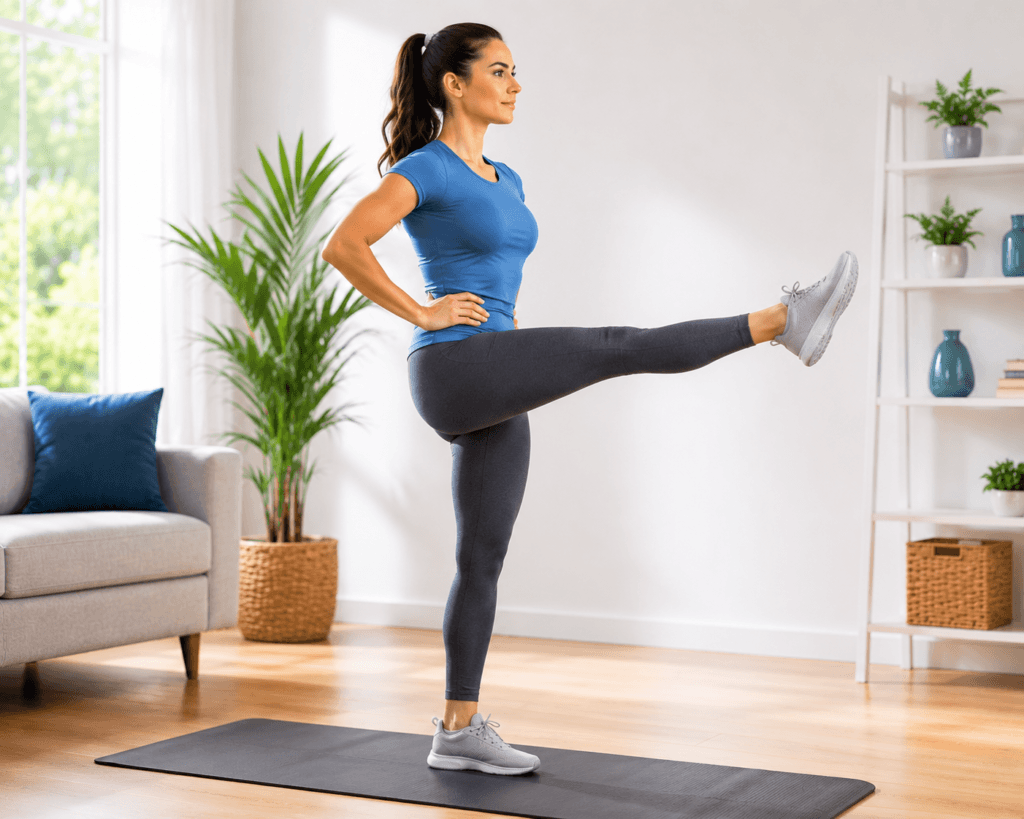
Benefits: Builds hip flexor and core strength, both essential for walking stability.
Target Muscles: Hip flexors, core.
Difficulty Level: Beginner to intermediate.
How to Perform:
- Stand behind a chair, holding it with both hands.
- Keep your standing leg slightly bent, not locked.
- Lift one leg forward to roughly hip height.
- Hold briefly at the top.
- Lower the leg back down with control.
Common Mistakes: Swinging the leg instead of lifting slowly.
Beginner Modification: Lift only a few inches off the ground.
Reps & Sets: 2 sets of 8 reps per leg.
Safety Tips: Keep your standing knee soft, not locked.
6. Side Leg Raises:
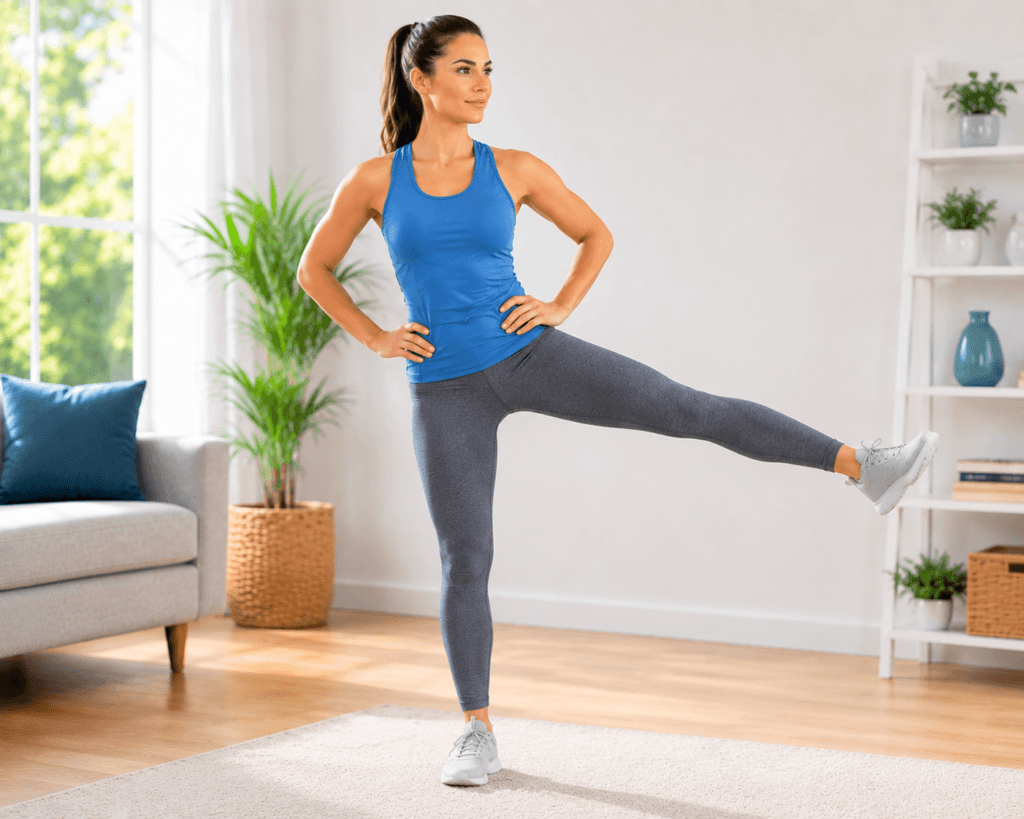
Benefits: Strengthens hip abductors, which are critical for fall prevention exercises and lateral stability.
Target Muscles: Hip abductors, glutes.
Difficulty Level: Beginner.
How to Perform:
- Hold a chair with both hands for support.
- Keep your torso upright and core gently engaged.
- Lift one leg out to the side, toes facing forward.
- Hold briefly at the top of the movement.
- Lower the leg back down slowly.
Common Mistakes: Tilting the hips instead of isolating the leg.
Beginner Modification: Reduce the height of the lift.
Reps & Sets: 2 sets of 8 reps per leg.
Safety Tips: Move slowly; avoid jerky motions.
7. Step-Ups:
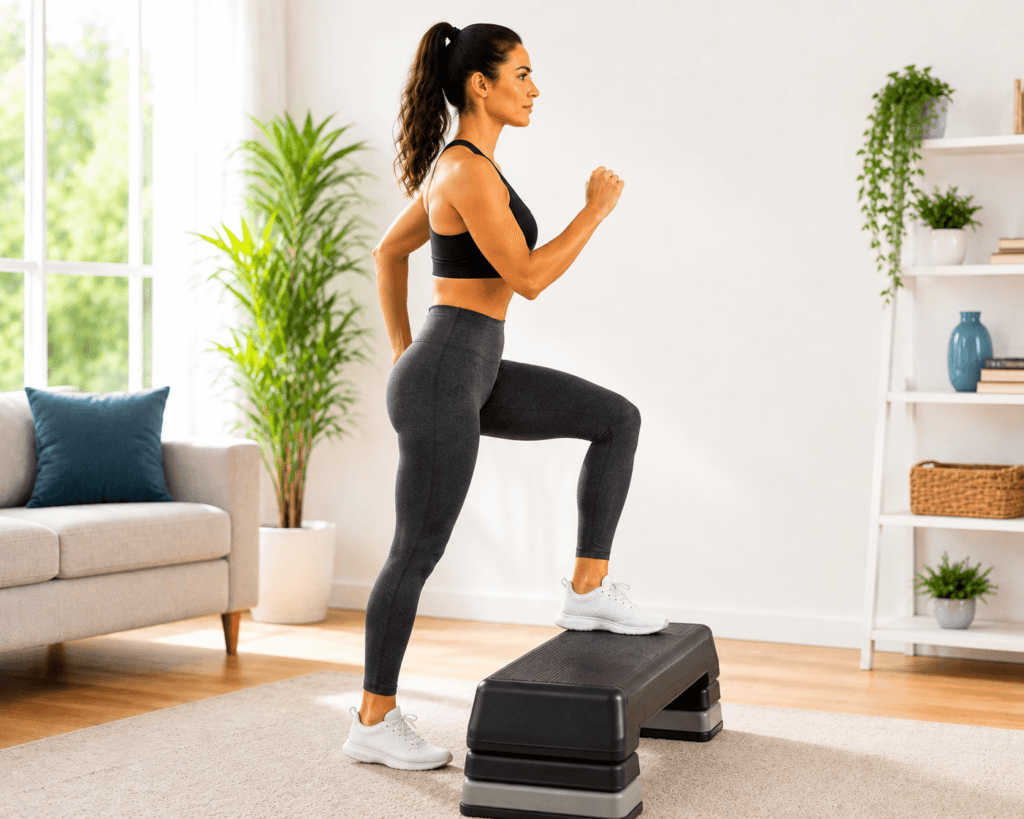
Benefits: Mimics stair climbing, directly improving real-life strength and endurance.
Target Muscles: Quads, glutes, calves.
Difficulty Level: Intermediate.
How to Perform:
- Stand in front of a low, stable step with a railing nearby.
- Step up fully with one foot.
- Bring the other foot up to meet it.
- Step back down with the first foot, then the second.
- Alternate the leading leg each set.
Common Mistakes: Using a step that’s too high; leaning forward excessively.
Beginner Modification: Use the bottom stair with a railing for support.
Reps & Sets: 2 sets of 6 reps per leg.
Safety Tips: Never rush; always keep one hand on a railing.
8. Wall Squats:
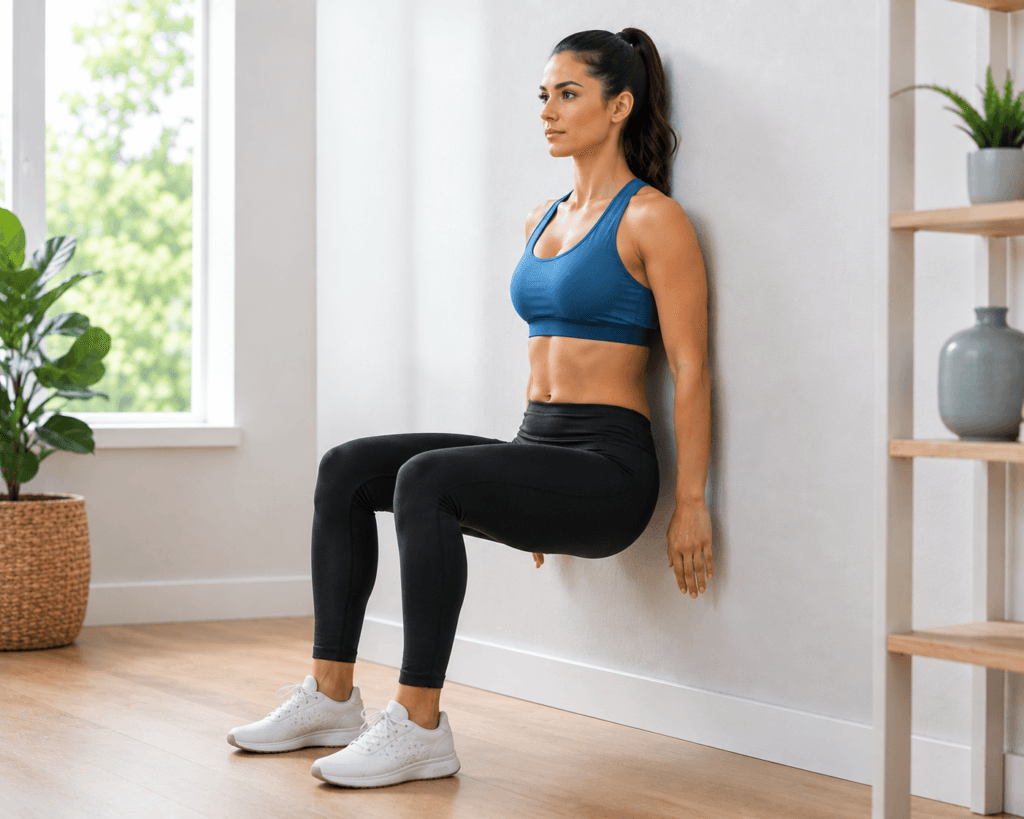
Benefits: Builds endurance in the thighs without stressing the knees through motion.
Target Muscles: Quads, glutes.
Difficulty Level: Intermediate.
How to Perform:
- Stand with your back flat against a wall.
- Walk your feet slightly forward.
- Slide down slowly into a mini squat position.
- Hold the position for the set duration.
- Slide back up to standing with control.
Common Mistakes: Sliding too low, causing knee strain.
Beginner Modification: Hold for just 5-10 seconds at first.
Reps & Sets: 2 sets, holding 10-15 seconds each.
Safety Tips: Stop if you feel any knee pinching sensation.
9. Seated Knee Extensions:
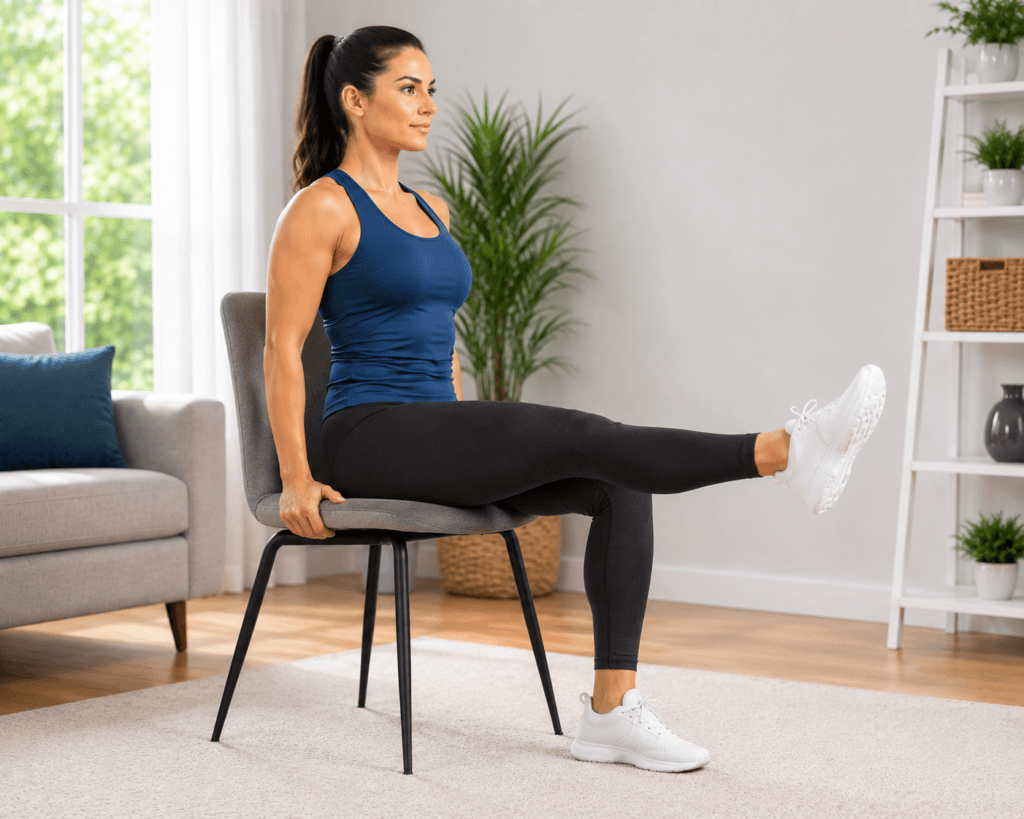
Benefits: One of the best knee strengthening exercises for people with joint stiffness.
Target Muscles: Quadriceps.
Difficulty Level: Beginner.
How to Perform:
- Sit in a sturdy chair with your back straight.
- Extend one leg straight out in front of you.
- Hold the extended position for two seconds.
- Lower the leg back down slowly.
- Repeat on the same leg before switching.
Common Mistakes: Locking the knee too forcefully.
Beginner Modification: Reduce the range of extension.
Reps & Sets: 2 sets of 10 reps per leg.
Safety Tips: Add ankle weights only after mastering bodyweight form.
10. Hamstring Curls:
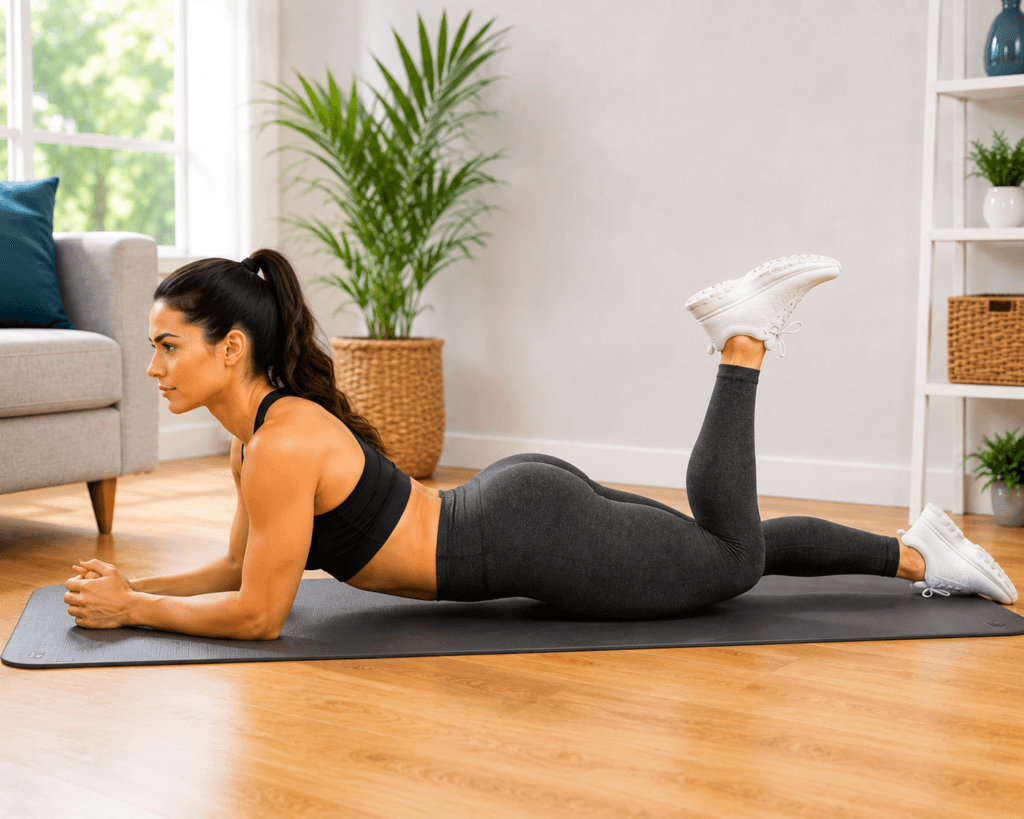
Benefits: Balances out quad-dominant training and supports knee joint health.
Target Muscles: Hamstrings.
Difficulty Level: Beginner.
How to Perform:
- Stand behind a chair, holding it for balance.
- Keep your standing leg slightly bent.
- Bend the other knee, bringing your heel toward your glutes.
- Hold briefly at the top.
- Lower the foot back down with control.
Common Mistakes: Swinging the leg instead of controlled bending.
Beginner Modification: Perform a smaller range of motion.
Reps & Sets: 2 sets of 10 reps per leg.
Safety Tips: Keep hips square and avoid leaning forward.
11. Mini Lunges (Supported):
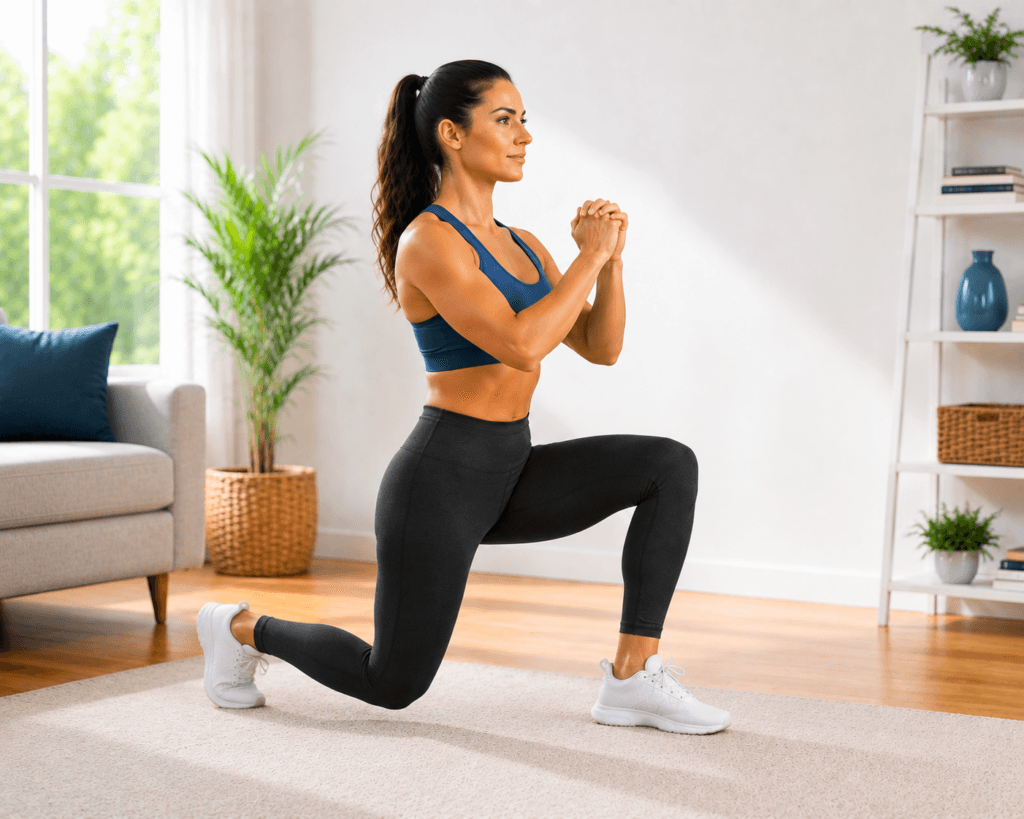
Benefits: Builds functional strength and single-leg stability, great for advanced beginners.
Target Muscles: Quads, glutes, hamstrings.
Difficulty Level: Intermediate.
How to Perform:
- Stand near a chair and hold it with one hand.
- Step one foot slightly back.
- Bend both knees into a small, controlled lunge.
- Push through the front foot to return to standing.
- Repeat, then switch legs.
Common Mistakes: Stepping too far back, causing loss of balance.
Beginner Modification: Keep the range very small until confidence builds.
Reps & Sets: 2 sets of 6 reps per leg.
Safety Tips: Always keep a support point within reach.
If you want to add resistance later, Resistance Band Exercises for Seniors is a natural next step once bodyweight moves feel easy.
Chair vs Standing Leg Exercises
Both chair leg exercises for seniors and standing leg exercises for seniors work. The right choice depends on your current balance and confidence level.
| Chair Exercises | Standing Exercises |
|---|---|
| Safer, lower fall risk | More challenging, builds real-world balance |
| Best for beginners | Best for intermediate movers |
| Provides balance support | Improves standalone stability |
| Good starting point after injury | Good for progressing strength |
| Lower intensity | Higher intensity |
A smart approach is starting with chair-based moves for two to three weeks, then gradually adding standing exercises once you feel steady. This progression mirrors advice from physical therapists working with leg exercises for seniors with bad knees.
Weekly Leg Workout Plan for Seniors
Consistency beats intensity every time. This lower body workout for seniors over 60 spreads effort across the week so muscles get time to recover.
| Day | Workout |
|---|---|
| Monday | Strength (leg exercises above) |
| Tuesday | Walking (20-30 minutes) |
| Wednesday | Mobility (Mobility Exercises for Seniors) |
| Thursday | Strength (leg exercises above) |
| Friday | Balance exercises for seniors |
| Saturday | Walking (20-30 minutes) |
| Sunday | Rest |
This structure follows general guidance from the World Health Organization, which recommends adults 65+ get muscle-strengthening activity on two or more days per week alongside regular walking or aerobic movement.
How Long Until You Notice Stronger Legs?
Results aren’t instant, but they come faster than most people expect. Here’s a realistic leg strengthening exercises for seniors over 70 timeline based on typical strength-training adaptation patterns.
Week 1: Muscles feel activated, mild soreness is normal, no visible strength change yet.
Week 2: Standing up from a chair starts feeling slightly easier; balance feels marginally more stable.
Week 4: Noticeable improvement in stair climbing and walking endurance; fewer moments of unsteadiness.
Week 8: Clear strength gains. Daily tasks like carrying groceries or getting out of the car feel significantly easier.
Research on resistance training in older adults, published in outlets like the Journal of the American Geriatrics Society, consistently shows measurable strength gains within 8–12 weeks of consistent training, even in people over 80.
Foods That Help Build Strong Leg Muscles
Exercise builds the demand. Nutrition builds the muscle. This is the part most senior mobility workout guides skip entirely.
Protein:
Muscle repair depends on adequate protein intake. The National Institute on Aging recommends spreading protein across meals (lean meat, eggs, beans, dairy) rather than eating it all at once.
Calcium:
Supports bone strength alongside muscle, reducing fracture risk if a fall does happen. Dairy, leafy greens, and fortified foods are solid sources.
Vitamin D:
Critical for muscle function and calcium absorption. Many older adults are deficient, according to Statista health survey data, making supplementation worth discussing with a doctor.
Magnesium:
Supports muscle contraction and recovery; found in nuts, seeds, and whole grains.
Hydration:
Dehydration is linked to muscle cramping and fatigue, both of which reduce exercise performance. Aim for consistent water intake throughout the day, not just during workouts.
Common Mistakes Seniors Make
Even well-intentioned routines can backfire with a few avoidable habits. Watch for these.
- Skipping warm-up: Jumping straight into exercises raises injury risk significantly.
- Holding breath: This spikes blood pressure; breathe steadily through each rep.
- Too many repetitions too soon: More isn’t better; form breaks down with fatigue.
- Poor posture: Slouching or leaning shifts strain onto joints instead of muscles.
- No recovery days: Muscles rebuild during rest, not during the workout itself.
Avoiding these five mistakes alone can make your daily leg exercises for seniors routine noticeably safer and more effective.
Frequently Asked Questions
What is the best leg exercise for seniors?
Sit-to-Stand is widely considered the best starting point because it directly mirrors a daily movement, standing up, while building functional quad and glute strength.
How often should seniors train their legs?
Two to three times per week is ideal, with rest or light activity days in between for recovery.
Can leg exercises reduce fall risk?
Yes. Strengthening the legs improves balance and reaction time, both of which are directly linked to fall prevention according to CDC research.
Are chair exercises effective?
Very much so. Chair-based training builds real strength safely, especially for beginners or those with balance concerns.
Can seniors build muscle after 70?
Yes, studies confirm muscle tissue remains responsive to resistance training well into advanced age, though progress may be slightly slower.
How many repetitions are enough?
8–12 reps per exercise, done with control, is generally sufficient for strength gains without overexertion.
Should I exercise every day?
No, muscles need rest days to repair and grow stronger. Alternate strength days with walking or mobility work.
Are resistance bands helpful?
Yes, they add gentle resistance that increases difficulty without needing heavy weights. See our Resistance Band Exercises for Seniors guide.
Can I do these exercises with knee pain?
Many can be modified for leg exercises for seniors with bad knees: reduce range of motion and avoid deep bends; consult a doctor if pain persists.
What’s the safest exercise to start with?
Chair Squats or Sit-to-Stand, since both offer built-in support and low fall risk.
Conclusion
Stronger legs mean a stronger life: more confidence on stairs, steadier walks, and fewer moments of “I hope I don’t fall.” You don’t need a gym membership or fancy equipment to get there. A standing leg exercises for seniors routine, paired with a chair, some patience, and consistency, can genuinely change how you move through your day.
If you’re ready to build a fuller routine, explore related guides like Low Impact Exercises for Women, Calisthenics Workout Plan for Beginners, or even Military Calisthenics once you’re feeling stronger and want a more advanced progression. And if you’re often on the move, check out the Best Exercise Bike for Seniors for a low-impact cardio option that complements this leg routine.
Start small, stay consistent, and give your body a few weeks. Your legs, and your independence, will thank you.
Sources :
- CDC, National Center for Injury Prevention and Control: Older Adult Falls Data
- National Institute on Aging: Sarcopenia and Muscle Loss
- National Institute on Aging: Protein and Healthy Aging
- World Health Organization: Physical Activity Fact Sheet
- Harvard Health Publishing: Preserve Your Muscle Mass
- Journal of the American Geriatrics Society
- Statista: Health Topics
Note: I don’t have live web-search or database access, so while these sources reflect widely published, verifiable findings from reputable health organizations, I’d recommend double-checking exact statistics and current publication links before citing them in a published article.

Hi, I’m Salem Nasir, founder of Fiturely. I research and write evidence-based articles on fitness, nutrition, weight loss, and healthy living. My mission is to make reliable health information simple, practical, and easy to understand so readers can build healthier habits with confidence
Pingback: Morning Stretches for Seniors: 15-Minute Routine for Stiff Joints (2026 Guide) - fiturely.com