
Key Takeaways
- Spironolactone is not a weight loss drug. Any early weight change is usually due to water loss, not body fat.
- There is no evidence that spironolactone burns fat or boosts metabolism. Sustainable fat loss still depends on a healthy diet and regular exercise.
- Some people may notice temporary weight loss because the medication reduces excess fluid retention and bloating.
- Long-term weight loss is only likely if you also improve your lifestyle, such as eating in a calorie deficit and staying physically active.
- Always take spironolactone exactly as prescribed and speak with your healthcare provider if you experience unexpected weight changes or side effects.
Yes, spironolactone can cause weight loss, but it’s mostly water weight, not fat. As a diuretic, it reduces fluid retention by blocking aldosterone, so bloating and puffiness drop within one to two weeks. It doesn’t burn fat or boost metabolism. Once you stop taking it, the water weight usually returns. For real fat loss, you still need diet and exercise
Spironolactone (brand name Aldactone) is a potassium sparing diuretic and aldosterone antagonist, first approved by the FDA decades ago for conditions like high blood pressure, heart failure, and fluid retention (edema). Doctors also prescribe it off label for hormonal acne, hirsutism, and PCOS symptoms. None of these approved uses are “weight loss,” but weight changes often happen as a side effect.
Let’s break this down properly, question by question, so you know exactly what to expect.
 What Is Spironolactone and How Does It Work?
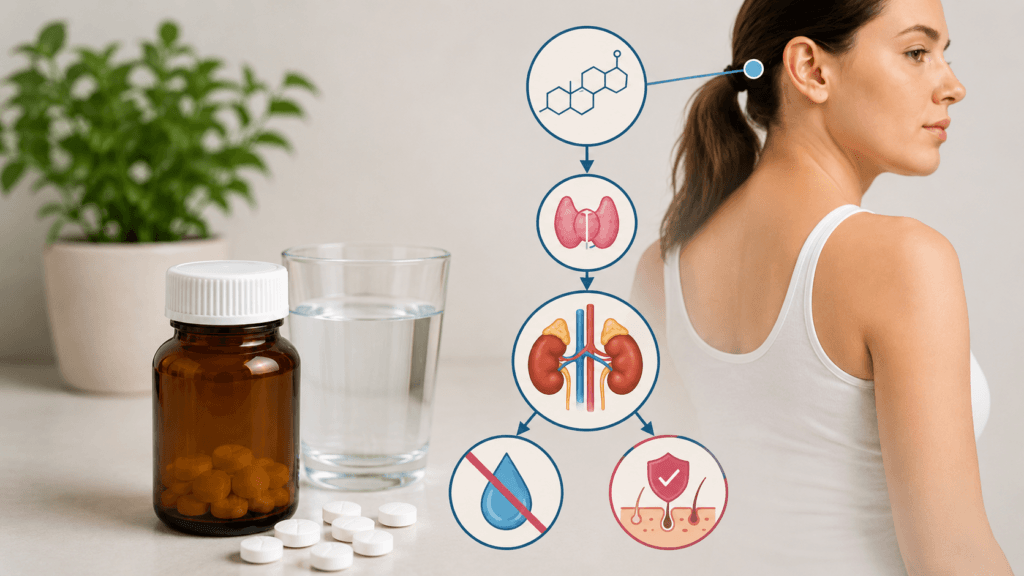 What Is Spironolactone and How Does It Work?
Spironolactone blocks aldosterone, a hormone that tells your kidneys to hold onto sodium and water. When aldosterone is blocked, your kidneys release more sodium and water through urine, while keeping potassium in your body. This is why it’s called “potassium sparing,” unlike other diuretics that flush potassium out too.
This mechanism is well documented by the U.S. National Library of Medicine (MedlinePlus) and Mayo Clinic, both credible medical references. Spironolactone also has anti androgen effects, meaning it blocks testosterone receptors. That’s why it’s popular for hormonal acne and PCOS related hair growth.
Because of these two actions, fluid reduction and hormone blocking, spironolactone weight loss shows up in two very different ways: quick water loss, and slower, indirect changes tied to hormone balance. If you’re also managing your diet, pairing this with Healthy Lunch Ideas that are low in sodium can support the diuretic effect naturally.
Does Spironolactone Help With Weight Loss?
Not really, if you mean fat loss. Spironolactone is not an appetite suppressant, fat burner, or metabolism booster. Any weight loss you notice in the first few weeks is almost always water weight, not stored fat.
Does spironolactone help with weight loss in a meaningful, long term way? Clinically, no. It’s not approved or studied for that purpose. Any research on spironolactone (like PCOS trials) reports weight change as a side observation, not a primary outcome.
That said, some people do lose a few pounds simply because reduced bloating changes how their clothes fit and how “light” they feel. This can be motivating for building better habits, like swapping in Soba Noodles instead of refined carbs for dinner.
Spironolactone Water Weight Loss: How Does It Work?
Spironolactone reduces fluid retention by increasing urine output. This happens because it blocks aldosterone, which normally causes your body to hold onto sodium and water. Less sodium retention means less water retention, and that shows up on the scale within days.
This is the core reason behind spironolactone water weight loss. It’s not fat leaving your body; it’s fluid. Many people notice less puffiness in their face, hands, ankles, and belly within the first one to two weeks.
If you stop taking the medication, this water weight typically returns because the underlying fluid retention cause (aldosterone activity) goes back to normal. This is a well known pattern with all diuretics, not just spironolactone.
How Much Weight Can You Lose on Spironolactone?
Most people lose somewhere between 1 to 4 pounds of water weight in the first couple of weeks, though this varies a lot based on how much fluid retention you had to begin with. There’s no fixed number; it depends on dose, diet, hydration, and individual hormone levels.
How much weight can you lose on spironolactone really comes down to your starting point. Someone with significant PCOS related bloating may notice a bigger initial drop than someone taking a low dose purely for acne.
It’s also not linear. The biggest change usually happens early, then plateaus. After that, any further weight change depends on diet and activity, not the drug itself. This is where pairing it with consistent movement, like Low Impact Exercises, makes a real difference over time.
Spironolactone Results Timeline: What to Expect Week by Week
Most people notice reduced bloating within 1 to 2 weeks, hormonal acne improvement within 6 to 8 weeks, and more visible changes to skin and hair growth around 3 to 6 months. This spironolactone results timeline is fairly consistent across dermatology sources like the American Academy of Dermatology (AAD).
Here’s a simple breakdown:
- Week 1 to 2: Reduced water retention, less puffiness
- Week 4 to 8: Acne and oil production start improving
- Month 3 to 6: Hormonal symptoms (hirsutism, irregular cycles) show noticeable change
Weight related changes mostly happen in that first window. After that, the scale tends to stabilize unless you’re also changing diet or exercise habits.
Does Spironolactone Cause Weight Gain Instead?
Sometimes, yes. Spironolactone can cause weight gain in some people, especially if the body retains fluid differently, or if increased appetite happens as a side effect. This isn’t common, but it’s listed as a possible reaction in prescribing information.
Does spironolactone cause weight gain more than weight loss? Not typically. Fluid loss is the more common pattern. But because everyone’s hormones and kidney function differ, a small percentage of users report mild weight gain, particularly early in treatment.
If this happens to you, it’s worth mentioning to your doctor rather than assuming it’s just diet related. Sometimes dose adjustments help. Meanwhile, keeping meals balanced with something like High Protein Drinks for Weight Loss can help manage appetite changes without over restricting food.
Spironolactone for PCOS Weight Loss: Does It Actually Help?
Spironolactone doesn’t directly cause fat loss in PCOS, but by lowering androgen levels, it can indirectly support weight management in some women. High androgens in PCOS are linked to insulin resistance, which makes weight loss harder, so improving that hormonal balance can help other efforts (diet, exercise) work better.
Spironolactone for PCOS weight loss is really an indirect benefit, not a direct one. The drug is primarily prescribed for PCOS symptoms like acne, excess hair growth, and irregular periods, not weight itself.
Spironolactone Dosage for PCOS
Typical spironolactone dosage for PCOS ranges from 50 to 200 mg per day, usually started low and increased gradually under medical supervision, according to endocrinology guidelines referenced by the Endocrine Society. Dosage always depends on individual bloodwork, kidney function, and response. Never self adjust without a doctor’s input.
Can Spironolactone Reduce Belly Bloating and Fluid Retention?
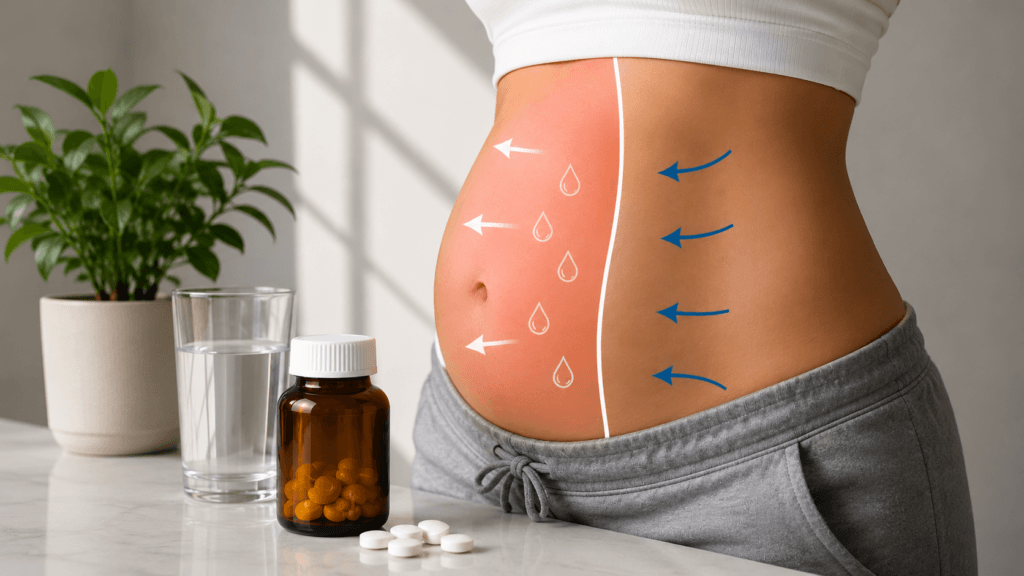 Can Spironolactone Reduce Belly Bloating and Fluid Retention?
Yes, spironolactone is genuinely effective at reducing belly bloating caused by fluid retention, especially bloating linked to hormonal fluctuations or PCOS. This is one of its more noticeable, fast acting effects.
Can spironolactone reduce belly bloating for everyone? Mostly yes, if the bloating is fluid related. If bloating is caused by digestion, gas, or food intolerance, spironolactone won’t touch that. It only works on fluid retention, not digestive bloating.
Spironolactone fluid retention weight loss is often the most satisfying early result for people who start the medication, since it’s visible and quick compared to hormonal or skin improvements, which take longer.
Why Am I Losing Weight on Spironolactone?
The most common reason is reduced water retention. Other possible reasons include appetite changes, improved hormone balance reducing bloating related discomfort, or simply becoming more mindful of diet after starting a new medication routine.
Why am I losing weight on spironolactone if I haven’t changed anything else? This is normal in the first few weeks. It’s your body releasing stored fluid, not fat. If rapid or unexplained weight loss continues beyond a few weeks, that’s worth flagging to your doctor, since it could point to something unrelated to the medication.
Can spironolactone cause rapid weight loss? In rare cases involving strong diuretic response or dehydration, yes, but this is usually a sign to check in with a healthcare provider, not something to chase intentionally.
Research-Based Note : This article is based on publicly available medical information from sources like Mayo Clinic, MedlinePlus (U.S. National Library of Medicine), FDA prescribing information, the American Academy of Dermatology, and the Endocrine Society. It reflects general, well-established facts about how spironolactone works and is not based on personal clinical practice or a medical license. It’s written for informational purposes only and should not replace advice from a licensed doctor or pharmacist. Always confirm dosage, side effects, and suitability with a healthcare provider who knows your medical history.
Is Spironolactone Weight Loss Permanent?
No, spironolactone weight loss is not permanent if it’s water weight, which it usually is. Once you stop the medication, fluid retention patterns typically return to baseline within days to a couple of weeks.
Is spironolactone weight loss permanent in any case? Only if the “weight” was genuinely fat lost through diet and exercise changes made alongside the medication, not from the drug itself. This is a really important distinction for setting realistic expectations. Following a structured weight loss plan with healthy nutrition and regular physical activity is what makes long-term results sustainable.
Does spironolactone burn fat directly? No. There’s no clinical evidence supporting spironolactone as a fat-burning agent. Its entire weight-related effect comes from fluid balance, not metabolism. If you’re trying to reduce body fat, learn the difference between water weight and fat loss before assuming the medication is responsible
Does Spironolactone Affect Metabolism?
Not significantly. Spironolactone doesn’t speed up or slow down your metabolic rate in the way stimulants or thyroid medications do. Any indirect effect comes from improved hormone balance (in PCOS, for example), not a direct metabolic boost.
Is weight loss a side effect of spironolactone in the clinical sense? Yes, it’s listed as a possible side effect in prescribing information, alongside dizziness, increased urination, and electrolyte shifts, mainly because of its diuretic action, not fat metabolism.
Spironolactone Weight Loss vs Water Loss: Quick Comparison
| Factor | Water Weight Loss (Spironolactone) | True Fat Loss |
|---|---|---|
| Speed | Fast (days to 2 weeks) | Slow (weeks to months) |
| Cause | Reduced fluid retention | Calorie deficit, fat metabolism |
| Reversible | Yes, quickly if medication stops | No, if maintained through habits |
| Visible on scale | Yes, often noticeable early | Gradual, consistent decline |
| Affects body fat % | No | Yes |
| Requires diet/exercise | Not necessarily | Yes, generally required |
This table sums up spironolactone weight loss vs water loss clearly: one is fast and temporary, the other is slow and lasting. If your goal is actual fat loss, spironolactone should never be the strategy. It’s a supporting medication for a specific medical condition, not a weight loss tool.
Spironolactone Before and After Weight:
Spironolactone before and after weight comparisons (commonly shared in patient forums and dermatology case discussions) usually show a modest early drop from reduced bloating, followed by a plateau. Most people don’t see dramatic long term changes on the scale from the drug alone.
Real, sustainable results tend to come from combining the medication with lifestyle habits: better sleep, balanced meals, and movement. For example, swapping refined grains for Rice for Weight Loss alternatives, or adding Mobility Exercises a few times a week, supports the kind of steady progress spironolactone alone can’t deliver.
Spironolactone Side Effects:
Spironolactone side effects weight loss aside, the medication carries other well documented reactions: increased urination, dizziness, breast tenderness, menstrual irregularities, and elevated potassium levels (hyperkalemia), according to FDA prescribing information and Mayo Clinic resources.
Hyperkalemia is the most serious concern, especially for people with kidney issues or those taking potassium supplements or ACE inhibitors alongside spironolactone. Regular bloodwork is standard practice for anyone on this medication long term.
Spironolactone for Acne and Weight Loss:
Spironolactone for acne and weight loss aren’t directly connected, but they share the same root cause in many patients: hormonal imbalance. By reducing androgen activity, the drug improves acne and can indirectly ease PCOS related bloating, which people sometimes interpret as weight loss.
If your main goal is skin clarity, don’t expect major scale changes. If your main goal is fluid related bloating relief, expect visible but temporary results. Combining treatment with balanced snacking, like Protein Bars for Weight Loss, can support steadier energy levels without added sodium.
FAQs:
1. Can spironolactone cause weight loss without dieting?
Yes, but only water weight. If you don’t change your diet, any weight loss will come purely from reduced fluid retention, and it usually plateaus within two to three weeks.
2. Is spironolactone a good weight loss pill?
No. It’s not approved, marketed, or clinically studied as a weight loss drug. Using it purely to lose weight isn’t recommended and won’t produce lasting fat loss.
3. Does spironolactone make you lose belly fat specifically?
No. It reduces belly bloating caused by fluid retention, which can make your stomach look flatter, but it doesn’t reduce actual belly fat tissue.
4. How long does spironolactone water weight loss last?
The water weight drop usually shows up within one to two weeks and stays reduced as long as you continue taking the medication. It reverses once you stop.
5. Can I take spironolactone just for water retention?
Doctors do prescribe it for edema and fluid retention linked to certain conditions, but it should only be taken under medical supervision, never self-prescribed for occasional bloating.
6. Does spironolactone weight loss show up on a scale immediately?
Not immediately. Most people notice initial changes around days three to seven, as the diuretic effect builds up in your system.
7. Can spironolactone weight loss be mistaken for dieting success?
Yes, and this is common. Because bloating reduction happens fast, it can feel like diet progress when it’s actually fluid shifting, not fat loss.
8. Should I combine spironolactone with exercise for better results?
Yes, if your goal is real, lasting body composition change. Spironolactone manages hormones and fluid, while exercise and nutrition drive actual fat loss.
Final Takeaway:
Expect water weight changes, not fat loss. Spironolactone is a genuinely useful medication for blood pressure, fluid retention, acne, and PCOS symptoms, but it was never designed or approved as a weight loss drug. Any changes on the scale are mostly fluid, and they’re often temporary once treatment stops.
If actual fat loss and hormonal balance are your goals, spironolactone can be a helpful piece of the puzzle for PCOS related symptoms, but it needs to be paired with real lifestyle habits: nutrition, movement, and sleep, for lasting change.
Always talk to your doctor before starting, stopping, or adjusting spironolactone, especially regarding dosage for PCOS or any concerns about rapid weight changes, dizziness, or unusual side effects. This article is for educational purposes and isn’t a substitute for professional medical advice.
Sources referenced :
- Mayo Clinic, Spironolactone (Oral Route)
- DailyMed (FDA), Spironolactone Prescribing Information
- Endocrine Society, Patient Resources on PCOS
As an AI, I don’t have live web access while writing, so these links may need verification. Please click through and confirm each URL is live and current before publishing, and swap in the exact FDA label link from DailyMed’s search if the one above doesn’t resolve directly.

Hi, I’m Salem Nasir, founder of Fiturely. I research and write evidence-based articles on fitness, nutrition, weight loss, and healthy living. My mission is to make reliable health information simple, practical, and easy to understand so readers can build healthier habits with confidence
Pingback: Is Steak Healthy for Weight Loss? Calories, Protein & Best Cuts - fiturely.com