
Key Takeaways
- Medjool dates are naturally sweet and high in carbohydrates and calories.
- They provide fiber, potassium, copper, and other important nutrients.
- Their natural sugars can provide a quick source of energy.
- Eating them in moderation can fit well into a balanced diet.
- Pairing Medjool dates with nuts, yogurt, or another protein source can make a more satisfying snack.
One Medjool date has about 66 calories, 18g carbs, 1.6g fiber, and 16g natural sugar. Per 100g, that’s roughly 277 calories, 6.7g fiber, 66g sugar, and 696mg potassium. Most adults can safely eat 2 to 4 dates a day as part of a balanced diet. They’re nutrient-dense but calorie-dense too, so portion size matters.
If you’ve ever bitten into a Medjool date and wondered whether you just ate dessert or a health food, you’re not alone. This guide breaks down Medjool dates nutrition in plain English: calories, sugar, fiber, and everything in between, so you can decide how they fit into your day.
What Is the Nutritional Value of Medjool Dates?
Medjool dates nutrition facts (per 100g / roughly 4 dates):
| Nutrient | Amount |
|---|---|
| Calories | 277 kcal |
| Fiber | 6.7g |
| Sugar | 66g |
| Potassium | 696mg |
Medjool dates are a nutrient-dense, naturally sweet fruit packed with fiber, potassium, and magnesium. A single date delivers meaningful micronutrients without added sugar or preservatives. They’re often called “nature’s candy” for good reason. The sweetness is real, but so is the nutrition.
According to USDA FoodData Central, Medjool dates nutritional value per 100 grams includes roughly 277 calories, 75g carbohydrates, 6.7g fiber, 66g natural sugar, 1.8g protein, and under 0.2g fat. That’s a lot packed into a small, chewy fruit.
They’re also rich in B-vitamins, copper, and manganese, nutrients most people don’t get enough of from a typical Western diet. This is one reason Medjool dates vitamins and minerals content gets so much attention from nutritionists.
If you’re building a broader whole-food plate, dates pair surprisingly well with lean proteins like Chicken Thighs or a scoop of Cottage Cheese for a balanced snack that covers carbs, protein, and fat together.
Medjool Dates Calories: How Many Calories Are in a Date?
One Medjool date (about 24g) has roughly 66 to 67 calories. Medjool dates calories 100g comes out to around 277 calories, which is comparable to other dried fruits but lower than most candy bars gram for gram.
Because dates are naturally dehydrated, their calorie density is higher than fresh fruit like a Navel Orange, simply because water has been removed and sugars are concentrated. That’s normal for any dried fruit, not unique to dates.
For Medjool dates calories per date, most nutrition labels list 66 kcal, 18g carbs, 1.6g fiber, 16g sugar, and 0.4g protein for one medium date. Two dates would roughly double that, landing around 130 to 135 calories.
This calorie profile matters if you’re tracking intake alongside other energy source foods in your day, whether that’s a bowl of Soba Noodles at lunch or a protein shake post-workout.
Are Medjool Dates Healthy?
Yes. Medjool dates are considered a healthy, nutrient-dense food when eaten in moderate portions. They offer fiber, potassium, magnesium, and antioxidants with no added sugar, cholesterol, or sodium.
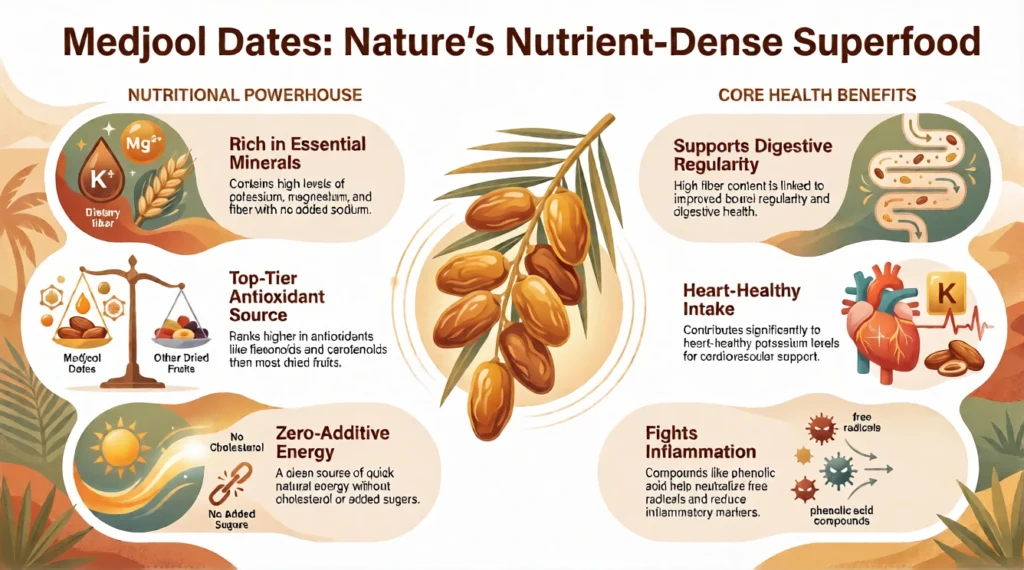
Medjool dates health benefits include supporting digestion, providing quick natural energy, and contributing to heart-healthy potassium intake. Research published in nutrition journals has linked regular date consumption to improved bowel regularity and reduced inflammatory markers, though most studies use small sample sizes, so treat this as promising rather than definitive.
Medjool dates benefits extend to their antioxidant compounds, including flavonoids, carotenoids, and phenolic acid, which help neutralize free radicals in the body. Dates actually rank among the higher-antioxidant dried fruits when compared gram-for-gram with fresh produce.
That said, “healthy” doesn’t mean unlimited. Like Sourdough Bread or Kidney Beans, portion size is what determines whether a nutrient-dense food supports your goals or works against them.
Do Medjool Dates Have Fiber? Do They Help With Digestion?
Yes, Medjool dates are a solid source of dietary fiber, offering about 6.7g per 100g, or roughly 1.6g per single date. That’s meaningful when most adults fall short of the daily fiber target of 25 to 38g.
Medjool dates fiber comes from a mix of soluble and insoluble fiber, which supports digestive health by feeding beneficial gut bacteria and adding bulk to stool. This is part of why dates have traditionally been used as a mild, natural remedy for constipation.
A small clinical trial published in the Journal of Nutrition, Metabolism and Cardiovascular Diseases found that participants eating dates daily for four weeks saw improved stool frequency without any negative effect on blood sugar or weight. It’s a small study, so consider it a data point, not a guarantee. Always verify current research before citing it elsewhere.
If digestion is a focus area, pairing fiber-rich dates with cooked vegetables like Steamed Broccoli or fermented sides like Pickled Beetroot can round out your gut-health routine.
Are Medjool Dates High in Sugar?
Yes, dates are naturally high in sugar, around 66g per 100g, or about 16g per date. But this is natural sugar, meaning it comes bundled with fiber, not stripped away like table sugar or syrup.
Medjool dates sugar content is mostly glucose and fructose, occurring naturally within the fruit’s cell structure. The fiber alongside it slows digestion, which is why dates typically produce a gentler blood sugar response than an equivalent amount of refined sugar.

Medjool dates natural sugars shouldn’t be confused with added sugars on a nutrition label. The FDA and most global health bodies distinguish between the two because whole-fruit sugars come packaged with fiber, minerals, and water content that change how the body processes them.
Still, if you’re managing blood sugar closely, for diabetes or a low-carb plan, portion control matters. One or two dates is a very different metabolic event than a handful eaten straight from the box.
Medjool Dates vs Other Dried Fruits: A Quick Comparison
Here’s how Medjool dates stack up against other common dried fruits per 100g, based on USDA reference data:
| Food (per 100g) | Calories | Carbs | Fiber | Sugar | Potassium |
|---|---|---|---|---|---|
| Medjool dates | 277 kcal | 75g | 6.7g | 66g | 696mg |
| Raisins | 299 kcal | 79g | 3.7g | 59g | 749mg |
| Dried apricots | 241 kcal | 63g | 7.3g | 53g | 1,162mg |
| Prunes (dried plums) | 240 kcal | 64g | 7.1g | 38g | 732mg |
Dates land in the middle of the pack. Not the lowest in sugar, not the highest in fiber, but a strong all-around performer for potassium-rich foods and steady energy.
Note: values can vary slightly by brand, growing region, and ripeness, so always check the label on your specific product for exact numbers.
3 Common Mistakes People Make With Medjool Dates
Most people don’t get dates “wrong” exactly, but a few habits quietly cancel out the benefits. Here’s what to watch for:
1. Treating them as a “free” snack.
Because dates are whole food, it’s easy to eat 6 to 8 in one sitting without noticing. That’s 400+ calories and roughly 100g of natural sugar, more than most people realize.
2. Skipping the pit check.
Some Medjool dates are sold with the pit still inside. Always check before biting in or blending them into a smoothie.
3. Ignoring portion when using them as a sugar substitute.
Swapping sugar for dates in baking is a smart move, but a 1:1 swap by weight still adds significant carbs. Adjust the recipe’s other sweeteners accordingly.
How Many Medjool Dates Should You Eat a Day?
Most nutrition guidance suggests 2 to 4 Medjool dates per day for a healthy adult, roughly 130 to 270 calories. This gives you fiber and micronutrient benefits without overloading on sugar.
Serving size matters more than most people realize with dried fruit. A “handful” can easily be 6 to 8 dates without you noticing, which quietly adds 400+ calories and 100g of natural sugar to your day.
If you’re active or need extra carbs around training, you might go slightly higher. If you’re managing weight or blood sugar, 1 to 2 dates as a natural sweetener substitute (in oatmeal, smoothies, or baking) is a common approach.
Think of dates the way you’d think about a Pint of Guinness: enjoyable, has some nutritional upside, but still something to portion with intention rather than eat on autopilot.
Are Medjool Dates Good for Weight Loss?
Dates can support weight loss when used to replace less nutritious sweets, thanks to their fiber content, which promotes fullness. But they’re calorie-dense, so they’re not automatically a “diet food.”
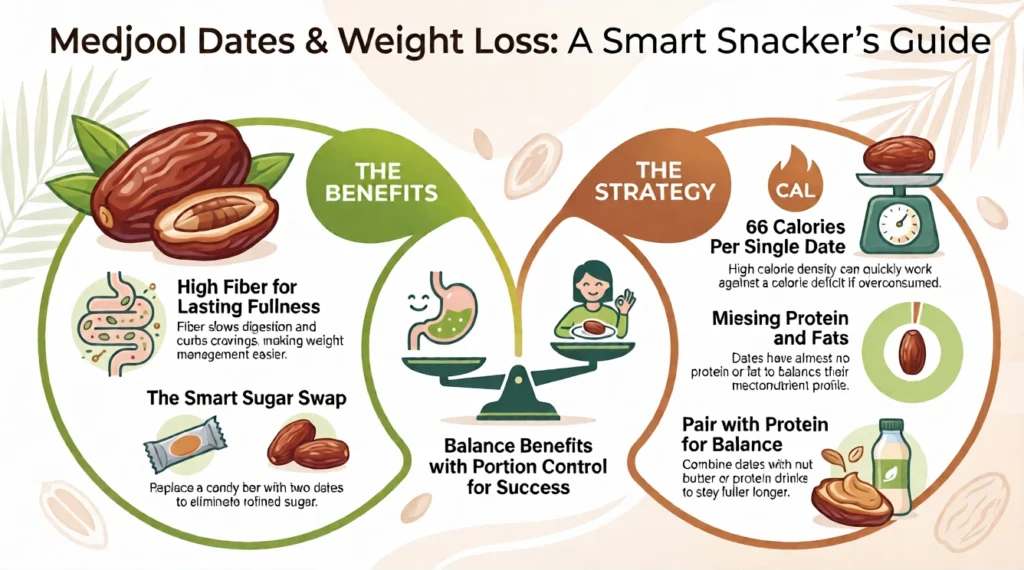
The fiber in Medjool dates fiber content slows digestion and can curb cravings, which is genuinely useful for weight management. Swapping a candy bar for two dates is a reasonable trade for most people trying to cut refined sugar.
However, because dates pack roughly 66 calories each with almost no protein or fat to balance them, eating too many can work against a calorie deficit fast. Pairing dates with a protein source, like a spoon of nut butter or one of the High Protein Drinks on the market, helps balance the macros and keeps you fuller longer.
Are Medjool Dates Good Before a Workout?
Yes, Medjool dates are a solid pre-workout snack. Their natural sugars offer a fast energy source, and the fiber provides a slower-release boost, giving you both quick and sustained fuel.
Athletes and endurance runners have used dates for decades as a natural alternative to processed energy gels, largely because of their easily digestible carbohydrate profile and potassium-rich foods status, which supports muscle function during exercise.
Medjool dates protein content is low (under 2g per 100g), so dates alone won’t replace a full pre-workout meal that includes protein. Think of them as a carb-loading snack, not a complete meal, similar to how you might combine carbs and protein from something like Chicken Thighs or a bowl of Soba Noodles before a longer training session.
Can You Eat Medjool Dates Every Day?
Yes, most healthy adults can eat 2 to 4 Medjool dates daily as part of a balanced diet without issue. The fiber, potassium, and magnesium content make them a reasonable everyday addition rather than an occasional treat.
Medjool dates magnesium content, about 54mg per 100g, contributes to muscle and nerve function, and many adults don’t hit their daily magnesium target from food alone. Daily date consumption is one small way to help close that gap.
People with diabetes, on a strict low-carb diet, or managing weight closely should be more deliberate about portion and timing, ideally checking with a registered dietitian or doctor for personalized guidance.
As with most whole foods, whether it’s Red Onion in your cooking or Spam Nutrition on the other end of the processed-food spectrum, context and portion size are what turn “healthy” into “healthy for you.”
Medjool Dates: Myth vs Fact
A few quick myth-busters before you go, since Medjool dates attract more confusion than most fruits:
Myth: Dates are basically candy.
Fact: Dates contain natural sugar bundled with fiber, potassium, and magnesium. Candy offers none of that. The sweetness is similar, but the nutritional package is not.
Myth: Dates will spike your blood sugar like table sugar.
Fact: The fiber in dates slows sugar absorption, which generally produces a gentler blood sugar response than an equivalent amount of refined sugar, though individual results vary.
Myth: Dried fruit is always less nutritious than fresh fruit.
Fact: Drying concentrates both sugar and nutrients. Dates end up higher in fiber and potassium per gram than most fresh fruit, simply because the water has been removed.
The Bottom Line
Medjool dates are a genuinely nutrient-dense food: fiber, potassium, magnesium, and antioxidants wrapped in natural sweetness. They’re not a “free food” because of their sugar and calorie density, but in sensible portions (2 to 4 a day), they’re one of the more honest treats you can reach for.
Sources
- USDA FoodData Central, Dates, medjool.
- USDA FoodData Central, Raisins, dried apricots, prunes (for comparison table).
- U.S. FDA, Added Sugars on the New Nutrition Facts Label.
- National Institutes of Health, Office of Dietary Supplements, Magnesium Fact Sheet.
- National Institutes of Health, Office of Dietary Supplements, Potassium Fact Sheet.
- Dietary Guidelines for Americans (fiber intake recommendations).

Hi, I’m Salem Nasir, founder of Fiturely. I research and write evidence-based articles on fitness, nutrition, weight loss, and healthy living. My mission is to make reliable health information simple, practical, and easy to understand so readers can build healthier habits with confidence