
The best posture exercises for women include wall angels, chin tucks, shoulder blade squeezes, cat cow stretch, bird dog, dead bug, and doorway chest stretch. Doing 8 to 10 minutes of these moves daily strengthens the upper back and core, opens the chest, and reverses the rounded-shoulder, forward-head posture caused by sitting and phone use. Most women notice less tension within 2 to 3 weeks of consistent practice.
The good news is that posture exercises for women don’t require a gym membership, fancy equipment, or hours of free time. A few minutes a day, done consistently, can retrain your body to stand taller and move with less pain.
This guide breaks down real, practical exercises to improve posture for women, why bad posture happens in the first place, and how to build a simple routine you can actually stick to.
Why Posture Matters More Than You Think
Posture isn’t just about looking confident in photos, although that’s a nice bonus. It affects how your spine, muscles, and joints share the workload of holding you upright all day.
When your posture slips, a few things tend to follow:
- Neck and shoulder tension that creeps up by mid-afternoon
- Lower back pain, especially after long periods of sitting
- Shallow breathing, since a collapsed chest limits lung space
- Reduced core strength, because your muscles stop doing their job
Organizations like the Mayo Clinic and the American Council on Exercise have long recommended posture-focused strength and mobility work as part of a well-rounded fitness routine, precisely because posture touches so many parts of daily movement. Good posture isn’t vanity. It’s mechanics.
What Causes Bad Posture in Women?
There isn’t one single culprit, but a few habits show up again and again:
Desk work and screen time. Hours of sitting encourage rounded shoulders and a forward head position, sometimes called “tech neck.”
Carrying kids or bags on one side. Any mom who has spent years balancing a toddler on one hip knows this uneven load adds up over time.
Weak upper back muscles. Chest muscles tend to get tight while the upper back muscles that pull your shoulders back get weak and outvoted.
Lack of movement variety. Sitting all day and then sitting on the couch all evening doesn’t give your spine much reason to move through its full range.
None of this means your posture is broken beyond repair. It just means your body adapted to your habits. Change the habits, and the body follows.
Best Posture Exercises for Women
These posture correction exercises for women target the neck, shoulders, upper back, chest, and core. Most take under a minute each, and none require equipment, which makes this a solid option for posture exercises for women at home.
Chin Tucks
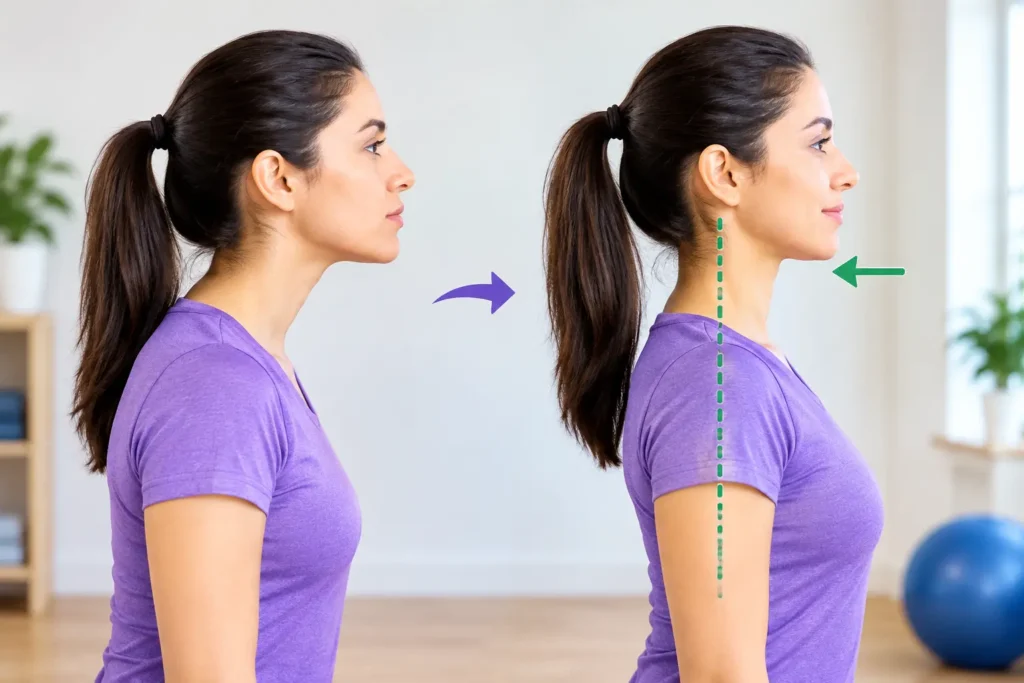
Sit or stand tall. Gently pull your chin straight back, as if you’re avoiding a poke to the nose, without tilting your head down. Hold for two seconds, release, and repeat 10 times. This simple move directly counters forward head posture from phone and laptop use.
Neck and Shoulder Stretches
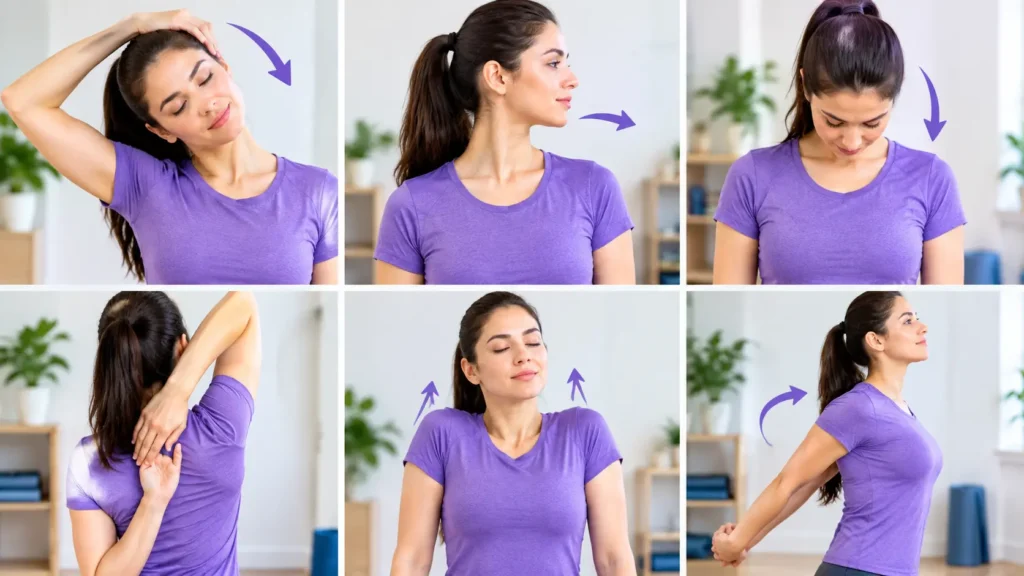
Tilt your head gently to one side until you feel a stretch along the opposite neck line. Hold for 20 seconds, then switch sides. Follow with slow shoulder rolls, forward and backward, to loosen tight upper traps.
Wall Angels
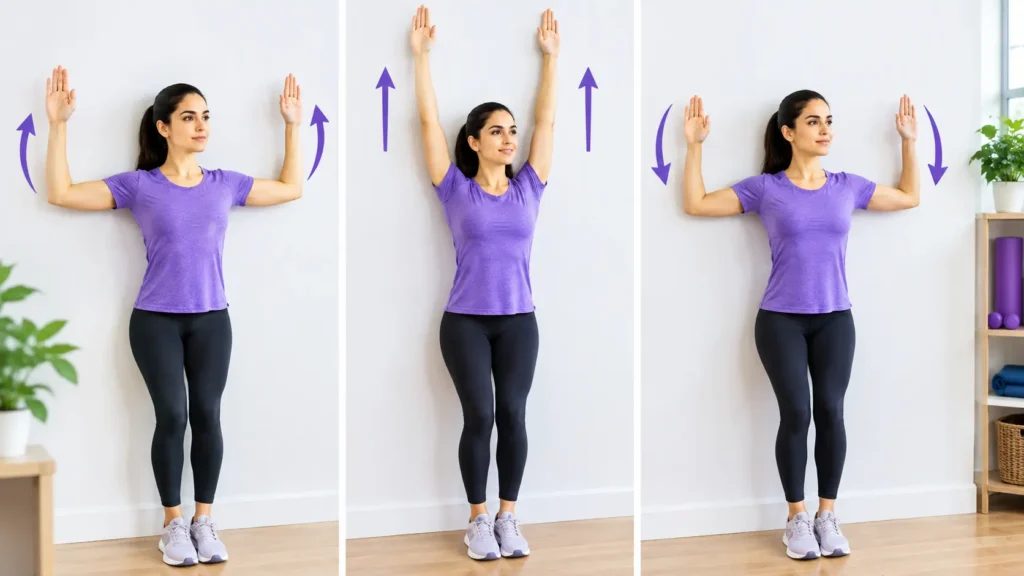
Stand with your back against a wall, arms bent at 90 degrees like a goalpost. Slowly slide your arms up and down while keeping your lower back, shoulders, and wrists in contact with the wall. This is a deceptively humbling mobility exercise that exposes just how tight your shoulders really are.
Shoulder Blade Squeezes
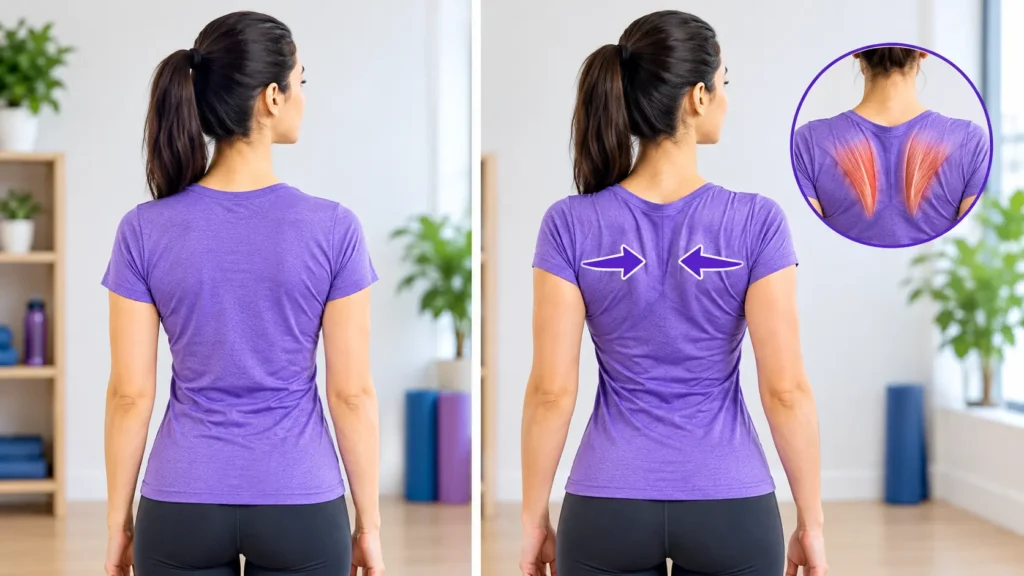
Sit or stand tall, then squeeze your shoulder blades together as if pinching a pencil between them. Hold for five seconds, release, repeat 10 to 15 times. Simple, quiet, and something you can sneak in during a work call.
Band Pull Aparts
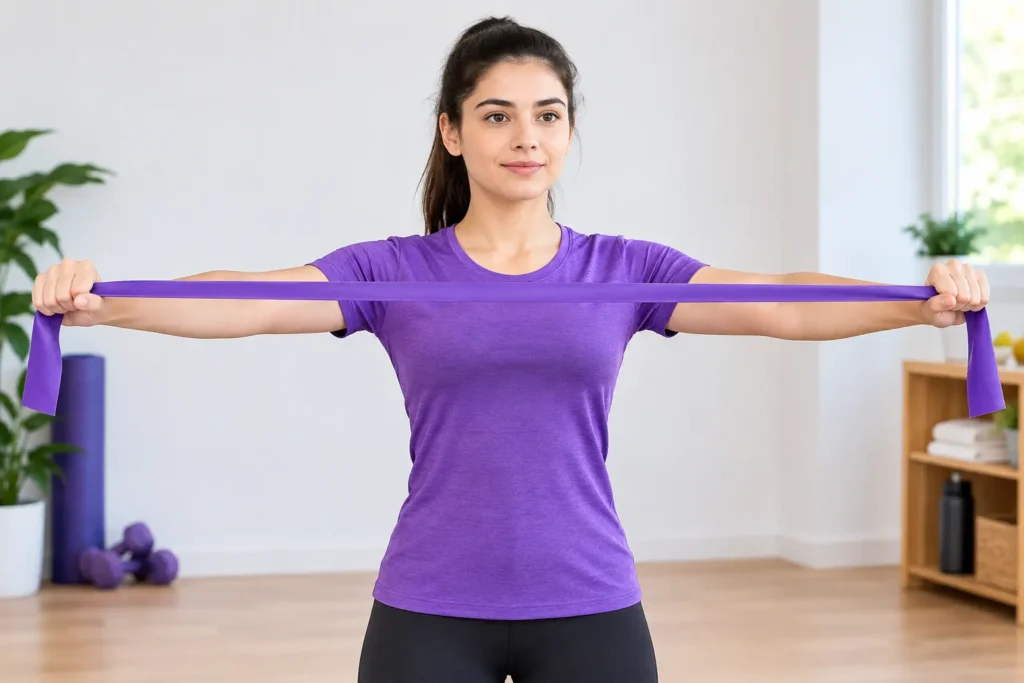
Hold a resistance band with both hands at chest height, then pull it apart while squeezing your shoulder blades together. This doubles as a light arms workout, strengthening the rear shoulders and upper back at the same time.
Rows and Reverse Fly
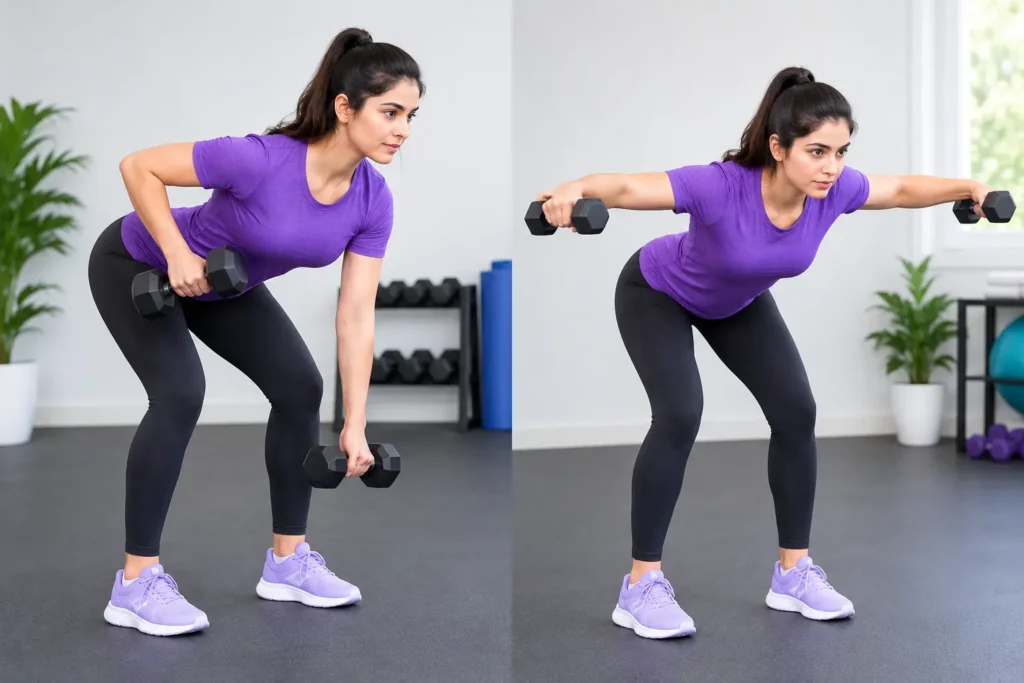
Using light dumbbells or a band, bend slightly forward and pull your elbows back for a row, or open your arms wide for a reverse fly. Both moves strengthen the muscles between the shoulder blades, which are usually the weakest link behind rounded shoulders.
Doorway Chest Stretch
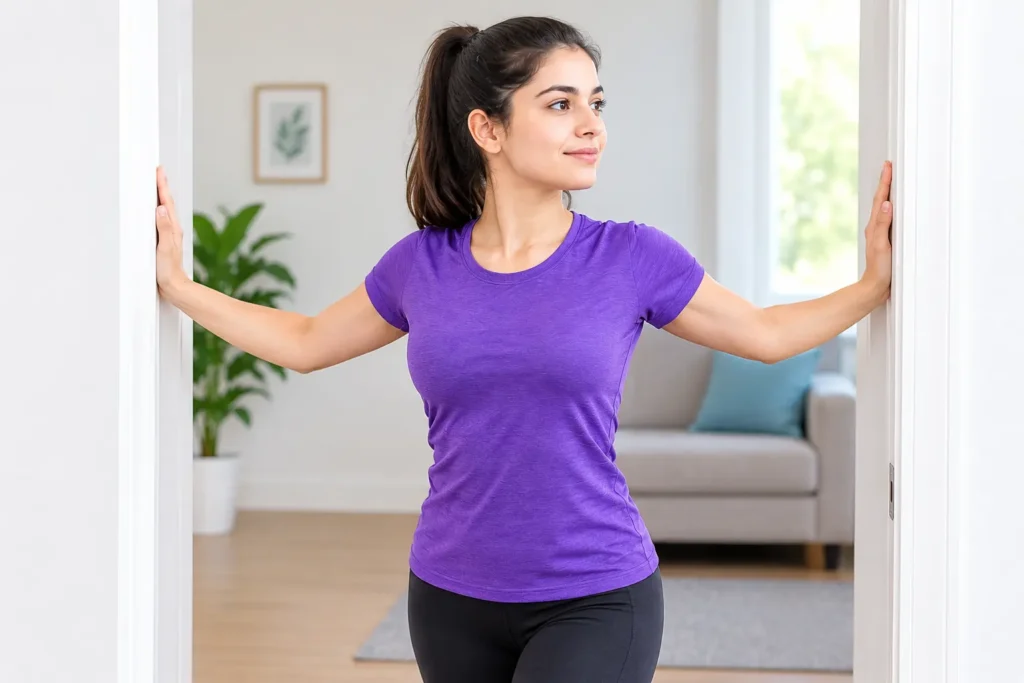
Stand in a doorway, place your forearm against the frame with your elbow bent at 90 degrees, then gently lean forward. You’ll feel a stretch across the front of your shoulder and chest. Hold for 20 to 30 seconds per side.
Cobra Stretch
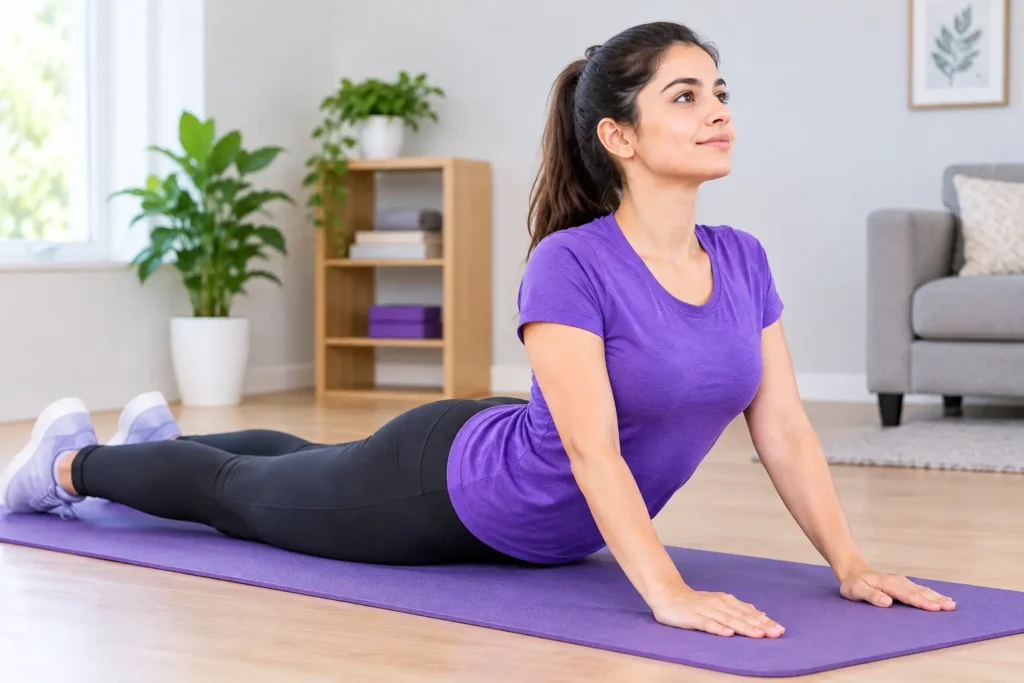
Lie face down, place your palms under your shoulders, and gently press your chest up while keeping your hips on the floor. This opens the chest and strengthens the lower back at the same time, making it one of the more efficient back posture exercises on this list.
Cat Cow Stretch
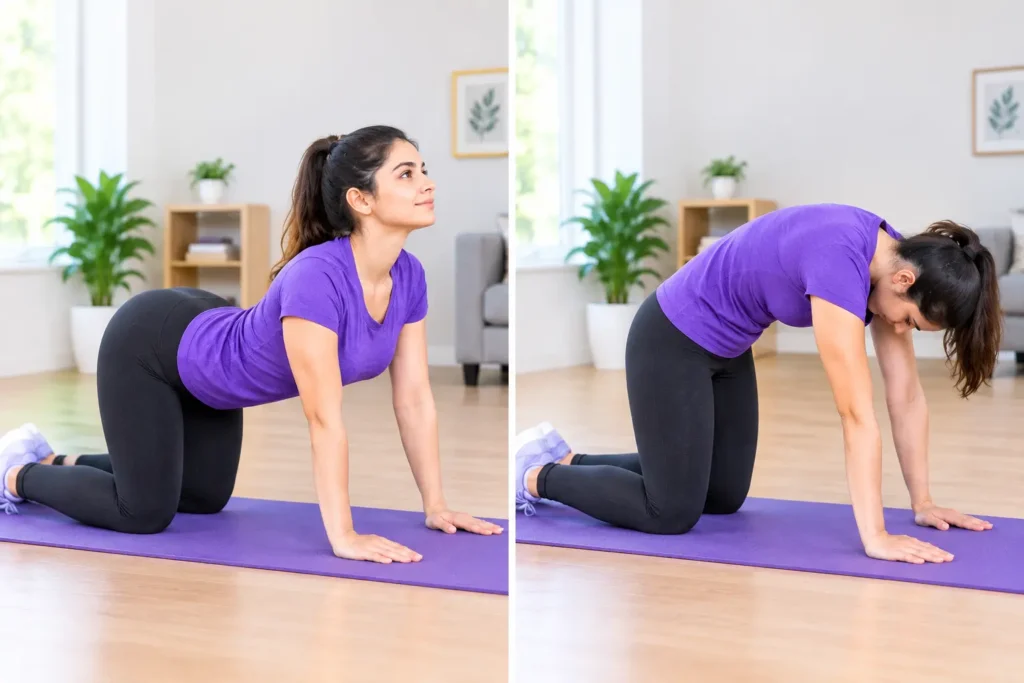
On hands and knees, arch your back up like a cat, then dip it down while lifting your chest, like a cow. This gentle flow warms up the entire spine and is a favorite among physical therapists for spinal mobility exercises.
Bird Dog
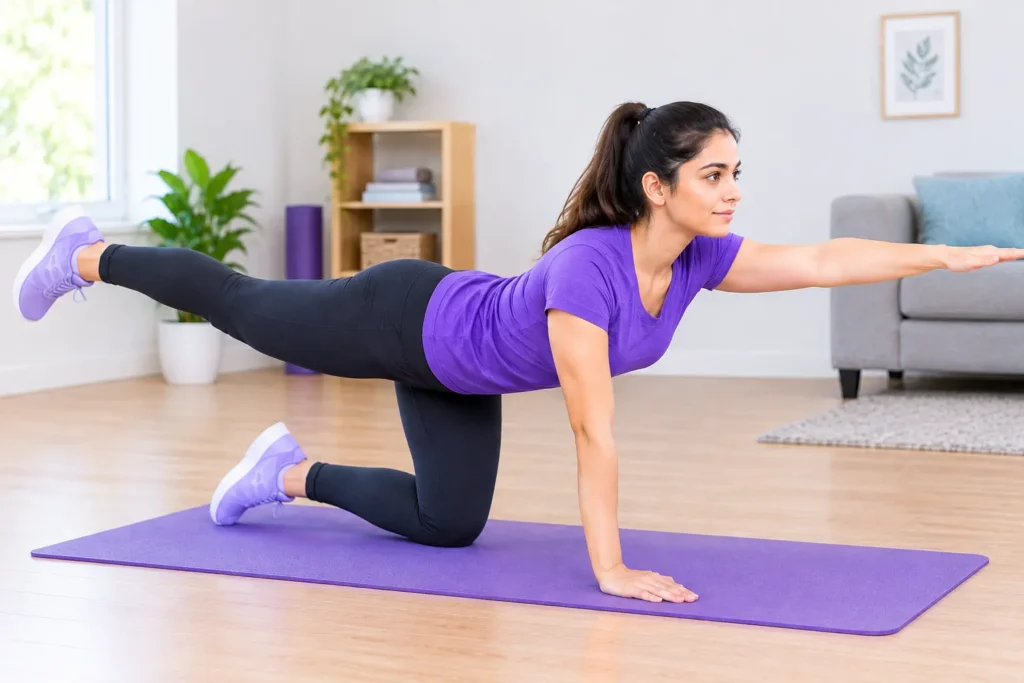
From a hands-and-knees position, extend one arm forward and the opposite leg back, keeping your hips level. Hold for a few seconds, then switch sides. This move builds core control without straining the lower back.
Dead Bug
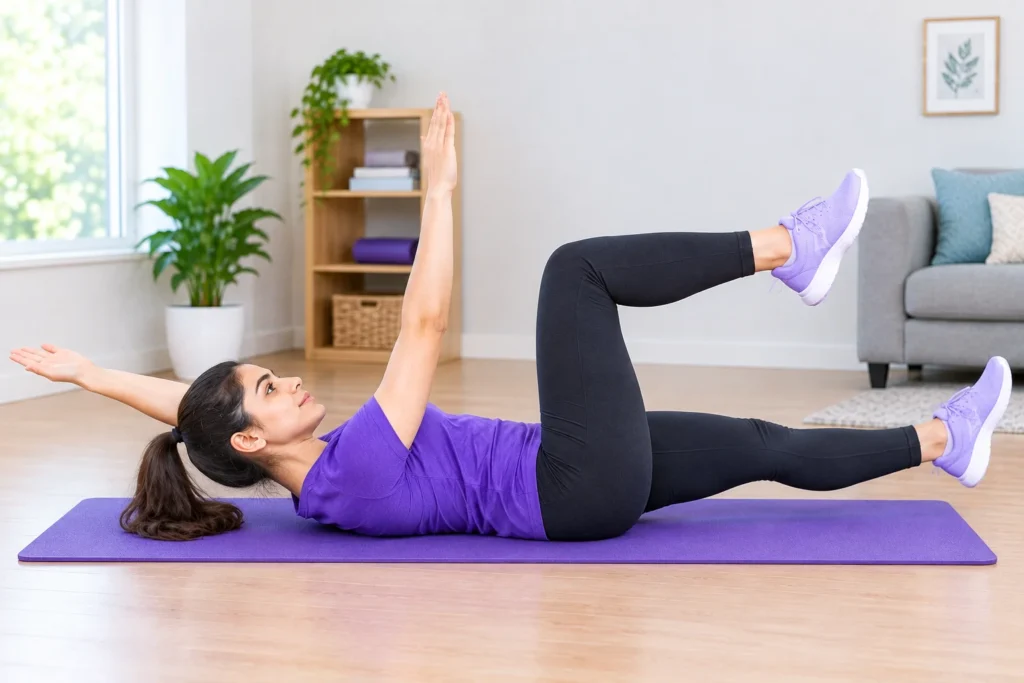
Lie on your back, arms reaching toward the ceiling, knees bent at 90 degrees. Slowly lower one arm and the opposite leg toward the floor, then return. It looks silly, feels harder than it looks, and quietly builds the deep core strength that supports good posture.
Plank
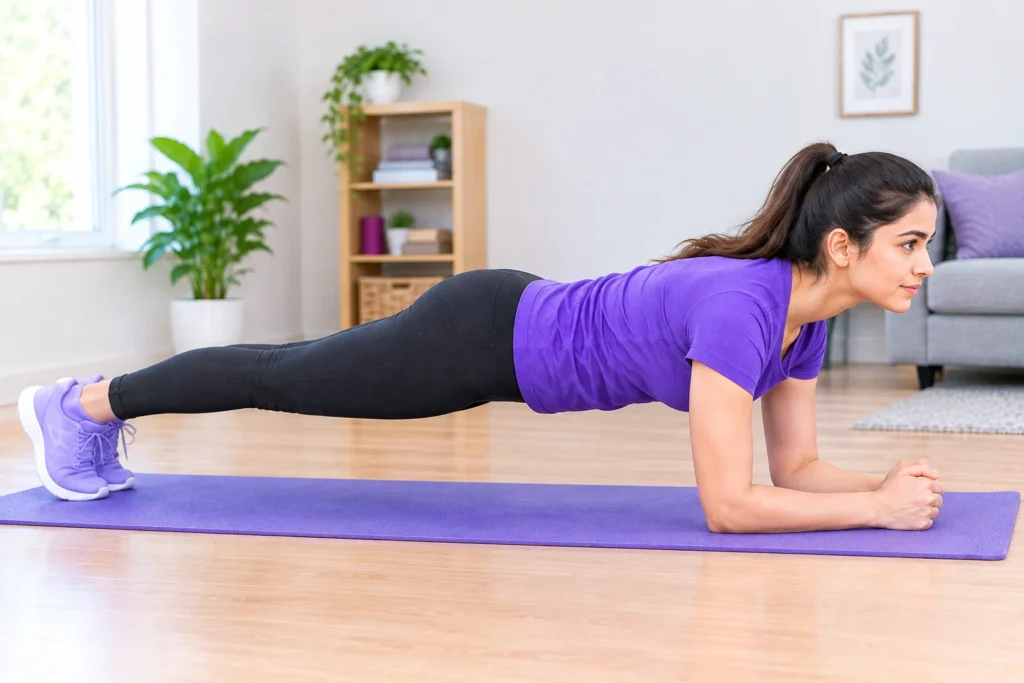
Hold a forearm plank with a straight line from head to heels. Even 20 to 30 seconds builds the core endurance needed to keep your spine supported throughout the day.
Pelvic Tilt
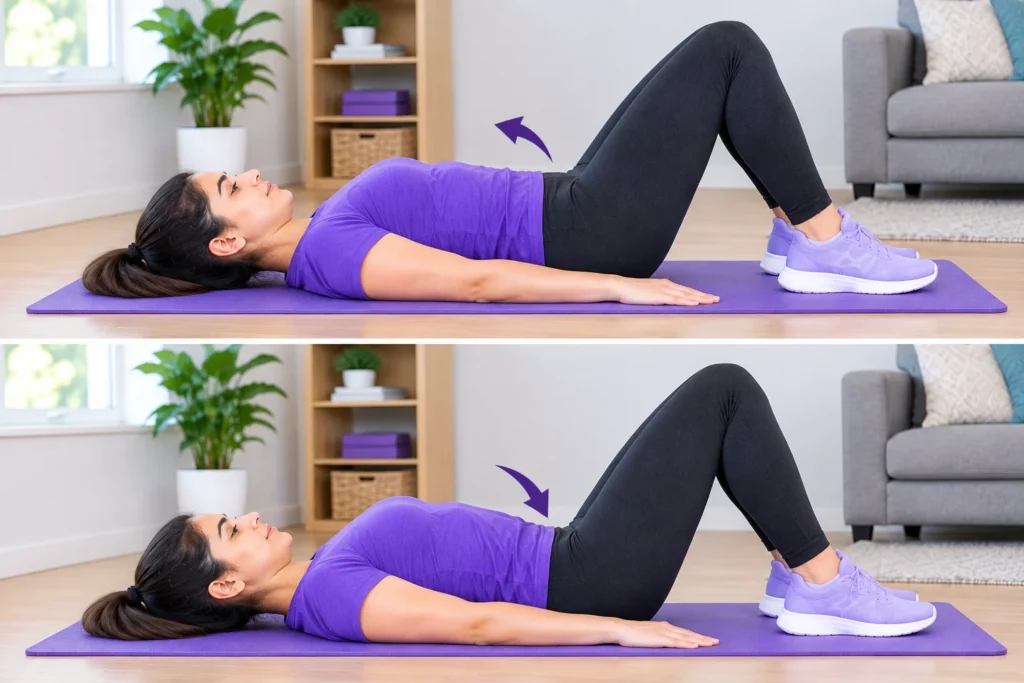
Lie on your back with knees bent. Flatten your lower back into the floor by gently tilting your pelvis, hold briefly, then release. This small movement helps correct the pelvic tuck that throws off spine alignment from the ground up, and it also engages the lower body in a subtle but useful way.
Thoracic Extension
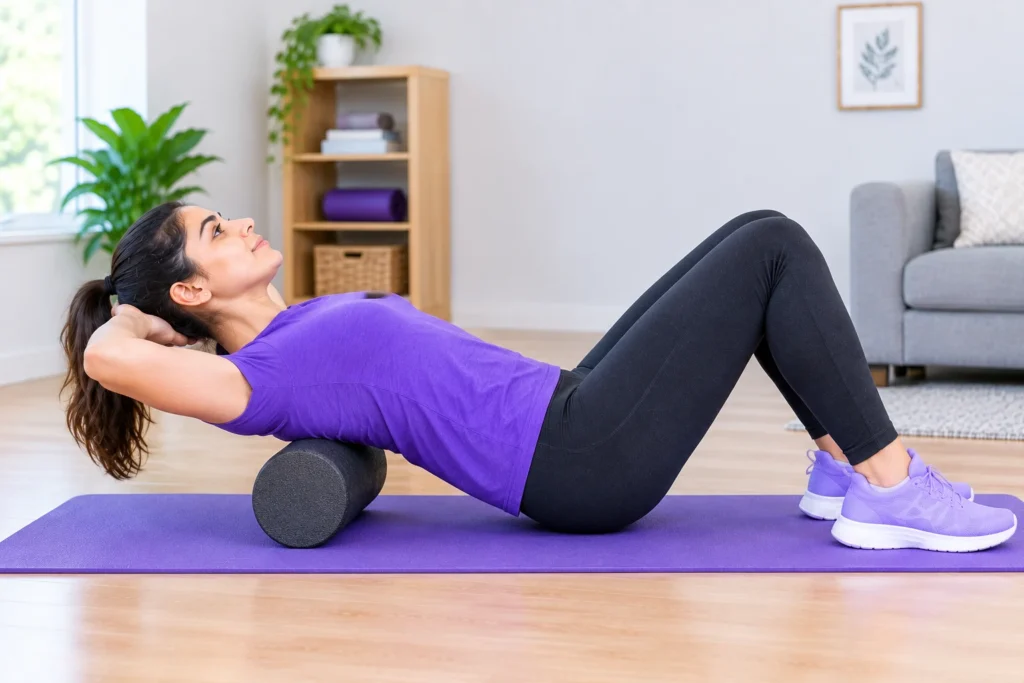
Sit or kneel with your hands behind your head, then gently arch your upper back over a chair edge or foam roller. This targets the mid-back stiffness that often gets ignored while everyone focuses on the neck and lower back.
Child’s Pose
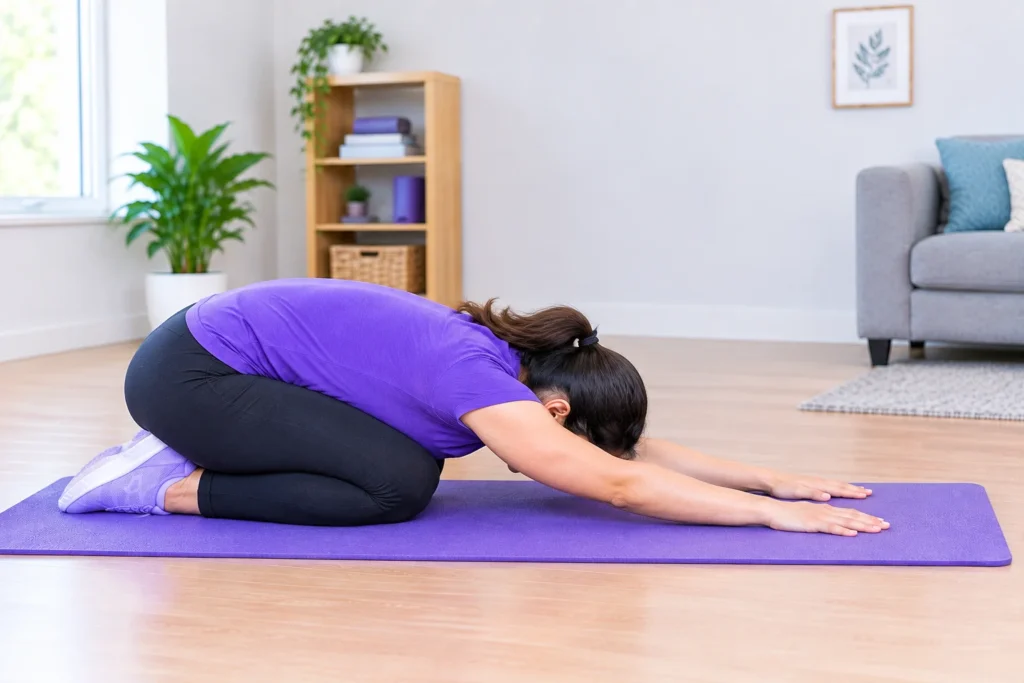
Kneel and fold forward, reaching your arms out in front of you. This restful stretch releases tension in the back and shoulders and makes a good closing move for any posture session.
7 Signs You Need Posture Exercises Right Now
Not sure if this list applies to you? Check off any of these, and the answer is probably yes:
- Your shoulders round forward when you catch yourself in a mirror
- You get a stiff neck by 3 p.m. most workdays
- Your lower back aches after sitting for more than an hour
- Photos make you look like you’re leaning into your phone
- You feel shorter by the end of the day than when you woke up
- Your bra strap marks feel deeper on one side than the other
- You catch yourself sighing to “reset” your breathing
If two or more sound familiar, your body is already asking for help. The exercises below are the answer.
What Happens When You Fix Your Posture? (Before and After)
Here’s the honest, no-hype version of what changes when you actually stick with posture exercises for women:
Week 1 to 2: You start noticing when you slouch, which is annoying but is actually the first real sign of progress. Awareness always comes before change.
Week 3 to 4: Neck and shoulder tension eases up. Sitting for long stretches feels less punishing.
Month 2:Standing tall starts to feel normal instead of forced. People may comment that you “look different,” and you’ll know exactly why.
Month 3 and beyond:Better posture becomes your default, not something you have to think about. Your core and upper back have quietly done their job.
No exercise plan turns you into a different person overnight. But small, consistent reps rewire habits faster than most people expect.
A 10-Minute Posture Workout for Women
Short on time? Here’s a simple 10 minute posture workout for women you can do most days:
- Cat cow stretch: 1 minute
- Chin tucks: 1 minute
- Wall angels: 1 minute
- Shoulder blade squeezes: 1 minute
- Bird dog: 1 minute per side
- Dead bug: 1 minute
- Doorway chest stretch: 1 minute per side
- Plank: 30 seconds, twice
- Child’s pose: 1 minute
This isn’t a metabolic workout built to spike your heart rate. It’s slower and more deliberate, which is exactly the point. Posture work rewards patience, not intensity.
Posture Exercises for Women Who Sit All Day
If you’re glued to a desk, sitting posture exercises and desk posture exercises deserve a permanent spot in your calendar. Try this:
- Set a reminder every hour to do 10 shoulder blade squeezes
- Do chin tucks during video calls when your camera is off
- Stand up and do wall angels between meetings
- Keep your screen at eye level so your neck isn’t dropping forward all day
These small breaks make a real difference for posture exercises for office workers, especially since long, uninterrupted sitting is harder on the spine than sitting itself.
Posture Tips for Busy Moms
Between school runs, laundry, and carrying a car seat that seems to weigh more each month, a mom’s posture takes a beating. A few adjustments help:
- Switch which hip or shoulder carries the diaper bag
- Do pelvic tilts and cat cow stretches while your child naps
- Keep exercises low impact so they’re gentle on tired joints
- Squeeze in shoulder blade squeezes while waiting in the school pickup line
Common Mistakes to Avoid
- Only stretching without strengthening the upper back
- Doing posture exercises once and expecting instant results
- Ignoring core strength, since a weak core undermines every other posture fix
- Slouching right back into old habits the moment the exercise ends
FAQs
How long until posture improves?
Most people notice less tension within two to three weeks of consistent daily practice, though full postural change takes longer since it involves retraining habits, not just muscles.
Can these exercises help with rounded shoulders?
Yes. Wall angels, band pull aparts, and doorway chest stretches directly target the muscle imbalance behind rounded shoulders and forward head posture.
Do I need equipment?
No. Every exercise in this guide works as a posture exercises for women at home routine using just body weight, though a resistance band adds variety later on.
What is the single best exercise for posture?
There isn’t one magic move, but wall angels come close. They strengthen the upper back, stretch the chest, and force better shoulder positioning all at once, which is rare for a single exercise.
Can bad posture be reversed permanently?
In most cases, yes, especially if the cause is muscle imbalance rather than a structural spine condition. Consistent strengthening and mobility work retrains the body to hold a better position by default. Long-standing or severe cases may need guidance from a physical therapist.
How often should I do posture exercises?
Daily is ideal, since posture habits form from repetition. Even 8 to 10 minutes a day beats a longer session done once a week.
Is walking enough to fix posture?
Walking helps overall fitness and circulation, but it doesn’t specifically strengthen the upper back or stretch a tight chest. Pairing walks with targeted posture exercises gets better results than walking alone.
Final Thoughts
Better posture isn’t about forcing your shoulders back and holding your breath until you turn purple. It’s about building strength where you’re weak and flexibility where you’re tight, one small session at a time.
Start with a few of these moves today. Your future self, sitting a little taller at her desk or chasing a toddler with less back pain, will thank you.
References
- Mayo Clinic, Fitness and exercise guidance.
- American Council on Exercise (ACE), exercise library and posture research.
- Harvard Health Publishing, Posture and back health.
- Cleveland Clinic, Posture, back pain, and core strength.
- MedlinePlus (U.S. National Library of Medicine), exercise and posture basics.

Hi, I’m Salem Nasir, founder of Fiturely. I research and write evidence-based articles on fitness, nutrition, weight loss, and healthy living. My mission is to make reliable health information simple, practical, and easy to understand so readers can build healthier habits with confidence