
Key Takeaways
- You can build stronger, bigger biceps at home using bodyweight exercises, dumbbells, or resistance bands-no gym membership required.
- Focus on proven moves like hammer curls, chin-ups, resistance band curls, and towel curls for the best muscle growth.
- Train your biceps 2-3 times per week with proper form and progressive overload to see consistent results.
- Include compound and isolation exercises in your routine to improve arm strength, size, and overall upper-body performance.
- Stay consistent, eat enough protein, and allow proper recovery to maximize bicep growth and long-term strength gains.
You can build stronger biceps at home. Whether you use bodyweight exercises, resistance bands, or dumbbells, you can effectively train your biceps without going to the gym.Do you need equipment? No. While dumbbells and resistance bands can increase resistance and speed up muscle growth, many beginner-friendly bicep exercises require little or no equipment.What are the best bicep workouts at home? Chin-ups, hammer curls, towel curls, resistance band curls, and dumbbell curls are some of the most effective exercises for improving arm strength and building muscle.Is this workout suitable for beginners? Absolutely. Home bicep workouts are ideal for beginners because they’re easy to follow and can be adjusted to your fitness level. Focus on proper form, train consistently, and apply progressive overload by gradually increasing resistance or repetitions to achieve the best results.
If you’re also working on other muscle groups at home, check out Home Workout Equipment for Abs and Trap Workout at Home for the rest of your upper body.
 Can You Build Bigger Biceps at Home?
 Can You Build Bigger Biceps at Home?
Short answer: yes. Muscles don’t know the difference between a gym dumbbell and a water-filled backpack. What matters is tension, range of motion, and consistency, not the postal code where you train.
Do Home Bicep Workouts Really Work?
They work because muscle growth depends on mechanical tension and progressive overload, not on the equipment brand sitting in front of you. According to the American Council on Exercise (ACE), resistance training, regardless of setting, stimulates muscle hypertrophy when volume and intensity are managed properly. A resistance band pulling against your arm creates the same kind of load your muscle fibers respond to as a cable machine does.
How Long Does It Take to Build Bigger Biceps?
This varies by genetics, diet, sleep, and training consistency. Most beginners notice visible strength gains within 3 to 4 weeks and some size change within 8 to 12 weeks of consistent training. The Mayo Clinic notes that visible muscle changes typically follow weeks of adaptation, since the body first improves neuromuscular efficiency before adding size. In plain English: your nervous system gets efficient first, then the muscle catches up.
Want to pair this with lower-body training too? Take a look at Glute Exercises for Women for a balanced full-body split.
What Muscles Make Up the Biceps?
The “biceps” people talk about at the dinner table is actually a small team of arm muscles working together.
Biceps Brachii
This is the main muscle you see flexing in the mirror. It has two heads (hence “bi-ceps”) and is responsible for elbow flexion and forearm rotation.
Brachialis
Sitting underneath the biceps brachii, the brachialis pushes the biceps upward and outward, adding thickness to your arm. Hammer curls hit this muscle particularly well.
Brachioradialis
This one lives in your forearm, not your upper arm, but it plays a big supporting role in curling movements. It’s also a major contributor to forearm strength and grip strength, useful whether you’re lifting weights or opening a stubborn jar lid.
Best Bicep Workouts at Home
Here are 15 exercises that combine bodyweight bicep exercises, dumbbell curls, and resistance band curls for a complete arm muscles session.
1. Bodyweight Chin-Ups
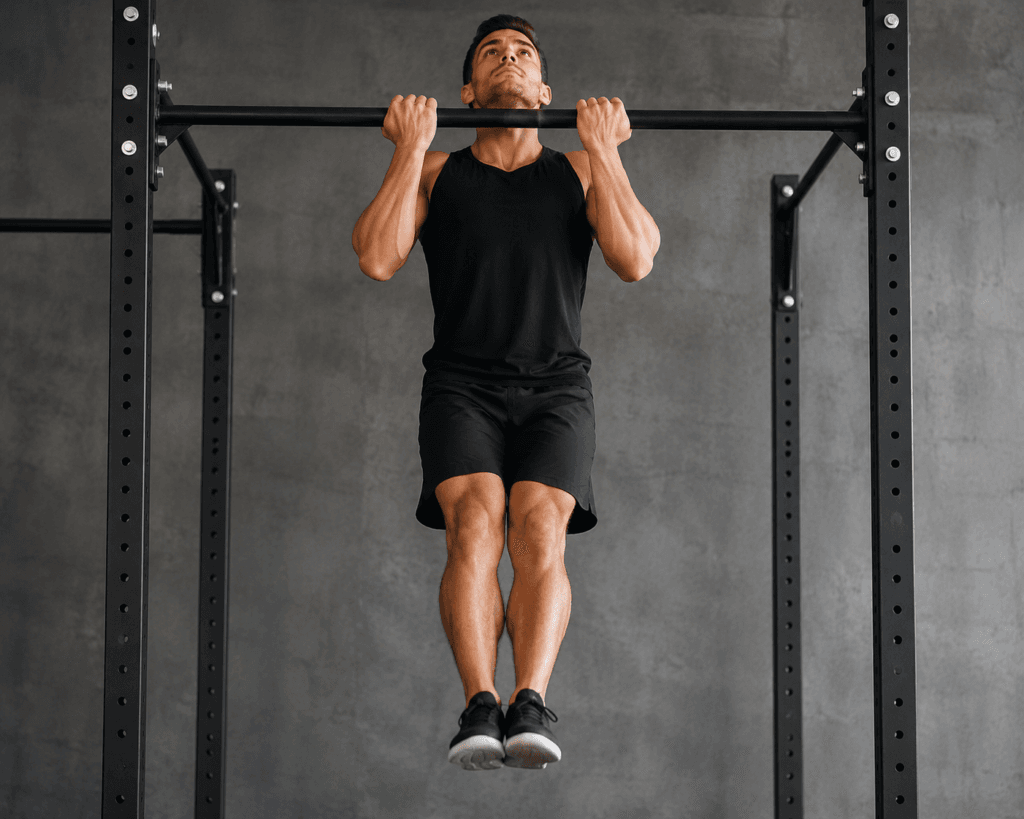
Chin-ups are one of the most underrated bicep builders, since they force your arms to lift your entire bodyweight instead of just a dumbbell. They also train your back and grip at the same time, making them a genuinely efficient upper body workout move. If you don’t own a pull-up bar, a sturdy door frame bar works just as well.
Muscles Worked: Biceps brachii, brachialis, lats
How to Do It:
- Grip a pull-up bar with your palms facing you, hands shoulder-width apart.
- Pull your chin above the bar, keeping your elbows close to your body.
- Lower yourself slowly and fully extend your arms at the bottom.
Benefits: One of the best bodyweight bicep exercises for building both arm strength and upper body workout capacity at once
2. Resistance Band Bicep Curl
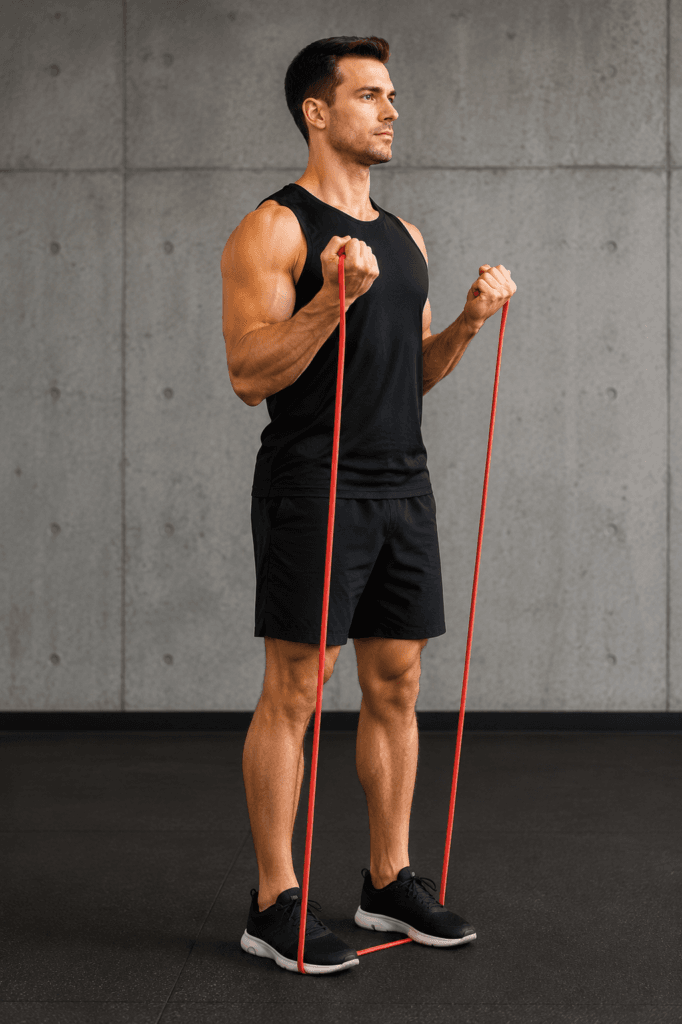
This exercise is a favorite among people who travel a lot or simply don’t have room for a rack of dumbbells at home. The band’s resistance builds gradually as you curl, so your muscles stay under tension throughout the entire movement. It’s also gentle on the elbows, which makes it a comfortable option for daily practice
Muscles Worked: Biceps brachii, brachialis, forearms
How to Do It:
- Step on the middle of the band with both feet, shoulder-width apart.
- Hold a handle in each hand with palms facing forward.
- Keep your elbows pinned to your sides and curl both hands up toward your shoulders.
- Squeeze at the top, then lower slowly back to the start.
Benefits: Bands add resistance that increases the higher you curl, so the top of the movement feels harder than the bottom, which is great for building time under tension. This is one of the most joint-friendly resistance band curls, making it a smart choice for beginners or anyone with elbow sensitivity.
3. Dumbbell Bicep Curl
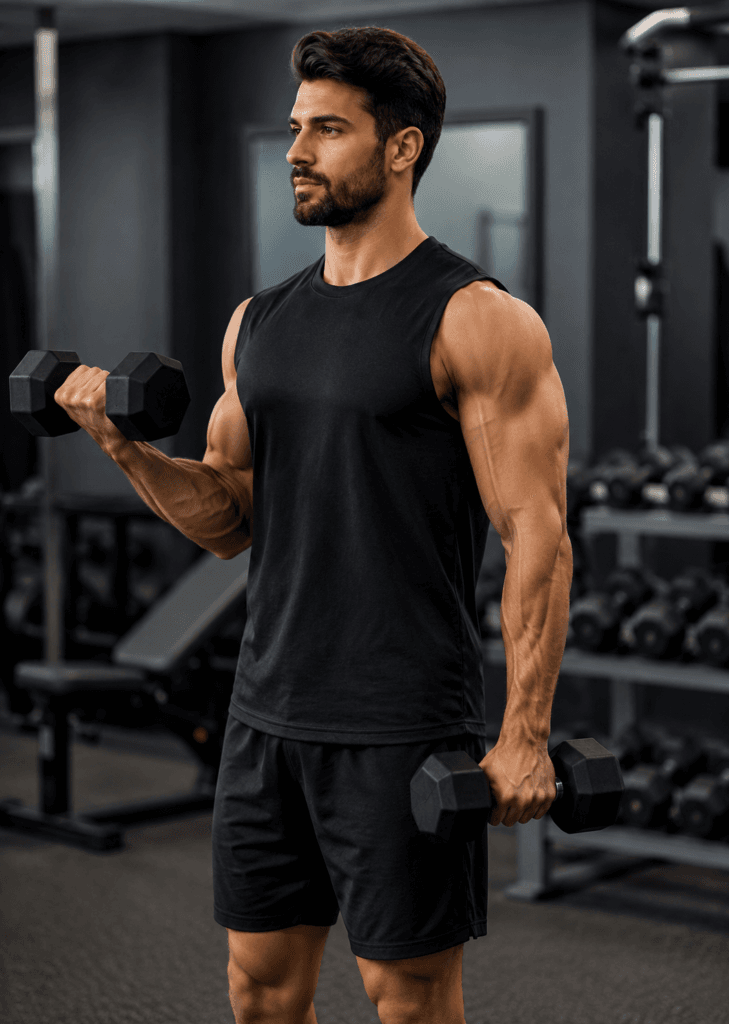
If you only have time for one exercise, this is usually it. Dumbbell curls let you increase weight in small, precise increments, which makes tracking progress far easier than with bands or bodyweight moves. It’s also the exercise most people picture when they think of a home bicep workout
Muscles Worked: Biceps brachii, brachialis
How to Do It:
- Stand tall with a dumbbell in each hand, palms facing forward, arms fully extended.
- Brace your core and keep your elbows tucked close to your torso.
- Curl the dumbbells up without swinging your body or using your back for momentum.
- Squeeze the biceps hard at the top, then lower slowly for a full four-count.
Benefits: Simple, effective, and a staple of any home bicep workout for muscle growth, since it lets you track weight and reps precisely for progressive overload.
4. Hammer Curl
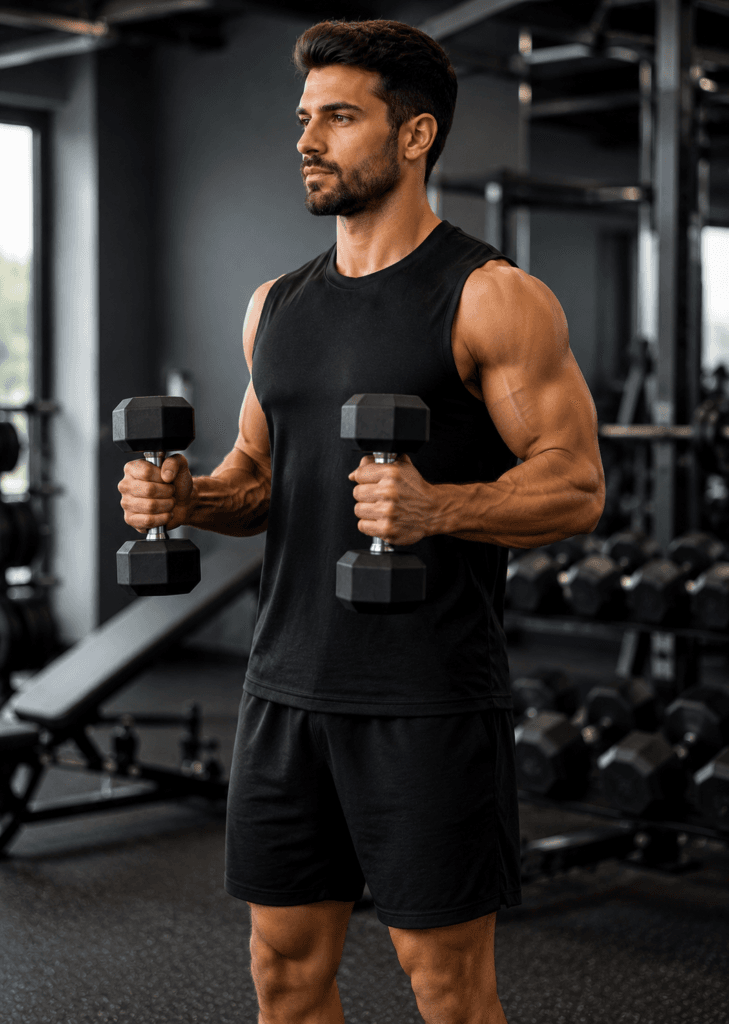
Hammer curls trade a bit of biceps peak for a lot more arm thickness. Because your palms stay neutral throughout the movement, the brachialis and brachioradialis take on more of the workload than they would in a standard curl. Many people notice their forearms getting stronger from this move alone.
Muscles Worked: Brachialis, brachioradialis, biceps brachii
How to Do It:
- Hold a dumbbell in each hand with palms facing each other, like holding a hammer.
- Keep your elbows close to your sides throughout the movement.
- Curl both dumbbells up without rotating your wrists at any point.
- Pause briefly at the top, then lower with control.
Benefits: This neutral grip shifts more of the work onto the brachialis and brachioradialis rather than the biceps brachii alone, adding visible arm thickness and improving grip strength as a bonus.
5. Concentration Curl
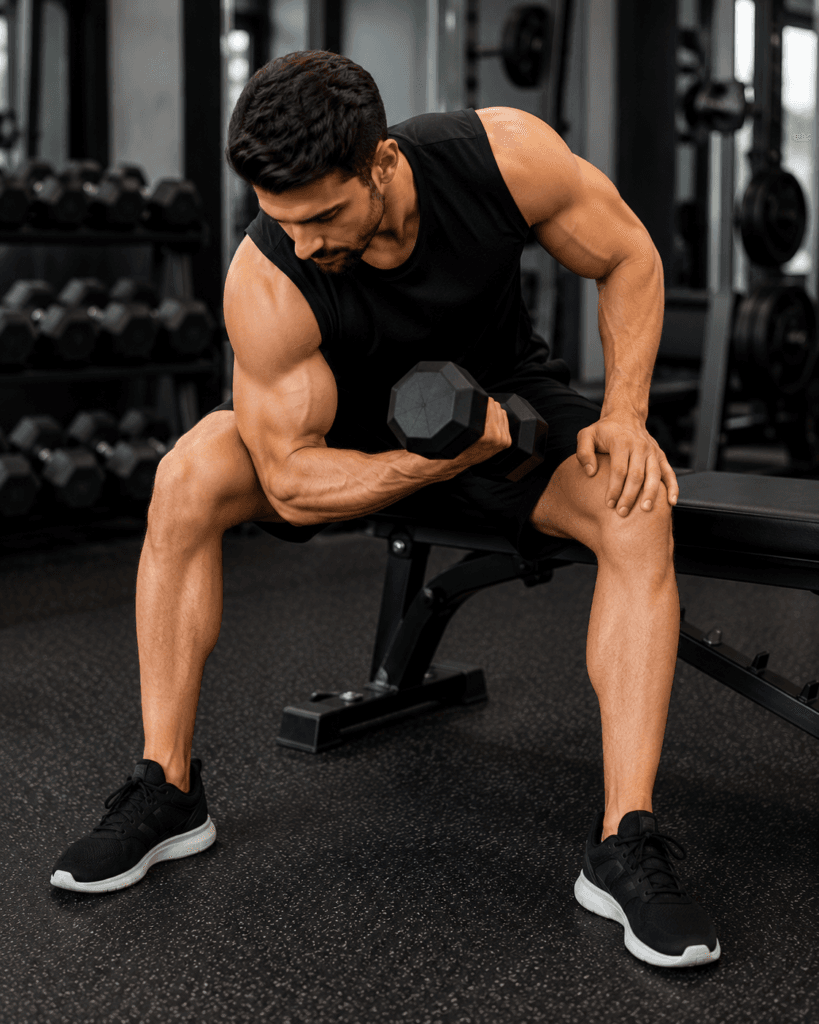
This is the exercise for anyone who feels like their curls “don’t do much” because their shoulders and back keep taking over. By locking your elbow against your thigh, you remove almost every escape route for momentum. It’s slow, it’s humbling, and it genuinely works.
Muscles Worked: Biceps brachii (isolated)
How to Do It:
- Sit on a bench or sturdy chair with your legs spread apart.
- Lean forward slightly and rest the back of your working elbow against your inner thigh.
- Hold a dumbbell and curl it up toward your shoulder, focusing on the squeeze.
- Lower slowly and fully extend the arm before repeating.
Benefits: Because your elbow is locked in place, this isolates the biceps brachii and removes almost all momentum, making it ideal for mind-muscle connection.
6. Incline Dumbbell Curl
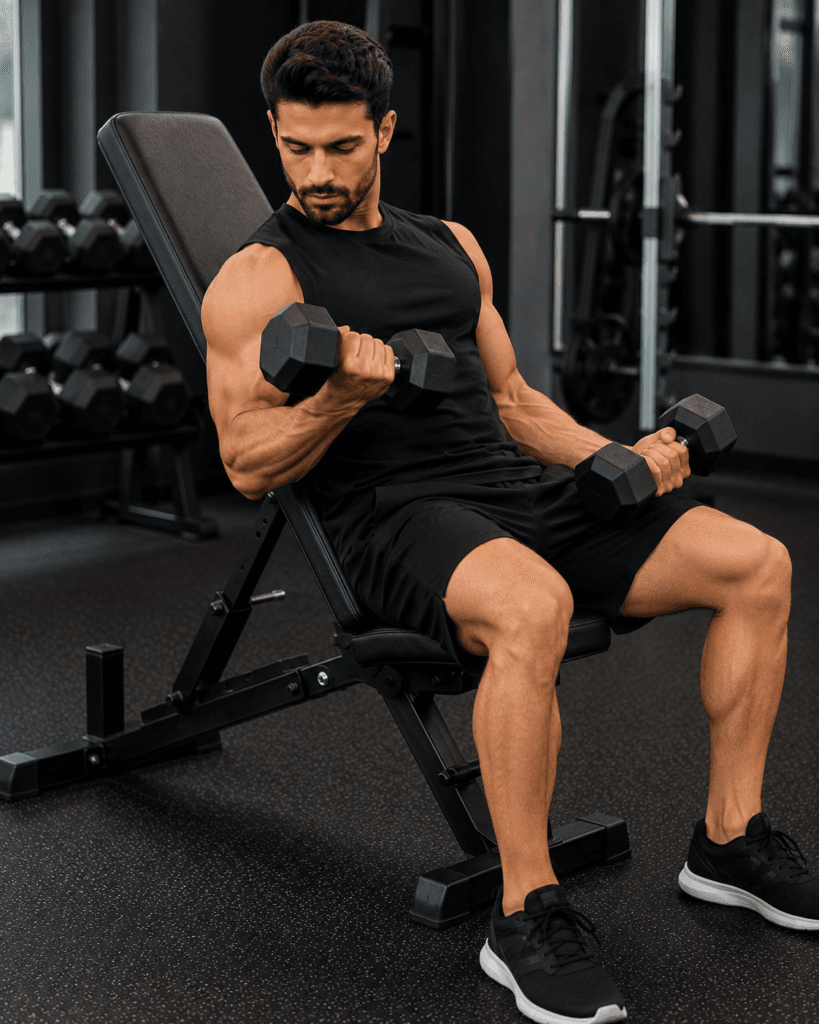
Lying back on an incline changes the starting position of your arms, which stretches the biceps more than a standing curl does. That extra stretch at the bottom of the movement is exactly what makes this variation feel harder with lighter weights. It’s a small tweak with a noticeably bigger burn.
Muscles Worked: Biceps brachii (long head)
How to Do It:
- Set an adjustable bench to a 45–60 degree incline and lie back against it.
- Let your arms hang straight down, palms facing forward, with a dumbbell in each hand.
- Curl the dumbbells up without letting your elbows drift forward.
- Lower slowly until your arms are fully stretched again.
Benefits: This stretched starting position increases range of motion compared to standing curls and puts extra tension on the long head of the biceps, so start lighter than your usual standing-curl weight.
Pairing arm day with core work? Core Exercises for Seniors is a gentle option if you’re training an older family member alongside you.
7. Towel Curl
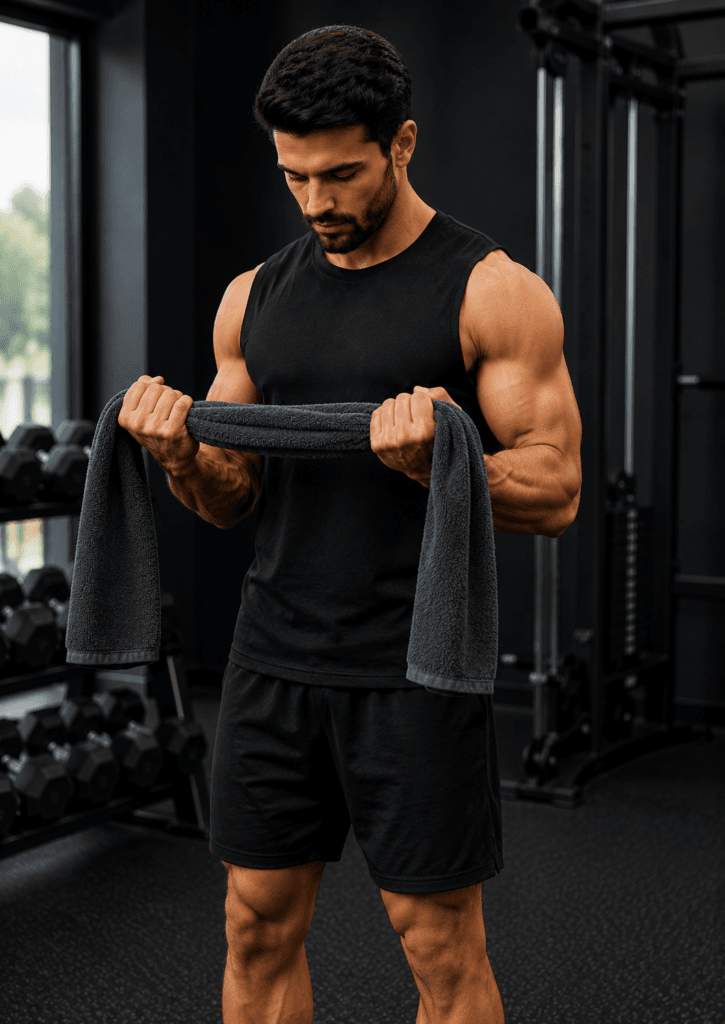
Not everyone has dumbbells lying around, and that’s completely fine. A regular bath towel, looped under your foot, creates enough resistance to genuinely challenge your biceps. It sounds almost too simple to work, but the tension is real and adjustable
Muscles Worked: Biceps brachii, brachialis, forearms
How to Do It:
- Loop a sturdy towel under one foot, holding both ends with one hand.
- Keep your elbow tucked at your side and your foot pressed firmly down.
- Curl your hand upward, pulling against the tension your foot creates.
- Lower slowly and repeat, then switch arms.
Benefits: One of the simplest bicep workouts at home without equipment, since you can adjust difficulty just by pressing your foot down harder or standing on more of the towel’s length.
8. Backpack Curl
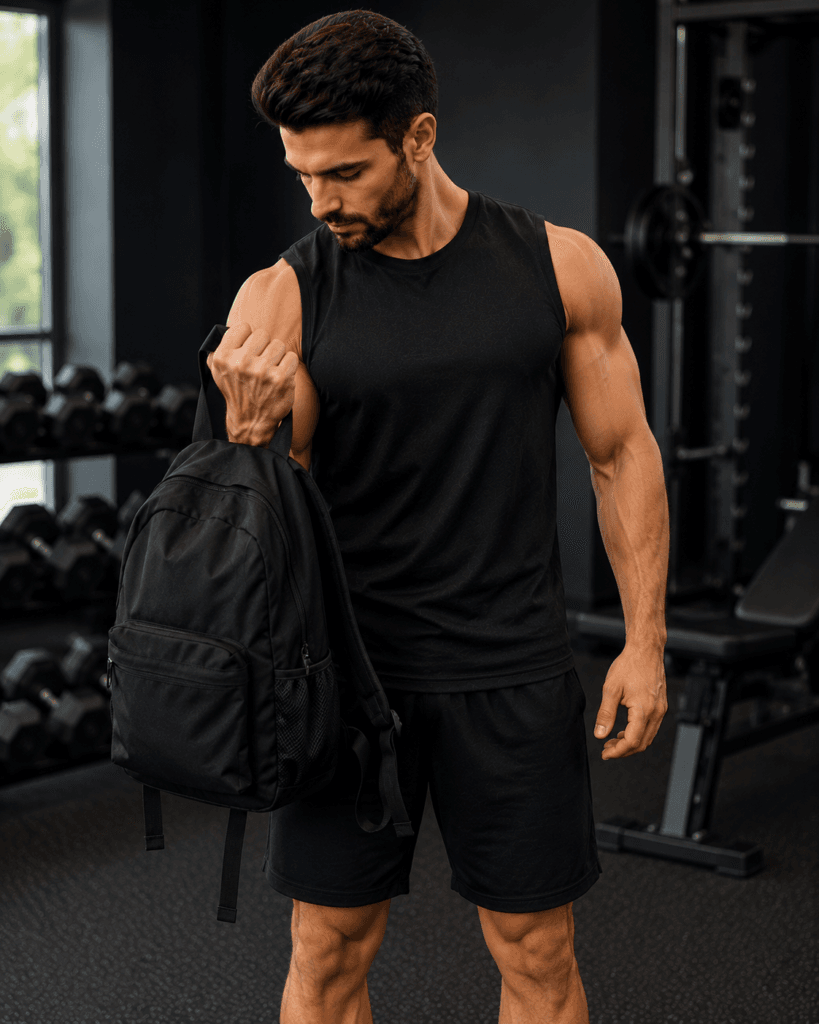
Your old school backpack has a second life as a makeshift dumbbell. Fill it with anything heavy and stable, and you’ve got an adjustable weight that costs nothing extra. It’s not glamorous, but it gets the job done for building arm strength at home.
Muscles Worked: Biceps brachii, brachialis
How to Do It:
- Fill a backpack with books, water bottles, or canned food to your desired weight.
- Hold the straps or top handle firmly, similar to gripping a dumbbell.
- Curl the backpack up toward your shoulder with control.
- Lower it slowly back down and repeat on both arms.
Benefits: Adjustable, costs nothing, and is a surprisingly effective way to build arm strength at home when you don’t own actual dumbbells.
9. Isometric Towel Hold
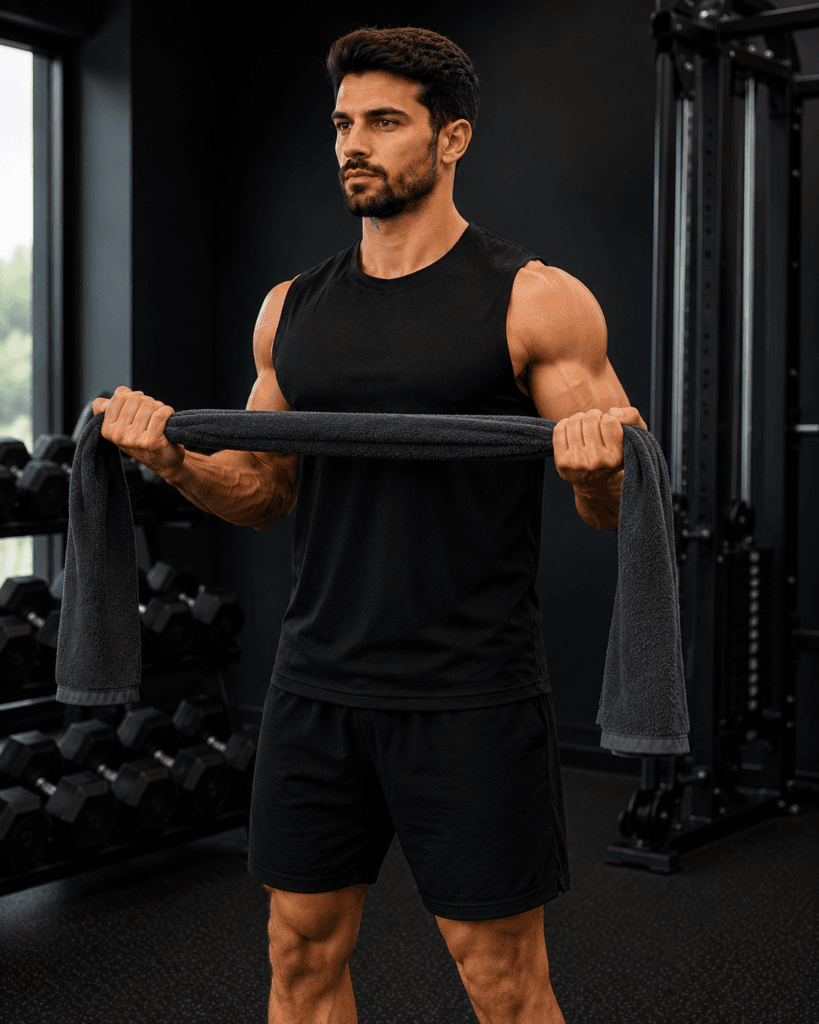
Sometimes the best way to build endurance is to simply stop moving and hold a position. This isometric hold uses the same towel setup as before, but instead of curling up and down, you pause and let the muscle work under constant tension. It’s a short exercise that burns more than it looks like it should.
Muscles Worked: Biceps brachii, brachialis (static contraction)
How to Do It:
- Set up the towel curl as described above, looping it under one foot.
- Curl your arm up to a 90-degree elbow angle.
- Hold that exact position without moving for 20 to 30 seconds.
- Breathe normally throughout instead of holding your breath.
Benefits: This isometric bicep hold builds muscle endurance and strengthens the joint through sustained, static contraction. It’s a nice change of pace from constant reps.
10. Reverse Curl
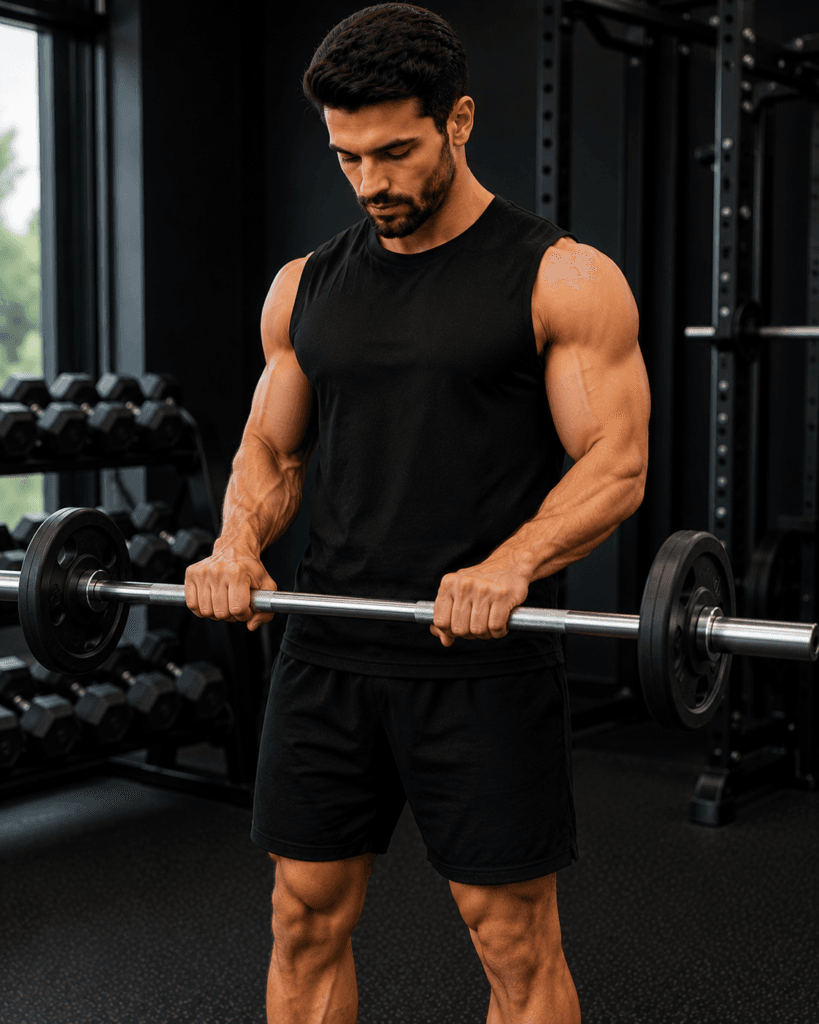
Flipping your grip changes everything about how this curl feels. With palms facing down, the biceps take a back seat while the forearms and brachioradialis do most of the heavy lifting. Expect to feel this one in your forearms first, and your upper arm second.
Muscles Worked: Brachioradialis, forearms, biceps brachii
How to Do It:
- Grab a dumbbell or resistance band with an overhand grip, palms facing down.
- Keep your elbows tucked close to your sides.
- Curl the weight up while maintaining the palms-down position throughout.
- Lower slowly back to the starting position.
Benefits: This grip shifts most of the emphasis away from the biceps brachii and onto the brachioradialis, boosting forearm strength and grip strength. Expect to use noticeably lighter weight than a standard curl. That’s normal.
11. Zottman Curl
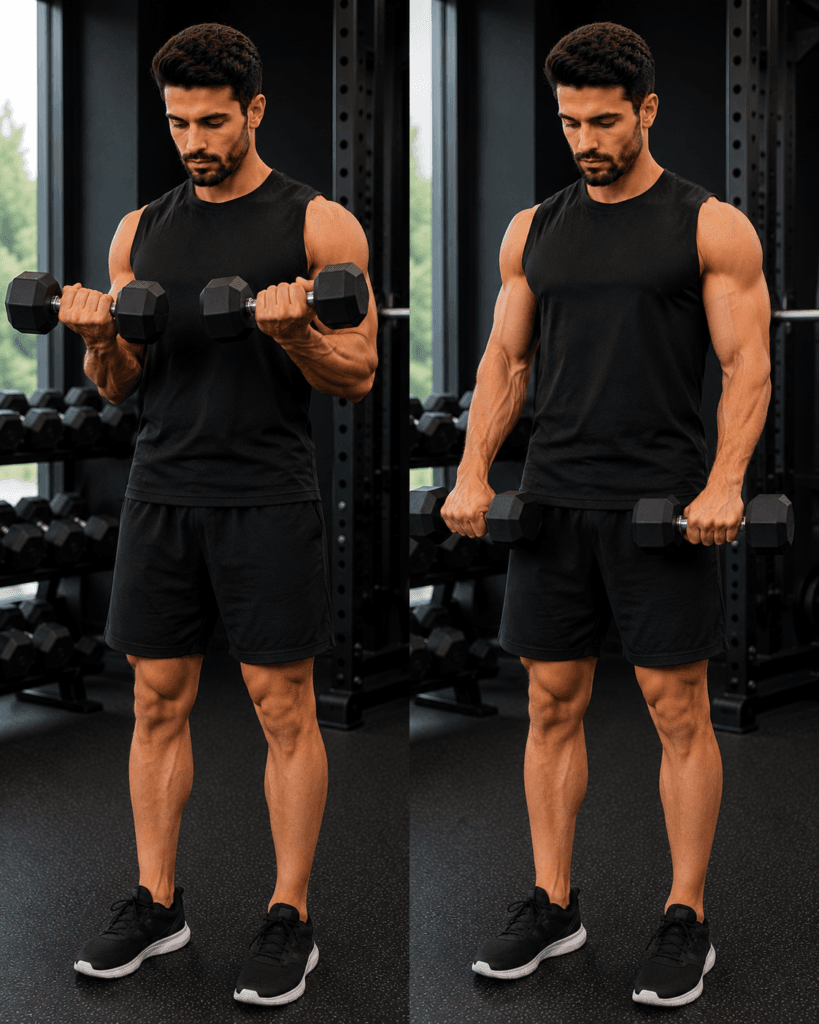
This one feels like getting two exercises for the price of one. You curl up like normal, then flip your wrists and lower the weight in a completely different grip. It’s an efficient way to train both your biceps and forearms without adding extra sets.
Muscles Worked: Biceps brachii, brachioradialis, forearms
How to Do It:
- Hold dumbbells with palms facing up, just like a standard curl.
- Curl the weight up to shoulder height as usual.
- At the top, rotate your wrists so your palms now face down.
- Lower the weight slowly in this reversed, palms-down grip.
Benefits: It’s essentially two exercises in one movement, hitting the biceps on the way up and the forearms on the way down, making it efficient for full arm development.
12. Cross-Body Hammer Curl
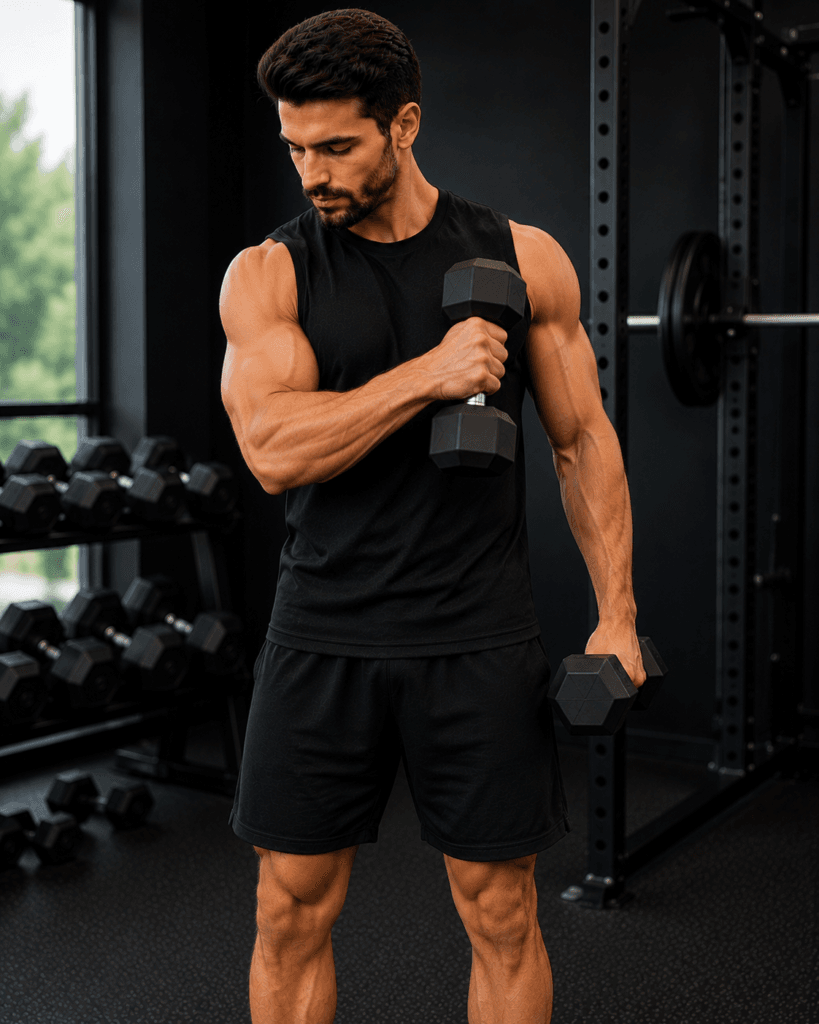
Taking a regular hammer curl and angling it across your body sounds like a small change, but it shifts the tension in a noticeable way. This diagonal path challenges the brachialis and brachioradialis slightly differently than a straight-up curl. It’s a good addition once the basic hammer curl starts feeling routine.
Muscles Worked: Brachialis, brachioradialis, biceps brachii
How to Do It:
- Hold dumbbells with a neutral grip, palms facing each other.
- Curl one dumbbell diagonally across your body toward the opposite shoulder.
- Lower it back down slowly, then repeat with the other arm.
- Alternate sides, keeping the motion slow and controlled rather than swinging.
Benefits: This slightly different path changes the angle of tension on the brachialis and brachioradialis compared to a straight hammer curl, adding variety to your routine.
13. Resistance Band High Curl
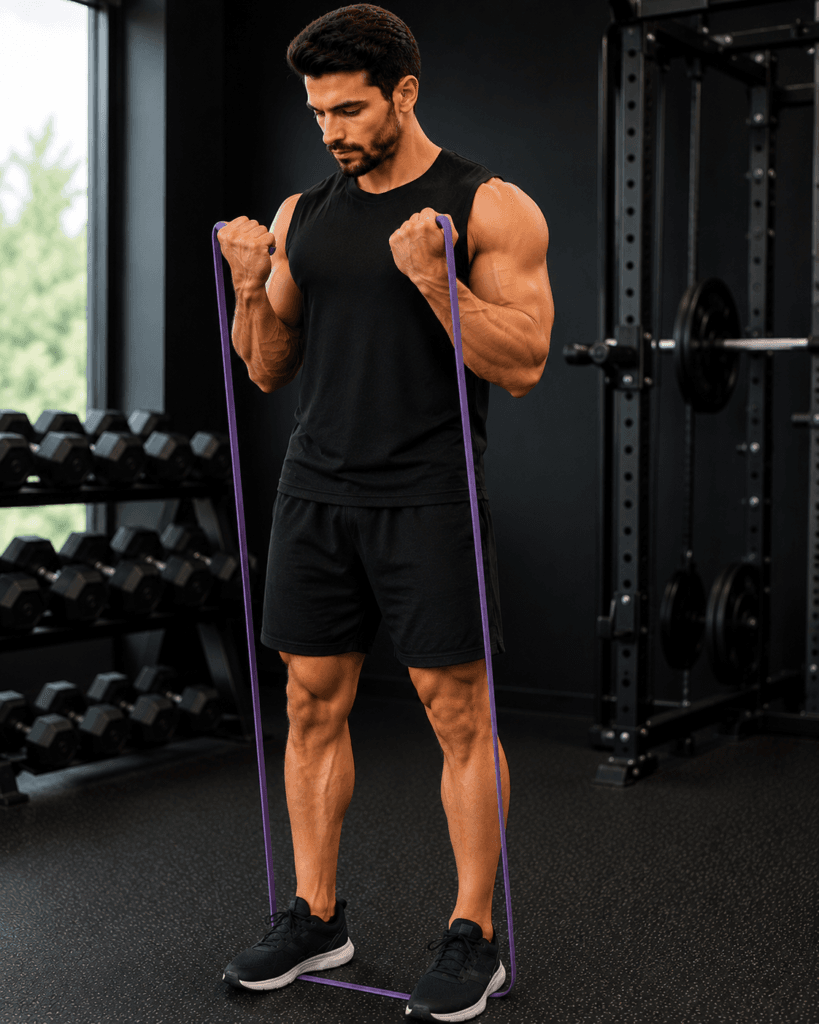
Anchoring the band above your head instead of under your feet completely changes how the resistance behaves through the movement. Instead of getting harder near the top, this version challenges you the most near the middle of the curl. It’s a simple setup change that keeps your muscles guessing.
Muscles Worked: Biceps brachii, brachialis
How to Do It:
- Anchor the band above head height. A door hinge or sturdy hook works fine.
- Hold a handle in each hand and step back until there’s tension in the band.
- Curl the handles downward and inward toward your shoulders.
- Return slowly to the starting position and repeat.
Benefits: Because the resistance pulls from above instead of below, this changes the resistance curve compared to a standard low-anchor band curl, adding fresh stimulus once regular curls feel too easy.
14. TRX Bicep Curl
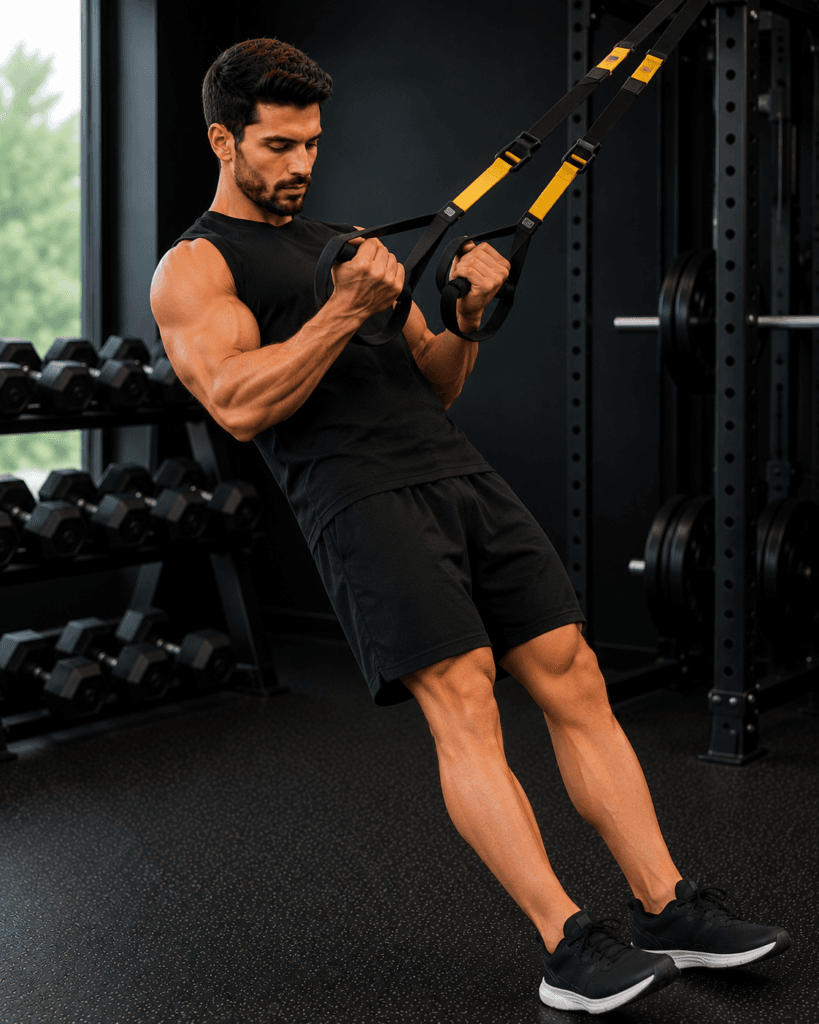
A suspension trainer turns your own bodyweight into resistance, and this curl is one of the simplest ways to use it for arm training. The steeper you lean back, the harder the curl becomes, so you control the difficulty just by shifting your foot position. It’s a great option if you already own a TRX for other bodyweight bicep exercises.
Muscles Worked: Biceps brachii, brachialis, forearms
How to Do It:
- Grab the handles of a suspension trainer with palms facing up.
- Walk your feet forward and lean back until your arms are fully extended.
- Curl yourself up toward the anchor point, keeping elbows pointed forward.
- Lower slowly back to the extended position and repeat.
Benefits: It’s a bodyweight bicep exercise that scales in difficulty simply by adjusting your body angle. The more upright you stand, the easier it gets.
15. Negative Chin-Up
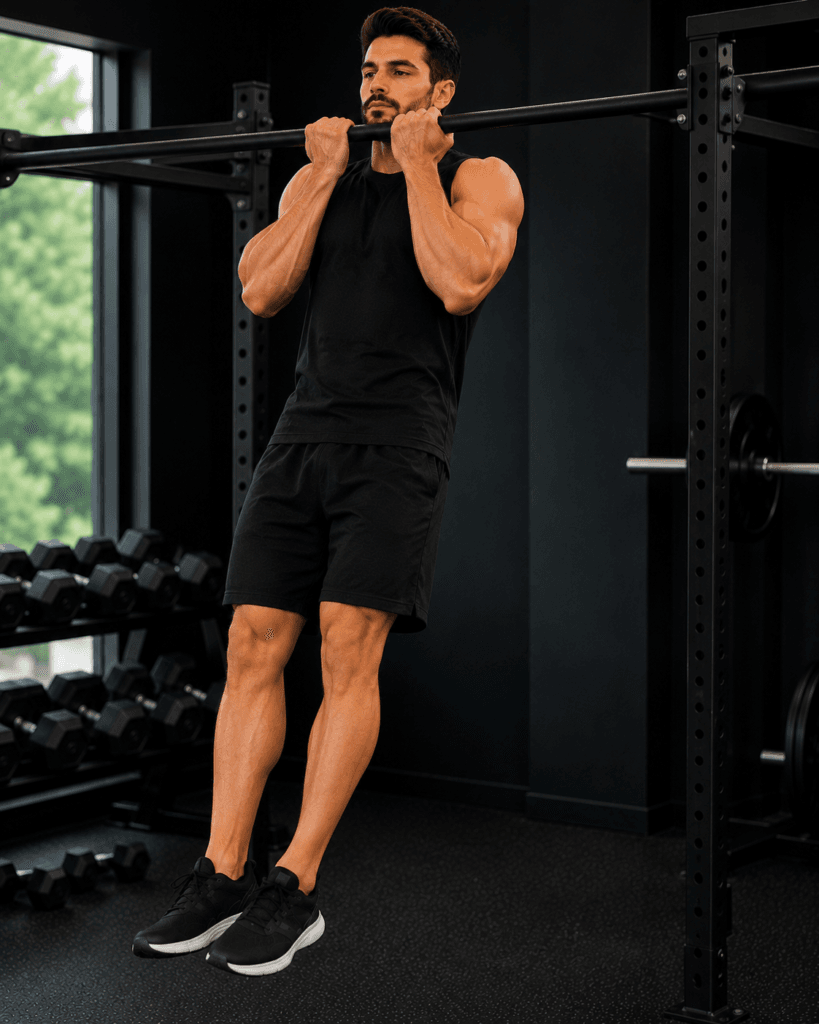
If a regular chin-up still feels out of reach, this is the exercise that gets you there. By only focusing on the lowering portion of the movement, you train the same muscles under control without needing the strength to pull yourself up yet. It’s one of the most practical bodyweight bicep exercises for building toward your first real chin-up.
Muscles Worked: Biceps brachii, brachialis, lats
How to Do It:
- Jump or step up to the top chin-up position, chin above the bar, palms facing you.
- Hold briefly at the top to stabilize your body.
- Lower yourself down as slowly as possible, ideally over 4 to 6 seconds.
- Step or jump back up and repeat for the desired number of reps.
Benefits: This eccentric-only approach still trains the biceps and back through a full range of motion, even if you can’t yet pull yourself up. Over weeks, your control on the way down translates into strength on the way up.
Best Bicep Workout at Home Without Equipment
If dumbbells and bands aren’t available, lean on chin-ups, towel curls, backpack curls, and isometric holds. These bodyweight bicep exercises rely on your own body tension and household items, proving that bicep workouts at home without equipment can still deliver real results.
Best Bicep Workout at Home With Dumbbells
Dumbbell curls, hammer curls, concentration curls, and incline curls form a well-rounded dumbbell session. Bicep workouts at home with dumbbells give you precise control over load, which makes tracking progressive overload much easier.
Curious about the equipment side of things? Resistance Band Exercises is a solid companion read if bands are more your style than dumbbells.
Best Resistance Band Bicep Exercises
Standard band curls, high-anchor curls, and reverse band curls cover most of what you need. Resistance band curls are joint-friendly and portable, which makes them ideal bicep workouts at home for beginners who are just getting comfortable with resistance training.
Beginner Bicep Workout at Home
New to training? Start simple. Focus on form over weight, and don’t chase soreness. Chase consistency instead.
Example Routine
- Chin-Ups: 3 sets, as many reps as possible (or negative chin-ups if full reps are tough)
- Backpack Curl: 3 sets of 12 to 15 reps
- Hammer Curl: 3 sets of 12 reps
- Towel Curl: 3 sets of 12 reps per arm
This beginner bicep workout builds a foundation of arm strength before adding more advanced variations like Zottman curls or TRX work.
20-Minute Home Bicep Workout
Short on time? This 20-minute session hits every part of the biceps and forearms without needing a full hour.
Workout Table
| Exercise | Sets | Reps |
|---|---|---|
| Chin-Up | 3 | 8-10 |
| Hammer Curl | 3 | 12 |
| Backpack Curl | 3 | 15 |
| Resistance Curl | 3 | 12 |
| Isometric Hold | 3 | 30 sec |
Rest 45-60 seconds between sets. This routine is a genuinely effective home bicep workout routine for people juggling a busy schedule.
How Many Times a Week Should You Train Biceps?
According to the American College of Sports Medicine (ACSM), training a muscle group 2 to 3 times per week with adequate rest between sessions supports steady strength and hypertrophy gains for most adults. Biceps recover relatively fast compared to larger muscle groups like legs or back, so 2–3 sessions a week, with at least 48 hours of rest in between, works well for most people.
Training biceps every single day, by the way, is a bit like watering a plant every hour. More isn’t always better. Muscles grow during rest, not during the workout itself.
Tips to Grow Bigger Biceps Faster
- Progressive overload: Gradually increase reps, sets, or resistance over time. Without this, muscles have no reason to adapt.
- Protein intake: The National Institutes of Health (NIH) notes that dietary protein provides the amino acids needed for muscle repair and growth after resistance training.
- Recovery: Sleep and rest days allow muscle fibers to rebuild stronger. Skipping recovery slows progress, not speeds it up.
- Full range of motion: Half-reps look impressive but build half the muscle. Curl through the entire range for real hypertrophy.
- Consistency: A mediocre workout done consistently beats a perfect workout done once a month.
Nutrition matters just as much as training. If you’re also cleaning up your diet, Healthy Lunch Ideas for Weight Loss and Cottage Cheese Nutrition Facts are worth a read for protein-friendly meal ideas.
Home Workout Equipment for Better Bicep Training
You don’t need much, but a few tools open up more variety.
- Resistance Bands: Cheap, portable, and joint-friendly.
- Dumbbells: Precise and easy to progressively overload.
- Pull-Up Bar: Great for chin-ups and negative reps.
- Suspension Trainer: Adds a bodyweight challenge with adjustable difficulty.
- Adjustable Bench: Useful for incline curls and better positioning.
If you’re building a full home gym setup, Calisthenics Workout Plan for Beginners and Military Calisthenics cover bodyweight training approaches that pair well with an arm-focused routine.
Frequently Asked Questions
What is the best bicep workout at home for beginners?
Bodyweight moves like negative chin-ups, backpack curls, and towel curls are ideal starting points. They let you focus on form and full range of motion before adding heavier resistance later on.
How do I build biceps at home without going to a gym?
Combine progressive overload with consistent training two to three times a week. Use dumbbells, resistance bands, or household items like backpacks, and gradually increase reps or resistance as your strength improves.
Can I get bigger biceps at home without any equipment?
Yes. Chin-ups, towel curls, isometric holds, and backpack curls all create enough resistance to trigger muscle growth. Consistency and progressive difficulty matter more than the specific tool you use.
What are the best bicep workouts at home with dumbbells?
Dumbbell curls, hammer curls, concentration curls, and incline dumbbell curls form a well-rounded session. Together they train the biceps brachii, brachialis, and brachioradialis from multiple angles.
Are resistance band bicep exercises as effective as dumbbells?
Resistance bands provide variable tension that increases through the curl, which can be just as effective as dumbbells for building strength and endurance. They’re also lighter on the joints, making them a solid choice for beginners.
Is a 10 minute bicep workout at home enough to see results?
A focused 10-minute session, done consistently several times a week, can build noticeable strength over a few weeks. Longer routines add more volume, but short, consistent workouts still beat inconsistent long ones.
Do bicep workouts at home work differently for men and women?
The training principles stay the same for everyone: progressive overload, full range of motion, and recovery. The main difference usually comes down to personal goals, like building visible size versus toning and functional strength.
How long does it take to get bigger biceps at home?
Most people notice strength improvements within three to four weeks and visible size changes within eight to twelve weeks of consistent training. Genetics, diet, sleep, and training frequency all influence the timeline.
Final Thoughts
Bicep workouts at home genuinely work for beginners, for men, for women, and for anyone willing to show up consistently. You don’t need a rack of dumbbells or a gym subscription. A resistance band, a towel, a backpack, or a pull-up bar can build real arm strength over time.
Focus on form, apply progressive overload gradually, eat enough protein, and give your muscles time to recover. That combination, repeated week after week, is what actually builds bigger biceps, not any single “magic” exercise.
Rounding out your training? Strength Exercises for Seniors and Soba Noodles Nutrition Facts are useful next reads if you’re building a broader fitness and nutrition routine.
References
- American Council on Exercise (ACE): acefitness.org
- American College of Sports Medicine (ACSM): acsm.org
- Harvard Health Publishing: health.harvard.edu
- National Institutes of Health (NIH): nih.gov
- Mayo Clinic: mayoclinic.org

Hi, I’m Salem Nasir, founder of Fiturely. I research and write evidence-based articles on fitness, nutrition, weight loss, and healthy living. My mission is to make reliable health information simple, practical, and easy to understand so readers can build healthier habits with confidence
Pingback: Transform Your Lower Body with Just 5 Dumbbell Exercises at Home